

Buzzoole Alternatives: Best Influencer Marketing Platforms
Managing creator partnerships at scale requires more than spreadsheets and manual outreach, which is why influencer marketing software has become essential for brands and agencies. Platforms like Buzzoole help streamline creator discovery, campaign workflows, and performance tracking, making it easier to run data-driven influencer campaigns from one place. However, while Buzzoole offers strong analytics and campaign visibility, many users start exploring Buzzoole alternatives when they need more flexible workflows or broader platform capabilities.
Common feedback highlights a few recurring challenges, including limited pricing transparency for higher-tier plans, a user interface that can require a learning curve, and inconsistent creator matching that still demands manual vetting. Some teams also mention occasional platform stability issues and limited payment flexibility for global campaigns, which can slow down execution when scaling internationally. To help you evaluate your options, this guide compares the 10 best Buzzoole alternatives—including GRIN, Influencer Hero, Aspire, SARAL, Influencity, NeoReach, Buzzoole, Skeepers, Upfluence, and Traackr—based on features, pricing, and use cases.
Criteria for Suggesting Platform Alternatives:
• Core Features
Evaluation of each platform’s essential capabilities, including influencer discovery, outreach, CRM, campaign reporting, gifting, UGC and content collection, affiliate tracking and payments, storefronts, application pages, and AI-powered tools.
• Supported Social Media Platforms
Assessment of how well each platform integrates with major social networks such as Instagram, YouTube, TikTok, Facebook, Pinterest, and many more
• Pricing & Contract Flexibility
Comparison of pricing models, subscription costs, and contract requirements to help brands choose solutions that match their budget and scalability needs.
• Standout & Differentiating Features
Highlighting unique or innovative functionalities that set each platform apart, such as real-time tracking dashboards, creator benchmarking, TikTok email discovery, or advanced automation tools.
• Customer Reviews & User Satisfaction
Analysis of verified user feedback from credible platforms like G2, TrustRadius, Capterra, focusing on usability, reliability, value for money, customer support, and real-world performance.
Buzzoole Overview

Buzzoole is an AI-powered influencer marketing platform designed to help brands and agencies discover creators, manage campaigns, and measure performance at scale. Positioned as a data-driven solution, Buzzoole focuses heavily on creator quality, campaign tracking, and competitive intelligence—making it particularly appealing for teams that want more analytical depth in their influencer marketing efforts.
Its core offering, Buzzoole Suite, combines influencer discovery, campaign management, and reporting into a single workflow, with additional tools for auditing campaigns, analyzing competitors, and optimizing creator selection.
Key Features
• Advanced Influencer Discovery Buzzoole provides access to a large creator database with 20+ filters, allowing marketers to search by audience demographics, engagement metrics, brand mentions, hashtags, and content performance. This helps teams identify creators that align closely with campaign goals.
• AI-Powered Creator Qualification The platform emphasizes profile “health status” using first-party data and fraud detection, helping brands assess audience authenticity and avoid low-quality influencers.
• Unlimited Creator Lists & Collaboration Users can build, save, and share unlimited influencer lists internally, making it easier for teams and agencies to collaborate on shortlisting and approvals.
• End-to-End Campaign Management Buzzoole offers a guided campaign setup process, from selecting creators and defining deliverables to sending invitations and managing participation.
• Content Approval Workflow Brands can review and approve influencer content before it goes live, request edits, and maintain control over brand messaging.
• Real-Time Campaign Tracking The platform includes live dashboards with metrics such as reach, impressions, engagement, and audience data, enabling performance monitoring during campaigns—not just after.
• Competitor & Market Insights Buzzoole allows brands to analyze competitor campaigns, track industry trends, and identify high-performing creators in their niche.
• Conversion Tracking via Links Users can implement tracking links to measure traffic and performance beyond social engagement, adding a performance marketing layer.
• Creator Payment Management Campaigns include built-in workflows for assigning compensation and managing payouts once deliverables are completed.
• Exportable Reports & Dashboards Reports can be downloaded or shared via links, making it easy to present results to stakeholders or clients.
Platform Coverage
Instagram, TikTok, YouTube, Facebook, and X
Pricing
Buzzoole offers a tiered pricing model through its Buzzoole Suite:
• Essential Plan – Starts at €89/month Includes core features such as creator discovery, profile analysis, and list building.
• Professional Plan – Custom pricing Adds campaign tracking, real-time reporting, and expanded analytics capabilities.
• Enterprise Plan – Custom pricing Includes full campaign management, advanced content analysis, and access to additional features and support.
Buzzoole promotes no long-term commitment, allowing users to subscribe and cancel flexibly. However, detailed pricing for higher tiers is not publicly disclosed and typically requires contacting sales.
Reviews
4.1 / 5.0 (G2)
Buzzoole Standout Features
• Competitor Campaign Intelligence Buzzoole goes beyond standard influencer tools by offering detailed competitor analysis. Brands can monitor rival campaigns, benchmark performance, and identify which creators are driving results in their industry.
• First-Party Data & Creator Health Scoring Unlike platforms relying solely on scraped data, Buzzoole uses first-party insights to evaluate creator authenticity and audience quality—helping brands reduce fraud risk and improve campaign ROI.
• Flexible Campaign Tracking (Live & Historical) Buzzoole allows brands to track campaigns both in real time and retrospectively. This means teams can analyze past campaigns, audit performance, and benchmark results even after campaigns have ended.
Limitations (Why Users Look for Buzzoole Alternatives)
Limited pricing transparency at higher tiers
While the entry plan is affordable, the lack of clear pricing for Professional and Enterprise plans makes budgeting difficult for many brands.
User interface and usability challenges
Some users report that the platform is not the most intuitive, with a learning curve that can slow down onboarding and daily use.
Inconsistent creator matching quality
Despite AI-driven discovery, users note that suggested creators are not always highly relevant, requiring additional manual vetting.
Occasional platform stability issues
Feedback highlights instances of bugs or crashes, which can disrupt campaign workflows and reduce efficiency.
Limited payment flexibility for global campaigns
Some users mention the lack of widely used payment options, which can complicate collaborations with international creators.
Smaller or less responsive creator pool in some niches
Compared to larger databases or open platforms, some users find fewer available or responsive influencers in specific industries.
10 Best Influencer Marketing Platform Alternatives
| TOOL | REVIEWS | BEST FOR | TRIAL INFO | PRICING | ||
|---|---|---|---|---|---|---|
1 |

|
⭐ | DTC creator management | Book Demo | Pricing | Website |
2 |

|
⭐ | Influencer CRM & automation | Book Demo | Pricing | Website |
3 |

|
⭐ | Influencer partnerships | Book Demo | Pricing | Website |
4 |

|
⭐ | Influencer outreach | Book Demo | Pricing | Website |
5 |

|
⭐ | Campaign management | Book Demo | Pricing | Website |
6 |
|
⭐ | Influencer campaigns & data analytics | Book Demo | Pricing | Website |
7 |

|
⭐ | Influencer discovery | Book Demo | Pricing | Website |
8 |

|
⭐ | Influencer gifting & UGC campaigns with micro-influencers | Book Demo | Pricing | Website |
9 |

|
⭐ | Ecommerce influencer discovery | Book Demo | Pricing | Website |
10 |

|
⭐ | Enterprise influencer analytics | Book Demo | Pricing | Website |
GRIN
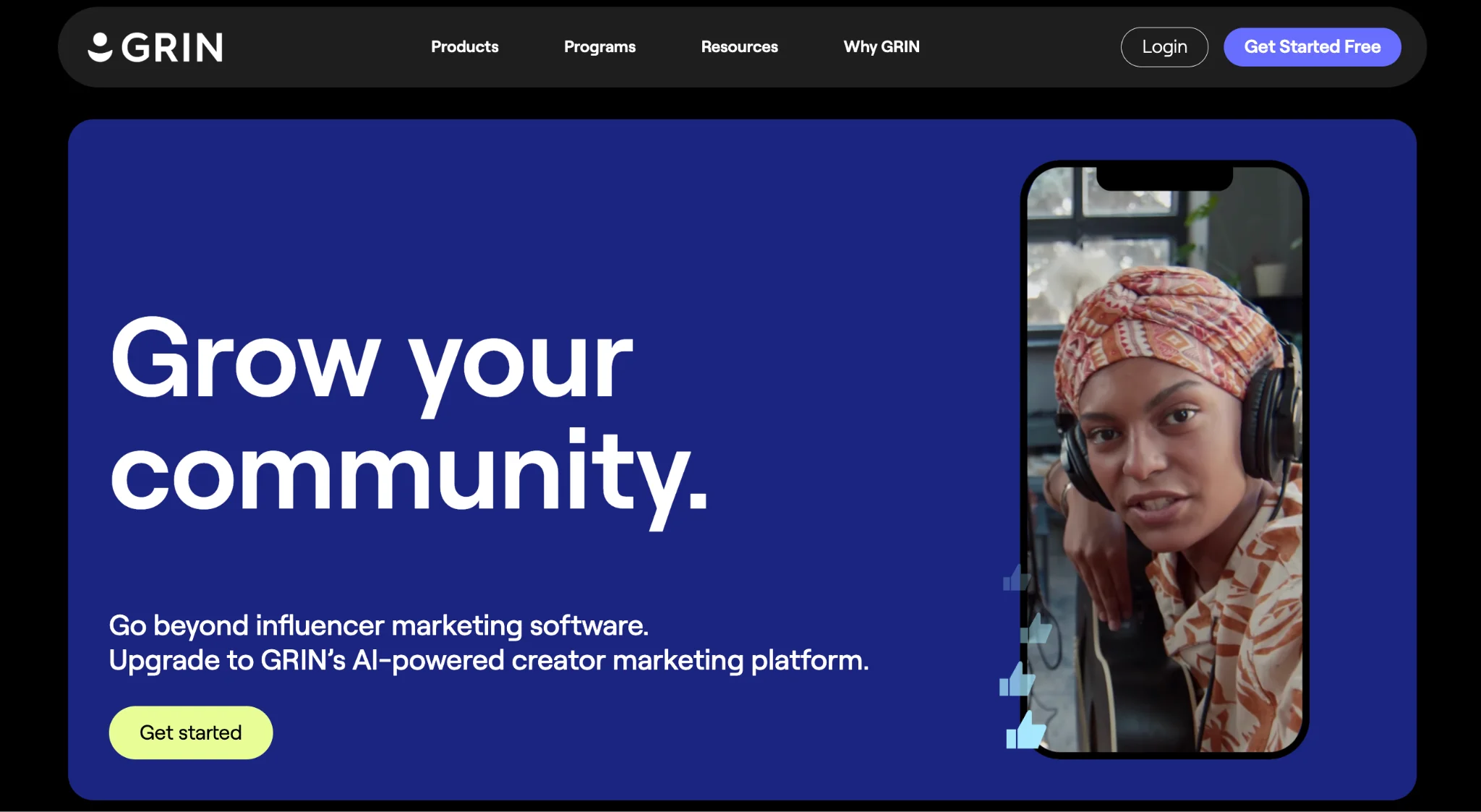
GRIN is an influencer marketing platform built primarily for eCommerce and DTC brands that want to manage creator discovery, outreach, gifting, affiliate tracking, payments, and content reuse from a single system. Its positioning is especially strong for brands running ongoing creator programs tied to revenue, repeat partnerships, and product seeding rather than one-off awareness campaigns.
Key Features
• Creator discovery and lookalike search: GRIN helps brands find creators by niche, audience data, engagement, and brand fit, with AI-assisted discovery features including keyword and lookalike matching.
• Integrated outreach and email syncing: Teams can run outreach through connected inboxes, automate communication, and centralize replies, opens, and follow-ups inside the platform.
• Creator CRM and personalized portals: GRIN gives each creator a structured workflow with briefs, contracts, discount codes, deliverables, and content uploads, which is useful for scaling large programs without losing organization.
• eCommerce-native gifting workflows: The platform integrates with Shopify and WooCommerce so brands can automate product seeding, generate discount codes, track orders, and connect creator activity to revenue.
• Affiliate tracking and payments: GRIN supports creator commissions and in-platform payouts, including PayPal-based payment workflows for affiliate and sales-driven programs.
• Media rights management: The platform stores creator agreements and supports automatic media rights acceptance during activation, which reduces manual contract handling for brands that want to reuse content.
• UGC library: GRIN centralizes creator content, including short-form social assets, into a searchable content library for reuse across email, ads, and ecommerce channels.
• Landing pages for creator recruitment: Brands can build creator application pages without developer support, helping them attract inbound creators and maintain a stronger pipeline.
• Gia AI assistant: GRIN has expanded its AI positioning around Gia, which is presented as a creator-marketing sidekick for discovery, workflow support, and campaign efficiency.
Platform Coverage
Facebook, Instagram, TikTok, X, Pinterest, YouTube, and Twitch
Pricing
Annual pricing starts at $25,000/year (approx. $2,050/month)
Reviews
4.5/5.0 (G2)
Standout Features
• eCommerce-native infrastructure: GRIN is one of the stronger options for brands that need gifting, discount codes, affiliate attribution, and creator revenue tracking tightly connected to Shopify, WooCommerce, BigCommerce, and Magento workflows.
• Creator-friendly activation portals: Its creator portals reduce friction by giving influencers one place to view briefs, contracts, product options, and payment details, which is especially useful for high-volume brand ambassador programs.
• Gia AI and creator management positioning: GRIN has leaned further into AI-assisted creator management with Gia, positioning it as a workflow and discovery enhancement rather than just a search add-on.
Buzzoole vs GRIN
Buzzoole is the more analytics-forward choice if competitor monitoring and campaign intelligence are your priority, while GRIN is stronger for brands that need deeper eCommerce workflows such as gifting, affiliate attribution, creator payouts, and content reuse. Buzzoole is more centered on creator vetting and tracking, whereas GRIN is better suited to operational creator programs that run continuously and tie directly to commerce outcomes.
Influencer Hero

Influencer Hero is an all-in-one influencer marketing platform designed for brands, agencies, and eCommerce teams that want discovery, outreach, CRM, gifting, affiliate tracking, and campaign reporting in one workflow. Its strongest positioning is around campaign orchestration at scale, with a particular emphasis on CRM automation, AI-assisted outreach, and flexible eCommerce support.
Key Features
• Advanced influencer discovery: Users can search creators with filters for demographics, engagement, interests, and audience quality, with fake follower detection and lookalike recommendations built into the workflow.
• Chrome extension: The extension allows teams to pull creator insights and import influencers directly while browsing social profiles, reducing manual sourcing work.
• AI-personalized outreach: Influencer Hero includes bulk email flows, smart templates, reply tracking, and AI-supported outreach copy to make large-scale campaigns feel more one-to-one.
• Campaign-centric CRM: Its core strength is a board-based CRM with bulk actions, automated follow-ups, and structured stage management for outreach, contracts, deliverables, and ROI tracking.
• Real-time reporting and ROI tracking: Teams can monitor performance by campaign and by creator, including clicks, affiliate sales, and influencer-level returns.
• Gifting and seeding: The platform integrates with Shopify and WooCommerce so brands can handle product seeding and shipping status inside the same system.
• UGC collection: Influencer Hero automatically gathers creator posts into a content library and lets teams tag top-performing assets for reuse.
• Affiliate and payouts: Brands can manage links, codes, commissions, and creator payouts without depending on multiple outside tools.
• Branded application pages and storefronts: The platform supports inbound creator acquisition through signup pages and storefront-style experiences.
Platform Coverage
Instagram, TikTok, YouTube, Facebook, Pinterest, Snapchat, X, and Twitch
Pricing
Influencer Hero offers flexible pricing based on outreach volume, and you can have unlimited creators in your CRM with Influencer Hero:
• Standard — $649/month (up to 1,000 reachouts/month)
• Pro — $1,049/month (up to 5,000 reachouts/month)
• Business — $2,490/month (up to 10,000 reachouts/month)
• Custom / Agency — Tailored pricing
Reviews
5.0/5.0 (Capterra)
Standout Features
• Campaign-centric CRM automation: Influencer Hero’s strongest differentiator is its workflow-heavy CRM, built for brands managing large numbers of creators with bulk actions, stage automation, and structured campaign boards.
• Multi-platform eCommerce support: Unlike many tools that lean heavily on Shopify alone, Influencer Hero also supports WooCommerce and custom eCommerce tracking setups, making it more flexible for brands outside a single ecosystem.
• AI-enhanced personalized outreach: Its outreach stack is designed to scale email sequences without losing the feel of individualized communication, which is a major advantage for teams running high-volume creator recruitment.
Buzzoole vs Influencer Hero
Buzzoole is the more measurement- and intelligence-led platform, especially for brands prioritizing creator vetting and competitive analysis. Influencer Hero is the better fit for teams that care more about campaign operations at scale—particularly outreach automation, CRM structure, gifting, and affiliate workflows—while also benefiting from more transparent entry-level pricing.
Aspire
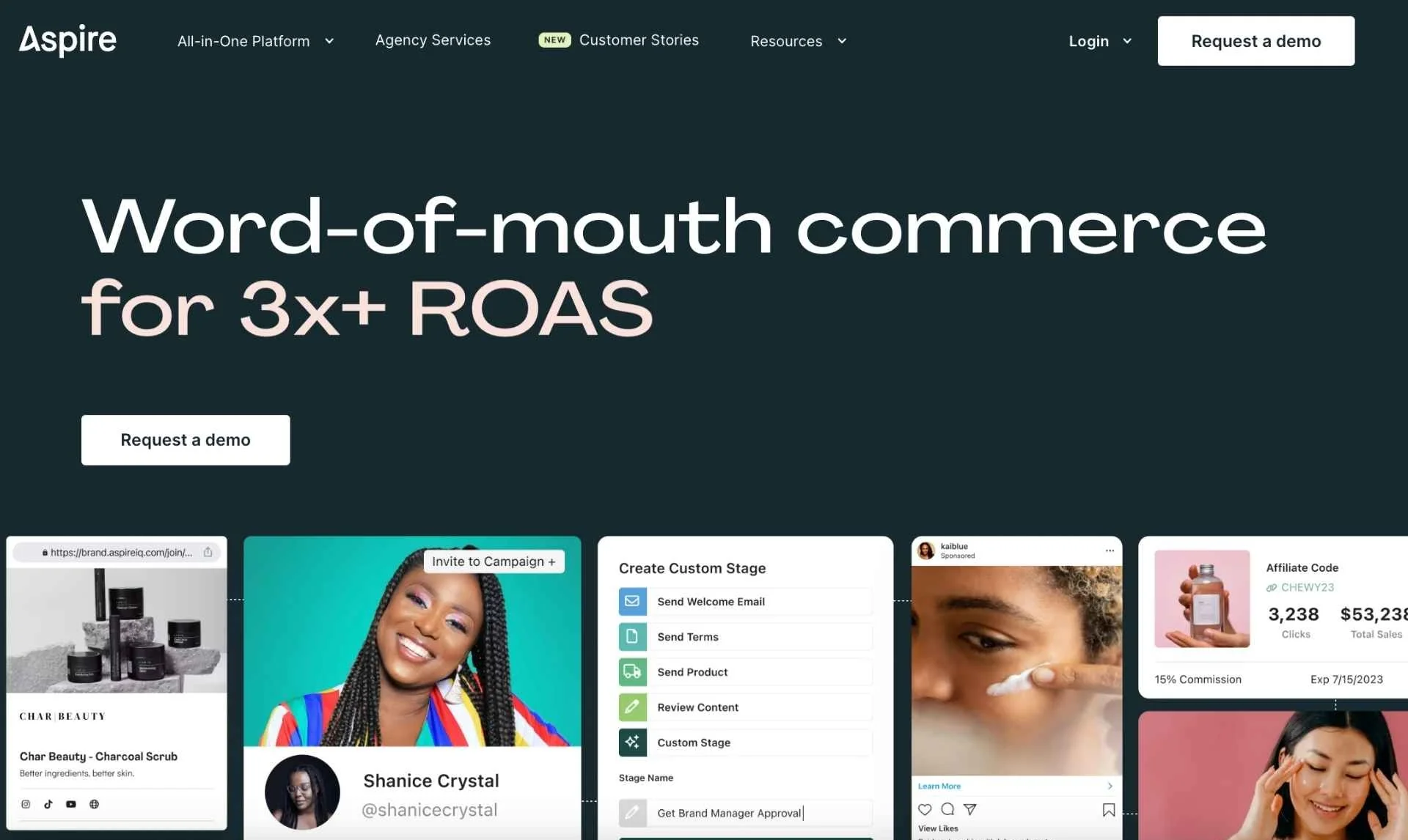
Aspire is an influencer marketing platform built for eCommerce brands that want to discover creators, recruit inbound applicants, manage approvals, run gifting workflows, and track sales in one place. The platform is particularly known for combining outbound discovery with a large creator marketplace, giving brands more than one path to building influencer programs.
Key Features
• Dual-mode creator discovery: Aspire combines traditional creator search with an inbound creator marketplace, allowing brands to both source creators directly and accept creator applications.
• First-party data partnerships: The platform highlights first-party data access from major social platforms, which it positions as more reliable than heavily scraped alternatives for audience and performance data.
• Custom application pages: Brands can build campaign landing pages that capture creator details, experience, and creative concepts before a partnership begins.
• Workflow automation and CRM: Aspire supports invite-to-contract workflows with briefs, approvals, bulk actions, automated follow-ups, tagging, and creator lists.
• Content approvals and rights management: Teams can collect content drafts, approve deliverables, and include usage-rights terms in contracts and briefs.
• Shopify gifting and fulfillment: Creators can select products from brand catalogs under set rules, while brands manage approvals and fulfillment without leaving the platform.
• Sales tracking and CreatorStores: Aspire supports discount links, unique codes, creator stores, and conversion tracking, making it more commerce-oriented than many creator tools.
• Reporting and exports: The platform provides social analytics, performance reporting, and exportable campaign and sales reports for internal stakeholders.
• Support infrastructure: Aspire includes implementation support, client success management, help articles, and in-platform chat, which is often important for brands building their first structured program.
Platform Coverage
Instagram, TikTok, Pinterest, YouTube, and Facebook
Pricing
Aspire starts with tiered pricing and can be customized, with a mid-tier quote of about $2,300/month for a use case involving multiple team members and up to 500 creators in CRM.
Reviews
4.0 /5.0 (Capterra)
Standout Features
• Inbound Creator Marketplace: Aspire’s marketplace is one of its biggest differentiators, giving brands access to creators who actively apply rather than relying only on outbound recruitment.
• First-party platform data: Aspire’s first-party data relationships are a major reason brands choose it over more scraped-data-heavy alternatives, especially when audience quality and reporting credibility matter.
• Commerce-ready creator workflows: The combination of gifting, CreatorStores, code generation, conversion tracking, and contract workflows makes Aspire particularly strong for brands running revenue-oriented creator programs.
Buzzoole vs Aspire
Buzzoole is stronger if your focus is campaign intelligence, creator vetting, and competitive analysis, while Aspire is more compelling for brands that want to recruit creators through both search and inbound applications. Aspire also has the advantage for product seeding, application pages, and creator-commerce workflows, whereas Buzzoole is more centered on tracking and strategic campaign visibility.
SARAL

SARAL is an influencer marketing platform built for consumer and eCommerce brands that want a simpler, more operational approach to influencer programs. It is positioned less like an enterprise intelligence suite and more like an “InfluencerOS” for finding creators, automating outreach, managing relationships, tracking ROI, and scaling predictable creator-led growth.
Key Features
• Influencer discovery engine: SARAL helps brands discover creators across major social platforms using audience, contact, and profile data, with a workflow designed to surface untapped creators efficiently.
• Chrome extension: The platform includes a browser extension that speeds up sourcing and makes it easier to evaluate creators without switching between tools.
• Influencer outreach automation: SARAL is built for scaling email and creator outreach with automated sequences and an integrated inbox, reducing spreadsheet-heavy campaign work.
• Flexible influencer CRM: Teams can create custom stages, fields, and workflows so the CRM matches their internal creator process rather than forcing a rigid structure.
• Performance and ROI tracking: SARAL includes campaign tracking designed to connect creator efforts to outcomes, including post tracking and broader program measurement.
• AI assistant: The platform now promotes SIA, an AI assistant built into the workflow, which shows that SARAL is evolving beyond simple outreach tooling.
• Shopify and WooCommerce integrations: SARAL supports ecommerce integrations for gifting, affiliate tracking, and campaign management, and also supports custom integrations where needed.
• Support and strategic onboarding: A notable part of SARAL’s pitch is that pricing includes onboarding, a dedicated success manager, and direct support access rather than just software access.
Platform Coverage
Instagram, TikTok, and YouTube.
Pricing
There are different plans:
• Starter: $3.6k/quarter
• Business: $4.5k/quarter
• Professional: $7.5k/quarter
Reviews
4.7/5.0 (G2)
Standout Features
• Transparent plan structure: SARAL is one of the more pricing-transparent platforms in the category, which is a real differentiator in a market where many competitors require multiple sales calls before discussing cost.
• Flexible CRM built around your workflow: Instead of forcing brands into one fixed campaign model, SARAL emphasizes custom stages, fields, and workflows, which is useful for lean teams with established internal processes.
• Software plus strategy model: SARAL bundles onboarding, success support, and strategic guidance into its pitch more directly than many software-first competitors, which can be valuable for growing DTC teams.
Buzzoole vs SARAL
Buzzoole is the better option for brands that care more about campaign intelligence, fraud-aware creator analysis, and competitive monitoring. SARAL is better suited to brands that want a simpler and more hands-on operator tool for discovery, outreach automation, relationship management, and predictable creator-led growth, with far clearer pricing along the way.
Influencity

Influencity is an end-to-end influencer marketing platform built around public-data discovery, campaign management, outreach, CRM, analytics, and reporting. It is designed for brands and agencies that want broad discovery coverage and structured campaign workflows without depending on opt-in-only creator databases.
Key Features
• Public-data influencer discovery: Influencity’s discovery model covers public profiles rather than only opt-in creators, giving brands access to a very broad creator universe.
• AI keyword matching and lookalikes: The platform includes AI-supported search, keyword matching, hashtags, lookalike recommendations, and profile analysis to improve shortlist quality.
• Strong CRM and list segmentation: Users can organize creators into lists, tags, segments, and campaign boards by market, geography, or program type.
• Campaign boards and workflow visibility: Influencity uses a visual campaign structure, often described like a Kanban board, to manage budgets, deliverables, deadlines, and campaign progress.
• Automated email outreach: The platform supports outreach templates, follow-up sequences, and email-sending tools, with replies routed back to the user’s inbox.
• Branded application pages: Brands can create inbound recruitment pages for creators to apply directly to campaigns.
• Manual and automated tracking: Campaign reporting can be done manually or through an auto-tracker add-on that captures posts matching defined rules such as hashtags and mentions.
• Shopify integration: The platform supports gifting and affiliate workflows through Shopify, including code assignment and influencer-level sales attribution.
• Exportable reporting: Teams can export reports in PDF, CSV, and Excel formats, which is useful for agencies and stakeholder reporting.
Platform Coverage
Instagram, TikTok, YouTube, and X/Twitter
Pricing
• Professional Plan: $318/month or $3,816/year
• Business Plan: $798/month or $9,576/year
• Enterprise Plan: Custom pricing
• Auto-Tracker Add-On: $660/year (for 50 influencers)
Reviews
4.3 / 5.0 (G2)
Standout Features
• Public-data discovery at scale: Influencity’s non-opt-in model is one of its biggest differentiators, since it gives teams access to a wider discovery pool than platforms that rely mainly on registered creators.
• Structured CRM and campaign boards: Its visual campaign management is stronger than many lightweight tools, making it appealing for agencies and brands juggling multiple markets or programs.
• Flexible pricing and no permanence requirement: Compared with platforms tied to rigid annual contracts, Influencity’s current positioning around trials, upgrades, and cancellation flexibility stands out.
Buzzoole vs Influencity
Buzzoole is more differentiated around creator qualification, fraud-aware analysis, and competitor campaign intelligence. Influencity is stronger if you want broader discovery through public data, a more visual CRM structure, and more flexibility in how campaigns are organized and scaled across teams or geographies.


NeoReach

NeoReach is an enterprise influencer marketing platform that combines software, API access, fraud detection, creator payments, and managed services for brands running large-scale creator programs. Its positioning is especially strong for teams that want campaign management, analytics, and custom data integrations in one system rather than a lightweight self-serve discovery tool.
Key Features
• Enterprise-grade creator discovery: NeoReach’s software supports creator search and analysis with 40+ filters, including keywords, platform, audience demographics, performance, language, income, and brand affinity.
• Workflow automation: The platform is built to help teams plan campaigns, coordinate creator relationships, manage contracts, track deadlines, review posts, and monitor payment history from one shared workspace.
• Real-time reporting: NeoReach tracks ROI, CPM, CPE, impressions, engagements, and campaign audience demographics, with dashboards and CSV exports for internal reporting.
• Fraud detection: NeoReach explicitly includes fraudulent engagement and follower analysis, which is useful for brands that want stronger creator vetting before activation.
• Creator payments: The platform includes creator payment capabilities as part of its broader influencer workflow, which makes it easier to keep contracting, activation, and payouts inside one system.
• API and custom data integrations: NeoReach offers API access and over 400 custom data points for teams that want to connect creator data to in-house tools or build more tailored reporting workflows.
• UGC and product seeding support: Its software and services pages position NeoReach for influencer gifting, UGC creation, and performance-driven paid amplification as part of a broader campaign stack.
Platform Coverage
Instagram, TikTok, YouTube, Facebook, Twitter (X), Pinterest, and Snapchat.
Pricing
NeoReach uses custom enterprise pricing, typically based on campaign scale, number of users, and feature requirements. Contracts are generally annual, with pricing often positioned in the higher tier of the market.
Reviews
4.5 / 5.0 (G2)
Standout Features
• Platform + API buying model: NeoReach is unusual in how strongly it emphasizes both full software access and API-level data access, which is valuable for brands building internal creator-tech workflows.
• Built-in fraud detection: Fraud analysis is a core part of the product positioning rather than a side feature, making NeoReach appealing to enterprise teams that care deeply about audience quality.
• Managed-service flexibility: NeoReach blends software with full-service execution, so brands can use it as a platform, an agency-like managed service, or both.
Buzzoole vs NeoReach
Buzzoole is the more self-serve, creator-vetting and campaign-intelligence-focused option, especially for teams that want competitive monitoring and streamlined tracking. NeoReach is stronger for enterprise teams that need workflow automation, API access, fraud detection, and the option to combine software with managed services. In short, Buzzoole feels more like an AI-led influencer operations platform, while NeoReach is better suited to brands that want a broader enterprise creator stack.
Heepsy

Heepsy is an influencer marketing platform focused on helping brands and agencies find, analyze, and connect with influencers through a large global database. It is particularly popular among small to mid-sized businesses looking for a straightforward solution for influencer discovery, outreach, and campaign tracking without the complexity of enterprise tools.
Key Features
• Large influencer database: Heepsy provides access to a database of around 50 million influencers globally, enabling brands to find creators across different regions and niches.
• Advanced search filters: Users can filter influencers by keywords, follower count (nano to macro), engagement rate, audience demographics (location, age, gender), and authenticity score to refine results.
• Fake follower detection: The platform includes an authenticity filter that estimates the percentage of real vs fake followers, helping brands avoid low-quality influencers.
• Detailed influencer profiles: Each profile includes engagement metrics, audience breakdown, recent brand collaborations, and content performance insights.
• Lookalike search: Heepsy allows users to find similar influencers based on a selected profile, making it easier to scale creator discovery.
• Outreach and email campaigns: Brands can send bulk outreach emails with templates and follow-ups, helping streamline influencer communication.
• CRM and campaign pipeline: The platform includes a Kanban-style pipeline to track campaign stages such as outreach, approval, shipping, and payments.
• Campaign tracking and reporting: Heepsy tracks engagement metrics like likes, comments, views, and shares, with more advanced reporting available on higher-tier plans.
• Shopify integration (Advanced plan): Enables affiliate tracking, discount codes, and sales attribution tied to influencer campaigns.
Platform Coverage
Instagram, TikTok, YouTube, and Twitch
Pricing
There are different plans:
• Free Plan: You can simply discover creators and see how the discovery feature works.
• Starter Plan: Starts at $89/month. You get up to 15k results, 50 profiles and 50 outreach emails.
• Plus Plan: Starts at $249/month. Offers 40K results, 1,000 advanced profiles, and 1,000 outreach emails. Adds bulk email outreach, contact exports, media gallery, and campaign reporting.
• Advanced Plan: Starts at $369/month. Includes 60K results, 3,000 profiles, and 3,000 outreach emails. Adds advanced filters, automated sales tracking, Shopify/WooCommerce integrations, product catalogs, and promo code tracking.
Reviews
4.5 / 5.0 (G2)
Standout Features
• High-volume influencer discovery with granular filters: Heepsy’s combination of a large database and detailed filtering makes it especially effective for niche targeting and international campaigns.
• Built-in fake follower detection: The platform’s authenticity scoring helps brands quickly assess influencer quality without relying on external tools.
• Affordable entry point with scalable plans: Compared to many enterprise tools, Heepsy offers accessible pricing and flexible plans, making it a strong option for smaller teams scaling influencer programs.
Buzzoole vs Heepsy
Buzzoole is stronger for AI-driven creator qualification, campaign tracking, and competitive insights, making it more suitable for brands focused on analytics and performance monitoring. Heepsy, on the other hand, is better suited for teams prioritizing influencer discovery, outreach, and affordability, especially at the entry level. While Buzzoole offers a more structured campaign workflow, Heepsy provides greater flexibility and accessibility for brands that need a simpler, search-first influencer marketing tool.
Skeepers
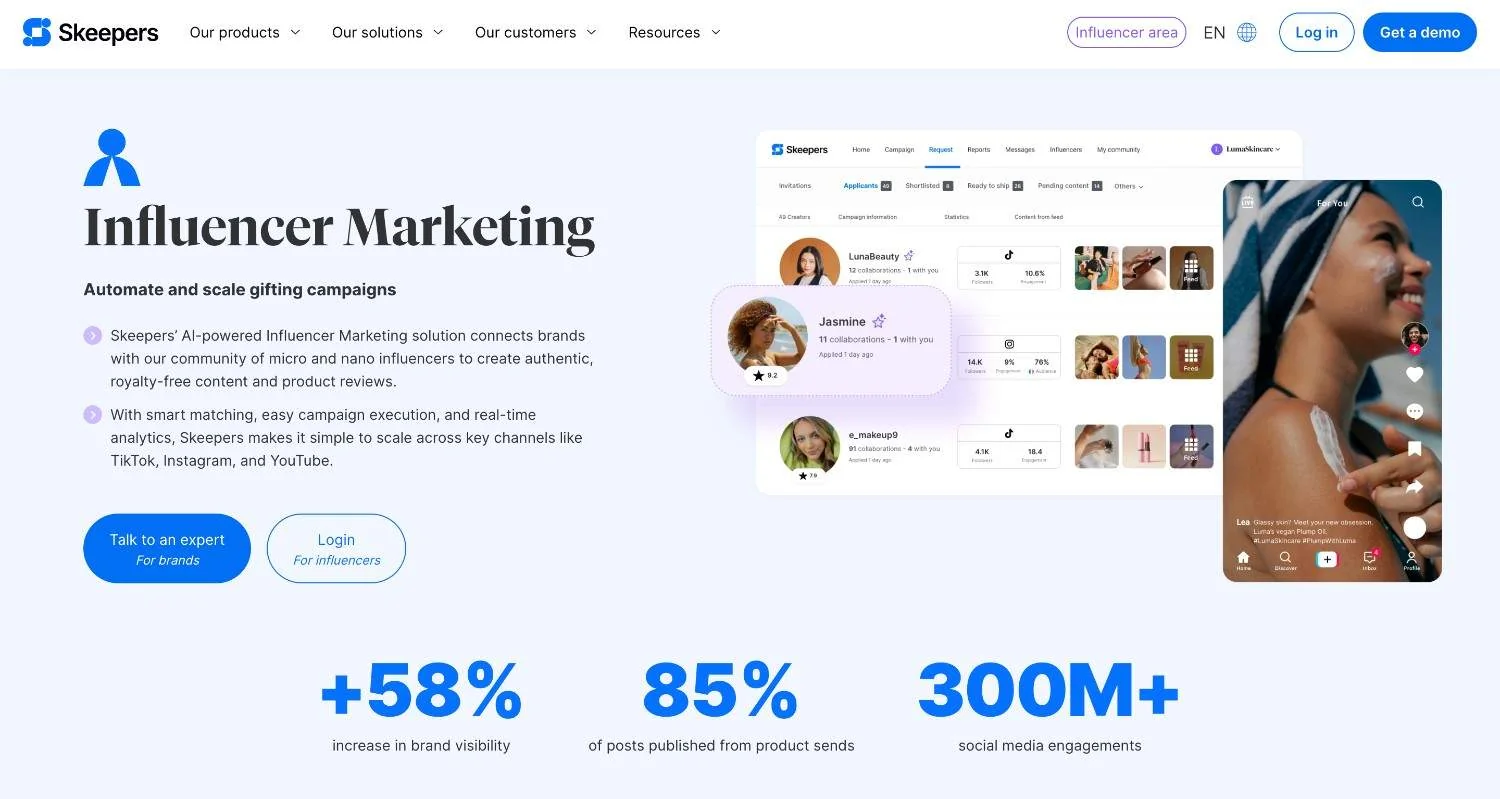
Skeepers Influencer Marketing is a creator marketing platform focused on micro and nano influencers, gifting campaigns, royalty-free content, and product review generation. It is particularly well suited to brands that want to combine influencer content with review generation and social proof, rather than focusing only on large-scale influencer CRM.
Key Features
• Micro and nano influencer network: Skeepers connects brands with a community of smaller creators, which is useful for brands seeking authenticity, content volume, and lower-cost seeding campaigns.
• AI-powered matching: The platform uses AI to match brands with relevant creators and simplify profile selection.
• Campaign execution and gifting workflows: Skeepers is explicitly positioned around automating and scaling gifting campaigns, making it a strong fit for product launch, sampling, and review-led programs.
• Royalty-free content and review generation: The product emphasizes creator content and product reviews that brands can reuse, which gives it a stronger UGC angle than many traditional influencer tools.
• Real-time analytics: Skeepers includes reporting to help teams track campaign impact and manage performance without relying entirely on manual exports.
• Creator applications and social account connection: Its creator onboarding flow references Instagram, TikTok, and YouTube account connections for campaign participation.
Platform Coverage
Instagram, TikTok, YouTube
Pricing
Skeepers uses custom pricing, typically based on modules (UGC, influencer marketing, reviews) and campaign scale. Contracts are usually annual.
Reviews
4.7/5.0 (G2)
Standout Features
• Strong gifting-first workflow: Skeepers is more gifting-led than many all-purpose influencer platforms, which makes it attractive for brands that want to seed products at scale.
• Royalty-free content plus product reviews: The blend of creator posts and incentivized reviews gives Skeepers a more commerce-oriented UGC angle than many traditional influencer CRMs.
• Micro and nano creator specialization: Its community model is especially useful for brands that prioritize authenticity, social proof, and creator-generated content over celebrity or macro-influencer campaigns.
Buzzoole vs Skeepers
Buzzoole is the stronger option for teams that want deeper creator search, campaign intelligence, and self-serve performance monitoring. Skeepers is better suited to brands running product seeding and review-led programs with micro and nano creators, especially when royalty-free content and social proof matter as much as reach. In that sense, Buzzoole is more analytics-led, while Skeepers is more gifting- and UGC-led.
Upfluence
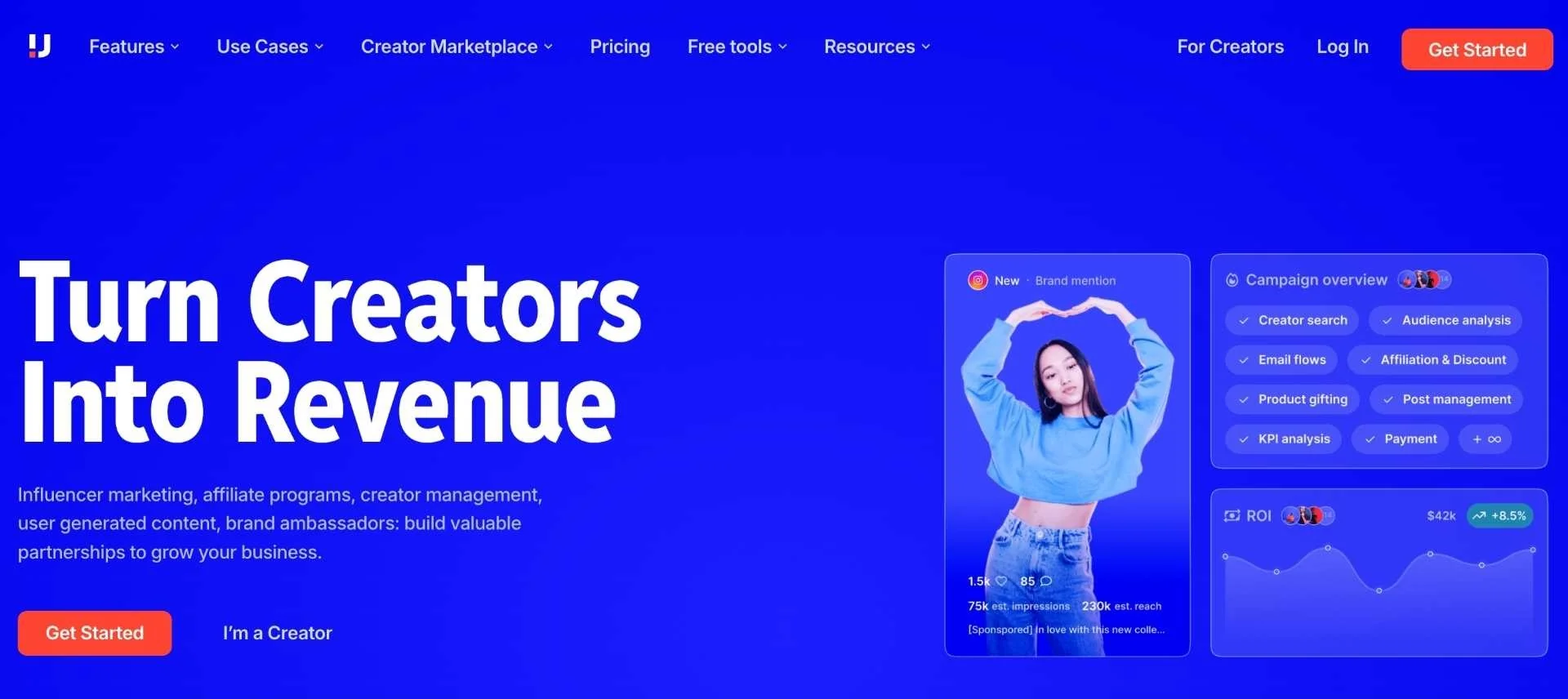
Upfluence is an all-in-one influencer and affiliate marketing platform built primarily for eCommerce brands. It combines creator discovery, outreach, campaign management, affiliate workflows, payments, and revenue tracking, with particularly strong positioning for Shopify and Amazon sellers that want influencer activity tied directly to sales.
Key Features
• Large creator database: Upfluence’s product materials and provided research describe a database of more than 12 million creators with filters for location, niche, audience demographics, engagement, and content relevance.
• AI-assisted outreach: The platform includes bulk outreach and automated drip flows, supported by its AI assistant, Jace AI.
• Influencer CRM and campaign management: Upfluence centralizes communication, creator relationship tracking, affiliate codes, links, and compensation models in-platform.
• Shopify integration: A major differentiator is its ability to identify existing customers who are influencers, manage gifting, create referral workflows, and tie creator partnerships to store revenue.
• Amazon integration: Upfluence also supports Amazon attribution and affiliate tracking, which makes it more marketplace-friendly than many competitors.
• Tracking and payouts: Campaigns can track sales, reach, impressions, engagement, clicks, and individual conversions, while also supporting bulk creator payments.
• Social listening: Upfluence includes social listening for market research and creator identification based on branded or competitor conversation data.
Platform Coverage
Instagram, TikTok, YouTube, Facebook, Twitch, Pinterest, and blogs.
Pricing
On average plans start around $2,000/month ($24,000 yearly)
Reviews
4.3 / 5.0 (Capterra)
Standout Features
• Customer-to-creator discovery: Upfluence’s Shopify workflow can identify existing customers who are also influencers, which is one of its clearest differentiators for DTC brands.
• Strong Shopify and Amazon revenue tracking: Very few influencer platforms are as explicitly built around both DTC and marketplace attribution as Upfluence.
• Jace AI for outreach automation: The platform’s AI outreach assistant adds automation to creator recruitment and campaign messaging at scale.
Buzzoole vs Upfluence
Buzzoole is the better fit for teams prioritizing creator vetting, campaign intelligence, and self-serve performance monitoring. Upfluence is stronger for eCommerce operators that need Shopify and Amazon attribution, affiliate workflows, bulk outreach, and direct revenue visibility from creator activity. Put simply, Buzzoole is more analytics- and campaign-led, while Upfluence is more commerce- and conversion-led.
Traackr

Traackr is an enterprise influencer marketing platform built around creator discovery, relationship management, campaign execution, benchmarking, and spend optimization. It is especially well suited to global brands that want deeper performance analytics, budget planning, and market benchmarking rather than just creator sourcing and outreach.
Key Features
• Global influencer discovery: Traackr’s platform and the research you provided describe a creator database of more than 6 million influencers, with filters for demographics, engagement, brand collaborations, and historical performance.
• CRM and outreach workflows: The platform includes relationship tracking, shared notes, custom tags, email workflows, and application pages for creator recruitment.
• Granular reporting: Traackr tracks CPC, CPE, CPV, reach, engagement, ROI, and historical campaign comparisons, which makes it one of the more analytics-heavy tools in the category.
• Gifting and UGC support: The platform supports product seeding workflows and content collection for reuse across ads, email, and organic channels.
• Affiliate tracking and creator payments: Traackr supports affiliate links, commission tracking, and creator payouts inside the same workflow.
• Real-time benchmarking: The provided materials highlight live benchmarking and market comparisons as a major strength, especially for global brands and C-suite reporting.
Platform Coverage
Instagram, TikTok, YouTube, Facebook, Pinterest, and Twitter (X).
Pricing
Plans usually start at $32,500/year.
Reviews
4.3/5.0 (G2)
Standout Features
• Brand Vitality Score: Traackr’s proprietary Brand Vitality Score is a distinctive benchmarking metric that combines brand visibility, trust, and impact into one score.
• Budget Optimization Calculator: The platform’s budgeting tool helps brands estimate creator investment based on historical ROI and performance benchmarks instead of relying on guesswork.
• Cost-per metrics dashboard: Traackr goes beyond vanity metrics with campaign reporting for cost-per-click, cost-per-engagement, cost-per-view, and cost-per-story-view.
Buzzoole vs Traackr
Buzzoole is the more accessible self-serve option for creator discovery, qualification, and campaign tracking, especially for teams that want autonomy without full enterprise complexity. Traackr is better suited to larger global organizations that need advanced benchmarking, budget optimization, and more sophisticated performance analytics. In short, Buzzoole is more operational and streamlined, while Traackr is more enterprise, measurement-heavy, and strategy-led.
Final Thoughts on Buzzoole Alternatives
Buzzoole stands out for its focus on AI-driven creator qualification, campaign tracking, and competitive intelligence, making it a solid choice for brands prioritizing performance visibility and data-backed decisions. However, as explored across alternatives, different platforms excel in specific areas—such as GRIN and Upfluence for eCommerce and revenue attribution, Aspire and Influencer Hero for workflow automation and creator recruitment, or Traackr and NeoReach for enterprise-level analytics and scalability. Ultimately, the best alternative depends on whether a brand values discovery depth, campaign execution, creator relationships, or direct ROI tracking, as no single platform dominates across all dimensions.