

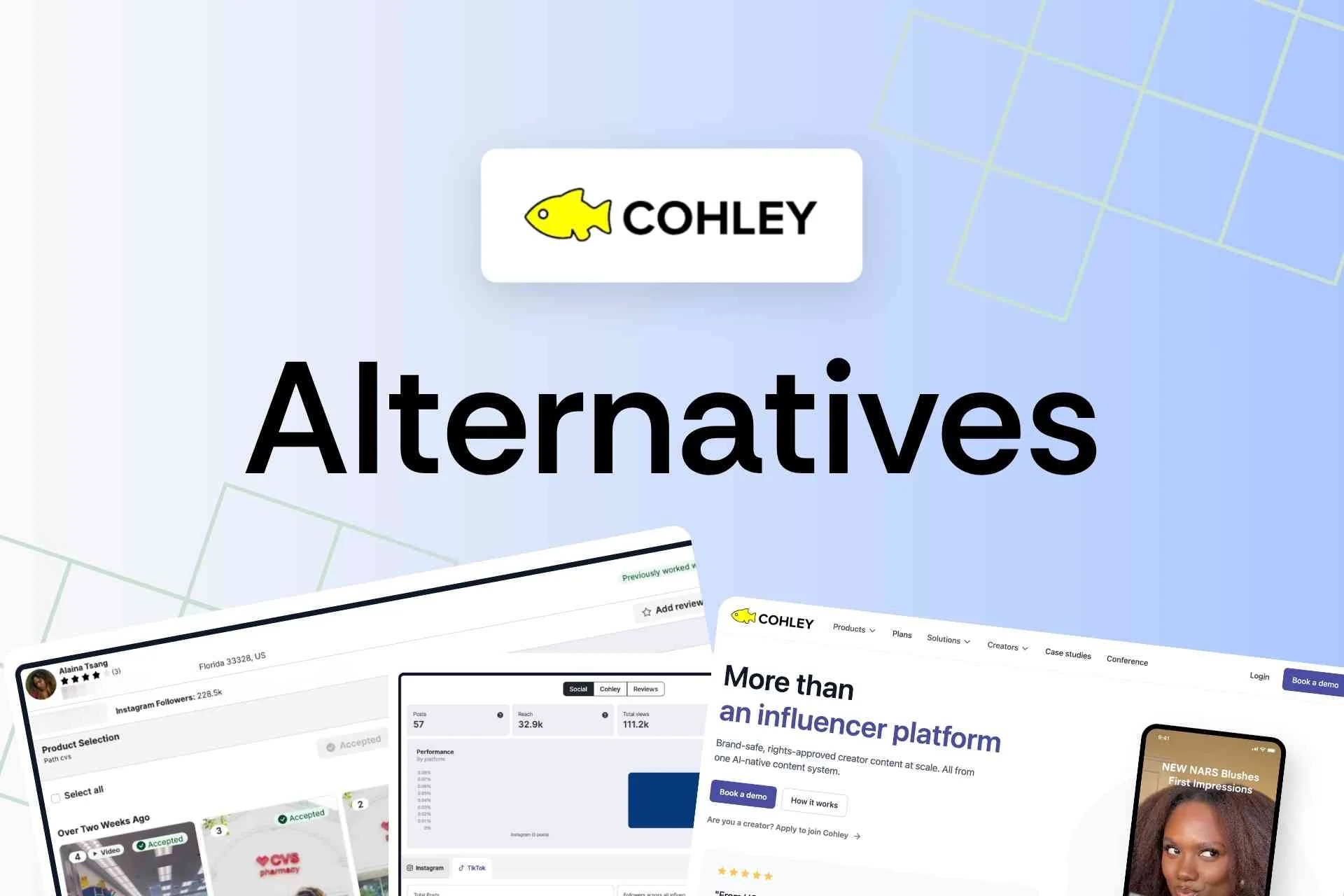
Cohley Alternatives: Best Influencer Marketing Platforms
Managing creator partnerships at scale now requires more than spreadsheets and manual outreach, which is why influencer marketing software has become essential for handling discovery, communication, campaign workflows, and performance tracking in one place. Cohley is often recognized as a strong content-first platform, particularly for UGC production and product reviews, helping brands generate creative assets for paid social and ecommerce. However, when evaluating Cohley alternatives, several limitations come up in practice: its lack of transparent pricing makes it harder for teams to assess budget fit upfront, creator diversity can be limited for highly specific niches, and some users report occasional platform friction when managing multiple campaigns. In addition, while Cohley streamlines execution, content quality can vary depending on creator selection and briefing, which often requires more hands-on oversight. These factors lead many marketers to explore other influencer marketing software options that offer stronger discovery, CRM workflows, or pricing clarity.
\In this guide, we’ll compare 10 of the best Cohley alternatives—including Influencer Hero, Upfluence, Aspire, SARAL, CreatorIQ, Sprout Social, GRIN, Modash, Influencity, and IZEA Media—to help you find the right platform for your needs.
Criteria for Suggesting Platform Alternatives
Core Features
Evaluation of each platform’s essential capabilities, including influencer discovery, outreach, CRM, campaign reporting, gifting, UGC and content collection, affiliate tracking and payments, storefronts, application pages, and AI-powered tools.
Supported Social Media Platforms
Assessment of how well each platform integrates with major social networks such as Instagram, YouTube, TikTok, Facebook, Pinterest, and many more
Pricing & Contract Flexibility
Comparison of pricing models, subscription costs, and contract requirements to help brands choose solutions that match their budget and scalability needs.
Standout & Differentiating Features
Highlighting unique or innovative functionalities that set each platform apart, such as real-time tracking dashboards, creator benchmarking, TikTok email discovery, or advanced automation tools.
Customer Reviews & User Satisfaction
Analysis of verified user feedback from credible platforms like G2, TrustRadius, Capterra, focusing on usability, reliability, value for money, customer support, and real-world performance.
Cohley Overview

Cohley is a creator marketing and content generation platform designed for brands that need to produce, manage, and scale high-quality content across the entire marketing funnel. Unlike traditional influencer marketing tools that focus primarily on discovery and outreach, Cohley positions itself as a content-first platform, combining influencer collaborations, UGC production, product reviews, and performance tracking into a single workflow.
For brands running performance-driven campaigns—especially across paid social and ecommerce—Cohley stands out for its ability to generate reusable creative assets at scale while maintaining structured campaign management.
Key Features
• UGC & Content Production at Scale:
Cohley enables brands to produce large volumes of short-form video, photography, and product reviews. This is particularly valuable for teams running paid social campaigns that require constant creative refreshes.
• End-to-End Influencer Campaign Management:
From creator sourcing and applications to briefing, approvals, payments, and reporting, Cohley centralizes the full influencer workflow in one platform.
• AI-Powered Creative Briefs:
The platform includes AI-assisted briefing tools that help brands create clearer, more effective campaign briefs—improving content quality and reducing back-and-forth with creators.
• Creator Applications & Vetting:
Brands can invite creators or receive inbound applications, then evaluate them based on performance metrics, past work, and audience insights before selecting collaborators.
• Creator Hub (Relationship Management):
Cohley allows brands to build long-term creator relationships by organizing talent into lists, favoriting creators, and re-engaging them through private briefs.
• Product Reviews & Sampling:
A key differentiator: Cohley helps brands generate verified product reviews (text, photo, video) for ecommerce and retail channels, supporting conversion-focused strategies.
• Payments & Content Licensing:
Built-in payment workflows simplify compensation, while content usage rights are included—making it easy to repurpose creator content across ads, social, and product pages.
• Performance Analytics & Reporting:
Cohley provides campaign-level insights, including engagement, audience data, and content performance—helping teams identify top-performing creative assets.
Platform Coverage
Instagram, TikTok, Youtube
Pricing
Cohley operates on a custom pricing model, with no publicly listed monthly subscription tiers.
Available structures include:
• Platform Plan – Access to the software for managing UGC, influencer campaigns, product reviews, and content production.
• Managed Services Plan – Includes everything in Platform, plus hands-on support such as campaign strategy, creator sourcing, and execution.
• 3-Month Paid Pilot – An entry option for brands to test the platform with dedicated support before committing long-term.
Pricing is typically based on content volume, campaign scope, and service level, and contracts are often structured annually (with pilot flexibility).
Reviews
4.4/5.0 (G2)
Cohley Standout Features
• Content-First Approach to Influencer Marketing:
Unlike many platforms that prioritize discovery, Cohley is built around generating and scaling high-performing content—making it especially strong for paid media and ecommerce teams.
• Retail-Ready Product Review Engine:
Cohley enables brands to collect verified reviews (including video) that can be deployed across retailer sites and product pages, directly impacting conversion rates.
• Advanced Creative Insights (Video Tagging & Performance Analysis):
Newer features like video tagging allow brands to analyze patterns across content—helping identify what creative elements drive performance and inform future campaigns.
Limitations (Why Users Look for Cohley Alternatives)
Lack of Transparent Pricing
With no public pricing tiers, it can be difficult for smaller teams to quickly evaluate cost fit compared to competitors with clear monthly plans.
Limited Creator Diversity in Some Niches
Some users report that finding highly specific or diverse creator segments can be challenging depending on the campaign requirements.
Occasional Platform Performance Issues
Feedback highlights instances of slow loading, glitches, or friction in campaign workflows—particularly when managing multiple campaigns.
Content Quality Can Vary by Creator
While Cohley streamlines execution, the quality of deliverables still depends heavily on creator selection and briefing—requiring hands-on oversight for best results.
10 Best Influencer Marketing Platform Alternatives:
| TOOL | REVIEWS | BEST FOR | TRIAL INFO | PRICING | ||
|---|---|---|---|---|---|---|
1 |

|
⭐ | Influencer CRM & automation | Book Demo | Pricing | Website |
2 |

|
⭐ | Influencer discovery | Book Demo | Pricing | Website |
3 |

|
⭐ | Influencer partnerships | Book Demo | Pricing | Website |
4 |

|
⭐ | Influencer outreach | Book Demo | Pricing | Website |
5 |

|
⭐ | Enterprise influencer marketing | Book Demo | Pricing | Website |
6 |
|
⭐ | Influencer marketing & Social media analytics | Book Demo | Pricing | Website |
7 |

|
⭐ | DTC creator management | Book Demo | Pricing | Website |
8 |

|
⭐ | Influencer discovery | Book Demo | Pricing | Website |
9 |

|
⭐ | Campaign management | Book Demo | Pricing | Website |
10 |

|
⭐ | Influencer marketplace | Book Demo | Pricing | Website |
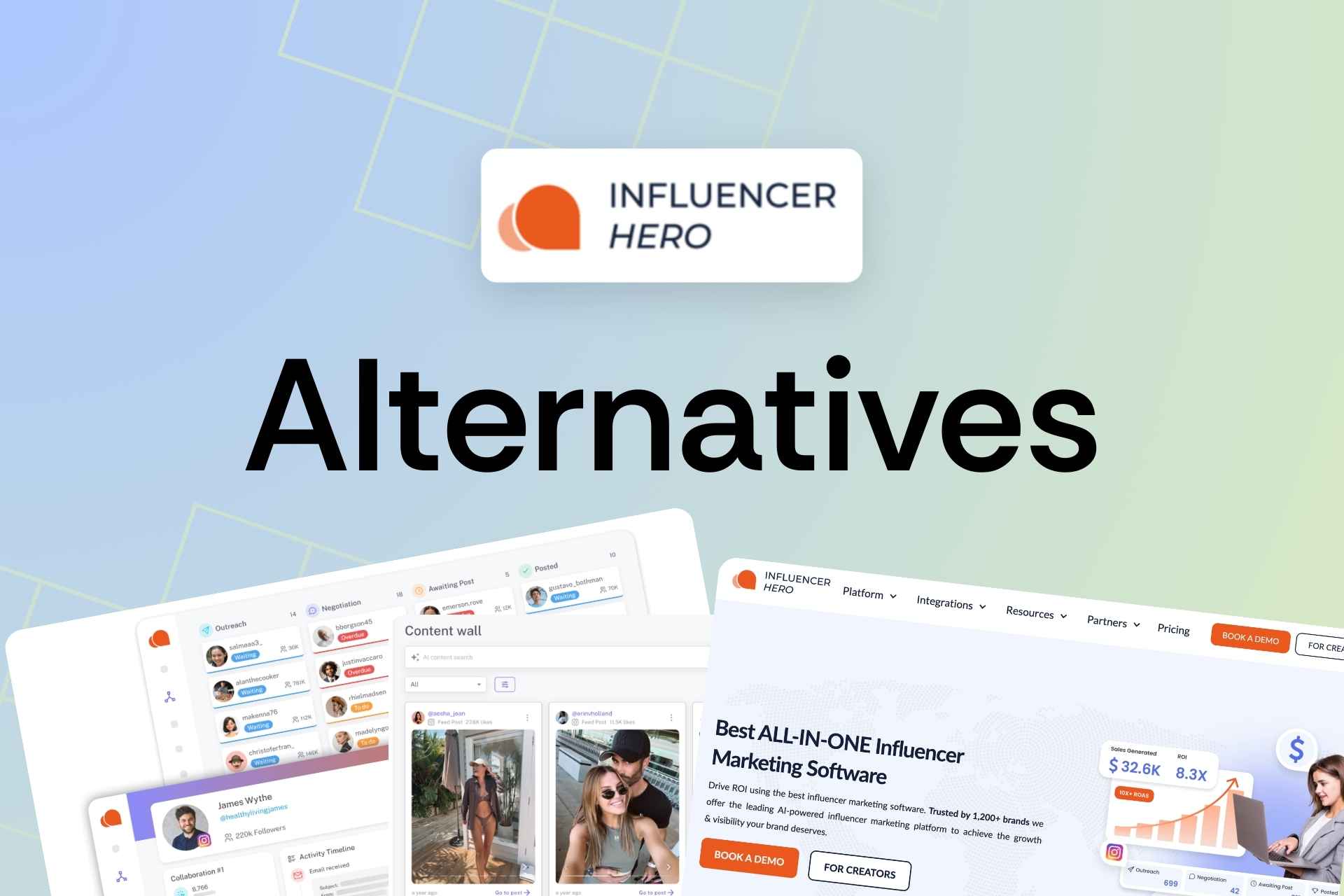
Influencer Hero

Influencer Hero is an all-in-one influencer marketing platform built for brands that want to run discovery, outreach, CRM, gifting, affiliate tracking, and reporting from a single system. Its positioning is especially strong for ecommerce and DTC teams that need more automation than spreadsheet-based workflows can handle, but without jumping straight to enterprise-level pricing.
Key Features
• Influencer discovery with deep filtering – Influencer Hero lets brands search across a large creator database using filters such as audience demographics, location, engagement rate, interests, and audience quality, with lookalike recommendations and fake follower analysis to refine shortlist quality.
• AI-assisted outreach and workflow automation – The platform supports bulk and 1:1 email outreach, AI-assisted personalization, multi-step drip sequences, and automated follow-ups tied to campaign stages, which is useful for teams managing outreach volume at scale.
• Campaign-centric CRM – Its CRM is one of the product’s core strengths, using structured boards to track outreach, negotiations, deliverables, affiliate performance, and ROI in one place. Bulk actions help teams update statuses, send emails, and manage large creator pipelines faster.
• Reporting and revenue attribution – Influencer Hero includes campaign-level dashboards, influencer-level analytics, affiliate sales tracking, clicks, and performance reporting, which makes it well suited to brands that want direct visibility into ROI.
• Gifting, affiliate, and payout tools – The platform supports Shopify and WooCommerce-based gifting, custom links and discount codes, commission tracking, creator dashboards, and payout workflows.
• UGC collection and content reuse – Creator content is automatically collected into a centralized content library, making it easier to repurpose top-performing assets for ads and lifecycle marketing.
• Application pages and storefronts – Brands can create branded signup pages and creator storefront-style experiences to drive inbound applications and scale affiliate recruitment.
• Chrome extension and free tools – Influencer Hero also offers a browser extension and a broad set of free creator analysis tools, which adds utility for brands that want lighter-weight research before committing to full campaigns.
Platform Coverage
Instagram, TikTok, YouTube, Facebook, Pinterest, Snapchat, X, and Twitch
Pricing
Influencer Hero offers flexible pricing based on outreach volume, and you can have unlimited creators in your CRM with Influencer Hero:
• Standard — $649/month (up to 1,000 reachouts/month)
• Pro — $1,049/month (up to 5,000 reachouts/month)
• Business — $2,490/month (up to 10,000 reachouts/month)
• Custom / Agency — Tailored pricing
Reviews
5.0/5.0 (Capterra)
Standout Features
• Campaign-centric CRM automation – Influencer Hero’s structured boards, bulk actions, and automated email flows are purpose-built for teams running large creator pipelines, which is a meaningful differentiator versus platforms that treat CRM as a lighter add-on.
• Customer and follower-based creator discovery – The platform can surface influencers who already follow or have purchased from your brand, making it easier to recruit warmer, more conversion-friendly creators instead of starting every campaign cold.
• Multi-platform ecommerce support – Native support for both Shopify and WooCommerce is a notable advantage for brands that need gifting, affiliate tracking, and payouts tied directly to ecommerce workflows.
Cohley vs Influencer Hero
Cohley is more content-led, with a stronger emphasis on scaling UGC, product reviews, and creative asset production across paid social and ecommerce. Influencer Hero is more operations-led: it puts heavier emphasis on CRM structure, outreach automation, affiliate workflows, and transparent pricing. For brands that primarily need creator content and review generation, Cohley has the clearer edge; for brands that want broader campaign orchestration and lower-friction scalability, Influencer Hero is usually the more flexible platform.
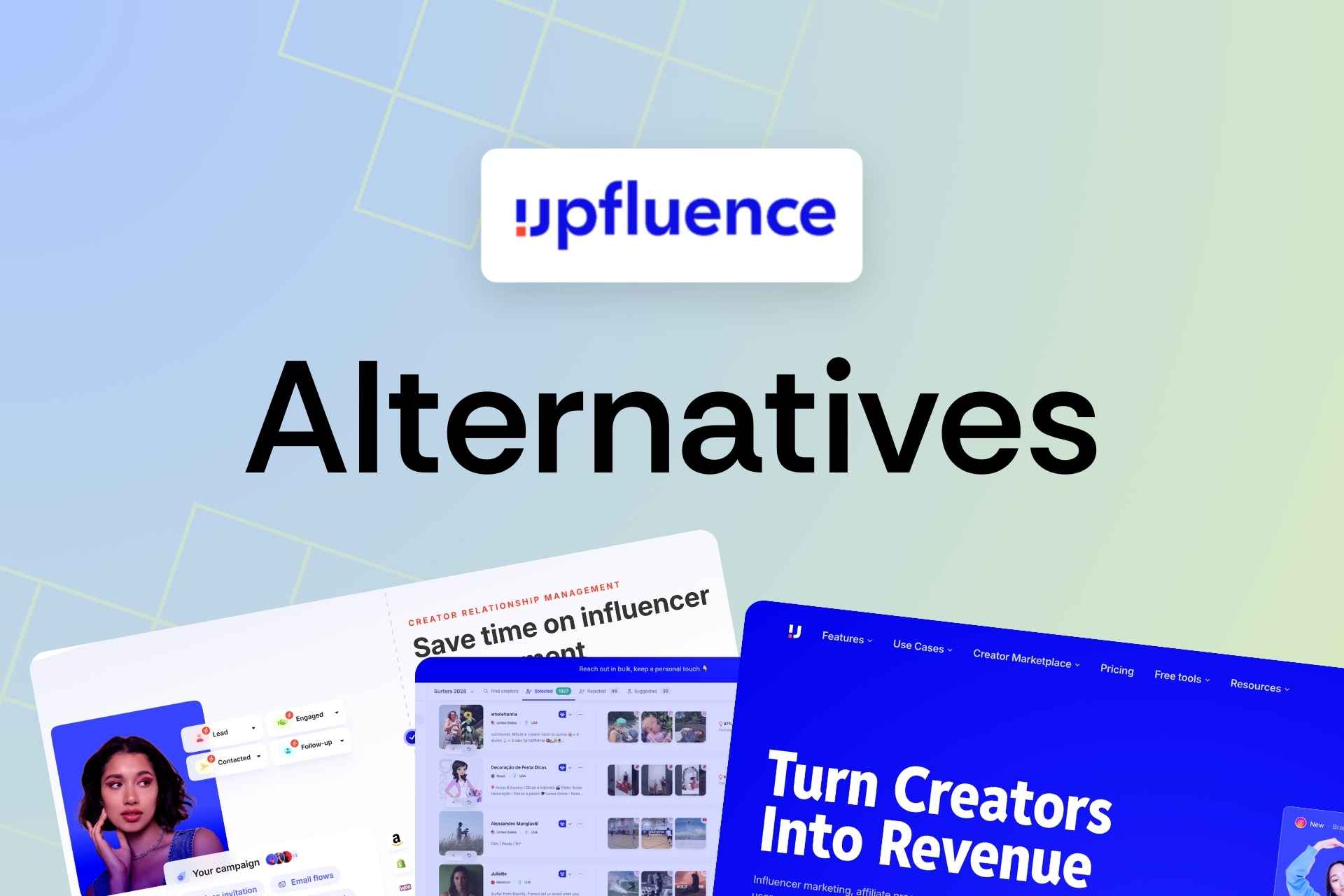
Upfluence
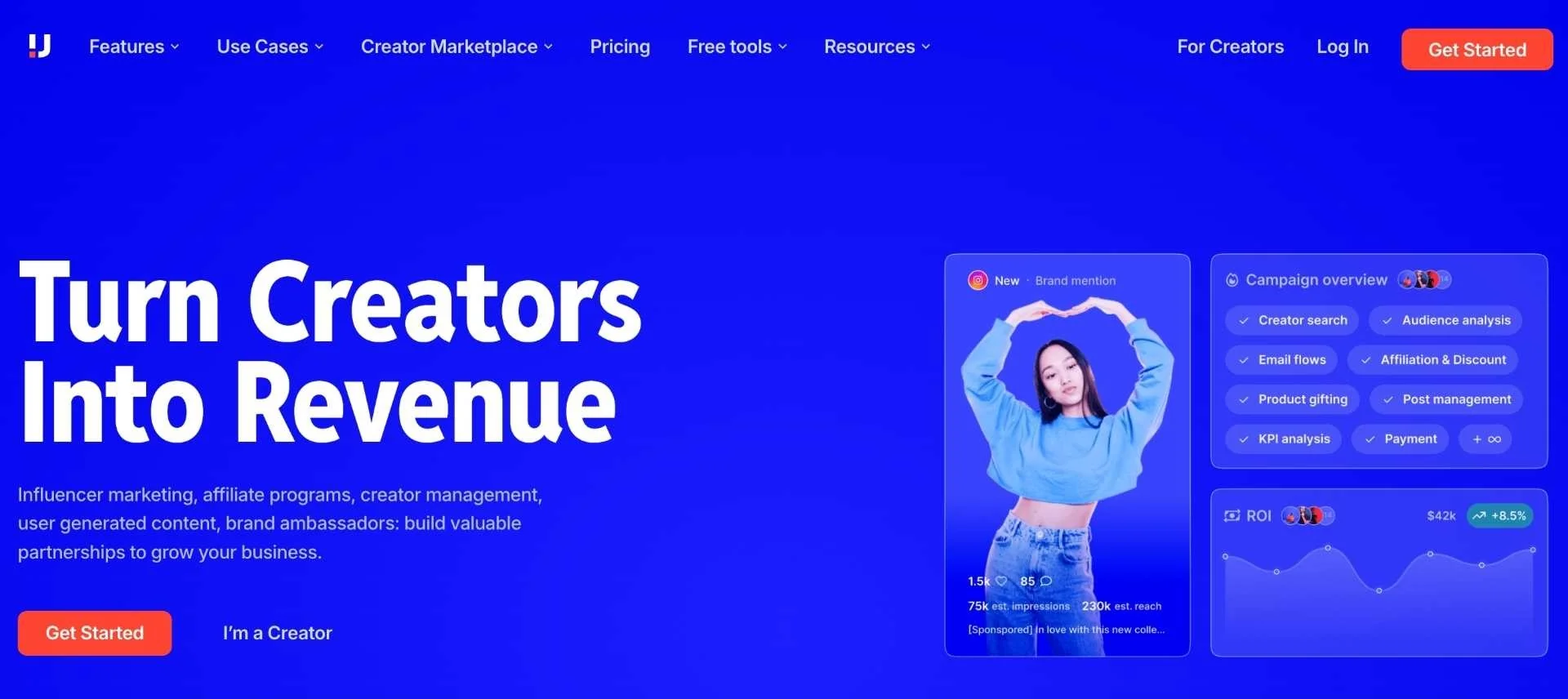
Upfluence is a mature influencer and affiliate marketing platform designed mainly for ecommerce brands that want to connect creator marketing directly to revenue. Its strongest positioning comes from combining influencer discovery, outreach, affiliate management, and ecommerce integrations, particularly for brands running on Shopify, Amazon, WooCommerce, Magento, or BigCommerce.
Key Features
• Large creator discovery engine – Upfluence provides access to a multi-million creator database with advanced filters for niche, location, audience demographics, engagement, and platform relevance, making it well suited to outbound creator recruitment.
• Bulk outreach and campaign management – Brands can run outreach through Gmail or Outlook-connected workflows, use templates, manage creator conversations in-platform, and organize campaigns with performance tracking tied to each collaborator.
• Jaice AI for campaign setup – Upfluence recently introduced Jaice AI, built to help marketers create briefs, calculate compensation, and streamline campaign planning faster than manual workflows.
• Customer-to-creator identification – One of Upfluence’s most compelling differentiators is its ability to connect with ecommerce data and identify existing customers who are also creators, helping brands recruit warmer ambassadors and affiliates.
• Affiliate and promo code automation – The platform supports custom promo codes, affiliate links, and creator compensation models, all connected to store and campaign performance.
• Amazon Attribution integration – Upfluence offers a native Amazon-focused affiliate workflow, including attribution and performance tracking, which is still relatively uncommon among influencer platforms.
• Analytics and social listening – Campaign analytics unify engagement, clicks, conversions, affiliate performance, and social listening into a single reporting layer.
• Creator import and CRM continuity – Brands can upload past collaborators and continue managing them inside Upfluence’s CRM rather than rebuilding creator history from scratch.
Platform Coverage
Instagram, TikTok, YouTube, Facebook, Twitch, Pinterest, and blogs.
Pricing
On average plans start around $2,000/month ($24,000 yearly)
Reviews
4.3 / 5.0 (Capterra)
Standout Features
• Jaice AI – Upfluence’s recently launched AI assistant is designed to speed up campaign creation by helping marketers draft briefs, estimate compensation, and reduce manual setup work.
• Native Amazon Attribution workflow – Upfluence’s Amazon integration is one of its clearest differentiators, letting brands track creator-driven Amazon sales, performance, and payouts in a native workflow.
• Customer-to-creator recruitment – Its ability to identify influential customers inside ecommerce systems and turn them into affiliates or ambassadors remains one of the most commercially useful features in the platform.
Cohley vs Upfluence
Cohley is stronger when the main goal is creative production: UGC, product reviews, and conversion-ready assets for social and PDPs. Upfluence is stronger when the goal is ecommerce-linked creator acquisition and affiliate tracking, especially for Shopify and Amazon-heavy programs. In other words, Cohley behaves more like a content engine, while Upfluence behaves more like a creator commerce and outreach engine.
Aspire
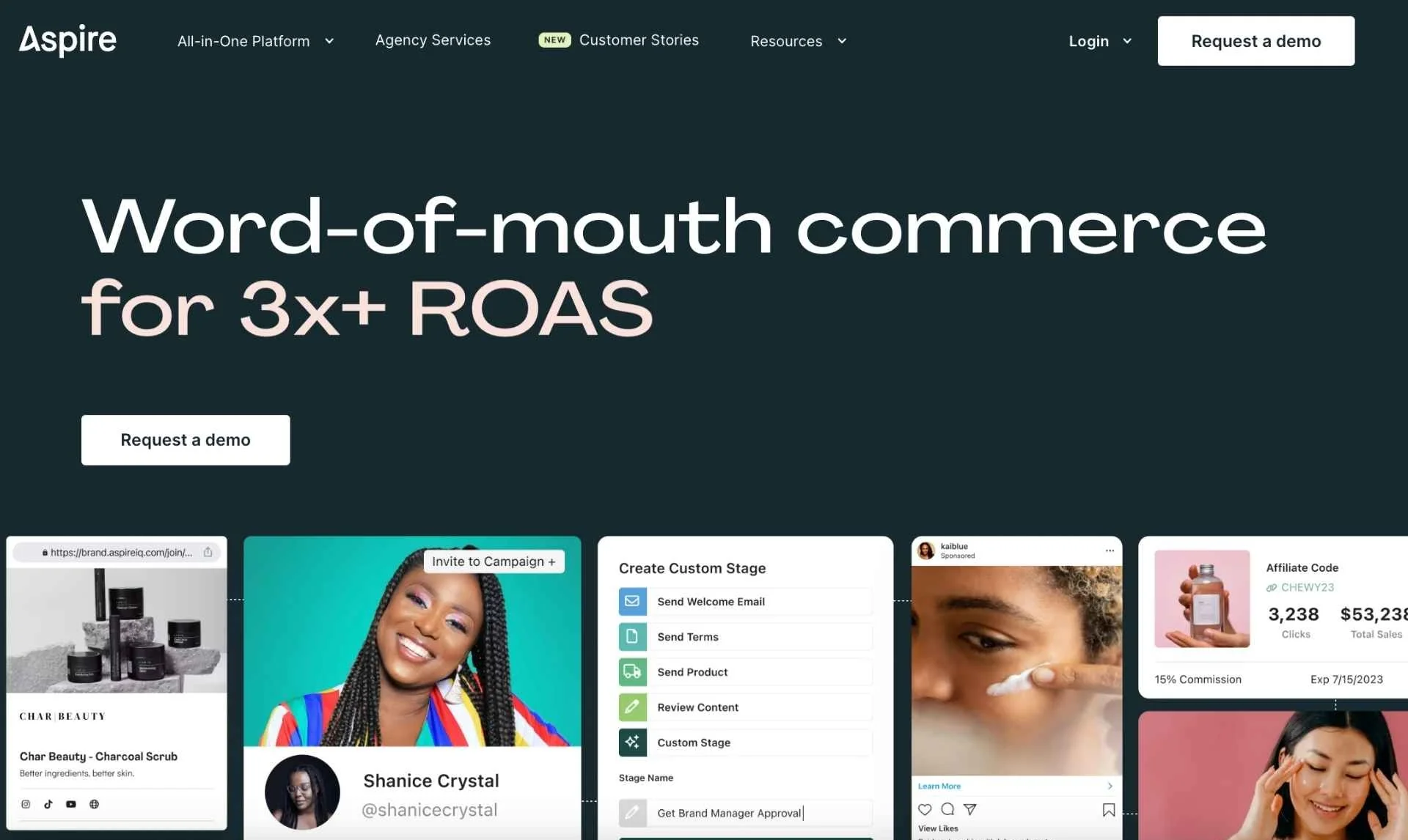
Aspire is an influencer marketing platform focused on helping brands turn creator relationships into a repeatable growth channel. Its product is built around creator discovery, inbound marketplace applications, gifting, affiliate workflows, and conversion reporting, which makes it especially attractive to ecommerce brands that want both top-of-funnel creator sourcing and lower-funnel revenue attribution.
Key Features
• Creator discovery with first-party data – Aspire’s discovery engine is built around first-party integrations and platform-connected data, which gives brands a stronger basis for audience validation than tools that rely more heavily on scraping or estimation.
• Large inbound creator marketplace – Aspire’s marketplace is a major part of its value proposition, giving brands access to creators who actively apply to campaigns instead of relying only on outbound recruiting.
• Workflow and CRM management – The platform supports invite flows, contracts, briefs, content approvals, creator tagging, group comparisons, and bulk actions across the campaign lifecycle.
• Shopify gifting and fulfillment – Aspire integrates deeply with Shopify so creators can select products within brand-set rules, while teams can approve, fulfill, and track gifting without jumping between systems.
• Affiliate and sales tracking – It supports discount codes, links, creator stores, and commission reporting, allowing brands to connect creator campaigns directly to conversions and revenue.
• Content library and usage rights – Aspire stores campaign content and usage rights in a central content library, helping brands repurpose creator assets more efficiently.
• Email and creator communications – Gmail sync, custom templates, bulk outreach, and workflow-triggered follow-ups are built into the platform.
• Implementation and support – Aspire pairs the platform with onboarding and client success support, which is one of the reasons it is often favored by brands that want a more guided implementation process.
Platform Coverage
Instagram, TikTok, Pinterest, YouTube, and Facebook
Pricing
Aspire starts with tiered pricing and can be customized, with a mid-tier quote of about $2,300/month for a use case involving multiple team members and up to 500 creators in CRM.
Reviews
4.0 /5.0 (Capterra)
Standout Features
• AI Instagram Discovery powered by Meta – Aspire recently introduced conversational AI discovery for Instagram using first-party Meta access, allowing brands to describe the creator they want and get more precise matches faster.
• Expanded Creator Marketplace – Aspire has continued expanding its marketplace, increasing access to a larger pool of inbound creators and making it easier for brands to source applicants at scale.
• CreatorStores / Offer Landing Pages – Aspire’s newer creator storefront capabilities allow brands to launch co-branded, Shopify-hosted offer pages that can improve conversion rates while capturing valuable first-party shopper data.
Cohley vs Aspire
Cohley is more specialized in creator content production and review generation, which makes it especially relevant for brands that need assets for ads, PDPs, and retail channels. Aspire is broader in campaign orchestration and creator commerce, with a stronger emphasis on inbound marketplace sourcing, Shopify gifting, and creator-linked storefront conversion. Cohley is typically the better fit for content-heavy programs, while Aspire is often the better fit for brands that want discovery, applications, and revenue workflows in one place.
SARAL

SARAL is an influencer marketing platform built primarily for ecommerce brands that want a simpler, more operationally focused way to run seeding, outreach, relationship management, affiliate tracking, and reporting. Its positioning is less enterprise-heavy than tools like CreatorIQ and more focused on helping consumer brands build predictable, ROI-oriented creator programs without stitching together multiple tools.
Key Features
• Influencer discovery across core creator channels – SARAL’s discovery engine lets brands search creators by keyword, engagement, and similar profiles, with access to a large non-opt-in creator set.
• Bulk personalized outreach – The platform is designed to automate personalized outreach rather than leave teams stuck in manual email workflows, which is one of its main value propositions for lean ecommerce teams.
• Relationship and campaign management – SARAL includes creator relationship boards, lists, filters, and campaign organization tools, allowing brands to keep sourcing, communication, and status tracking in one system.
• Seeding and shipping workflows – Product seeding is built into the platform, which makes it easier for ecommerce teams to move from creator recruitment to fulfillment without relying on scattered manual processes.
• Affiliate tracking and ambassador programs – SARAL supports affiliate tracking, application forms, customer-to-ambassador workflows, and performance monitoring, giving brands a path from influencer outreach to longer-term ambassador management.
• Cross-platform performance reporting – The platform tracks creator performance across supported channels and offers exports for reporting and stakeholder updates.
• AI assistant support – SARAL promotes its AI assistant, SIA, as a way to help with creator sourcing, outreach, shipping, conversations, and repetitive execution tasks.
• Strategy layer built into onboarding – Unlike many software-first tools, SARAL packages onboarding and ongoing consulting into its positioning around “predictable influence,” making the product feel more operationally guided.
Platform Coverage
Instagram, TikTok, and YouTube.
Pricing
There are different plans:
• Starter: $3.6k/quarter
• Business: $4.5k/quarter
• Professional: $7.5k/quarter
Reviews
4.7/5.0 (G2)
Standout Features
• SIA AI assistant – SARAL’s AI assistant is one of its clearest product differentiators, helping automate sourcing, outreach, and operational creator tasks for smaller teams.
• Predictable Influence framework – SARAL does not just sell software; it sells a structured, ROI-first operating model backed by onboarding and consulting, which gives it a different feel from pure software platforms.
• Simple full-stack workflow for ecommerce brands – Discovery, seeding, ambassador applications, affiliate tracking, and reporting are all built into one cleaner workflow aimed at consumer brands that want fewer moving parts.
Cohley vs SARAL
Cohley is the better fit for brands prioritizing content production, UGC scale, and review generation across social and retail environments. SARAL is more focused on straightforward influencer operations for ecommerce teams: finding creators, sending products, tracking revenue, and building ambassador programs with less enterprise complexity. Put simply, Cohley leans creative and content-first, while SARAL leans operational and ROI-first.
CreatorIQ
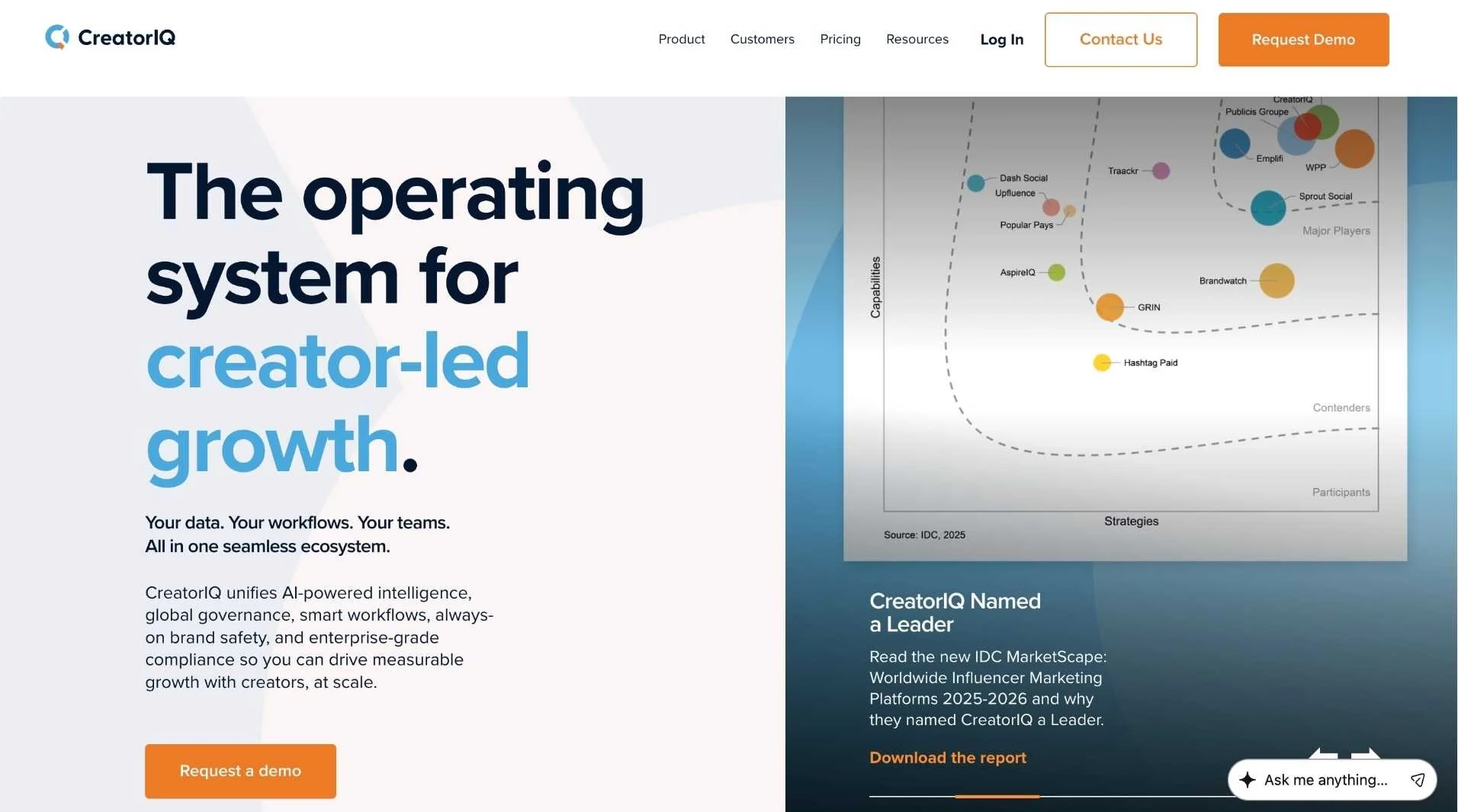
CreatorIQ is an enterprise-grade creator marketing platform designed for brands running large, data-intensive influencer programs across multiple teams and markets. Its strongest reputation comes from first-party data integrations, global-scale creator intelligence, advanced reporting, and structured collaboration workflows for brands that need governance as much as they need discovery.
Key Features
• Enterprise-grade creator discovery – CreatorIQ supports AI-assisted discovery, keyword and semantic search, granular audience filters, and public profile analysis, making it one of the stronger options for brands that need precision at scale.
• Direct platform data integrations – A major strength is its direct integrations with major social platforms, which support more reliable audience insights, workflow accuracy, and measurement quality.
• Private CRM and creator network management – Teams can store creator notes, tags, past campaign history, approvals, and relationship details in a centralized CRM built for multi-stakeholder collaboration.
• Campaign workflows and approvals – CreatorIQ includes campaign setup, briefs, one-sheet approvals, content previews, live links for stakeholder review, and cross-team feedback flows.
• Shopify integration and content library – The platform supports gifting and content management tied to Shopify and campaign execution, alongside centralized content collection and reporting.
• Payments and compliance – CreatorIQ handles creator payouts and related operational workflows in-platform, which is especially useful for large brands managing many partners across regions.
• Custom reporting and live dashboards – Reporting is one of its strongest areas, with customizable dashboards, live links, and measurement tools built for executive and cross-functional visibility.
• API and BI connectivity – CreatorIQ also supports broader data unification via API connectivity, helping large brands tie creator insights into their wider business intelligence stack.
Platform Coverage
Instagram, YouTube, TikTok, Facebook, Twitter, Pinterest, and more.
Pricing
• Basic Plan: Starts at $35,000/year. Includes 1,000 contact creators per month
• Standard Plan: Starts at $50,000/year. Includes 2,500 contact creators per month
• Professional Plan: Starts at $90,000/year. Includes 5,000 contact creators per month
• Enterprise Plan: Starts at $200,000/year. Includes 7,500 contact creators per month
Reviews
4.4 / 5.0 (Capterra)
Standout Features
• YouTube creator API integration – CreatorIQ recently expanded its YouTube integration, giving brands sharper first-party audience insights and more efficient campaign workflows on one of the most commercially important creator channels.
• BenchmarkIQ – Its newer BenchmarkIQ capability adds global competitive benchmarking across markets, giving enterprise teams a stronger way to evaluate creator performance in context rather than in isolation.
• Collaborator access for creator dashboards – Recent workflow updates around creator dashboard collaboration are geared toward more seamless, scalable brand-creator coordination, which matters for larger, distributed teams.
Cohley vs CreatorIQ
Cohley is more focused on generating content and reviews efficiently for ads, social, and ecommerce placements. CreatorIQ is much more enterprise-oriented, with heavier investment in first-party data, governance, global benchmarking, and cross-team reporting. Brands choosing between them are usually deciding whether they need a content production engine first, or a full-scale creator intelligence and operating system first.


Sprout Social

Sprout Social is a well-established social media management platform that has expanded into influencer marketing through its advanced analytics, creator discovery, and campaign management tools. It is particularly suited for enterprise teams that want to combine influencer marketing with broader social media strategy, reporting, and brand safety monitoring in one unified system.
Key Features
• Advanced influencer discovery with brand fit scoring
Sprout Social uses filters like demographics, engagement benchmarks, and brand safety criteria, alongside its proprietary Brand Fit Score to match creators with campaign goals.
• Campaign workflow management
The platform enables structured workflows—from creator selection to content approval and publishing—allowing teams to manage campaigns across multiple stages with visibility into each creator’s status.
• Content approval and collaboration tools
Influencers can submit draft posts for review directly in-platform, which is particularly useful for brands that require compliance checks or strict brand guidelines.
• Deep analytics and reporting (EMV-focused)
Sprout Social offers detailed reporting including engagement, audience growth, and earned media value (EMV), alongside competitive benchmarking insights.
• Brand safety and risk monitoring
Built-in filters allow brands to exclude creators based on flagged keywords or risky content, making it a strong option for highly regulated industries.
• Shopify integration for gifting and affiliate tracking
Brands can manage product seeding, discount codes, and attribution directly through Shopify integrations.
• Integrated communication tools
Email integrations and outreach templates allow teams to manage creator communication without switching tools.
Platform Coverage
Instagram, YouTube, Facebook, TikTok, and X (Twitter)
Pricing
Starts around $1,600/month per user plus $600 per extra user.
Reviews
4.5 / 5.0 (Capterra)
Standout Features
• Brand Fit Score + Brand Safety filters – Combines creator matching with risk management, helping brands select safe, aligned influencers.
• Content approval workflow – Built-in draft submission and approval system ensures content meets brand standards before publishing.
• Competitive benchmarking reports – Allows brands to analyze competitor influencer strategies and performance side-by-side.
Cohley vs Sprout Social
Cohley is more focused on content production and UGC scaling, especially for ecommerce and paid media use cases. Sprout Social, on the other hand, is stronger in analytics, brand safety, and social media integration, making it more suitable for enterprise teams that want influencer marketing embedded into a broader social strategy rather than a standalone content engine.
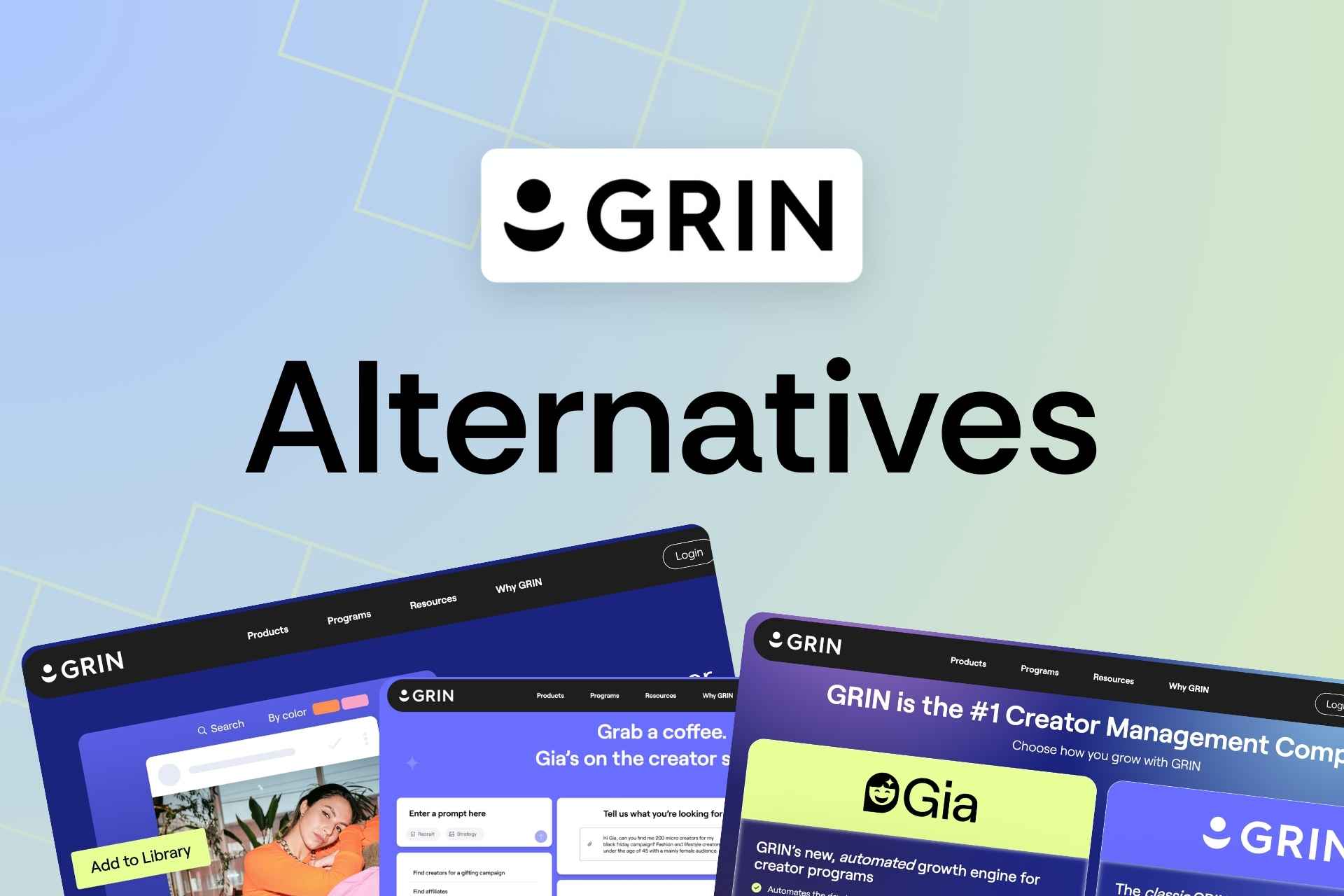
GRIN
GRIN is a full-suite influencer marketing platform designed specifically for ecommerce and DTC brands. It focuses on managing the entire influencer lifecycle—from discovery and outreach to gifting, payments, affiliate tracking, and UGC management—within a single integrated system.
Key Features
• AI-powered influencer discovery
GRIN offers keyword-based and lookalike search capabilities, along with audience insights and engagement metrics to identify relevant creators.
• End-to-end campaign management
The platform centralizes outreach, contracts, content approvals, payments, and reporting, allowing brands to manage campaigns without external tools.
• Ecommerce integrations (Shopify, WooCommerce, Magento)
GRIN is deeply integrated with ecommerce platforms, enabling automated gifting, order tracking, and revenue attribution.
• UGC library and content management
All creator content—including Instagram Stories—is stored in a searchable library for reuse across ads and marketing channels.
• Affiliate and commission tracking
Brands can assign discount codes, track performance, and automate commission payouts directly within the platform.
• Creator portals and communication tools
Influencers receive personalized dashboards for deliverables, contracts, and payments, improving collaboration efficiency.
• In-app payments via PayPal
Enables direct creator payments without leaving the platform.
Platform Coverage
Facebook, Instagram, TikTok, X, Pinterest, YouTube, and Twitch
Pricing
Annual pricing starts at $25,000/year (approx. $2,050/month)
Reviews
4.5/5.0 (G2)
Standout Features
• GRIN Intelligent Assistant (Gia) – AI-driven assistant that helps automate discovery, campaign management, and creator prioritization.
• Native ecommerce infrastructure – Deep integrations with Shopify and other platforms allow real-time sales attribution and ROI tracking.
• UGC library with automatic content capture – Centralizes all creator content for reuse in ads and marketing campaigns.
Cohley vs GRIN
Cohley is more specialized in UGC creation and review generation, making it ideal for content-heavy campaigns. GRIN, by contrast, is more focused on ecommerce operations and affiliate tracking, offering deeper integrations and revenue attribution. Cohley excels in content output, while GRIN excels in campaign infrastructure and sales tracking.
Modash

Modash is a modern influencer marketing platform focused on discovery, outreach, and performance tracking. It stands out for its massive creator database and AI-powered search capabilities, making it a strong option for brands prioritizing scalable influencer discovery and outreach.
Key Features
• Massive creator database (350M+ profiles)
Modash provides access to one of the largest influencer datasets, including non-opt-in creators.
• Advanced search and filtering
Brands can filter creators by niche, audience demographics, engagement, location, and more, with lookalike search capabilities.
• AI-powered discovery (“describe a vibe”)
Users can describe a type of creator or upload an image to find similar influencers based on content style.
• Bulk outreach and CRM tracking
Supports large-scale outreach campaigns with email templates and CRM status tracking.
• Shopify integration for gifting and affiliate tracking
Enables automated product seeding, discount codes, and revenue attribution.
• Fake follower detection and analytics
Provides audience quality metrics and engagement benchmarks.
• Real-time campaign tracking
Tracks posts, engagement, and affiliate sales in a unified dashboard.
Platform Coverage
Modash supports influencer marketing on platforms such as Instagram, YouTube, and TikTok, providing comprehensive campaign tracking and influencer management tools.
Pricing
• Essentials: $199/month (paid annually)
• Performance: $499/month (paid annually)
• Custom Enterprise: Contact for pricing
Reviews
4.9 / 5.0 (Capterra)
Standout Features
• AI visual discovery tool – Find creators by describing aesthetics or uploading images, not just keywords.
• Largest public influencer database – Access to 350M+ profiles without opt-in limitations.
• “Find Your Fans” feature – Identifies influencers already following your brand.
Cohley vs Modash
Cohley focuses on content production and campaign execution, while Modash is more specialized in discovery and outreach. Brands that need large-scale influencer sourcing will prefer Modash, whereas those focused on generating high-quality UGC and managing creative output will find Cohley more aligned.
Influencity

Influencity is a fully integrated influencer marketing platform designed to manage campaigns from discovery to reporting. It stands out for its use of public data, allowing brands to access a broad range of influencers without requiring opt-in participation.
Key Features
• Large influencer database (15M+ profiles)
Uses public data to provide access to a wide pool of creators across multiple platforms.
• End-to-end campaign management
Covers discovery, outreach, CRM, campaign tracking, and reporting in one platform.
• Visual CRM and campaign boards
Uses a Kanban-style interface to track campaign progress and creator relationships.
• Automated and manual tracking options
Tracks posts via hashtags, mentions, and manual inputs, offering flexibility for different campaign types.
• Shopify integration for gifting and affiliate tracking
Enables product seeding and sales attribution workflows.
• AI-powered discovery and email outreach
Includes keyword matching, lookalike search, and automated email tracking.
• Exportable reports and analytics
Supports PDF, Excel, and CSV exports for campaign reporting.
Platform Coverage
Instagram, TikTok, YouTube, and X/Twitter
Pricing
• Professional Plan: $318/month or $3,816/year
• Business Plan: $798/month or $9,576/year
• Enterprise Plan: Custom pricing
• Auto-Tracker Add-On: $660/year (for 50 influencers)
Reviews
4.3 / 5.0 (G2)
Standout Features
• Public data-driven discovery – Allows access to a broader influencer pool without opt-in limitations.
• Kanban-style campaign management – Visual workflow system for tracking campaigns and tasks.
• Flexible tracking system – Combines automated and manual tracking for more control over reporting.
Cohley vs Influencity
Cohley is more focused on content creation and UGC workflows, while Influencity is a more traditional campaign management and analytics platform. Cohley excels in producing creative assets, whereas Influencity provides stronger flexibility in campaign tracking and influencer discovery using public data.
IZEA

IZEA is one of the longest-standing influencer marketing platforms, known for pioneering the creator economy and offering a comprehensive suite for influencer campaigns, content creation, and creator monetization. Today, IZEA provides both self-service software and managed services, making it suitable for brands that want flexibility between running campaigns in-house or outsourcing execution.
Key Features
• IZEAx unified platform
IZEA’s core platform, IZEAx, enables end-to-end campaign management including creator discovery, campaign setup, content approvals, payments, and reporting in a centralized dashboard.
• Influencer discovery with detailed filtering
Brands can search a large creator marketplace using filters such as audience demographics, engagement metrics, location, niche, and platform, helping identify relevant influencers efficiently.
• Creator marketplace and casting calls
IZEA allows brands to post campaign opportunities (“casting calls”) where creators can apply directly, streamlining inbound creator recruitment alongside outbound discovery.
• Content workflow and approvals
The platform includes structured workflows for briefing, content submission, feedback, and approvals, which is useful for maintaining brand consistency across campaigns.
• Automated payments and compliance
IZEA handles creator payments, contracts, and tax documentation, reducing administrative overhead—especially for brands managing multiple creators.
• Social listening and trend tracking
Built-in listening tools allow brands to monitor conversations, hashtags, and trends, helping inform campaign strategy and creator selection.
• Performance tracking and reporting
IZEA provides campaign analytics including engagement, reach, impressions, and ROI metrics, with reporting dashboards for internal teams and stakeholders.
• Managed services option
In addition to its software, IZEA offers fully managed campaign services, including strategy, creator sourcing, and execution for brands that want a hands-off approach.
Platform Coverage
Instagram, TikTok, YouTube, Facebook, Pinterest, Snapchat, Twitch, and X (Twitter).
Pricing
IZEA does not publicly list fixed pricing tiers for all products, but it offers two main approaches:
• IZEA Flex (self-serve SaaS): Typically offered via custom pricing based on usage, features, and scale.
• Managed Services: Fully customized pricing depending on campaign scope, creator volume, and level of service.
In practice, this means pricing is quote-based, often structured as annual contracts for software access or campaign-based pricing for managed services.
Reviews
3.9/ 5.0 (G2)
Standout Features
• Casting Calls marketplace – IZEA’s inbound application system allows creators to apply directly to campaigns, reducing reliance on cold outreach and speeding up recruitment.
• Flex pay-per-use model – Unlike many platforms, IZEA offers a free entry point with pay-as-you-go capabilities, making it more accessible for smaller teams testing influencer campaigns.
• Integrated social listening tools – Combines influencer marketing with trend analysis, helping brands identify emerging topics and align campaigns with real-time conversations.
Cohley vs IZEA
Cohley is more specialized in UGC production and product review generation, making it ideal for brands focused on content output and ecommerce conversion. IZEA, on the other hand, is a broader marketplace-driven platform with stronger capabilities in creator sourcing, inbound applications, and flexible campaign execution. While Cohley leans toward structured content workflows, IZEA offers more flexibility in how brands discover and collaborate with creators, especially for teams that want both self-service and managed service options.
Final Thoughts on Cohley Alternatives
Cohley stands out as a content-first platform focused on UGC production, product reviews, and creative asset generation, making it particularly strong for brands prioritizing paid media and ecommerce conversion. However, the alternatives highlighted in this article show that the influencer marketing landscape is highly diverse—ranging from CRM-heavy platforms like Influencer Hero and GRIN, to discovery-led tools like Modash, and enterprise solutions like CreatorIQ and Sprout Social. Ultimately, the right choice depends on whether a brand prioritizes content creation, influencer discovery, campaign automation, or revenue attribution, as each platform brings different strengths across the influencer marketing workflow.