

Collabstr Alternatives: Best Influencer Marketing Platforms
Choosing the right influencer marketing software has become essential for managing creator discovery, outreach, campaign workflows, and performance tracking in a scalable way, especially as brands move beyond one-off collaborations into repeatable programs. Collabstr is often one of the first platforms teams consider because of its marketplace model, transparent pricing, and ease of booking creators, making it accessible for smaller teams or quick campaigns. However, as programs grow, common limitations become more apparent—its lack of end-to-end campaign management and CRM workflows makes it harder to scale, analytics are relatively basic for brands focused on ROI and attribution, and its strongest functionality is limited to Instagram, TikTok, and YouTube, which can restrict multi-channel strategies. These gaps are why many marketers begin exploring Collabstr alternatives that offer deeper automation, better reporting, and more robust integrations.
In this guide, we’ll compare the 10 best Collabstr alternatives—including Influencer Hero, Upfluence, Aspire, SARAL, CreatorIQ, Sprout Social, GRIN, Modash, Influencity, and IZEA—to help you find the right platform for your needs.
Criteria for Suggesting Platform Alternatives
Core Features
Evaluation of each platform’s essential capabilities, including influencer discovery, outreach, CRM, campaign reporting, gifting, UGC and content collection, affiliate tracking and payments, storefronts, application pages, and AI-powered tools.
Supported Social Media Platforms
Assessment of how well each platform integrates with major social networks such as Instagram, YouTube, TikTok, Facebook, Pinterest, and many more
Pricing & Contract Flexibility
Comparison of pricing models, subscription costs, and contract requirements to help brands choose solutions that match their budget and scalability needs.
Standout & Differentiating Features
Highlighting unique or innovative functionalities that set each platform apart, such as real-time tracking dashboards, creator benchmarking, TikTok email discovery, or advanced automation tools.
Customer Reviews & User Satisfaction
Analysis of verified user feedback from credible platforms like G2, TrustRadius, Capterra, focusing on usability, reliability, value for money, customer support, and real-world performance.
Collabstr Overview

Collabstr is a self-serve influencer marketing marketplace designed to simplify how brands discover, hire, and collaborate with creators. Unlike traditional influencer platforms that focus heavily on CRM workflows or long-term campaign management, Collabstr emphasizes speed and accessibility—allowing brands to browse creator profiles, view pricing upfront, communicate directly, and purchase influencer services in just a few clicks. It’s particularly popular among startups, DTC brands, and small marketing teams looking for a fast, low-commitment way to run influencer campaigns.
Key Features
• Vetted Creator Marketplace
Collabstr operates as a curated marketplace where brands can browse thousands of creators. Each influencer is reviewed before being listed, helping reduce risks around fake followers or low-quality accounts.
• Transparent Pricing & Instant Booking
One of Collabstr’s core differentiators is upfront pricing. Brands can compare creator rates before outreach and complete transactions directly on-platform, eliminating lengthy negotiation cycles.
• Secure Payments with Escrow Protection
Payments are held securely until deliverables are completed and approved, reducing risk for brands and ensuring accountability from creators.
• Campaign Posting & Creator Applications
Instead of sourcing manually, brands can publish campaign briefs and receive inbound applications from creators. This shifts the workflow from outbound-heavy to inbound-driven sourcing.
• In-Platform Messaging & Negotiation
Built-in chat allows brands and creators to communicate, clarify deliverables, and negotiate terms without leaving the platform.
• Advanced Search & Filtering (Paid Plans)
Filters include niche, audience demographics, platform, location, gender, age, and follower size—helping brands find highly relevant creators faster.
• Influencer Analytics & Audience Insights
Paid users can access engagement metrics and audience data before hiring, improving decision-making and reducing guesswork.
• Content & Campaign Tracking
Brands can track influencer post performance (likes, comments, reach, impressions, etc.) through a centralized dashboard with automated updates.
• UGC Marketplace Capabilities
Beyond influencer posts, brands can also purchase user-generated content (UGC), making Collabstr a hybrid between influencer marketing and content sourcing platforms.
Platform Coverage
Instagram, TikTok, and YouTube
Pricing
Collabstr offers a flexible, subscription-based pricing model with no long-term commitment required:
• Basic: Free
• Pro Plan: $299/month (or $149/month billed annually)
• Premium Plan: $399/month (or $199/month billed annually)
Reviews
4.7 / 5.0 (Trustpilot)
Collabstr Standout Features
• Marketplace-First Influencer Buying Experience
Unlike traditional platforms, Collabstr functions more like a marketplace than a CRM. Brands can browse, compare, and purchase influencer services instantly—similar to an eCommerce experience for influencer marketing.
• Fast Creator Sourcing via Campaign Applications
The campaign posting feature enables brands to receive multiple creator applications quickly, significantly reducing sourcing time compared to manual outreach.
• Built-In Post Tracking for Key Social Platforms
The “one-click” analytics system allows brands to monitor influencer content performance across Instagram, TikTok, and YouTube without needing third-party tools.
Limitations (Why Users Look for Collabstr Alternatives)
Limited End-to-End Campaign Management
Collabstr is not a full-scale influencer marketing suite. It lacks deeper CRM capabilities, workflow automation, and advanced campaign orchestration features found in more robust platforms.
Basic Analytics Compared to Enterprise Tools
While it covers core metrics, the reporting is relatively lightweight. Brands focused on ROI tracking, attribution, or advanced benchmarking often require more sophisticated analytics.
Narrow Platform Depth
The strongest functionality is limited to Instagram, TikTok, and YouTube, which can be restrictive for brands running multi-channel influencer strategies.
UI Performance & Platform Maturity Issues
Some users report occasional lag, usability limitations, or a less polished interface compared to more established SaaS platforms.
Support & Issue Resolution Friction
When issues arise (e.g., payments or campaign disputes), resolution speed and support responsiveness can be inconsistent, which can impact campaign timelines.
10 Best Influencer Marketing Platform Alternatives:
| TOOL | REVIEWS | BEST FOR | TRIAL INFO | PRICING | ||
|---|---|---|---|---|---|---|
1 |

|
⭐ | Influencer CRM & automation | Book Demo | Pricing | Website |
2 |

|
⭐ | Influencer discovery | Book Demo | Pricing | Website |
3 |

|
⭐ | Influencer partnerships | Book Demo | Pricing | Website |
4 |

|
⭐ | Influencer outreach | Book Demo | Pricing | Website |
5 |

|
⭐ | Enterprise influencer marketing | Book Demo | Pricing | Website |
6 |
|
⭐ | Influencer marketing & Social media analytics | Book Demo | Pricing | Website |
7 |

|
⭐ | DTC creator management | Book Demo | Pricing | Website |
8 |

|
⭐ | Influencer discovery | Book Demo | Pricing | Website |
9 |

|
⭐ | Campaign management | Book Demo | Pricing | Website |
10 |

|
⭐ | Influencer marketplace | Book Demo | Pricing | Website |
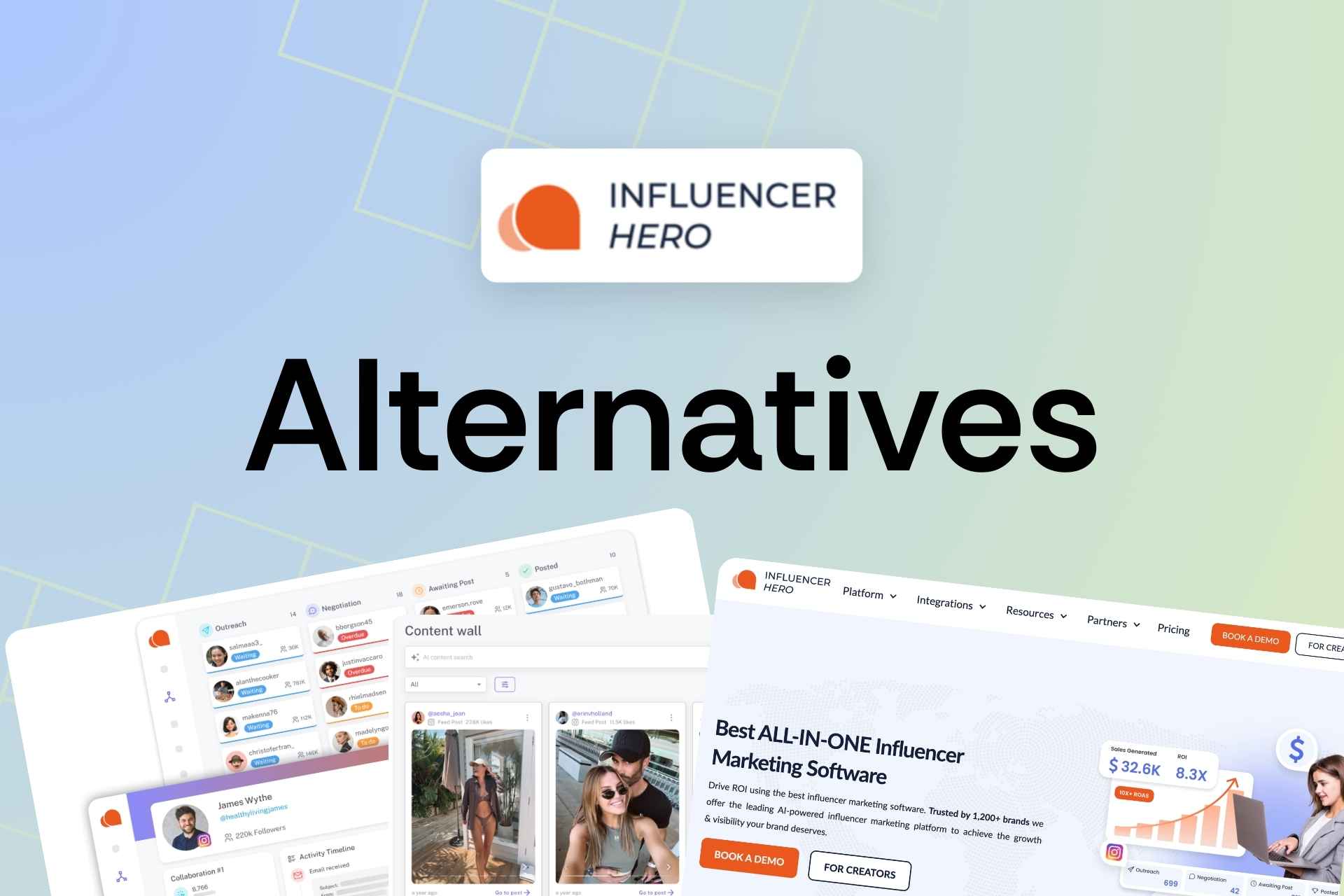
Influencer Hero

Influencer Hero is an all-in-one influencer marketing platform built for brands that want to manage discovery, outreach, CRM, gifting, affiliate tracking, UGC collection, and reporting inside one workflow. Its positioning is especially strong for eCommerce and DTC teams that need more automation and clearer revenue attribution than a simple creator marketplace can provide.
Key Features
• Influencer discovery with advanced filtering: Brands can search creators by audience demographics, geography, lookalikes, fake follower signals, and niche relevance, helping teams move beyond basic marketplace browsing.
• AI-assisted outreach and workflow automation: Influencer Hero supports bulk outreach, AI-assisted message personalization, A/B-tested templates, and campaign automation, which is useful for teams running high-volume creator recruitment.
• Campaign CRM and relationship management: The platform includes an influencer CRM to organize outreach, negotiations, deliverables, status changes, and historical creator data in one place.
• UGC and post tracking: Paid tiers add post tracking, UGC collection, and campaign reporting, making it easier to centralize creator content and performance data after campaigns go live.
• Affiliate, gifting, and payouts: Influencer Hero supports gifting workflows, affiliate tracking, influencer payouts, and broader social commerce execution for brands that want influencer activity tied back to sales.
• API and integration layer: Higher tiers include custom API integrations, and the platform also positions itself as compatible with broader eCommerce workflows rather than only one storefront ecosystem.
Platform Coverage
Instagram, TikTok, YouTube, Facebook, Pinterest, Snapchat, X, and Twitch
Pricing
Influencer Hero offers flexible pricing based on outreach volume, and you can have unlimited creators in your CRM with Influencer Hero:
• Standard — $649/month (up to 1,000 reachouts/month)
• Pro — $1,049/month (up to 5,000 reachouts/month)
• Business — $2,490/month (up to 10,000 reachouts/month)
• Custom / Agency — Tailored pricing
Reviews
5.0/5.0 (Capterra)
Standout Features
• Campaign-centric CRM automation: Influencer Hero’s core strength is not just discovery, but the ability to automate follow-ups, status changes, payouts, and reporting from within a structured creator CRM.
• Built-in AI outreach layer: The platform combines bulk outreach with AI-assisted personalization and template testing, which is more workflow-driven than many marketplace-first tools.
• Broader commerce support than Shopify-only tools: Influencer Hero is positioned for gifting, affiliate tracking, and payouts across a wider commerce stack, making it appealing to brands that do not want their influencer program tied to a single storefront setup.
Collabstr vs Influencer Hero
Collabstr is better suited to brands that want a lightweight marketplace with transparent creator pricing and quick bookings, while Influencer Hero is built for teams that need a fuller operating system for outreach, CRM, gifting, affiliate tracking, and reporting. Collabstr wins on simplicity and low-friction creator hiring; Influencer Hero offers more automation, stronger campaign infrastructure, and deeper sales-oriented workflows for scaling programs over time.
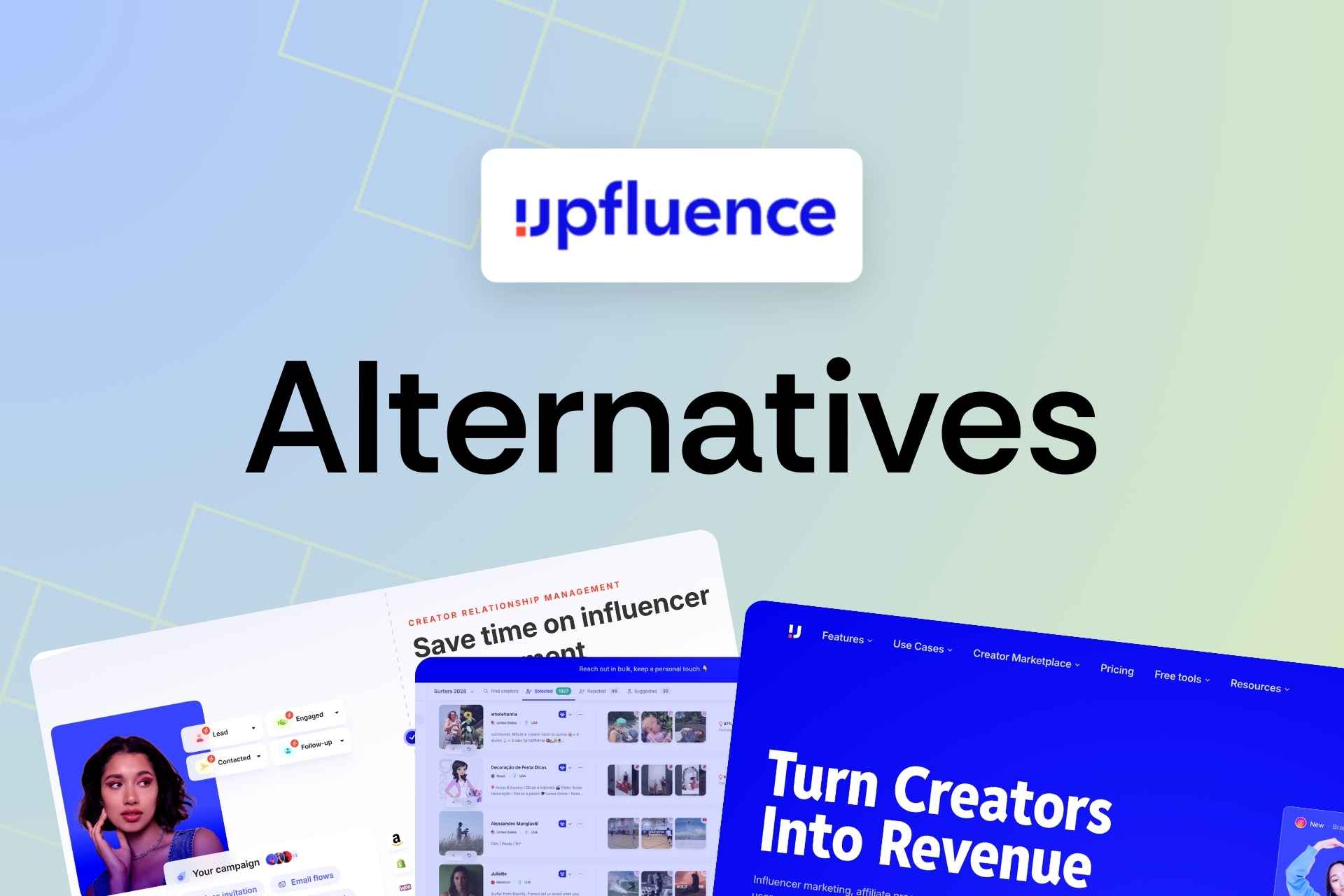
Upfluence
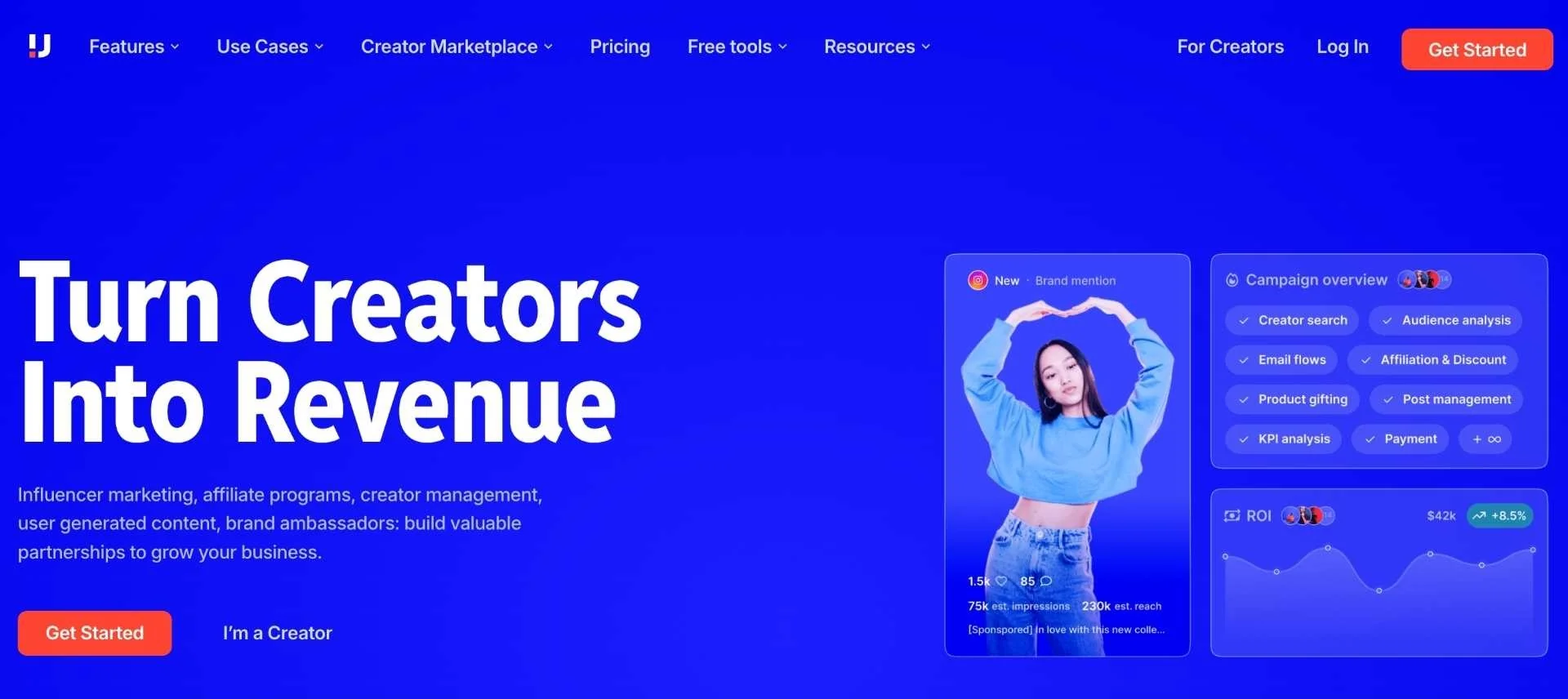
Upfluence is an enterprise-leaning influencer and affiliate marketing platform designed primarily for eCommerce brands. Its core value proposition is combining creator discovery, outreach, campaign management, affiliate tracking, payments, and sales attribution in one system, with especially strong support for Shopify and Amazon-centric brands.
Key Features
• Large creator discovery database: Upfluence offers influencer discovery across a large multi-platform database with filters for niche, geography, follower count, engagement rate, and audience demographics.
• AI-assisted outreach: The platform supports bulk outreach and automated follow-up flows, and also promotes its AI assistant for campaign messaging and creator recruitment workflows.
• Built-in CRM and campaign management: Brands can centralize creator communication, manage workflows, track collaborations, and organize influencer lists without relying on spreadsheets or disconnected tools.
• Shopify integration: Upfluence is especially strong for Shopify merchants because it can identify customers who are influencers, support gifting and affiliate programs, and tie influencer activity back to revenue.
• Amazon integration: It also supports Amazon sales attribution and affiliate tracking, which is a notable differentiator for brands running both DTC and marketplace sales.
• Bulk payments and ROI tracking: Upfluence supports creator payouts and campaign reporting across sales, clicks, conversions, reach, engagement, and impressions, making it more performance-driven than lightweight marketplaces.
• Social listening and market research: The platform includes social listening capabilities that help brands identify trends, mentions, and high-performing content tied to their category or brand.
Platform Coverage
Instagram, TikTok, YouTube, Facebook, Twitch, Pinterest, and blogs.
Pricing
On average plans start around $2,000/month ($24,000 yearly)
Reviews
4.3 / 5.0 (Capterra)
Standout Features
• Customer-to-creator identification through Shopify: Upfluence can identify existing customers who are also influencers, which is a strong differentiator for retention-led and advocacy-led eCommerce brands.
• Amazon + Shopify revenue attribution: Few influencer platforms are as explicitly built around both DTC and marketplace attribution, making Upfluence especially appealing to brands that need clearer revenue tracking across channels.
• AI-assisted outreach with affiliate depth: The combination of bulk outreach, AI campaign assistance, affiliate tooling, and payment workflows makes it more of a performance platform than a simple discovery engine.
Collabstr vs Upfluence
Collabstr is built for speed, simplicity, and transparent marketplace transactions, whereas Upfluence is designed for brands that want an end-to-end influencer plus affiliate engine tied directly to revenue. Collabstr is easier to adopt for smaller teams; Upfluence is stronger for eCommerce operators who need CRM depth, bulk outreach, and Shopify/Amazon attribution, but it comes with a heavier price point and a more rigid contract structure.
Aspire
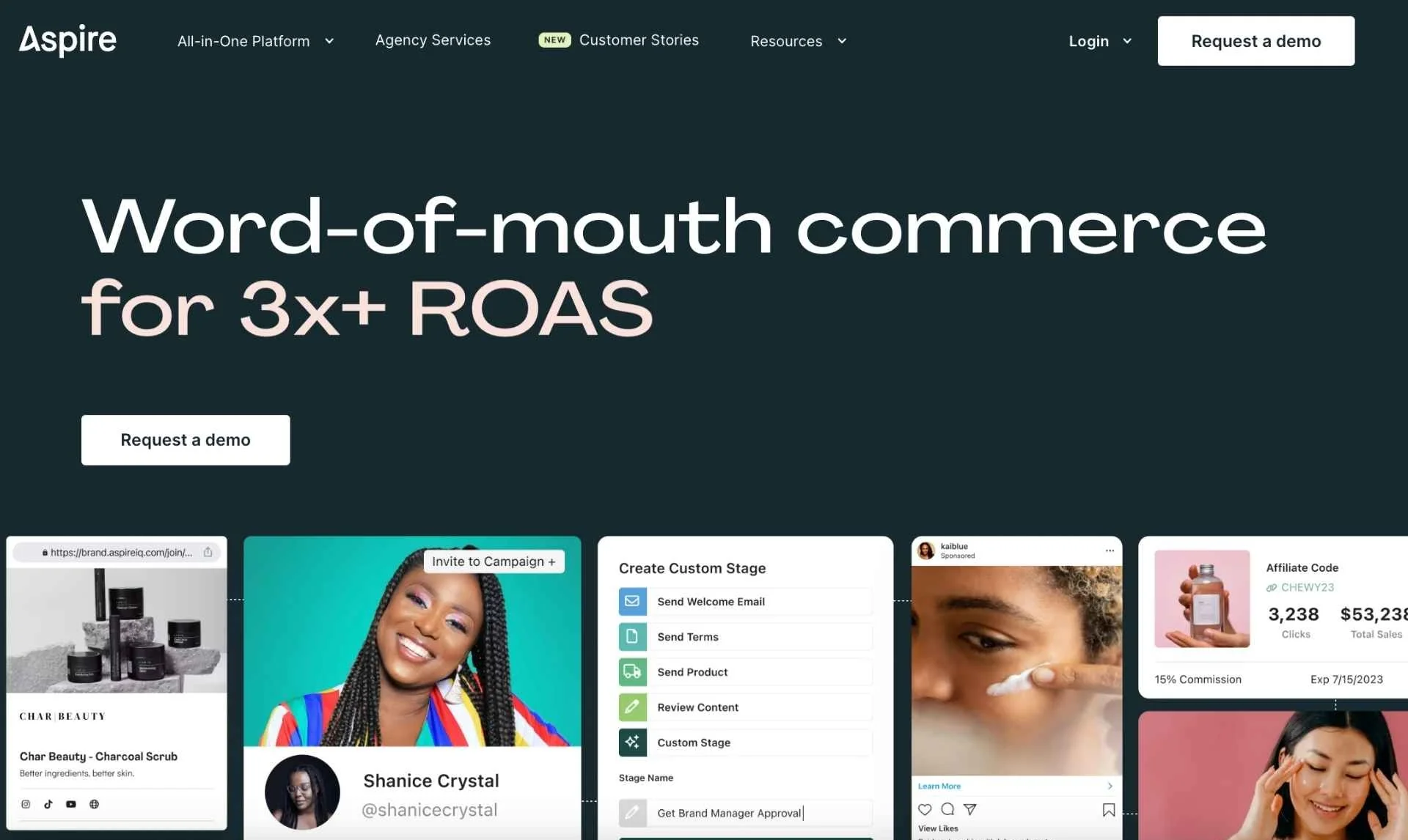
Aspire is an influencer marketing platform built around creator relationship management, product seeding, affiliate programs, UGC, and campaign execution for eCommerce brands. Its positioning is especially strong for brands that want both outbound creator search and inbound creator applications through a marketplace-style workflow.
Key Features
• Dual discovery model: Aspire combines influencer search with a built-in creator marketplace where creators can proactively apply to work with brands, helping teams source both outbound and inbound partnerships.
• Workflow automation and CRM: The platform supports campaign pipelines, bulk actions, templates, follow-ups, and creator list management, making it easier to standardize approvals, briefs, and collaboration stages.
• Shopify-powered gifting and fulfillment: Aspire’s gifting workflow lets creators select products while brands retain approval control, which is particularly useful for DTC product seeding programs.
• Affiliate and sales tracking: Brands can generate codes and links, track conversions and sales, and manage commission workflows from within the platform.
• Content approvals and usage rights: Aspire supports content workflows, UGC management, and licensing/usage-rights language inside campaign processes, which is valuable for brands repurposing influencer content into ads.
• Strong implementation and support model: Recent sales materials emphasize onboarding help, an implementation manager, and a dedicated client success manager, which is a meaningful differentiator for teams adopting a more operationally complex platform.
Platform Coverage
Instagram, TikTok, Pinterest, YouTube, and Facebook
Pricing
Aspire starts with tiered pricing and can be customized, with a mid-tier quote of about $2,300/month for a use case involving multiple team members and up to 500 creators in CRM.
Reviews
4.0 /5.0 (Capterra)
Standout Features
• Inbound creator marketplace: Aspire’s creator marketplace gives brands a second sourcing engine beyond database search, which can materially reduce manual recruiting time.
• Direct platform partnerships and first-party data access: Aspire highlights direct relationships with Meta, TikTok, and Pinterest, which strengthens data quality and campaign measurement compared with more heavily scraped systems.
• Gifting and affiliate workflows designed for commerce brands: Product seeding, creator stores, affiliate tracking, and content rights workflows make Aspire particularly strong for brands blending influencer, UGC, and commerce strategies.
Collabstr vs Aspire
Collabstr is the simpler option for brands that mainly want to browse creators, compare pricing, and book campaigns quickly. Aspire is better for brands that treat influencer marketing as a repeatable operating system, with stronger support for creator applications, gifting, approvals, affiliate programs, and long-term relationship management. In other words, Collabstr is more marketplace-first, while Aspire is more workflow- and program-first.
SARAL

SARAL is an influencer marketing platform aimed primarily at eCommerce and DTC brands that want a simpler operating system for influencer seeding, outreach, relationship management, tracking, and payments. Its positioning is more practical and execution-focused than enterprise-heavy, which makes it especially appealing to emerging brands that want to move beyond spreadsheets without adopting a highly complex platform.
Key Features
• Discovery across major creator channels: SARAL’s discovery engine covers a very large set of creator profiles and allows brands to search by keyword, engagement rate, and similar creators to build targeted outreach lists.
• Automated personalized outreach: The platform is built around streamlining outreach at scale while keeping communication personalized, which is one of its main operational selling points.
• Relationship and campaign management: SARAL centralizes creator relationships, campaign stages, and influencer history so brands can manage programs without relying on scattered spreadsheets.
• Affiliate tracking and ambassador workflows: The platform supports affiliate links, discount codes, and ambassador-style programs, helping brands move from one-off seeding into longer-term creator relationships.
• Performance tracking and UGC monitoring: SARAL tracks sales and creator activity, and its performance materials emphasize unified monitoring across Instagram, TikTok, and YouTube.
• Hands-on support model: The pricing page highlights onboarding calls, proactive customer success, and fast support response times, which matters for leaner teams that need help getting their program running.
Platform Coverage
Instagram, TikTok, and YouTube.
Pricing
There are different plans:
• Starter: $3.6k/quarter
• Business: $4.5k/quarter
• Professional: $7.5k/quarter
Reviews
4.7/5.0 (G2)
Standout Features
• Simple, operator-friendly workflow: SARAL is intentionally positioned as an easier, less bloated influencer OS for brands that want to move fast without enterprise complexity.
• Transparent quarterly pricing: Unlike many influencer platforms that hide pricing behind demos, SARAL publishes plan structure and capacity limits clearly, which is a practical differentiator.
• Balanced discovery + outreach + ambassador support: SARAL is not just a search tool; it connects discovery, automated outreach, affiliate tracking, and ambassador management into one simpler stack.
Collabstr vs SARAL
Collabstr is stronger if you want a creator marketplace with visible pricing and fast transactional booking. SARAL is stronger if your team wants to build and manage ongoing influencer relationships through outreach, ambassador programs, and sales tracking rather than just hire creators one campaign at a time. Collabstr is more plug-and-play; SARAL is more operating-system-driven for brands building repeatable seeding and affiliate workflows.
CreatorIQ
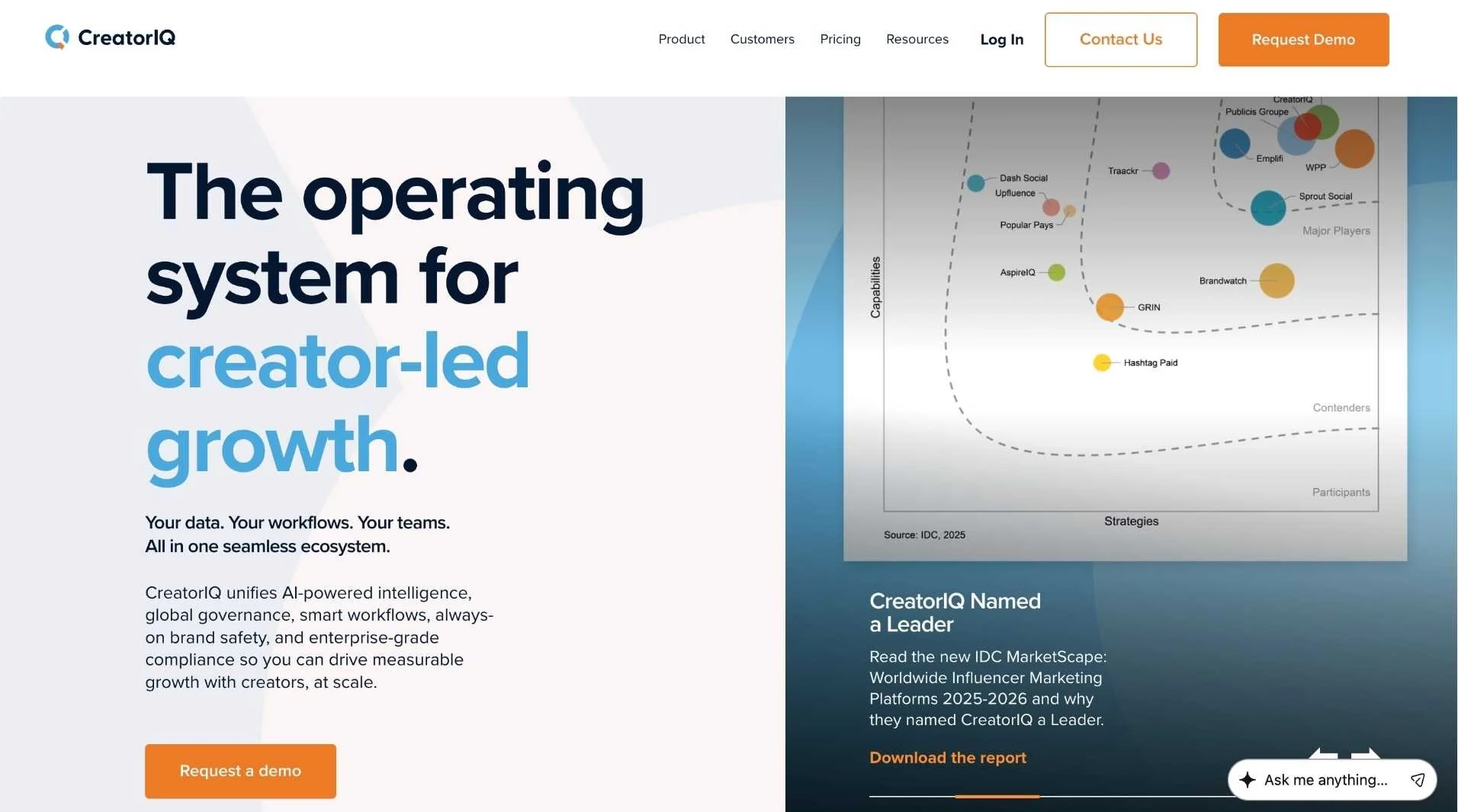
CreatorIQ is an enterprise creator marketing platform designed for large brands and agencies that need AI-driven discovery, governance, brand safety, campaign execution, payments, and measurement at scale. Its public messaging is clearly aimed at organizations running sophisticated, cross-market creator programs rather than lightweight influencer bookings.
Key Features
• AI-powered creator discovery: CreatorIQ supports creator search, evaluation, and AI-assisted recommendations, helping teams surface relevant creators faster while maintaining brand-safety and authenticity checks.
• Enterprise governance and brand safety: The platform emphasizes always-on brand safety, governance controls, and compliance infrastructure, which are especially valuable for global organizations with stricter internal approval and risk standards.
• Campaign execution and workflow management: CreatorIQ includes creator management, campaign execution, and measurement within one ecosystem rather than treating discovery and reporting as separate tools.
• Payments and conversion tooling: Its product suite includes dedicated modules for recruiting, conversion, and creator payments, reflecting its broader enterprise operating-system approach.
• Custom dashboards and reporting: CreatorIQ is known for stronger measurement and executive-ready reporting than simpler creator marketplaces, especially for organizations that need centralized data across large programs.
• Direct ecosystem integrations: The platform highlights integrations and measurement capabilities spanning creator, paid, owned, earned, and commerce touchpoints, including newer unified measurement partnerships.
Platform Coverage
Instagram, YouTube, TikTok, Facebook, Twitter, Pinterest, and more.
Pricing
• Basic Plan: Starts at $35,000/year. Includes 1,000 contact creators per month
• Standard Plan: Starts at $50,000/year. Includes 2,500 contact creators per month
• Professional Plan: Starts at $90,000/year. Includes 5,000 contact creators per month
• Enterprise Plan: Starts at $200,000/year. Includes 7,500 contact creators per month
Reviews
4.4 / 5.0 (Capterra)
Standout Features
• Enterprise-grade brand safety and governance: CreatorIQ leans much further into brand safety, compliance, and governance than most mid-market influencer tools.
• AI-native creator operating system: Its latest product positioning emphasizes AI-powered discovery, smart workflows, and unified creator intelligence rather than just creator search alone.
• Broad cross-channel measurement infrastructure: CreatorIQ is designed for organizations that want creator data integrated into broader marketing measurement, not just campaign-level post tracking.
Collabstr vs CreatorIQ
Collabstr is a much lighter, more accessible marketplace for booking creators quickly, while CreatorIQ is built for large organizations that need governance, brand safety, approvals, reporting depth, and global program management. Collabstr is easier and cheaper to adopt; CreatorIQ is the stronger fit for enterprise brands that need creator marketing woven into a broader media and measurement stack.


Sprout Social

Sprout Social is best known as a broader social media management platform, but its influencer marketing product has become a more serious enterprise option since the Tagger acquisition and 2025 rebrand. Today, Sprout Social Influencer Marketing is positioned as an end-to-end system for creator discovery, vetting, campaign workflows, and performance reporting, with a strong emphasis on AI-assisted matching, brand safety, and executive-ready analytics.
Key Features
• AI-powered creator discovery: Sprout uses semantic search and topical analysis to find creators based on what they actually talk about, rather than relying only on static demographic filters. That makes discovery more useful for brands that care about contextual fit, not just audience size.
• Brand Fit Score: One of Sprout’s most distinctive tools is its AI-powered Brand Fit Score, which helps teams quantify how well a creator’s content aligns with a target audience or brand narrative before they invest.
• Brand safety reporting: Sprout lets teams define their own keywords and thresholds to flag risky creator content before a partnership goes live, which is especially useful for larger brands with stricter approval requirements.
• Branded application pages: In addition to outbound discovery, brands can launch customized creator application pages to centralize inbound interest by region, campaign, or brand.
• Campaign workflow and collaboration tools: Sprout supports contracts, content approvals, deliverables, spend tracking, reporting, and stakeholder collaboration inside one workflow, which helps teams replace spreadsheets and fragmented review processes.
• Workspaces for multi-brand teams: Workspaces let agencies and large internal teams segment campaigns by client, brand, product line, or region, with custom scoring, reporting, and lists inside each environment.
• Influencer ROI reporting: Sprout supports ROI measurement across organic and boosted influencer content, and its reporting layer is one of the strongest reasons larger teams choose it over lighter marketplace tools.
• Commerce integrations: The platform integrates with Shopify, PayPal, TikTok Ads, X, Twitch, Snapchat, and other tools that support campaign execution and attribution.
Platform Coverage
Instagram, YouTube, Facebook, TikTok, and X (Twitter)
Pricing
Starts around $1,600/month per user plus $600 per extra user.
Reviews
4.5 / 5.0 (Capterra)
Standout Features
• AI-powered Brand Fit Score: This remains one of the clearest differentiators in Sprout’s influencer stack because it gives teams a fast, repeatable way to judge creator alignment at scale.
• Workspaces for multi-brand governance: Workspaces make Sprout especially strong for agencies and enterprise teams managing multiple brands, regions, or client environments at once.
• Integrated brand safety plus semantic discovery: The combination of topical AI search, safety screening, and customizable performance metrics makes Sprout more strategic than lightweight creator marketplaces.
Collabstr vs Sprout Social
Collabstr is a marketplace-first platform built for quick creator hiring, transparent pricing, and simple campaign execution. Sprout Social is much more workflow- and intelligence-driven, with stronger brand safety controls, deeper reporting, and more structure for multi-stakeholder teams. If Collabstr is best for fast transactional partnerships, Sprout is better suited for brands that need governance, AI-assisted vetting, and executive-grade measurement.
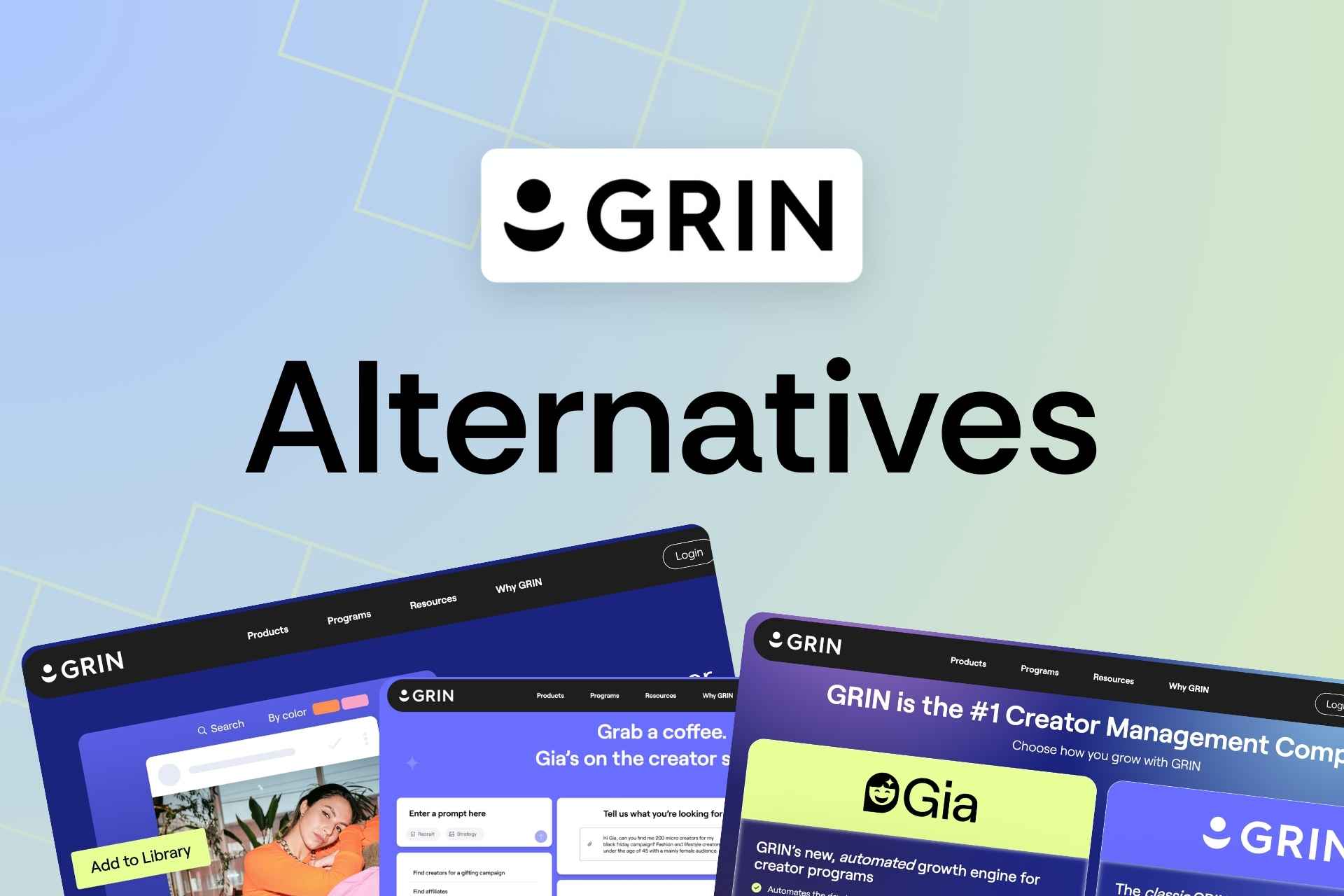
GRIN
GRIN is a creator management platform built primarily for eCommerce and DTC brands that want to run influencer, ambassador, gifting, affiliate, and content programs from one system. Its positioning is less about marketplace-style transactions and more about ongoing creator relationship management tied directly to revenue, product seeding, and repeatable campaign workflows.
Key Features
• Creator management workflow: GRIN is built around creator relationship management rather than one-off bookings, giving brands tools for discovery, outreach, campaign management, and long-term collaboration.
• eCommerce-native integrations: Shopify, WooCommerce, BigCommerce, Magento, and other commerce integrations are a major part of GRIN’s value proposition, especially for gifting, tracking codes, affiliate links, and sales attribution.
• Affiliate management: GRIN connects discovery, product gifting, commission tracking, and affiliate reporting in one system, which makes it appealing for brands running creator-led commerce programs rather than pure awareness campaigns.
• Creator CRM and communication tools: Brands can centralize email outreach, statuses, notes, deliverables, and creator history, which reduces manual coordination.
• Payments and contracts: GRIN supports creator payments and contract workflows, helping brands manage more of the campaign lifecycle without moving to separate finance or admin tools.
• UGC library and rights workflows: The platform stores creator content and supports reuse workflows, which is valuable for brands repurposing influencer content into paid or owned media.
• AI support through Gia: GRIN promotes Gia as an AI assistant for creator suggestions, scoring, and campaign support, adding a newer intelligence layer on top of its CRM and eCommerce workflows.
• Social listening and reporting: GRIN’s reporting is designed to connect creator activity to conversions, gifting effectiveness, and ROI, not just surface engagement metrics.
Platform Coverage
Facebook, Instagram, TikTok, X, Pinterest, YouTube, and Twitch
Pricing
Annual pricing starts at $25,000/year (approx. $2,050/month)
Reviews
4.5/5.0 (G2)
Standout Features
• eCommerce-native creator management: GRIN stands out for connecting product seeding, discount codes, affiliate links, and sales tracking more tightly than marketplace-style platforms.
• Gia AI assistant: GRIN’s newer AI layer is designed to help with creator recommendations, scoring, and campaign support rather than just discovery filters.
• Creator management as a full operating system: GRIN is less about finding a creator once and more about managing the entire lifecycle of the relationship, which is why it resonates with DTC brands running repeatable programs.
Collabstr vs GRIN
Collabstr is better for fast discovery and booking inside a marketplace, especially for smaller or newer teams. GRIN is better for brands that want a full creator management system tied to eCommerce, affiliate tracking, gifting, and long-term relationship building. In short, Collabstr is lighter and easier to adopt, while GRIN is stronger for operational depth and sales-linked creator programs.
Modash

Modash is an influencer marketing platform built for brands that want a focused, performance-oriented workflow across discovery, outreach, tracking, gifting, and creator payments. It is especially well suited to Shopify brands and lean teams that want strong search capabilities and campaign execution without the complexity of larger enterprise suites.
Key Features
• Large public creator database: Modash’s discovery engine indexes 350M+ public creator profiles across Instagram, TikTok, and YouTube, which is a major reason teams choose it over opt-in-only databases.
• Advanced search and filtering: Brands can search by niche topics, hashtags, captions, audience geography, gender, age, platform, engagement rate, and more, making it one of the strongest creator search tools in this group.
• AI search and image-led discovery: Modash supports AI search that helps teams describe the kind of creator they want, then layer filters on top for precision. Public help docs also show the platform is leaning more heavily into AI-assisted discovery.
• Outreach and inbox tools: Brands can connect Gmail or Outlook, send outreach, track replies, and keep creator communication inside a simplified CRM workflow.
• Campaign tracking: Modash automatically collects published content and campaign metrics so teams can review content performance, ROI, and creator output without manual reporting.
• Shopify gifting and affiliate tracking: The Shopify integration supports gifting, affiliate links, commission tracking, and creator payouts, making Modash particularly attractive for commerce-driven brands.
• Creator payments: Modash supports worldwide creator payouts for both fixed fees and commissions, which helps brands consolidate operations.
• API access: Modash also offers an API for brands or platforms that want to build custom influencer workflows or tools around its creator dataset.
Platform Coverage
Modash supports influencer marketing on platforms such as Instagram, YouTube, and TikTok, providing comprehensive campaign tracking and influencer management tools.
Pricing
• Essentials: $199/month (paid annually)
• Performance: $499/month (paid annually)
• Custom Enterprise: Contact for pricing
Reviews
4.9 / 5.0 (Capterra)
Standout Features
• Discovery engine built on public data, not opt-ins: Modash’s creator database breadth is one of its biggest practical differentiators for brands that do not want to be limited to opted-in marketplace profiles.
• AI-assisted creator search: The platform’s recent AI search workflow makes it easier to find creators by content style and intent, not just exact keywords.
• Find, gift, track, and pay in one lean stack: For Shopify brands in particular, Modash combines discovery, outreach, gifting, affiliate tracking, and payouts without adding a lot of enterprise complexity.
Collabstr vs Modash
Collabstr is stronger if you want a marketplace with visible creator pricing and quick transactions. Modash is stronger if you want a broader public creator database, better search depth, and a more performance-oriented workflow tied to outreach, gifting, affiliate tracking, and payouts. Collabstr feels more transactional; Modash feels more like a lightweight operating system for scaling creator programs.
Influencity

Influencity is an end-to-end influencer marketing platform designed for brands and agencies that want discovery, relationship management, campaign execution, reporting, and social listening inside one system. Its current positioning emphasizes flexibility, public-data discovery at scale, and the ability to pay only for the level of functionality a team actually needs.
Key Features
• Large creator database: Influencity says its platform tracks 200M+ creators, while some current product pages reference even larger searchable coverage depending on the module and page viewed. Either way, scale is clearly part of the pitch.
• Influencer discovery and analysis: The platform includes search filters, audience analysis, authenticity checks, and campaign-fit evaluation to help narrow down creators more accurately.
• Relationship management and outreach: Influencity includes influencer relationship management, outreach tools, and campaign management features, making it more than just a search engine.
• Campaign manager and reporting: Brands can run campaigns and measure results inside the platform, with reporting designed to move beyond basic vanity metrics.
• Social listening and monitoring: Influencity now positions itself not only as an influencer platform, but also as a social media management and listening solution with brand management, competitor analysis, and campaign monitoring.
• eCommerce support: The platform has specific positioning for eCommerce teams that want to connect creator activity to measurable revenue outcomes.
• Free trial and flexible subscription model: Influencity highlights a 7-day free trial and explicitly says there is no mandatory account permanence, which stands out in a category full of annual contracts.
Platform Coverage
Instagram, TikTok, YouTube, and X/Twitter
Pricing
• Professional Plan: $318/month or $3,816/year
• Business Plan: $798/month or $9,576/year
• Enterprise Plan: Custom pricing
• Auto-Tracker Add-On: $660/year (for 50 influencers)
Reviews
4.3 / 5.0 (G2)
Standout Features
• Flexible subscription model with no lock-in: Influencity’s cancel-anytime language is a real differentiator in a market where annual commitments are common.
• Combined influencer marketing plus social listening: The platform’s expansion into brand monitoring, competitor analysis, and campaign monitoring makes it broader than many influencer-only tools.
• All-in-one structure for brands and agencies: Discovery, analysis, outreach, campaign management, and reporting are all built into one stack, which is why it appeals to teams managing multiple campaigns at once.
Collabstr vs Influencity
Collabstr is simpler and more marketplace-driven, which makes it easier for brands that just want to hire creators quickly. Influencity is better for teams that want more control over CRM, outreach, campaign reporting, and ongoing influencer operations. Collabstr lowers friction at the point of booking, while Influencity offers more depth for brands that want an actual program-management platform.
IZEA

IZEA is one of the longest-standing influencer marketing platforms in the market, originally founded in 2006 and evolving into a full creator economy platform that combines influencer discovery, campaign management, content licensing, and payments. Its core product, IZEA Flex, is designed to help brands and agencies manage influencer campaigns at scale, while IZEA Marketplace enables direct creator hiring in a more transactional model.
Key Features
• Influencer discovery and creator search: IZEA Flex allows brands to search a large database of creators using filters such as audience demographics, engagement, niche, and historical performance, helping teams identify relevant partners more efficiently.
• End-to-end campaign management: The platform supports full campaign workflows including briefing, content approvals, deliverables tracking, and reporting, making it suitable for brands running multi-stage influencer programs.
• IZEA Marketplace (direct hiring): In addition to managed workflows, IZEA offers a marketplace where brands can post opportunities and receive creator applications, blending marketplace and SaaS functionality.
• Content licensing and UGC management: IZEA includes tools for content ownership, licensing, and reuse, allowing brands to repurpose influencer content across paid, owned, and earned channels.
• Payments and financial workflows: The platform handles creator payments, contracts, and tax documentation, reducing operational overhead for finance and legal teams.
• Performance tracking and reporting: IZEA provides reporting on engagement, reach, impressions, and campaign-level performance, with dashboards designed for both operational and executive visibility.
• Managed services option: For brands that need additional support, IZEA offers fully managed campaign services, acting as an extension of the internal marketing team.
• AI-powered tools (IZEA.ai): IZEA has introduced AI capabilities for content ideation, creator matching, and campaign optimization, reflecting its move toward more automation-driven workflows.
Platform Coverage
Instagram, TikTok, YouTube, Facebook, Pinterest, Snapchat, Twitch, and X (Twitter).
Pricing
IZEA does not publicly list fixed pricing tiers for all products, but it offers two main approaches:
• IZEA Flex (self-serve SaaS): Typically offered via custom pricing based on usage, features, and scale.
• Managed Services: Fully customized pricing depending on campaign scope, creator volume, and level of service.
In practice, this means pricing is quote-based, often structured as annual contracts for software access or campaign-based pricing for managed services.
Reviews
3.9/ 5.0 (G2)
Standout Features
• Hybrid model (Marketplace + SaaS platform): IZEA combines a self-serve creator marketplace with a full campaign management platform, giving brands flexibility depending on how they want to run influencer programs.
• Content licensing and reuse infrastructure: Unlike many competitors, IZEA places strong emphasis on content ownership and licensing, making it easier for brands to repurpose influencer content across paid and owned channels.
• IZEA.ai capabilities: The introduction of AI-powered tools for ideation, creator matching, and campaign optimization reflects a newer shift toward automation and smarter campaign planning.
Collabstr vs IZEA
Collabstr is primarily a lightweight marketplace designed for quick creator hiring with transparent pricing, making it ideal for smaller teams or one-off campaigns. IZEA, on the other hand, offers a more comprehensive platform with campaign management, content licensing, payments, and optional managed services, making it better suited for brands running larger or more structured influencer programs. While Collabstr prioritizes simplicity and speed, IZEA provides more operational depth and flexibility for scaling influencer marketing efforts.
Final Thoughts on Collabstr Alternatives
Collabstr stands out as a simple, marketplace-driven solution for quickly finding and hiring creators, but many alternatives offer deeper functionality depending on a brand’s needs. Platforms like GRIN, Upfluence, and Aspire focus on end-to-end campaign management and eCommerce integrations, while tools like Modash and Influencity emphasize large-scale discovery and data-driven insights. Enterprise solutions such as CreatorIQ and Sprout Social provide advanced analytics, governance, and multi-team workflows. Ultimately, the right alternative depends on whether a brand prioritizes ease of use and speed, or requires more robust features like CRM, automation, affiliate tracking, and performance measurement.