

EnTribe Pricing Explained: Plans, Features & Review
Every marketing team has a folder of excellent customer photos nobody is allowed to use. The content exists, it performs better than anything the studio produces, and legal will not sign off because nobody can prove permission was given. EnTribe is built almost entirely around closing that gap: collecting user-generated content at scale, running the rights clearance behind it, and handing back a library that is cleared for paid media and product pages. Google, Hershey's, Riot Games, and Circle K appear on its client list, which signals a buyer whose legal function has opinions. What the website does not tell you is the price. In this article, we break down EnTribe pricing, key features, reviews, limitations, and the best EnTribe alternatives to consider.
EnTribe Pricing
EnTribe publishes nothing. There are no tiers listed, no starting figure, and no self-serve signup: every deployment is quoted after a demo, with the software directories that track this category listing it simply as contact-the-vendor. That places the platform firmly in enterprise territory, and the customer roster supports it. From what the product structure reveals, the variables likely to shape a quote are content volume, the number of brands or campaigns running, whether the AI tagging and media hub components are included, and whether a team wants EnTribe's own people guiding the program or intends to run campaigns independently. That last choice matters: the platform is sold both as self-managed software and with full-service guidance, and those are different commercial conversations. Budget for an annual arrangement rather than a monthly subscription, and expect the sales process to start with a scoping call rather than a price list.
Free Trial
There is no free trial and no free version. Evaluation runs through a demo, which for a rights-focused product is less limiting than it sounds, since what a brand actually needs to assess is whether the permission workflow satisfies its own legal team. Bring a lawyer to the demo rather than a marketer, and ask to see the consent record a cleared asset carries, because that document is the product. Ask also for a reference customer in your sector, since the platform serves consumer brands, entertainment companies, and universities, and the workflows differ meaningfully between them.
Contract
Terms are not published. The structure of the product, the enterprise client base, and the absence of any self-serve option all point to annual agreements scoped per brand. Because pricing is assembled around content volume and service level rather than seats, the negotiation worth having concerns what happens when volume grows: confirm whether a successful campaign that doubles submissions changes the fee, and get the answer in the contract rather than in the demo.
EnTribe Overview
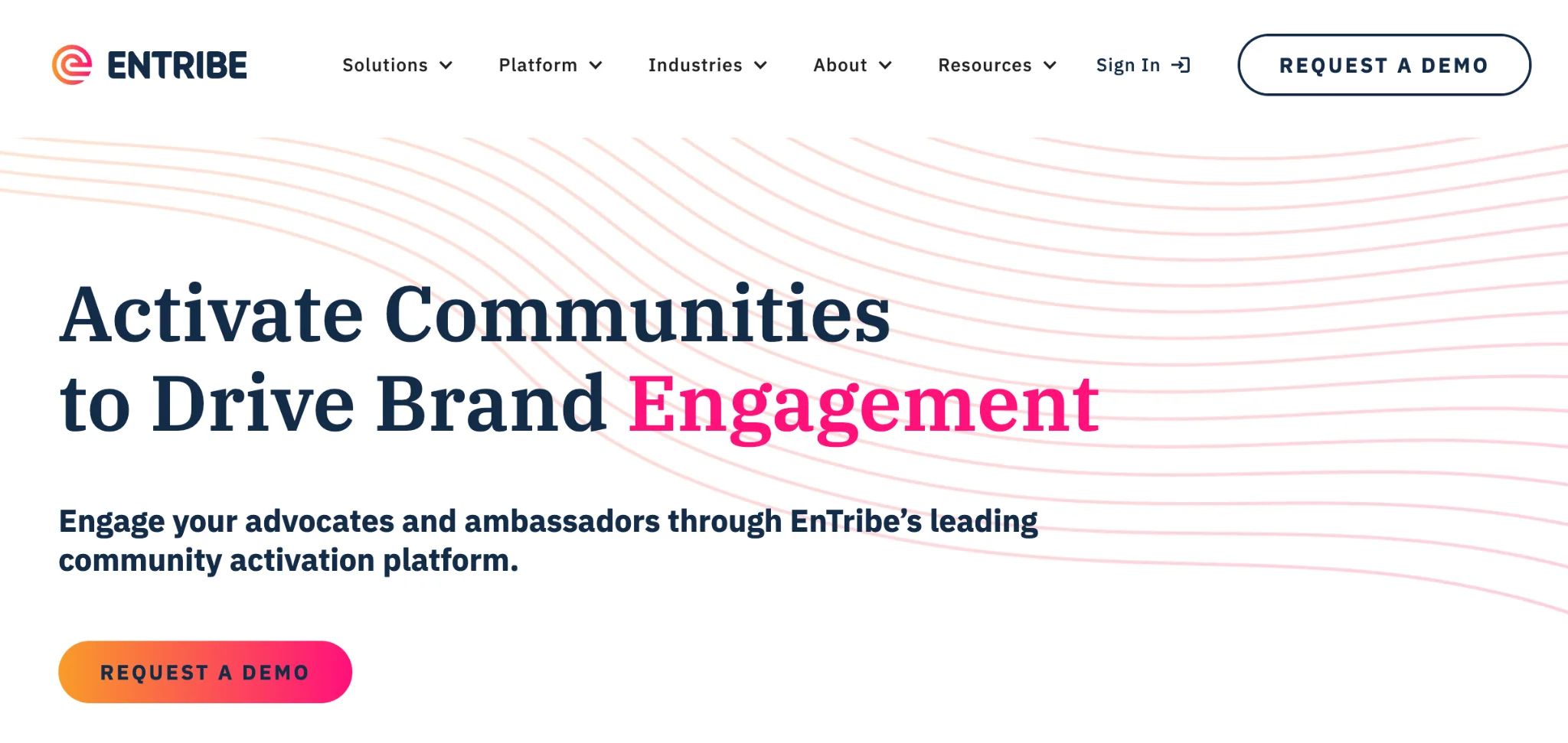
EnTribe is a SaaS platform for collecting, clearing, and reusing user-generated content, aimed at brands with communities large enough that managing content by hand has stopped working. Its workflow runs through seven stages: discovering advocates and creators, collecting and verifying content, reviewing and organising assets, automating communication, clearing rights and publishing, rewarding participation, and measuring impact. The current version, released under the name Campfire, added a media hub and rebuilt much of the interface. What distinguishes it from a general influencer platform is the emphasis: this is content and permission infrastructure rather than campaign execution, and the buyers reflect that, spanning CPG and retail, technology and entertainment, universities and schools, and the agencies serving them. Circle K reports doubling social engagement using the platform's content features.
Key Features
Rights Clearance Workflows
Purpose-built permission requests, consent capture, and legal documentation sit at the centre of the product, producing an auditable record for every asset so content can be used in paid media without a separate approval scramble.
Content Collection and Verification
Submissions are gathered from customers and creators and verified before entering the library, which keeps the asset pool brand-safe rather than merely large.
Content Uploaders
Branded upload forms and portals let customers submit photos and videos directly, turning a community into a content pipeline that does not depend on social monitoring alone.
AI Auto-Tagging and Smart Albums
Assets are tagged automatically and grouped into smart albums, which is what makes a library of tens of thousands of items searchable by a creative team rather than an archivist.
Media Hub
A central repository organises cleared assets for distribution across owned channels, giving other teams access to the content without routing every request through one person.
Creator CRM
Creator and advocate profiles, communication history, and relationship context live in the platform rather than a spreadsheet, so the people producing content are managed as an asset alongside the content itself.
Automated Communication and Workflows
Outreach, permission requests, follow-ups, and status changes are automated, which is the difference between running one campaign and running a continuous program.
Reward and Incentive Management
Participation can be rewarded through the platform, giving brands a mechanism to keep community submissions flowing rather than relying on goodwill.
Community and Content Analytics
Reporting covers content performance and community activity, letting teams see which assets and which contributors are actually driving results.
Full-Service Option
Brands can run campaigns themselves or take guidance from EnTribe's team, which suits organisations that have the content opportunity but not the headcount to work it.
Best For
EnTribe fits mid-market and enterprise brands with genuine community volume, where customers are already producing content and the constraint is collecting and clearing it rather than generating it. CPG, retail, entertainment, and consumer technology are its strongest categories, and universities are an unusual but logical fit given how much content students produce and how carefully institutions must handle permissions. It suits organisations where legal review is the bottleneck holding good content out of paid campaigns. It is a poor fit for brands whose problem is finding and paying creators, for teams running affiliate-led programs, and for small companies without the submission volume to justify enterprise infrastructure.
EnTribe Reviews
4.6/5.0 (Capterra)
The score is high and consistent with its rating elsewhere, though both rest on a small review base, so treat the direction as reliable and the precision as approximate. Users describe the same strengths repeatedly: the platform makes UGC easy to find, rate, and organise, the permission verification genuinely simplifies a process most teams handle badly, the interface is intuitive, and support responds quickly.
Criticism is equally specific. Loading and filtering large content volumes has been slow, an issue the company says the current platform version addressed. Social account integration is described as limited, which matters if your content arrives mainly through social channels rather than direct upload. A few users mention occasional glitches and would like more proactive outreach from customer success. Ask for a live demonstration on a large content set rather than a curated sample, since performance under volume is the recurring theme.
EnTribe Standout Features
Rights Clearance as the Product, Not a Feature
Most UGC tools treat permissions as a checkbox bolted onto a content library. Here the consent workflow and the documentation trail are the reason to buy, which is what makes the difference between content a brand has and content a brand can legally run as an ad.
Content Uploaders Turn Customers Into Contributors
Branded submission forms invite content directly rather than waiting to find it on social, which reaches the large share of happy customers who photograph a product but never post it publicly or tag the brand.
Serving Categories Others Ignore
Universities and schools sitting alongside Google and Hershey's on a client list is unusual, and it reflects a permission model built to satisfy institutions with strict consent requirements. Brands in regulated categories should read that as a signal.
EnTribe Limitations
No Published Pricing and No Trial
Nothing is listed, there is no free version, and evaluation requires a sales process, so budgeting and shortlisting both stall until you are already in a demo cycle.
Performance Under Volume
Slow loading and filtering on large content sets is the most consistent complaint. The company points to platform improvements, but it is the first thing to stress-test rather than take on trust.
Limited Social Integrations
Integration with social accounts is described by users as narrow. For a brand whose UGC lives mostly on Instagram and TikTok rather than in direct submissions, that constraint shapes how much the platform can actually collect.
Not a Creator Marketing Platform
There is no creator database, no outreach at discovery scale, no affiliate tracking, and no commission payments. EnTribe manages content and the rights attached to it; sourcing, negotiating, and paying creators belongs to another system.


Is EnTribe Worth It?
For a brand sitting on real community content it cannot legally use, EnTribe addresses the actual obstacle rather than a symptom, and the client roster suggests the permission model holds up under scrutiny from serious legal departments. Ratings are strong, the AI organisation makes a large library workable, and the direct-upload approach reaches content that social monitoring never sees. The reservations are the opaque pricing, the absence of any way to test it without a sales cycle, the performance questions under volume, and the narrow scope: this is a content and rights product, not a creator program. Teams needing more than that should compare it against:
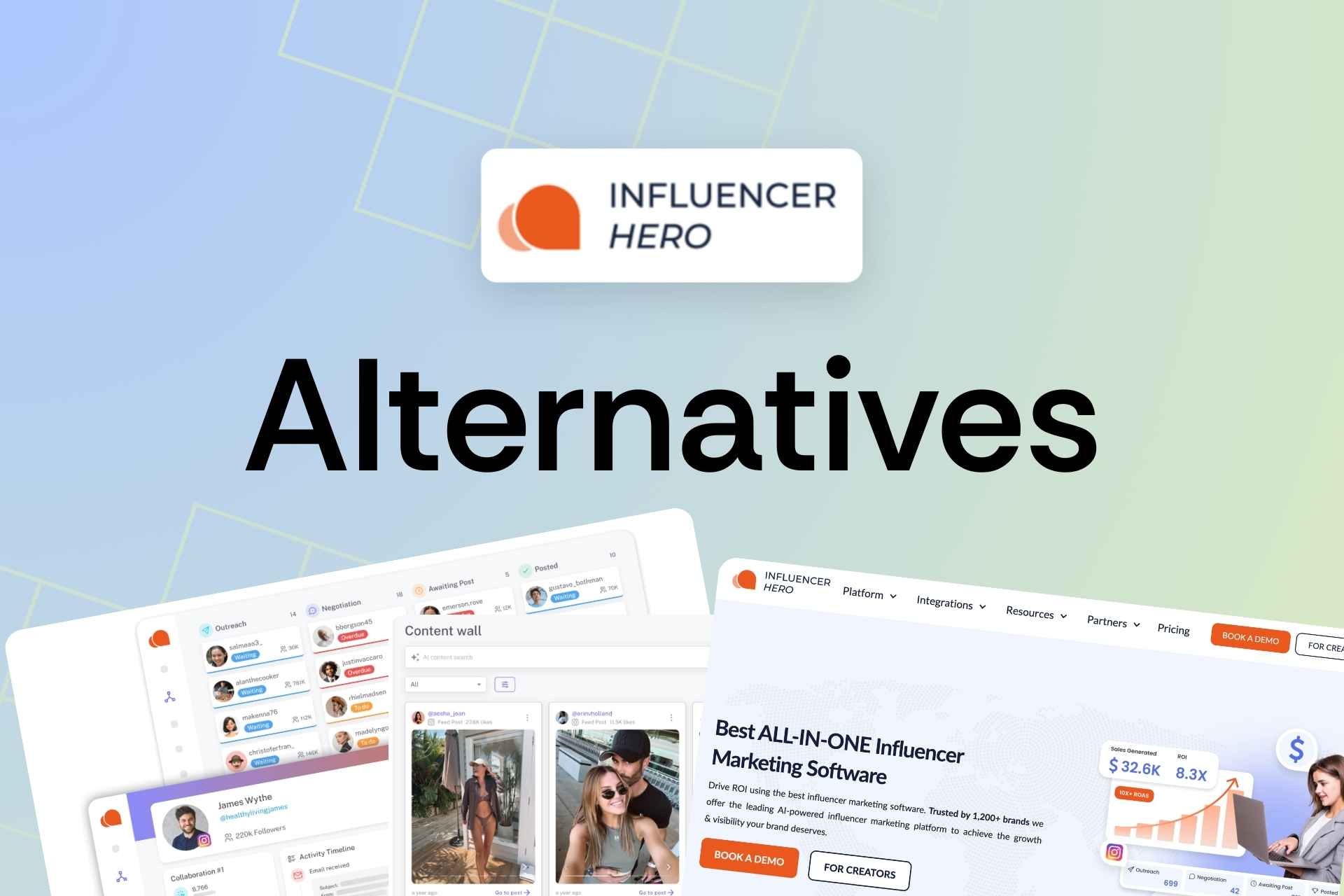
- Influencer Hero — an all-in-one influencer marketing platform combining creator discovery and outreach with CRM, gifting, affiliate tracking, and an automatically populated UGC content library on published plans.
- Afluencer — a marketplace where brands post collaborations and creators apply, useful for commissioning content rather than only collecting what already exists.
- Bazaarvoice — enterprise UGC, ratings and reviews, and syndication across retail partner sites for consumer brands.
- TINT — UGC collection, rights management, and shoppable galleries with a focus on displaying community content across owned channels.
- Flowbox — visual commerce and UGC management aimed at eCommerce teams putting customer content on product pages.
Final Thoughts
EnTribe is narrow by design, and that is the honest basis on which to judge it. If the question keeping content out of your campaigns is "can we legally use this," the platform answers it thoroughly, with a workflow strong enough that regulated institutions and global brands rely on it. If the question is "where do we get content in the first place," a rights platform will not solve that, and a creator platform that commissions work is the better spend. Two practical steps before committing: put your legal team in the demo to review the consent record, and insist on seeing the interface run against a content library the size of the one you expect to build.