

Fohr Alternatives: Best Influencer Marketing Platforms
Managing creator partnerships at scale requires more than spreadsheets—modern influencer marketing software helps streamline discovery, automate outreach, centralize campaign workflows, and track performance and ROI across channels. Fohr has positioned itself as a data-driven platform with predictive campaign modeling and strategic planning capabilities, which can be valuable for brands focused on forecasting outcomes before launch. However, many teams begin exploring Fohr alternatives due to a few recurring limitations: high annual pricing that limits accessibility for smaller teams, a relatively constrained creator pool tied to opt-in profiles compared to public-data platforms, and reporting capabilities that may not offer the depth or flexibility needed for advanced performance analysis or eCommerce attribution. As a result, marketers evaluating influencer marketing software often look for platforms that provide broader discovery, stronger automation, or more direct revenue tracking.
In this guide, we compare the 10 best Fohr alternatives—Influencer Hero, Upfluence, Aspire, SARAL, CreatorIQ, Sprout Social, GRIN, Modash, Influencity, and IZEA—to help you find the right fit based on your campaign goals and operational needs.
Criteria for Suggesting Platform Alternatives
Core Features
Evaluation of each platform’s essential capabilities, including influencer discovery, outreach, CRM, campaign reporting, gifting, UGC and content collection, affiliate tracking and payments, storefronts, application pages, and AI-powered tools.
Supported Social Media Platforms
Assessment of how well each platform integrates with major social networks such as Instagram, YouTube, TikTok, Facebook, Pinterest, and many more
Pricing & Contract Flexibility
Comparison of pricing models, subscription costs, and contract requirements to help brands choose solutions that match their budget and scalability needs.
Standout & Differentiating Features
Highlighting unique or innovative functionalities that set each platform apart, such as real-time tracking dashboards, creator benchmarking, TikTok email discovery, or advanced automation tools.
Customer Reviews & User Satisfaction
Analysis of verified user feedback from credible platforms like G2, TrustRadius, Capterra, focusing on usability, reliability, value for money, customer support, and real-world performance.
Fohr Overview

Fohr is an influencer marketing platform and managed-service provider that helps brands plan, execute, and measure creator campaigns with a strong focus on predictive performance. Founded in 2013, Fohr has evolved from a traditional influencer database into a platform centered on “predictive creator marketing”—using historical campaign data and modeling to forecast results before campaigns go live. Today, it positions itself as a solution for brands that want to move beyond vanity metrics and make influencer marketing decisions based on expected ROI and audience impact.
Key Features
- Predictive campaign planning
Fohr’s core differentiator is its predictive engine, which estimates campaign outcomes (reach, impressions, engagement) before launch. This allows marketers to make data-backed decisions instead of relying purely on past creator performance or follower size. - Influencer discovery and vetting
The platform enables brands to search and evaluate creators based on audience quality, engagement, brand fit, and predicted performance. This helps teams shortlist influencers more efficiently and reduce time spent on manual vetting. - Campaign management workflows
Fohr provides tools to manage the full campaign lifecycle—from creator selection and briefing to execution—helping teams streamline operations and reduce manual coordination. - Performance tracking and reporting
The reporting dashboard offers real-time insights into campaign performance, including engagement metrics, ROI tracking, and creator-level breakdowns for ongoing optimization. - Ambassador recruitment and management
Brands can build long-term creator programs through Fohr’s ambassador tools, including custom application pages and workflows for onboarding and managing creator communities. - Managed services support
In addition to its software, Fohr offers a managed-service model where its team supports campaign strategy, creator selection, and execution using its proprietary data and tools.
Platform Coverage
Instagram, TikTok, and YouTube
Pricing
Fohr does not offer fully transparent, self-serve pricing, but publicly available information outlines three main offerings:
- Platform: Starts at approximately $25,000 per year (annual contract) for access to its self-serve influencer marketing software
- Managed Services: Starts at around $50,000+, custom-priced depending on campaign scope and support level
- Custom Tech / Enterprise Solutions: Also $50,000+, tailored to brands needing custom workflows or recruitment tools
A free trial may be available, but overall pricing is positioned at the enterprise level and typically requires annual commitment.
Reviews
4.2 / 5.0 (Cuspera)
Fohr Standout Features
- Predictive campaign intelligence
Unlike most platforms that rely on historical metrics, Fohr models campaign outcomes in advance—helping brands estimate how much exposure is needed to drive awareness and action before investing budget. - Risk-adjusted creator pricing model
Fohr evaluates creators based on expected performance and risk, rather than just follower count or engagement rates. This allows brands to allocate budgets more strategically across influencer partnerships. - Enhanced performance dashboards
Recently updated dashboards provide more granular visibility into influencer-level performance, campaign pacing, and reporting gaps—making it easier for teams to optimize campaigns in real time.
Limitations (Why Users Look for Fohr Alternatives)
High cost and enterprise positioning
With pricing starting around $25K/year, Fohr is often out of reach for small to mid-sized brands or teams looking for flexible monthly plans.
Limited influencer pool compared to public-data platforms
Because Fohr relies on opted-in creators, some users feel the discovery pool is smaller compared to platforms that index hundreds of millions of public profiles.
Analytics not as deep as some competitors
While easy to use, the reporting capabilities may lack the depth and customization that data-heavy teams or agencies expect for advanced performance analysis.
Missing features like mobile access or broader integrations
Users have noted the absence of a dedicated mobile app and fewer integrations compared to more modern, automation-heavy influencer platforms.
10 Best Influencer Marketing Platform Alternatives
| TOOL | REVIEWS | BEST FOR | TRIAL INFO | PRICING | ||
|---|---|---|---|---|---|---|
1 |

|
⭐ | Influencer CRM & automation | Book Demo | Pricing | Website |
2 |

|
⭐ | Influencer discovery | Book Demo | Pricing | Website |
3 |

|
⭐ | Influencer partnerships | Book Demo | Pricing | Website |
4 |

|
⭐ | Influencer outreach | Book Demo | Pricing | Website |
5 |

|
⭐ | Enterprise influencer marketing | Book Demo | Pricing | Website |
6 |
|
⭐ | Influencer marketing & Social media analytics | Book Demo | Pricing | Website |
7 |

|
⭐ | DTC creator management | Book Demo | Pricing | Website |
8 |

|
⭐ | Influencer discovery | Book Demo | Pricing | Website |
9 |

|
⭐ | Campaign management | Book Demo | Pricing | Website |
10 |

|
⭐ | Influencer marketplace | Book Demo | Pricing | Website |
Influencer Hero

Influencer Hero is an all-in-one influencer marketing platform built for brands that want to manage discovery, outreach, gifting, affiliate tracking, UGC collection, and payouts in one workflow. Its positioning is notably commerce- and ROI-led: the platform emphasizes structured CRM, automation, and eCommerce integrations over a pure marketplace model, which makes it especially relevant for growing DTC brands and agencies managing creator programs at scale.
Key Features
- Influencer discovery with practical vetting tools
Influencer Hero includes advanced filters for location, audience demographics, interests, and engagement, plus fake follower detection and lookalike suggestions. Its Chrome extension also lets teams pull creator data while browsing social platforms and import profiles directly into campaigns. - Automated outreach and email sequencing
The platform supports one-to-one and bulk outreach, AI-personalized email templates, and multi-step drip campaigns with reply tracking. That makes it stronger for teams that want to scale outbound creator recruitment without relying on manual email management. - Campaign-centric CRM
One of its core strengths is a structured CRM built around campaign execution. Teams can move creators through stages, trigger follow-ups based on status, apply bulk actions, and manage deliverables, approvals, and ROI tracking from visual boards. - Reporting and ROI tracking
Influencer Hero offers campaign- and influencer-level dashboards covering clicks, affiliate sales, content performance, and ROI. Reports are exportable for internal teams or clients, which is useful for agencies and performance-focused in-house marketers. - Gifting, affiliate management, and payouts
Shopify and WooCommerce integrations support gifting workflows, shipping tracking, discount codes, affiliate links, and automated payouts through connected eCommerce systems. This makes the platform especially attractive for brands that tie creator campaigns closely to sales. - UGC capture and application pages
Influencer Hero automatically gathers creator content into a library for reuse and also offers branded signup pages and creator storefronts to capture inbound interest. That gives brands both outbound and inbound growth levers in one platform.
Platform Coverage
Instagram, TikTok, YouTube, Facebook, Pinterest, Snapchat, X, and Twitch
Pricing
Influencer Hero offers flexible pricing based on outreach volume, and you can have unlimited creators in your CRM with Influencer Hero:
- Standard — $649/month (up to 1,000 reachouts/month)
- Pro — $1,049/month (up to 5,000 reachouts/month)
- Business — $2,490/month (up to 10,000 reachouts/month)
- Custom / Agency — Tailored pricing
Reviews
5.0/5.0 (Capterra)
Standout Features
- Campaign-centric CRM automation
Influencer Hero’s clearest differentiator is its CRM built specifically for high-volume campaign orchestration. Boards, bulk actions, and automated follow-ups are designed to move creators through outreach, approval, deliverables, and performance tracking with far less manual work. - Multi-platform eCommerce support
Unlike many creator platforms that lean heavily on Shopify alone, Influencer Hero supports Shopify, WooCommerce, and custom setups via scripts. That makes it more flexible for brands with mixed or non-standard commerce stacks. - AI-powered outreach and workflow optimization
The platform combines AI creator recommendations, outreach copy generation, and predictive workflow suggestions, which helps teams scale personalized communication without turning campaigns into a manual CRM exercise.
Fohr vs Influencer Hero
Fohr is stronger as a predictive creator marketing platform built around modeling campaign outcomes before launch, while Influencer Hero is stronger as an end-to-end execution layer for brands that need influencer discovery, bulk outreach, gifting, affiliate tracking, and payments in one place. Fohr leans more into forecasting and strategic planning; Influencer Hero leans more into operational control and ROI execution.
Influencer Hero is also far more transparent and accessible on pricing, with entry plans starting at $649 per month and flexible commitments, while Fohr’s public pricing starts much higher and is positioned more like an enterprise software or managed-service buy. For smaller DTC teams and agencies that need campaign automation more than predictive modeling, Influencer Hero is the more practical fit.
Upfluence
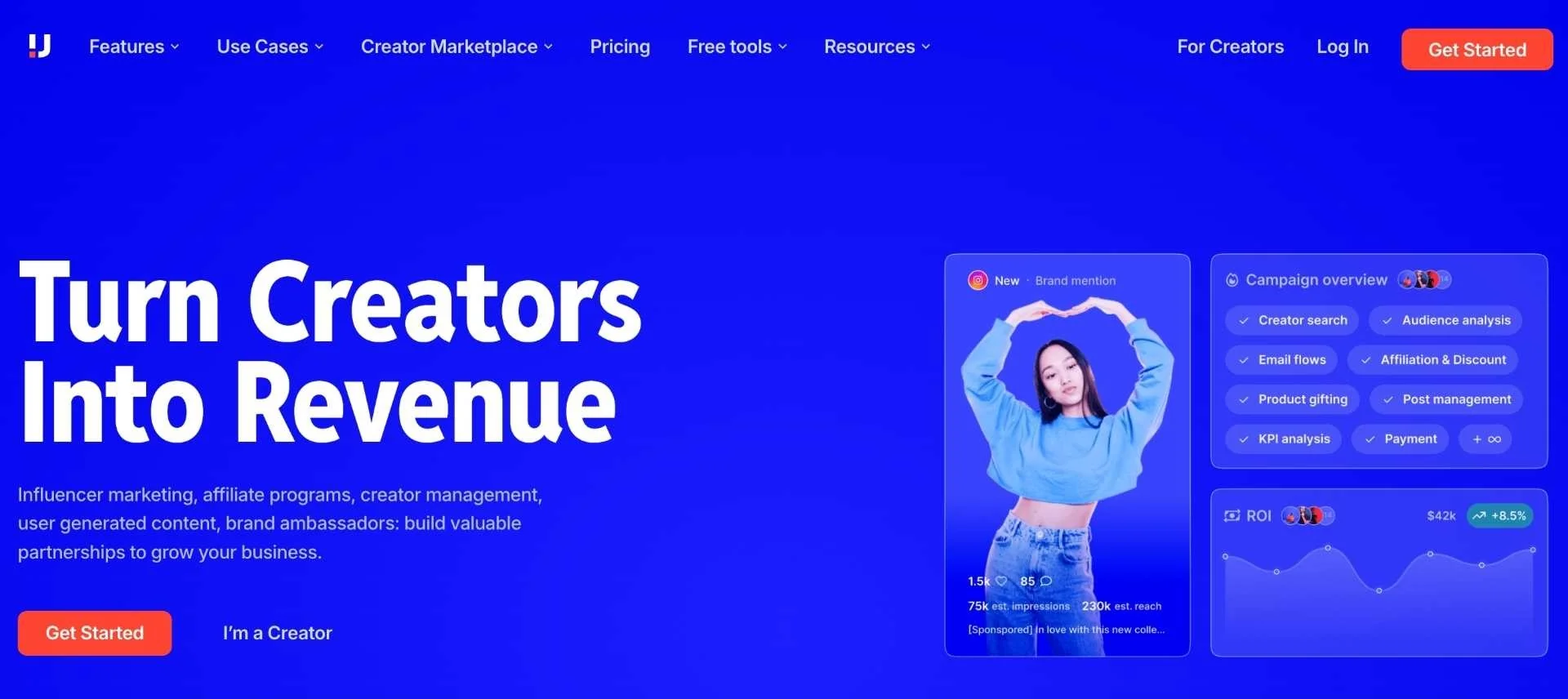
Upfluence is an end-to-end influencer and affiliate marketing platform built primarily for eCommerce brands that want creator discovery, outreach, campaign execution, sales tracking, and payouts inside one system. The platform is particularly known for its Shopify and Amazon integrations and for turning influencer marketing into a measurable revenue channel rather than a top-of-funnel brand activity alone.
Key Features
- Large creator database with advanced search
Upfluence gives brands access to a large influencer database with filters for location, niche, engagement, audience demographics, and past content. It also includes lookalike discovery and branded searches to help teams source creators faster. - Bulk outreach with AI assistance
The platform supports mass outreach, custom templates, Gmail/Outlook integration, and automated email sequences on higher tiers. Its AI assistant, Jaice AI, is positioned as a way to help brands launch campaigns and personalize outreach at scale. - CRM and campaign management
Upfluence includes in-platform relationship management, campaign tracking, creator importing, and affiliate setup. Teams can manage communication, compensation structures, and creator performance without switching between multiple tools. - Shopify and Amazon integrations
This is one of Upfluence’s biggest strengths. It can identify influential customers in Shopify, manage gifting and referrals, run affiliate campaigns, and attribute sales on both Shopify and Amazon. That makes it especially strong for brands selling across DTC and marketplace channels. - Social listening and market intelligence
Upfluence also includes social listening capabilities so brands can see what content is performing, spot trends, and identify creators already talking about their brand or competitors. - Revenue and payout tracking
Brands can track sales, clicks, conversions, reach, impressions, and engagement, and use Upfluence for secure bulk creator payouts. Its no-commission approach on tracked sales is a meaningful commercial differentiator for performance-driven teams.
Platform Coverage
Instagram, TikTok, YouTube, Facebook, Twitch, Pinterest, and blogs.
Pricing
On average plans start around $2,000/month ($24,000 yearly)
Reviews
4.3 / 5.0 (Capterra)
Standout Features
- Shopify customer-to-creator matching
Upfluence can identify which existing customers are also creators, helping brands activate built-in advocates rather than sourcing only cold prospects. This is one of its most compelling differentiators for DTC brands. - Amazon + Shopify revenue attribution
Few influencer platforms are as explicitly built around both DTC and Amazon revenue tracking. Upfluence’s ability to tie creator activity to sales across both ecosystems makes it unusually commerce-native. - Jaice AI for campaign launch and outreach
Upfluence has been leaning further into AI-assisted workflows, especially around campaign setup and email personalization, which helps reduce manual setup for teams running creator programs at scale.
Fohr vs Upfluence
Fohr is better suited to brands that want predictive campaign planning and strategic creator selection, while Upfluence is better suited to brands that want a commerce-first operating system for creator discovery, affiliate tracking, and revenue attribution. In other words, Fohr helps brands forecast performance; Upfluence helps them operationalize creator programs tied directly to Shopify and Amazon sales.
Upfluence also offers a broader execution stack for eCommerce teams, including customer-to-creator matching, affiliate mechanics, and bulk payouts. Fohr may appeal more to brands prioritizing modeling and managed services, but Upfluence is usually the better fit when influencer marketing is being run like a performance channel.
Aspire
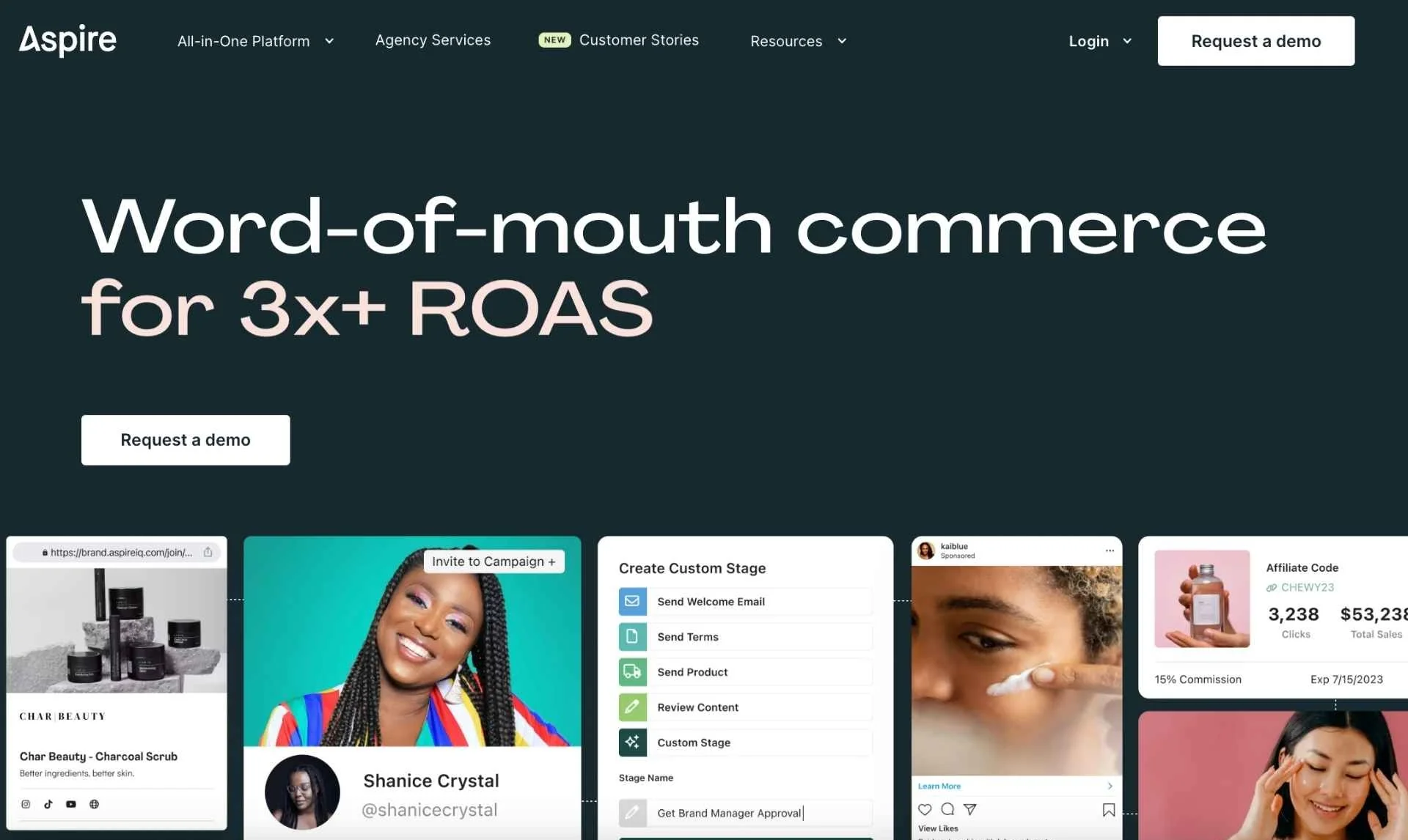
Aspire is an influencer marketing platform built for eCommerce brands that want to scale creator partnerships, product seeding, UGC, and affiliate programs from a centralized system. The company positions itself around ROI, first-party data, and inbound creator demand, making it especially attractive for brands that want both structured workflows and a large creator marketplace.
Key Features
- Creator discovery with first-party data
Aspire’s discovery tools let brands search by channel, keywords, engagement, demographics, and lookalikes. One of its major product strengths is access to first-party data through direct partnerships with Meta, TikTok, and Pinterest, which improves audience and content accuracy. - Inbound creator marketplace and application pages
Aspire combines classic search with a built-in marketplace where creators can apply directly to campaigns. Brands can also launch branded signup pages to collect details, qualify creators, and reduce the amount of cold outreach needed. - Workflow automation and CRM
The platform supports invites, contracts, briefs, content approvals, creator lists, group comparisons, and automated follow-ups. It is well-suited to teams that need strong collaboration and process control across many active creators. - Shopify-powered gifting and fulfillment
Aspire integrates deeply with Shopify so creators can shop approved catalogs, brands can set fulfillment rules, and teams can track orders without leaving the platform. This reduces the operational drag of product seeding campaigns. - Affiliate, promo code, and commission tracking
Brands can create promo codes, affiliate links, and creator stores, then track clicks, conversions, sales, and commissions from detailed reporting dashboards. PayPal support adds a payout layer for brands running commission-based programs. - Content library and UGC rights support
Aspire includes a content library, exportable reports, and digital term sheets that help brands manage usage rights and repurpose influencer-created assets more cleanly.
Platform Coverage
Instagram, TikTok, Pinterest, YouTube, and Facebook
Pricing
Aspire starts with tiered pricing and can be customized, with a mid-tier quote of about $2,300/month for a use case involving multiple team members and up to 500 creators in CRM.
Reviews
4.0 /5.0 (Capterra)
Standout Features
- First-party platform integrations
Aspire’s direct partnerships with Meta, TikTok, and Pinterest are a major differentiator because they provide more reliable audience, performance, and campaign data than platforms that rely mainly on scraping or indirect signals. - Large inbound creator marketplace
Aspire’s marketplace gives brands access to 1M+ creators actively looking for partnerships. For lean teams, that can materially reduce sourcing effort and increase the speed of filling campaign rosters. - CreatorStores / microshopping experiences
Aspire has been leaning into commerce with CreatorStores, which are co-branded microstores tied to Shopify. That gives creators a more conversion-focused storefront experience than a simple affiliate link or discount code alone.
Fohr vs Aspire
Fohr stands out for predictive campaign intelligence and pre-campaign forecasting, while Aspire is more compelling for brands that want broad creator sourcing, product seeding, affiliate commerce, and application-driven recruiting in one platform. If Fohr is more strategy- and forecast-oriented, Aspire is more execution- and marketplace-oriented.
Aspire also offers a stronger creator application ecosystem and more explicit commerce workflows through Shopify, CreatorStores, and affiliate management. Fohr may suit brands prioritizing predictive planning, but Aspire is usually stronger for teams building repeatable UGC, gifting, and creator-commerce programs.
SARAL

SARAL is an influencer marketing platform built primarily for eCommerce and DTC brands that want a simpler, more operationally efficient way to run creator seeding, outreach, relationship management, affiliate tracking, and payments. Its positioning is intentionally practical: rather than trying to be an enterprise intelligence layer, SARAL focuses on helping brands replace spreadsheets and fragmented tools with one cleaner workflow.
Key Features
- Influencer discovery and bulk sourcing
SARAL helps brands find creators in bulk, save influencers each month, and use audience/contact data to build outreach lists more efficiently. Its discovery tools are built for high-output prospecting rather than deep enterprise benchmarking. - Personalized outreach and inbox workflows
The platform is designed to automate personalized creator outreach while keeping relationship history and campaign stage visible inside a dedicated influencer management system. This makes it attractive to lean teams that need operational simplicity. - Relationship management / InfluencerOS
SARAL’s management layer is built specifically around creator relationships, campaign stages, and performance tracking. It is meant to replace spreadsheet-heavy workflows with a dashboard that tracks where each partnership stands. - Seeding, affiliate tracking, and payments
SARAL supports product shipping, sales tracking, and payments from the same system, which is important for brands running gifting-heavy or ambassador-heavy programs. - Social listening and performance reporting
The platform also includes social listening, reporting, and ambassador automation, giving brands more than just a discovery database. It is especially geared toward measuring which creator relationships actually generate revenue and efficiency gains. - Chrome extension and rate guidance
A recurring differentiator in user feedback is the Chrome extension, plus a suggested rate calculator that helps teams avoid wasting time on creators who are out of budget.
Platform Coverage
Instagram, TikTok, and YouTube.
Pricing
There are different plans:
- Starter: $3.6k/quarter
- Business: $4.5k/quarter
- Professional: $7.5k/quarter
Reviews
4.7/5.0 (G2)
Standout Features
- Transparent pricing tied to influencer search volume
SARAL’s pricing is simpler than many competitors: instead of bundling endless custom fees, it prices primarily by how many influencers a brand needs to search and save each month. That clarity stands out in a category where pricing is often opaque. - Operationally simple InfluencerOS
SARAL’s product is built to replace fragmented spreadsheets and tools with a purpose-built relationship dashboard. That simplicity is a real differentiator for smaller teams that want execution speed over enterprise complexity. - Chrome extension plus suggested rate calculator
The combination of browser-based sourcing support and rate guidance is a practical differentiator for outreach-led teams trying to move quickly and stay inside budget.
Fohr vs SARAL
Fohr is the more strategy-heavy platform, with its strongest angle in predictive creator intelligence and campaign forecasting. SARAL is the more operations-heavy platform, built to help eCommerce teams find creators, automate outreach, seed products, track sales, and manage relationships without enterprise-level complexity.
For brands that want predictive planning and a more premium strategic layer, Fohr has the edge. For brands that want a simpler, lower-friction platform with transparent pricing and strong seeding/affiliate workflows, SARAL is usually the more practical alternative.
CreatorIQ
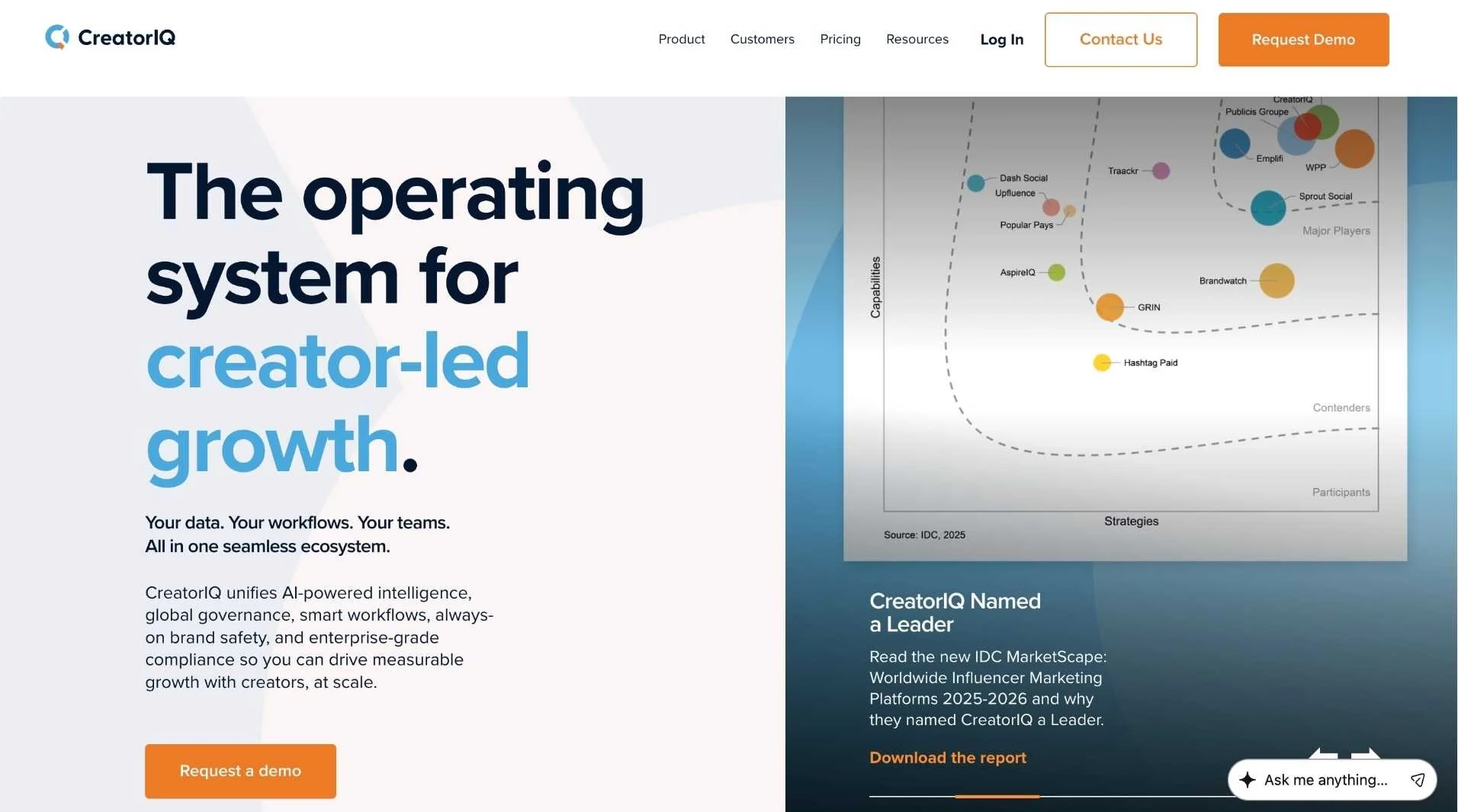
CreatorIQ is an enterprise creator marketing platform built for large brands and agencies managing complex, global influencer programs. The company positions itself as the operating system for creator-led growth, with an emphasis on AI-driven intelligence, direct platform partnerships, enterprise workflow control, and large-scale reporting.
Key Features
- Public creator discovery with granular filtering
CreatorIQ lets teams search public creator profiles without requiring opt-in, then filter by platform, audience demographics, brand mentions, verified status, business profile, content topics, and keyword intent. Its discovery layer is particularly strong for global brands with highly specific targeting needs. - Private CRM and relationship history
Brands can build their own private creator network with tags, notes, questionnaires, collaboration history, and import/export functionality. That makes CreatorIQ especially useful for large teams managing long-term creator ecosystems rather than one-off campaigns. - Campaign setup, briefs, and approvals
The platform supports reusable templates, campaign duplication, content approval toggles, and one-sheet approval flows that allow internal stakeholders to review creator selections without needing their own login. - Content library, analytics, and live dashboards
CreatorIQ offers customizable dashboards for engagement, reach, impressions, EMV, creator performance, and campaign analytics, with reporting tied to direct API integrations from major platforms. It is designed for executive-ready reporting as much as day-to-day campaign management. - Shopify integration and payment processing
Shopify support covers gifting logistics and shipping visibility, while CreatorIQ’s payment infrastructure allows brands to fund creator payouts in-platform and simplify tax handling and documentation. - Creator Connect and inbound applications
An optional Creator Connect add-on provides branded creator signup pages and applications that feed directly into the CRM, making it easier to support inbound creator programs at enterprise scale.
Platform Coverage
Instagram, YouTube, TikTok, Facebook, Twitter, Pinterest, and more.
Pricing
- Basic Plan: Starts at $35,000/year. Includes 1,000 contact creators per month
- Standard Plan: Starts at $50,000/year. Includes 2,500 contact creators per month
- Professional Plan: Starts at $90,000/year. Includes 5,000 contact creators per month
- Enterprise Plan: Starts at $200,000/year. Includes 7,500 contact creators per month
Reviews
4.4 / 5.0 (Capterra)
Standout Features
- Deep direct platform integrations
CreatorIQ’s biggest differentiator is its direct API access and platform relationships, which improve data reliability, compliance, and access to newer platform capabilities. That matters a lot for global brands that cannot rely on inconsistent scraped data. - One-sheet approvals and enterprise collaboration flows
Its live approval sheets and shareable reporting links are built for large internal teams and agency-client environments where many stakeholders need visibility without platform logins. - Built-in payment and tax handling
CreatorIQ’s payment processing model reduces finance overhead by consolidating creator payouts and handling tax documentation, which is a meaningful enterprise feature that many smaller platforms cannot match cleanly.
Fohr vs CreatorIQ
Fohr and CreatorIQ both appeal to larger brands, but they solve different problems. Fohr is more differentiated around predictive campaign intelligence and modeling likely outcomes before launch. CreatorIQ is more differentiated around enterprise operating depth: global discovery, platform-connected reporting, approvals, payments, and multi-stakeholder workflow control.
CreatorIQ is also much more expansive in terms of scale, seat structure, and enterprise infrastructure, but it comes with a much steeper price tag. For brands that need a full enterprise creator OS, CreatorIQ is usually the stronger choice. For brands that care more about forecasting creator effectiveness and strategic campaign planning, Fohr may feel more specialized.


Sprout Social

Sprout Social Influencer Marketing is Sprout’s influencer marketing platform, built from its Tagger acquisition and rebrand. It is designed for brands and agencies that want influencer discovery, campaign management, social intelligence, and reporting tied more closely to their broader social media stack, rather than running creator marketing as a completely separate channel.
Key Features
- AI-assisted creator discovery
Sprout Social Influencer Marketing helps brands find creators using topic-based search, brand-fit scoring, audience filters, and AI-assisted discovery tools, making it easier to identify creators who align with campaign goals and brand values. - Brand Fit Score and brand safety tools
One of Sprout’s strongest differentiators is its ability to help brands assess creator alignment and reduce risk. Teams can screen for safety concerns, flagged terms, and overall fit before investing in a partnership. - Campaign workflow and content approvals
The platform supports multi-stage campaign workflows, creator status tracking, contracts, and pre-publish content approval, which is valuable for larger teams that need internal review and governance. - Advanced reporting and benchmarking
Sprout is especially strong on analytics. Users can track engagement, audience growth, EMV, post performance, and competitive benchmarking, then export reports for stakeholders. - Shopify gifting and affiliate support
Through Shopify and PayPal integrations, teams can manage gifting, discount codes, attribution, and creator commission payouts in-platform. - Social listening adjacency
Because Sprout sits inside a broader social software ecosystem, it is well positioned for teams that want influencer work connected to wider audience conversations, competitor tracking, and brand sentiment analysis.
Platform Coverage
Instagram, YouTube, Facebook, TikTok, and X (Twitter)
Pricing
Starts around $1,600/month per user plus $600 per extra user.
Reviews
4.5 / 5.0 (Capterra)
Standout Features
- Brand Fit Score
Sprout’s Brand Fit Score is one of its clearest differentiators, helping teams evaluate creator alignment in a more strategic way than basic follower or engagement filtering alone. - Brand safety filtering
The platform’s brand safety layer helps teams avoid risky creator matches by screening for problematic themes or terms before outreach and activation. - Reimagined Influencer Marketing 2.0 platform
Sprout has recently pushed AI-driven upgrades through its reimagined influencer marketing platform, including stronger discovery and workflow capabilities after the Tagger rebrand.
Fohr vs Sprout Social
Fohr is more specialized around predictive creator marketing and campaign forecasting, while Sprout Social is broader and more analytics-heavy, especially for brands that want influencer work connected to a larger social media management stack. Fohr is more focused on modeling outcomes before launch; Sprout is stronger for teams prioritizing reporting depth, brand safety, and integrated social intelligence.
Sprout is also typically the better fit for enterprise teams that already live inside Sprout’s ecosystem and want influencer marketing tied to social listening, benchmarking, and executive reporting. Fohr, by contrast, feels more purpose-built for creator campaign planning and predictive strategy.
GRIN
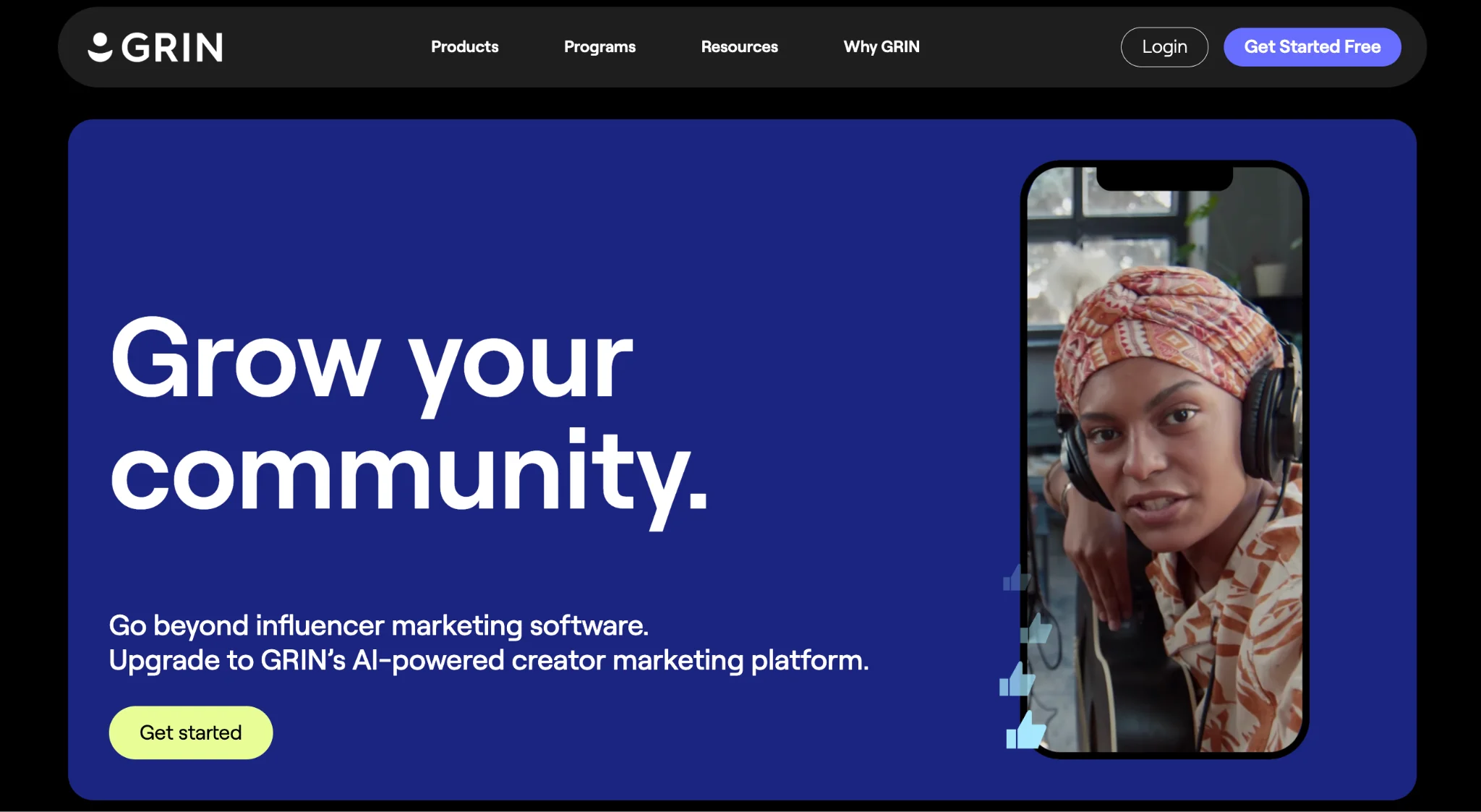
GRIN is a creator management platform built primarily for eCommerce and DTC brands. Its positioning is less about marketplace-style influencer discovery and more about helping brands build, run, and scale creator relationships through CRM, gifting, affiliate tracking, content management, and revenue reporting in one system.
Key Features
- Creator discovery with AI assistance
GRIN lets teams search large creator datasets using filters, lookalikes, and audience criteria, while its AI assistant, Gia, can also help surface creators and support the discovery process. - Relationship-focused CRM
The platform is built around creator CRM, enabling tags, statuses, notes, deliverables, and collaboration history so brands can manage long-term partnerships rather than one-off influencer transactions. - Email outreach and workflow automation
GRIN centralizes outreach through integrated email, templates, sequences, and tracking for opens, clicks, and replies, which helps teams keep communication tied directly to creator records. - eCommerce-native gifting and affiliate tools
A major GRIN strength is its eCommerce stack: product seeding, discount codes, affiliate links, sales tracking, and creator commissions are built into the platform through integrations with commerce systems. - Content library and rights workflows
GRIN automatically gathers creator content into a searchable library, making it easier to organize UGC and reuse assets across marketing channels. - Payments and operational tooling
GRIN supports creator payments, contracts, and operational integrations across communication and eCommerce systems, helping teams reduce spreadsheet-heavy campaign management.
Platform Coverage
Facebook, Instagram, TikTok, X, Pinterest, YouTube, and Twitch
Pricing
Annual pricing starts at $25,000/year (approx. $2,050/month)
Reviews
4.5/5.0 (G2)
Standout Features
- Gia, GRIN’s AI creator marketing assistant
Gia is GRIN’s most prominent recent differentiator, positioned as an agentic AI assistant that helps with creator discovery, outreach, and day-to-day workflow execution. - eCommerce-native infrastructure
GRIN remains one of the strongest options for brands that need gifting, affiliate links, sales attribution, and creator payouts tightly connected to commerce operations. - Free trial and self-serve pricing shift
GRIN’s move toward self-serve onboarding, free trial access, and cancel-anytime pricing is a notable recent update that differentiates it from platforms still locked behind annual enterprise contracts.
Fohr vs GRIN
Fohr is more strategy-led and differentiated by predictive campaign intelligence, while GRIN is more operations-led and designed to help brands run creator programs as an eCommerce growth channel. If Fohr is about forecasting creator performance before launch, GRIN is about managing creator relationships, seeding, payouts, and ROI once the program is running.
GRIN is also the stronger fit for DTC brands that need a creator CRM and revenue attribution layer tied to commerce systems. Fohr will appeal more to teams prioritizing campaign planning and predictive decision-making over operational depth.
Modash

Modash is an end-to-end influencer marketing platform built for brands that want to discover creators at scale, run outreach, track content, and tie influencer activity to gifting, affiliate programs, and payments. Its positioning is notably focused: instead of trying to be everything for every marketing team, Modash concentrates on discovery, campaign tracking, and efficient execution for modern in-house teams.
Key Features
- Large public creator database
Modash is known for giving brands access to a large pool of public creator profiles, without relying on creator opt-in. That makes it especially useful for brands that want broad discovery coverage. - Advanced discovery and audience analysis
Teams can search creators by niche, hashtags, captions, audience location, demographics, engagement rate, and content style, then review fake follower analysis and profile benchmarks. - AI-powered creator search
Modash supports AI discovery through text prompts and image-based search, helping brands find creators with a specific aesthetic or “vibe,” not just a keyword match. - Outreach and CRM workflows
The platform supports email outreach, templates, Gmail/Outlook integration, and simple CRM status tracking so marketers can move creators from sourcing to negotiation and activation. - Shopify gifting and affiliate operations
Modash connects tightly with Shopify for gifting links, discount codes, affiliate links, and performance tracking, making it a strong fit for brands already selling on Shopify. - Content tracking and creator payments
Brands can track campaign content in real time, monitor engagement and affiliate sales, and automate creator or affiliate payouts from the same workflow.
Platform Coverage
Modash supports influencer marketing on platforms such as Instagram, YouTube, and TikTok, providing comprehensive campaign tracking and influencer management tools.
Pricing
- Essentials: $199/month (paid annually)
- Performance: $499/month (paid annually)
- Custom Enterprise: Contact for pricing
Reviews
4.9 / 5.0 (Capterra)
Standout Features
- AI discovery by prompt or image
Modash’s ability to find creators using text prompts or uploaded visuals is one of the most distinctive discovery features in this group. - “Find Your Fans” workflow
Modash can identify influencers already following a brand, which is especially useful for improving reply rates and finding creators with natural affinity. - Transparent, flexible pricing
In a category dominated by custom quotes and annual contracts, Modash stands out for publishing pricing, offering both monthly and yearly plans, and allowing plan changes without rigid lock-in.
Fohr vs Modash
Fohr is better suited to brands that want predictive planning and campaign forecasting. Modash is better suited to brands that want broad creator discovery, efficient outreach, and Shopify-based execution at a much more accessible price point.
Modash also gives brands access to a much larger public-data discovery universe, while Fohr is more specialized in strategic selection and forecasting. For teams that value scale, speed, and pricing transparency, Modash is usually the more practical alternative.
Influencity

Influencity is a full-stack influencer marketing platform built to cover discovery, outreach, CRM, campaign management, and reporting in one interface. It is positioned as a flexible, public-data-driven platform for brands and agencies that want broad discovery access without relying on opt-in-only creator pools.
Key Features
- Public-data creator discovery
Influencity says it enables search across a large, real-time database of 200+ million influencers, with 20+ search criteria and strong analytical views for audience quality and influencer screening. - Influencer CRM and segmentation
The platform includes a structured CRM for lists, tags, segmentation, and campaign organization, making it easier to separate creators by region, campaign type, or brand objective. - Outreach and email workflows
Teams can use templates, follow-up sequences, and an AI email assistant on higher plans. Replies go back to the user’s inbox while the platform handles the sending layer. - Campaign management boards
Influencity uses a visual campaign management style that resembles a Kanban or Trello board, helping marketers track deliverables, statuses, and campaign progress in a more intuitive format. - Tracking and exportable reports
Users can track posts manually or automatically using hashtags, mentions, and rules, then export reports showing impressions, post performance, top content, and cost breakdowns. - Shopify integration for gifting and affiliate use cases
Influencity supports Shopify-powered gifting and discount-code-based attribution, which makes it more useful for eCommerce teams than discovery-only platforms.
Platform Coverage
Instagram, TikTok, YouTube, and X/Twitter
Pricing
- Professional Plan: $318/month or $3,816/year
- Business Plan: $798/month or $9,576/year
- Enterprise Plan: Custom pricing
- Auto-Tracker Add-On: $660/year (for 50 influencers)
Reviews
4.3 / 5.0 (G2)
Standout Features
- Large public-data discovery model
Influencity’s biggest structural differentiator is discovery based on public profiles rather than a smaller opt-in-only creator network. - Visual campaign management boards
Its Kanban-style campaign tracking is a practical standout for marketers who want clearer operational visibility across multiple campaigns. - Flexible paid plans with trial access
Compared with many enterprise tools, Influencity stands out for offering a free trial and a clearer plan structure spanning Professional, Business, and Enterprise tiers.
Fohr vs Influencity
Fohr is more differentiated around predictive campaign intelligence and pre-launch forecasting. Influencity is more differentiated around broad creator discovery and end-to-end campaign operations built on public-data coverage.
Influencity is usually the better fit for teams that want a wider searchable creator universe, more flexible CRM workflows, and lower entry pricing. Fohr is the stronger fit for brands that care more about predictive modeling and strategic campaign planning.
IZEA

IZEA is one of the earliest companies in the influencer marketing category and positions itself as a creator economy platform offering self-serve software, managed services, and hybrid solutions. Its current messaging leans heavily into creator operations, AI-infused workflow tooling, and access to a large creator marketplace for brands and agencies.
Key Features
- Large creator marketplace
IZEA says it operates a leading creator exchange with 4.6M+ creators, giving brands access to a large marketplace of content creators and publishers. - Self-serve, hybrid, and managed service models
Unlike platforms that are purely software-led, IZEA offers multiple engagement models, including DIY software, managed programs, and hybrid support for brands that want more hands-on execution help. - Campaign management and collaboration
Its platform is built to help brands find creators, manage campaigns, coordinate deliverables, and measure outcomes from a centralized system. - Content and influencer marketing workflows
IZEA is positioned across both influencer marketing and content marketing use cases, which can appeal to teams that want creator partnerships and sponsored content coordination in one ecosystem. - AI-infused platform direction
IZEA’s current corporate positioning emphasizes AI-enabled creator marketing operations, and the company recently launched ZED as an AI-infused creator economy marketing operations platform. - Managed strategy for larger brands
IZEA’s pricing page prominently features managed services for brands that want full strategic execution, not just software access.
Platform Coverage
Instagram, TikTok, YouTube, Facebook, Pinterest, Snapchat, Twitch, and X (Twitter).
Pricing
IZEA does not publicly list fixed pricing tiers for all products, but it offers two main approaches:
- IZEA Flex (self-serve SaaS): Typically offered via custom pricing based on usage, features, and scale.
- Managed Services: Fully customized pricing depending on campaign scope, creator volume, and level of service.
In practice, this means pricing is quote-based, often structured as annual contracts for software access or campaign-based pricing for managed services.
Reviews
3.9/ 5.0 (G2)
Standout Features
- Large creator marketplace
IZEA’s scale as a creator marketplace remains one of its main differentiators, especially for brands that want access to a broad pool of creators inside a long-established platform. - Managed-service flexibility
IZEA stands out by offering self-serve, hybrid, and fully managed options, which is useful for brands that may want software but also need execution support. - ZED and AI-infused platform direction
IZEA’s newer platform messaging is centered on AI-powered creator marketing operations, signaling a push beyond legacy marketplace functionality into more modern orchestration tooling.
Fohr vs IZEA
Fohr is more specialized around predictive creator intelligence and campaign forecasting. IZEA is broader and more marketplace-oriented, with a longer legacy in creator transactions and a wider mix of software plus managed services.
For brands that want strategic prediction and tighter campaign planning, Fohr is the more specialized option. For brands that want access to a large creator marketplace and flexible service models, IZEA is the broader, more service-diverse alternative.
Final Thoughts on Fohr Alternatives
Fohr stands out for its predictive approach to influencer marketing, helping brands forecast campaign performance before launch, but many alternatives offer stronger capabilities in execution, scalability, or pricing flexibility. Platforms like GRIN, Upfluence, and Aspire lean heavily into eCommerce integrations and ROI tracking, while tools like Modash and Influencity prioritize large-scale discovery and accessibility. Enterprise solutions such as CreatorIQ and Sprout Social provide deeper analytics and workflow control, whereas newer platforms like Influencer Hero and SARAL focus on operational efficiency and automation. Ultimately, the right alternative depends on whether a brand prioritizes predictive strategy, hands-on campaign execution, or scalable creator program management.