

inBeat Alternatives: Best Influencer Marketing Platforms
Influencer marketing software has become essential for managing creator discovery, outreach, campaign workflows, and performance tracking at scale, especially as brands move from one-off collaborations to structured, ROI-driven programs. While inBeat is often recognized for its simplicity and effectiveness in sourcing micro-influencers and supporting UGC-driven campaigns, it has limitations that lead many teams to explore inBeat alternatives. Common feedback highlights constraints such as limited platform coverage beyond Instagram and TikTok, relatively basic analytics that lack deeper ROI attribution and benchmarking, and a less robust SaaS experience for teams that need full CRM, automation, and end-to-end workflow management. For brands and agencies evaluating influencer marketing software, these gaps become more noticeable as programs scale or require multi-channel coordination and advanced reporting.
This guide explores the 10 best inBeat alternatives—Influencer Hero, Upfluence, Aspire, SARAL, CreatorIQ, Sprout Social, GRIN, Modash, Influencity, and IZEA—to help you compare platforms and find the right fit for your marketing strategy.
Criteria for Suggesting Platform Alternatives
Core Features
Evaluation of each platform’s essential capabilities, including influencer discovery, outreach, CRM, campaign reporting, gifting, UGC and content collection, affiliate tracking and payments, storefronts, application pages, and AI-powered tools.
Supported Social Media Platforms
Assessment of how well each platform integrates with major social networks such as Instagram, YouTube, TikTok, Facebook, Pinterest, and many more
Pricing & Contract Flexibility
Comparison of pricing models, subscription costs, and contract requirements to help brands choose solutions that match their budget and scalability needs.
Standout & Differentiating Features
Highlighting unique or innovative functionalities that set each platform apart, such as real-time tracking dashboards, creator benchmarking, TikTok email discovery, or advanced automation tools.
Customer Reviews & User Satisfaction
Analysis of verified user feedback from credible platforms like G2, TrustRadius, Capterra, focusing on usability, reliability, value for money, customer support, and real-world performance.
inBeat Overview
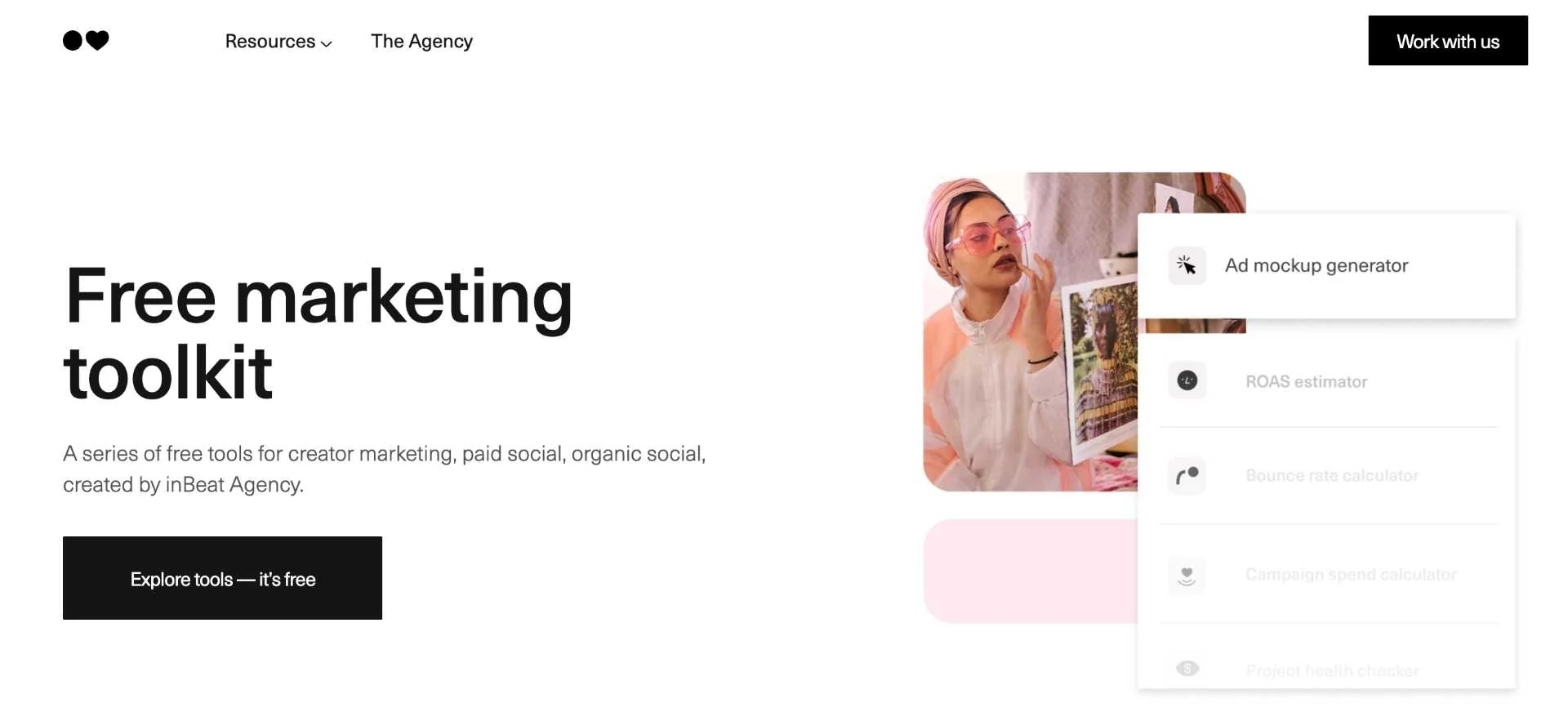
inBeat is a creator-focused influencer marketing solution that has evolved from a self-serve discovery platform into a hybrid model combining influencer marketing services, UGC production, and a free marketing toolkit. Originally known for its micro-influencer database, inBeat is now positioned more as a performance-driven agency helping brands source creators, produce high-converting content, and scale campaigns—particularly on Instagram and TikTok.
Key Features
- Micro & Nano Influencer Discovery: Historically, inBeat enabled brands to find influencers based on engagement rate, follower size, niche, and audience demographics. It remains particularly strong in identifying micro- and nano-creators for cost-efficient campaigns.
- Automated Similar Creator Search: Users can input a creator’s handle to find lookalike influencers with similar audiences and content styles—useful for scaling campaigns quickly.
- Campaign Management Dashboard: Includes tools to track influencer performance, manage collaborations, and monitor campaign progress from a centralized dashboard.
- Bulk Contact Export for Outreach: Allows exporting influencer contact data (emails, profiles) to run outreach campaigns externally, which is helpful for teams using their own CRM or email tools.
- UGC & Creative Services: A key part of inBeat’s current offering is UGC production—matching brands with vetted creators, reviewing content, and delivering assets optimized for paid social campaigns.
- Free Marketing Toolkit: inBeat offers a suite of free tools including engagement rate calculators, fake follower checkers, ROAS calculators, and ad mockup generators—valuable for marketers testing campaigns before committing.
- Creator Screening Process: The platform emphasizes a vetted influencer pool to reduce spam accounts and improve collaboration quality.
Platform Coverage
Instagram and TikTok
Pricing
inBeat does not publicly disclose its full pricing structure. Instead, pricing is custom and requires booking a demo or consultation.
Reviews
4.9 / 5.0 (G2)
inBeat Standout Features
- Micro-Influencer Performance Focus (Instagram & TikTok): Unlike many platforms that prioritize large creator databases, inBeat specializes in high-performing micro and nano influencers—helping brands achieve better engagement and lower acquisition costs.
- UGC-First Campaign Approach: inBeat stands out by combining influencer sourcing with UGC production and paid media strategy—making it particularly valuable for brands focused on performance marketing rather than just awareness.
- Free Toolkit Ecosystem: The availability of free tools (engagement calculators, ad mockups, ROI estimators) gives marketers immediate value without requiring a subscription—something most competitors do not offer at the same level.
Limitations (Why Users Look for inBeat Alternatives)
Limited Platform Coverage
The focus on Instagram and TikTok can be restrictive for brands running omnichannel campaigns that include YouTube, blogs, or emerging platforms.
Basic Analytics & Reporting
Compared to enterprise tools, inBeat’s reporting capabilities are relatively simple, lacking deeper ROI tracking, attribution modeling, and advanced benchmarking features.
Less Robust as a SaaS Platform
With its shift toward agency services, brands looking for a fully self-serve platform with built-in CRM, automated outreach, and end-to-end workflow automation may find it limited.
Onboarding & Matching Friction
Some users report confusion during onboarding and mismatches between campaign opportunities and their niche, which can slow down collaboration efficiency.
10 Best Influencer Marketing Platform Alternatives
| TOOL | REVIEWS | BEST FOR | TRIAL INFO | PRICING | ||
|---|---|---|---|---|---|---|
1 |

|
⭐ | Influencer CRM & automation | Book Demo | Pricing | Website |
2 |

|
⭐ | Influencer discovery | Book Demo | Pricing | Website |
3 |

|
⭐ | Influencer partnerships | Book Demo | Pricing | Website |
4 |

|
⭐ | Influencer outreach | Book Demo | Pricing | Website |
5 |

|
⭐ | Enterprise influencer marketing | Book Demo | Pricing | Website |
6 |
|
⭐ | Influencer marketing & Social media analytics | Book Demo | Pricing | Website |
7 |

|
⭐ | DTC creator management | Book Demo | Pricing | Website |
8 |

|
⭐ | Influencer discovery | Book Demo | Pricing | Website |
9 |

|
⭐ | Campaign management | Book Demo | Pricing | Website |
10 |

|
⭐ | Influencer marketplace | Book Demo | Pricing | Website |
Influencer Hero

Influencer Hero is an all-in-one influencer marketing platform built for brands and agencies that want discovery, outreach, CRM, gifting, affiliate tracking, UGC collection, and reporting in one place. Its positioning is especially strong for growing DTC and eCommerce teams that want more transparent pricing and lighter onboarding than enterprise-first platforms.
Key Features
- Influencer discovery and lookalike search: Influencer Hero lets teams search creators by niche, audience quality, demographics, location, and engagement, then expand lists with lookalike recommendations and follower-analysis tools.
- Bulk outreach and workflow automation: The platform supports high-volume outreach with personalized email flows, status tracking, and campaign-stage automations, which helps teams manage large creator pipelines without relying on spreadsheets.
- Influencer CRM: It includes structured campaign boards, bulk actions, tagging, and creator-level notes so brands can manage outreach, deliverables, and relationship history centrally.
- Affiliate, gifting, and payouts: Influencer Hero supports gifting workflows, affiliate links and codes, conversion tracking, and influencer payments, making it suitable for brands that want creator activity tied to revenue.
- UGC and content library: Teams can collect creator assets, track posts, and organize top-performing content for reuse in paid and organic campaigns.
- API and free tools: Influencer Hero also offers API access and a broad set of free utilities, including engagement calculators, fake-follower tools, and competitor reporting tools.
Platform Coverage
Instagram, TikTok, YouTube, Facebook, Pinterest, Snapchat, X, and Twitch
Pricing
Influencer Hero offers flexible pricing based on outreach volume, and you can have unlimited creators in your CRM with Influencer Hero:
- Standard — $649/month (up to 1,000 reachouts/month)
- Pro — $1,049/month (up to 5,000 reachouts/month)
- Business — $2,490/month (up to 10,000 reachouts/month)
- Custom / Agency — Tailored pricing
Reviews
5.0/5.0 (Capterra)
Standout Features
- Campaign-centric CRM automation: Influencer Hero’s strongest differentiator is its workflow-first CRM, with campaign boards, bulk actions, and automated outreach sequences built for scaling high-volume influencer programs.
- Influencer discovery from your own audience and customers: It stands out for helping brands identify creators who already follow or buy from them, which can lead to warmer outreach and stronger conversion potential.
- AI Workflow Optimization: From discovery to outreach, Influencer Hero reduces manual effort with smart automations, predictive success scoring, and campaign suggestions.
inBeat vs Influencer Hero
inBeat is more narrowly associated with Instagram and TikTok creator campaigns plus UGC-oriented services, while Influencer Hero is a broader software platform built for end-to-end program management across more channels. Compared with inBeat’s lighter public pricing transparency and more service-led positioning, Influencer Hero gives brands a clearer self-serve SaaS model with CRM automation, affiliate tracking, and structured outreach workflows.
Upfluence
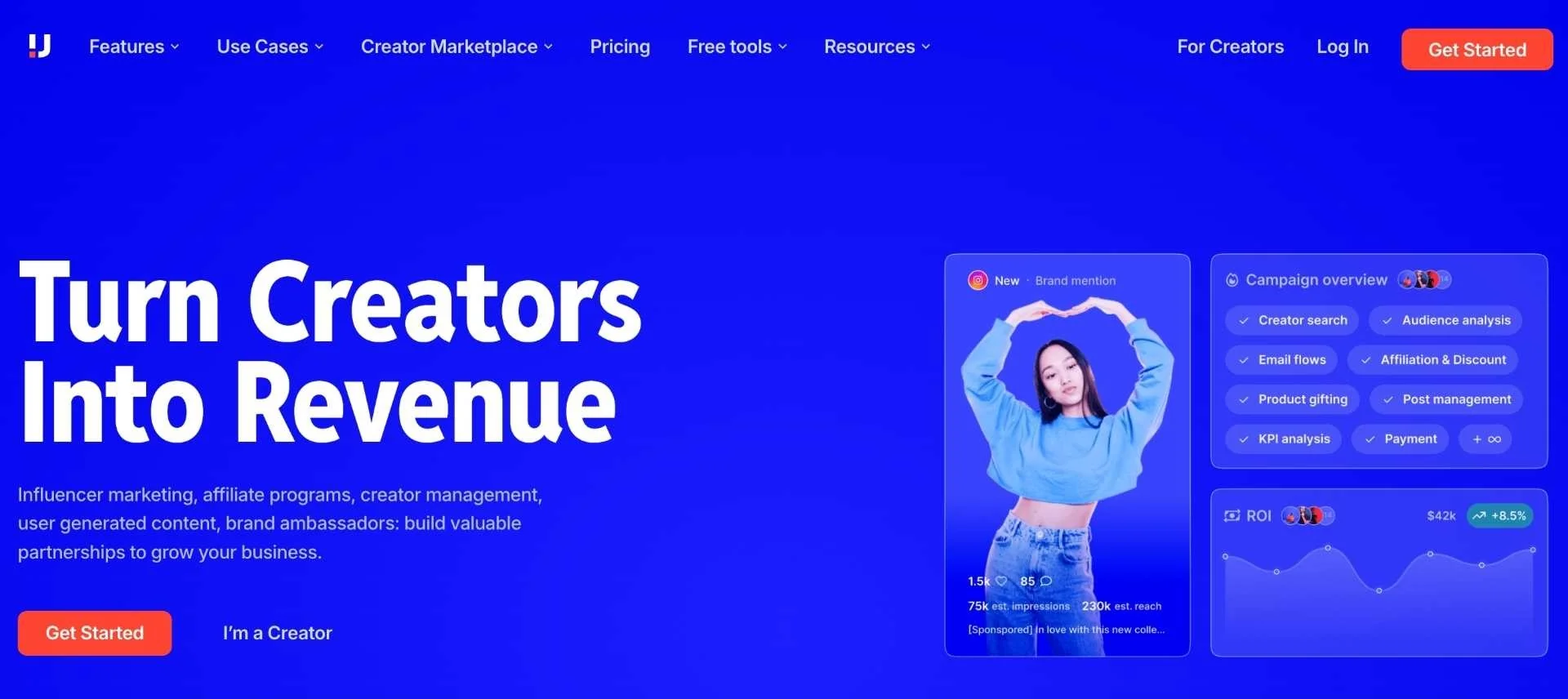
Upfluence is an all-in-one influencer and affiliate marketing platform designed primarily for eCommerce and DTC brands. It is best known for combining creator discovery, outreach, CRM, affiliate tracking, and revenue attribution in one system, with especially strong ties to Shopify and Amazon.
Key Features
- Large creator database with advanced filters: Upfluence gives brands access to a creator database with filters for location, niche, engagement rate, audience demographics, and recent content, helping teams narrow in on performance-fit creators more quickly.
- AI-powered outreach: The platform now emphasizes Jaice AI, which helps automate creator outreach and streamline campaign execution at scale.
- Built-in CRM and campaign management: Upfluence lets teams track outreach, creator status, campaign communication, links, and compensation models without switching tools.
- Strong Shopify and Amazon integrations: This is one of Upfluence’s clearest advantages. It can identify influential customers, manage gifting and referrals, and attribute sales back to creator activity across Shopify and Amazon.
- Affiliate tracking and creator payouts: Upfluence supports affiliate codes, link tracking, conversion tracking, and bulk payments, making it useful for brands that want influencer marketing tied directly to sales.
- Social listening and market research: The platform also includes social listening features to uncover brand mentions, top-performing content, and organic creator opportunities.
Platform Coverage
Instagram, TikTok, YouTube, Facebook, Twitch, Pinterest, and blogs.
Pricing
On average plans start around $2,000/month ($24,000 yearly)
Reviews
4.3 / 5.0 (Capterra)
Standout Features
- Jaice AI for creator program automation: Upfluence’s current positioning heavily features Jaice AI to help teams automate discovery-to-payment workflows with less manual effort.
- Customer-to-creator identification through Shopify: One of its most distinctive features is the ability to identify customers who are already influencers, then convert them into affiliates or creator partners.
- Amazon revenue attribution: Upfluence remains one of the more commerce-oriented platforms because it supports Amazon tracking alongside Shopify, which is still a meaningful differentiator in this category.
inBeat vs Upfluence
inBeat is more focused on micro-influencer and UGC-oriented execution, especially around Instagram and TikTok, while Upfluence is much more commerce-driven and built for end-to-end influencer plus affiliate infrastructure. Brands that want direct Shopify and Amazon revenue attribution, creator payouts, and deeper affiliate workflows will typically find Upfluence more robust, whereas inBeat is lighter and more focused on creator sourcing and performance content.
Aspire
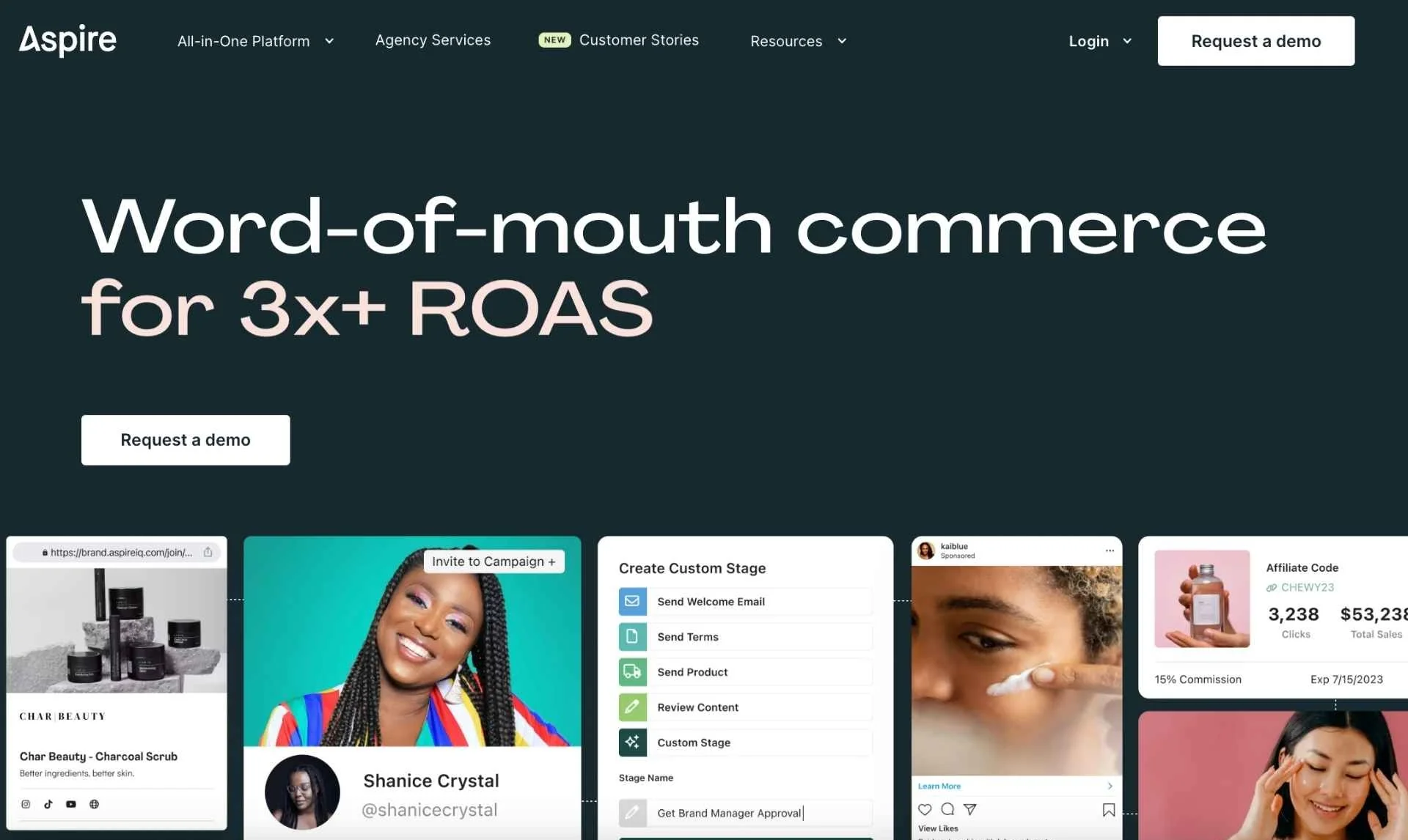
Aspire is an influencer marketing platform built for brands that want to scale creator partnerships, UGC, gifting, affiliate programs, and campaign automation from one workspace. It is especially appealing to DTC and eCommerce teams because it combines creator discovery with a large inbound marketplace, workflow automation, and strong commerce integrations.
Key Features
- Creator discovery with first-party data: Aspire combines search filters, lookalike recommendations, and AI-based discovery with direct partnerships that provide first-party data from Meta, TikTok, and Pinterest.
- Inbound creator marketplace: Brands can post opportunities and receive applications through Aspire Marketplace, reducing dependence on cold outbound recruitment.
- Workflow automation and CRM: Aspire includes campaign pipelines, creator lists, tagging, contract and brief templates, bulk actions, and automated follow-ups.
- Shopify gifting and fulfillment: Brands can let creators shop approved products, manage bundles and budgets, and track fulfillment directly inside the platform.
- Affiliate tracking and creator stores: Aspire supports discount codes, trackable links, creator stores, commissions, and conversion reporting, making it useful for sales-driven creator programs.
- Content hub and reporting: The platform stores creator content and usage rights while providing social analytics, campaign reports, and exports.
Platform Coverage
Instagram, TikTok, Pinterest, YouTube, and Facebook
Pricing
Aspire starts with tiered pricing and can be customized, with a mid-tier quote of about $2,300/month for a use case involving multiple team members and up to 500 creators in CRM.
Reviews
4.0 /5.0 (Capterra)
Standout Features
- Direct platform partnerships for first-party data: Aspire highlights that it is the only influencer marketing platform with direct partnerships with Meta, TikTok, and Pinterest, which helps strengthen data quality and campaign measurement.
- Aspire Marketplace: The platform’s large inbound creator marketplace is a major differentiator for brands that want creators to apply proactively instead of relying only on outbound search.
- AI Creator Discovery with plain-language search: Aspire now emphasizes AI creator discovery that lets users find best-fit creators using plain language instead of only filter-heavy search.
inBeat vs Aspire
inBeat is narrower and more centered on micro-influencer sourcing and creator-style content, while Aspire is a fuller creator operating system for scaling relationships, applications, gifting, and affiliate commerce. For brands that want first-party data access, inbound creator applications, and structured workflow automation, Aspire is the more expansive option; inBeat is the leaner choice for teams focused mainly on Instagram/TikTok creator activation and UGC-led performance campaigns.
SARAL

SARAL is an influencer marketing platform built for consumer and eCommerce brands that want a simpler, more operationally efficient way to run creator programs. Its positioning is especially strong for emerging DTC teams that need discovery, outreach, CRM, affiliate tracking, and performance reporting without the complexity of enterprise software.
Key Features
- Influencer discovery engine: SARAL’s discovery product gives brands access to over 200 million influencer profiles across Instagram, TikTok, and YouTube, with search based on keywords, engagement, and similar creators.
- Outreach automation: The platform helps automate outreach and follow-up, reducing the manual burden of influencer prospecting and communication.
- Flexible influencer CRM: SARAL includes customizable stages, fields, and workflows so teams can adapt the CRM to their own creator-management process.
- Affiliate and ambassador workflows: SARAL supports affiliate links, discount codes, and ambassador-style programs, which makes it well suited to revenue-focused DTC brands.
- Performance analytics and ROAS tracking: By connecting Shopify, brands can see which creators are driving sales, new customers, and ROI in a unified dashboard.
- Shopify and WooCommerce integrations: SARAL explicitly supports Shopify and WooCommerce for gifting, affiliate tracking, and campaign workflows, with custom integrations available beyond that.
Platform Coverage
Instagram, TikTok, and YouTube.
Pricing
There are different plans:
- Starter: $3.6k/quarter
- Business: $4.5k/quarter
- Professional: $7.5k/quarter
Reviews
4.7/5.0 (G2)
Standout Features
- 200M+ creator discovery without opt-in dependency: SARAL’s discovery engine is a major differentiator for teams that want broad creator coverage across Instagram, TikTok, and YouTube.
- Simple full-stack workflow for DTC brands: SARAL is built around a “full-stack” operating model that combines discovery, outreach, CRM, ambassadors, affiliate links, discount codes, and performance tracking in one interface.
- Commerce-oriented ROI dashboards: Its performance module is designed to show which influencers actually drive revenue and new customers, not just engagement.
inBeat vs SARAL
inBeat is more associated with curated micro-influencer activation and UGC-style services, while SARAL is a more clearly productized software platform for managing creator programs in-house. Compared with inBeat’s narrower platform focus and service-led positioning, SARAL gives eCommerce brands a more explicit SaaS workflow around CRM, affiliate tracking, Shopify/WooCommerce integrations, and sales attribution.
CreatorIQ
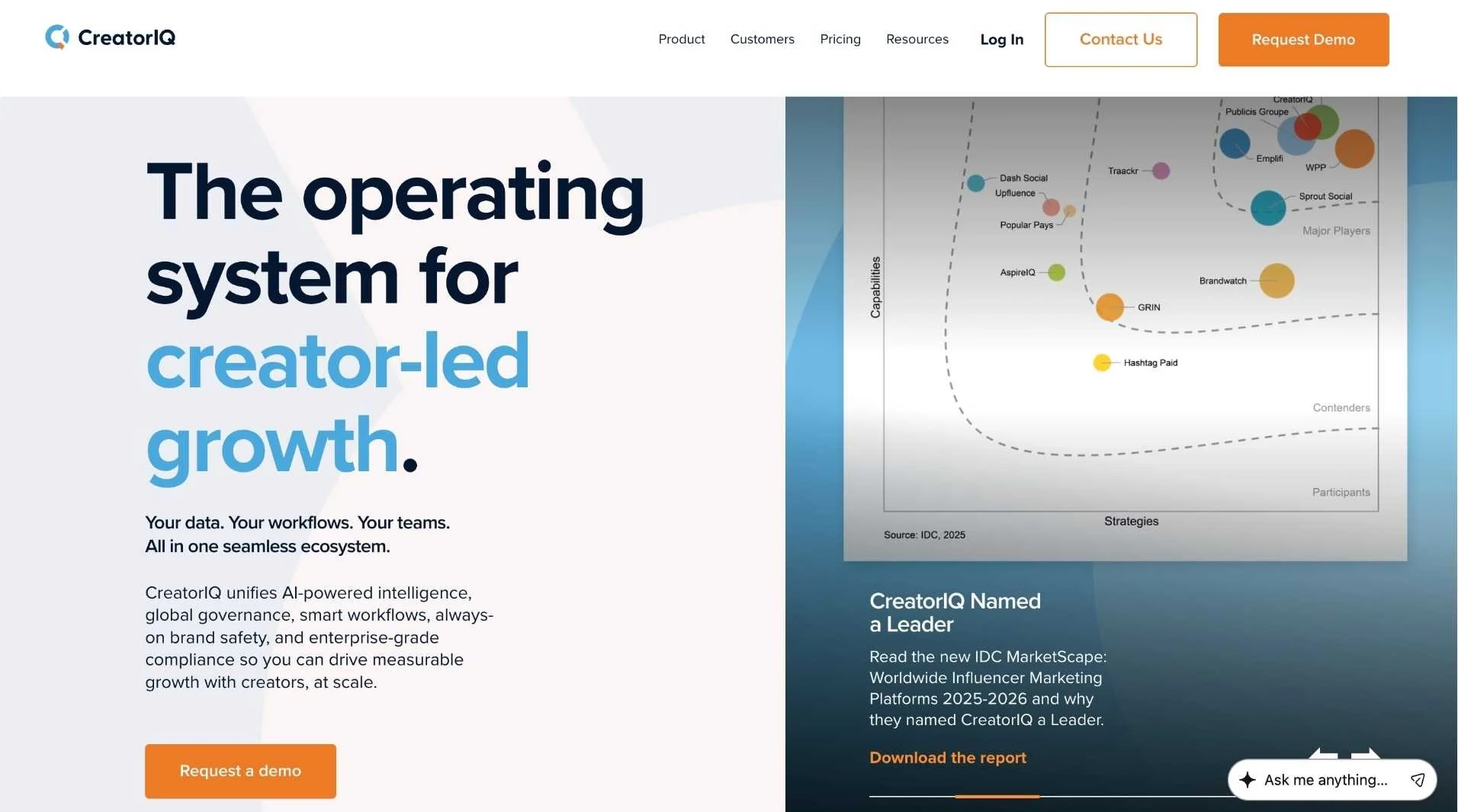
CreatorIQ is an enterprise-grade creator marketing platform designed for large brands managing complex, data-heavy influencer ecosystems. It is known for deep data access, structured workflows, payment compliance, and reporting capabilities that make it especially attractive to global teams and mature creator programs.
Key Features
- Public creator discovery with advanced filtering: CreatorIQ allows brands to search public creators without requiring opt-in, using filters for platform, audience, demographics, engagement, past brand mentions, and semantic AI search.
- Private CRM and creator network management: Teams can organize creators with notes, tags, questionnaires, relationship history, and communication tracking inside a dedicated CRM layer.
- Campaign setup and stakeholder approvals: CreatorIQ supports templated campaigns, custom deliverables by creator, auto-generated briefs, and shareable one-sheet approvals that stakeholders can review without needing a login.
- Shopify gifting and affiliate tools: It includes shipping visibility, address management, creator dashboards, links, codes, and affiliate support, though your research notes conversion reporting is more manual than some competitors.
- Payment processing and compliance: CreatorIQ handles creator payments inside the platform, including tax documentation and fee-based processing after the first annual threshold.
- Custom dashboards and reporting: The platform is built for live, executive-friendly reporting, with strong emphasis on API-connected measurement and shareable dashboards.
Platform Coverage
Instagram, YouTube, TikTok, Facebook, Twitter, Pinterest, and more.
Pricing
- Basic Plan: Starts at $35,000/year. Includes 1,000 contact creators per month
- Standard Plan: Starts at $50,000/year. Includes 2,500 contact creators per month
- Professional Plan: Starts at $90,000/year. Includes 5,000 contact creators per month
- Enterprise Plan: Starts at $200,000/year. Includes 7,500 contact creators per month
Reviews
4.4 / 5.0 (Capterra)
Standout Features
- Semantic AI discovery and granular filtering: CreatorIQ stands out for deep search capabilities that combine public creator data, audience filters, brand mention history, and semantic search queries.
- One-sheet approvals and executive-ready reporting: Its shareable approval flows and no-login reporting are especially valuable for large organizations with multiple stakeholders.
- Integrated payments with tax handling: CreatorIQ’s built-in creator payments and compliance workflow reduce operational load for finance and legal teams, which remains a meaningful differentiator in enterprise programs.
inBeat vs CreatorIQ
inBeat is better aligned with smaller-scale creator activation and UGC-focused campaigns, while CreatorIQ is built for enterprise brands that need global discovery, workflow governance, advanced approvals, and deeper reporting infrastructure. If a team needs cross-functional collaboration, formal stakeholder review, and large-scale creator operations, CreatorIQ is the more robust platform; inBeat is better suited to lighter-weight Instagram and TikTok creator initiatives.


Sprout Social

Sprout Social’s influencer marketing product is the rebranded evolution of Tagger Media, now positioned as Sprout Social Influencer Marketing. It is designed for brands that want creator discovery, campaign management, brand safety, performance reporting, and closer alignment between influencer programs and broader social media strategy.
Key Features
- AI-powered creator discovery: Sprout Social Influencer Marketing helps brands find creators using demographic, engagement, topical, and semantic search signals, with brand fit and creator similarity tools layered in.
- Brand Fit Score and brand safety filters: One of its strongest differentiators is its ability to score creator-brand alignment and flag risky content categories before outreach begins.
- Workflow-driven campaign management: Teams can move creators through stages such as review, proposal, approval, and live posting, while keeping contracts, notes, and collaboration history in one place.
- Content approval and reporting: The platform supports pre-publish content review, downloadable reports, benchmark tracking, and earned media value analysis.
- Shopify and PayPal integrations: Sprout supports gifting workflows, discount code attribution, and affiliate-style payouts, making it stronger for commerce-linked campaigns than many social suites.
- Competitive benchmarking: The platform also emphasizes industry and competitor comparisons, which is useful for teams that need board-ready reporting rather than just campaign-level metrics.
Platform Coverage
Instagram, YouTube, Facebook, TikTok, and X (Twitter)
Pricing
Starts around $1,600/month per user plus $600 per extra user.
Reviews
4.5 / 5.0 (Capterra)
Standout Features
- Brand Fit Score + Brand Safety filtering: Sprout stands out for helping teams qualify creators not just by size or engagement, but by strategic fit and content risk.
- Benchmark-heavy analytics: Its EMV reporting, competitor comparisons, and executive-friendly exports make it especially appealing for enterprise teams that need more than campaign snapshots.
- Rebranded Tagger infrastructure inside Sprout: Since the 2025 rebrand, the product’s differentiation is tighter integration between influencer marketing and Sprout’s wider social media management ecosystem.
inBeat vs Sprout Social
inBeat is more focused on micro-influencer sourcing and creator-style performance campaigns, especially around Instagram and TikTok, while Sprout Social is broader and more analytics-heavy. Brands that need brand safety controls, benchmark reporting, stakeholder-ready exports, and a closer tie between influencer activity and overall social media operations will usually find Sprout more robust, while inBeat remains the lighter, more creator-campaign-focused option.
GRIN
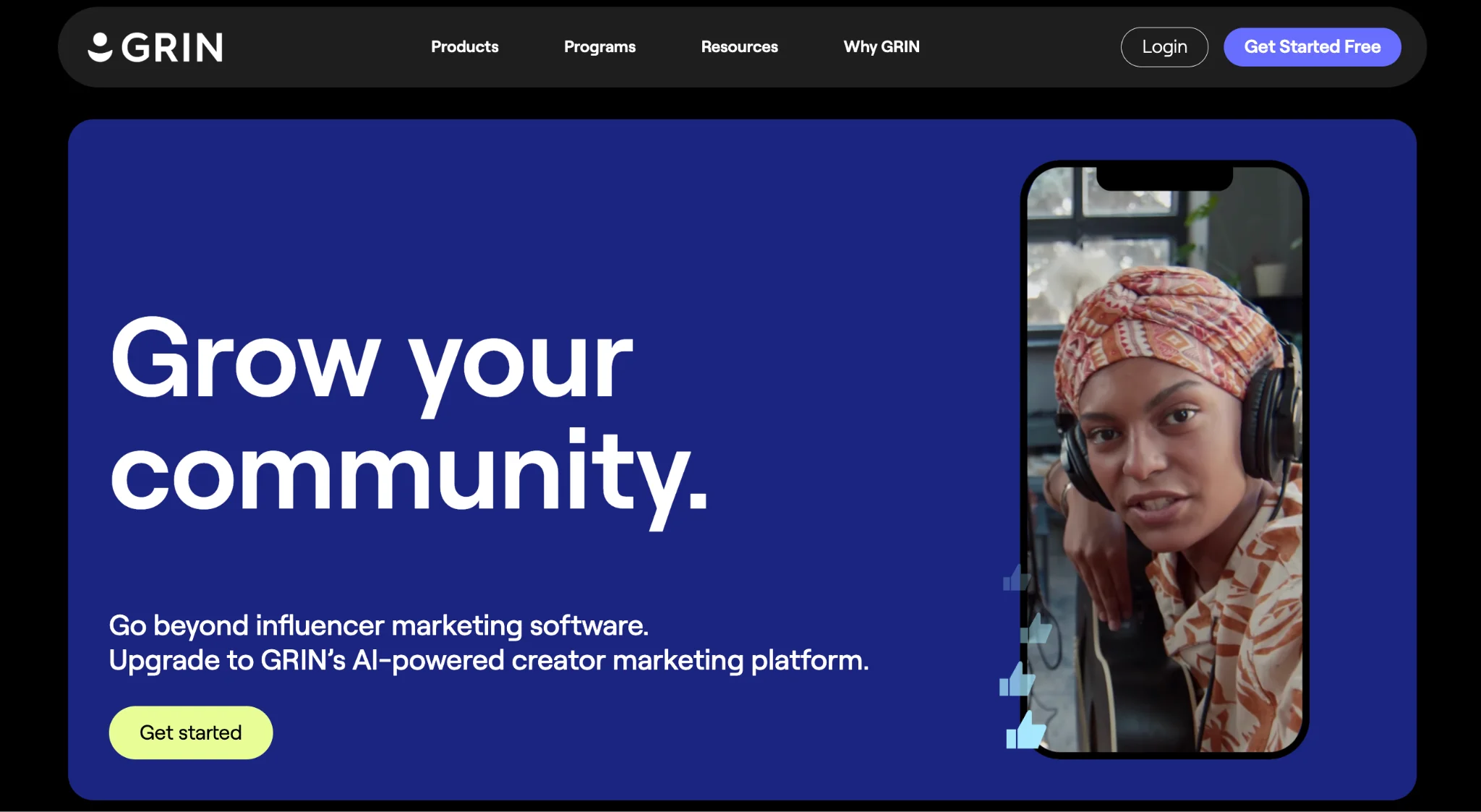
GRIN is a creator management platform built primarily for DTC and eCommerce brands that want to run influencer programs in-house. It combines creator discovery, CRM, gifting, payments, affiliate tracking, and content management in a single system, with a strong emphasis on long-term creator relationships rather than one-off discovery.
Key Features
- Creator discovery and AI search: GRIN offers creator search with filters, keyword targeting, and AI-assisted discovery, including support for finding lookalike creators and prioritizing better-fit partnerships.
- Integrated outreach and CRM: Brands can run outreach from synced email accounts, manage notes and statuses, and organize creators in customizable relationship pipelines.
- Branded landing pages and creator portals: GRIN lets brands create inbound creator application pages, while creators get structured portals for briefs, submissions, contracts, and payment visibility.
- Gifting, affiliate, and commerce workflows: The platform is especially strong in product seeding, discount codes, affiliate tracking, and revenue attribution through eCommerce integrations.
- UGC library and media rights: GRIN stores creator content, including Stories, and supports media-rights handling, which is useful for brands repurposing creator assets in ads and owned channels.
- Integrated payments: GRIN supports creator payouts and 1099 processing, reducing operational burden for brands managing larger creator programs.
Platform Coverage
Facebook, Instagram, TikTok, X, Pinterest, YouTube, and Twitch
Pricing
Annual pricing starts at $25,000/year (approx. $2,050/month)
Reviews
4.5/5.0 (G2)
Standout Features
- Public tiered pricing with free trial: GRIN’s shift to self-serve pricing tiers and a 30-day free trial is one of its biggest recent changes, making it more accessible than older enterprise-only positioning suggested.
- Creator portals plus branded landing pages: GRIN is especially strong for brands building repeatable creator programs, thanks to dedicated creator experiences on both the inbound and operational sides.
- eCommerce-native campaign stack: Product seeding, affiliate tracking, content management, and payments are tightly connected, which is a major differentiator for DTC teams.
inBeat vs GRIN
inBeat is better suited to brands that want leaner creator sourcing and UGC-style activation, while GRIN is a fuller creator operating system for in-house relationship management. Compared with inBeat’s narrower channel focus and lighter workflow depth, GRIN offers more mature CRM, gifting, payments, affiliate tracking, and content management for brands running ongoing creator programs at scale.
Modash

Modash is an end-to-end influencer marketing platform built for brands that want large-scale creator discovery without relying on opt-in-only databases. It is especially well suited to lean performance teams that want strong search, outreach, campaign tracking, Shopify gifting, and affiliate workflows without heavy enterprise complexity.
Key Features
- Large public creator database: Modash emphasizes access to a very large pool of public creator profiles, with advanced filters for niche, location, demographics, engagement, and audience quality.
- AI-powered creator discovery: Users can describe an ideal creator in text or upload an aesthetic image to find visually and contextually similar influencers.
- Bulk outreach and simple CRM: Modash supports email templates, Gmail/Outlook syncing, 1:1 or bulk outreach, and CRM stages like contacted, negotiating, and confirmed.
- Campaign tracking and content monitoring: Brands can track posts, mentions, hashtags, impressions, reach, engagement, and affiliate performance in real time.
- Shopify gifting and affiliate tools: Modash connects gifting, discount codes, UTMs, affiliate links, and payout automation through Shopify.
- Influencer payments: The platform also supports commission-based payouts and creator earning visibility, which helps teams manage affiliate-heavy programs more efficiently.
Platform Coverage
Modash supports influencer marketing on platforms such as Instagram, YouTube, and TikTok, providing comprehensive campaign tracking and influencer management tools.
Pricing
- Essentials: $199/month (paid annually)
- Performance: $499/month (paid annually)
- Custom Enterprise: Contact for pricing
Reviews
4.9 / 5.0 (Capterra)
Standout Features
- AI discovery by text prompt or image: Modash’s “describe a vibe” and image-led discovery tools are still among the more distinctive search features in the category.
- Find Your Fans: The ability to identify creators who already follow your brand gives it a practical edge for warmer, higher-conversion outreach.
- Transparent pricing with flexible billing: Compared with many influencer platforms, Modash stands out for simple public pricing and the ability to switch between monthly and yearly plans.
inBeat vs Modash
inBeat is more associated with curated micro-influencer activation and creator-led services, while Modash is a more software-centric platform built for in-house discovery, outreach, and tracking. Brands that want broader public creator search, AI visual discovery, Shopify-powered gifting, and flexible pricing will usually see Modash as the more scalable SaaS option; inBeat remains the narrower creator-sourcing and UGC-focused alternative.
Influencity

Influencity is a full-stack influencer marketing platform that combines discovery, outreach, CRM, campaign execution, reporting, and social listening in one product. It is aimed at brands and agencies that want broad public-data discovery and flexible subscription options without being locked into rigid long-term contracts.
Key Features
- Public-data influencer discovery: Influencity’s database is built from public profiles rather than opt-in-only creators, helping brands search broadly across niche and geography.
- Influencer CRM and campaign boards: Teams can organize creators with tags, lists, segmentation, and Kanban-style campaign views to manage deliverables and stages visually.
- Outreach and follow-up tools: Influencity includes email templates, follow-up sequences, and an AI email assistant on higher plans, though replies route back to the user’s inbox.
- Manual and automated campaign tracking: Brands can track campaign content via rules based on hashtags or mentions, or enter posts manually when needed.
- Shopify-based gifting and affiliate workflows: The platform supports code assignment, gifting campaigns, and influencer-level sales attribution through Shopify.
- Exportable reporting and social listening: Influencity also layers in campaign reports, exports, monitoring, competitor analysis, and broader social media management capabilities.
Platform Coverage
Instagram, TikTok, YouTube, and X/Twitter
Pricing
- Professional Plan: $318/month or $3,816/year
- Business Plan: $798/month or $9,576/year
- Enterprise Plan: Custom pricing
- Auto-Tracker Add-On: $660/year (for 50 influencers)
Reviews
4.3 / 5.0 (G2)
Standout Features
- Flexible subscription model: Influencity stands out for allowing upgrades and cancellations without mandatory permanence, which is still relatively uncommon in this category.
- Public-data discovery plus social listening: It combines creator search with broader monitoring and market-research modules, giving teams more context than many pure influencer tools.
- Kanban-style campaign operations: Its visual campaign management makes it easier for teams to track deliverables and workflows across multiple programs at once.
inBeat vs Influencity
inBeat is more closely tied to creator sourcing and UGC-style activation, while Influencity is a more traditional all-in-one influencer SaaS platform. Compared with inBeat’s narrower focus, Influencity gives brands broader in-house tooling for CRM, automated tracking, social listening, and more flexible subscription management.
IZEA

IZEA is one of the longest-standing influencer marketing platforms, offering a comprehensive suite for creator discovery, campaign management, content collaboration, and payments. Originally known for pioneering the influencer marketing category, IZEA has evolved into a full-service platform that supports both self-serve software (IZEA Flex) and managed services, making it suitable for brands, agencies, and enterprises running large-scale creator programs.
Key Features
- Influencer discovery and marketplace: IZEA provides access to a large creator marketplace where brands can search influencers by niche, audience demographics, engagement, and content type, or post campaigns for creators to apply directly.
- IZEA Flex platform (end-to-end workflow): Its core platform supports campaign planning, creator sourcing, collaboration, approvals, and performance tracking within a centralized dashboard.
- Casting Calls (inbound applications): Brands can publish campaign briefs and receive applications from creators, reducing reliance on outbound outreach and speeding up recruitment.
- Content collaboration and approvals: IZEA enables structured workflows for content submission, feedback, revisions, and approvals before publishing, ensuring brand compliance and consistency.
- Automated payments and compliance: The platform handles influencer payments, contracts, and tax documentation, simplifying financial operations for brands managing multiple creators.
- Analytics and reporting: IZEA offers campaign-level analytics, tracking engagement, reach, impressions, and overall performance, with dashboards designed for both marketers and stakeholders.
- Managed services option: For brands that prefer hands-off execution, IZEA also provides managed campaign services alongside its SaaS platform.
Platform Coverage
Instagram, TikTok, YouTube, Facebook, Pinterest, Snapchat, Twitch, and X (Twitter).
Pricing
IZEA does not publicly list fixed pricing tiers for all products, but it offers two main approaches:
- IZEA Flex (self-serve SaaS): Typically offered via custom pricing based on usage, features, and scale.
- Managed Services: Fully customized pricing depending on campaign scope, creator volume, and level of service.
In practice, this means pricing is quote-based, often structured as annual contracts for software access or campaign-based pricing for managed services.
Reviews
3.9/ 5.0 (G2)
Standout Features
- Casting Calls for inbound creator sourcing: IZEA’s ability to let creators apply directly to campaigns helps brands quickly build pipelines without relying solely on outbound outreach.
- Hybrid SaaS + managed services model: Unlike many platforms, IZEA offers both self-serve software and fully managed campaign execution, giving teams flexibility based on internal resources.
- Integrated payments and compliance tools: Built-in payment processing and tax handling streamline influencer compensation, which is especially valuable for large-scale programs.
inBeat vs IZEA
inBeat is more focused on micro-influencer sourcing and UGC-driven campaigns, particularly for Instagram and TikTok, while IZEA offers a broader, enterprise-ready platform with full campaign workflows, creator marketplaces, and integrated payments. Compared to inBeat’s lighter, service-oriented approach, IZEA provides more structured campaign management, inbound creator applications, and multi-platform support, making it better suited for brands running larger, more complex influencer programs.
Final Thoughts on inBeat Alternatives
Choosing the right alternative to inBeat ultimately depends on your team’s priorities—whether that’s scalable creator CRM and automation (Influencer Hero, GRIN), deep eCommerce and affiliate integrations (Upfluence, SARAL), advanced analytics and enterprise reporting (CreatorIQ, Sprout Social), or flexible, data-driven discovery (Modash, Influencity). While inBeat remains a strong option for micro-influencer campaigns and UGC-focused execution, many of its alternatives offer more comprehensive, self-serve platforms with broader channel coverage, deeper reporting, and end-to-end campaign infrastructure, making them better suited for brands looking to scale influencer marketing into a long-term, data-driven growth channel.