

indaHash Alternatives: Best Influencer Marketing Platforms
Managing influencer campaigns today involves more than just finding creators—it requires structured workflows for discovery, outreach, relationship management, and performance tracking across multiple channels. Influencer marketing software helps teams centralize these processes, replacing spreadsheets and manual coordination with scalable systems that support creator vetting, automated communication, campaign execution, and ROI measurement. As programs grow, having the right platform becomes critical for maintaining efficiency, tracking conversions, and building long-term creator partnerships.
However, many teams exploring indaHash alternatives point to a few consistent limitations that impact usability and scalability. Users often mention limited transparency in pricing and campaign control, reliance on a managed-service model rather than self-serve workflows, and less flexibility in customizing outreach, reporting, or integrations compared to newer influencer marketing software. These gaps lead brands and agencies to evaluate more flexible platforms like GRIN, Influencer Hero, Aspire, SARAL, Influencity, NeoReach, Heepsy, Skeepers, Upfluence, and Traackr, which we’ll compare in detail throughout this article.
Criteria for Suggesting Platform Alternatives:
- Core Features
Evaluation of each platform’s essential capabilities, including influencer discovery, outreach, CRM, campaign reporting, gifting, UGC and content collection, affiliate tracking and payments, storefronts, application pages, and AI-powered tools. - Supported Social Media Platforms
Assessment of how well each platform integrates with major social networks such as Instagram, YouTube, TikTok, Facebook, Pinterest, and many more - Pricing & Contract Flexibility
Comparison of pricing models, subscription costs, and contract requirements to help brands choose solutions that match their budget and scalability needs. - Standout & Differentiating Features
Highlighting unique or innovative functionalities that set each platform apart, such as real-time tracking dashboards, creator benchmarking, TikTok email discovery, or advanced automation tools. - Customer Reviews & User Satisfaction
Analysis of verified user feedback from credible platforms like G2, TrustRadius, Capterra, focusing on usability, reliability, value for money, customer support, and real-world performance.
indaHash Overview

indaHash is an influencer marketing platform that combines self-serve software with managed services for brands and agencies. The company positions itself as an end-to-end solution for creator discovery, campaign execution, reporting, payments, and creator relationship management, and says it has supported campaigns for 600+ brands across 100+ countries. It also offers a creator-facing mobile app, which helps brands connect with influencers at scale while giving creators direct access to campaign opportunities.
Key Features
- Creator discovery and vetting: indaHash lets teams search creators using audience data, engagement rate, bio and hashtag filters, keyword logic, and audience credibility signals, with official materials also highlighting AI-powered image recognition to surface creators based on visual content, not just text metadata.
- AI image recognition: One of indaHash’s more distinctive capabilities is its AI Finder, which analyzes images and videos from past creator posts to identify relevant patterns, tags, and objects. This can help teams find creators who match a campaign aesthetic or product context even when those creators are not obvious from keyword search alone.
- Creator CRM: The platform includes a Creator Relations Manager for storing creator records, contact details, performance history, and recruitment workflows in one place. Paid plans expand this into unlimited CRM capacity, and enterprise setups can separate CRM environments by country or brand team.
- Campaign management: indaHash supports campaign setup, workflow templates, task management, content feedback, approvals, file sharing, budget tracking, and campaign handover. The platform is built to run campaigns from discovery through reporting inside a single workspace.
- Content moderation and approvals: Brands can manage amends, comments, approvals, and content review inside the dashboard, which is especially useful for teams running higher-volume creator programs that need structured review steps.
- AI-powered sentiment and product mention tracking: Paid plans include multilingual comment sentiment analysis and product mention monitoring, helping teams go beyond likes and views to understand audience reaction and brand perception.
- Reporting and analytics: indaHash offers automated and customizable reporting, campaign analytics, performance metrics, and ROI tracking. It also supports faster report creation for teams that need client-ready outputs without heavy manual formatting.
- eCommerce and ROI tracking: Through its eCommerce coupon and ROI add-on, indaHash enables brands to assign unique coupon codes, measure creator-driven sales, and attribute revenue at the influencer level. This is particularly relevant for Instagram and TikTok campaigns where coupon-led attribution can be easier to use than affiliate links.
- Influencer payments: indaHash has added integrated payment capabilities for global creator compensation, including transaction reporting, payment status tracking, and mass-payment workflows. Its pricing page also references influencer payment add-ons with support for broad international coverage.
- Submission forms and recruitment flows: The platform includes ambassador or creator onboarding forms that help brands collect applications and recruit creators through structured intake rather than only manual outreach.
- Client access and white-label options: indaHash offers client-facing campaign access as an add-on, along with white-label functionality for agencies that want a branded login, custom domain, and more polished external collaboration.
- API and workflow customization: Enterprise packages can include API integrations, custom platform packages, flexible data fields, and even feature development for organizations that need indaHash to fit more complex internal systems.
Platform Coverage
Instagram, TikTok, Snapchat, and YouTube
Pricing
Not publicly disclosed.
Reviews
4.7 / 5.0 (G2)
indaHash Standout Features
- AI visual creator discovery: indaHash’s AI image recognition can scan creators’ past visual content and tag it automatically, which helps brands search by objects, aesthetics, and product context rather than relying only on bios, captions, or hashtags. This is a strong differentiator for teams that care about creative fit as much as audience fit.
- AI brief-to-shortlist workflow: In a February 2026 product update, indaHash introduced an AI-assisted workflow that turns a campaign brief into tailored discovery logic and generates a “Reason Why” explanation for shortlisted creators. That is especially useful for agencies and in-house teams that need to justify selections internally or to clients.
- Integrated global influencer payments: indaHash has rolled out integrated payment infrastructure for creator compensation, including mass payouts, payment-status tracking, and reporting. This is valuable for multi-market campaigns where cross-border payments usually add operational overhead.
Limitations (Why People Look for indaHash Alternatives)
Paid pricing is still not very transparent
While indaHash now has a free Lite plan, its main paid tiers are still listed as custom, which makes it harder for teams to compare costs quickly against other influencer marketing platforms.
Advanced functionality is spread across add-ons and custom packages
Features such as mass mailing, client access, white label, flexible custom fields, eCommerce ROI tracking, and payments are positioned as add-ons or enterprise-level options, so the true cost and feature depth can be harder to estimate upfront.
The product appears better suited to consultative or larger-scale programs than lightweight self-serve use cases
indaHash strongly promotes both agency services and customized enterprise setups, which may feel heavier than needed for smaller teams that want fast onboarding and straightforward self-serve workflows.
Channel depth is not equally native across every platform
indaHash highlights native support for Instagram, TikTok, Snapchat, and YouTube, while broader platform coverage is described more as integration-agnostic support. Teams that need equally deep analytics and workflow control across every social channel may compare alternatives with stronger native coverage.
10 Best Influencer Marketing Platform Alternatives:
| TOOL | REVIEWS | BEST FOR | TRIAL INFO | PRICING | ||
|---|---|---|---|---|---|---|
1 |

|
⭐ | DTC creator management | Book Demo | Pricing | Website |
2 |

|
⭐ | Influencer CRM & automation | Book Demo | Pricing | Website |
3 |

|
⭐ | Influencer partnerships | Book Demo | Pricing | Website |
4 |

|
⭐ | Influencer outreach | Book Demo | Pricing | Website |
5 |

|
⭐ | Campaign management | Book Demo | Pricing | Website |
6 |
|
⭐ | Influencer campaigns & data analytics | Book Demo | Pricing | Website |
7 |

|
⭐ | Influencer discovery | Book Demo | Pricing | Website |
8 |

|
⭐ | Influencer gifting & UGC campaigns with micro-influencers | Book Demo | Pricing | Website |
9 |

|
⭐ | Ecommerce influencer discovery | Book Demo | Pricing | Website |
10 |

|
⭐ | Enterprise influencer analytics | Book Demo | Pricing | Website |
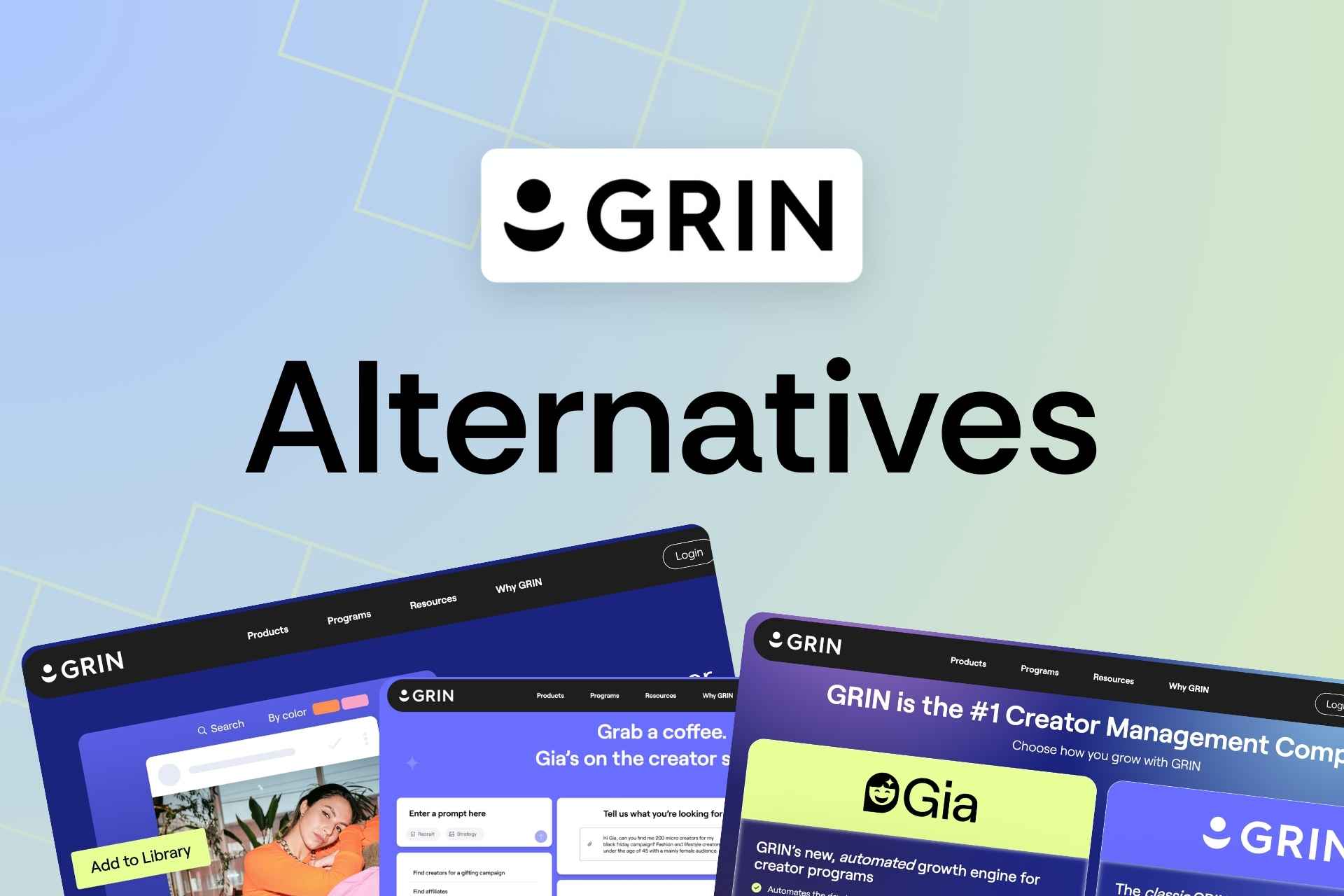
1. GRIN
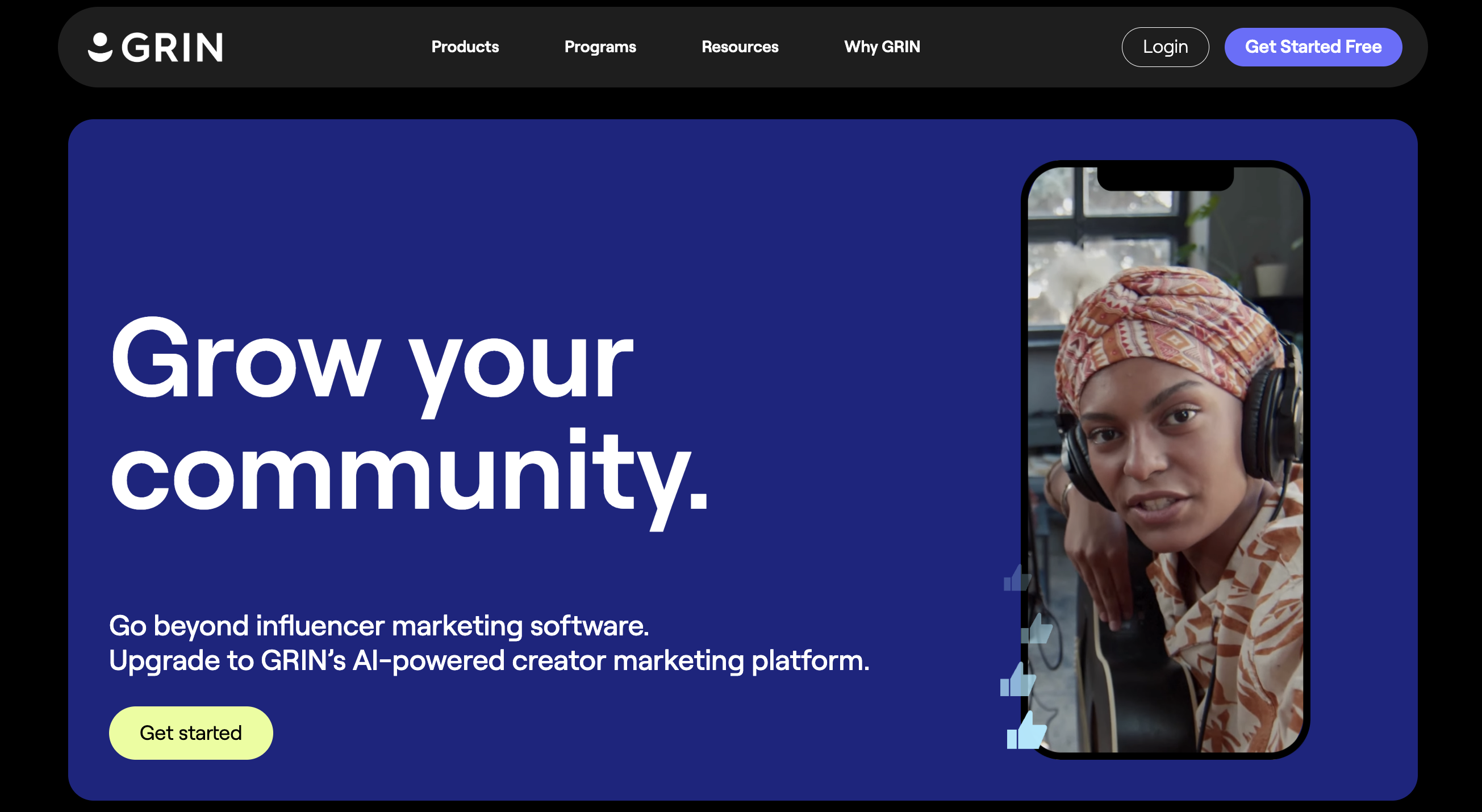
GRIN is a creator management platform built primarily for DTC and eCommerce brands that want to run influencer marketing, gifting, affiliate tracking, creator payments, and content management in one system. The company now positions its product around two paths: traditional hands-on workflow management through the GRIN platform, or AI-assisted execution through Gia, its newer creator marketing agent.
Key Features
- Influencer discovery and vetting: GRIN helps teams find creators by niche, audience fit, engagement, and brand affinity, then move them directly into outreach and campaign workflows without juggling separate tools.
- Built-in outreach and communication: Brands can run outreach from connected email accounts, track opens and replies, and keep creator conversations tied to campaign records.
- Creator CRM and workflows: GRIN’s CRM supports tagging, notes, statuses, deliverables, and creator portals so teams can manage relationships beyond one-off campaigns.
- Product seeding and gifting: GRIN is especially strong for product-heavy programs, with native eCommerce workflows for sending products, generating discount codes, and tracking fulfillment.
- Affiliate tracking and payouts: The platform supports affiliate links, commission logic, and creator payments, making it easier to connect creator activity with attributable revenue.
- UGC library and rights handling: GRIN stores creator content in a searchable library and supports media rights workflows, which is useful for brands repurposing influencer content across paid and owned channels.
- Deep integrations: GRIN integrates with major commerce and marketing systems, including Shopify, WooCommerce, Gmail, Klaviyo, Slack, PayPal, and DocuSign.
- AI support through Gia: Gia, launched in 2025, is designed to help with creator discovery, outreach, gifting, and performance tracking inside the platform.
- New social listening and affiliate tools: GRIN also launched Social Listening and Affiliate Hub, adding more visibility into creator conversations and revenue-focused workflows.
Platform Coverage
Facebook, Instagram, TikTok, X, Pinterest, YouTube, and Twitch
Pricing
Annual pricing starts at $25,000/year (approx. $2,050/month)
Reviews
4.5/5.0 (G2)
Standout Features
- Gia, the AI creator marketing agent: GRIN’s biggest recent differentiator is Gia, which is built to handle creator discovery, outreach, gifting, and tracking in a more agentic workflow than standard rule-based automation.
- Social Listening + Affiliate Hub: These newer releases push GRIN beyond campaign operations into creator discovery through conversations and more structured performance-driven revenue workflows.
- Commerce-native infrastructure: GRIN remains one of the stronger options for brands that want product seeding, affiliate links, creator payouts, and content reuse tied closely to Shopify, WooCommerce, Magento, and adjacent systems.
indaHash vs GRIN
Compared with indaHash, GRIN is more commerce-centric and better suited to brands that want gifting, affiliate revenue tracking, media rights handling, and creator payments tightly connected to eCommerce operations. indaHash stands out more for AI-based visual discovery and a flexible SaaS-plus-services setup, while GRIN is the stronger fit for DTC brands that want creator management to behave like an extension of their store and retention stack.
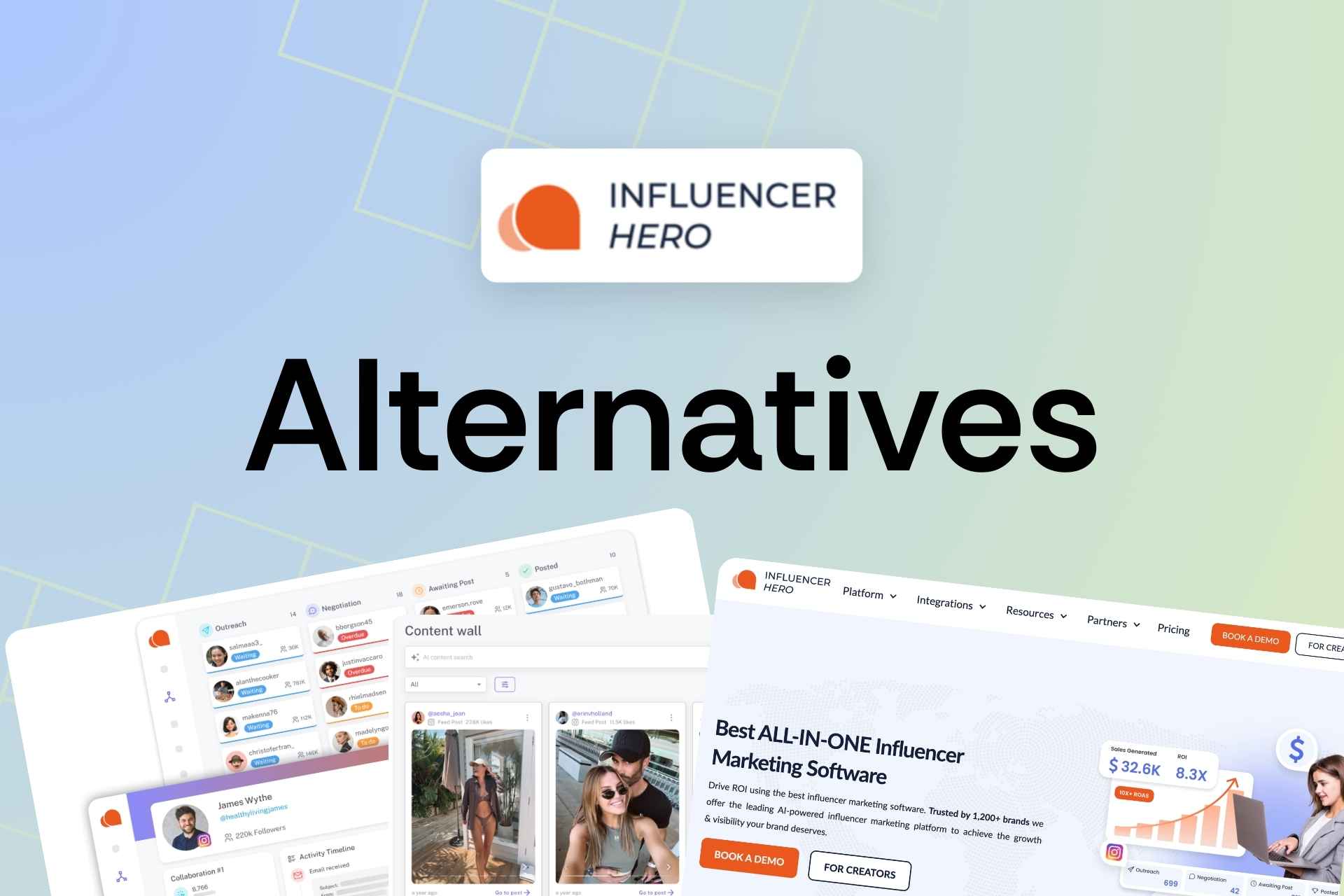
2. Influencer Hero
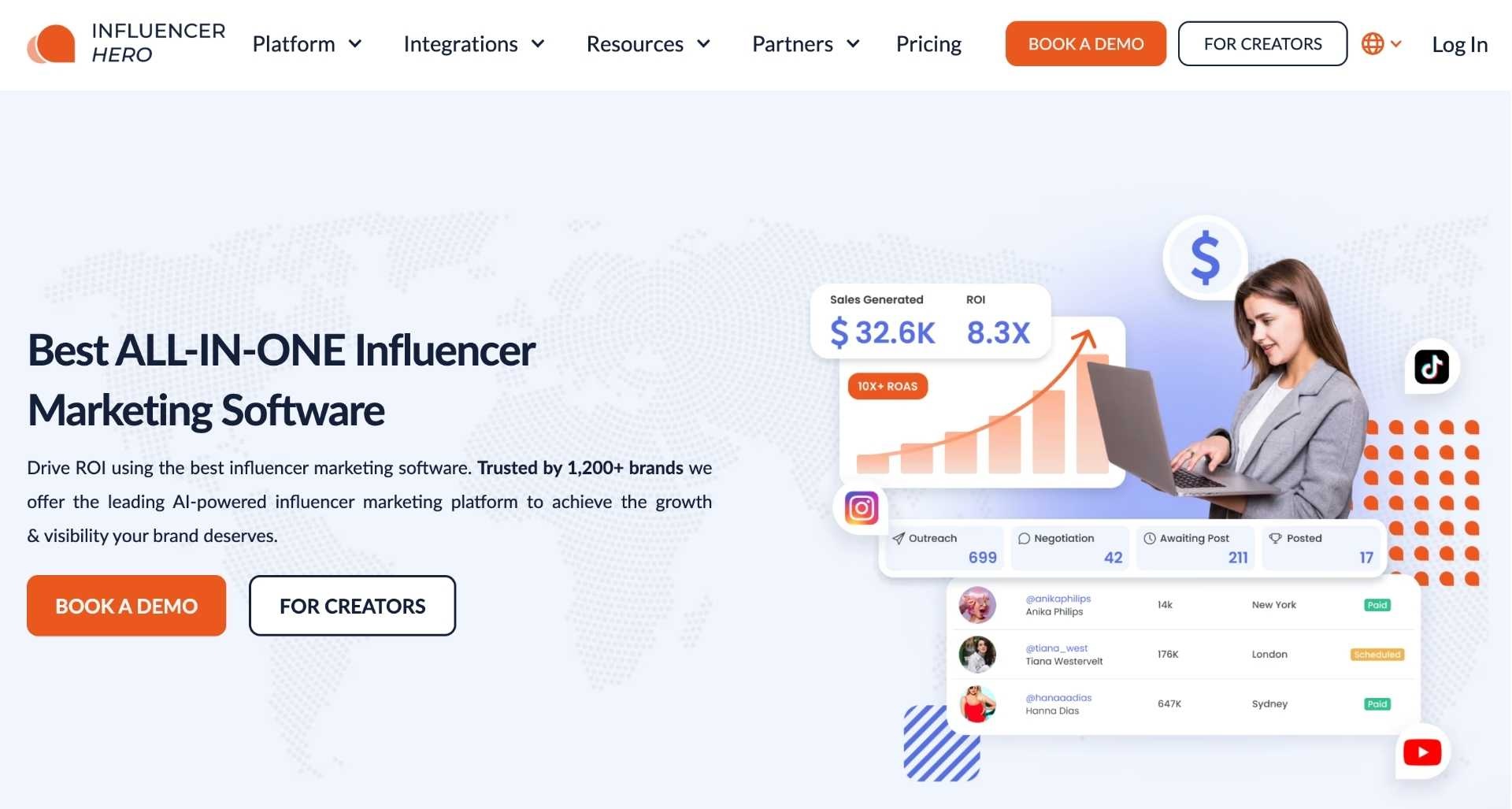
Influencer Hero is an all-in-one influencer marketing platform aimed at growing DTC brands, eCommerce teams, and agencies that want to centralize discovery, outreach, gifting, affiliate tracking, payouts, and reporting. Its positioning is especially strong around campaign-centric CRM workflows and making high-volume influencer programs easier to run without enterprise-level pricing.
Key Features
- Influencer discovery: Influencer Hero supports creator search with granular filters, fake follower detection, and lookalike recommendations. Company materials also highlight a large creator database and one-click importing from its Chrome extension.
- Campaign-centric CRM: One of its core strengths is the dealflow-style CRM that organizes outreach, deliverables, contracts, and ROI tracking in structured campaign boards.
- Automated outreach: The platform supports bulk and one-to-one email outreach, AI-assisted copy, reply tracking, and multi-step follow-up sequences.
- Chrome extension: Teams can analyze creators while browsing Instagram, TikTok, and YouTube, then sync profiles into CRM workflows without manual copy-paste work.
- Gifting and eCommerce workflows: Influencer Hero supports Shopify and WooCommerce for product seeding, discount codes, tracked links, sales attribution, and creator-level revenue reporting.
- UGC and reporting: The platform captures influencer content for reuse and offers ROI, click, affiliate, and performance reporting.
- Affiliate tracking and payouts: Teams can manage commission structures, custom links and codes, and payout workflows inside the same system.
- Application pages and storefronts: Brands can create branded sign-up pages and creator-facing application experiences to support inbound recruitment.
- API and integrations: Influencer Hero also offers API access and has recently expanded its integrations significantly.
Platform Coverage
Instagram, TikTok, YouTube, Facebook, Pinterest, Snapchat, X, and Twitch
Pricing
Influencer Hero offers flexible pricing based on outreach volume, with unlimited influencer storage across all plans:
- Standard — $649/month (up to 1,000 reachouts/month)
- Pro — $1,049/month (up to 5,000 reachouts/month)
- Business — $2,490/month (up to 10,000 reachouts/month)
- Custom / Agency — Tailored pricing
Reviews
5.0/5.0 (Capterra)
Standout Features
- Campaign-first CRM automation: Influencer Hero is unusually strong for brands that manage many concurrent creator relationships, thanks to structured dealflows, bulk actions, and automated follow-up logic.
- 30+ new integrations: The company recently expanded its integration ecosystem across eCommerce, contracts, affiliate tooling, and automation workflows, which makes it more adaptable than many mid-market influencer platforms.
- Chrome extension with AI-assisted outreach context: Goes beyond basic stats by analyzing recent content, generating personalized outreach messages, and enabling direct addition of influencers to campaign boards.
indaHash vs Influencer Hero
Compared with indaHash, Influencer Hero is more explicit about campaign automation, CRM structure, and performance-led outreach workflows for DTC teams. indaHash brings stronger visual discovery through AI Finder and a more consultative software-plus-services model, while Influencer Hero is generally the more transparent and operations-focused choice for brands that want outreach, gifting, affiliate tracking, and CRM motion tightly connected in one workflow.
3. Aspire
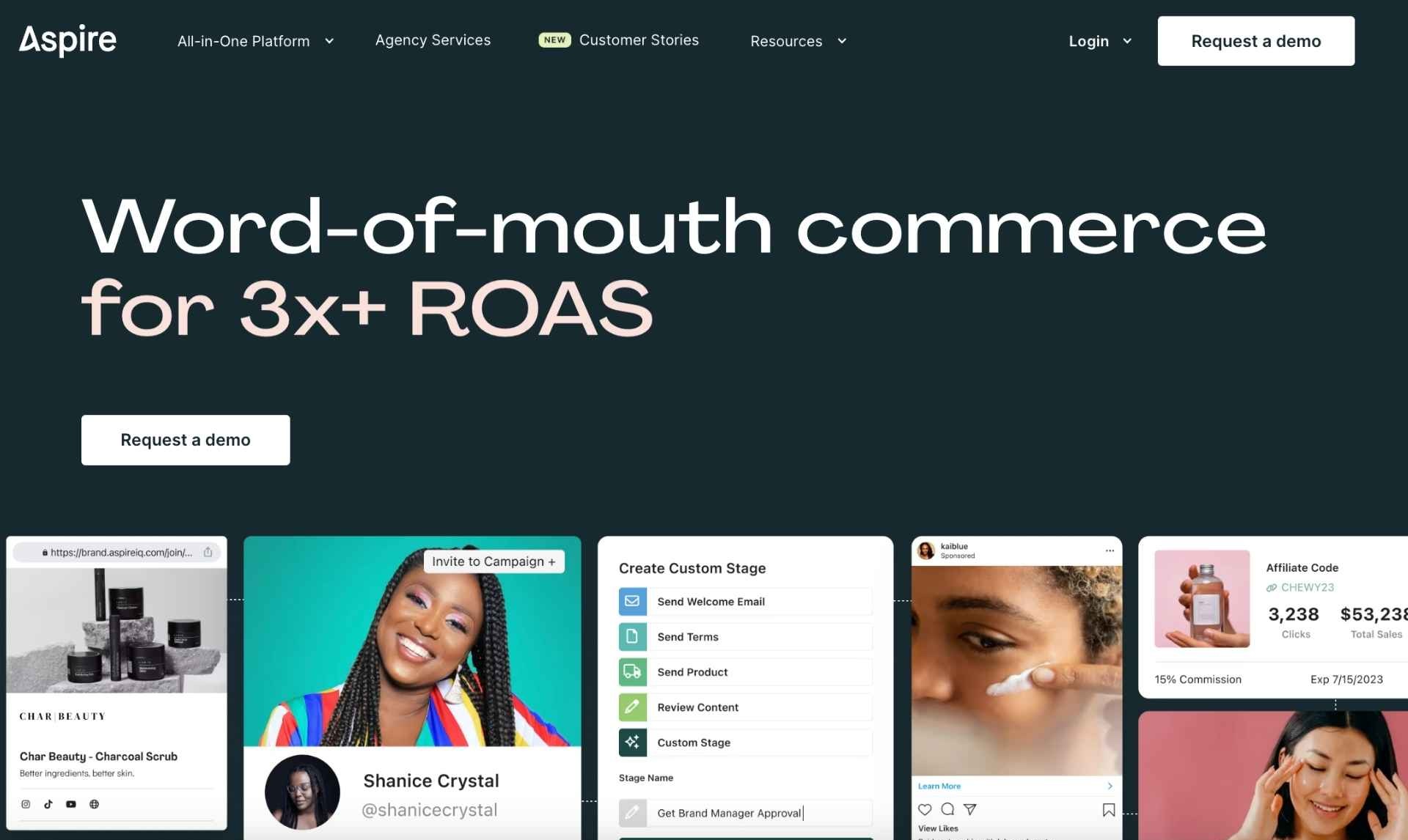
Aspire is an influencer marketing platform for eCommerce brands that combines creator discovery, workflow automation, content approvals, gifting, affiliate tracking, and reporting. A major part of its value proposition is balancing outbound discovery with inbound recruitment through its large creator marketplace, while also leaning on first-party platform data to improve trust in creator insights.
Key Features
- Creator discovery with first-party data: Aspire supports creator search by channel, demographics, keywords, and engagement metrics, and emphasizes first-party data connections with major social platforms rather than relying only on scraped public data.
- Lookalike and customer-based discovery: Brands can identify creators similar to top performers and even match customers to potential influencers through commerce data.
- Large inbound creator marketplace: Aspire pairs outbound search with a marketplace of 1M+ creators who can apply directly to campaigns, reducing manual sourcing.
- Application pages and recruitment workflows: Brands can launch branded sign-up pages, collect creator details and concepts, and route applicants into campaign pipelines.
- Campaign workflow automation: Aspire supports invites, contracts, briefs, approvals, post tracking, and automated follow-ups when creators stall at specific stages.
- Content approvals and rights management: Teams can review draft content before it goes live and manage usage rights within briefs and contracts.
- Gifting and fulfillment: Shopify-connected product seeding lets creators select from approved catalog options while brands manage budget controls and fulfillment inside Aspire.
- Sales tracking and creator stores: Aspire supports codes, links, commissions, and CreatorStores that live on a brand’s Shopify site, which is useful for commerce-led creator programs.
- Strong support model: Aspire pairs software with implementation and client success support, which is often a deciding factor for lean internal teams.
Platform Coverage
Instagram, TikTok, Pinterest, YouTube, and Facebook
Pricing
Aspire starts with tiered pricing and can be customized, with a mid-tier quote of about $2,300/month for a use case involving multiple team members and up to 500 creators in CRM.
Reviews
4.0 /5.0 (Capterra)
Standout Features
- AI Creator Discovery: Aspire’s newer AI-driven creator search uses natural-language prompts and is tied to first-party integrations with Meta and TikTok One Marketplace.
- Expanded Creator Marketplace: Aspire recently highlighted expanded access to over 1M creators, reinforcing its edge in inbound recruitment compared with platforms that rely mostly on outbound search.
- CreatorStores on Shopify: CreatorStores give Aspire a stronger commerce angle by letting creators drive sales through branded storefront experiences hosted directly on a brand’s Shopify environment.
indaHash vs Aspire
Compared with indaHash, Aspire is the better fit for brands that want a stronger inbound creator engine, tighter content approval workflows, and more mature Shopify-based gifting and commerce features. indaHash offers more distinctive AI image recognition and a flexible mix of self-serve software and managed service support, while Aspire is usually the stronger option for brands prioritizing marketplace-driven recruitment and first-party data confidence.
4. SARAL
SARAL is an influencer marketing platform built mainly for consumer and eCommerce brands that want a simpler, more operationally efficient way to run seeding, affiliate, ambassador, and relationship-led creator programs. Its positioning is less enterprise-heavy than many platforms in the category, and much more focused on helping lean teams build predictable, ROI-oriented influencer workflows without relying on spreadsheets and fragmented tools.
Key Features
- Discovery across major creator channels: SARAL lets brands search a large creator dataset without waiting for creators to opt in, with keyword-based search, similar-creator discovery, and list-building workflows.
- Automated outreach: The platform is built around scaling email outreach, organizing creator replies, and moving prospects through relationship stages without manual tracking.
- Creator relationship management: SARAL includes a CRM with custom stages, tags, fields, and conversation history so teams can manage creators like a true pipeline rather than one-off contacts.
- AI assistant (SIA): SIA helps with discovery, outreach, follow-ups, product shipping, and workflow automation, making SARAL more AI-enabled than its “simple platform” branding might suggest.
- Ambassador and application workflows: SARAL helps brands capture applications, accept or reject creators, and turn customers or followers into ambassador-style creator programs.
- Affiliate and ROI tracking: The platform supports tracked links, discount codes, and reporting that ties creator activity to sales and ROAS.
- Chrome extension: SARAL’s extension helps teams save creators directly while browsing supported social platforms.
- Straightforward operations model: The official site emphasizes unlimited email accounts, unrestricted outreach, and pricing tied mainly to how many new influencers a team wants to search and save each month.
Platform Coverage
Instagram, TikTok, and YouTube.
Pricing
There are different plans:
- Starter: $3.6k/quarter
- Business: $4.5k/quarter
- Professional: $7.5k/quarter
Reviews
4.7/5.0 (G2)
Standout Features
- SIA AI assistant: SIA is one of SARAL’s clearest product differentiators, helping automate discovery, outreach, follow-ups, and other repetitive workflow tasks for lean teams.
- Predictable-influence operating model: SARAL is unusually explicit about helping brands build repeatable, ROI-first influencer systems rather than ad hoc campaign execution.
- Simple pricing logic and unlimited outreach: Unlike platforms that meter creator management heavily, SARAL says pricing is driven primarily by new influencer search-and-save volume, while outreach and managed relationships are not the main throttle.
indaHash vs SARAL
Compared with indaHash, SARAL is simpler, more outreach-centric, and usually easier to map to lean DTC teams running seeding, affiliate, and ambassador motions. indaHash has broader enterprise polish in creator CRM, campaign management, and AI visual discovery, while SARAL is the stronger fit for teams that want operational speed, flexible CRM stages, and a more hands-on system for predictable outreach-led growth.
5. Influencity
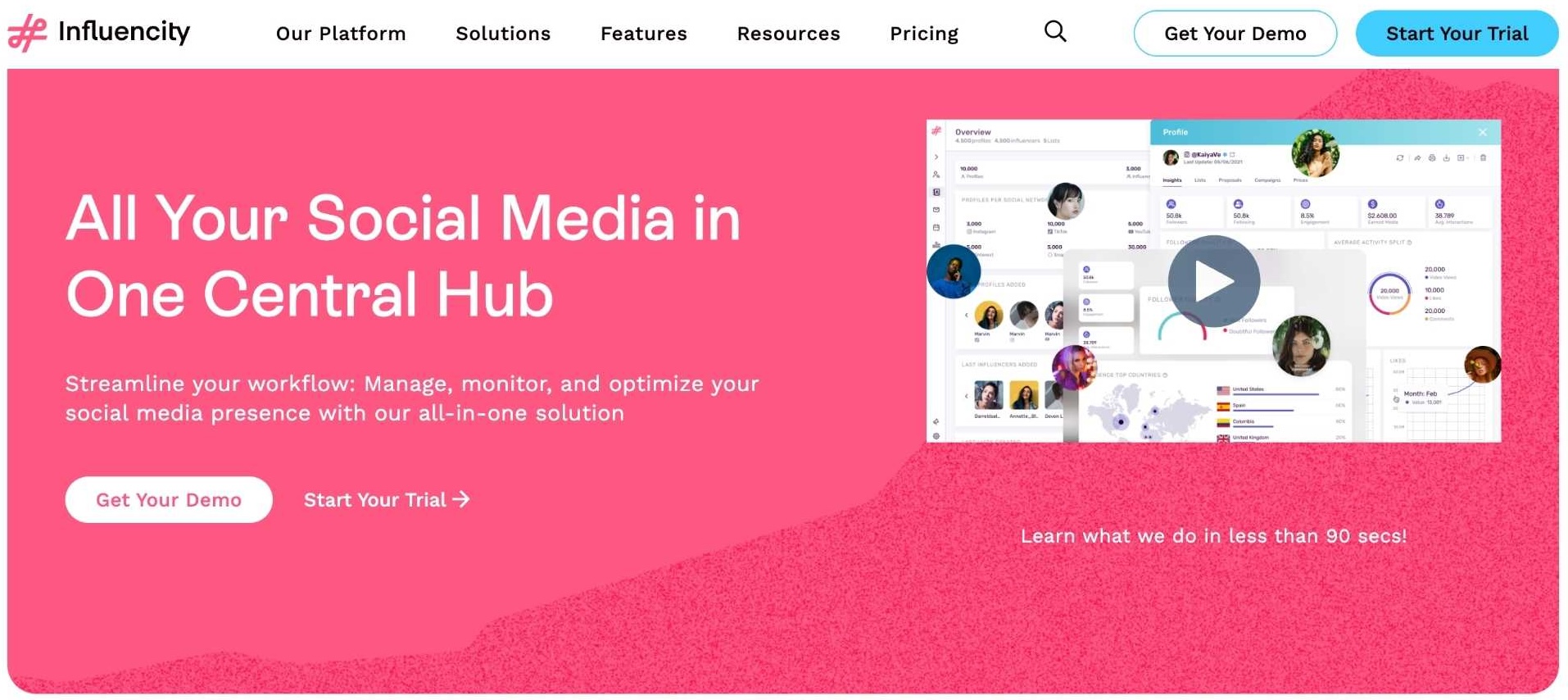
Influencity is an end-to-end influencer marketing platform for brands and agencies that want broad creator discovery, campaign management, reporting, and workflow visibility in one place. A major part of its appeal is that it uses public data rather than relying only on opt-in creators, which makes it attractive for teams that want larger search coverage without moving into enterprise pricing too quickly.
Key Features
- Large-scale creator discovery: Influencity positions its platform around searchable public creator data, deep filters, audience insights, and profile-level analysis. Official materials now reference a database of 350M creators, while the provided materials frame its advantage as broad discovery without opt-in limits.
- Influencer CRM and list management: Teams can organize creators by country, campaign type, or theme, then manage them inside a visual IRM workflow.
- Campaign management boards: Influencity supports tasks, deadlines, approvals, and progress tracking in a more operational interface than many discovery-first tools.
- Email outreach and tracking: The platform supports automated outreach, email templates, follow-ups, and reply/open/click tracking.
- Casting Calls and recruitment pages: Influencity has invested in branded recruitment workflows that let creators apply through structured campaign pages rather than relying entirely on cold outreach.
- Reporting and campaign monitoring: Brands can combine manual and automated reporting, track posts through rules such as hashtags or mentions, and export campaign data.
- AI assistant and forecasting: Influencity has been pushing AI more actively, particularly for email generation, workflow prompting, predictive analytics, and campaign planning.
- Broader social and social-listening footprint: Beyond influencer workflows, Influencity also promotes Social Hub and monitoring features for broader social management and listening use cases.
Platform Coverage
Instagram, TikTok, YouTube, and X/Twitter
Pricing
- Professional Plan: $318/month or $3,816/year
- Business Plan: $798/month or $9,576/year
- Enterprise Plan: Custom pricing
- Auto-Tracker Add-On: $660/year (for 50 influencers)
Reviews
4.3 / 5.0 (G2)
Standout Features
- Casting Calls as an automated recruitment engine: This is one of Influencity’s more notable recent workflow pushes, helping brands replace messy inbound recruitment with structured, branded applications.
- AI assistant for workflow and email support: Influencity is leaning more into AI for briefing, email creation, and planning, which helps reduce manual setup work in campaign operations.
- Broader product suite beyond influencer workflows: Social Hub and monitoring tools give Influencity a wider social-management footprint than many pure-play influencer platforms in this price band.
indaHash vs Influencity
Compared with indaHash, Influencity is generally more open in its discovery model and better suited to teams that want broad public-data search, visual campaign boards, and more accessible pricing before moving into custom enterprise scope. indaHash has a stronger differentiator in AI image-based creator discovery and a more established software-plus-services positioning, while Influencity is the better fit for teams that want a larger searchable universe, structured recruitment pages, and flexible campaign visibility without relying on opt-in creator pools.


6. NeoReach
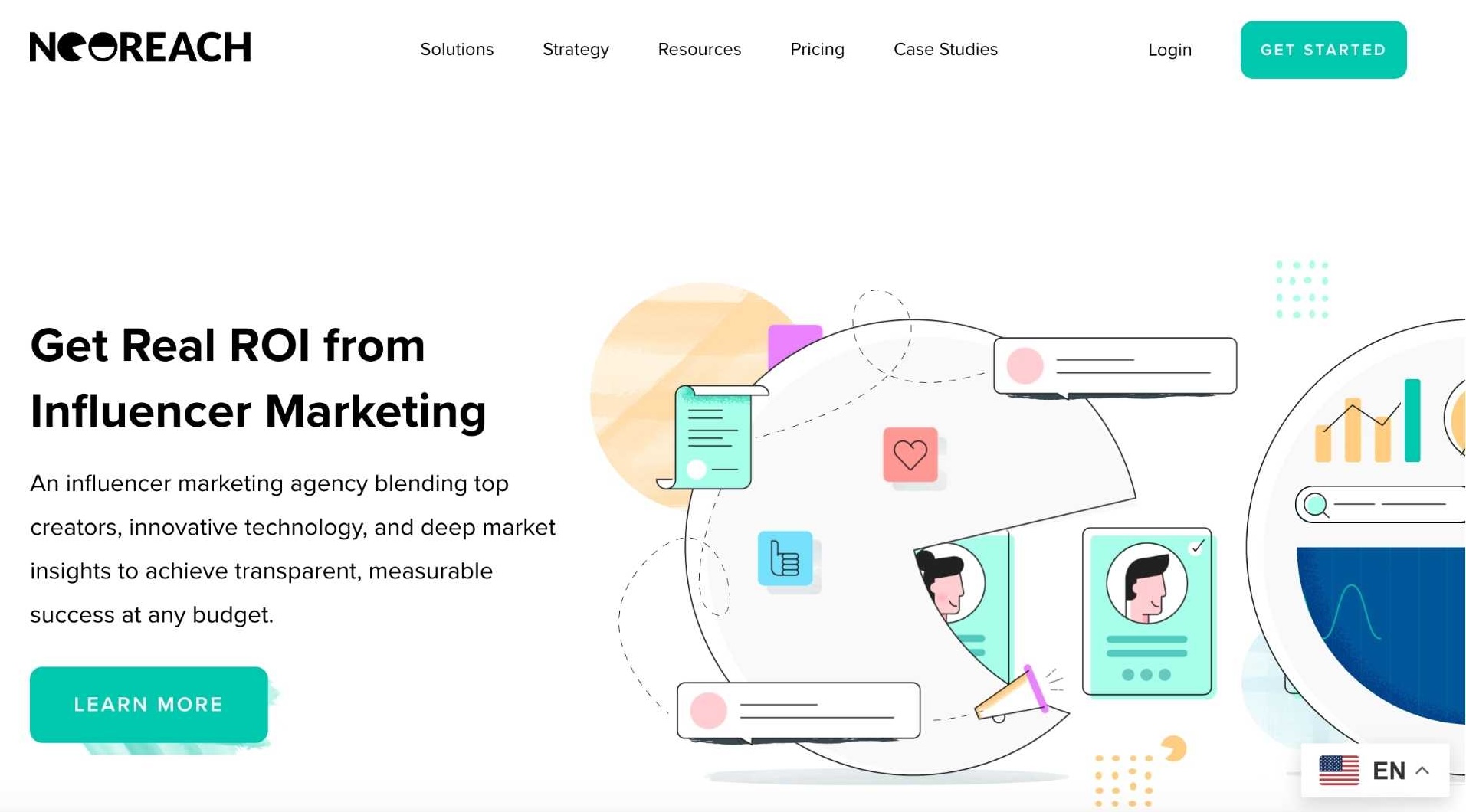
NeoReach is an influencer marketing platform built for enterprise brands and agencies that need large-scale creator discovery, campaign execution, and performance analytics. The platform is widely used for data-driven influencer campaigns, with a strong focus on paid media integration, audience insights, and ROI measurement across global programs.
Key Features
- Advanced influencer discovery: NeoReach provides access to a large global database with detailed filters for audience demographics, engagement, past brand collaborations, and platform-specific metrics.
- Paid media and whitelisting support: The platform allows brands to run paid amplification campaigns using influencer content, including whitelisting and boosting workflows.
- Campaign management: Teams can manage influencer campaigns end-to-end, including contracts, deliverables, timelines, and approvals.
- Fraud detection and audience quality analysis: NeoReach includes tools to identify fake followers, suspicious engagement, and audience authenticity.
- Custom reporting and dashboards: Brands can create detailed reports with KPIs like impressions, engagement, conversions, and ROI, often tailored for enterprise stakeholders.
- API and data integrations: NeoReach supports integrations with internal BI tools, CRM systems, and paid media platforms for deeper analysis.
- Dedicated account management: Many plans include strategic support, helping brands plan and optimize influencer campaigns at scale.
Platform Coverage
Instagram, TikTok, YouTube, Facebook, Twitter (X), Pinterest, and Snapchat.
Pricing
NeoReach uses custom enterprise pricing, typically based on campaign scale, number of users, and feature requirements. Contracts are generally annual, with pricing often positioned in the higher tier of the market.
Reviews
4.5 / 5.0 (G2)
Standout Features
- Paid media integration: NeoReach stands out for enabling influencer whitelisting and paid amplification directly within campaign workflows.
- Enterprise-grade analytics: Highly customizable dashboards and deep reporting capabilities make it suitable for large teams with complex KPI tracking.
- API-first infrastructure: Strong integration capabilities allow brands to connect influencer data with broader marketing and analytics systems.
indaHash vs NeoReach
Compared with indaHash, NeoReach is more focused on enterprise analytics, paid media activation, and API-driven workflows, making it a better fit for large organizations running high-budget campaigns. indaHash, on the other hand, offers more accessible AI-driven discovery and flexible SaaS-plus-service options, which can be easier for mid-market teams to adopt without heavy implementation.
7. Heepsy
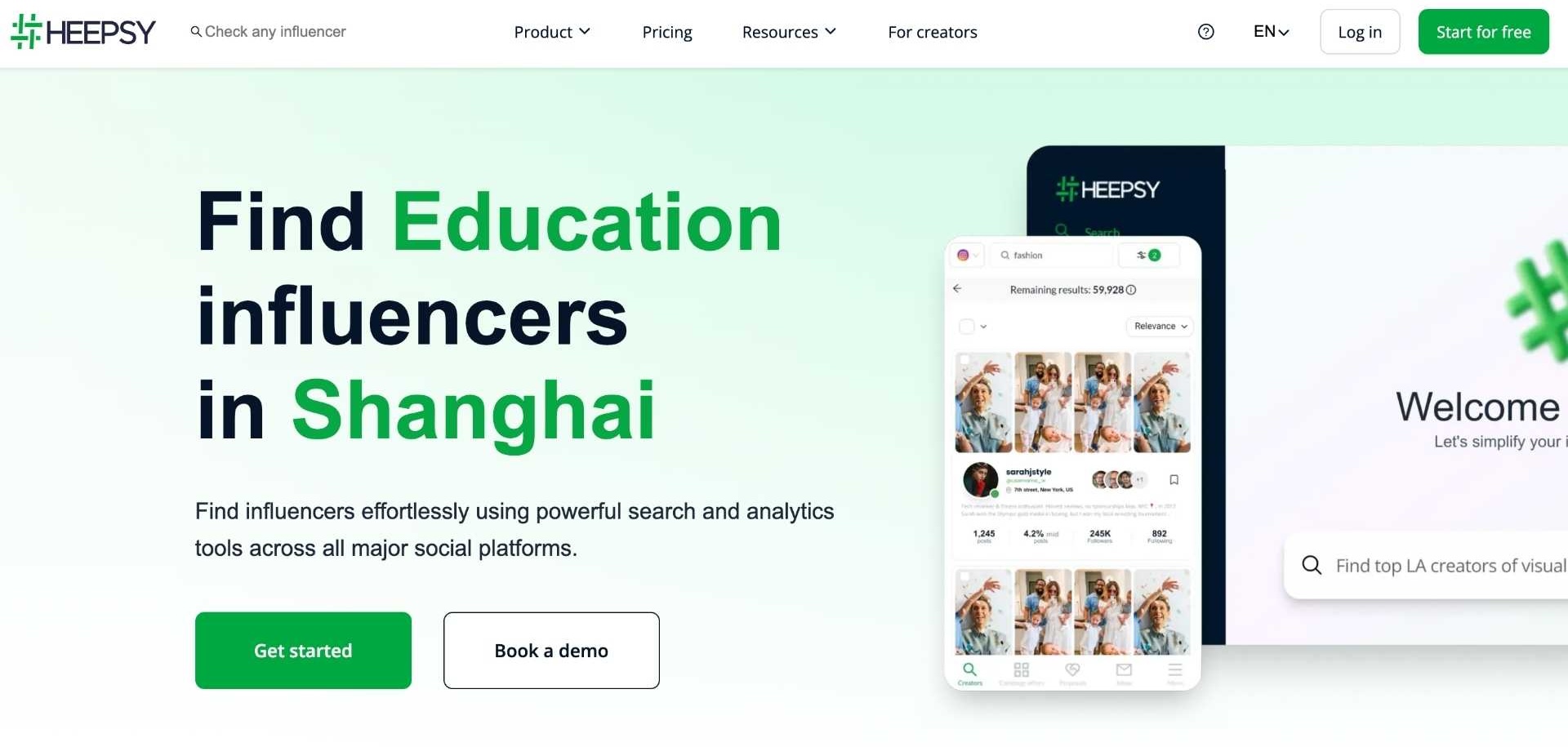
Heepsy is an influencer marketing platform focused on discovery, outreach, and campaign tracking, particularly for eCommerce brands and agencies. It is known for its large influencer database, intuitive filters, and relatively accessible pricing compared to enterprise tools.
Key Features
- Influencer discovery with advanced filters: Heepsy allows filtering by niche, location, engagement rate, audience demographics, and follower authenticity.
- Fake follower detection: The platform includes audience quality scoring to help brands avoid influencers with inflated metrics.
- Bulk outreach and email templates: Teams can send outreach emails at scale and manage communication workflows directly within the platform.
- Campaign tracking: Heepsy tracks influencer content, engagement, and (on higher plans) sales performance.
- CRM pipeline: A Kanban-style workflow helps teams track influencer stages from outreach to payment.
- Shopify integration: Advanced plans support affiliate tracking, discount codes, and revenue attribution.
- Lookalike search: Users can find creators similar to top-performing influencers.
Platform Coverage
Instagram, TikTok, YouTube, and Twitch
Pricing
Heepsy offers monthly and annual plans, with tiers such as Plus and Advanced. Pricing typically starts around $49–$149/month for lower tiers, while the Advanced plan (~$369/month) includes sales tracking and deeper analytics.
Reviews
4.5 / 5.0 (G2)
Standout Features
- Strong discovery filters with authenticity scoring: Heepsy is particularly strong for brands prioritizing influencer vetting and audience quality.
- Visual CRM pipeline: The Kanban-style workflow simplifies campaign tracking for smaller teams.
- Accessible pricing for mid-market brands: Compared to enterprise tools, Heepsy offers a lower entry point while still covering core workflows.
indaHash vs Heepsy
Compared with indaHash, Heepsy is more focused on discovery, outreach, and lightweight campaign management, making it a better fit for smaller teams or brands starting to scale influencer programs. indaHash offers more advanced AI capabilities, broader workflow features, and enterprise-level flexibility, while Heepsy prioritizes simplicity and cost-efficiency.
8. Skeepers
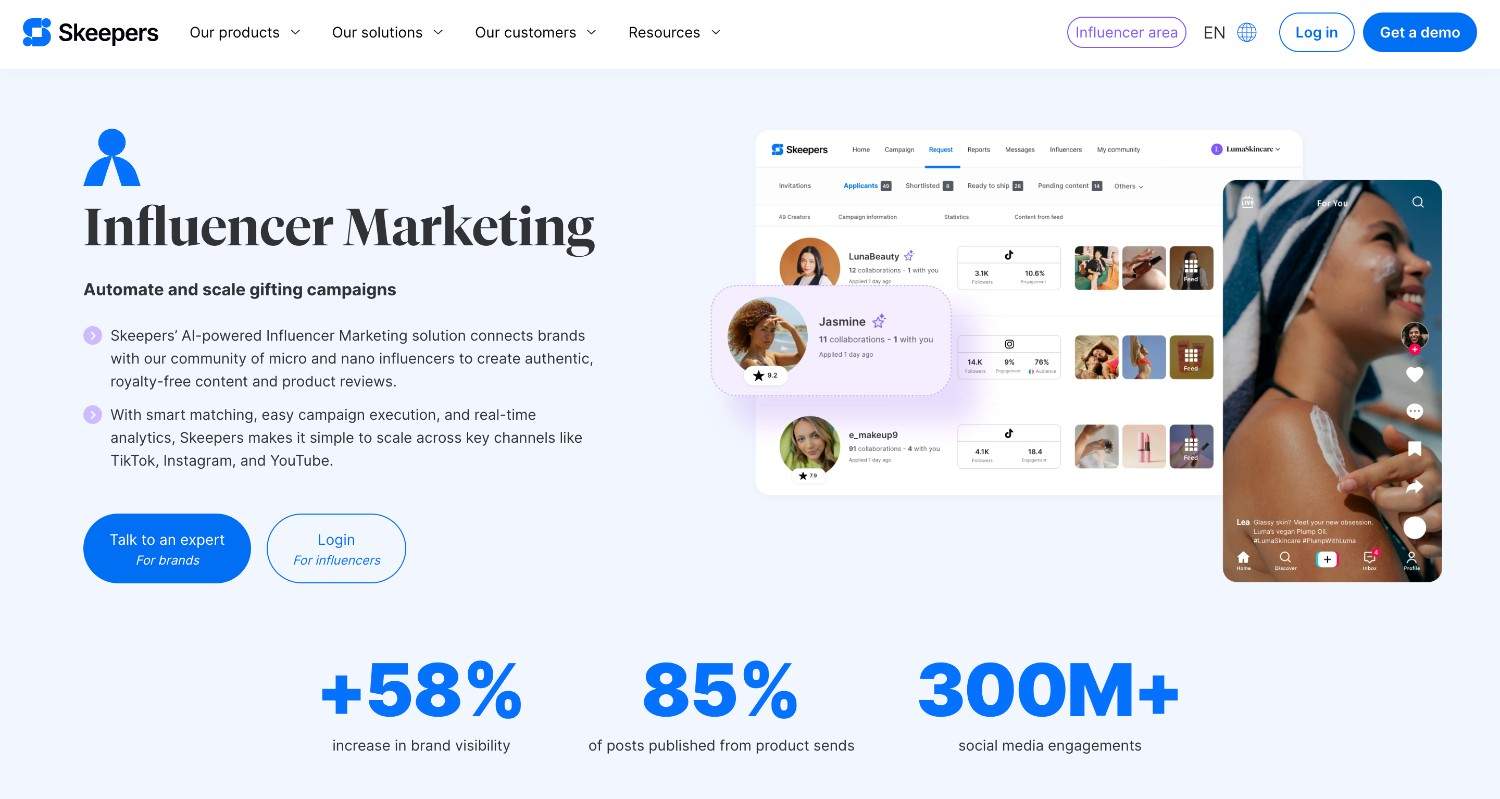
Skeepers is a user-generated content (UGC) and influencer marketing platform designed to help brands collect, manage, and activate creator content at scale. It combines influencer campaigns with ratings, reviews, and customer content to support broader marketing strategies.
Key Features
- UGC and influencer campaigns: Skeepers focuses on generating authentic content from creators and customers for use across marketing channels.
- Creator recruitment: Brands can recruit influencers through a managed network and structured campaign workflows.
- Content collection and management: All influencer-generated content is stored and organized for reuse in ads, social media, and eCommerce.
- Ratings and reviews integration: Skeepers connects influencer content with product reviews to improve social proof.
- Performance tracking: Tracks engagement, reach, and campaign-level performance.
- Multi-channel content activation: Brands can reuse influencer content across websites, ads, and email campaigns.
Platform Coverage
Instagram, TikTok, YouTube
Pricing
Skeepers uses custom pricing, typically based on modules (UGC, influencer marketing, reviews) and campaign scale. Contracts are usually annual.
Reviews
4.7/5.0 (G2)
Standout Features
- UGC-first approach: Skeepers differentiates itself by combining influencer marketing with reviews and customer content.
- Content activation beyond social: Strong focus on repurposing influencer content across websites and ads.
- Integrated social proof ecosystem: Connects influencer campaigns with ratings and reviews to drive conversions.
indaHash vs Skeepers
Compared with indaHash, Skeepers is more focused on UGC and content reuse rather than full influencer lifecycle management. indaHash provides stronger discovery, CRM, and campaign execution capabilities, while Skeepers is better suited for brands prioritizing content generation and social proof across multiple channels.
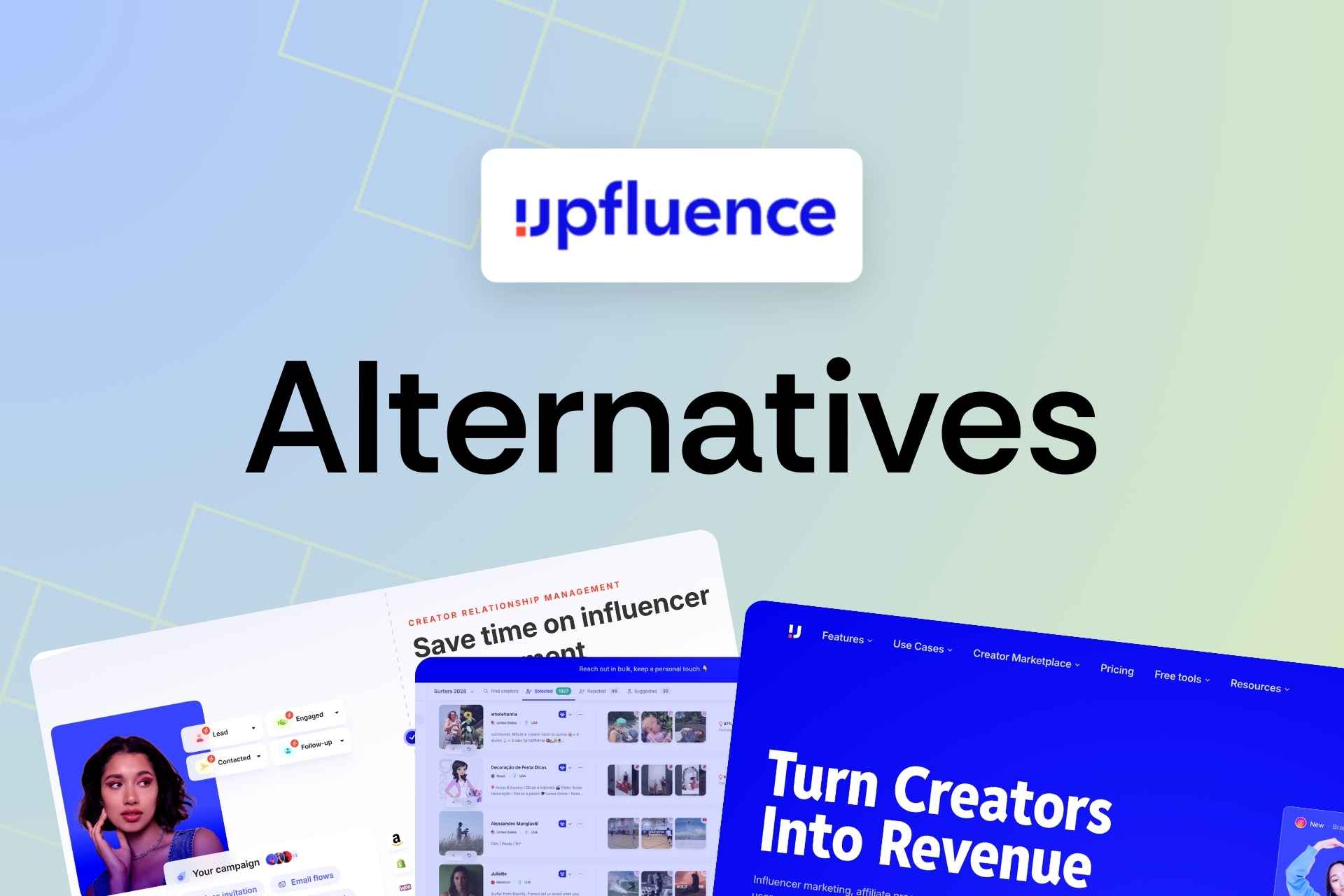
9. Upfluence
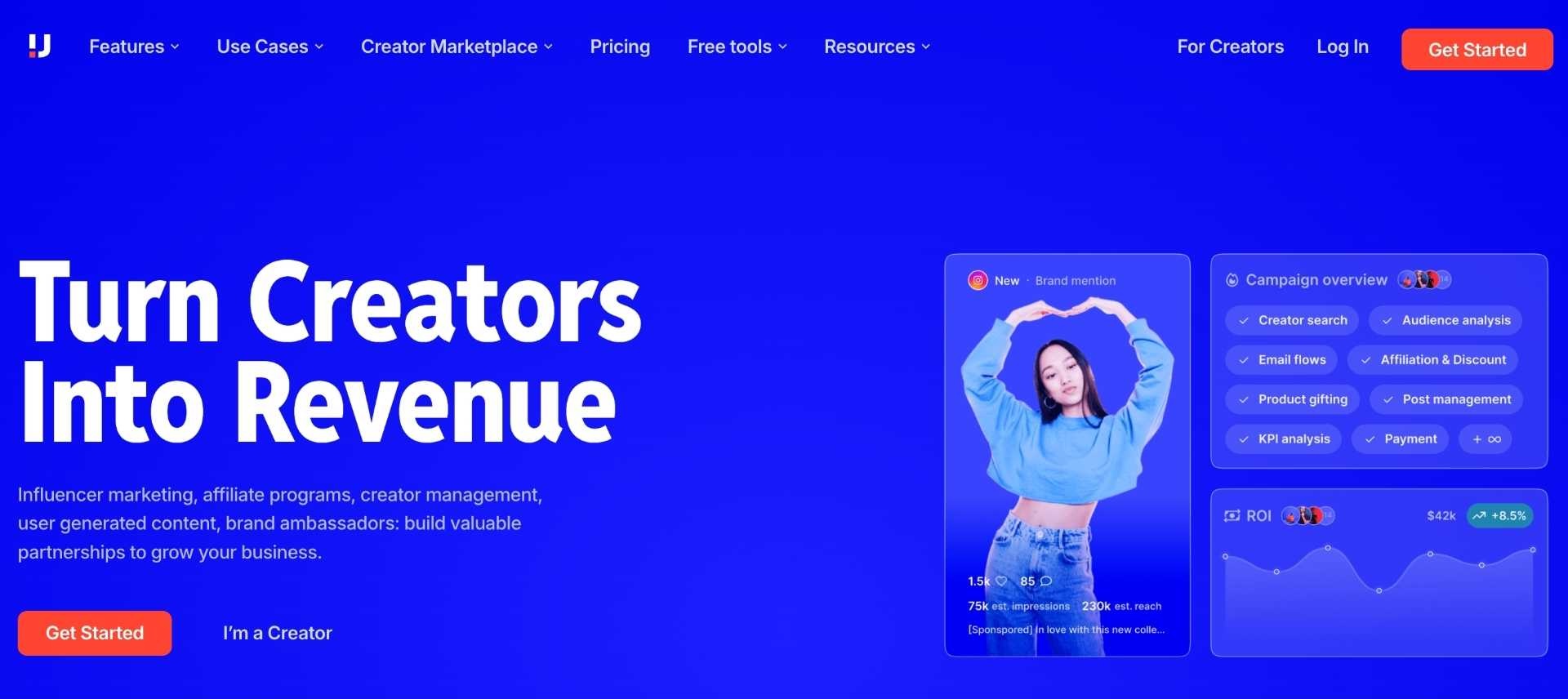
Upfluence is an all-in-one influencer marketing platform designed for eCommerce brands that want to combine influencer discovery, outreach, affiliate marketing, and sales tracking. It is particularly strong for Shopify and Amazon integrations.
Key Features
- Large influencer database: Access to over 12M influencers with detailed audience and engagement data.
- AI-powered outreach: Automated email workflows and campaign assistance through AI tools.
- CRM and campaign management: Manage influencer relationships, track communication, and oversee campaign progress in one place.
- Affiliate and sales tracking: Track conversions, clicks, and revenue generated by influencers.
- Shopify and Amazon integration: Identify customers who are influencers and track sales directly from campaigns.
- Social listening: Monitor trends and identify high-performing content.
- Bulk payments: Manage influencer payouts securely within the platform.
Platform Coverage
Instagram, TikTok, YouTube, Facebook, Twitch, Pinterest, and blogs.
Pricing
On average plans start around $2,000/month ($24,000 yearly)
Reviews
4.3 / 5.0 (Capterra)
Standout Features
- Strong eCommerce integrations: Deep Shopify and Amazon integrations for tracking sales and identifying influencer customers.
- Customer-to-influencer identification: Unique ability to turn existing customers into creators.
- End-to-end workflow: Combines discovery, outreach, tracking, and payments in one platform.
indaHash vs Upfluence
Compared with indaHash, Upfluence is more focused on eCommerce-driven influencer marketing with strong sales attribution and integrations. indaHash offers more advanced AI discovery tools and flexible workflows, while Upfluence is the better choice for brands prioritizing revenue tracking and customer-based influencer strategies.
10. Traackr
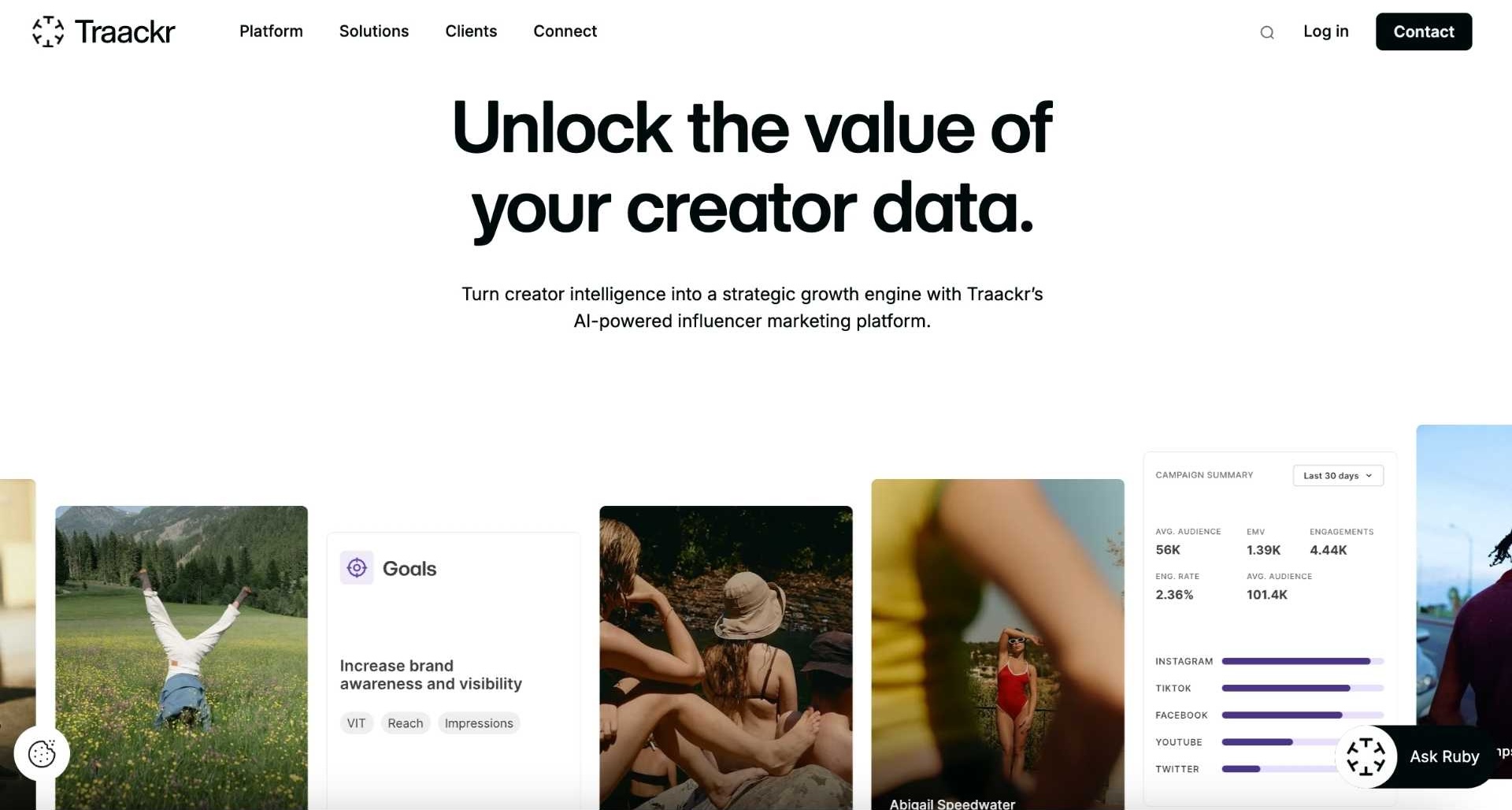
Traackr is an enterprise influencer marketing platform focused on performance benchmarking, budget optimization, and ROI tracking. It is widely used by global brands that need detailed analytics and strategic insights across large-scale campaigns.
Key Features
- Influencer discovery: Access to millions of influencers with advanced filtering based on performance history and audience data.
- Campaign management: Manage outreach, relationships, and campaign workflows in a centralized CRM.
- Advanced reporting: Tracks cost-per metrics (CPC, CPE, CPV) and provides detailed ROI analysis.
- Benchmarking tools: Compare campaign performance against industry standards and competitors.
- Budget optimization: Helps allocate spend across creators based on expected performance.
- UGC tracking and reuse: Collect and repurpose influencer-generated content.
- Affiliate and payments: Manage commissions and payouts within the platform.
Platform Coverage
Instagram, TikTok, YouTube, Facebook, Pinterest, and Twitter (X).
Pricing
Plans usually start at $32,500/year.
Reviews
4.3/5.0 (G2)
Standout Features
- Brand Vitality Score (BVS): Proprietary metric that measures brand influence and visibility.
- Cost-per performance tracking: Detailed dashboards for CPC, CPE, and CPV analysis.
- Global benchmarking: Compare campaign performance against industry data.
indaHash vs Traackr
Compared with indaHash, Traackr is more focused on analytics, benchmarking, and budget optimization for enterprise teams. indaHash provides more flexible campaign workflows and AI-driven discovery, while Traackr excels in performance measurement and strategic decision-making for large-scale programs.
Final Thoughts
Choosing between indaHash alternatives depends largely on how a team prioritizes discovery, workflow automation, and performance tracking. Platforms like GRIN, Aspire, and Upfluence stand out for their strong eCommerce integrations and end-to-end campaign management, while tools such as Influencer Hero and SARAL focus more on outreach efficiency, CRM structure, and scalable relationship management. On the other hand, solutions like Traackr and NeoReach lean toward enterprise analytics and benchmarking, and platforms like Heepsy or Influencity provide more accessible discovery-driven options for growing teams.
indaHash remains a competitive option with its AI-driven discovery and flexible SaaS-plus-service model, but many brands explore alternatives to gain more transparency in pricing, deeper integrations, or more specialized workflows. Ultimately, the right choice depends on factors such as team size, campaign complexity, budget, and whether the focus is on content creation, sales attribution, or long-term creator partnerships.