

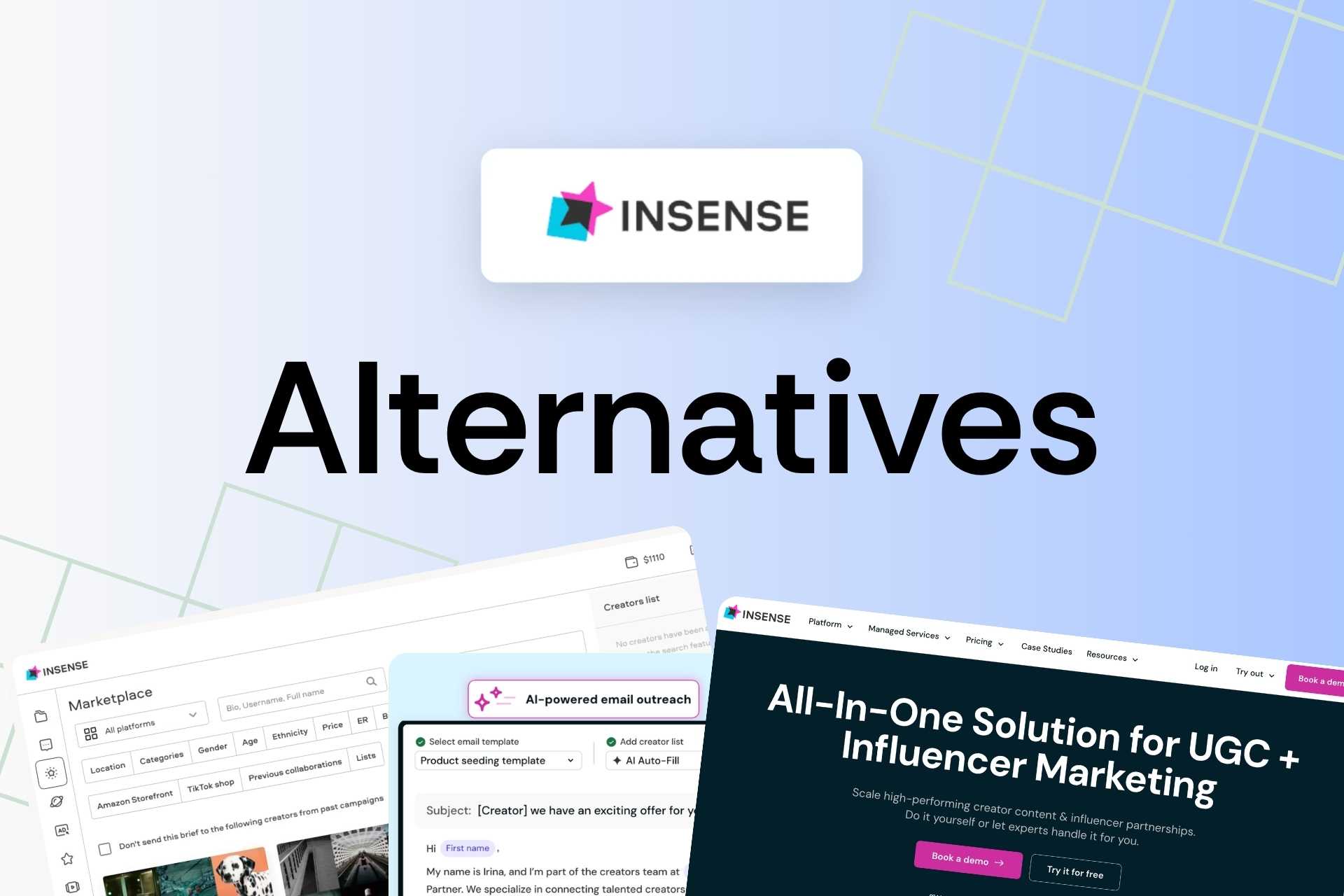
Insense Alternatives: Best Influencer Marketing Platforms
Brands and agencies increasingly rely on influencer marketing software to manage creator discovery, outreach, campaign tracking, and performance analytics across multiple social platforms in one centralized workflow. As creator partnerships scale, tools that automate relationship management and attribution have become essential, especially as global influencer marketing spend is projected to reach $24 billion in 2025, according to Statista, highlighting growing demand for scalable campaign infrastructure.
While Insense remains a popular platform for sourcing UGC creators and running paid social collaborations, users often look for Insense alternatives due to limitations in advanced CRM functionality, restricted influencer database depth for large-scale discovery, and pricing structures that may not align well with brands managing ongoing or multi-market campaigns.
As brands mature their creator programs, many seek influencer marketing software that combines influencer discovery, outreach automation, affiliate tracking, and reporting within a single ecosystem rather than relying on fragmented workflows. This comparison explores leading Insense alternatives that offer broader campaign management flexibility, deeper analytics, or stronger relationship management capabilities for agencies and D2C teams. Throughout this guide, we’ll compare platforms such as Influencer Hero, Aspire, Influencity, Sprout Social, and GRIN to help you identify the 10 best alternatives available today.
Criteria for Suggesting Platform Alternatives:
- Core Features
Evaluation of each platform’s essential capabilities, including influencer discovery, outreach, CRM, campaign reporting, gifting, UGC and content collection, affiliate tracking and payments, storefronts, application pages, and AI-powered tools. - Supported Social Media Platforms
Assessment of how well each platform integrates with major social networks such as Instagram, YouTube, TikTok, Facebook, Pinterest, and many more - Pricing & Contract Flexibility
Comparison of pricing models, subscription costs, and contract requirements to help brands choose solutions that match their budget and scalability needs. - Standout & Differentiating Features
Highlighting unique or innovative functionalities that set each platform apart, such as real-time tracking dashboards, creator benchmarking, TikTok email discovery, or advanced automation tools. - Customer Reviews & User Satisfaction
Analysis of verified user feedback from credible platforms like G2, TrustRadius, Capterra, focusing on usability, reliability, value for money, customer support, and real-world performance.
Insense Overview
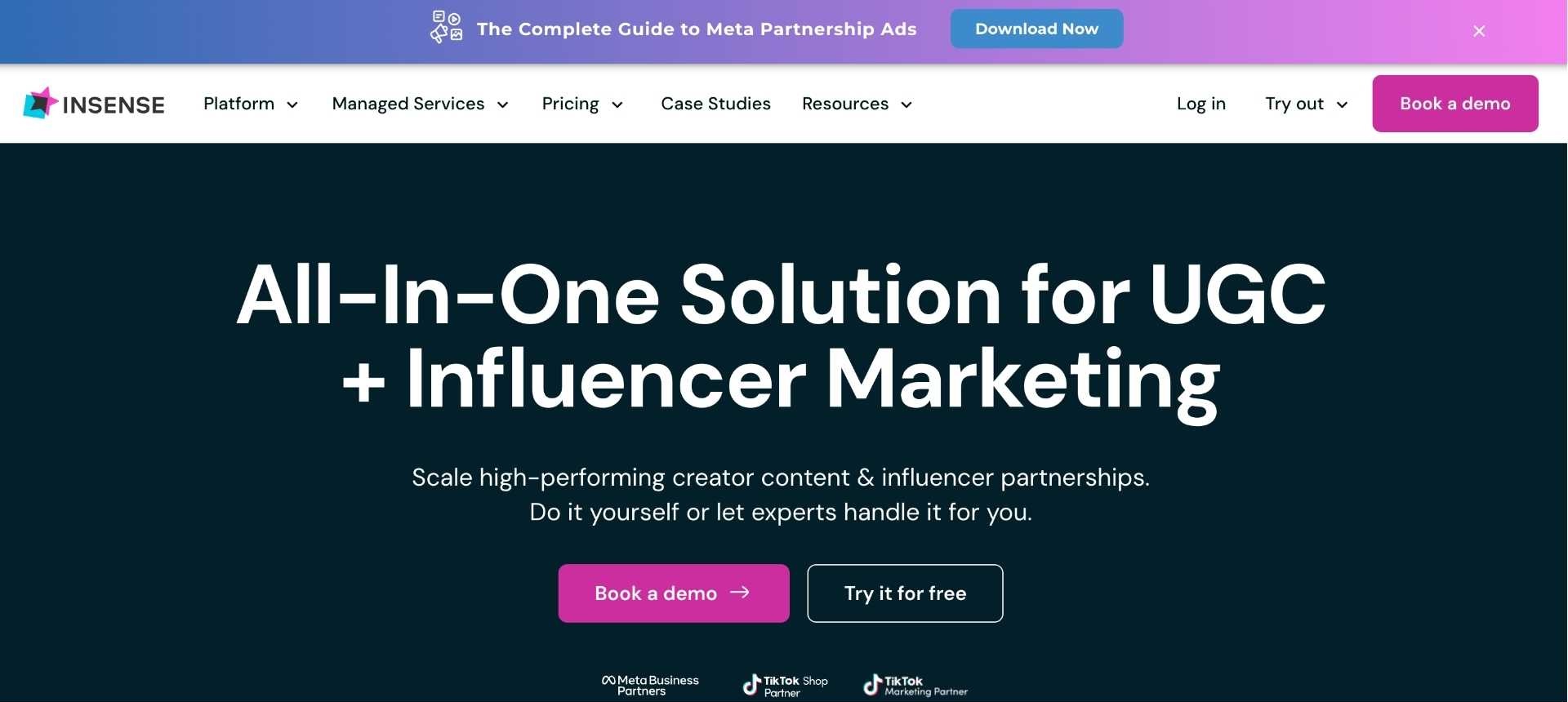
Insense is an influencer marketing and UGC creator platform built to help brands run creator collaborations end-to-end—from finding vetted creators to managing deliverables, usage rights, and payments in one workflow. The company positions the product around scaling UGC and creator ads, including creator whitelisting for Meta Partnership Ads and TikTok Spark Ads, alongside other campaign types commonly used by D2C growth teams.
Key Features
- Influencer & UGC creator discovery: Access a creator marketplace to source creators that match your niche and creative needs, then filter to speed up shortlisting and reduce back-and-forth during casting.
- Outreach + collaboration workflow: Invite creators, share deliverables, manage approvals, and keep communication centralized so your team isn’t juggling email threads, DMs, and spreadsheets.
- Creator CRM-style management: Keep creator collaborations organized in one place (creator profiles, status tracking, and campaign history) so you can scale repeat partnerships more consistently.
- Product seeding + campaign logistics: Support campaigns where creators need product shipped or reimbursed, and manage campaign requirements and timelines directly inside the platform workflow.
- Affiliate-style collaborations: Run performance-style creator campaigns (when relevant to your strategy) as part of a broader funnel that can include UGC and paid amplification.
- UGC tracking & content organization: Collect and manage delivered assets in one place so content is easier to approve, reuse, and deploy across paid and organic channels.
- Built for creator ads (whitelisting): Launch creator-whitelisted ads (where the ad runs through the creator’s handle) and tie that into the same collaboration—useful for teams testing multiple creators/angles for paid social.
- Briefs, payments, and usage rights in-platform: Insense emphasizes structured creative briefs and streamlined admin like payments and usage rights to reduce friction when producing ad-ready UGC at volume.
Platform Coverage
Insense covers Instagram, TikTok, YouTube, and Facebook.
Pricing
Brand: $500/month
Trial: $650/month
Agency: $800/month
Reviews
4.5 / 5.0 (G2)
Insense Standout Features
- Meta Partnership Ads + UGC in one flow: Source ad-ready UGC and launch Meta Partnership Ads (creator whitelisting) within the same collaboration workflow, which is a strong fit for D2C teams scaling paid social testing.
- TikTok Spark Ads support: Insense explicitly supports TikTok Spark Ads as a campaign type, helping brands turn creator content into paid placements that retain a creator-handle feel (often used for performance creative iteration).
- TikTok Shop campaigns as part of the funnel: The platform also references TikTok Shop campaigns, making it easier to align creator collaborations with commerce-led activation rather than treating content and sales motions as separate efforts.
Limitations (Why Users Look for Insense Alternatives)
Billing friction + auto-renewal complaints
Some reviewers describe negative billing experiences, including dissatisfaction with auto-renewal and refund handling—pushing teams toward vendors with more flexible contracts or clearer cancellation policies.
Glitches and workflow reliability issues
Multiple notes point to the app being “glitchy” at times or brands not responding, which can slow campaigns when you’re managing approvals and deadlines.
Slow response times / delays in collaboration
Some feedback highlights frustration with time delays (waiting for responses or updates after content submission), which matters if you’re iterating creative weekly for paid social.
Marketplace quality + offer clarity concerns
Some users mention concerns about brand reputation or reimbursement friction, while Reddit threads include complaints about confusion between paid vs gifted collaborations—driving users to platforms with stronger vetting, clearer deal terms, and tighter creator/brand controls.
10 Best Influencer Marketing Platform Alternatives:
| TOOL | REVIEWS | BEST FOR | TRIAL INFO | PRICING | ||
|---|---|---|---|---|---|---|
1 |
|
⭐ | Influencer marketplace | Book Demo | Pricing | Website |
2 |

|
⭐ | Influencer outreach | Book Demo | Pricing | Website |
3 |

|
⭐ | Influencer CRM & automation | Book Demo | Pricing | Website |
4 |

|
⭐ | Influencer partnerships | Book Demo | Pricing | Website |
5 |

|
⭐ | Campaign management | Book Demo | Pricing | Website |
6 |
|
⭐ | Influencer marketing & Social media analytics | Book Demo | Pricing | Website |
7 |

|
⭐ | DTC creator management | Book Demo | Pricing | Website |
8 |
|
⭐ | Ecommerce influencer discovery | Book Demo | Pricing | Website |
9 |
|
⭐ | Enterprise influencer campaigns | Book Demo | Pricing | Website |
10 |

|
⭐ | Influencer discovery | Book Demo | Pricing | Website |
1. IZEA
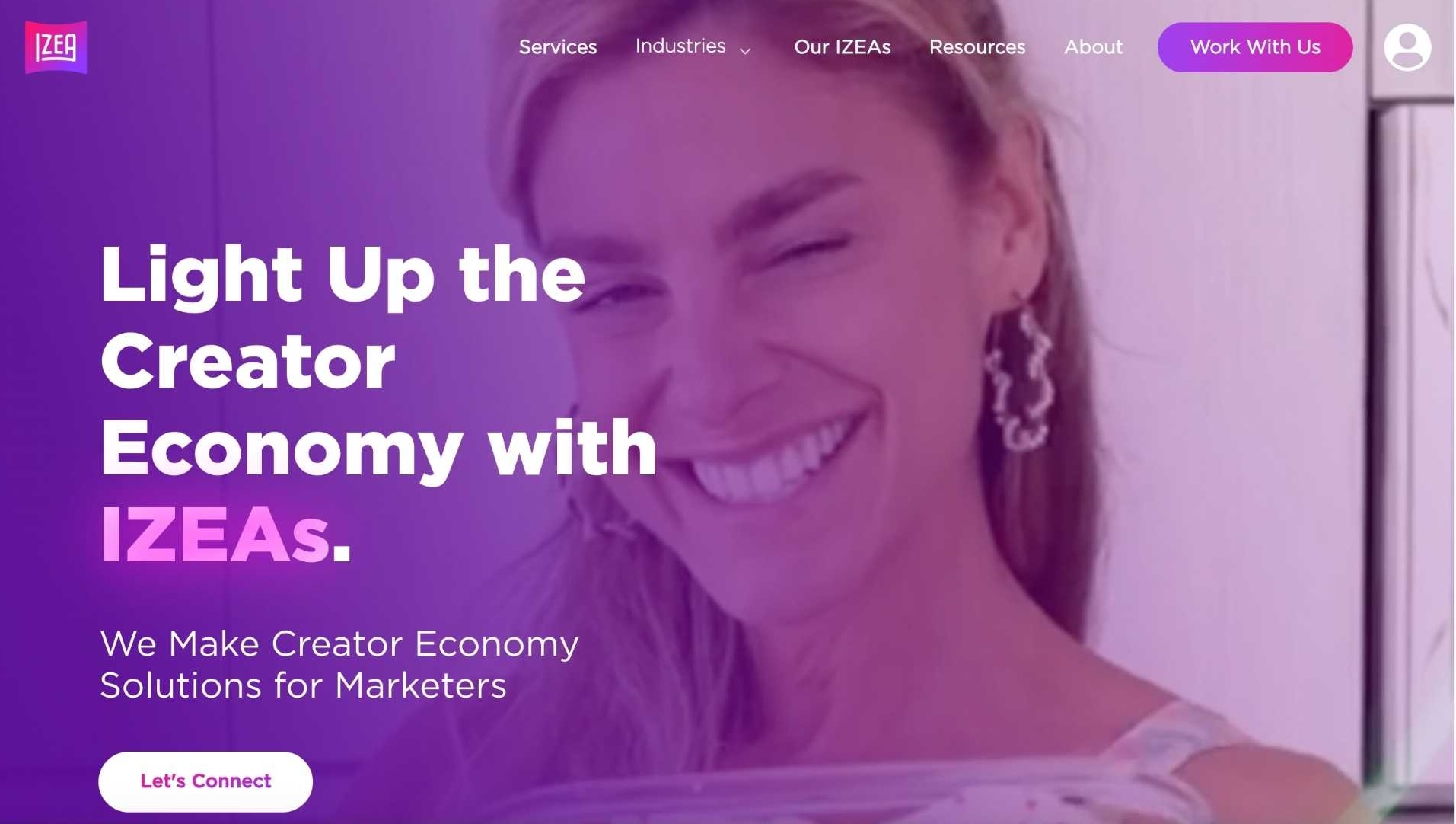
IZEA is an influencer marketing and creator economy platform that helps brands manage influencer collaborations, sponsorships, and content production at scale. Founded in 2006, the platform focuses on connecting brands with creators while supporting campaign execution, payments, and performance tracking across multiple social channels. IZEA is widely used by enterprise brands and agencies looking for structured creator campaign workflows combined with content licensing capabilities.
Key Features
- Influencer discovery marketplace: Access a large creator database with filtering options based on audience demographics, engagement metrics, and content categories to identify relevant creators quickly.
- Creator outreach and campaign management: Manage creator invitations, negotiations, deliverables, and approvals within a centralized campaign workspace.
- Influencer relationship management: Track creator history, partnerships, and campaign participation to support long-term collaborations rather than one-off campaigns.
- Content workflow management: Coordinate sponsored content production from briefing to approval while maintaining visibility across campaign stages.
- Payments and contracting: Built-in tools help brands handle creator compensation and agreements securely within the platform.
- UGC licensing and reuse: Brands can organize and reuse influencer-generated content for advertising or owned media channels.
Platform Coverage
IZEA covers Instagram, TikTok, YouTube, Facebook, Pinterest, Snapchat, Twitch, and X (Twitter.
Pricing
Not publicly disclosed
Reviews
3.9/ 5.0 (G2)
IZEA Standout Features
- Content licensing marketplace: IZEA allows brands to license creator content beyond campaigns, enabling long-term paid media or owned-channel reuse.
- Flex Cloud campaign infrastructure: Enterprise-focused workflow management supports large multi-market influencer campaigns with structured approvals.
- Creator payments automation: Integrated payment processing simplifies global creator compensation without external finance tools.
Insense vs IZEA
Insense primarily focuses on UGC production and creator ads for paid social performance, making it popular among D2C brands running Meta and TikTok ads. IZEA, by comparison, positions itself as a broader enterprise creator marketing ecosystem with stronger content licensing and large-scale campaign governance.
Brands looking for structured enterprise workflows or long-term creator partnerships often prefer IZEA, while teams focused heavily on fast UGC sourcing and ad testing may find Insense more performance-oriented.
2. SARAL
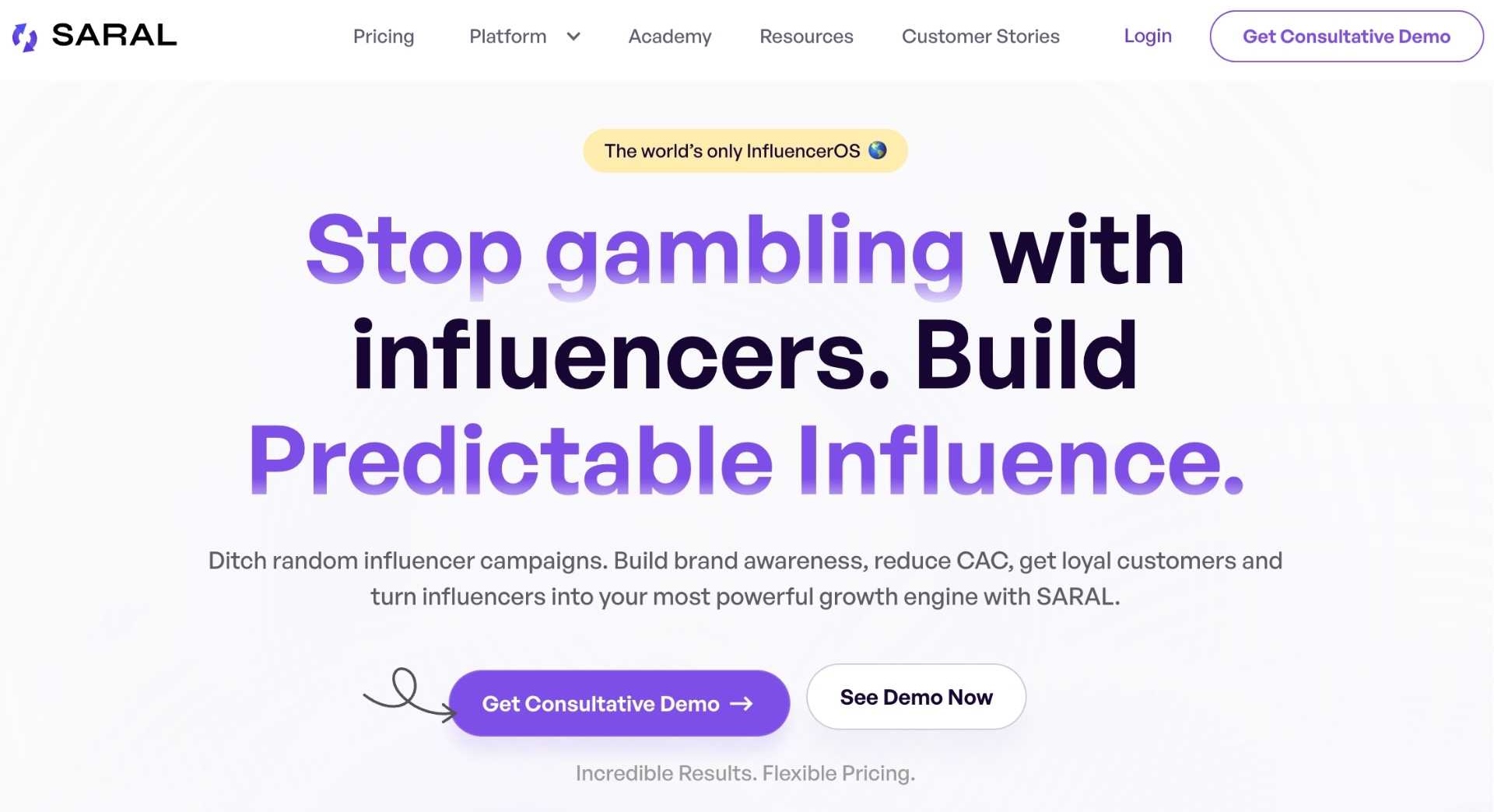
SARAL is a creator relationship management platform designed mainly for eCommerce and D2C brands running product seeding and ambassador-style influencer programs. The platform emphasizes relationship-building rather than marketplace sourcing, helping brands scale influencer outreach using CRM-style workflows. SARAL is commonly adopted by Shopify-first brands focused on affiliate-driven creator growth.
Key Features
- Influencer discovery tools: Identify creators aligned with your niche and customer audience for gifting or ambassador campaigns.
- Automated outreach workflows: Send personalized outreach emails at scale using automated sequences and follow-ups.
- Influencer CRM system: Track conversations, collaboration stages, and creator engagement across campaigns.
- Product gifting management: Streamline product seeding campaigns and monitor creator participation after shipment.
- Affiliate tracking integrations: Connect influencer collaborations directly to performance-based campaigns and revenue tracking.
- Relationship-first campaign management: Built to nurture long-term creator partnerships rather than transactional collaborations.
Platform Coverage
SARAL covers Instagram, TikTok, and YouTube.
Pricing
There are different plans:
Starter: $3.6k/quarter
Business: $4.5k/quarter
Professional: $7.5k/quarter
Reviews
4.7/5.0 (G2)
SARAL Standout Features
- Creator relationship CRM focus: Designed specifically for managing long-term influencer relationships rather than creator marketplaces.
- Product seeding automation: Strong workflows for gifting-heavy campaigns common among D2C brands.
- Affiliate-first influencer workflows: Built to connect influencer outreach directly with revenue attribution.
Insense vs SARAL
Insense operates mainly as a creator marketplace optimized for sourcing UGC creators quickly, while SARAL focuses more on building owned creator communities through outreach and relationship tracking.
Brands prioritizing ambassador programs, gifting, and retention-driven influencer strategies often lean toward SARAL, whereas Insense is better suited for short-term campaign execution and ad-focused collaborations.
3. Influencer Hero
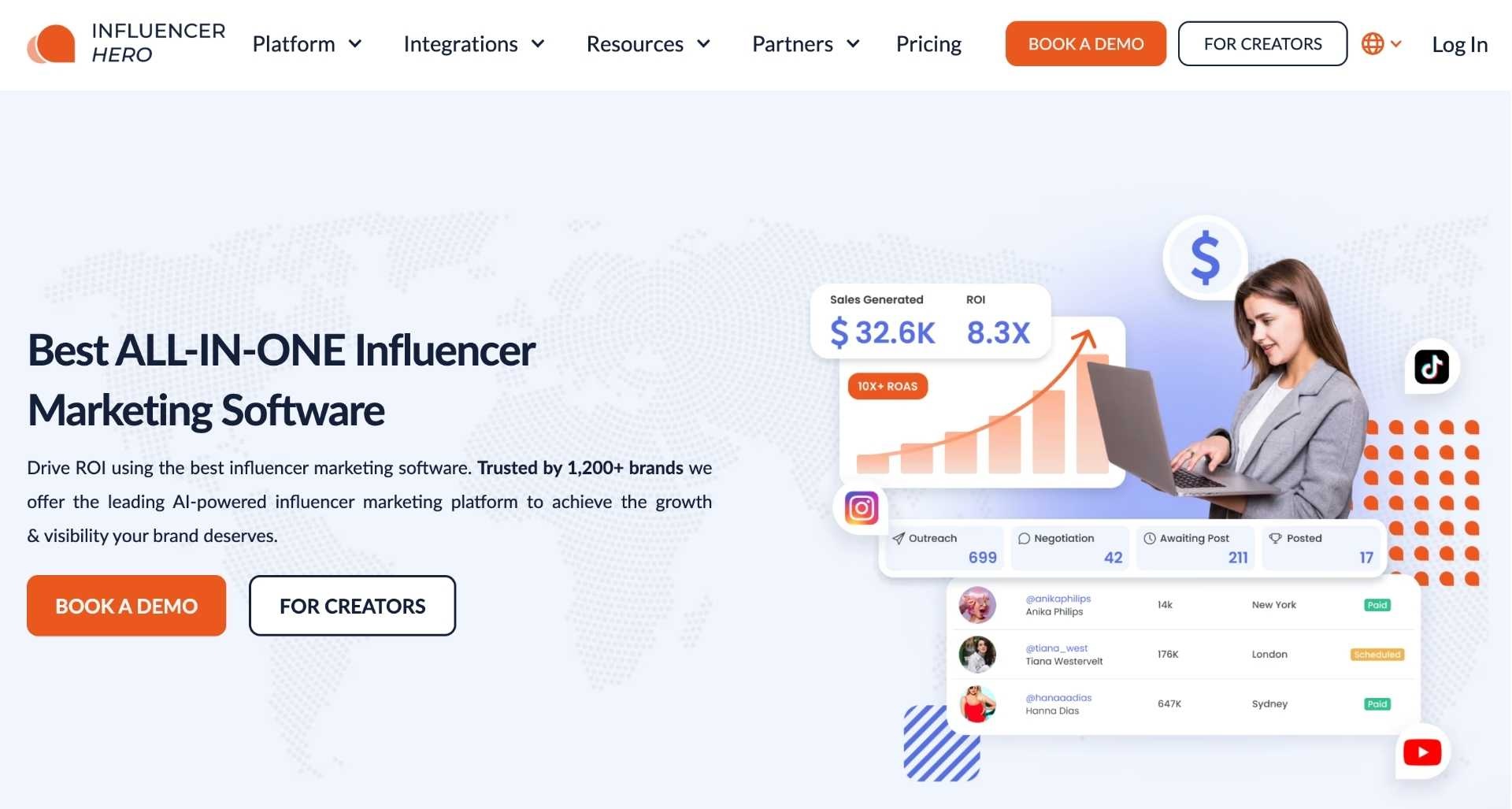
Influencer Hero is an all-in-one influencer marketing CRM designed for brands and agencies looking to manage discovery, outreach, gifting, affiliate tracking, and reporting within a single platform. Built primarily for scaling influencer programs, the platform combines automation, AI workflows, and deep campaign analytics to help D2C and eCommerce teams manage thousands of creator relationships efficiently. The system is particularly known for enabling large-scale seeding and performance-driven influencer campaigns.
Key Features
- Advanced influencer discovery: Search creators using audience demographics, engagement rate, follower quality, interests, and AI-powered lookalike recommendations.
- AI-powered outreach automation: Send bulk or personalized outreach emails using smart templates, drip sequences, and automated follow-ups.
- Influencer CRM management: Visual relationship boards track outreach, contracts, deliverables, and campaign stages in real time.
- Product seeding automation: Shopify and WooCommerce integrations automate gifting fulfillment, shipping tracking, and confirmations.
- Affiliate tracking & payments: Generate custom links and discount codes while tracking commissions and influencer-driven revenue.
- UGC collection & organization: Automatically gathers influencer content for reuse across ads, ecommerce, and social campaigns.
- Performance analytics & ROI dashboards: Measure clicks, sales, conversions, and ROI per creator from a centralized dashboard.
Platform Coverage
Influencer Hero covers Instagram, TikTok, YouTube, Facebook, Pinterest, Snapchat, X (Twitter), and Twitch.
Pricing
Influencer Hero offers scalable pricing based on outreach volume:
- Standard Plan — $649/month for up to 1,000 outreaches per month
- Pro Plan — $1,049/month for up to 5,000 outreaches per month
- Business Plan — $2,490/month for up to 10,000 outreaches per month
- Custom / Agency Plan — Custom pricing
Billing is flexible with monthly, quarterly, or annual options. Influencer Hero also allows unlimited creators in your CRM.
Reviews
5.0 / 5.0 (Capterra)
Influencer Hero Standout Features
- AI workflow automation across campaigns: Predictive creator matching, automated follow-ups, and smart campaign recommendations reduce manual campaign management.
- Deep eCommerce integrations: Native Shopify, WooCommerce, and custom integrations enable automated gifting, affiliate tracking, and revenue attribution.
- Chrome Extension for live discovery: Instantly analyze creators while browsing Instagram, TikTok, or YouTube and import them directly into campaigns.
Insense vs Influencer Hero
Insense focuses heavily on sourcing UGC creators and launching paid social collaborations, particularly for Meta and TikTok ads. Influencer Hero instead provides a broader end-to-end CRM infrastructure designed to manage discovery, outreach, affiliate tracking, gifting, and analytics within one ecosystem.
Teams scaling influencer programs long-term or managing thousands of creators typically prefer Influencer Hero’s automation and CRM depth, while Insense remains stronger for marketplace-driven UGC sourcing.
4. Aspire
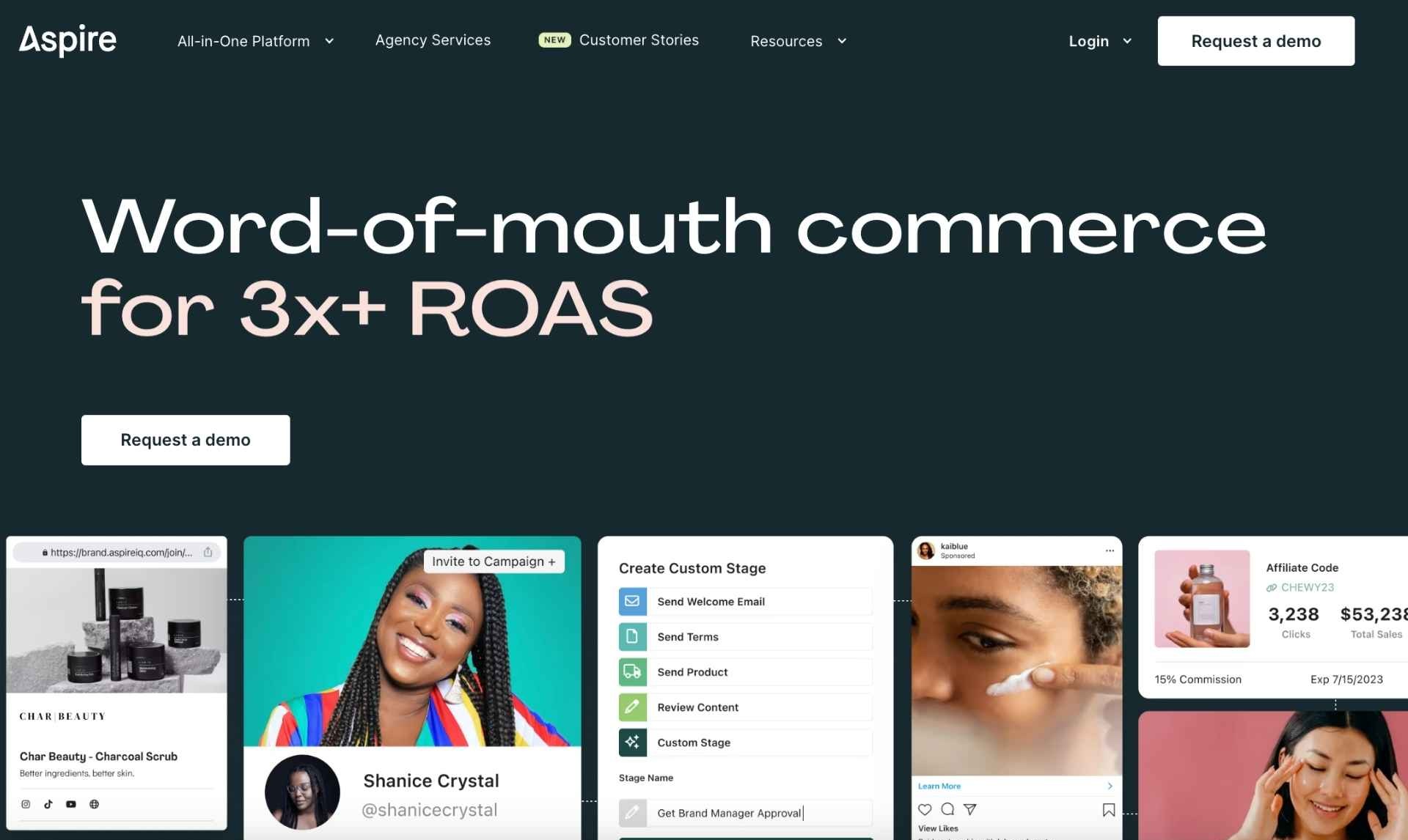
Aspire is an influencer marketing platform built to help brands manage creator relationships, ambassador programs, affiliate partnerships, and social commerce initiatives. The platform is widely used by mid-market and enterprise brands seeking structured influencer lifecycle management combined with commerce integrations. Aspire places strong emphasis on community building and long-term creator partnerships.
Key Features
- Influencer discovery engine: Search creators using audience demographics, performance data, and brand affinity signals.
- Creator outreach and relationship management: Manage creator communication and campaign collaboration within a centralized CRM environment.
- Product gifting workflows: Coordinate product shipments and creator participation directly from campaign dashboards.
- Affiliate and ambassador program management: Track influencer-driven sales and manage long-term partnerships.
- UGC management system: Collect creator-generated assets and reuse them across marketing channels.
- Social commerce integrations: Connect influencer campaigns directly to ecommerce outcomes and revenue attribution.
Platform Coverage
Aspire covers Instagram, TikTok, YouTube, Facebook, and Pinterest.
Pricing
All plans are custom made. Plans usually start at $2,000/month, with annual agreements.
Reviews
4.0 /5.0 (Capterra)
Aspire Standout Features
- Creator community building tools: Enables brands to build ambassador communities instead of managing isolated campaigns.
- Commerce-driven influencer programs: Strong integrations linking influencer activity to ecommerce performance.
- End-to-end lifecycle management: Covers discovery, collaboration, payments, and reporting in enterprise workflows.
Insense vs Aspire
Insense is optimized for campaign-based UGC sourcing and paid creator ads, making it appealing for performance marketing teams. Aspire focuses more on long-term influencer lifecycle management and brand ambassador ecosystems.
Brands investing in ongoing creator communities or affiliate-led growth may find Aspire more suitable, while Insense remains stronger for rapid content production and ad testing.
5. Influencity
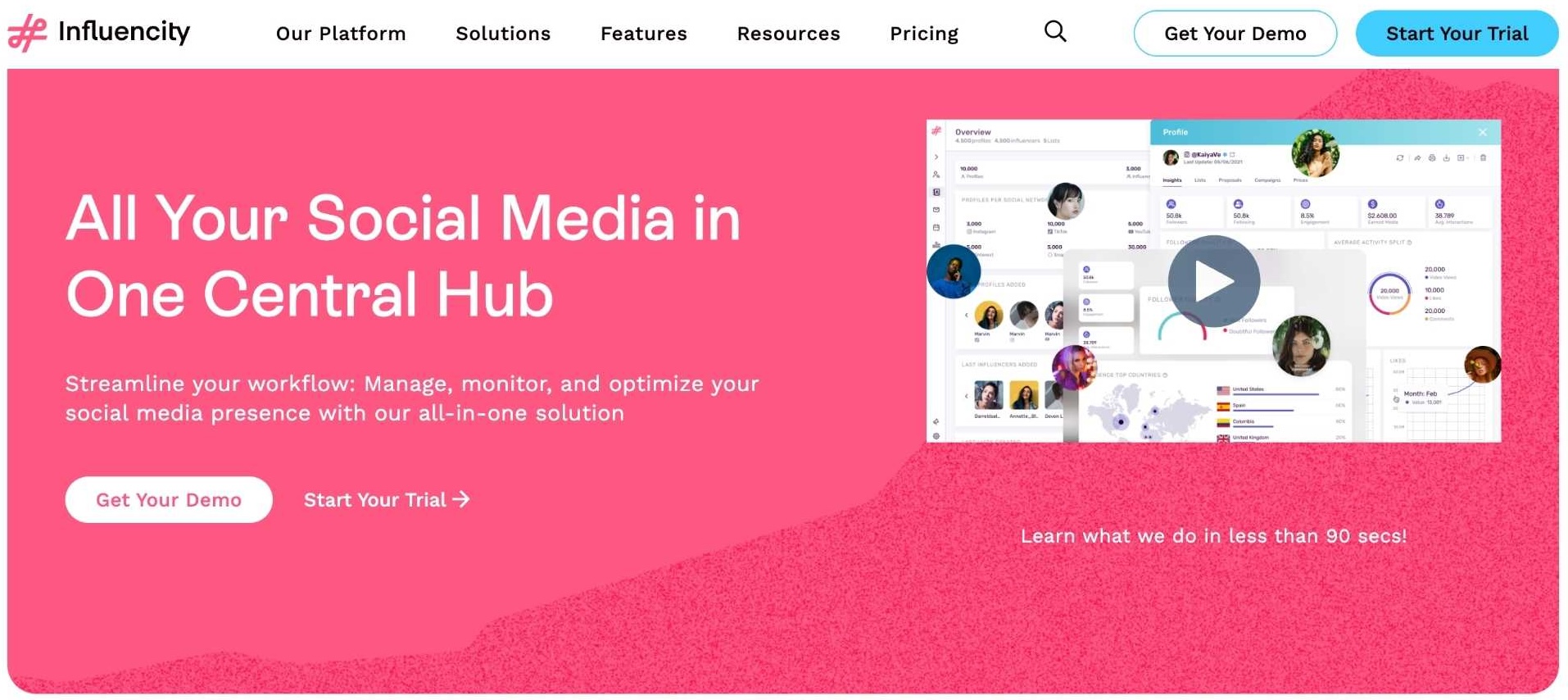
Influencity is a data-driven influencer marketing platform focused on influencer analytics, discovery, and campaign performance measurement. The platform is widely adopted by agencies and brands that prioritize audience insights and reporting accuracy when selecting creators. Influencity emphasizes analytics depth and scalable campaign monitoring across global influencer programs.
Key Features
- Advanced influencer discovery: Filter creators using detailed audience demographics, authenticity metrics, and engagement analytics.
- Outreach and campaign tracking: Manage influencer collaborations and monitor campaign execution from one dashboard.
- Influencer CRM tools: Organize creator relationships and campaign participation history.
- Affiliate-style performance tracking: Monitor conversions and influencer-driven outcomes.
- UGC performance monitoring: Track post performance and campaign effectiveness across creators.
- Audience analytics reporting: Deep analytics help brands validate influencer audiences before partnerships.
Platform Coverage
Influencity covers Instagram, TikTok, YouTube, and X (Twitter – analytics only).
Pricing
Professional Plan: $318/month or $3,816/year
Business Plan: $798/month or $9,576/year
Enterprise Plan: Custom pricing
Auto-Tracker Add-On: $660/year (for 50 influencers)
Reviews
4.3 / 5.0 (G2)
Influencity Standout Features
- Audience quality analytics: Detailed follower authenticity and demographic insights support data-led creator selection.
- Campaign performance dashboards: Real-time analytics help agencies measure ROI across multiple influencer campaigns.
- Auto-Tracker functionality: Automatically tracks influencer content and performance without manual reporting updates.
Insense vs Influencity
Insense prioritizes creator sourcing and UGC production workflows, particularly for paid social advertising use cases. Influencity differentiates itself through deeper analytics and audience intelligence rather than marketplace collaboration.
Brands that prioritize data validation and influencer analytics typically prefer Influencity, while teams focused on creator content production and ad-ready UGC workflows may continue to favor Insense.


6. Sprout Social
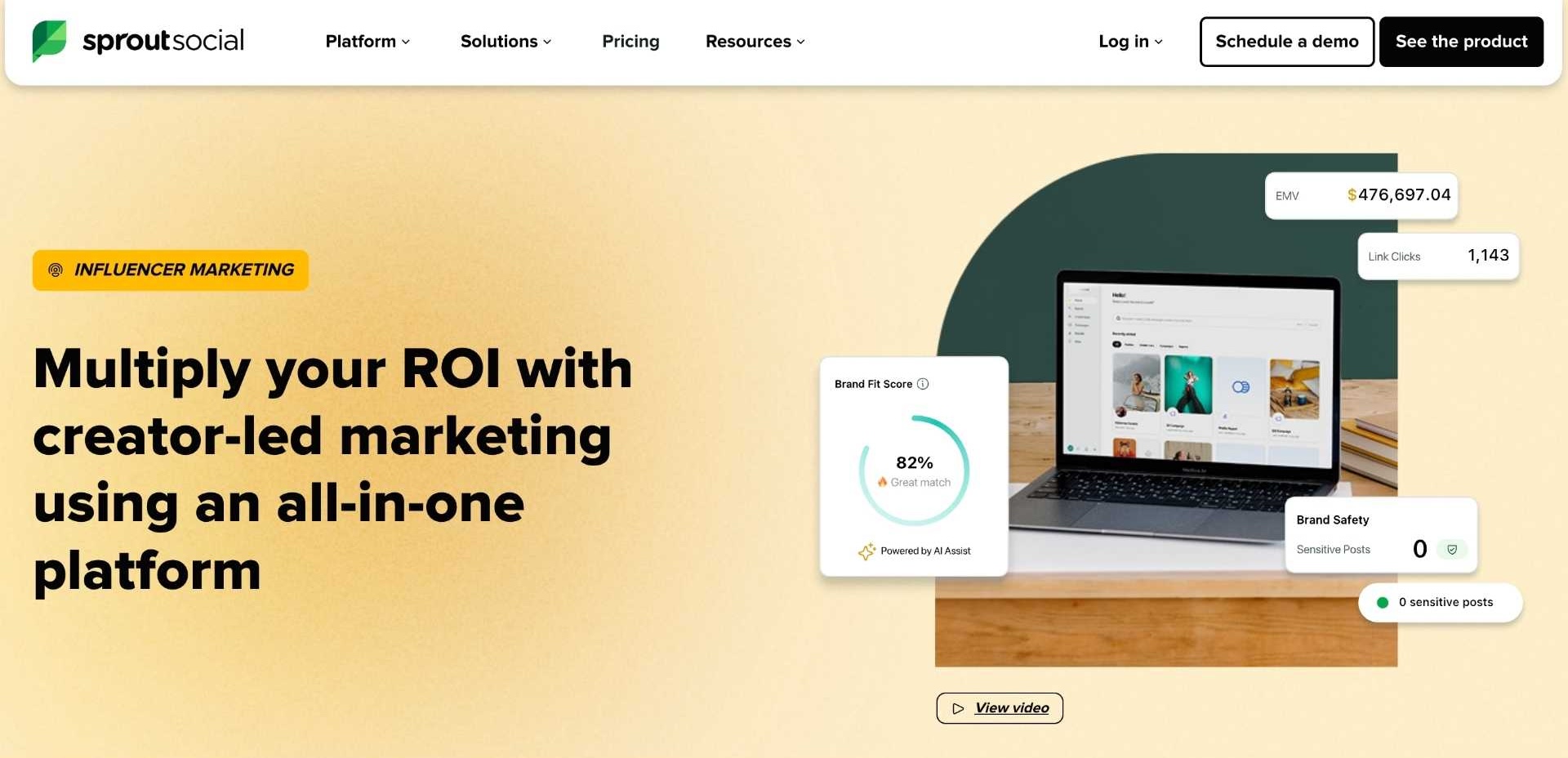
Sprout Social is an enterprise influencer marketing platform focused on data-driven campaign planning, creator discovery, and performance analytics. Acquired by Sprout Social, the platform is widely used by global brands and agencies that require advanced audience insights and reporting capabilities to manage large-scale influencer programs. Sprout Social emphasizes analytics-first influencer selection combined with collaborative campaign workflows.
Key Features
- Advanced influencer discovery: Search creators using detailed audience demographics, brand affinity data, engagement benchmarks, and psychographic insights.
- Campaign planning & workflow management: Build structured influencer campaigns with collaboration tools that align internal teams and external partners.
- Audience intelligence analytics: Deep audience segmentation helps validate influencer authenticity and brand alignment before activation.
- Social listening integration: Monitor brand mentions, campaign sentiment, and creator conversations across social platforms.
- Performance reporting dashboards: Measure reach, engagement, and ROI through customizable analytics dashboards.
- Competitive benchmarking: Compare influencer campaign performance against industry competitors or historical campaigns.
Platform Coverage
Sprout Social covers Instagram, TikTok, YouTube, Facebook, Twitter (X), and Pinterest.
Pricing
Starts from $2,500/month
Reviews
4.7 / 5.0 (G2)
Sprout Social Standout Features
- Social intelligence + influencer analytics integration: Combines influencer discovery with social listening insights for campaign planning.
- Campaign forecasting tools: Predict campaign outcomes before launch using historical influencer performance data.
- Enterprise collaboration workflows: Built-in approval systems designed for large brand or agency teams managing global campaigns.
Insense vs Sprout Social
Insense is primarily optimized for sourcing UGC creators and launching performance-focused creator ads quickly. Sprout Social, in contrast, focuses heavily on analytics, planning, and enterprise-level campaign intelligence.
Brands running global influencer programs or requiring deep audience insights typically favor Sprout Social, while Insense remains more suitable for D2C teams prioritizing fast creator sourcing and paid social execution.
7. GRIN
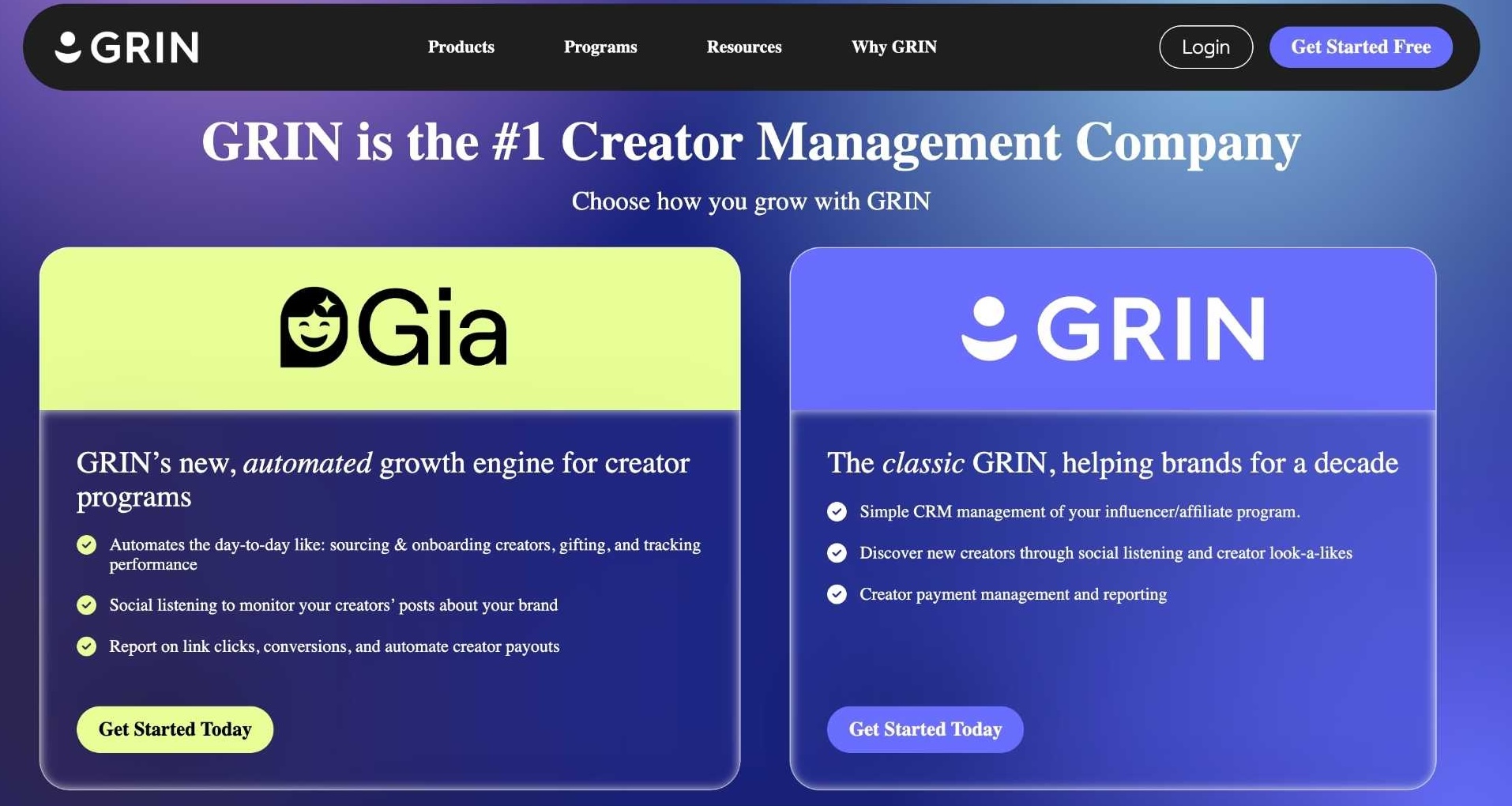
GRIN is an influencer marketing platform designed specifically for eCommerce brands looking to manage creator relationships, affiliate programs, and product seeding campaigns at scale. The platform integrates closely with online stores, enabling brands to connect influencer activity directly with revenue outcomes. GRIN is widely adopted by Shopify-based brands running long-term creator programs.
Key Features
- Influencer discovery & recruitment: Identify creators through social platforms or existing customer databases.
- Creator relationship management: Maintain long-term partnerships using CRM-style workflows and collaboration tracking.
- Product gifting automation: Send products directly to creators and track fulfillment within campaigns.
- Affiliate link & discount tracking: Attribute influencer-driven revenue through custom links and codes.
- Content management system: Store and reuse influencer-generated content for marketing campaigns.
- Ecommerce integrations: Native integrations with Shopify, WooCommerce, and major ecommerce platforms.
Platform Coverage
GRIN covers Instagram, TikTok, YouTube, Facebook, Pinterest, and Twitch.
Pricing
Annual pricing starts at $25,000/year (approx. $2,050/month), with no discounts for upfront payment. Contracts require a full-year commitment with monthly billing.
Reviews
4.5 / 5.0 (G2)
GRIN Standout Features
- Deep ecommerce integrations: Direct syncing with online stores enables accurate influencer revenue attribution.
- Customer-to-creator recruitment: Identify influencers directly from existing customers or email subscribers.
- Creator content library: Centralized system to manage UGC rights and reuse assets across marketing channels.
Insense vs GRIN
Insense focuses more on marketplace-driven creator sourcing and UGC production for advertising campaigns. GRIN instead centers around long-term influencer relationship management tied directly to ecommerce performance.
Brands building ambassador or affiliate-driven creator programs often choose GRIN, while Insense is better suited for campaign-based creator collaborations and paid ad creative production.
8. Upfluence
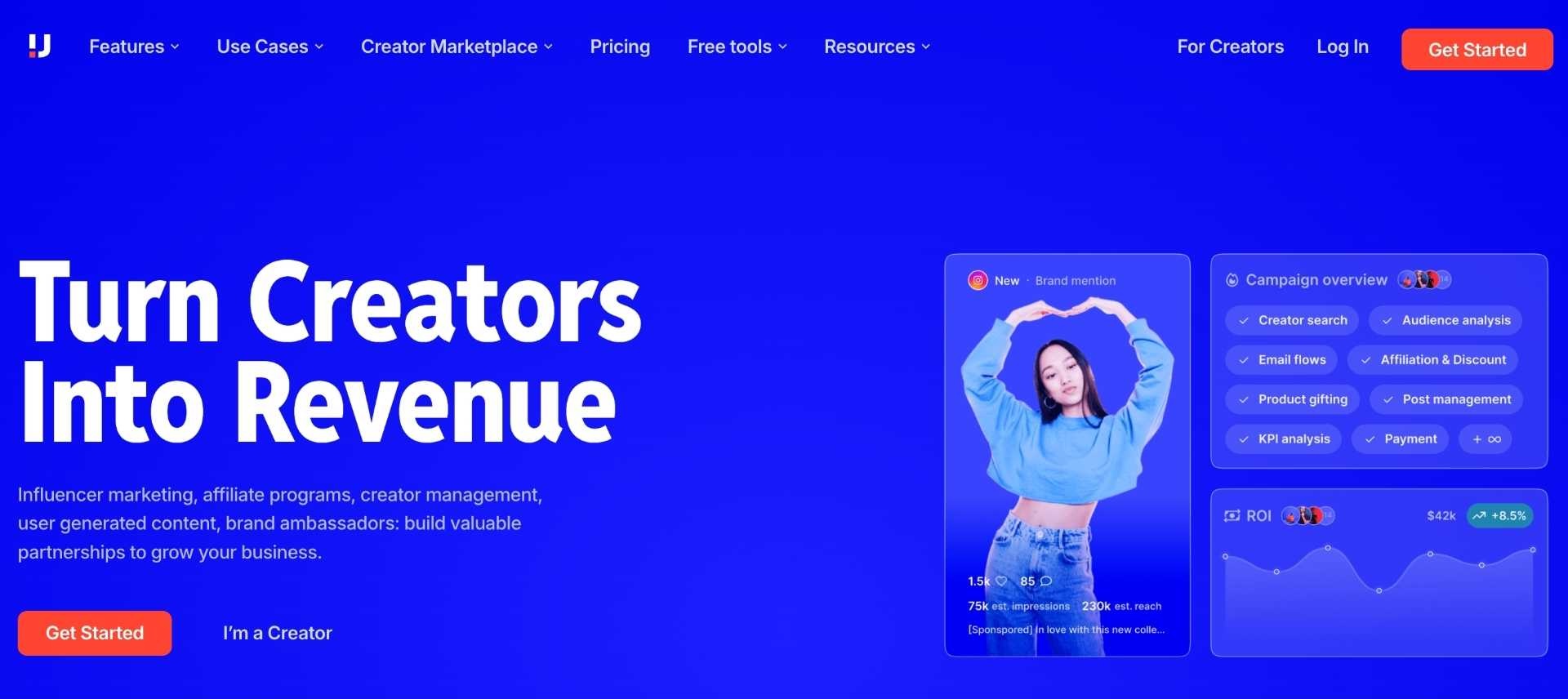
Upfluence is an influencer marketing and affiliate management platform designed to help brands discover creators, manage partnerships, and track influencer-driven sales. The platform is particularly popular among eCommerce companies due to its strong integration with online storefronts and customer data. Upfluence combines influencer discovery with affiliate marketing automation within a single platform.
Key Features
- Influencer discovery database: Search influencers using audience demographics, engagement metrics, and performance filters.
- Influencer CRM: Track conversations, negotiations, and collaboration status across campaigns.
- Affiliate & referral tracking: Generate affiliate links and discount codes tied to influencer performance.
- Email outreach automation: Send bulk outreach campaigns directly from the platform.
- Sales attribution tracking: Connect influencer activity with ecommerce revenue data.
- Creator payment management: Handle influencer compensation within campaign workflows.
Platform Coverage
Upfluence covers Instagram, TikTok, YouTube, Facebook, Pinterest, Twitch, and Blogs.
Pricing
Average plans start around $2,000/month ($24,000 yearly)
Reviews
4.3 / 5.0 (Capterra)
Upfluence Standout Features
- Live creator data via ecommerce integration: Identify influencers already purchasing from your store.
- Affiliate-first campaign infrastructure: Strong performance marketing capabilities linking creators directly to conversions.
- Integrated influencer payments: Streamlines creator compensation without external tools.
Insense vs Upfluence
Insense is primarily centered around UGC creation and paid social creator campaigns. Upfluence expands beyond content production by combining influencer discovery with affiliate marketing and ecommerce intelligence.
Brands prioritizing measurable revenue attribution and influencer-driven sales typically prefer Upfluence, while Insense remains stronger for sourcing creators for ad-ready content production.
9. Captiv8
Captiv8 is an enterprise influencer marketing platform designed for large brands and agencies managing global creator campaigns. The platform combines influencer discovery, campaign execution, paid media amplification, and advanced analytics into one ecosystem. Captiv8 is commonly used by Fortune 500 brands requiring scalable influencer marketing infrastructure.
Key Features
- Global influencer discovery: Access millions of creator profiles with demographic and audience insights.
- Campaign workflow automation: Manage creator onboarding, approvals, and deliverables across teams.
- Paid media amplification: Extend influencer content through paid advertising integrations.
- Performance analytics & reporting: Measure campaign reach, engagement, and ROI across markets.
- Brand safety & compliance tools: Evaluate creators for risk, fraud detection, and audience authenticity.
- Social commerce integrations: Connect influencer campaigns to commerce-driven outcomes.
Platform Coverage
Captiv8 covers Instagram, TikTok, YouTube, Facebook, Twitter (X), Snapchat, and Pinterest.
Pricing
$2000 / month
Reviews
4.7 / 5.0 (G2)
Captiv8 Standout Features
- Enterprise AI creator matching: Uses machine learning to match brands with creators based on performance history.
- Unified paid + organic influencer measurement: Tracks both influencer posts and paid amplification outcomes.
- Brand safety monitoring tools: Advanced compliance and fraud detection capabilities for enterprise campaigns.
Insense vs Captiv8
Insense targets D2C brands seeking efficient UGC sourcing and creator ad execution. Captiv8 operates at the enterprise level, offering large-scale analytics, compliance tools, and global campaign orchestration.
Organizations managing multinational influencer programs or requiring enterprise governance typically prefer Captiv8, while Insense remains more accessible for mid-market teams focused on performance creative.
10. Modash
Modash is an influencer discovery and analytics platform focused on helping brands identify creators using transparent audience data and performance insights. The platform emphasizes accuracy and scalability, allowing teams to search creators globally without relying on opt-in marketplaces. Modash is particularly popular among agencies and performance-focused marketing teams.
Key Features
- Influencer discovery engine: Search creators across social platforms using engagement, audience demographics, and growth metrics.
- Audience authenticity analysis: Detect fake followers and evaluate influencer audience quality.
- Campaign tracking tools: Monitor influencer performance and campaign outcomes.
- Creator lists & workflow organization: Build influencer lists and manage outreach planning externally or internally.
- Performance analytics dashboards: Analyze influencer growth trends and engagement history.
- Global creator coverage: Access creators regardless of marketplace participation.
Platform Coverage
Modash covers Instagram, TikTok, and YouTube.
Pricing
Essentials: $199/month
Performance: $499/month
Enterprise: Custom pricing
Reviews
4.9 / 5.0 (Capterra)
Modash Standout Features
- Non-opt-in influencer database: Discover creators globally without requiring marketplace registration.
- Real-time audience data accuracy: Continuously updated influencer metrics improve discovery reliability.
- API access for scaling teams: Enables brands and agencies to integrate influencer data into internal workflows.
Insense vs Modash
Insense operates as a creator collaboration marketplace designed to manage campaigns and UGC production directly inside the platform. Modash focuses primarily on influencer discovery and analytics rather than campaign execution.
Teams needing accurate creator discovery data and flexible outreach workflows often prefer Modash, while Insense is better suited for brands wanting built-in collaboration and content production management.
Final Thoughts on Insense Alternatives
Choosing the right influencer marketing platform ultimately depends on how your brand structures creator collaborations and campaign goals. While Insense remains a strong option for sourcing UGC creators and running paid social collaborations, many brands explore Insense alternatives when they need deeper influencer discovery, advanced CRM capabilities, stronger analytics, or tighter ecommerce and affiliate integrations to support long-term creator programs.
Platforms like GRIN, Upfluence, and Influencer Hero focus on relationship management and revenue attribution, while solutions such as Sprout Social, Captiv8, and Influencity prioritize analytics and enterprise campaign oversight. By comparing these tools across features, pricing models, and scalability, brands and agencies can select influencer marketing software that aligns more closely with their growth stage, operational complexity, and performance objectives.