

Intellifluence Alternatives: Best Influencer Marketing Platforms
Managing creator partnerships at scale requires more than spreadsheets and manual outreach, which is why influencer marketing software has become essential for handling discovery, communication, campaign workflows, and performance tracking in one place. Intellifluence is often considered a solid entry-level platform thanks to its affordability, opt-in influencer marketplace, and simple campaign setup, making it accessible for smaller teams. However, as programs grow, some limitations become more apparent—such as a smaller and less comprehensive creator database compared to platforms using public data, inconsistent influencer quality that requires additional vetting, and relatively basic analytics that make it harder to track ROI or scale data-driven campaigns. These gaps are why many marketers begin exploring Intellifluence alternatives that offer stronger discovery, automation, and eCommerce integrations.
In this guide, we compare the best influencer marketing platforms—including Influencer Hero, Upfluence, Aspire, SARAL, CreatorIQ, Sprout Social, GRIN, Modash, Influencity, and IZEA—to help you find the right fit for your workflow and growth stage.
Criteria for Suggesting Platform Alternatives
Core Features
Evaluation of each platform’s essential capabilities, including influencer discovery, outreach, CRM, campaign reporting, gifting, UGC and content collection, affiliate tracking and payments, storefronts, application pages, and AI-powered tools.
Supported Social Media Platforms
Assessment of how well each platform integrates with major social networks such as Instagram, YouTube, TikTok, Facebook, Pinterest, and many more
Pricing & Contract Flexibility
Comparison of pricing models, subscription costs, and contract requirements to help brands choose solutions that match their budget and scalability needs.
Standout & Differentiating Features
Highlighting unique or innovative functionalities that set each platform apart, such as real-time tracking dashboards, creator benchmarking, TikTok email discovery, or advanced automation tools.
Customer Reviews & User Satisfaction
Analysis of verified user feedback from credible platforms like G2, TrustRadius, Capterra, focusing on usability, reliability, value for money, customer support, and real-world performance.
Intellifluence Overview
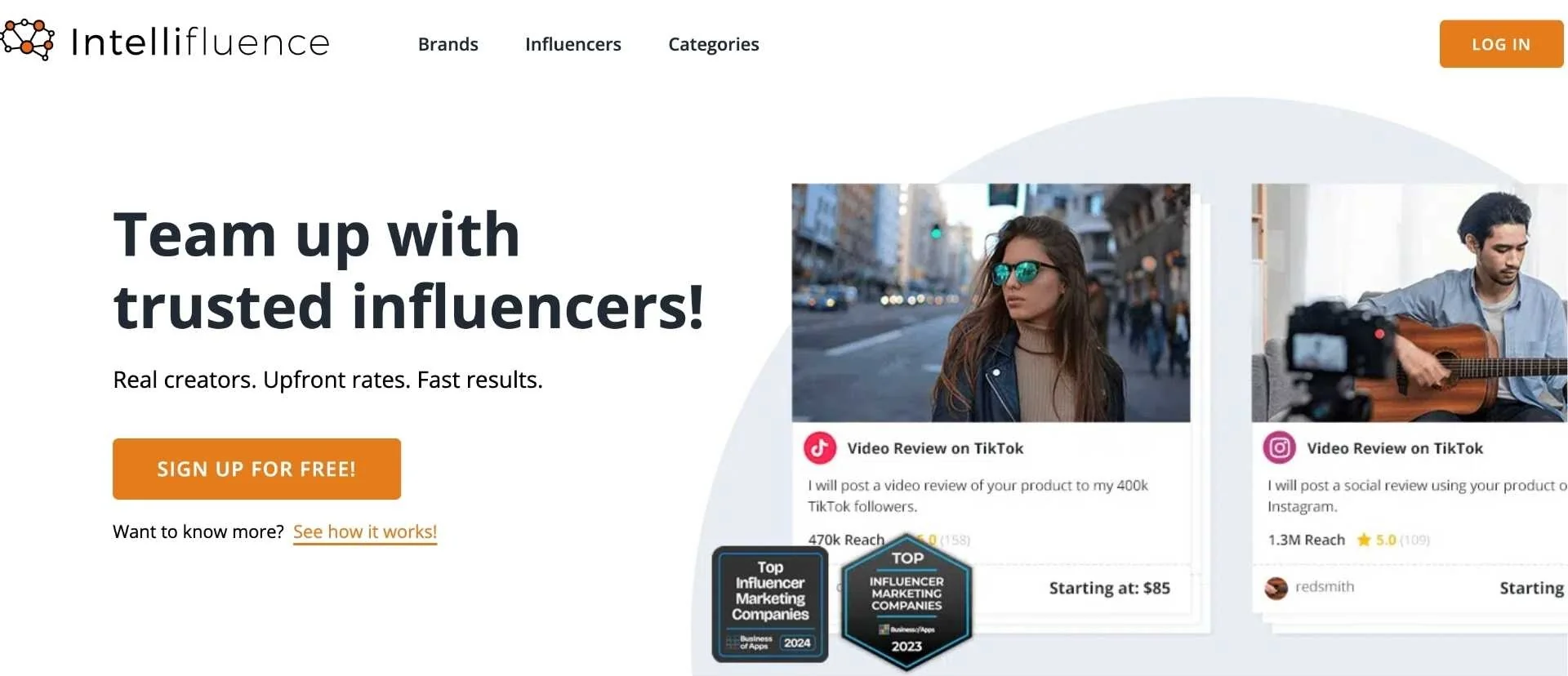
Intellifluence is an influencer marketing platform designed to help brands manage the full campaign lifecycle—from discovering creators to executing collaborations and handling payments. Positioned as a more accessible and flexible solution compared to enterprise tools, it focuses on simplicity, affordability, and an opt-in influencer marketplace.
Unlike platforms that rely heavily on scraped data, Intellifluence emphasizes a “warm” network of creators who have actively signed up to collaborate with brands. This makes it particularly appealing for small to mid-sized businesses looking for a straightforward way to launch influencer campaigns without long-term contracts or complex onboarding.
Key Features
- Influencer Discovery with Advanced Filters
Search creators by niche, location, audience size, and platform. While the database is smaller than some competitors, it consists of opt-in influencers who are more likely to respond to campaigns. - Marketplace Campaigns (Inbound Applications)
Launch public campaigns where influencers can apply directly. This reduces manual outreach and helps brands quickly gather interested creators. - Direct Outreach & Pitching
Brands can proactively invite influencers to campaigns, allowing a hybrid approach between inbound applications and outbound outreach. - Influencer Offers (Flat-Rate Collaborations)
A unique feature where creators list predefined services (e.g., Instagram post, blog review) with fixed pricing—eliminating negotiation and speeding up execution. - Campaign Wizard (SallyBot Assistance)
Guided campaign creation tool that helps structure campaigns efficiently, especially useful for teams new to influencer marketing. - In-Platform Messaging
Centralized communication with influencers, keeping negotiations, approvals, and updates organized. - Secure Payment System
Payments are held and only released once deliverables are completed and approved, reducing risk for brands. - Campaign Management & Duplication
Save drafts, duplicate campaigns, and reuse workflows—ideal for brands running recurring campaigns. - Managed Services (Advanced Plan)
Higher-tier plans include hands-on support from Intellifluence’s team for campaign setup and execution.
Platform Coverage
Instagram, TikTok, YouTube, Facebook, X (Twitter), Pinterest, LinkedIn, Twitch, and Reddit.
Pricing
Intellifluence offers flexible monthly and annual pricing (with discounts for annual billing) and no long-term contract requirements:
- Free Plan ($0/month)
1 user, 1 active campaign, limited applications and outreach (5 each) - Starter Plan ($99/month)
1 user, 3 active campaigns, up to 50 applications and 50 pitches per campaign - Regular Plan ($249/month)
3 users, 10 active campaigns, 100 applications and 500 pitches per campaign - Advanced Plan ($599/month)
Unlimited users and campaigns, unlimited outreach and applications, plus managed services and premium support
This pricing structure makes Intellifluence one of the more accessible platforms for small and mid-sized teams.
Reviews
3.9 / 5.0 (G2)
Intellifluence Standout Features
- Opt-in Influencer Marketplace (Higher Response Rates)
Unlike scraped databases, Intellifluence’s network consists of creators who actively joined the platform, which often leads to better response rates and smoother collaboration workflows. - Influencer Offers (Pre-Priced Services)
The ability to browse and purchase predefined influencer services removes negotiation friction and significantly speeds up campaign execution—especially for high-volume or test campaigns. - Hybrid Campaign Model (Inbound + Outbound)
Brands can combine inbound applications from the marketplace with direct outreach, giving more flexibility than platforms that rely solely on one approach.
Limitations (Why Users Look for Intellifluence Alternatives)
Smaller and Less Comprehensive Database
Compared to platforms using large-scale scraped data, the creator pool can feel limited—especially for niche industries or specific geographies.
Inconsistent Influencer Quality
Some users report variability in creator professionalism and performance, requiring additional manual vetting before collaboration.
Basic Analytics and Reporting
The platform focuses more on campaign execution than deep performance insights, which can be limiting for data-driven teams needing advanced ROI tracking.
Limited Automation and Scaling Capabilities
While effective for smaller campaigns, brands running large-scale influencer programs may find the workflow and automation features less robust than enterprise platforms.
10 Best Influencer Marketing Platform Alternatives
| TOOL | REVIEWS | BEST FOR | TRIAL INFO | PRICING | ||
|---|---|---|---|---|---|---|
1 |

|
⭐ | Influencer CRM & automation | Book Demo | Pricing | Website |
2 |

|
⭐ | Influencer discovery | Book Demo | Pricing | Website |
3 |

|
⭐ | Influencer partnerships | Book Demo | Pricing | Website |
4 |

|
⭐ | Influencer outreach | Book Demo | Pricing | Website |
5 |

|
⭐ | Enterprise influencer marketing | Book Demo | Pricing | Website |
6 |
|
⭐ | Influencer marketing & Social media analytics | Book Demo | Pricing | Website |
7 |

|
⭐ | DTC creator management | Book Demo | Pricing | Website |
8 |

|
⭐ | Influencer discovery | Book Demo | Pricing | Website |
9 |

|
⭐ | Campaign management | Book Demo | Pricing | Website |
10 |

|
⭐ | Influencer marketplace | Book Demo | Pricing | Website |
Influencer Hero

Influencer Hero is an all-in-one influencer marketing platform built for brands that want discovery, outreach, CRM, gifting, affiliate tracking, UGC collection, and payouts in one workflow. Its positioning leans heavily toward ROI-focused eCommerce teams, with an emphasis on automation, campaign orchestration, and transparent pricing.
Key Features
- Advanced influencer discovery: Influencer Hero lets brands search creators using filters like location, demographics, interests, engagement rate, and audience quality, while also supporting lookalike discovery and fake follower analysis.
- Chrome extension for live sourcing: The platform’s Chrome extension helps teams review creator data while browsing social platforms and import profiles directly into campaigns, which speeds up recruitment and shortlisting.
- AI-assisted outreach automation: Brands can run bulk or one-to-one email campaigns with drip follow-ups and AI-generated personalization, helping scale outreach without making it feel fully templated.
- Campaign-centric CRM: Influencer Hero uses visual boards to track creators across outreach, negotiation, deliverables, and reporting stages, making it well suited to teams running many partnerships at once.
- Integrated gifting, affiliate, and payout workflows: The platform supports gifting, affiliate links and codes, creator payments, and campaign reporting in one system rather than splitting those jobs across multiple tools.
- UGC and content library: Creator posts are automatically captured into a centralized content library, making it easier to repurpose high-resolution assets for ads, email, and organic content.
Platform Coverage
Instagram, TikTok, YouTube, Facebook, Pinterest, Snapchat, X, and Twitch
Pricing
Influencer Hero offers flexible pricing based on outreach volume, and you can have unlimited creators in your CRM with Influencer Hero:
- Standard — $649/month (up to 1,000 reachouts/month)
- Pro — $1,049/month (up to 5,000 reachouts/month)
- Business — $2,490/month (up to 10,000 reachouts/month)
- Custom / Agency — Tailored pricing
Reviews
5.0/5.0 (Capterra)
Standout Features
- Campaign-centric CRM automation: Influencer Hero’s strongest differentiator is its workflow-first CRM, with boards, bulk actions, and automated follow-ups designed for teams managing high volumes of creators.
- AI-personalized outreach at scale: The platform combines drip campaigns with AI-generated personalization based on recent creator content, which is more advanced than the basic outreach flows found in many mid-market tools.
- Influencer brand-follower and customer discovery: A standout capability is finding creators who already follow or have purchased from your brand, which can improve response rates and campaign authenticity.
Intellifluence vs Influencer Hero
Intellifluence is better suited to brands that want a lighter-weight, marketplace-led platform with lower entry costs and opt-in creators, while Influencer Hero is more workflow-heavy and built for brands that want structured CRM, automation, gifting, affiliate tracking, and payouts in a single operating system. Intellifluence’s strength is accessibility and simplicity; Influencer Hero’s advantage is deeper orchestration, stronger eCommerce alignment, and more advanced outreach automation.
Upfluence
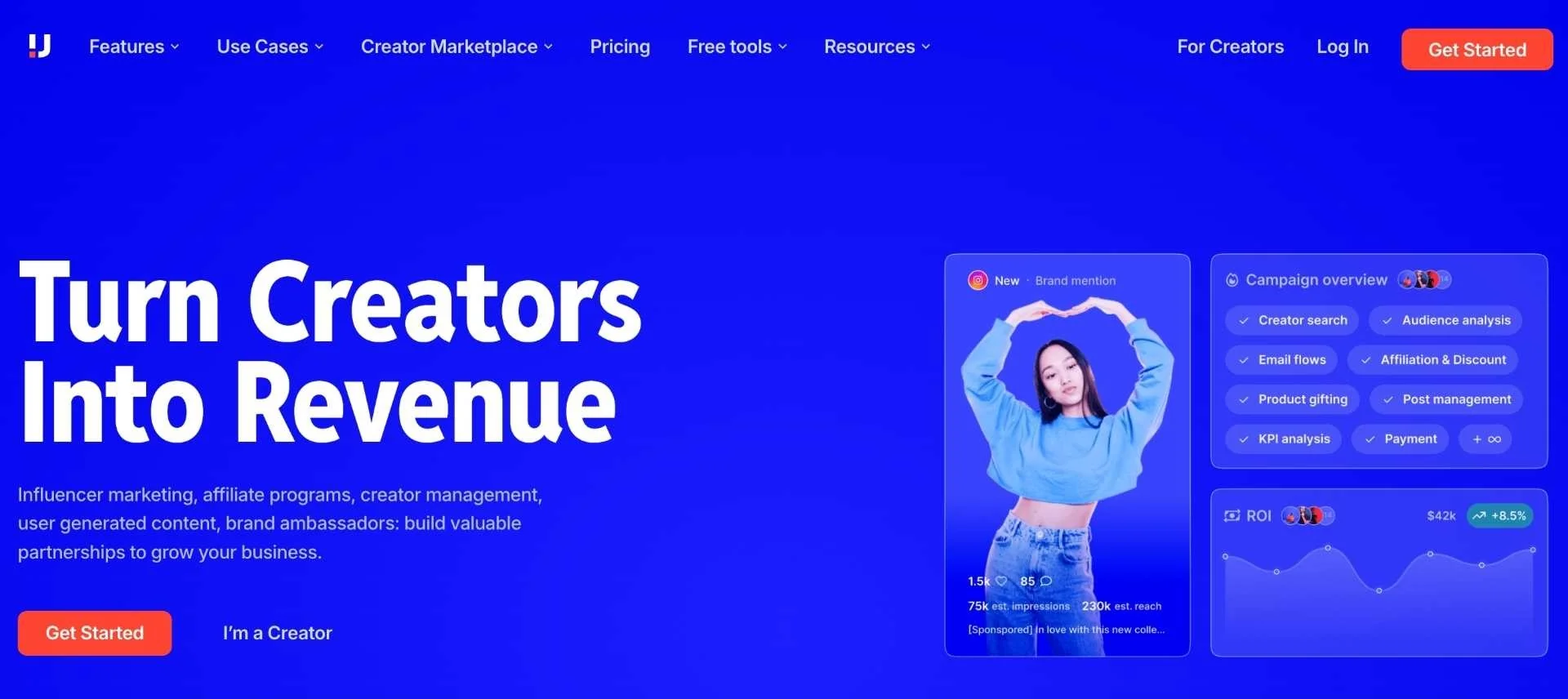
Upfluence is an influencer and affiliate marketing platform focused on helping eCommerce and DTC brands scale creator partnerships with stronger sales attribution. It combines influencer discovery, outreach, CRM, affiliate management, and payments, with especially strong positioning for brands that sell through Shopify and Amazon.
Key Features
- Large creator database with AI-assisted discovery: Upfluence provides access to a large influencer database and lets brands search by niche, location, audience demographics, engagement rate, and interests.
- AI-powered outreach with Jaice AI: The platform now highlights Jaice AI as a major differentiator for campaign setup and outreach assistance, helping brands automate parts of the recruiting process.
- Influencer CRM and campaign management: Upfluence centralizes communication, statuses, tracking, and campaign performance, reducing the need for separate spreadsheets or external CRM tools.
- Shopify integration for customer-to-creator discovery: One of its strongest capabilities is identifying existing customers who are influencers, then turning them into affiliates or creator partners.
- Amazon integration: Upfluence also stands out for Amazon support, letting brands attribute influencer-driven sales and track affiliate performance beyond Shopify.
- Payments and affiliate tracking: The platform supports discount codes, affiliate links, conversions, and creator payouts, making it especially useful for ROI-focused commerce teams.
Platform Coverage
Instagram, TikTok, YouTube, Facebook, Twitch, Pinterest, and blogs.
Pricing
On average plans start around $2,000/month ($24,000 yearly)
Reviews
4.3 / 5.0 (Capterra)
Standout Features
- Customer-to-creator identification: Upfluence’s Shopify integration can surface customers who are already influencers, which is a particularly valuable differentiator for brands trying to activate warm advocates.
- Strong Shopify and Amazon commerce tracking: Few platforms are as centered on direct commerce attribution across both Shopify and Amazon, which is why Upfluence remains popular with performance-minded eCommerce teams.
- Jaice AI for campaign assistance: Its recent AI positioning around Jaice gives Upfluence a stronger automation narrative than many older influencer suites that still rely on more manual setup.
Intellifluence vs Upfluence
Intellifluence is more affordable and easier to adopt for brands that want a marketplace-style workflow with no heavy contract burden, while Upfluence is more advanced for commerce brands that need affiliate tracking, customer-to-creator discovery, and stronger revenue attribution. In short, Intellifluence is the lighter and more accessible option; Upfluence is the stronger fit for teams that prioritize Shopify/Amazon integrations and sales tracking over simplicity.
Aspire
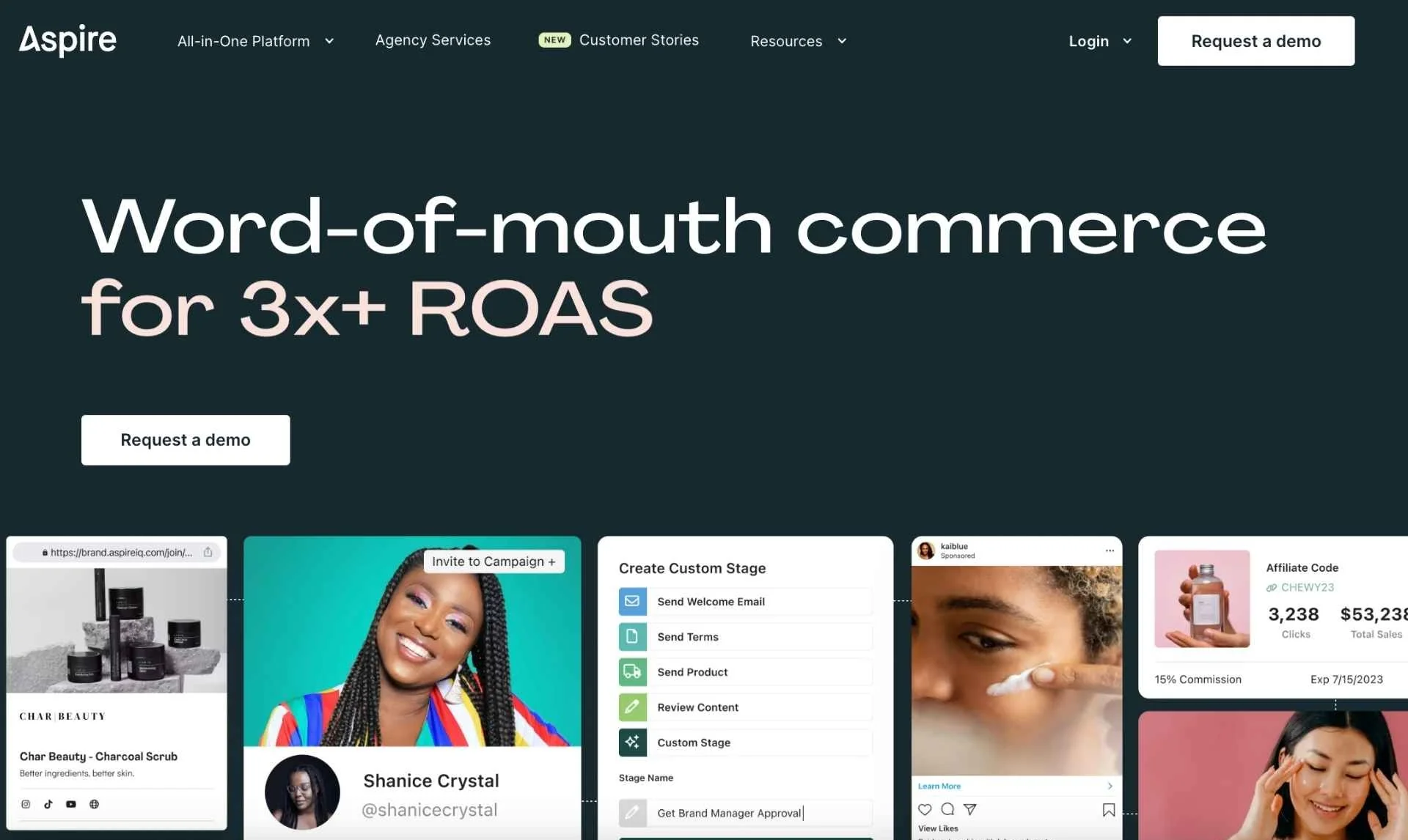
Aspire is an influencer marketing platform built around creator discovery, relationship management, product seeding, affiliate growth, and measurable word-of-mouth commerce. It is particularly well known for combining a creator marketplace, workflow automation, and first-party platform data into one system for scaling creator programs.
Key Features
- Creator discovery powered by first-party platform data: Aspire emphasizes that its creator data comes through first-party partnerships rather than only scraped third-party sources, which can improve confidence in audience and performance metrics.
- Inbound creator marketplace and application pages: Brands can post projects, collect creator applications, and gather details such as creative ideas, experience, and audience fit before approving collaborators.
- Workflow automation and CRM: Aspire supports full campaign workflows from invite to contract, brief, approval, post tracking, and follow-up automation, helping small teams manage larger creator volumes.
- Shopify-powered gifting and fulfillment: The platform integrates gifting into campaign workflows so creators can select products and brands can approve and fulfill them without switching systems.
- Affiliate and commission tracking: Aspire supports discount codes, links, creator stores, sales attribution, and commission reporting, making it more performance-oriented than pure discovery tools.
- Content library and usage rights support: Aspire stores campaign content, tracks performance by creator and channel, and supports exportable reporting for both social and commerce results.
Platform Coverage
Instagram, TikTok, Pinterest, YouTube, and Facebook
Pricing
Aspire starts with tiered pricing and can be customized, with a mid-tier quote of about $2,300/month for a use case involving multiple team members and up to 500 creators in CRM.
Reviews
4.0 /5.0 (Capterra)
Standout Features
- First-party data partnerships: Aspire’s first-party data access from major social platforms is one of its clearest differentiators and a strong trust signal for brands that care about data quality.
- Large inbound creator marketplace: Its creator marketplace reduces dependence on cold outreach by letting brands attract creators who actively want to work with them.
- Deep gifting and workflow automation: Aspire is especially strong for brands running product seeding and affiliate campaigns because gifting, approvals, codes, and reporting are tied together in one process.
Intellifluence vs Aspire
Intellifluence is a more budget-friendly option for brands that want straightforward creator sourcing and campaign execution, while Aspire is a more premium system designed for scaling creator programs with automation, first-party data, and stronger seeding and affiliate workflows. Intellifluence is simpler and more accessible; Aspire is the better fit when a brand wants a more mature creator marketplace and a tighter link between gifting, affiliate sales, and workflow automation.
SARAL

SARAL is an influencer marketing operating system designed primarily for emerging and growth-stage eCommerce brands. Its messaging centers on making influencer marketing simpler by combining creator discovery, outreach, relationship management, tracking, affiliate workflows, and payouts inside one tool with a more operational, ROI-driven focus.
Key Features
- Search-engine style creator discovery: SARAL positions its discovery product less like a closed opt-in database and more like a search engine across public creator accounts, with keyword search, niche discovery, and country-based sourcing.
- Automated outreach and email drips: The platform emphasizes personalized outreach automation, follow-ups, inbox management, and campaign communication without relying on spreadsheets and manual tracking.
- Influencer relationship management: SARAL’s “InfluencerOS” brings relationships, campaign tracking, shipping, links, codes, clicks, and performance data into one dashboard.
- Chrome extension for sourcing: The SARAL extension helps users save creators while browsing Instagram, TikTok, or YouTube, and surfaces useful metrics like engagement rate, predicted likes, and fair fee guidance.
- Affiliate and ambassador workflows: SARAL supports application forms, customer-to-ambassador workflows, affiliate tracking, discount codes, and payments, which makes it a strong fit for brands running influencer plus affiliate programs together.
- Performance tracking and reporting: The platform tracks campaign impact across posts and channels, with exportable data for reporting and optimization.
Platform Coverage
Instagram, TikTok, and YouTube.
Pricing
There are different plans:
- Starter: $3.6k/quarter
- Business: $4.5k/quarter
- Professional: $7.5k/quarter
Reviews
4.7/5.0 (G2)
Standout Features
- Search-engine approach to creator discovery: SARAL’s real-time search model is a notable differentiator because it is designed to search public creator profiles rather than confining brands to a smaller closed marketplace.
- Chrome extension with fee guidance: The extension does more than save creators; it also surfaces engagement metrics and fair-fee guidance, which helps teams qualify creators faster.
- Influencer-plus-affiliate operating system: SARAL stands out by tightly connecting outreach, seeding, affiliate tracking, applications, and payouts in a single workflow aimed at DTC brands.
Intellifluence vs SARAL
Intellifluence is stronger for brands that want an opt-in marketplace where creators are already inside the platform and ready to apply, while SARAL is stronger for brands that want a more operational system for discovery, outreach, affiliate tracking, and ambassador growth. Put simply, Intellifluence feels more marketplace-led, while SARAL feels more like an influencer operating system for DTC execution.
CreatorIQ
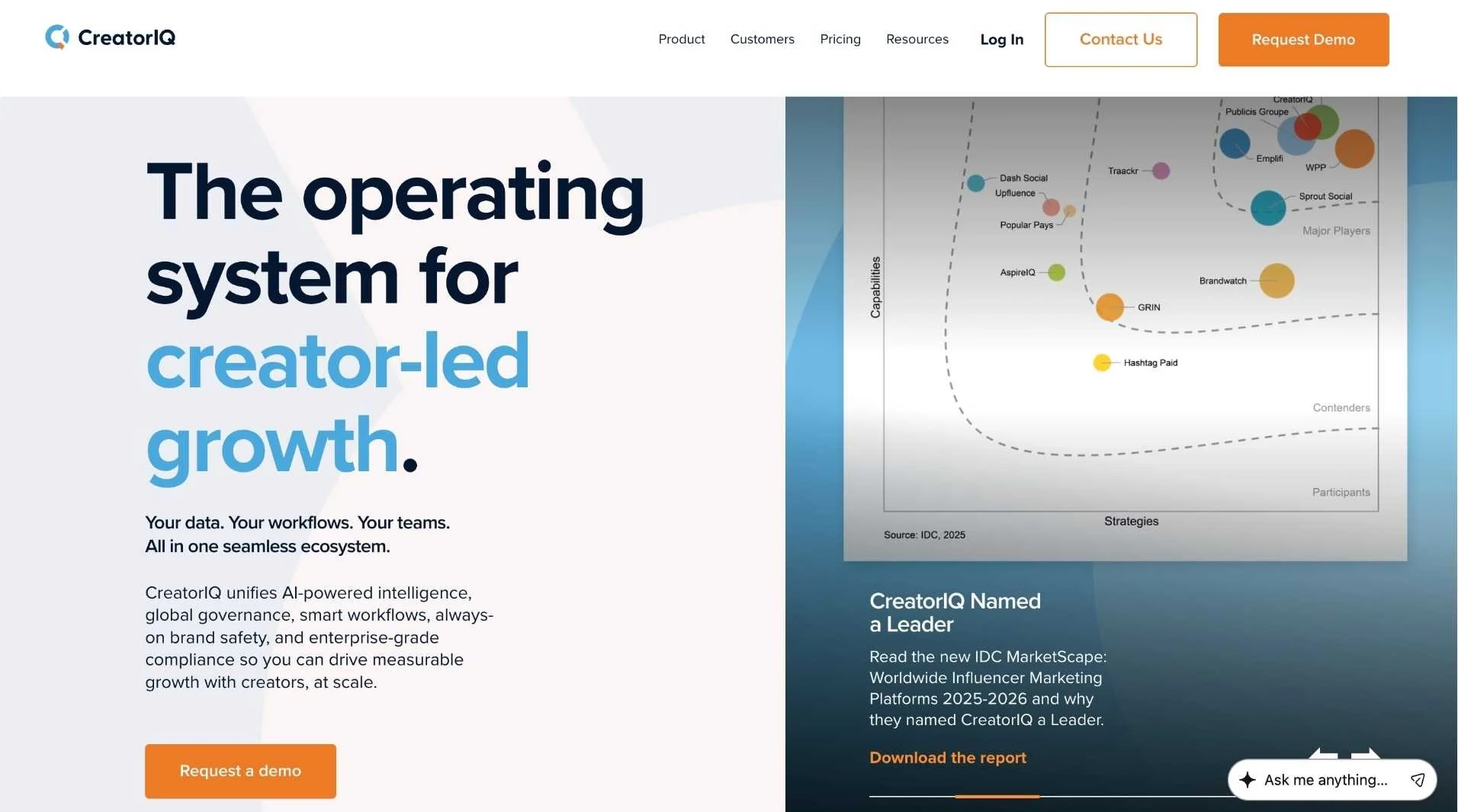
CreatorIQ is an enterprise creator marketing platform built for large brands and agencies that need unified data, governance, workflow control, brand safety, and global-scale creator operations. Its positioning is less about lightweight campaign management and more about becoming the operating system for creator-led growth across regions, teams, and business units.
Key Features
- AI-driven creator discovery with enterprise-grade filtering: CreatorIQ supports public creator search, audience filtering, content/topic search, and detailed creator profiling for brands that need precise targeting and governance.
- Private CRM and creator relationship management: Teams can store creators, tag them, track previous campaigns, centralize communication, and manage collaborations through a dedicated IRM/CRM layer.
- Campaign workflows and stakeholder approvals: CreatorIQ supports structured campaign setup, one-sheets, review flows, and cross-team approvals, which is especially valuable for larger organizations with layered decision-making.
- Content collection and reporting: The platform offers customizable dashboards, live reporting, creator-level analytics, and shareable reporting links for internal stakeholders and agencies.
- Enterprise governance and compliance: CreatorIQ places strong emphasis on governance, compliance, and brand safety, which is a major reason it is used by large global brands.
- Integrated payments and scalable infrastructure: The platform supports creator payments and global enterprise workflows, making it better suited to multinational programs than mid-market SMB tools.
Platform Coverage
Instagram, YouTube, TikTok, Facebook, Twitter, Pinterest, and more.
Pricing
- Basic Plan: Starts at $35,000/year. Includes 1,000 contact creators per month
- Standard Plan: Starts at $50,000/year. Includes 2,500 contact creators per month
- Professional Plan: Starts at $90,000/year. Includes 5,000 contact creators per month
- Enterprise Plan: Starts at $200,000/year. Includes 7,500 contact creators per month
Reviews
4.4 / 5.0 (Capterra)
Standout Features
- Enterprise-grade governance and compliance: CreatorIQ’s biggest differentiator is how well it supports large organizations that need brand safety, governance, and cross-team control rather than just creator outreach.
- Custom reporting and stakeholder-friendly workflows: Shareable live dashboards, one-sheets, and approval flows make it particularly strong for organizations that need internal buy-in and executive reporting.
- Unified ecosystem for creator-led growth: CreatorIQ is built to unify data, workflows, teams, and measurement in one enterprise system, which is why it is often chosen by global brands rather than smaller DTC operators.
Intellifluence vs CreatorIQ
Intellifluence is a more approachable platform for SMBs and mid-sized teams that want cost-effective creator sourcing and campaign execution, while CreatorIQ is built for enterprise organizations that need governance, custom reporting, approvals, and global-scale infrastructure. For most smaller brands, Intellifluence will feel simpler and easier to justify; for multinational teams running complex creator programs, CreatorIQ is the more advanced system.


Sprout Social

Sprout Social’s influencer marketing product, built on the former Tagger platform, is positioned as an enterprise-grade solution for creator discovery, campaign management, brand safety, and performance measurement. It is designed for brands that want influencer marketing tightly connected to broader social intelligence, reporting, and governance workflows rather than just basic creator sourcing.
Key Features
- AI-led creator discovery: Sprout Social uses semantic search and creator discovery tools to help teams identify influencers by topic, audience, and engagement patterns rather than relying only on manual keyword filtering.
- Brand Fit Score: One of its best-known capabilities is Brand Fit Score, which helps marketers assess creator alignment against brand criteria before outreach or approval.
- Brand safety controls: The platform includes brand safety monitoring and filtering, making it easier to exclude creators tied to risky keywords or unsuitable content categories.
- Content approval workflows: Brands can manage draft review and approval before posts go live, which is especially useful for regulated categories or campaigns with tighter messaging controls.
- Competitive benchmarking: Sprout Social includes benchmarking and reporting tools that show creator overlap, competitor activity, and campaign performance context.
- Exportable analytics and dashboards: Teams can produce presentation-ready exports and share reporting internally, with metrics like engagement, EMV, audience insights, and campaign summaries.
- Integrated gifting and affiliate workflows: Through Shopify and PayPal integrations, the platform supports product seeding, discount code attribution, and affiliate payouts inside a more structured campaign workflow.
Platform Coverage
Instagram, YouTube, Facebook, TikTok, and X (Twitter)
Pricing
Starts around $1,600/month per user plus $600 per extra user.
Reviews
4.5 / 5.0 (Capterra)
Standout Features
- Brand Fit Score + brand safety in one workflow: Sprout Social stands out for pairing AI-style creator matching with brand safety filters, which is especially useful for larger brands with stricter approval processes.
- Reporting depth built for stakeholders: Its exportable dashboards, EMV tracking, benchmarking, and presentation-ready reporting are stronger than what many lighter influencer tools offer.
- Influencer marketing tied to broader social intelligence: Because it sits inside the Sprout ecosystem, teams can connect influencer activity with wider social listening, governance, and enterprise reporting needs.
Intellifluence vs Sprout Social
Sprout Social is the more enterprise-oriented option, with stronger analytics, brand safety controls, content approvals, and stakeholder reporting, while Intellifluence is the lighter and more accessible marketplace-led platform. Sprout Social makes more sense for teams that want governance and reporting depth; Intellifluence is the easier fit for brands that prioritize lower-cost campaign execution and a simpler creator marketplace workflow.
GRIN
GRIN is an end-to-end creator management platform built primarily for eCommerce and DTC brands. Its core value proposition is that it brings discovery, outreach, CRM, gifting, affiliate tracking, content management, and payouts into one operating system for brands that want creator relationships tied directly to revenue outcomes.
Key Features
- Creator discovery suite: GRIN supports influencer discovery through keyword, audience, and brand-fit filters, with AI-assisted search and lookalike-style workflows.
- Email-based outreach and CRM: Brands can run outreach through synced email, track opens and replies, and manage creators with tags, statuses, tasks, and notes in a centralized CRM.
- Creator portals: GRIN gives creators dedicated portals for briefs, contracts, discount codes, submissions, and payment status, which helps brands scale without relying on fragmented communication.
- eCommerce-native gifting: GRIN integrates deeply with Shopify and other commerce systems so brands can automate product seeding, shipping status, discount codes, and performance tracking.
- Affiliate and payment workflows: The platform supports PayPal payouts, commission tracking, affiliate dashboards, and sales attribution in the same system.
- UGC library and media rights: GRIN stores creator content in a searchable library and includes media rights support, making it easier to reuse content across ads and owned channels.
- AI assistant and automation: GRIN has been promoting Gia, its intelligent assistant, to help with creator suggestions, prioritization, and workflow support.
Platform Coverage
Facebook, Instagram, TikTok, X, Pinterest, YouTube, and Twitch
Pricing
Annual pricing starts at $25,000/year (approx. $2,050/month)
Reviews
4.5/5.0 (G2)
Standout Features
- eCommerce-native infrastructure: GRIN’s deepest differentiator is how tightly it connects creator programs to Shopify, WooCommerce, payments, gifting, and affiliate revenue.
- Creator-friendly portals: Instead of forcing creators into clunky back-and-forth workflows, GRIN gives them structured dashboards for deliverables, contracts, codes, and uploads.
- Gia and AI-assisted workflow support: GRIN’s newer AI positioning around Gia gives it a stronger automation story for prioritizing creators and managing campaign operations.
Intellifluence vs GRIN
Compared with Intellifluence, GRIN is far more commerce-centric and operationally deep, especially for brands that need gifting, affiliate revenue tracking, creator portals, and integrated payouts. Intellifluence is the more lightweight and budget-friendly option, while GRIN is better suited to established DTC brands running always-on creator programs tied to measurable sales outcomes.
Modash

Modash is a creator discovery and campaign platform built around a very large public influencer database. It is especially popular with performance-minded in-house teams that want powerful search, outreach, tracking, affiliate workflows, and Shopify-linked gifting without moving up to a heavier enterprise platform.
Key Features
- Large public creator database: Modash is built on public profile data rather than an opt-in-only marketplace, which gives brands access to a wider pool of creators.
- Advanced filtering and profile analysis: Teams can filter by niche, audience demographics, location, engagement rate, hashtags, captions, and more, while reviewing fake follower analysis and benchmark data.
- AI creator discovery: Modash supports text-prompt and image-based creator search, making it easier to search by aesthetic, vibe, or content style instead of only standard metadata.
- Lookalikes and “Find Your Fans”: It can surface creators similar to top performers and identify influencers who already follow the brand, which can improve reply and conversion rates.
- Outreach and lightweight CRM: Modash supports email templates, Gmail/Outlook sync, bulk outreach, and status tracking across contact, negotiation, and confirmation stages.
- Shopify-powered gifting and affiliate tracking: Brands can automate product gifting, discount codes, affiliate links, and sales tracking through Shopify-connected workflows.
- Automated payouts: Modash supports creator payments and commission-based payouts, reducing the need for separate payout tooling.
Platform Coverage
Modash supports influencer marketing on platforms such as Instagram, YouTube, and TikTok, providing comprehensive campaign tracking and influencer management tools.
Pricing
- Essentials: $199/month (paid annually)
- Performance: $499/month (paid annually)
- Custom Enterprise: Contact for pricing
Reviews
4.9 / 5.0 (Capterra)
Standout Features
- AI search by text prompt or image: This is one of Modash’s clearest differentiators because it lets marketers search for creators by visual style, not just by audience and metadata.
- Find Your Fans: Modash can identify creators who already follow your brand, which is a practical advantage for warmer outreach and higher-fit partnerships.
- Focused discovery-to-payout workflow: Rather than trying to do everything, Modash is strongest where many teams actually need it most: sourcing, outreach, tracking, affiliate management, and payouts.
Intellifluence vs Modash
Modash is the stronger choice when a brand wants broad public-data discovery, deeper creator search, and Shopify-connected affiliate workflows, while Intellifluence is the simpler opt-in marketplace option. Intellifluence reduces friction through a built-in creator marketplace; Modash gives brands more discovery power and more flexible outreach for teams willing to build campaigns outside a closed creator network.
Influencity

Influencity is an all-in-one influencer relationship management platform designed for brands and agencies that want discovery, outreach, CRM, campaign execution, reporting, and social listening in one system. Its positioning sits between lighter SMB tools and more expensive enterprise suites, with a strong emphasis on flexibility and modularity.
Key Features
- Large influencer database: Influencity says it gives brands access to a database of more than 170 million influencer profiles with extensive search filters and real-time analysis.
- Influencer discovery and analysis: Brands can search, analyze audience quality, review demographics, and compare creators before moving them into campaign workflows.
- Influencer relationship management: The platform includes list building, tagging, segmentation, and outreach sequences, with email replies routed back to the user’s inbox.
- Campaign manager and Kanban workflow: Influencity supports multi-campaign management with visual workflows for tracking budgets, deliverables, approvals, and creator progress.
- Campaign reports and exports: Teams can run manual or automated reporting with trackable rules based on hashtags or mentions, then export reports for internal use.
- Seeding and payments: Its platform navigation and pricing materials show dedicated modules for influencer seeding and payments, reinforcing its end-to-end positioning.
- Social listening and social hub: Influencity combines influencer marketing with monitoring, competitor analysis, market research, and broader social workflows.
Platform Coverage
Instagram, TikTok, YouTube, and X/Twitter
Pricing
- Professional Plan: $318/month or $3,816/year
- Business Plan: $798/month or $9,576/year
- Enterprise Plan: Custom pricing
- Auto-Tracker Add-On: $660/year (for 50 influencers)
Reviews
4.3 / 5.0 (G2)
Standout Features
- Strong IRM plus campaign workflows: Influencity stands out for combining creator discovery with a genuine IRM layer and visual campaign boards, not just contact lists.
- Built-in social listening and monitoring: Its ability to connect influencer marketing with competitor analysis, brand monitoring, and market research gives it broader strategic value than many pure-play outreach tools.
- Flexible subscriptions and trial access: Compared with many enterprise tools that require long demos and annual commitments, Influencity’s trial and more flexible billing model are meaningful differentiators.
Intellifluence vs Influencity
Influencity is the more operational and analytics-heavy platform, with stronger IRM, campaign boards, reporting, and social listening, while Intellifluence stays closer to a straightforward opt-in creator marketplace. For brands that want more control, richer workflows, and broader intelligence features, Influencity is the stronger system; for brands that want a simpler marketplace-led setup, Intellifluence remains the easier entry point.
IZEA

IZEA is one of the longest-running companies in influencer marketing and now operates across managed services, IZEA Flex, Creator Marketplace, and FormAI. Its positioning is broader than a typical discovery tool: brands can use IZEA for full-service campaign execution, self-serve marketplace deals, or a more structured enterprise platform.
Key Features
- Creator Marketplace: IZEA gives marketers direct access to creator listings and casting calls, so brands can search talent or invite creators to pitch for opportunities.
- IZEA Flex campaign platform: Flex supports campaign approvals, creator collaboration, content review, performance tracking, contract templates, e-signature, and creator payments.
- Managed services option: Brands that do not want to run programs internally can use IZEA’s managed services team for strategy, execution, and measurement.
- AI tools through FormAI: IZEA has invested in AI tools for image generation, copy generation, storyboarding, and creative ideation tailored to influencer workflows.
- Creator offer management and listings: Brands can browse pre-priced creator listings or create casting calls, which adds a marketplace-style buying motion similar to service listings.
- Integrations for commerce and reporting: IZEA says Flex includes integrations with Shopify and Google Analytics, supporting commerce tracking and campaign measurement.
Platform Coverage
Instagram, TikTok, YouTube, Facebook, Pinterest, Snapchat, Twitch, and X (Twitter).
Pricing
IZEA does not publicly list fixed pricing tiers for all products, but it offers two main approaches:
- IZEA Flex (self-serve SaaS): Typically offered via custom pricing based on usage, features, and scale.
- Managed Services: Fully customized pricing depending on campaign scope, creator volume, and level of service.
In practice, this means pricing is quote-based, often structured as annual contracts for software access or campaign-based pricing for managed services.
Reviews
3.9/ 5.0 (G2)
Standout Features
- Marketplace plus platform plus managed service model: IZEA is unusual in offering self-serve marketplace access, enterprise software, and a fully managed service path under one brand.
- FormAI for creator workflow support: Its AI layer is more developed than many legacy influencer platforms, with tools for visual generation, copy, and storyboarding.
- Casting calls and creator listings: IZEA’s marketplace structure lets brands either shop creator listings directly or run casting calls to invite inbound pitches.
Intellifluence vs IZEA
Both platforms support a marketplace-led way to work with creators, but IZEA has a broader product stack that stretches from self-serve listings to enterprise software and fully managed services. Intellifluence is usually the simpler and more straightforward marketplace option, while IZEA is better suited to brands that want the flexibility to combine marketplace hiring, structured campaign software, and agency-style support under one umbrella.
Final Thoughts on Intellifluence Alternatives
Choosing the right Intellifluence alternative ultimately depends on a brand’s priorities, budget, and campaign maturity. Platforms like Modash and SARAL offer stronger discovery and outreach capabilities, while GRIN, Upfluence, and Aspire focus heavily on eCommerce integrations and revenue tracking. Enterprise solutions such as CreatorIQ and Sprout Social bring advanced analytics, governance, and scalability, whereas tools like Influencer Hero and IZEA balance flexibility with all-in-one workflows. Intellifluence remains a solid entry-level option for marketplace-driven campaigns, but as brands scale or require deeper analytics, automation, or commerce attribution, many of these alternatives provide more specialized or robust capabilities.