

Julius Alternatives: Best Influencer Marketing Platforms
Managing influencer campaigns today requires more than spreadsheets and manual outreach—teams need influencer marketing software to efficiently handle creator discovery, automate outreach, streamline campaign workflows, and track performance across multiple channels. As programs scale, having a centralized platform becomes critical for managing relationships, monitoring content, and tying influencer activity to measurable results like engagement, conversions, and ROI. This is why many teams evaluating tools are actively searching for reliable Julius alternatives that can better support their growth and operational needs.
Based on user feedback across platforms and marketing communities, some common limitations of Julius include a relatively dated user interface and workflow complexity, limited flexibility in customization and integrations, and gaps in advanced analytics or real-time performance tracking, which can make it harder for teams to scale campaigns efficiently. These challenges often lead marketers to explore other influencer marketing software options that offer stronger automation, better data accuracy, and more intuitive campaign management. In this article, we’ll compare the 10 best Julius alternatives—GRIN, Influencer Hero, Aspire, SARAL, Influencity, NeoReach, Heepsy, Skeepers, Upfluence, and Traackr—to help you find the right fit for your influencer marketing strategy.
Criteria for Suggesting Platform Alternatives:
- Core Features
Evaluation of each platform’s essential capabilities, including influencer discovery, outreach, CRM, campaign reporting, gifting, UGC and content collection, affiliate tracking and payments, storefronts, application pages, and AI-powered tools. - Supported Social Media Platforms
Assessment of how well each platform integrates with major social networks such as Instagram, YouTube, TikTok, Facebook, Pinterest, and many more - Pricing & Contract Flexibility
Comparison of pricing models, subscription costs, and contract requirements to help brands choose solutions that match their budget and scalability needs. - Standout & Differentiating Features
Highlighting unique or innovative functionalities that set each platform apart, such as real-time tracking dashboards, creator benchmarking, TikTok email discovery, or advanced automation tools. - Customer Reviews & User Satisfaction
Analysis of verified user feedback from credible platforms like G2, TrustRadius, Capterra, focusing on usability, reliability, value for money, customer support, and real-world performance.
Julius Overview

Julius is an end-to-end influencer marketing platform for brands and agencies that need creator discovery, campaign activation, and performance measurement in one system. The platform is built around detailed influencer profiles, audience targeting, workflow tools, and reporting, with an emphasis on helping teams find vetted creators and manage campaigns at scale. Julius also highlights manual profile analysis alongside data science, which is meant to give marketers a more nuanced view of each creator before outreach or activation. l
Key Features
- Influencer discovery and vetting: Julius lets teams search creator profiles with granular criteria and audience filters, helping marketers narrow down influencers by demographics, interests, location, and other fit signals.
- Content search: The platform includes a content search feature that uses Boolean logic to scan social posts for specific keywords and topics, which is useful for finding creators already talking about relevant trends, product categories, or brand-adjacent conversations.
- Audience targeting: Julius supports audience-based filtering so brands can evaluate not just the creator, but also the makeup of their followers, including demographic and location-based targeting.
- Influencer lists and CRM workflows: Users can create influencer lists, organize talent by campaign stage, and manage workflows with tags, notes, and user activity monitoring to keep outreach and approvals structured.
- Campaign management: Julius includes tools to create, activate, schedule, and manage campaigns across social platforms, giving teams a central place to track deliverables and campaign progress.
- Automatic post detection and compliance support: The platform offers automatic post detection to help teams review live content, monitor deliverables, and support FTC compliance checks.
- Social listening and brand relationship visibility: Julius highlights the ability to understand creators’ past brand relationships and monitor conversations about a brand or influencer, which helps with brand-fit checks and campaign planning.
- Reporting and measurement: Julius’ reporting suite is designed to consolidate influencer performance data, with views for overall campaign results, influencer-level analysis, and content-specific metrics.
- Audience overlap analysis: Julius also surfaces audience overlap within influencer lists, helping marketers compare Instagram followers across creators and reduce duplication when building a roster.
Platform Coverage
Instagram, Facebook, YouTube, TikTok, Snapchat, Pinterest, Twitter/X, and Twitch
Pricing
Julius does not publicly publish a full pricing grid with named plans on its website, so there is no reliable public list of all plan tiers.
Reviews
4.5 / 5.0 (G2)
Julius Standout Features
- Content Search with Boolean logic: Julius stands out for letting teams search millions of social posts by keyword or topic, which is especially useful when a brand wants creators already posting about a niche rather than relying only on profile-level filters.
- Insight View: The platform’s Insight View surfaces posting frequency, top hashtags, commonly mentioned hashtags, and sponsored-versus-organic posting patterns, giving marketers a quicker way to evaluate creator behavior before outreach.
- Audience Overlap inside Lists: Julius includes audience overlap analysis within its list feature, helping teams compare Instagram follower duplication across shortlisted creators so campaign reach is not wasted on heavily overlapping audiences.
Limitations (Why People Look for Julius Alternatives)
High starting cost for smaller teams
Julius is often viewed as expensive for smaller brands and agencies, especially when compared with lower-cost platforms that cover similar core workflows.
Discovery depth can vary by market and creator segment
Some users report gaps in smaller, niche, or regional creator coverage, including weaker access to micro-influencers or incomplete coverage in certain geographies.
Campaign management is not always the main strength
While Julius supports campaign workflows, some users still see it as stronger for discovery and vetting than for fully managing campaigns end to end.
Data accuracy and platform coverage concerns come up in some reviews
Feedback across review platforms points to occasional data inaccuracies and uneven coverage across niche segments or newer creator categories, which can push teams toward tools with broader or more current creator datasets.
10 Best Influencer Marketing Platform Alternatives:
| TOOL | REVIEWS | BEST FOR | TRIAL INFO | PRICING | ||
|---|---|---|---|---|---|---|
1 |

|
⭐ | DTC creator management | Book Demo | Pricing | Website |
2 |

|
⭐ | Influencer CRM & automation | Book Demo | Pricing | Website |
3 |

|
⭐ | Influencer partnerships | Book Demo | Pricing | Website |
4 |

|
⭐ | Influencer outreach | Book Demo | Pricing | Website |
5 |

|
⭐ | Campaign management | Book Demo | Pricing | Website |
6 |

|
⭐ | Influencer campaigns & data analytics | Book Demo | Pricing | Website |
7 |

|
⭐ | Influencer discovery | Book Demo | Pricing | Website |
8 |

|
⭐ | Influencer gifting & UGC campaigns with micro-influencers | Book Demo | Pricing | Website |
9 |

|
⭐ | Ecommerce influencer discovery | Book Demo | Pricing | Website |
10 |

|
⭐ | Enterprise influencer analytics | Book Demo | Pricing | Website |
1. GRIN
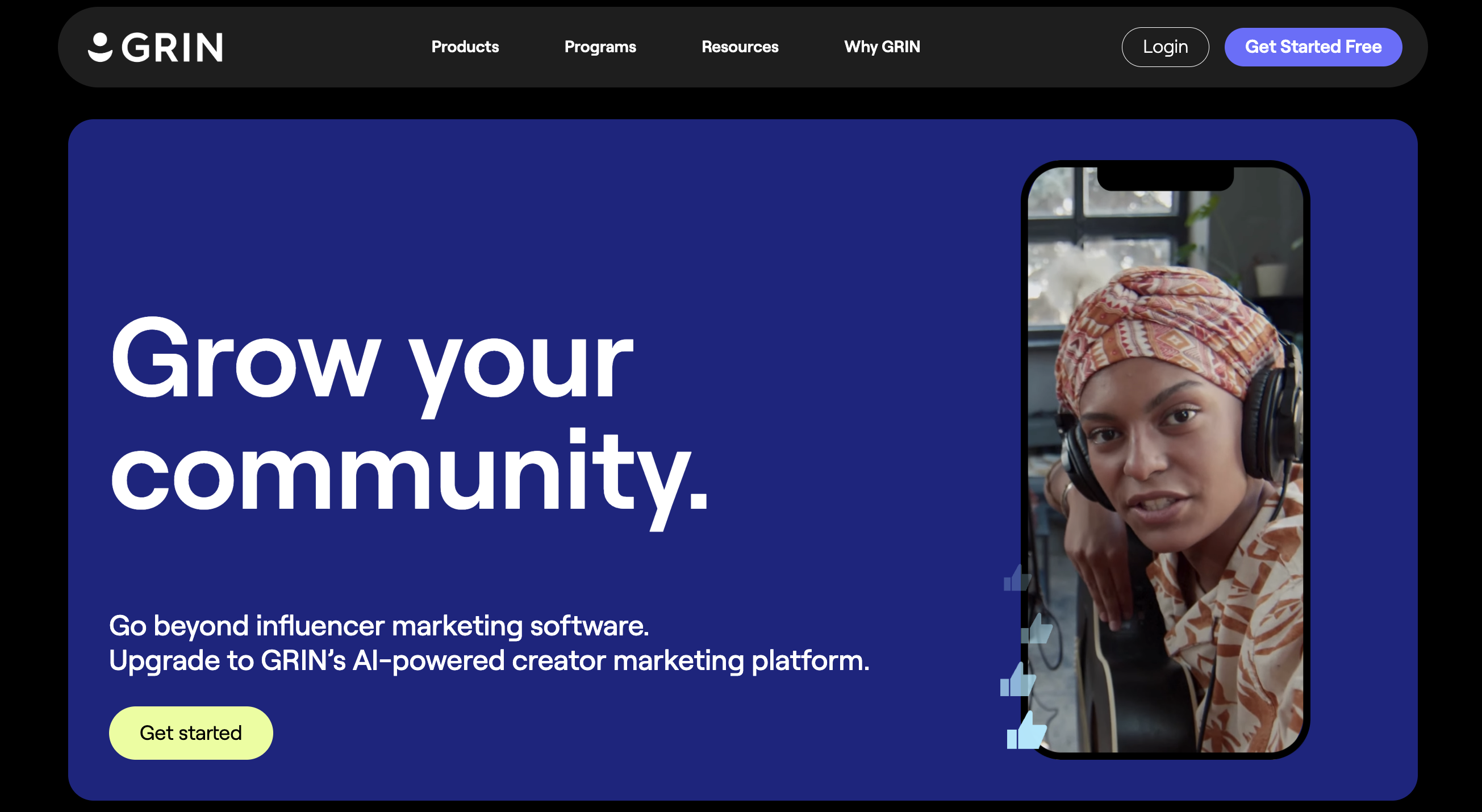
GRIN is a creator management platform built mainly for DTC and ecommerce brands that want to run influencer, affiliate, gifting, and content workflows in one system. Compared with broader influencer platforms, GRIN leans more heavily into operational execution: product seeding, creator relationship management, content collection, payments, and sales attribution tied to commerce.
Key Features
- Creator discovery and lookalike search: GRIN lets brands search a large creator database, filter by audience and performance signals, and use lookalike tools to find similar creators faster.
- CRM and outreach workflows: The platform centralizes creator contact details, email outreach, relationship stages, campaign communication, and deliverable tracking in one creator CRM.
- Product gifting and ecommerce integrations: GRIN is especially strong for brands running gifting or affiliate programs because it connects product seeding, discount links, shipping workflows, and creator fulfillment to ecommerce systems.
- UGC library and content rights workflows: Brands can collect creator content in a centralized library, repurpose it across channels, and manage media usage more cleanly than in spreadsheet-based workflows.
- Payments and reporting: GRIN includes creator payment workflows, attribution, affiliate tracking, and reporting tools for campaign performance and ROI.
Platform Coverage
Facebook, Instagram, TikTok, X, Pinterest, YouTube, and Twitch
Pricing
Annual pricing starts at $25,000/year (approx. $2,050/month)
Reviews
4.5/5.0 (G2)
Standout Features
- Deep eCommerce integration: Native Shopify and WooCommerce workflows for gifting, fulfillment, and revenue attribution.
- UGC library with automatic content capture: Stores all creator content (including Stories) for easy reuse in ads and email.
- Unlimited creator partnerships: No cap on influencer collaborations, making it scalable for large programs.
Julius vs GRIN
Julius and GRIN serve different priorities within influencer marketing workflows. Julius is primarily focused on influencer discovery, vetting, and content-level search, making it a strong option for teams that prioritize finding the right creators through detailed filtering and audience insights. In contrast, GRIN is built for execution, especially for eCommerce brands that need to manage gifting, affiliate programs, and revenue attribution directly within the platform. GRIN’s deep integrations with Shopify and payment systems allow teams to connect influencer activity directly to sales, while Julius is less focused on transactional workflows.
For brands running large-scale DTC programs, GRIN often offers more operational efficiency, whereas Julius is better suited for upfront influencer research and campaign planning.
2. Influencer Hero

Influencer Hero is an all-in-one influencer marketing platform designed for brands that want discovery, outreach, CRM, gifting, affiliate tracking, UGC collection, and reporting in one system. It is positioned more aggressively toward growing ecommerce teams than enterprise-heavy platforms, with a stronger emphasis on transparent pricing, automation, and campaign operations at scale. Your additional overview document also highlights its strength in CRM automation, outreach workflows, and multi-platform support.
Key Features
- Influencer discovery: Multi-platform search with filters for demographics, engagement, niche, and follower quality. Includes fake follower detection, lookalike recommendations, and brand-follower identification to improve targeting.
- Outreach and CRM automation: Supports bulk outreach with AI-personalized emails, drip sequences, and reply tracking. A built-in CRM with visual boards helps manage creator relationships, deliverables, and campaign stages in one place.
- Gifting, affiliate tracking, and payouts: Combines product seeding, discount codes, affiliate links, conversion tracking, and payouts into a single workflow, making it easier to manage performance-driven campaigns.
- UGC collection and reporting: Automatically captures influencer content, organizes it for reuse, and provides dashboards to track engagement, clicks, sales, and ROI per creator.
- Application pages and storefronts: Branded pages help attract inbound creators, while storefronts allow influencers to promote products and drive affiliate sales.
- Integrations and API: Native integrations with Shopify and WooCommerce, plus support for custom eCommerce setups and tools like Klaviyo, Slack, Zapier, and DocuSign for extended workflows.
- AI-powered workflows: AI supports creator discovery, outreach personalization, and predictive analytics to improve efficiency and campaign performance.
- Scalable bulk operations: Bulk actions across outreach, CRM updates, and gifting workflows enable teams to manage large volumes of creators efficiently.
Platform Coverage
Instagram, TikTok, YouTube, Facebook, Pinterest, Snapchat, X, and Twitch
Pricing
Influencer Hero offers flexible pricing based on outreach volume, and you can have unlimited creators in your CRM with Influencer Hero:
- Standard — $649/month (up to 1,000 reachouts/month)
- Pro — $1,049/month (up to 5,000 reachouts/month)
- Business — $2,490/month (up to 10,000 reachouts/month)
- Custom / Agency — Tailored pricing
Reviews
5.0/5.0 (Capterra)
Standout Features
- Campaign-centric CRM automation: Designed to manage thousands of creators with structured workflows and automation.
- AI-powered outreach and recommendations: Improves targeting and response rates with personalized messaging.
- Multi-platform + multi-ecommerce support: Works with Shopify, WooCommerce, and custom setups for flexible scaling.
Julius vs Influencer Hero
Julius leans heavily into influencer discovery and structured campaign planning, while Influencer Hero is designed for scaling influencer programs through automation and CRM-driven workflows. Influencer Hero provides more advanced outreach capabilities, including bulk email automation, AI-driven personalization, and campaign boards that allow teams to manage thousands of creators efficiently. In comparison, Julius relies more on manual workflows and list-based organization, which can be limiting for high-volume campaigns. Additionally, Influencer Hero offers stronger integrations for gifting, affiliate tracking, and payments, making it more suitable for performance-driven campaigns. Julius, on the other hand, is better positioned for teams that prioritize detailed influencer analysis and curated discovery over automation.
3. Aspire
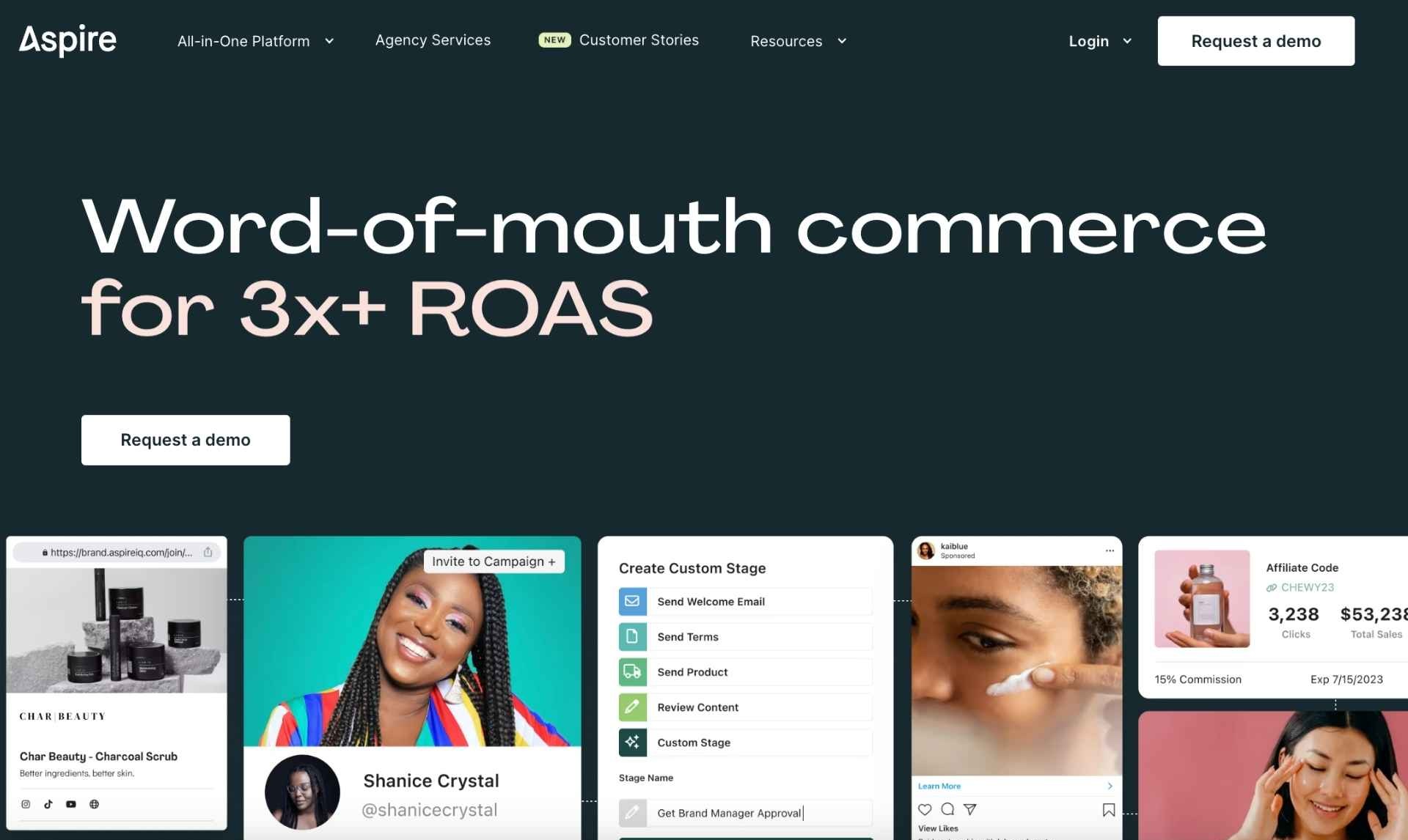
Aspire is an influencer marketing platform built around what it calls word-of-mouth commerce, combining influencer discovery, creator marketplace workflows, affiliate programs, UGC, and social commerce reporting. It is especially well suited to ecommerce brands that want both outbound creator discovery and inbound applications from creators, customers, ambassadors, and affiliates..
Key Features
- Influencer search plus inbound marketplace: Aspire combines outbound search with one of the best-known inbound creator marketplaces, so brands can source influencers directly and also receive applications from creators who want to work with them..
- Workflow automation and approvals: The platform supports contract workflows, bulk actions, product seeding, content approvals, and automated follow-ups, making it strong for campaign management once creators are selected..
- Affiliate and social commerce tracking: Aspire connects influencer and affiliate activity more tightly to sales outcomes than many older influencer platforms, which is one reason it appeals to ROI-focused ecommerce teams..
- UGC and creator ads support: Aspire helps brands collect creator content and turn it into paid media assets, especially through Meta and TikTok ad workflows..
- First-party data partnerships: Aspire’s direct partnerships with Meta, TikTok, and Pinterest are a major differentiator because they improve access to first-party creator and campaign data.
Platform Coverage
Instagram, TikTok, Pinterest, YouTube, and Facebook
Pricing
Aspire starts with tiered pricing and can be customized, with a mid-tier quote of about $2,300/month for a use case involving multiple team members and up to 500 creators in CRM.
Reviews
4.0 /5.0 (Capterra)
Standout Features
- Inbound creator marketplace: Large pool of creators applying directly to campaigns.
- First-party data integrations: More accurate audience and performance insights from social platforms.
- Workflow automation: Automated follow-ups and campaign stages reduce manual work.
Julius vs Aspire
Julius and Aspire differ mainly in how they approach influencer sourcing and workflow automation. Julius emphasizes outbound discovery, giving teams tools to search, filter, and vet influencers manually using detailed audience and content insights. Aspire, however, reduces this manual effort through its inbound creator marketplace, where influencers apply directly to campaigns, significantly speeding up the recruitment process. Aspire also stands out with its workflow automation, including automated follow-ups, contract management, and content approvals, which streamline campaign execution.
While Julius offers strong discovery capabilities, Aspire provides a more end-to-end operational system, especially for teams looking to scale campaigns efficiently with less manual outreach.
4. SARAL

SARAL is an influencer marketing platform built primarily for ecommerce and DTC brands that want a simpler, more operational way to run seeding, outreach, ambassador programs, and affiliate workflows. Its positioning is more practical than enterprise-heavy: centralize creator discovery, automate outreach, track ROI, and keep relationship management easy for smaller teams.
Key Features
- Creator discovery across core channels: SARAL focuses discovery on Instagram, TikTok, and YouTube, with keyword search, lookalikes, and creator lists designed to help brands source creators quickly.
- Automated outreach and inbox workflows: The platform helps brands send large-scale personalized outreach, centralize communication, and move creators through relationship stages without relying on spreadsheets.
- Shopify-connected gifting and performance tracking: SARAL is built for product seeding and affiliate use cases, with Shopify-linked tracking for revenue, ROI, and creator performance.
- Application forms and ambassador workflows: Brands can run inbound applications and automate parts of the approval workflow for affiliate or ambassador-style programs.
- Ongoing strategy support: SARAL pairs software with onboarding and success support, which is a meaningful advantage for teams that are still building their influencer process.
Platform Coverage
Instagram, TikTok, and YouTube.
Pricing
There are different plans:
- Starter: $3.6k/quarter
- Business: $4.5k/quarter
- Professional: $7.5k/quarter
Reviews
4.7/5.0 (G2)
Standout Features
- Strong outreach automation: Designed to minimize manual email work with automated sequences.
- Simple UX for small teams: Focuses on usability rather than enterprise complexity.
- Affiliate-first tracking: Built specifically for conversion-driven influencer campaigns.
Julius vs SARAL
Julius is positioned as a more comprehensive discovery and analytics platform, whereas SARAL focuses on simplicity and execution, particularly for small to mid-sized teams. SARAL is designed to automate outreach and relationship management, making it easier for lean teams to run influencer campaigns without complex setup or training. Its strength lies in email automation, affiliate tracking, and straightforward campaign management. In contrast, Julius offers more advanced filtering, content search, and audience insights, which are valuable for detailed influencer vetting. However, SARAL often appeals to brands that prioritize speed and ease of use over deep analytics, while Julius is better suited for teams that require more granular discovery capabilities.
5. Influencity

Influencity is an end-to-end influencer marketing platform that combines discovery, outreach, CRM, campaign management, and reporting in one suite. It is particularly appealing to brands and agencies that want broad creator discovery, modular pricing, and a platform built around public data rather than opt-in-only creator networks.
Key Features
- Large-scale creator discovery: Influencity gives brands access to a very large influencer database with detailed search filters for audience, engagement, geography, and profile quality.
- Outreach and recruitment workflows: The platform includes outreach features, email workflows, and branded recruitment experiences to support both outbound and inbound creator sourcing.
- Campaign and relationship management: Influencity positions itself as an end-to-end management tool for approvals, workflows, payments, and campaign organization.
- Reporting and measurement: It supports campaign tracking and reporting that go beyond vanity metrics, with stronger emphasis on business outcomes and campaign visibility.
- Broader suite beyond influencer marketing: One notable difference is that Influencity also extends into social listening and social media management, which may matter for teams looking to consolidate tools.
Platform Coverage
Instagram, TikTok, YouTube, and X/Twitter
Pricing
- Professional Plan: $318/month or $3,816/year
- Business Plan: $798/month or $9,576/year
- Enterprise Plan: Custom pricing
- Auto-Tracker Add-On: $660/year (for 50 influencers)
Reviews
4.3 / 5.0 (G2)
Standout Features
- Public data-based discovery: Access influencers without requiring opt-in participation.
- Visual campaign management boards: Easy-to-use interface for tracking campaign progress.
- Strong reporting and export capabilities: Detailed analytics with flexible export formats.
Julius vs Influencity
Julius and Influencity differ significantly in their approach to influencer data and scalability. Julius relies on curated influencer profiles and emphasizes content search and audience insights for more controlled discovery. Influencity, on the other hand, uses public data to provide access to a much larger pool of creators, allowing brands to discover influencers without opt-in limitations. This makes Influencity more flexible for global campaigns and broader outreach. Additionally, Influencity offers more accessible pricing and visual campaign management tools, making it appealing to growing teams. While Julius provides a more curated and refined discovery experience, Influencity offers greater scalability and flexibility for brands that need to manage larger influencer programs.


6. NeoReach
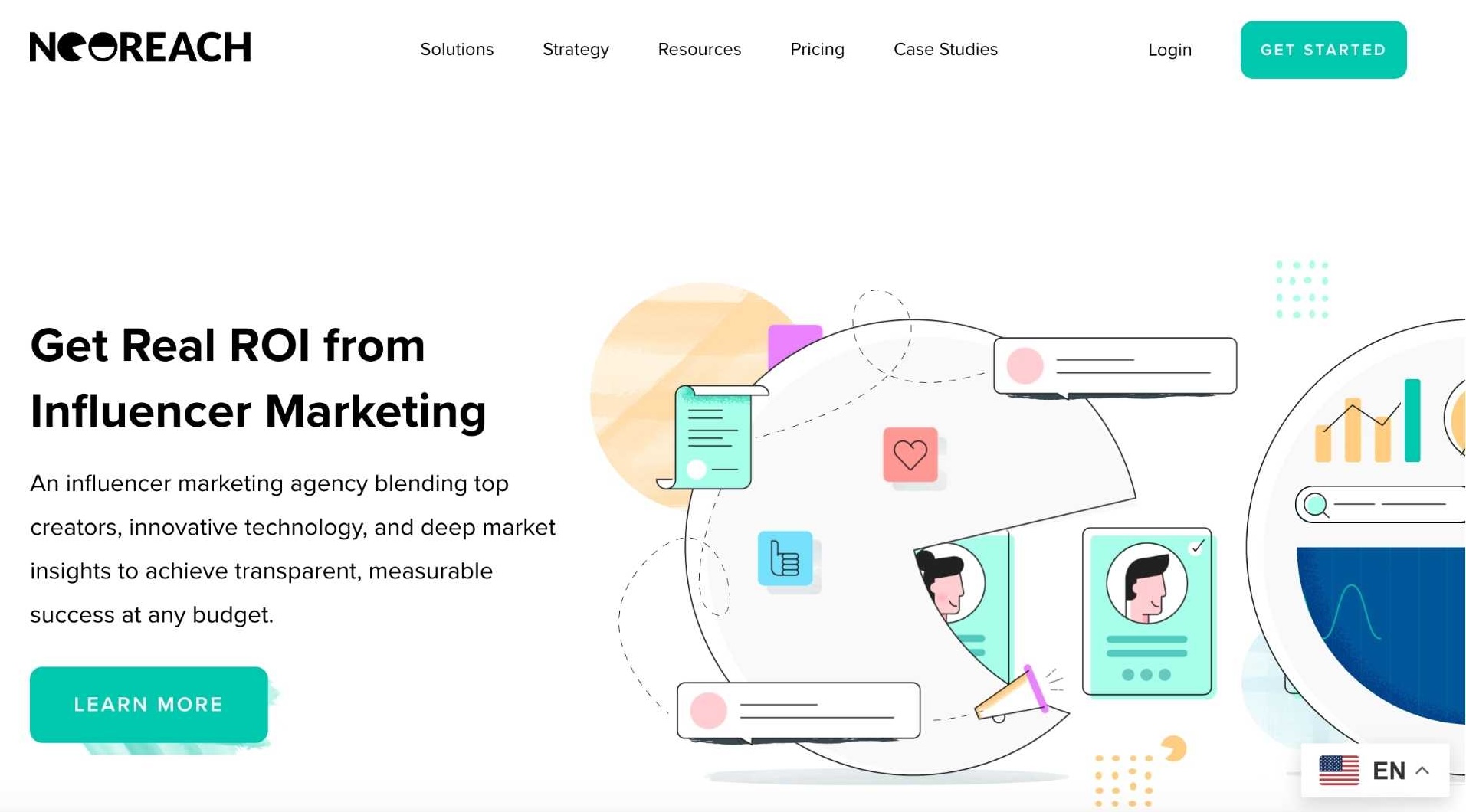
NeoReach is an enterprise-focused influencer marketing platform designed for brands and agencies that need large-scale creator discovery, campaign execution, and advanced analytics. It is particularly known for its strong data infrastructure and ability to support global campaigns with detailed audience insights and custom reporting.
Key Features
- Advanced influencer discovery: NeoReach provides access to a large creator database with deep filtering options, including audience demographics, engagement metrics, and historical brand collaborations.
- Campaign management and workflow tools: Brands can manage campaigns end-to-end, including creator onboarding, deliverables, approvals, and communication within a centralized system.
- Custom reporting and data analytics: The platform offers highly customizable dashboards and reporting capabilities, allowing teams to track performance across multiple KPIs and campaigns.
- API and data integrations: NeoReach supports integrations with internal systems and data pipelines, making it suitable for teams that require custom workflows or deeper data analysis.
- Fraud detection and audience quality analysis: Built-in tools help identify fake followers and ensure creators meet brand safety and quality standards.
Platform Coverage
Instagram, TikTok, YouTube, Facebook, Twitter (X), Pinterest, and Snapchat.
Pricing
NeoReach uses custom enterprise pricing, typically based on campaign scale, number of users, and feature requirements. Contracts are generally annual, with pricing often positioned in the higher tier of the market.
Reviews
4.5 / 5.0 (G2)
Standout Features
- Enterprise-grade API and data integrations: Enables brands to connect influencer data directly into internal analytics systems.
- Paid media amplification: Turn influencer content into high-performing paid ads within the same workflow.
- Advanced custom reporting: Highly flexible dashboards tailored to enterprise KPIs and performance metrics.
Julius vs NeoReach
Julius and NeoReach cater to different levels of campaign complexity and scale. Julius is more focused on influencer discovery and campaign setup, providing detailed tools for identifying and vetting creators based on audience and content insights. NeoReach, however, is built for enterprise-level execution, offering advanced analytics, API integrations, and custom reporting that allow brands to integrate influencer data into broader marketing systems. NeoReach also includes paid media amplification, enabling brands to extend influencer content into paid advertising channels, which is not a core focus of Julius. While Julius is suitable for teams prioritizing influencer selection and planning, NeoReach is better aligned with organizations that require deep analytics, integrations, and large-scale campaign execution.
7. Heepsy

Heepsy is an influencer marketing platform focused on discovery, outreach, and campaign tracking, particularly for ecommerce brands and agencies. It is known for its large influencer database and straightforward interface, making it a practical option for teams that prioritize fast creator sourcing and campaign execution.
Key Features
- Extensive influencer search: Heepsy offers access to tens of millions of creators with filters for niche, audience demographics, engagement rate, and authenticity.
- Fake follower detection: The platform includes audience authenticity checks to help brands avoid low-quality or fraudulent influencers.
- Campaign management and CRM: Users can organize influencers into lists, track campaign stages in a pipeline view, and manage outreach workflows.
- Bulk outreach and email templates: Heepsy enables large-scale outreach campaigns with pre-built templates and follow-up sequences.
- Shopify integration for sales tracking: Advanced plans allow brands to track conversions, revenue, and affiliate performance directly from influencer campaigns.
Platform Coverage
Instagram, TikTok, YouTube, and Twitch
Pricing
Heepsy offers monthly and annual plans, with tiers such as Plus and Advanced. Pricing typically starts around $49–$149/month for lower tiers, while the Advanced plan (~$369/month) includes sales tracking and deeper analytics.
Reviews
4.5 / 5.0 (G2)
Standout Features
- Strong fake follower detection: Helps brands avoid low-quality influencers with authenticity scoring.
- Visual CRM pipeline: Easy-to-use Kanban board for tracking influencer campaign stages.
- Affordable entry point: More accessible pricing compared to enterprise platforms.
Julius vs Heepsy
Julius offers more advanced discovery tools and content-based search capabilities, while Heepsy focuses on accessibility and ease of use. Heepsy is designed for smaller teams and agencies that need a straightforward platform for finding influencers, managing outreach, and tracking campaigns without a steep learning curve. It includes essential features like fake follower detection and a visual CRM pipeline but lacks some of the deeper analytics and content search functionality found in Julius. For brands with limited budgets or simpler campaign needs, Heepsy provides a more cost-effective solution. In contrast, Julius is better suited for teams that require more detailed influencer vetting and advanced filtering options.
8. Skeepers
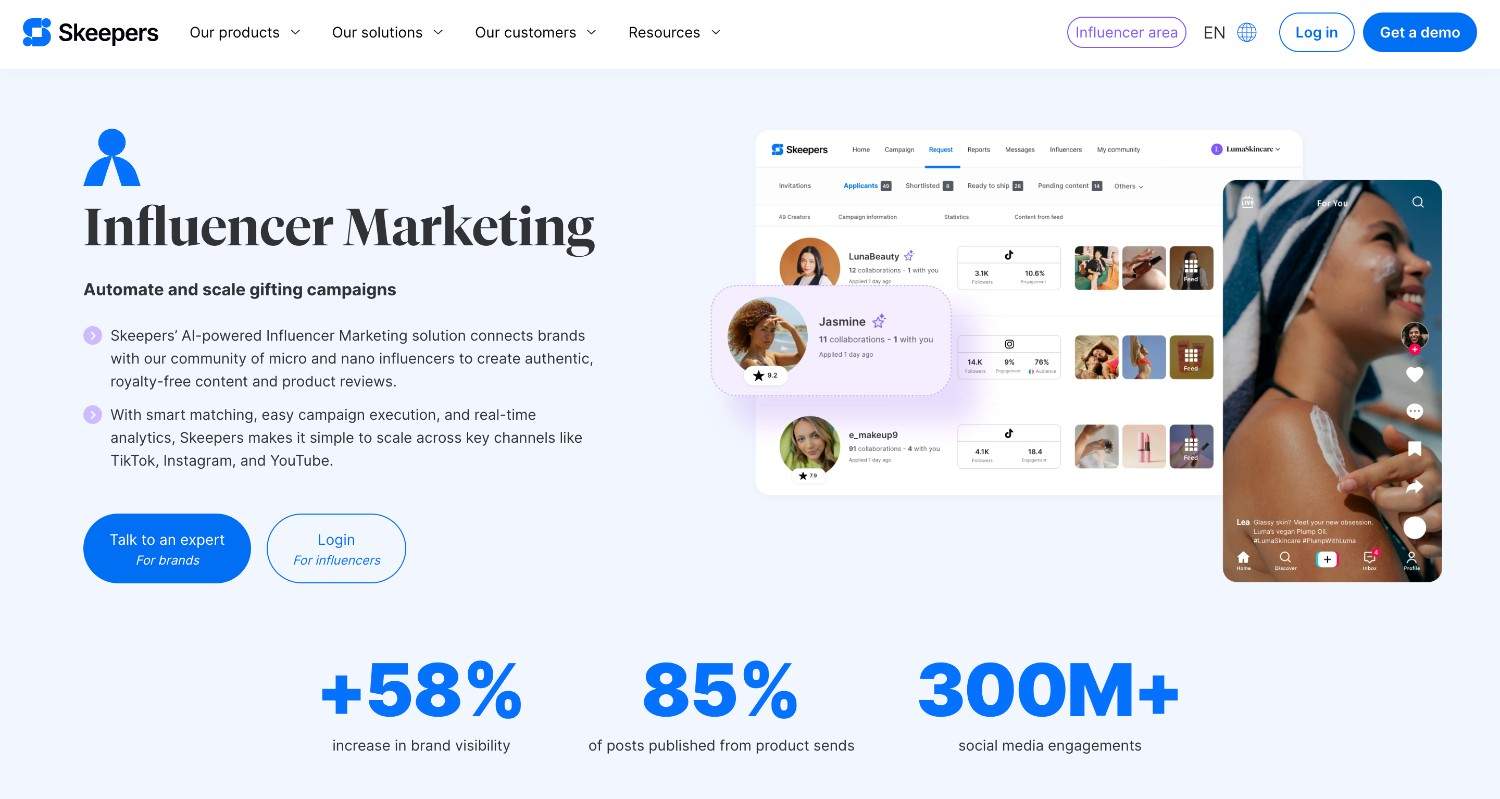
Skeepers is a platform focused on user-generated content (UGC), influencer marketing, and customer engagement. It combines influencer campaigns with broader content and review management, making it particularly useful for brands that want to leverage creators as part of a wider content and social proof strategy.
Key Features
- Influencer and UGC campaign management: Skeepers helps brands run campaigns that generate authentic content from creators and customers.
- Creator recruitment and community building: The platform supports sourcing creators and building long-term ambassador communities.
- Content distribution and reuse: Brands can collect, manage, and repurpose UGC across marketing channels.
- Performance tracking: Campaign analytics focus on engagement, reach, and content performance.
- Integration with review and ratings systems: Skeepers connects influencer marketing with customer reviews to strengthen social proof.
Platform Coverage
Instagram, TikTok, YouTube
Pricing
Skeepers uses custom pricing, typically based on modules (UGC, influencer marketing, reviews) and campaign scale. Contracts are usually annual.
Reviews
4.3/5.0 (Capterra)
Standout Features
- UGC-first approach: Focuses on content creation and social proof rather than traditional influencer discovery.
- Micro and nano influencer network: Strong emphasis on smaller creators for authentic engagement.
- Integrated review + influencer strategy: Combines influencer content with product reviews.
Julius vs Skeepers
Julius and Skeepers serve different use cases within influencer marketing. Julius is focused on influencer discovery, campaign management, and performance tracking, making it suitable for structured influencer campaigns. Skeepers, however, is built around UGC and micro-influencer activation, helping brands generate authentic content and product reviews at scale. Instead of prioritizing discovery, Skeepers connects brands with a community of smaller creators who produce content through product seeding campaigns. This makes Skeepers more aligned with brands focused on social proof and content generation, while Julius is better for teams that need detailed influencer research and campaign planning.
9. Upfluence

Upfluence is an all-in-one influencer marketing platform that combines creator discovery, outreach, CRM, and ecommerce integrations. It is particularly popular among ecommerce brands due to its strong focus on affiliate marketing, sales tracking, and customer-based influencer identification.
Key Features
- Influencer discovery and search: Upfluence provides access to a large creator database with filters for audience demographics, engagement, and niche.
- CRM and outreach management: The platform centralizes influencer communication, email campaigns, and relationship tracking.
- Affiliate and sales tracking: Upfluence integrates with ecommerce platforms to track conversions, revenue, and ROI from influencer campaigns.
- Customer influencer identification: Brands can identify influencers within their own customer base to build authentic partnerships.
- Payment and contract management: The platform supports influencer payments and contract workflows within the system.
Platform Coverage
Instagram, TikTok, YouTube, Facebook, Twitch, Pinterest, and blogs.
Pricing
On average plans start around $2,000/month ($24,000 yearly)
Reviews
4.3 / 5.0 (Capterra)
Standout Features
- Strong eCommerce integrations: Deep Shopify and Amazon tracking for sales attribution.
- Customer-to-influencer identification: Identify existing customers who can become influencers.
- All-in-one workflow: Combines discovery, outreach, tracking, and payments in one platform.
Julius vs Upfluence
Julius and Upfluence differ primarily in their focus on performance tracking and eCommerce integration. Julius emphasizes influencer discovery and audience insights, helping brands identify the right creators through detailed filtering and content search. Upfluence, on the other hand, is designed as a full end-to-end platform with strong integrations for Shopify and Amazon, allowing brands to track sales, manage affiliate programs, and convert customers into influencers. Upfluence also provides more robust tools for managing payments and attribution, making it a better fit for performance-driven campaigns. While Julius is ideal for influencer research and planning, Upfluence is more suited for brands looking to tie influencer marketing directly to revenue.
10. Traackr
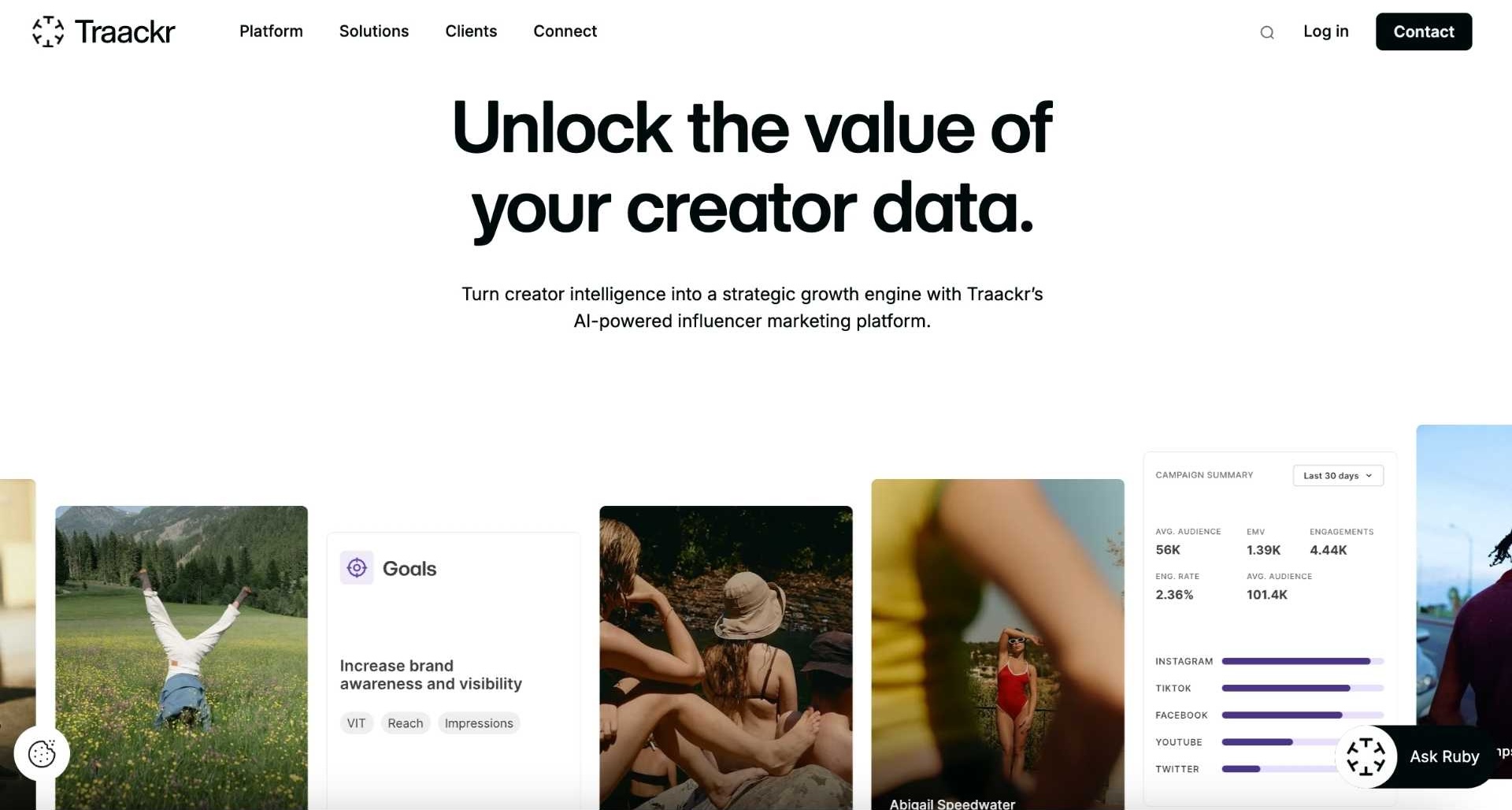
Traackr is an enterprise influencer marketing platform focused on data-driven decision-making, influencer relationship management, and performance analytics. It is widely used by global brands that need to manage large-scale programs across multiple markets.
Key Features
- Influencer discovery and benchmarking: Traackr provides detailed creator search and benchmarking tools to evaluate influencers against competitors and industry standards.
- Relationship management: The platform includes CRM tools to track long-term influencer relationships and campaign history.
- Campaign tracking and reporting: Traackr offers detailed analytics, including engagement, reach, and ROI metrics across campaigns.
- Market and competitive insights: Brands can analyze competitor campaigns and influencer activity to inform strategy.
- Global campaign support: Designed for multinational campaigns with region-specific insights and reporting.
Platform Coverage
Instagram, TikTok, YouTube, Facebook, Pinterest, and Twitter (X).
Pricing
Plans usually start at $32,500/year.
Reviews
4.3/5.0 (G2)
Standout Features
- Brand Vitality Score (BVS): Measures brand influence, visibility, and trust in one metric.
- Budget optimization calculator: Helps allocate spend based on predicted ROI.
- Advanced benchmarking tools: Compare performance across industries and competitors.
Julius vs Traackr
Julius focuses on influencer discovery and campaign setup, whereas Traackr is built for performance measurement and strategic optimization. Traackr offers advanced analytics, including cost-per metrics, benchmarking tools, and budget optimization features that help brands evaluate campaign efficiency and allocate spend effectively. It also provides real-time tracking and competitive benchmarking, making it particularly useful for enterprise teams managing global campaigns. Julius, by comparison, is more centered on identifying and vetting influencers rather than deeply analyzing campaign performance. For brands that prioritize data-driven decision-making and ROI optimization, Traackr offers more advanced capabilities, while Julius is better suited for discovery-focused workflows.
Final Thoughts
Julius remains a solid option for teams that prioritize detailed influencer discovery, content search, and audience-level insights when planning campaigns. However, as influencer programs scale, many brands look for platforms that go beyond discovery to offer stronger automation, eCommerce integrations, and performance tracking. Alternatives like GRIN, Upfluence, and Influencer Hero stand out for execution and revenue attribution, while tools like Aspire and Influencity focus on workflow efficiency and scalable creator sourcing.
At the same time, platforms such as NeoReach and Traackr cater to enterprise teams with advanced analytics and benchmarking, while Heepsy, SARAL, and Skeepers provide simpler or more specialized approaches depending on campaign goals. The right choice ultimately depends on priorities—whether that’s discovery depth, automation, content generation, or ROI tracking. Reviewing these Julius alternatives helps clarify which platform aligns best with your team’s workflow, budget, and growth stage.