

Later Alternatives: Best Influencer Marketing Platforms
Managing influencer campaigns at scale requires more than manual outreach and spreadsheets, which is why many brands and agencies rely on influencer marketing software to centralize creator discovery, streamline outreach, manage campaign workflows, and track performance in real time. Platforms like Later have helped teams handle social media scheduling and basic influencer collaborations, but as programs grow, marketers often need deeper analytics, stronger CRM capabilities, and more advanced automation to support long-term creator partnerships. This is where exploring Later alternatives becomes essential for teams looking to improve efficiency and drive measurable ROI from influencer marketing.
Common feedback from users across review platforms highlights a few consistent limitations with Later, including limited influencer discovery depth compared to dedicated platforms, restricted CRM and relationship management capabilities for scaling campaigns, and less advanced performance tracking tied to revenue or conversions. As a result, brands evaluating influencer marketing software often look for tools that offer end-to-end campaign management, richer data insights, and better integrations with eCommerce and affiliate systems. In this article, we’ll compare the 10 best Later alternatives—GRIN, Influencer Hero, Aspire, SARAL, Influencity, NeoReach, Heepsy, Skeepers, Upfluence, and Traackr—to help you find the right platform for your needs.
Criteria for Suggesting Platform Alternatives:
- Core Features
Evaluation of each platform’s essential capabilities, including influencer discovery, outreach, CRM, campaign reporting, gifting, UGC and content collection, affiliate tracking and payments, storefronts, application pages, and AI-powered tools. - Supported Social Media Platforms
Assessment of how well each platform integrates with major social networks such as Instagram, YouTube, TikTok, Facebook, Pinterest, and many more - Pricing & Contract Flexibility
Comparison of pricing models, subscription costs, and contract requirements to help brands choose solutions that match their budget and scalability needs. - Standout & Differentiating Features
Highlighting unique or innovative functionalities that set each platform apart, such as real-time tracking dashboards, creator benchmarking, TikTok email discovery, or advanced automation tools. - Customer Reviews & User Satisfaction
Analysis of verified user feedback from credible platforms like G2, TrustRadius, Capterra, focusing on usability, reliability, value for money, customer support, and real-world performance.
Later Overview
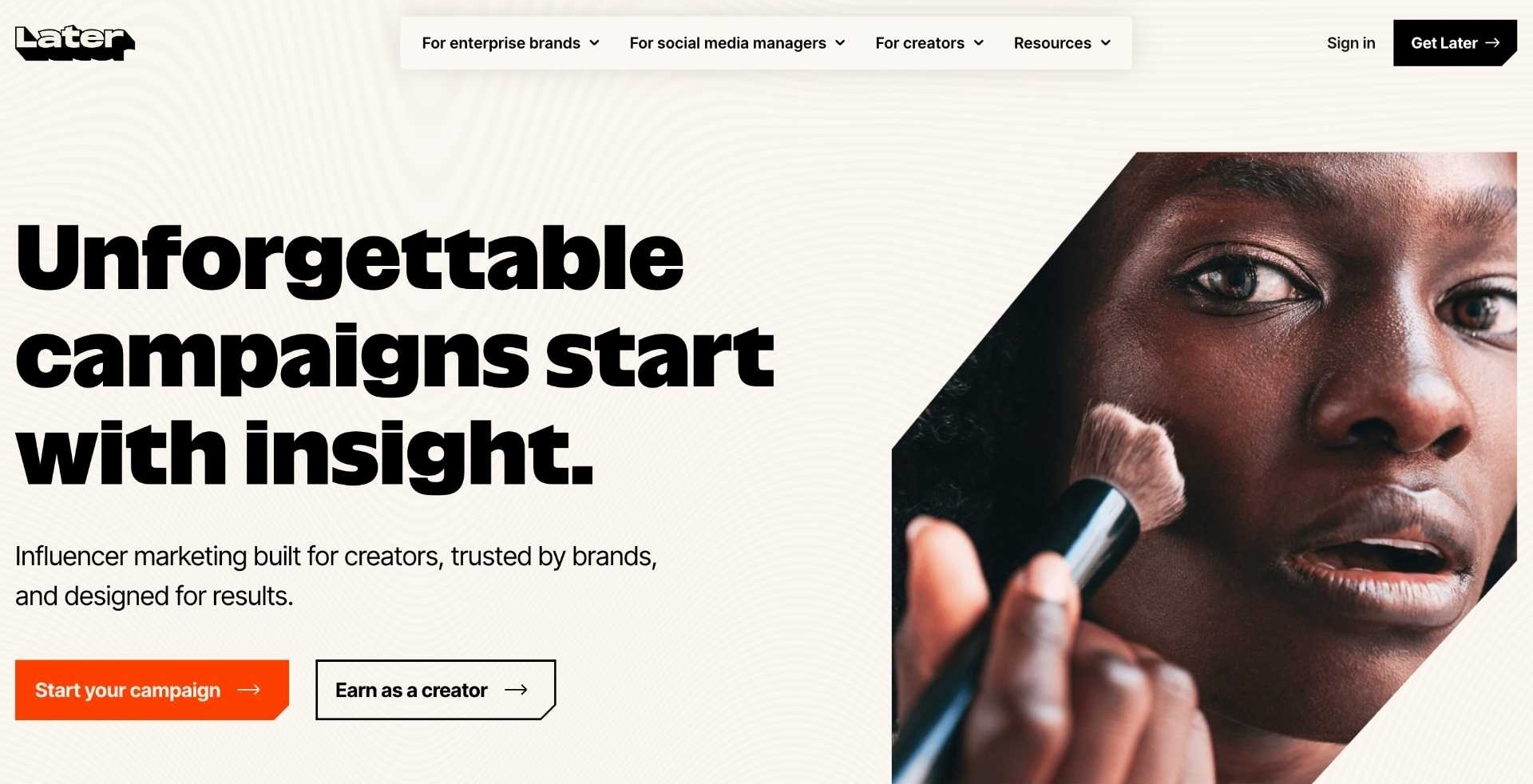
Later is an influencer marketing platform aimed primarily at brands that want to run creator campaigns with more structure than email threads and spreadsheets. Its positioning is strongest at the enterprise end of the market, where teams need creator discovery, workflow automation, brand safety checks, centralized communication, and performance reporting in one system.
Key Features
- Creator discovery and vetting: Later gives brands access to a large creator database with 10M+ influencer profiles, AI-assisted search, 20+ filters, and tools to evaluate creators by demographics, audience fit, brand affinity, and safety signals before outreach. Later
- Influencer Index and application workflows: Teams can source creators directly in-platform, send white-labeled application pages, and add custom screening questions to qualify applicants before moving them into campaigns.
- Campaign brief and deliverable management: Later supports campaign setup with detailed briefs, draft due dates, required deliverables, platform-specific posting requirements, and approval flows for creator content before it goes live. Later
- Centralized creator communication: Outreach, follow-ups, and creator conversations can be managed inside the platform, with message templates and automated or manual email triggers tied to campaign workflow stages. Later
- Brand safety controls: Later includes brand suitability and content risk tools that help teams screen for issues such as profanity, misinformation, political content, and other sensitivity flags before activating creators.
- Performance tracking and ROI measurement: The platform tracks campaign results across engagement, impressions, clicks, conversions, sales, earned media value, and related metrics, with reporting available at both campaign and program level. Later
- Managed services option: Beyond software access, Later also offers service-led support for influencer sourcing, campaign setup, creative strategy, negotiations, and campaign execution. Later
Platform Coverage
Instagram, TikTok, YouTube, Pinterest, Snapchat, Facebook, and Twitch.
Pricing
There are different plans:
- Essentials Plan: Starts at $28,500/year. Best for brands starting in influencer marketing.
- Pro Plan: Starts at $42,000/year. Best for data and automation to make your campaigns run faster and achieve better ROI.
- Premier Plan: Starts at $60,000/year. Everything you need for a scaled influencer program.
All plans come with an additional one-time onboarding fee of $5,000 for all new customers.
Reviews
4.4 / 5.0 (Capterra)
Later Standout Features
- Later EdgeAI: One of Later’s biggest recent updates is its proprietary predictive intelligence engine, built on data from 16 million creators, 136 billion annual impressions, and $2B+ in verified influencer-driven purchases. It is designed to help brands forecast performance and make creator selection decisions with more confidence before budget is committed. Later
- Later 360: Introduced in 2026, Later 360 brings organic, paid, and commerce data into one reporting environment so teams can measure influencer performance across the full funnel instead of stitching together separate dashboards. This is a notable differentiator for enterprise brands that need campaign reporting tied to business outcomes, not just engagement metrics. Later
- New creator screening and brand safety improvements: Recently release updates including a new grid-style creator browsing experience for faster comparison and post-level brand safety visibility, where teams can see the exact pieces of creator content triggering profanity or suggestive-content warnings. Those updates make vetting more transparent and more practical for brand-sensitive campaigns.
Limitations (Why People Look for Later Alternatives)
High pricing with annual commitment
Later’s influencer marketing product requires a yearly contract and significant upfront investment, making it less accessible for small teams or brands testing influencer programs.
Platform performance and usability issues
Some users report bugs, slow loading times, and occasional glitches, which can disrupt campaign workflows and reduce efficiency.
Limited precision in creator discovery
While the database is large, users often need to manually refine searches, as initial recommendations may not always align closely with campaign requirements.
Steeper learning curve for new users
The platform’s setup, onboarding process, and workflow structure can feel complex, especially for teams looking for a quick, self-serve solution.
10 Best Influencer Marketing Platform Alternatives:
| TOOL | REVIEWS | BEST FOR | TRIAL INFO | PRICING | ||
|---|---|---|---|---|---|---|
1 |

|
⭐ | DTC creator management | Book Demo | Pricing | Website |
2 |

|
⭐ | Influencer CRM & automation | Book Demo | Pricing | Website |
3 |
|
⭐ | Influencer partnerships | Book Demo | Pricing | Website |
4 |

|
⭐ | Influencer outreach | Book Demo | Pricing | Website |
5 |

|
⭐ | Campaign management | Book Demo | Pricing | Website |
6 |
|
⭐ | Influencer campaigns & data analytics | Book Demo | Pricing | Website |
7 |

|
⭐ | Influencer discovery | Book Demo | Pricing | Website |
8 |

|
⭐ | Influencer gifting & UGC campaigns with micro-influencers | Book Demo | Pricing | Website |
9 |
|
⭐ | Ecommerce influencer discovery | Book Demo | Pricing | Website |
10 |
|
⭐ | Enterprise influencer analytics | Book Demo | Pricing | Website |
1. GRIN
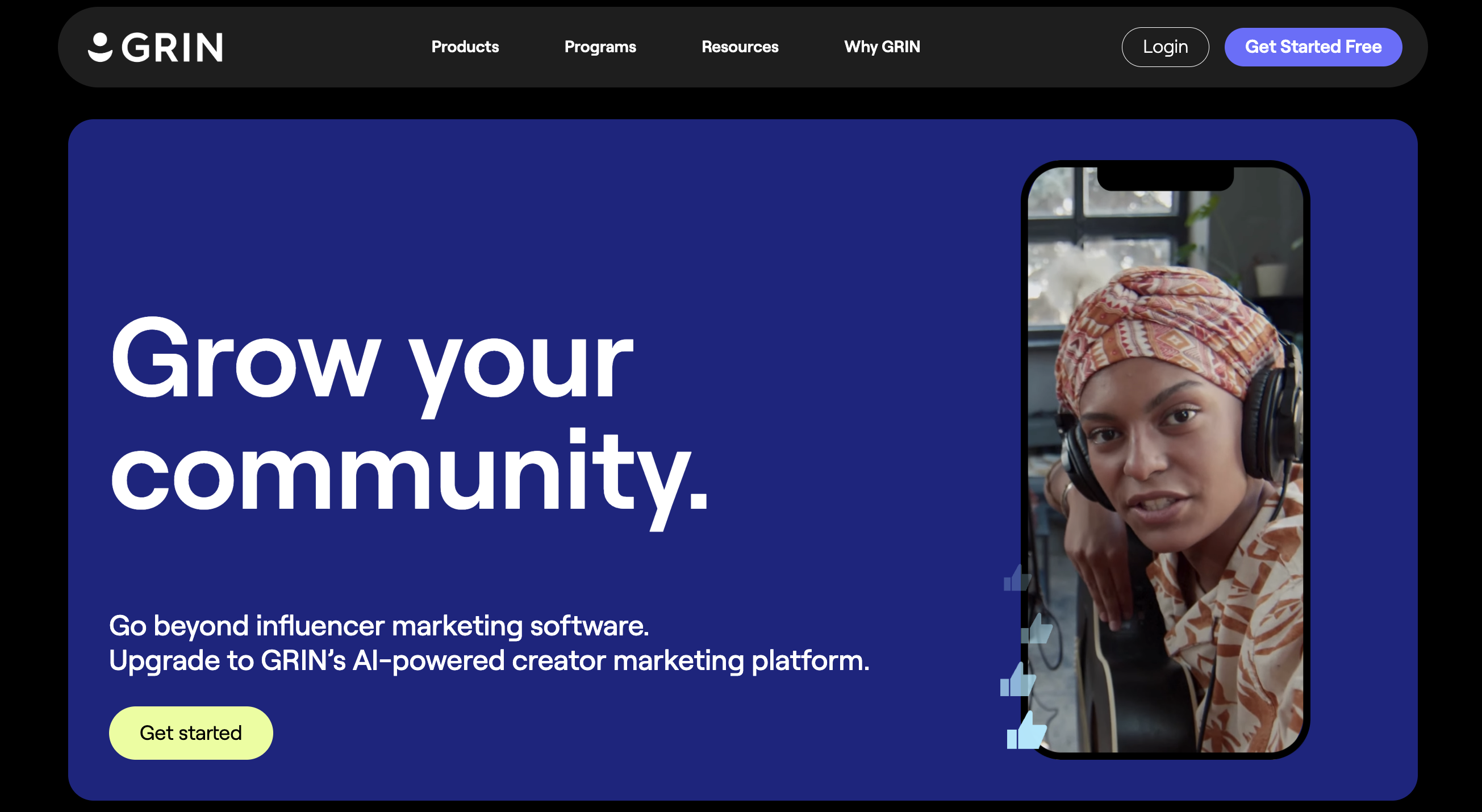
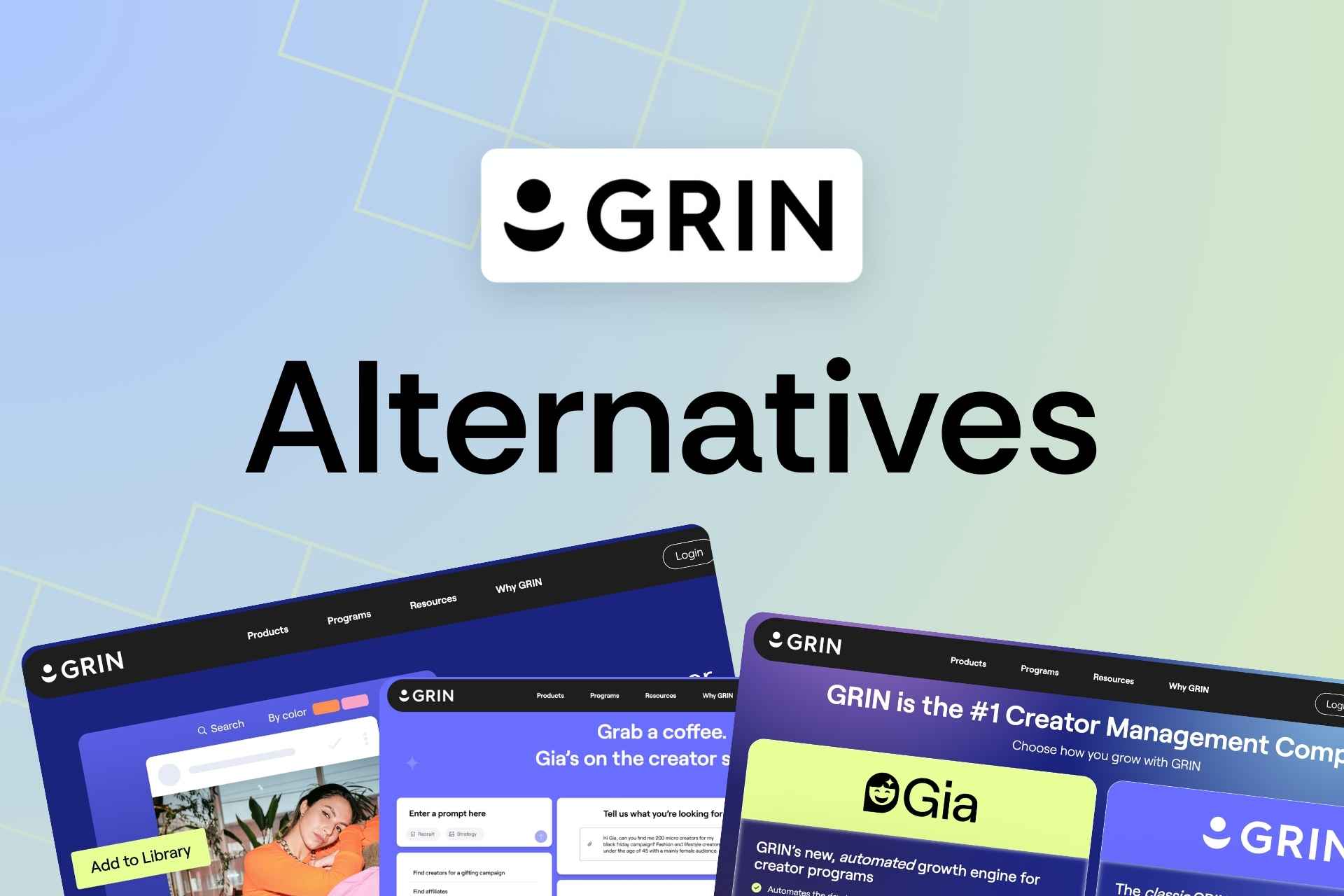
GRIN is a creator management platform built mainly for DTC and ecommerce brands that want to run influencer, affiliate, gifting, and content workflows in one system. Compared with broader influencer platforms, GRIN leans more heavily into operational execution: product seeding, creator relationship management, content collection, payments, and sales attribution tied to commerce.
Key Features
- Creator discovery and lookalike search: GRIN lets brands search a large creator database, filter by audience and performance signals, and use lookalike tools to find similar creators faster.
- CRM and outreach workflows: The platform centralizes creator contact details, email outreach, relationship stages, campaign communication, and deliverable tracking in one creator CRM.
- Product gifting and ecommerce integrations: GRIN is especially strong for brands running gifting or affiliate programs because it connects product seeding, discount links, shipping workflows, and creator fulfillment to ecommerce systems.
- UGC library and content rights workflows: Brands can collect creator content in a centralized library, repurpose it across channels, and manage media usage more cleanly than in spreadsheet-based workflows.
- Payments and reporting: GRIN includes creator payment workflows, attribution, affiliate tracking, and reporting tools for campaign performance and ROI.
Platform Coverage
Facebook, Instagram, TikTok, X, Pinterest, YouTube, and Twitch
Pricing
Annual pricing starts at $25,000/year (approx. $2,050/month)
Reviews
4.5/5.0 (G2)
Standout Features
- Gia AI discovery and workflow support: GRIN has been pushing its AI assistant, Gia, as a way to surface creator matches, speed up search, and support campaign execution inside the platform.
- Expanded YouTube and TikTok creator search: One of GRIN’s more notable recent product updates is the expansion of creator search across YouTube and TikTok, giving users access to a larger discovery pool and more filters across those channels.
- Free Chrome extension and creator vetting tools: GRIN’s Chrome extension and credibility-check tools make it easier to vet creators from the browser and move them into workflow faster, which is especially useful for lean teams doing active prospecting.
Later vs GRIN
Later is better known for enterprise influencer programs that prioritize brand safety, structured campaign oversight, and predictive reporting. GRIN is generally the stronger fit for brands that care more about operational execution after discovery, especially when gifting, affiliate tracking, creator payments, and ecommerce attribution are central to the program.
Another key difference is pricing and flexibility. Later’s influencer product is typically sold through larger annual agreements, while GRIN now offers public tiered pricing, a free trial, and month-to-month plans, which makes it easier for smaller or mid-market teams to get started. For ecommerce-led brands, GRIN usually has the clearer advantage. For brands that need stronger enterprise controls, managed services, and more formalized approval layers, Later may still be the better fit
2. Influencer Hero
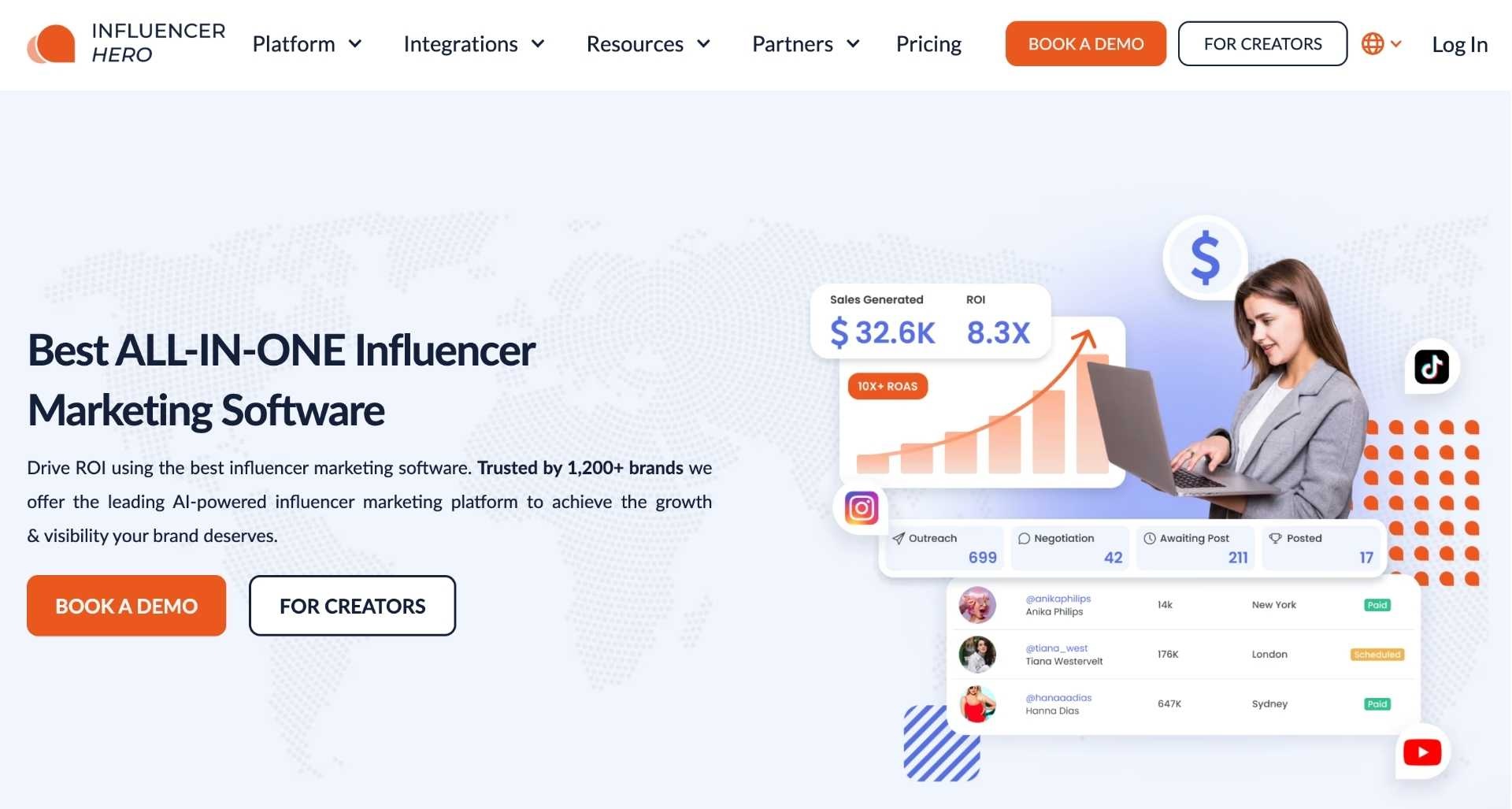
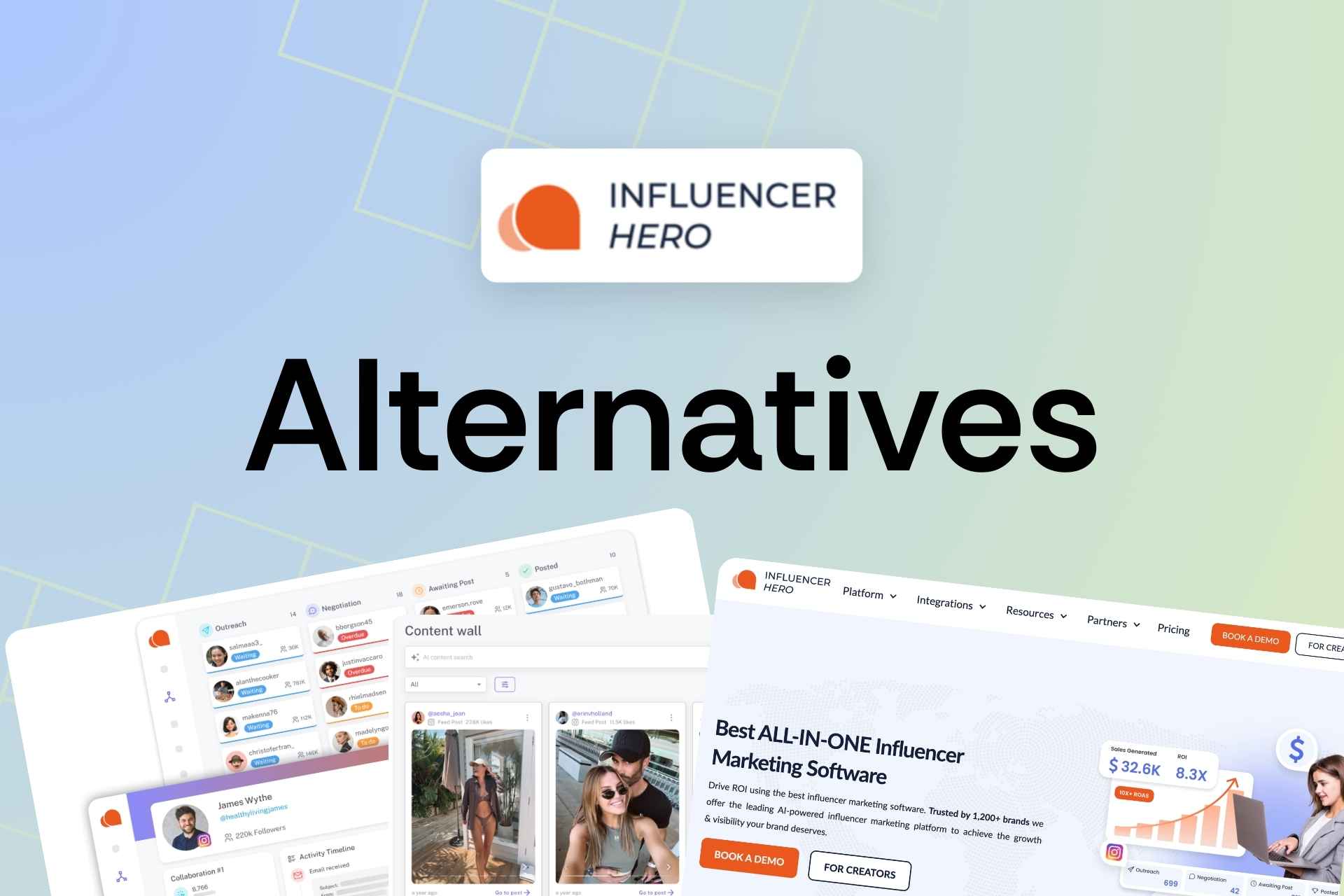
Influencer Hero is an all-in-one influencer marketing platform designed for brands that want discovery, outreach, CRM, gifting, affiliate tracking, UGC collection, and reporting in one system. It is positioned more aggressively toward growing ecommerce teams than enterprise-heavy platforms, with a stronger emphasis on transparent pricing, automation, and campaign operations at scale. Your additional overview document also highlights its strength in CRM automation, outreach workflows, and multi-platform support.
Key Features
- Influencer discovery: Multi-platform search with filters for demographics, engagement, niche, and follower quality. Includes fake follower detection, lookalike recommendations, and brand-follower identification to improve targeting.
- Outreach and CRM automation: Supports bulk outreach with AI-personalized emails, drip sequences, and reply tracking. A built-in CRM with visual boards helps manage creator relationships, deliverables, and campaign stages in one place.
- Gifting, affiliate tracking, and payouts: Combines product seeding, discount codes, affiliate links, conversion tracking, and payouts into a single workflow, making it easier to manage performance-driven campaigns.
- UGC collection and reporting: Automatically captures influencer content, organizes it for reuse, and provides dashboards to track engagement, clicks, sales, and ROI per creator.
- Application pages and storefronts: Branded pages help attract inbound creators, while storefronts allow influencers to promote products and drive affiliate sales.
- Integrations and API: Native integrations with Shopify and WooCommerce, plus support for custom eCommerce setups and tools like Klaviyo, Slack, Zapier, and DocuSign for extended workflows.
- AI-powered workflows: AI supports creator discovery, outreach personalization, and predictive analytics to improve efficiency and campaign performance.
- Scalable bulk operations: Bulk actions across outreach, CRM updates, and gifting workflows enable teams to manage large volumes of creators efficiently.
Platform Coverage
Instagram, TikTok, YouTube, Facebook, Pinterest, Snapchat, X, and Twitch
Pricing
Influencer Hero offers flexible pricing based on outreach volume, and you can have unlimited creators in your CRM with Influencer Hero:
- Standard — $649/month (up to 1,000 reachouts/month)
- Pro — $1,049/month (up to 5,000 reachouts/month)
- Business — $2,490/month (up to 10,000 reachouts/month)
- Custom / Agency — Tailored pricing
Reviews
5.0/5.0 (Capterra)
Standout Features
- AI-powered UGC search and Content Wall: Influencer Hero has recently emphasized its AI-powered UGC discovery, including updated content-wall functionality that helps teams find, organize, and reuse creator content faster.
- Influencer brand followers: The platform can identify creators who already follow or engage with your brand, helping improve outreach relevance, increase response rates, and drive more authentic collaborations.
- Strong CRM automation for high-volume campaigns: Its campaign boards, bulk tools, AI-assisted outreach, and workflow automations are standout strengths for teams scaling seeding and affiliate programs.
Later vs Influencer Hero
Later is generally positioned for larger programs that want enterprise structure, managed-service support, and stronger emphasis on brand safety and predictive measurement. Influencer Hero is more attractive for teams that want an all-in-one stack with clearer pricing and more accessible automation from the start.
Pricing is one of the biggest differences. Later tends to sit in a much higher budget range with custom sales-led contracts, while Influencer Hero gives brands a lower entry point and public plans, which makes it easier to evaluate and adopt without a long enterprise procurement cycle.
For brands focused on ecommerce execution, CRM automation, and scaling outreach volume, Influencer Hero is usually the more practical option. For brands that prioritize enterprise governance, brand safety tooling, and more formalized strategy support, Later still has the edge.
3. Aspire
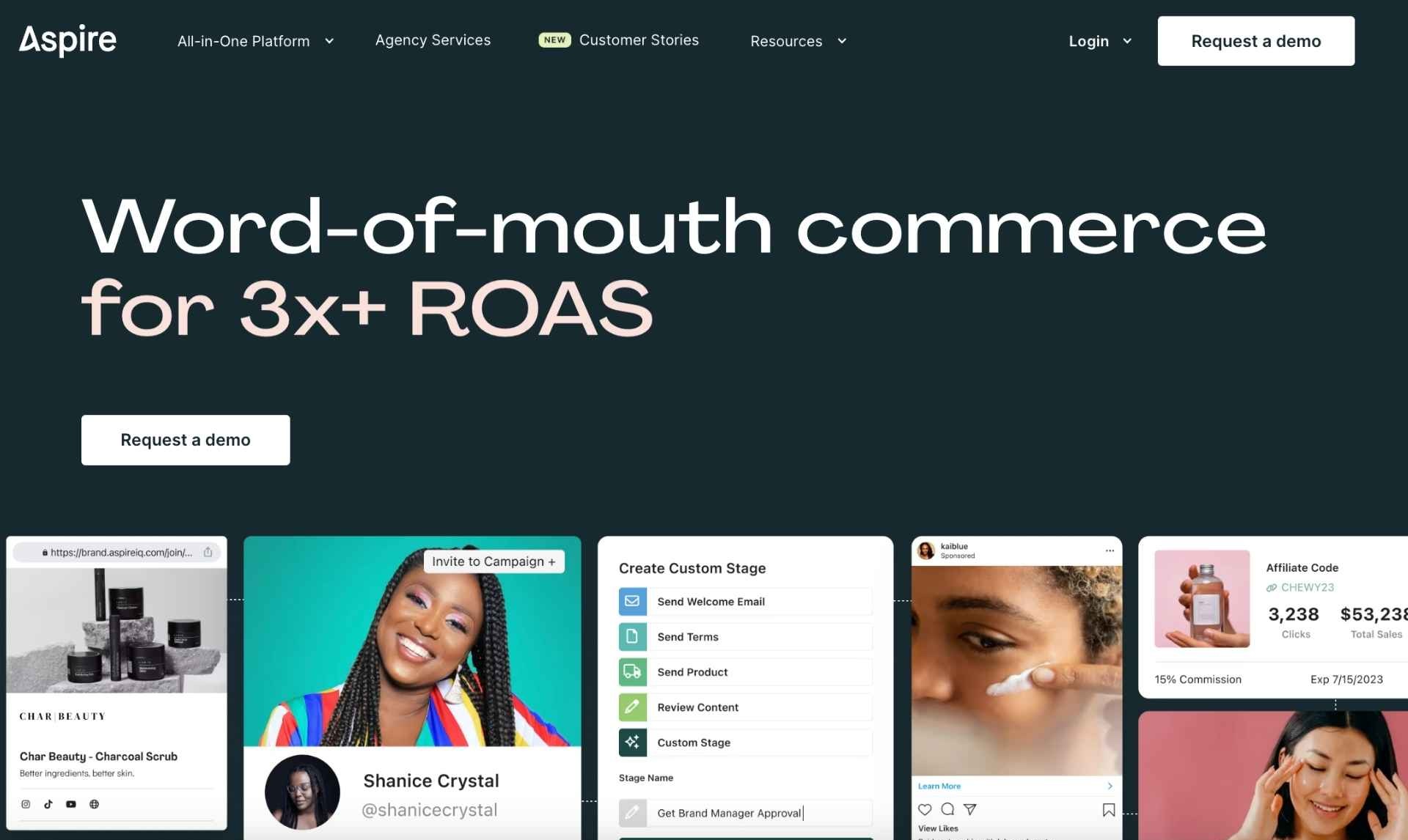
Aspire is an influencer marketing platform built around what it calls word-of-mouth commerce, combining influencer discovery, creator marketplace workflows, affiliate programs, UGC, and social commerce reporting. It is especially well suited to ecommerce brands that want both outbound creator discovery and inbound applications from creators, customers, ambassadors, and affiliates..
Key Features
- Influencer search plus inbound marketplace: Aspire combines outbound search with one of the best-known inbound creator marketplaces, so brands can source influencers directly and also receive applications from creators who want to work with them..
- Workflow automation and approvals: The platform supports contract workflows, bulk actions, product seeding, content approvals, and automated follow-ups, making it strong for campaign management once creators are selected..
- Affiliate and social commerce tracking: Aspire connects influencer and affiliate activity more tightly to sales outcomes than many older influencer platforms, which is one reason it appeals to ROI-focused ecommerce teams..
- UGC and creator ads support: Aspire helps brands collect creator content and turn it into paid media assets, especially through Meta and TikTok ad workflows..
- First-party data partnerships: Aspire’s direct partnerships with Meta, TikTok, and Pinterest are a major differentiator because they improve access to first-party creator and campaign data.
Platform Coverage
Instagram, TikTok, Pinterest, YouTube, and Facebook
Pricing
Aspire starts with tiered pricing and can be customized, with a mid-tier quote of about $2,300/month for a use case involving multiple team members and up to 500 creators in CRM.
Reviews
4.0 /5.0 (Capterra)
Standout Features
- Direct partnerships with Meta, TikTok, and Pinterest: This remains one of Aspire’s strongest differentiators because it supports more reliable first-party data access than platforms that rely mainly on scraped or patchwork sources..
- Expanded Creator Marketplace: Aspire has recently continued expanding its marketplace positioning, reinforcing one of its biggest advantages for brands that want inbound creator demand instead of relying only on cold outreach..
- CreatorAds Suite: Aspire’s newer CreatorAds Suite is notable because it connects rights management, ad launch, and reporting for creator-led paid media more directly inside the platform..
Later vs Aspire
Later and Aspire are both polished platforms, but they are built with different priorities. Later leans more toward enterprise influencer governance, predictive intelligence, and brand safety, while Aspire is more commerce-oriented and stronger on creator marketplace workflows, affiliate programs, and creator ads.
Aspire also stands out more on inbound sourcing. If your team wants creators, customers, or affiliates to apply directly through marketplace and landing-page workflows, Aspire is often the stronger choice. Later is the better fit when creator vetting, suitability checks, and structured enterprise oversight matter more..
For ecommerce brands trying to tie creator partnerships to affiliate sales and paid social, Aspire usually feels closer to a social commerce platform. Later is still the better option for brands that want more formalized enterprise campaign controls and a stronger focus on brand protection.
4. SARAL
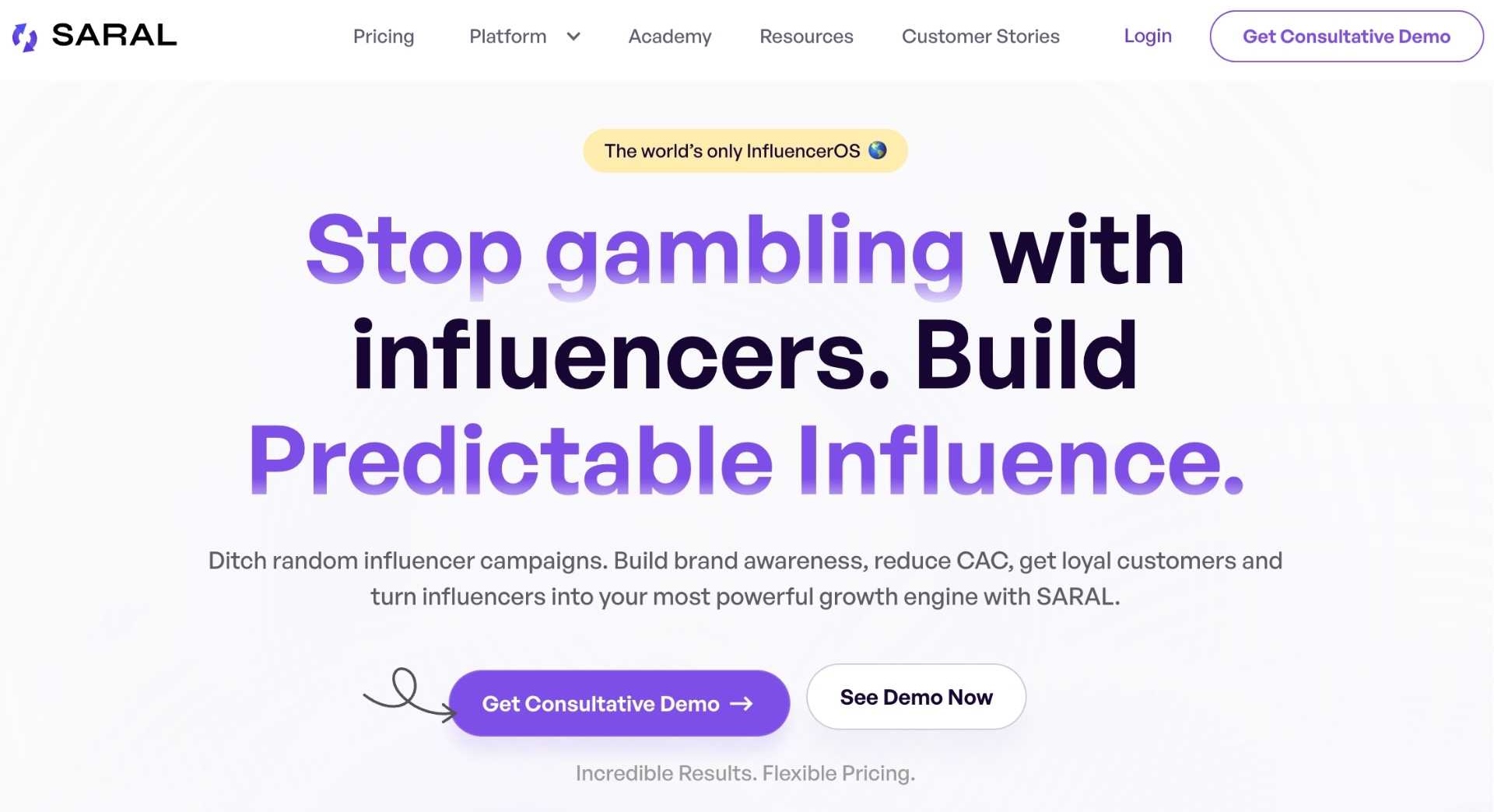
SARAL is an influencer marketing platform built primarily for ecommerce and DTC brands that want a simpler, more operational way to run seeding, outreach, ambassador programs, and affiliate workflows. Its positioning is more practical than enterprise-heavy: centralize creator discovery, automate outreach, track ROI, and keep relationship management easy for smaller teams.
Key Features
- Creator discovery across core channels: SARAL focuses discovery on Instagram, TikTok, and YouTube, with keyword search, lookalikes, and creator lists designed to help brands source creators quickly.
- Automated outreach and inbox workflows: The platform helps brands send large-scale personalized outreach, centralize communication, and move creators through relationship stages without relying on spreadsheets.
- Shopify-connected gifting and performance tracking: SARAL is built for product seeding and affiliate use cases, with Shopify-linked tracking for revenue, ROI, and creator performance.
- Application forms and ambassador workflows: Brands can run inbound applications and automate parts of the approval workflow for affiliate or ambassador-style programs.
- Ongoing strategy support: SARAL pairs software with onboarding and success support, which is a meaningful advantage for teams that are still building their influencer process.
Platform Coverage
Instagram, TikTok, and YouTube.
Pricing
There are different plans:
- Starter: $3.6k/quarter
- Business: $4.5k/quarter
- Professional: $7.5k/quarter
Reviews
4.7/5.0 (G2)
Standout Features
- SIA AI assistant: SARAL’s built-in AI assistant, SIA, is one of its clearest differentiators, helping with discovery, personalized outreach, follow-ups, and workflow automation.
- Transparent pricing and low-friction adoption: SARAL stands out by publishing clear pricing, emphasizing easier onboarding, and avoiding some of the opaque sales processes common in the category.
- Enhanced inbound application workflows: SARAL has recently expanded its application-form capabilities, including multiple inbound forms and automations for approval workflows, which is useful for ambassador and affiliate programs.
Later vs SARAL
Later is the more enterprise-oriented platform, with broader emphasis on formal campaign governance, brand safety, and predictive reporting. SARAL is the simpler, more execution-focused alternative for ecommerce brands that want to launch outreach, gifting, and affiliate workflows without the weight of a large enterprise stack.
The pricing difference is also significant. SARAL is much more transparent and easier to evaluate upfront, while Later is sold more like an enterprise software purchase. That makes SARAL a better fit for growing DTC brands, while Later remains better suited to larger brands with bigger budgets and more formal internal processes.
If your priority is a leaner team workflow and a faster path to running seeding and affiliate campaigns, SARAL usually makes more sense. If your priority is enterprise controls, advanced brand suitability checks, and more formalized reporting layers, Later is still stronger.
5. Influencity
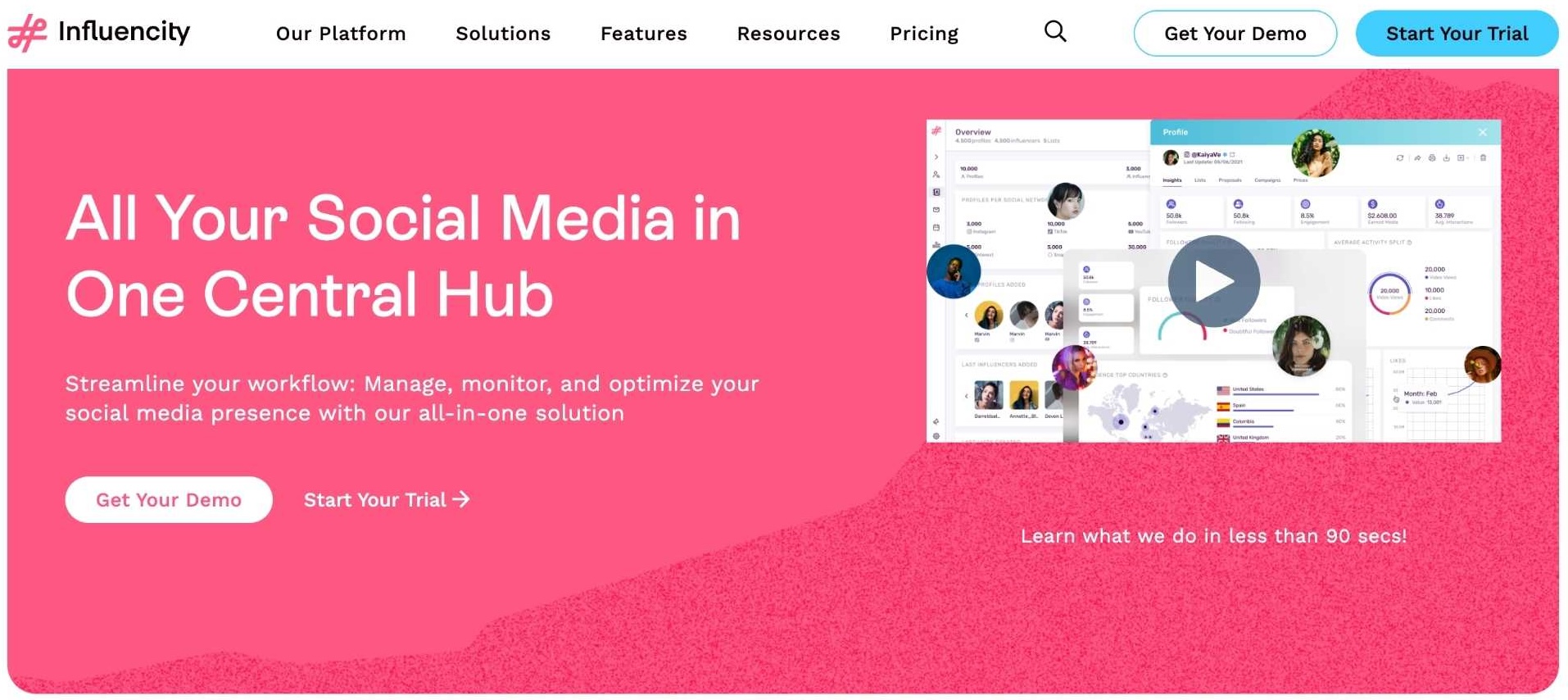
Influencity is an end-to-end influencer marketing platform that combines discovery, outreach, CRM, campaign management, and reporting in one suite. It is particularly appealing to brands and agencies that want broad creator discovery, modular pricing, and a platform built around public data rather than opt-in-only creator networks.
Key Features
- Large-scale creator discovery: Influencity gives brands access to a very large influencer database with detailed search filters for audience, engagement, geography, and profile quality.
- Outreach and recruitment workflows: The platform includes outreach features, email workflows, and branded recruitment experiences to support both outbound and inbound creator sourcing.
- Campaign and relationship management: Influencity positions itself as an end-to-end management tool for approvals, workflows, payments, and campaign organization.
- Reporting and measurement: It supports campaign tracking and reporting that go beyond vanity metrics, with stronger emphasis on business outcomes and campaign visibility.
- Broader suite beyond influencer marketing: One notable difference is that Influencity also extends into social listening and social media management, which may matter for teams looking to consolidate tools.
Platform Coverage
Instagram, TikTok, YouTube, and X/Twitter
Pricing
- Professional Plan: $318/month or $3,816/year
- Business Plan: $798/month or $9,576/year
- Enterprise Plan: Custom pricing
- Auto-Tracker Add-On: $660/year (for 50 influencers)
Reviews
4.3 / 5.0 (G2)
Standout Features
- Public-data discovery at scale: Influencity’s discovery model is one of its biggest differentiators because it does not rely as heavily on opt-in creator pools, which can broaden sourcing options.
- Full-stack suite beyond influencer workflows: The platform goes beyond influencer management into social listening and social media tooling, which is useful for teams trying to reduce tool sprawl.
- Current focus on AI-powered precision and predictive planning: Influencity’s recent 2026 content and product messaging show a stronger push into AI-assisted discovery, pricing intelligence, and predictive planning to improve campaign efficiency.
Later vs Influencity
Later and Influencity overlap as all-in-one platforms, but they differ in emphasis. Later is more enterprise-focused around brand safety, structured workflows, and predictive performance reporting, while Influencity is broader as a platform suite and often more attractive to teams that want discovery, outreach, social listening, and social management in one place.
Influencity is also much easier to access from a pricing standpoint. Later is usually evaluated through higher-cost enterprise sales processes, while Influencity offers lower public entry pricing and a more modular structure.
For brands that want broader public-data discovery and a more flexible budget fit, Influencity is often the more practical choice. For brands that need stronger enterprise controls, suitability checks, and managed strategic support, Later still has the advantage.


6. NeoReach
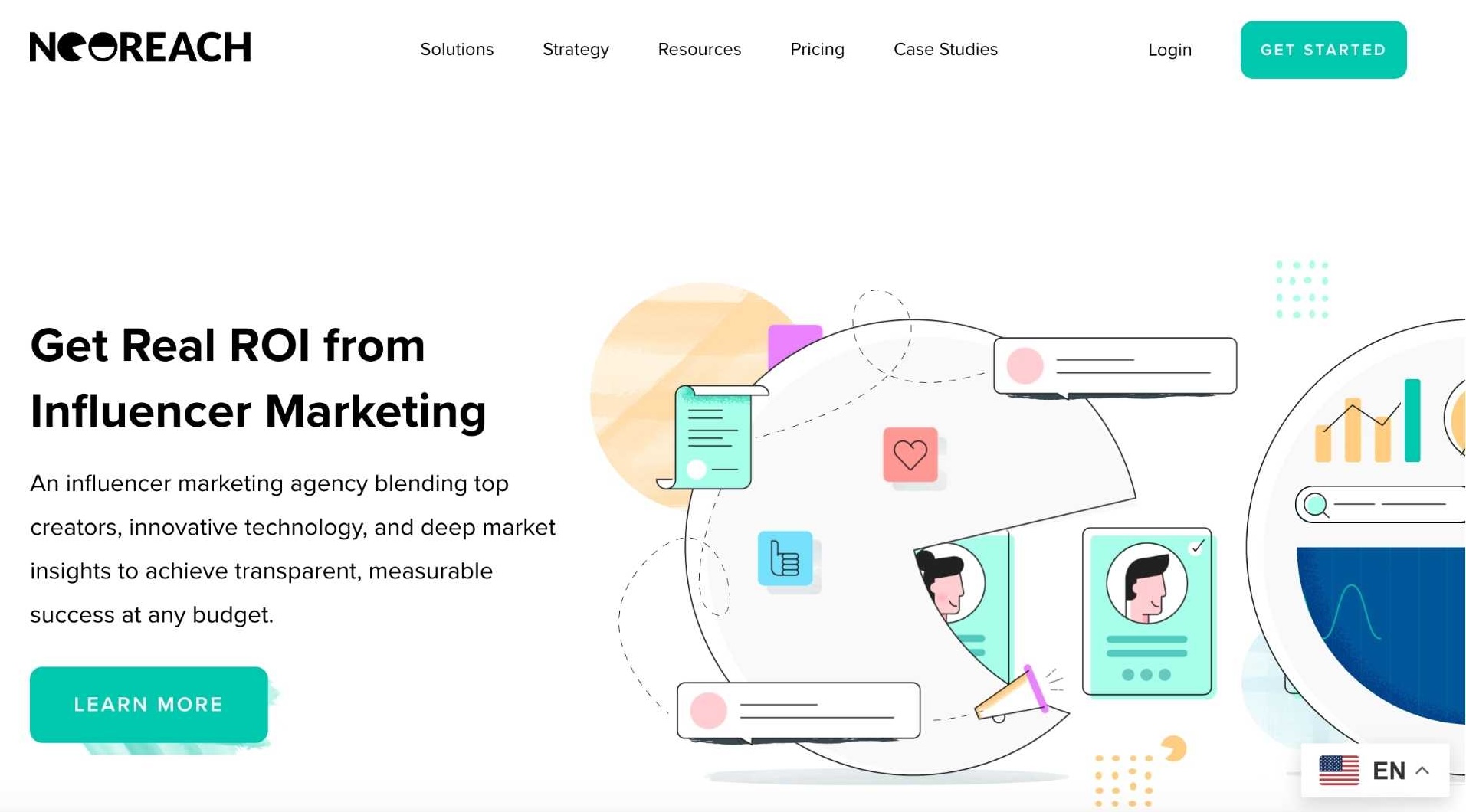
NeoReach is an enterprise-focused influencer marketing platform designed for brands and agencies that need large-scale creator discovery, campaign execution, and advanced analytics. It is particularly known for its strong data infrastructure and ability to support global campaigns with detailed audience insights and custom reporting.
Key Features
- Advanced influencer discovery: NeoReach provides access to a large creator database with deep filtering options, including audience demographics, engagement metrics, and historical brand collaborations.
- Campaign management and workflow tools: Brands can manage campaigns end-to-end, including creator onboarding, deliverables, approvals, and communication within a centralized system.
- Custom reporting and data analytics: The platform offers highly customizable dashboards and reporting capabilities, allowing teams to track performance across multiple KPIs and campaigns.
- API and data integrations: NeoReach supports integrations with internal systems and data pipelines, making it suitable for teams that require custom workflows or deeper data analysis.
- Fraud detection and audience quality analysis: Built-in tools help identify fake followers and ensure creators meet brand safety and quality standards.
Platform Coverage
Instagram, TikTok, YouTube, Facebook, Twitter (X), Pinterest, and Snapchat.
Pricing
NeoReach uses custom enterprise pricing, typically based on campaign scale, number of users, and feature requirements. Contracts are generally annual, with pricing often positioned in the higher tier of the market.
Reviews
4.5 / 5.0 (G2)
Standout Features
- API-first data infrastructure: NeoReach stands out for its ability to integrate deeply with internal data systems, making it ideal for large organizations needing custom reporting and analytics pipelines.
- Highly customizable reporting dashboards: Teams can build tailored reports across campaigns, regions, and KPIs, which is particularly valuable for global marketing teams.
- Strong fraud detection and audience analysis: Its focus on audience authenticity and fraud prevention helps brands minimize risk when scaling influencer programs.
Later vs NeoReach
Later and NeoReach both target larger brands, but their strengths differ. Later focuses more on usability, structured workflows, and predictive tools like EdgeAI, while NeoReach emphasizes data flexibility, custom reporting, and API-driven workflows.
NeoReach is typically a better fit for teams that require deeper data control and integration with internal systems. Later, on the other hand, is more accessible for marketing teams that want a polished interface and built-in campaign structure without heavy technical setup.
For global enterprise teams running highly customized programs, NeoReach often offers more flexibility. For teams prioritizing ease of use and guided workflows, Later is usually the better option.
7. Heepsy
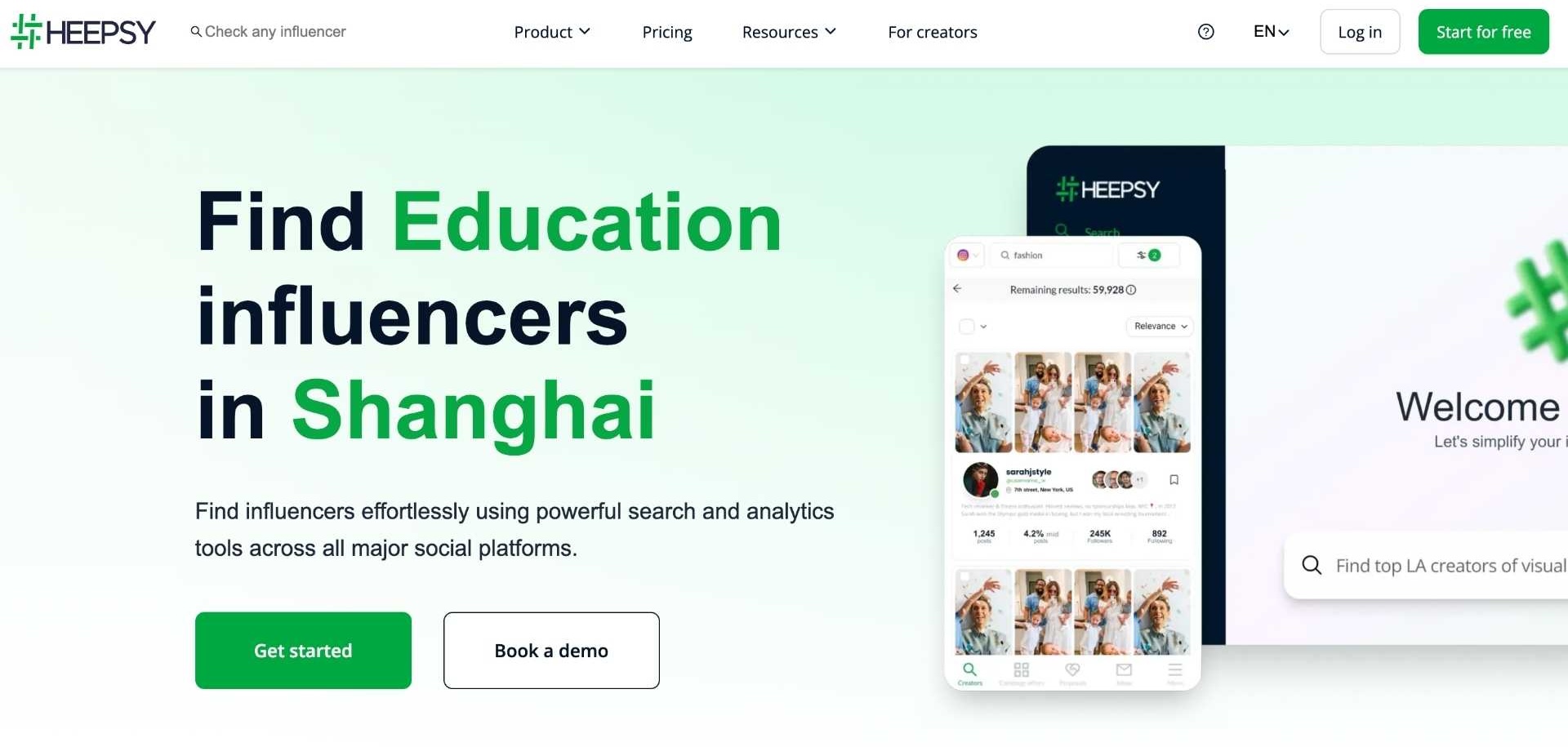
Heepsy is an influencer marketing platform focused on discovery, outreach, and campaign tracking, particularly for ecommerce brands and agencies. It is known for its large influencer database and straightforward interface, making it a practical option for teams that prioritize fast creator sourcing and campaign execution.
Key Features
- Extensive influencer search: Heepsy offers access to tens of millions of creators with filters for niche, audience demographics, engagement rate, and authenticity.
- Fake follower detection: The platform includes audience authenticity checks to help brands avoid low-quality or fraudulent influencers.
- Campaign management and CRM: Users can organize influencers into lists, track campaign stages in a pipeline view, and manage outreach workflows.
- Bulk outreach and email templates: Heepsy enables large-scale outreach campaigns with pre-built templates and follow-up sequences.
- Shopify integration for sales tracking: Advanced plans allow brands to track conversions, revenue, and affiliate performance directly from influencer campaigns.
Platform Coverage
Instagram, TikTok, YouTube, and Twitch
Pricing
Heepsy offers monthly and annual plans, with tiers such as Plus and Advanced. Pricing typically starts around $49–$149/month for lower tiers, while the Advanced plan (~$369/month) includes sales tracking and deeper analytics.
Reviews
4.5 / 5.0 (G2)
Standout Features
- Massive influencer database: With access to tens of millions of profiles, Heepsy is particularly strong for brands that need broad discovery across multiple regions.
- Visual CRM pipeline: Its Kanban-style campaign tracking makes it easy to manage outreach and campaign stages without complex setup.
- Integrated Shopify tracking for ROI: Heepsy’s ability to connect influencer activity directly to sales data is a key advantage for ecommerce teams.
Later vs Heepsy
Later offers a more enterprise-grade solution with advanced brand safety tools, predictive analytics, and structured workflows, while Heepsy focuses more on discovery and straightforward campaign management.
Heepsy is generally more accessible in terms of pricing and ease of use, making it suitable for smaller teams or brands starting with influencer marketing. Later, however, provides more advanced reporting and governance features for larger programs.
For teams that prioritize fast influencer sourcing and simple workflows, Heepsy is often the better fit. For brands needing deeper analytics and enterprise-level controls, Later remains stronger.
8. Skeepers
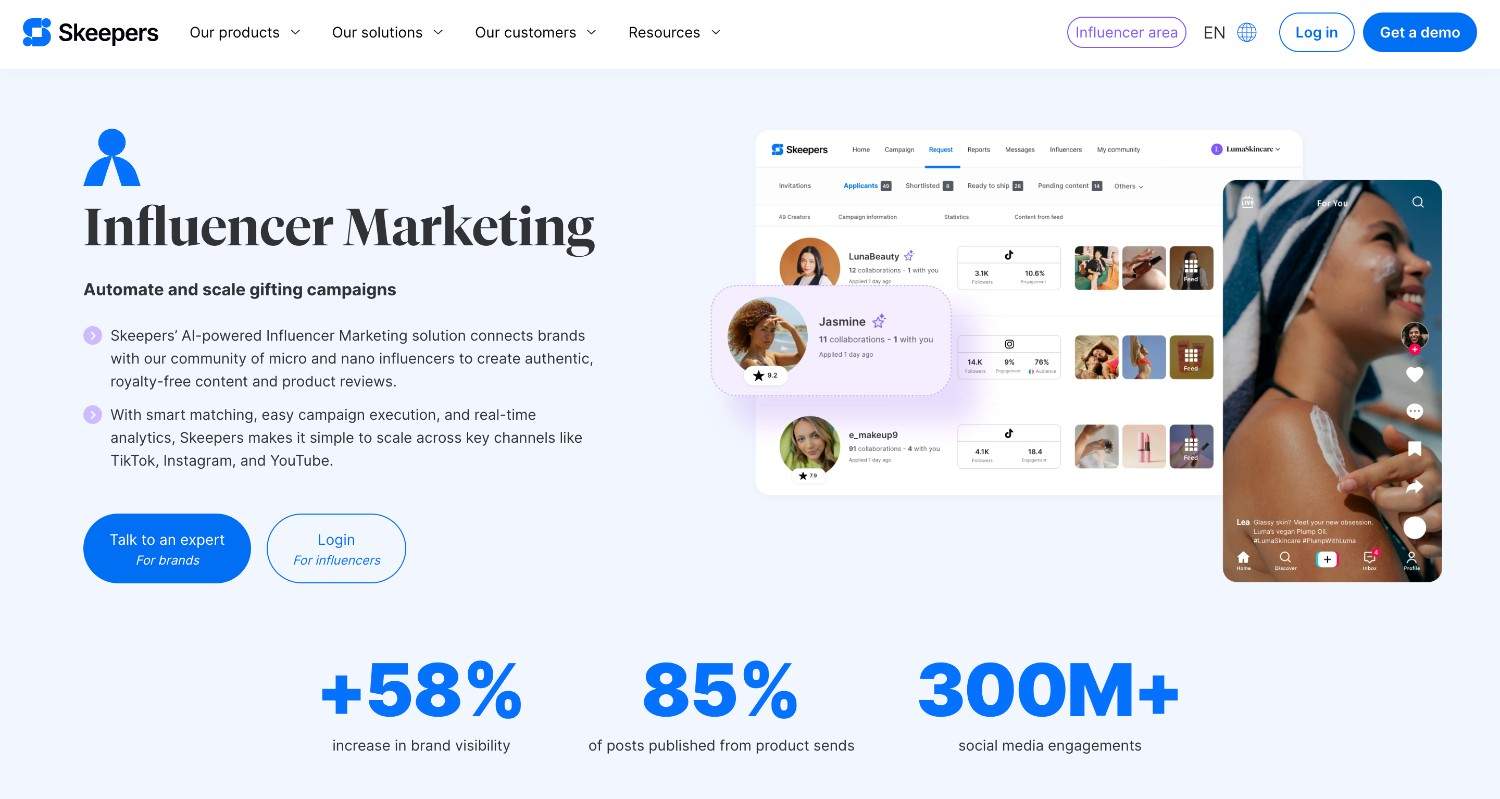
Skeepers is a platform focused on user-generated content (UGC), influencer marketing, and customer engagement. It combines influencer campaigns with broader content and review management, making it particularly useful for brands that want to leverage creators as part of a wider content and social proof strategy.
Key Features
- Influencer and UGC campaign management: Skeepers helps brands run campaigns that generate authentic content from creators and customers.
- Creator recruitment and community building: The platform supports sourcing creators and building long-term ambassador communities.
- Content distribution and reuse: Brands can collect, manage, and repurpose UGC across marketing channels.
- Performance tracking: Campaign analytics focus on engagement, reach, and content performance.
- Integration with review and ratings systems: Skeepers connects influencer marketing with customer reviews to strengthen social proof.
Platform Coverage
Instagram, TikTok, YouTube
Pricing
Skeepers uses custom pricing, typically based on modules (UGC, influencer marketing, reviews) and campaign scale. Contracts are usually annual.
Reviews
4.3/5.0 (Capterra)
Standout Features
- UGC-first approach: Skeepers stands out by combining influencer marketing with customer-generated content and reviews in one ecosystem.
- Content reuse and amplification tools: Brands can easily repurpose creator content across ads, websites, and social channels.
- Community-driven campaigns: The platform emphasizes long-term creator and customer relationships rather than one-off campaigns.
Later vs Skeepers
Later focuses more on influencer campaign execution and analytics, while Skeepers leans into UGC and customer content as part of a broader marketing strategy.
Skeepers is often a better fit for brands prioritizing content creation and social proof, whereas Later is more suited for structured influencer campaign management and performance tracking.
If your goal is to scale UGC and integrate influencer marketing with reviews, Skeepers offers a unique advantage. If you need more advanced influencer analytics and enterprise workflows, Later is typically stronger.
9. Upfluence
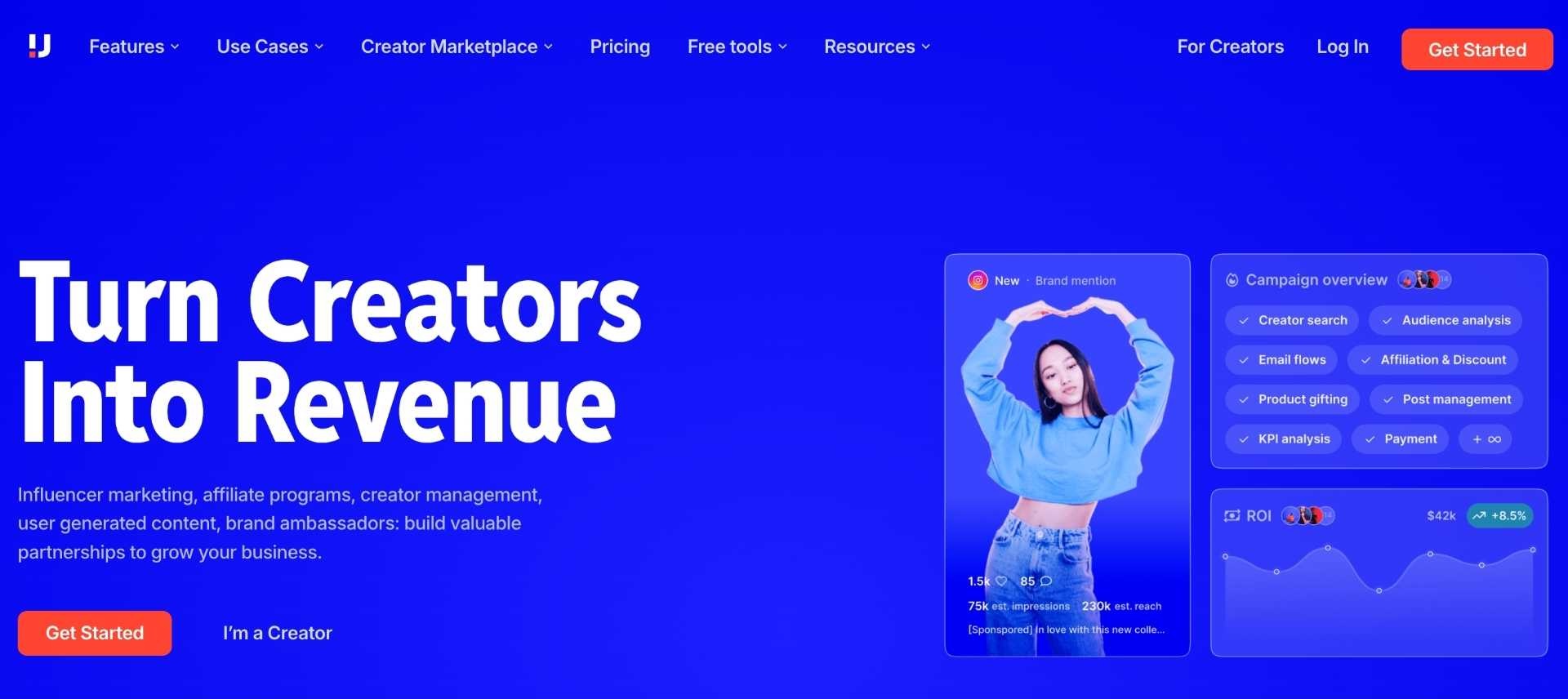
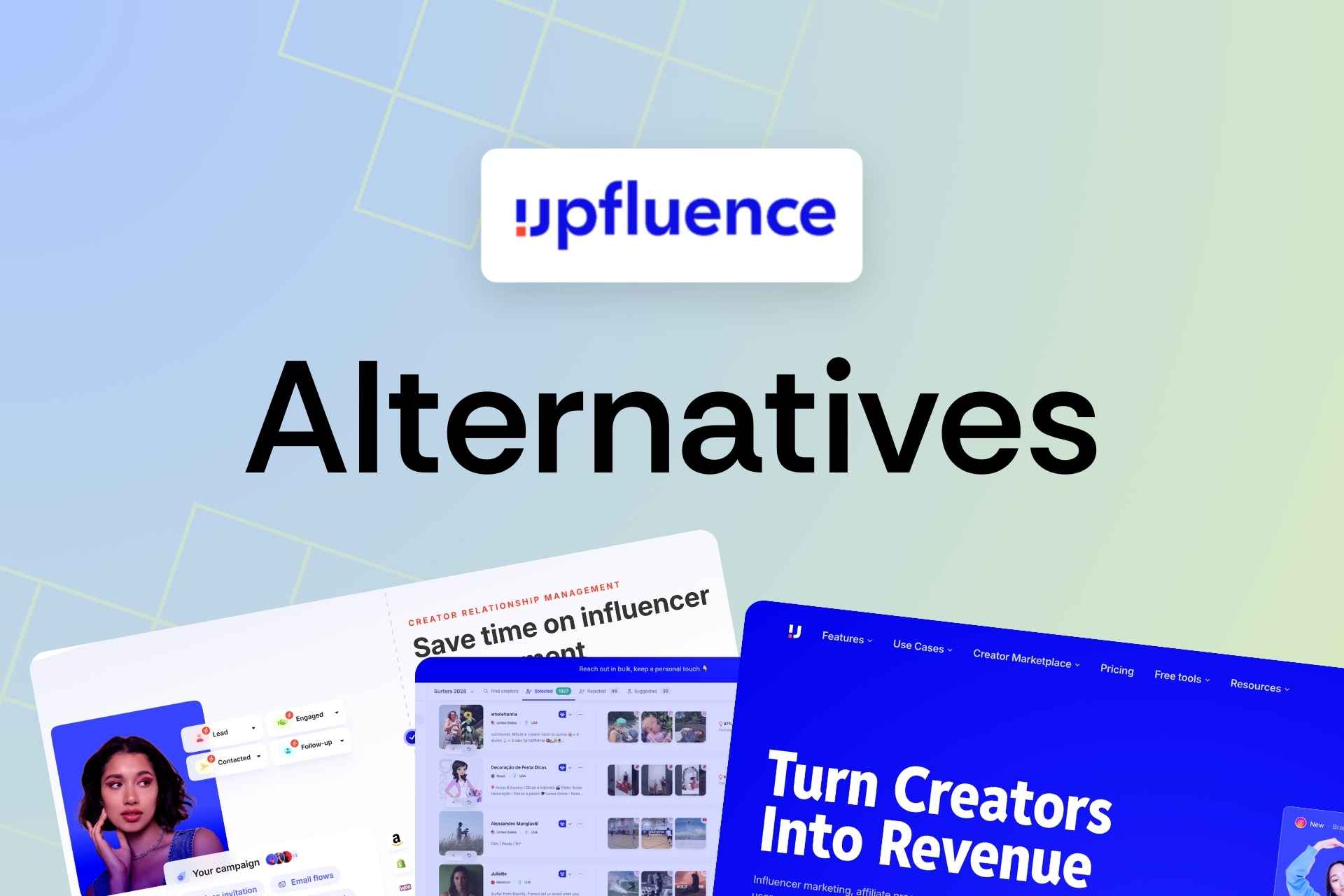
Upfluence is an all-in-one influencer marketing platform that combines creator discovery, outreach, CRM, and ecommerce integrations. It is particularly popular among ecommerce brands due to its strong focus on affiliate marketing, sales tracking, and customer-based influencer identification.
Key Features
- Influencer discovery and search: Upfluence provides access to a large creator database with filters for audience demographics, engagement, and niche.
- CRM and outreach management: The platform centralizes influencer communication, email campaigns, and relationship tracking.
- Affiliate and sales tracking: Upfluence integrates with ecommerce platforms to track conversions, revenue, and ROI from influencer campaigns.
- Customer influencer identification: Brands can identify influencers within their own customer base to build authentic partnerships.
- Payment and contract management: The platform supports influencer payments and contract workflows within the system.
Platform Coverage
Instagram, TikTok, YouTube, Facebook, Twitch, Pinterest, and blogs.
Pricing
On average plans start around $2,000/month ($24,000 yearly)
Reviews
4.3 / 5.0 (Capterra)
Standout Features
- Customer data integration: Upfluence can identify influencers already in a brand’s customer base, enabling more authentic partnerships.
- Strong ecommerce and affiliate tracking: Its deep integration with ecommerce platforms allows for detailed ROI tracking and performance measurement.
- All-in-one workflow for influencer marketing: From discovery to payments, Upfluence consolidates multiple processes into a single platform.
Later vs Upfluence
Later and Upfluence both offer end-to-end influencer marketing capabilities, but Upfluence is more focused on ecommerce and affiliate-driven campaigns.
Upfluence stands out for its ability to connect influencer marketing directly to customer data and sales performance. Later, meanwhile, emphasizes brand safety, predictive analytics, and structured campaign workflows.
For ecommerce brands prioritizing ROI and affiliate performance, Upfluence is often the better choice. For brands needing enterprise-level governance and campaign oversight, Later may be more suitable.
10. Traackr
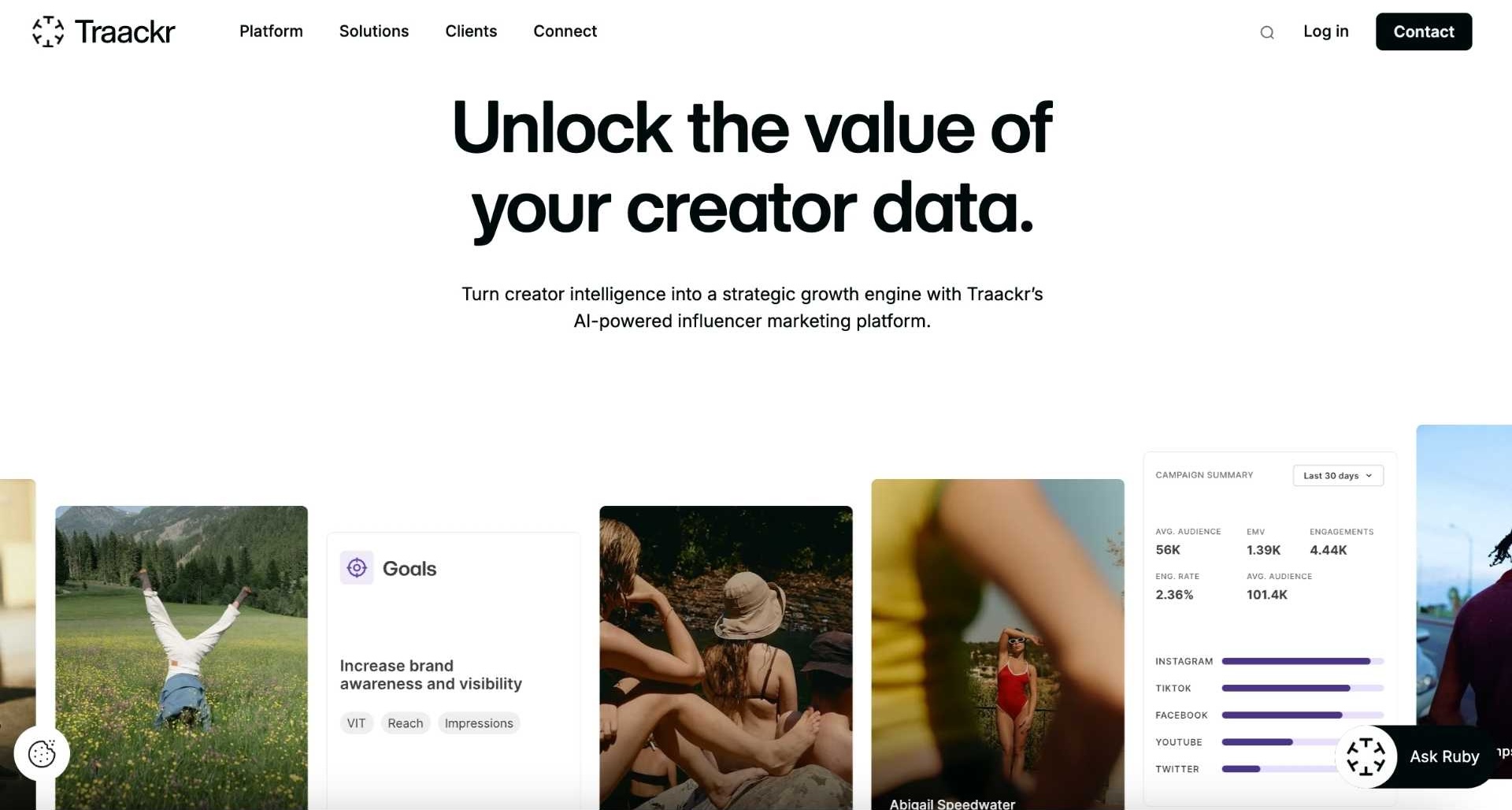
Traackr is an enterprise influencer marketing platform focused on data-driven decision-making, influencer relationship management, and performance analytics. It is widely used by global brands that need to manage large-scale programs across multiple markets.
Key Features
- Influencer discovery and benchmarking: Traackr provides detailed creator search and benchmarking tools to evaluate influencers against competitors and industry standards.
- Relationship management: The platform includes CRM tools to track long-term influencer relationships and campaign history.
- Campaign tracking and reporting: Traackr offers detailed analytics, including engagement, reach, and ROI metrics across campaigns.
- Market and competitive insights: Brands can analyze competitor campaigns and influencer activity to inform strategy.
- Global campaign support: Designed for multinational campaigns with region-specific insights and reporting.
Platform Coverage
Instagram, TikTok, YouTube, Facebook, Pinterest, and Twitter (X).
Pricing
Plans usually start at $32,500/year.
Reviews
4.3/5.0 (G2)
Standout Features
- Competitive benchmarking tools: Traackr allows brands to compare influencer performance against competitors and industry benchmarks.
- Global campaign analytics: Strong support for multinational campaigns with localized insights.
- Relationship-focused CRM: Emphasis on long-term influencer relationships rather than one-off campaigns.
Later vs Traackr
Later and Traackr are both positioned for enterprise users, but their strengths differ. Later focuses more on usability, workflow structure, and predictive analytics, while Traackr emphasizes benchmarking, competitive insights, and relationship management.
Traackr is often preferred by global brands needing deep analytics and competitive intelligence. Later is typically easier to adopt and offers a more guided workflow experience.
For teams prioritizing strategic insights and benchmarking, Traackr is a strong alternative. For teams looking for a more streamlined, user-friendly platform, Later may be the better fit.
Final Thoughts
Later remains a strong option for brands that need structured workflows, brand safety controls, and enterprise-level campaign management, but it is not the only solution available. Across the alternatives reviewed, the main differences come down to pricing flexibility, depth of creator discovery, ecommerce integrations, and how well each platform supports scaling outreach, affiliate programs, and performance tracking.
Platforms like GRIN, Influencer Hero, Aspire, and Upfluence are better suited for ecommerce-driven teams focused on ROI and operational execution, while tools like Traackr and NeoReach cater more to global enterprise programs with advanced analytics and benchmarking. Meanwhile, solutions such as SARAL, Heepsy, and Influencity offer more accessible entry points for teams that prioritize simplicity, discovery, or cost efficiency. Evaluating these Later alternatives ultimately comes down to how your team balances budget, workflow complexity, and the level of control needed across influencer campaigns.