

Loudcrowd Alternatives: Best Influencer Marketing Platforms
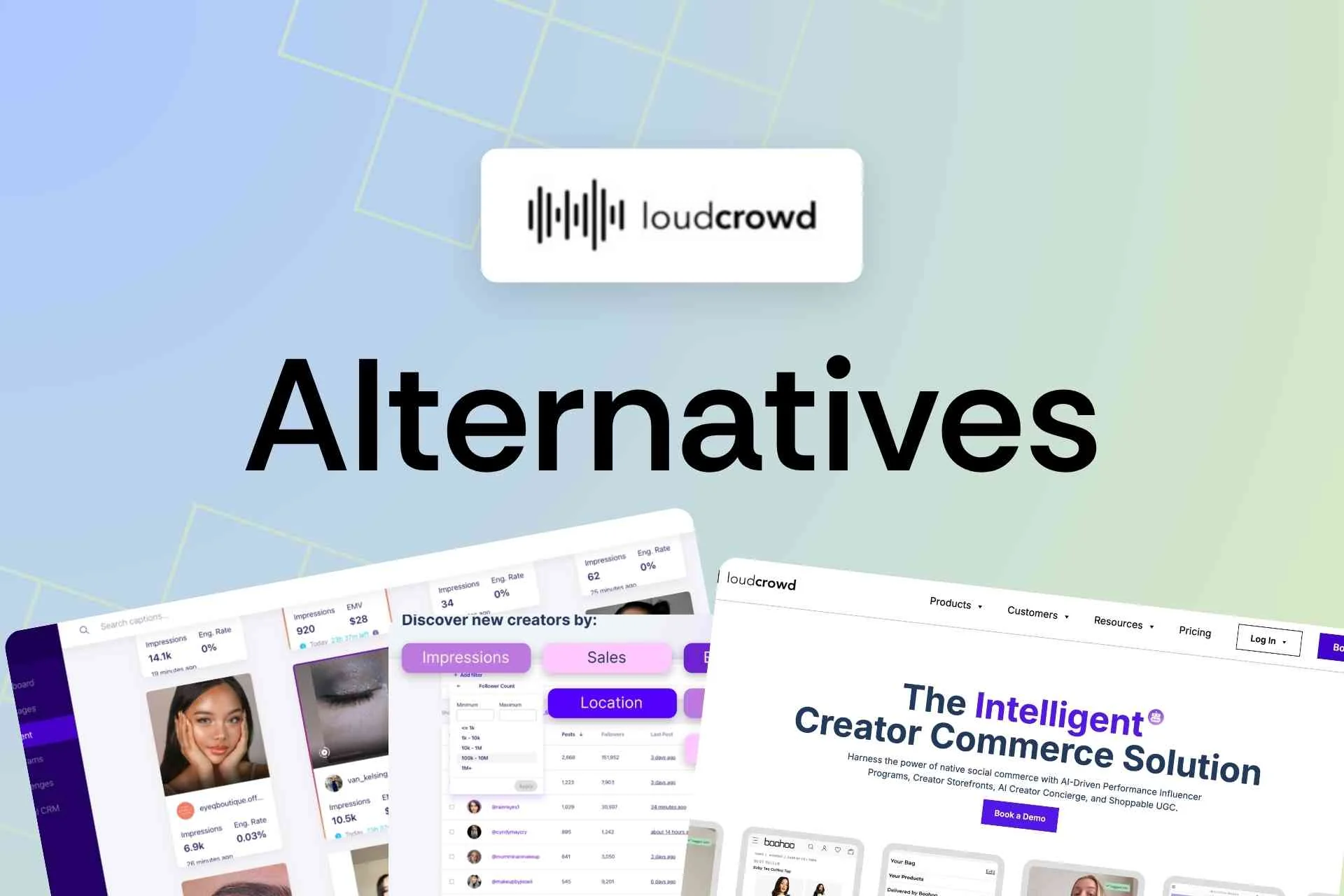
Choosing the right influencer marketing software has become a key decision for teams managing creator discovery, outreach, campaign workflows, and performance tracking at scale, especially as programs expand across multiple channels and revenue models. LoudCrowd stands out for its focus on creator commerce, affiliate-style activation, and on-site storefronts that help turn creators into direct sales drivers, but it also comes with trade-offs that lead many teams to explore LoudCrowd alternatives. Its native platform coverage is largely limited to Instagram and TikTok, which can be restrictive for brands running multi-channel campaigns, and it is less suited for large-scale influencer discovery compared to database-heavy platforms. In addition, some users report needing ongoing manual oversight for affiliate programs and rewards, along with gaps in reporting flexibility and rising costs as programs scale. For marketers evaluating influencer marketing software, these factors often make it worth comparing broader, more flexible solutions.
In this guide, we’ll break down the 10 best LoudCrowd alternatives—Influencer Hero, Upfluence, Aspire, SARAL, CreatorIQ, Sprout Social, GRIN, Modash, Influencity, and IZEA—to help you find the right platform for your strategy.
Criteria for Suggesting Platform Alternatives
Core Features
Evaluation of each platform’s essential capabilities, including influencer discovery, outreach, CRM, campaign reporting, gifting, UGC and content collection, affiliate tracking and payments, storefronts, application pages, and AI-powered tools.
Supported Social Media Platforms
Assessment of how well each platform integrates with major social networks such as Instagram, YouTube, TikTok, Facebook, Pinterest, and many more
Pricing & Contract Flexibility
Comparison of pricing models, subscription costs, and contract requirements to help brands choose solutions that match their budget and scalability needs.
Standout & Differentiating Features
Highlighting unique or innovative functionalities that set each platform apart, such as real-time tracking dashboards, creator benchmarking, TikTok email discovery, or advanced automation tools.
Customer Reviews & User Satisfaction
Analysis of verified user feedback from credible platforms like G2, TrustRadius, Capterra, focusing on usability, reliability, value for money, customer support, and real-world performance.
Loudcrowd Overview

LoudCrowd is a creator commerce and influencer marketing platform built primarily for DTC and eCommerce brands that want to turn customers, ambassadors, and creators into measurable revenue drivers. Its positioning is less about running traditional one-off influencer campaigns and more about giving creators branded, shoppable storefronts that live directly on a merchant’s own site, alongside tools for recruiting, rewarding, managing, and tracking creator activity. The company describes itself as an all-in-one creator commerce platform for Influencer Storefronts, ambassador programs, product seeding, and related social commerce workflows.
Key Features
• Creator Storefronts: LoudCrowd’s flagship feature is its white-label Creator Storefronts, which automatically create personalized landing pages for creators on the brand’s own eCommerce site. Creators can curate products, add their own UGC, and drive traffic to a conversion-focused page instead of sending shoppers to third-party marketplaces.
• Influencer and ambassador management: The platform is built to recruit, manage, and pay creators in one place, with support for influencer programs, creator-affiliate programs, and ambassador/community-style programs.
• UGC tracking and rights management: LoudCrowd tracks social content, measures UGC and affiliate performance, and lets brands manage content rights and download high-resolution assets for reuse. Its UGC analytics and rights workflows are a core part of the product.
• Payments, commissions, and rewards: Brands can reward creators with commissions, products, site credit, gift cards, loyalty points, and other incentives. LoudCrowd also supports commission fulfillment and recurring gifting strategies for creator retention.
• Product seeding and gifting: The platform supports product seeding and surprise-and-delight gifting, which is useful for brands running ambassador or affiliate-heavy programs.
• Analytics and attribution: LoudCrowd emphasizes revenue attribution, UGC value measurement, EMV, creator-level conversion data, and program-wide performance reporting. It also compares creator performance against broader UGC and organic segments.
• Messaging and creator communications: The platform includes messaging features such as automated story replies, message templates, creator communications, and scheduled program-wide email sends.
• Integrations for eCommerce and martech: LoudCrowd integrates with Shopify, Salesforce Commerce Cloud, Magento, WooCommerce, BigCommerce, Klaviyo, Yotpo, Mailchimp, Emarsys, Refersion, Impact.com, AWIN, Partnerize, and more, plus APIs and webhooks for custom use cases.
Platform Coverage
Instagram and TikTok
Pricing
LoudCrowd does not publicly disclose full pricing details, and most plans are customized based on brand needs.
Their plan tiers:
• Basic Plan — Start from $99 (limited functionality, likely entry-level access)
• Standard Plan — Custom pricing based on scale and features
• Advanced Plan — Custom pricing based on scale and features
Reviews
4.4 / 5.0 (G2)
LoudCrowd Standout Features
• Creator Storefronts built directly on the brand’s eCommerce site: This is LoudCrowd’s clearest differentiator. Instead of routing traffic to third-party creator marketplaces, it gives each creator a branded, personalized, shoppable page on the merchant’s own site, which helps brands keep first-party data, brand control, and higher-converting traffic in-house.
• ShopWith, its AI creator concierge layer: LoudCrowd launched ShopWith in June 2025 as a newer social commerce feature that surfaces AI-powered creator content directly on product pages, effectively turning creator recommendations into an on-site guided shopping experience. That makes LoudCrowd more commerce-native than many influencer platforms that stop at discovery or reporting.
• Knox AI for affiliate code protection: LoudCrowd has also pushed into creator-affiliate infrastructure with Knox AI, which monitors expected versus actual creator sales, flags suspicious code activity in real time, and rotates leaked codes when abuse is detected. That is especially relevant for brands running discount-code-heavy affiliate programs.
Limitations (Why Users Look For LoudCrowd Alternatives)
Limited native social coverage
LoudCrowd’s real native social integrations are concentrated around Instagram and TikTok. That works well for fashion, beauty, and DTC brands, but can feel restrictive for teams that need stronger support for YouTube, Pinterest, Twitch, or broader cross-channel influencer operations.
Less suited to classic influencer discovery at scale
LoudCrowd does offer discovery and curated lists, but its strongest value is creator commerce, ambassador programs, and customer/affiliate activation. Brands looking for a more traditional enterprise influencer database and heavy multi-platform prospecting may prefer a broader discovery-led platform.
Some teams report manual oversight is still needed
User feedback suggests brands may still need to monitor rewards issuance, affiliate engagement, and program rules closely to keep everything clean and running smoothly. That can be a drawback for lean teams looking for a more automated hands-off workflow.
Reporting and tracking gaps for some use cases
Review feedback points to limitations around certain reporting needs, such as wanting broader mention tracking, missing reach in some workflows, or not being able to retain expired Stories content. For brands that need deeper attribution or more flexible analytics, that can be a reason to compare alternatives.
Pricing can get expensive as programs expand
While LoudCrowd advertises a low starting price on Basic, user feedback indicates costs can rise meaningfully for larger or multi-region deployments, and higher tiers require sales conversations rather than transparent self-serve pricing.
Program success depends heavily on having an active brand community
Some reviewers note the platform works best when a brand already has customers or creators ready to activate, and that growth can be slower if internal marketing teams cannot actively push the program. That makes LoudCrowd less ideal for brands starting from zero without a warm creator or customer base.
10 Best Influencer Marketing Platform Alternatives:
| TOOL | REVIEWS | BEST FOR | TRIAL INFO | PRICING | ||
|---|---|---|---|---|---|---|
1 |

|
⭐ | Influencer CRM & automation | Book Demo | Pricing | Website |
2 |

|
⭐ | Influencer discovery | Book Demo | Pricing | Website |
3 |

|
⭐ | Influencer partnerships | Book Demo | Pricing | Website |
4 |

|
⭐ | Influencer outreach | Book Demo | Pricing | Website |
5 |

|
⭐ | Enterprise influencer marketing | Book Demo | Pricing | Website |
6 |
|
⭐ | Influencer marketing & Social media analytics | Book Demo | Pricing | Website |
7 |

|
⭐ | DTC creator management | Book Demo | Pricing | Website |
8 |

|
⭐ | Influencer discovery | Book Demo | Pricing | Website |
9 |

|
⭐ | Campaign management | Book Demo | Pricing | Website |
10 |

|
⭐ | Influencer marketplace | Book Demo | Pricing | Website |
Influencer Hero

Influencer Hero is an all-in-one influencer marketing platform built for brands and agencies that want to manage discovery, outreach, CRM, gifting, affiliate tracking, UGC, and reporting in one place. Its positioning is closer to an operations layer for creator programs than a pure discovery tool, with a strong emphasis on automation, eCommerce integrations, and scalable campaign workflows.
Key Features
• Influencer discovery and analytics: Influencer Hero offers a large creator database with filters for audience demographics, fake followers, engagement, geography, and lookalikes, plus a Chrome extension for live profile analysis while browsing social platforms.
• AI-powered outreach: The platform supports bulk outreach, automated follow-ups, hyper-personalized messaging, A/B-tested templates, and email flow automation to reduce manual campaign work.
• CRM and workflow automation: Its campaign-centric CRM helps teams manage outreach, contracts, deliverables, approvals, and revenue tracking in one system, with automation tied to campaign stages.
• Gifting, affiliate tracking, and payouts: Influencer Hero supports product seeding, affiliate links, discount codes, performance attribution, and creator payments from inside the platform.
• UGC collection and storefronts: The platform includes UGC storage, content reuse support, and storefront-style features that let creators showcase products and drive conversions.
• API and integrations: It integrates with Shopify and other eCommerce systems, and also offers APIs and automation-friendly workflows for more advanced teams.
Platform Coverage
Instagram, TikTok, YouTube, Facebook, Pinterest, Snapchat, X, and Twitch
Pricing
Influencer Hero offers flexible pricing based on outreach volume, and you can have unlimited creators in your CRM with Influencer Hero:
• Standard — $649/month (up to 1,000 reachouts/month)
• Pro — $1,049/month (up to 5,000 reachouts/month)
• Business — $2,490/month (up to 10,000 reachouts/month)
• Custom / Agency — Tailored pricing
Reviews
5.0/5.0 (Capterra)
Standout Features
• Campaign-centric automation: Influencer Hero stands out for CRM boards and workflow automations that move creators through outreach, deliverables, and reporting with less manual project management than many mid-market tools.
• Influencer brand-follower discovery: Its ability to identify creators who already follow or buy from a brand makes it especially useful for brands that want warmer outreach and stronger conversion potential.
• Bulk Tools for Scalable Operations: Manages influencer marketing at scale with bulk actions for outreach, follow-ups, product seeding, campaign updates, and deal management. The batching feature allows teams to execute high-volume tasks efficiently without sacrificing organization or accuracy.
Loudcrowd vs Influencer Hero:
LoudCrowd is more specialized around creator commerce, on-site storefronts, and turning creators into shoppable revenue channels, while Influencer Hero is broader as an all-in-one campaign operations platform. For brands that want deeper outreach automation, multichannel discovery, and a stronger CRM layer, Influencer Hero is usually the more flexible option. LoudCrowd remains more differentiated when the priority is storefront-led social commerce embedded directly into the brand’s eCommerce experience.
Upfluence
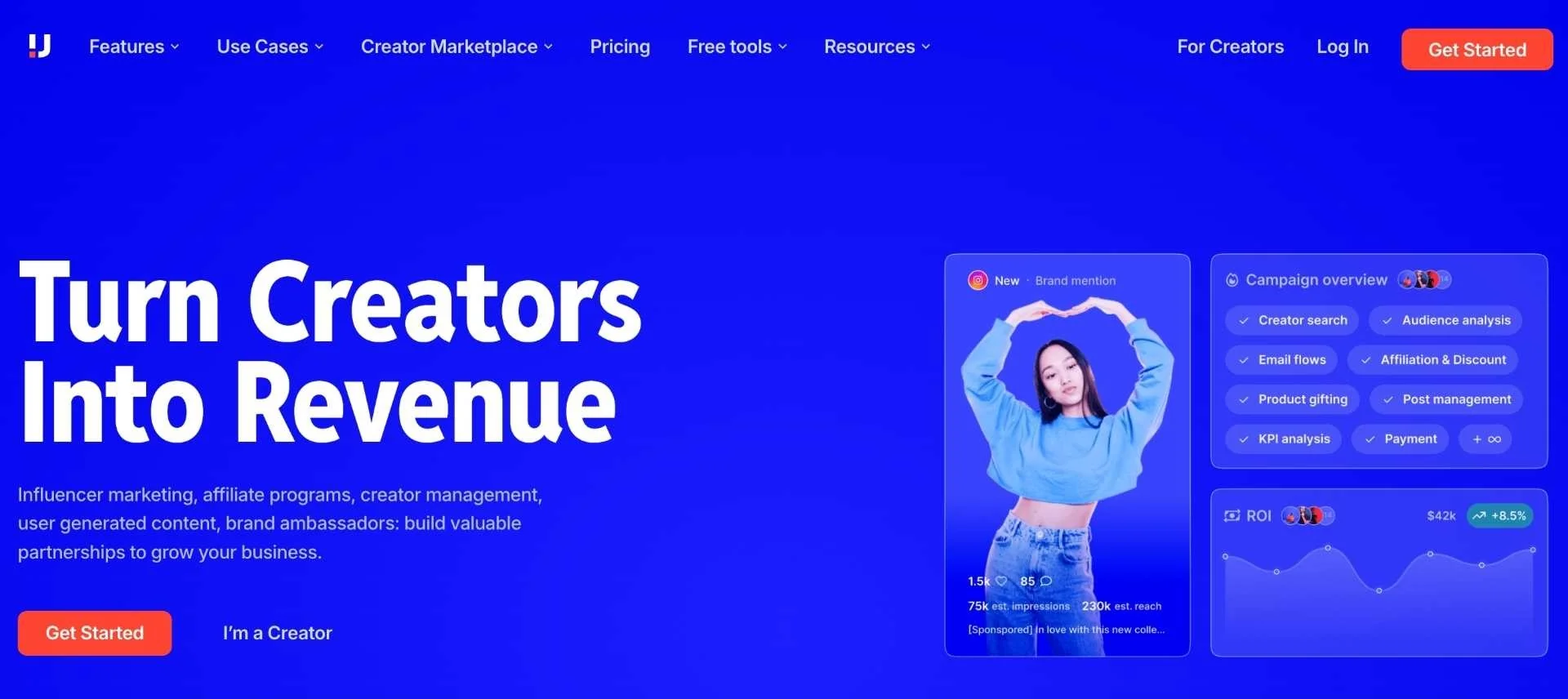
Upfluence is an established influencer and affiliate marketing platform built primarily for eCommerce and DTC brands. It combines creator discovery, outreach, campaign execution, affiliate management, and revenue tracking in one system, with particularly strong positioning around Shopify and Amazon integrations.
Key Features
• Creator discovery: Upfluence provides access to a large influencer database with filters for niche, audience size, location, engagement, and audience demographics, plus lookalike and search-based discovery.
• AI-assisted outreach: The platform supports bulk outreach, templates, automated follow-ups, and Jaice AI for campaign planning and email personalization.
• CRM and campaign management: Brands can manage influencer lists, communications, campaign progress, affiliate links, and custom compensation models inside a centralized workflow.
• Shopify and Amazon integrations: Upfluence is especially strong for eCommerce brands because it can identify influential customers, track affiliate sales, manage gifting, and attribute sales across Shopify and Amazon.
• Social listening: It includes listening tools that help brands find organic mentions, monitor competitor activity, and identify creators already talking about relevant products or categories.
• Payments and tracking: Upfluence supports bulk creator payments and tracks impressions, reach, clicks, engagement, conversions, and sales attribution.
Platform Coverage
Instagram, TikTok, YouTube, Facebook, Twitch, Pinterest, and blogs.
Pricing
On average plans start around $2,000/month ($24,000 yearly)
Reviews
4.3 / 5.0 (Capterra)
Standout Features
• Jaice AI: Upfluence has pushed AI harder than many legacy competitors, with Jaice AI positioned as an agent-like layer for planning, launching, and optimizing creator campaigns.
• Customer-to-creator identification: Its Shopify integration can identify existing customers who are also creators, which is a strong differentiator for DTC brands that want lower-friction affiliate recruitment.
• Amazon commerce integration: Upfluence remains one of the more commerce-oriented influencer platforms because it extends beyond Shopify into Amazon tracking and attribution.
Loudcrowd vs Upfluence
LoudCrowd is more specialized for creator commerce, storefronts, and affiliate-style activation on the brand’s own site, while Upfluence is broader as a discovery-plus-CRM-plus-affiliate platform. Upfluence is usually the stronger choice for brands that need classic influencer prospecting, deeper Shopify/Amazon attribution, and a wider multi-network database. LoudCrowd is more differentiated when the goal is turning creators into on-site shopping experiences rather than running a broader outbound influencer program.
Aspire
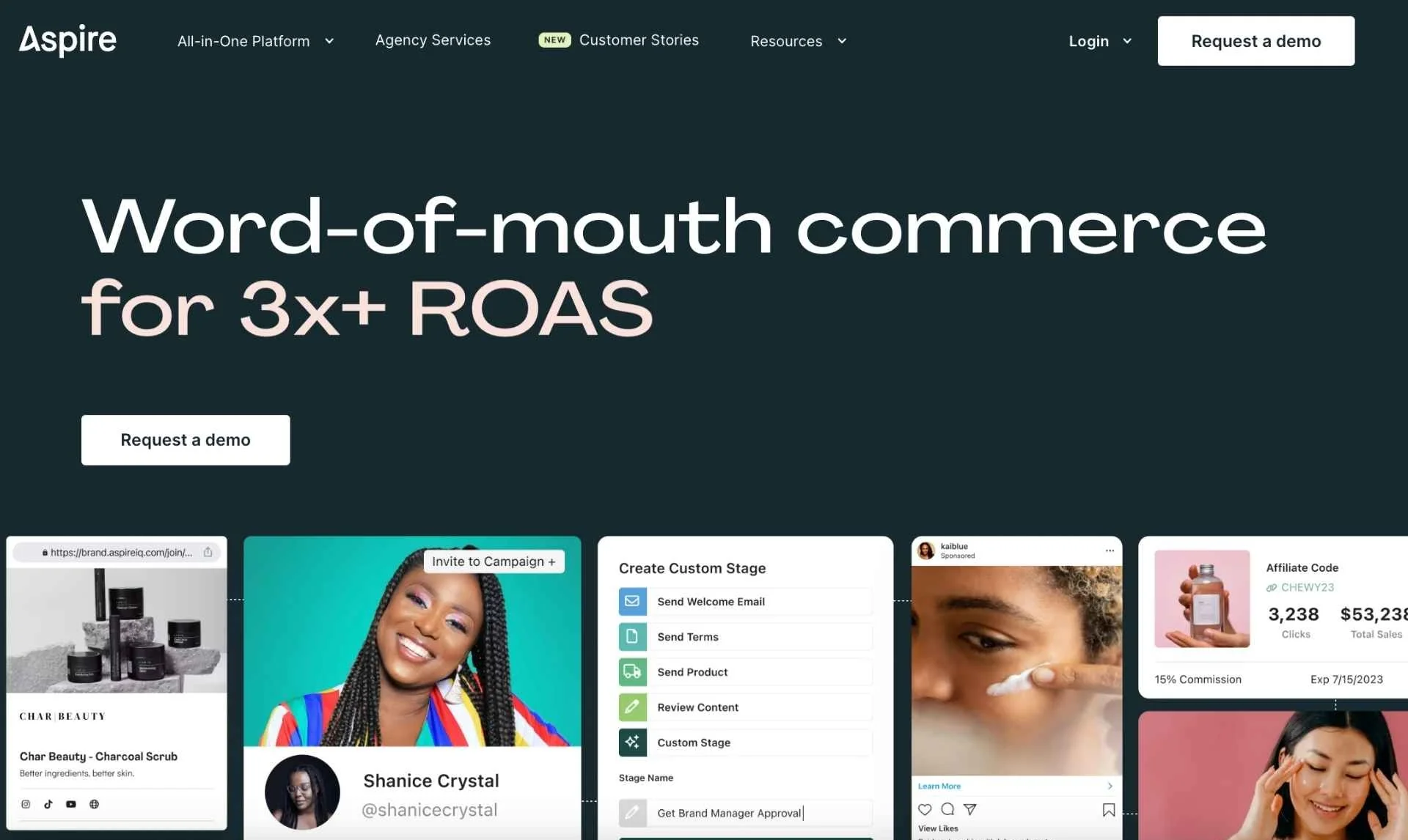
Aspire is an influencer marketing platform for eCommerce brands that want to build creator, ambassador, affiliate, and customer communities at scale. It combines creator search, a large inbound marketplace, relationship management, gifting, sales tracking, and UGC workflows into one platform geared toward ROI-focused teams.
Key Features
• Dual discovery model: Aspire combines creator search with an inbound Creator Marketplace, giving brands both active prospecting and creator applications in one workflow.
• Relationship management: The platform includes customizable workflows, tagging, and campaign management tools for influencers, affiliates, ambassadors, and product seeding programs.
• ROI and commerce tracking: Aspire tracks clicks, promo code usage, conversions, commissions, and sales performance, helping teams measure creator impact further down the funnel.
• Product gifting and fulfillment: Through Shopify, creators can select products, brands can approve orders, and teams can manage gifting without switching tools.
• Content approvals and UGC rights: Aspire supports briefs, contracts, usage rights, content approvals, and content library workflows, which makes it strong for long-term creator collaboration.
• Support and services: Aspire also offers implementation and customer success support, plus agency services for brands that need more hands-on help.
Platform Coverage
Instagram, TikTok, Pinterest, YouTube, and Facebook
Pricing
Aspire starts with tiered pricing and can be customized, with a mid-tier quote of about $2,300/month for a use case involving multiple team members and up to 500 creators in CRM.
Reviews
4.0 /5.0 (Capterra)
Standout Features
• Large inbound creator marketplace: Aspire’s marketplace is one of its clearest differentiators, giving brands access to creator applications instead of relying only on cold outreach.
• Direct platform partnerships: Aspire highlights direct partnerships with Meta, TikTok, and Pinterest, which strengthens data quality and campaign workflows compared with tools relying more heavily on scraping.
• Reverse image search and creator matching: Aspire’s more recent messaging around reverse image search helps brands find creators with similar aesthetics, which is especially useful for UGC-heavy or visually specific programs.
Loudcrowd vs Aspire
LoudCrowd is more commerce-native around storefronts and creator-led on-site shopping, while Aspire is broader as a relationship and workflow platform for influencer, ambassador, affiliate, and UGC programs. Aspire is usually stronger for brands that want inbound creator applications, content approval workflows, and large-scale gifting plus affiliate management. LoudCrowd is more distinctive when the goal is embedding creator storefronts and shopping experiences directly into the brand’s eCommerce journey.
SARAL

SARAL is an influencer marketing platform built for eCommerce brands that want a simpler, more operationally efficient way to run seeding, outreach, affiliate, and creator relationship programs. Its public positioning centers on removing spreadsheet-heavy workflows and giving leaner teams one system for discovery, personalized outreach, shipping, tracking, and payments.
Key Features
• Discovery across public creator profiles: SARAL gives brands access to a large creator database across Instagram, TikTok, and YouTube, with filters for keywords, engagement, and similar creators.
• Automated outreach: The platform emphasizes personalized email automation and follow-ups so brands can scale outreach without relying on manual inbox management.
• Relationship management: SARAL centralizes creator stages, tags, and relationship tracking, which makes it particularly useful for brands graduating from spreadsheets.
• Influencer seeding and shipping: The platform supports product shipping and seeding workflows, which is important for gifting-led creator programs.
• Affiliate and sales tracking: SARAL includes affiliate links, discount codes, sales tracking, and ROAS measurement, making it more commerce-focused than basic outreach tools.
• Payments and reporting: It also includes performance reporting, CSV exports, and creator payments in a unified workflow.
Platform Coverage
Instagram, TikTok, and YouTube.
Pricing
There are different plans:
• Starter: $3.6k/quarter
• Business: $4.5k/quarter
• Professional: $7.5k/quarter
Reviews
4.7/5.0 (G2)
Standout Features
• Built for lean eCommerce teams: SARAL’s clearest differentiator is how intentionally simple it is compared with heavier enterprise platforms, especially for brands moving off spreadsheets into a first true influencer OS.
• Strong seeding-to-affiliate workflow: SARAL combines discovery, email outreach, shipping, affiliate tracking, and payments in one workflow that fits gifting-led DTC programs well.
• Discovery without opt-in friction: Its discovery pages emphasize access to 200M+ influencer profiles across Instagram, TikTok, and YouTube without needing creators to sign up first.
Loudcrowd vs SARAL
LoudCrowd is more differentiated for creator commerce and storefront-led revenue experiences, while SARAL is better framed as a streamlined influencer operating system for outreach, seeding, and affiliate execution. SARAL is often the stronger fit for smaller or growing eCommerce teams that want simpler workflows and clearer operational control. LoudCrowd makes more sense when the strategy depends on creator storefronts and turning content into shoppable on-site journeys.
CreatorIQ
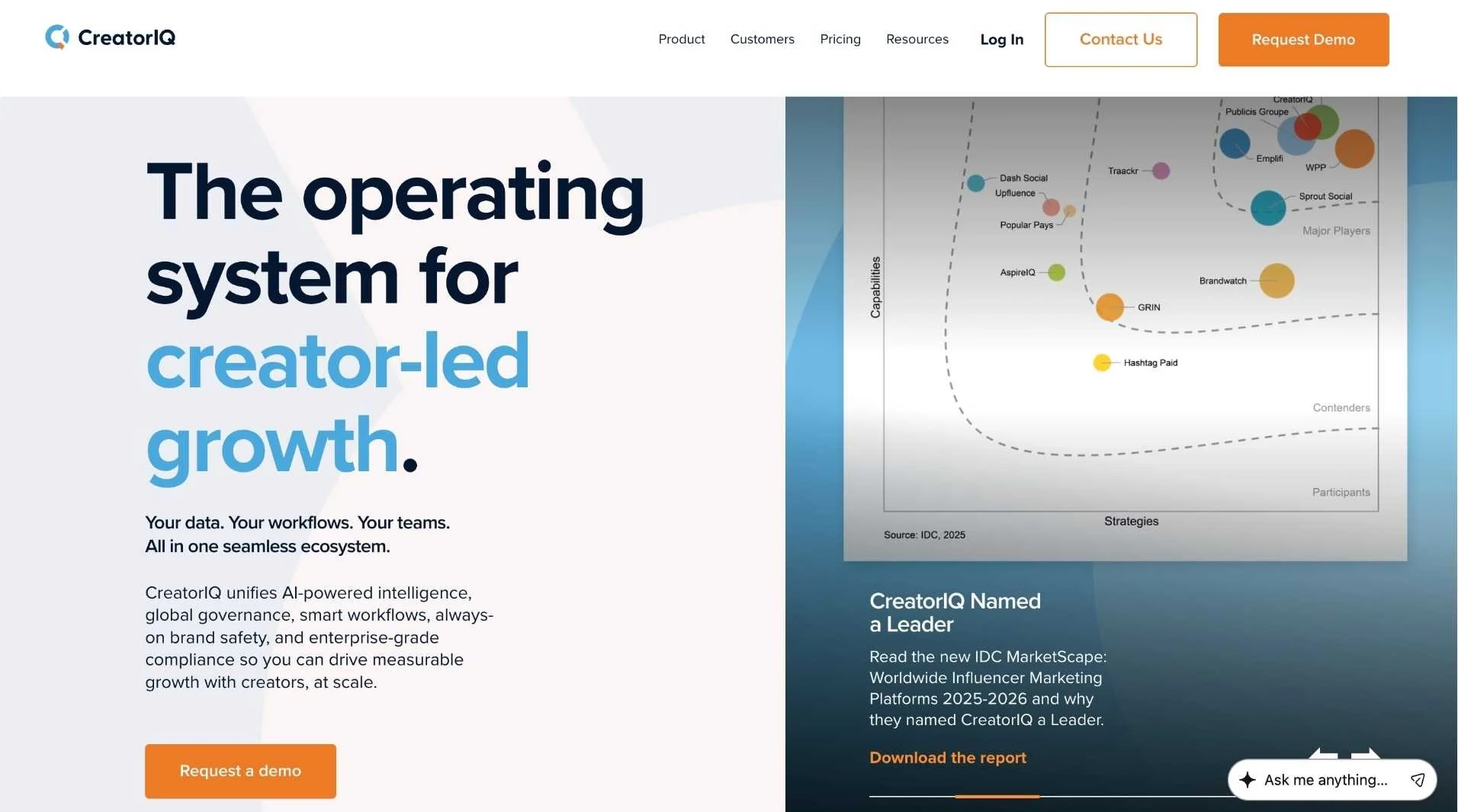
CreatorIQ is an enterprise creator marketing platform designed for global brands and agencies that need governance, measurement, workflow control, and brand safety at scale. Its messaging centers on creator-led growth across paid, owned, earned, commerce, community, and content, with a strong emphasis on compliance, intelligence, and cross-team operating structure.
Key Features
• Enterprise-grade creator discovery: CreatorIQ supports data-rich creator search with audience filters, brand mentions, authenticity checks, and discovery across major social channels.
• Private CRM and creator management: Teams can maintain detailed creator records, tags, notes, campaign history, and outreach history in a centralized private CRM.
• Campaign execution and approvals: CreatorIQ supports briefs, one-sheet approvals, stakeholder feedback, content previews, gifting logistics, and creator-specific workflows.
• Measurement and reporting: It offers customizable dashboards, API-driven reporting, campaign-level and creator-level analytics, and executive-ready live reporting links.
• Payments and tax handling: CreatorIQ Pay is built for creator payouts with tax and compliance support, helping large brands simplify finance workflows.
• Brand safety and governance: Its positioning is especially strong around enterprise governance, global compliance, and structured creator operations for larger organizations.
Platform Coverage
Instagram, YouTube, TikTok, Facebook, Twitter, Pinterest, and more.
Pricing
• Basic Plan: Starts at $35,000/year. Includes 1,000 contact creators per month
• Standard Plan: Starts at $50,000/year. Includes 2,500 contact creators per month
• Professional Plan: Starts at $90,000/year. Includes 5,000 contact creators per month
• Enterprise Plan: Starts at $200,000/year. Includes 7,500 contact creators per month
Reviews
4.4 / 5.0 (Capterra)
Standout Features
• The Creator Graph and AI-native positioning: CreatorIQ now frames itself as an AI-native platform built on The Creator Graph, pushing it beyond classic influencer CRM into a more intelligence-led enterprise system.
• Enterprise governance and compliance: Its strongest differentiator remains governance, global compliance, and structured workflows for large brand teams that need approval layers and brand safety.
• Recent Sprinklr integration: CreatorIQ’s newer partnership with Sprinklr expands unified measurement across owned, earned, paid, and creator media, which is especially relevant for enterprise reporting teams.
Loudcrowd vs CreatorIQ
LoudCrowd is more specialized around creator commerce, storefronts, and affiliate-style activation on the brand’s own site, while CreatorIQ is built for enterprise control, governance, and cross-market creator operations. CreatorIQ is usually the stronger option for large brands that need structured approvals, deeper reporting, and broader organizational workflows. LoudCrowd is more focused and often more differentiated when the priority is creator-led commerce and on-site shopping experiences rather than enterprise-scale program governance.


Sprout Social

Sprout Social is best known as a social media management platform, but its influencer marketing product has become a more serious enterprise option since the Tagger acquisition and 2025 rebrand. Today, Sprout Social Influencer Marketing is positioned as an AI-powered platform for creator discovery, vetting, campaign execution, reporting, and social-intelligence-led planning.
Key Features
• AI-powered creator discovery: Sprout lets teams find creators by topic rather than only by keywords, which is useful for brands that want to mirror how consumers actually discover content on social platforms.
• Brand Fit and brand safety tools: Its AI-powered Brand Fit Score and customizable brand safety reporting help teams assess alignment, flag risky content categories, and streamline internal approvals.
• Campaign workflow management: The platform supports outreach, contracts, content approvals, deliverables, and spend tracking inside one workspace, making it especially useful for larger teams with multiple stakeholders.
• Competitive benchmarking and social intelligence: Sprout stands out for giving brands a stronger strategic layer than many outreach-led tools, including competitor analysis, trend reporting, and broader social intelligence signals.
• Content approval and reporting: Teams can manage pre-publication approvals, then export reports in presentation-friendly formats with metrics such as EMV, engagement trends, and post-level performance.
• Shopify and payout support: Sprout supports Shopify gifting and creator payments, which helps connect campaign execution with commerce outcomes.
Platform Coverage
Instagram, YouTube, Facebook, TikTok, and X (Twitter)
Pricing
Starts around $1,600/month per user plus $600 per extra user.
Reviews
4.5 / 5.0 (Capterra)
Standout Features
• AI-powered natural language creator search: Sprout’s 2025 product refresh replaced rigid keyword-led discovery with topic-led, natural-language creator search.
• AI-powered Brand Fit Score: This is one of Sprout’s clearest differentiators for enterprise teams that need more standardized creator vetting.
• Customizable brand safety reporting: Brands can tailor safety parameters and automatically flag creators for sensitive topics, competitors, politics, alcohol, and more.
Loudcrowd vs Sprout Social
LoudCrowd is more specialized for creator commerce, storefronts, and turning creators into shoppable revenue channels on a brand’s own site, while Sprout Social is broader and more enterprise-oriented around analytics, benchmarking, approvals, and brand safety. Sprout is typically the better fit for larger teams that want influencer marketing tightly connected to social intelligence and executive reporting. LoudCrowd is more differentiated when the goal is storefront-led creator commerce rather than enterprise campaign governance.
GRIN
GRIN is a creator marketing platform built primarily for eCommerce and DTC brands that want to manage long-term creator relationships, gifting, affiliate programs, content collection, and revenue attribution from one system. It has increasingly repositioned itself around AI-native creator management and self-serve accessibility rather than just being a high-touch enterprise platform.
Key Features
• Creator discovery and recruitment: GRIN supports creator search, CRM building, landing pages, and other recruiting flows so brands can source both new creators and inbound applicants.
• Integrated creator CRM: The platform is designed to replace spreadsheets with one centralized workspace for communication history, deliverables, and relationship management.
• Product gifting and affiliate workflows: GRIN is especially strong for brands running gifting and affiliate programs, with support for product seeding, discount codes, links, and revenue tracking.
• Payments and compliance: Higher plans include automated creator payments and 1099 processing, which is a major operational advantage for US-based brands running larger creator programs.
• Content library and approvals: GRIN includes content management, approvals, and centralized creator asset storage, which helps brands reuse and organize influencer content more effectively.
• AI assistance through Gia: GRIN’s newest strategic push is Gia, its embedded agentic AI assistant for creator marketers. Gia is designed to help with discovery, outreach, rate suggestions, onboarding, and performance management.
Platform Coverage
Facebook, Instagram, TikTok, X, Pinterest, YouTube, and Twitch
Pricing
Annual pricing starts at $25,000/year (approx. $2,050/month)
Reviews
4.5/5.0 (G2)
Standout Features
• Gia, the embedded agentic AI assistant: GRIN launched Gia in May 2025 as a creator-marketing-specific AI assistant that can actively help execute day-to-day work, not just summarize it.
• Self-serve, month-to-month pricing: GRIN’s newer pricing model is one of its biggest strategic changes, making it more accessible than its earlier contract-heavy positioning.
• Payments plus 1099 processing: This remains a standout operational feature for U.S. brands managing creator payments and compliance at scale.
Loudcrowd vs GRIN
LoudCrowd is more commerce-native around creator storefronts and customer-to-creator activation, while GRIN is stronger as a broader eCommerce creator operations platform. GRIN is usually the better fit for brands that need gifting, affiliate tracking, payments, CRM, and creator content management in one workflow. LoudCrowd remains more distinctive when the strategy revolves around shoppable storefronts and creator-led on-site conversion rather than a full influencer CRM stack.
Modash

Modash is an influencer marketing platform built around a large public creator database, workflow simplicity, and Shopify-connected execution. It positions itself as a software-first operating system for brands that want to discover, vet, manage, track, and pay creators without relying on an opt-in marketplace or agency layer.
Key Features
• Large public creator database: Modash says it includes every public Instagram, TikTok, and YouTube profile with more than 1,000 followers, giving brands access to a very broad discovery layer.
• Advanced discovery and audience vetting: Brands can filter by niche, location, demographics, audience quality, brand partnerships, and fake follower indicators, which makes it especially strong for niche creator sourcing.
• Influential Fans: Modash helps brands find creators who already follow or engage with their brand, which is one of its most useful features for warmer outreach.
• Inbox and outreach management: It supports Gmail and Outlook integration, creator-centric inbox management, and more recently improved bulk outreach functionality.
• Content tracking and downloads: Modash can track creator content and, on higher plans, download posts, Reels, Stories, TikTok content, and YouTube content for easier campaign reporting and reuse.
• Affiliate tracking, gifting, and payments: The Shopify integration handles gifting, sales tracking, affiliate workflows, and creator payouts, which makes Modash more execution-ready than a discovery-only tool.
Platform Coverage
Modash supports influencer marketing on platforms such as Instagram, YouTube, and TikTok, providing comprehensive campaign tracking and influencer management tools.
Pricing
• Essentials: $199/month (paid annually)
• Performance: $499/month (paid annually)
• Custom Enterprise: Contact for pricing
Reviews
4.9 / 5.0 (Capterra)
Standout Features
• Influential Fans: This remains one of Modash’s best practical differentiators for brands that want to recruit creators already familiar with them.
• AI-powered creator search: Modash’s discovery engine now explicitly includes AI-powered search on top of filters and lookalikes.
• Recently upgraded Inbox and bulk outreach: Current user feedback highlights newer bulk messaging improvements, which strengthen Modash beyond discovery and tracking.
Loudcrowd vs Modash
LoudCrowd is more specialized for storefront-based creator commerce and on-site shopping experiences, while Modash is stronger as a lightweight, data-heavy system for creator discovery, outreach, affiliate execution, and Shopify-linked tracking. Modash is usually the better fit for teams that want broad public-profile discovery and simpler, transparent pricing. LoudCrowd is more differentiated when creator storefronts and customer-facing shopping journeys are the center of the strategy.
Influencity

Influencity is an end-to-end influencer marketing platform for brands and agencies that want discovery, IRM, campaign management, reporting, and broader social-media workflow tools in one product family. Its current positioning is notably broader than many competitors because it combines influencer marketing, social media management, and social listening under one umbrella.
Key Features
• Influencer discovery and analytics: Influencity offers a large creator database with channel-specific discovery, audience analysis, fraud screening, and campaign-fit filtering.
• Influencer relationship management: The platform includes IRM tools for storing creators, organizing lists, and keeping campaign workflows centralized rather than split across spreadsheets and email.
• Campaign management and reports: Influencity supports campaign planning, multi-campaign oversight, and exportable reports for brands and agencies that need structured campaign visibility.
• Recruitment and outreach: It supports recruitment flows, outreach management, and templates, with the Business plan adding an AI-powered email assistant.
• ECommerce seeding support: Influencity also supports influencer seeding and eCommerce-connected workflows for brands that want to coordinate gifting and campaign execution together.
• Broader social stack: A notable difference versus many pure influencer tools is that Influencity also includes Social Hub and Monitoring products for content planning, analytics, inbox management, and listening.
Platform Coverage
Instagram, TikTok, YouTube, and X/Twitter
Pricing
• Professional Plan: $318/month or $3,816/year
• Business Plan: $798/month or $9,576/year
• Enterprise Plan: Custom pricing
• Auto-Tracker Add-On: $660/year (for 50 influencers)
Reviews
4.3 / 5.0 (G2)
Standout Features
• Broader all-in-one scope: Influencity is unusual in combining influencer marketing, social media management, and listening in one product family instead of treating them as separate tools.
• AI-powered IRM and outreach direction: Influencity’s positioning increasingly leans into AI-powered workflows, predictive analytics, and assisted campaign optimization.
• Flexible three-tier structure plus trial: Its Professional, Business, and Enterprise structure with a 7-day trial is more approachable than many enterprise-only competitors.
Loudcrowd vs Influencity
LoudCrowd is more focused on creator commerce, storefronts, and affiliate-style monetization on a brand’s own site, while Influencity is broader as a multi-function influencer and social marketing platform. Influencity is usually a better fit for teams that want stronger IRM, campaign structure, and a wider marketing stack in one place. LoudCrowd is more differentiated for brands whose priority is storefront-led creator commerce and customer-to-creator monetization rather than broader social workflow coverage.
IZEA

IZEA is one of the longest-standing influencer marketing platforms in the industry, offering a full suite of tools for influencer discovery, campaign management, content creation, and performance tracking. Originally founded as a marketplace for sponsored content, IZEA has evolved into a comprehensive creator economy platform used by brands and agencies to manage both influencer partnerships and broader content workflows at scale. (izea.com)
Key Features
• Creator marketplace (IZEA Marketplace): IZEA provides access to a large opt-in network of vetted influencers and content creators, allowing brands to post campaigns or directly hire creators for sponsored content, social posts, and UGC.
• Discovery and search tools: The platform includes advanced filtering by niche, audience demographics, engagement metrics, and historical brand collaborations, helping teams identify relevant creators more efficiently.
• Campaign management workflows: IZEA supports end-to-end campaign execution, including briefs, approvals, messaging, deliverables tracking, and timelines within a centralized dashboard.
• Content creation and licensing: Beyond influencer campaigns, IZEA also enables brands to commission standalone content (e.g., photos, videos, blog posts) and manage licensing rights for reuse across marketing channels.
• Payments and contract management: The platform handles creator payments, contract workflows, and compliance, simplifying financial operations for brands working with multiple creators.
• Reporting and analytics: IZEA provides campaign performance metrics such as engagement, reach, clicks, and ROI, with reporting tools designed for both campaign-level and creator-level insights.
• BrandGraph (social intelligence): IZEA includes a social listening and analytics layer that helps brands analyze trends, track competitors, and identify emerging creators and content opportunities.
Platform Coverage
Instagram, TikTok, YouTube, Facebook, Pinterest, Snapchat, Twitch, and X (Twitter).
Pricing
IZEA does not publicly list fixed pricing tiers for all products, but it offers two main approaches:
• IZEA Flex (self-serve SaaS): Typically offered via custom pricing based on usage, features, and scale.
• Managed Services: Fully customized pricing depending on campaign scope, creator volume, and level of service.
In practice, this means pricing is quote-based, often structured as annual contracts for software access or campaign-based pricing for managed services.
Reviews
3.9/ 5.0 (G2)
Standout Features
• IZEA Marketplace with opt-in creators: Unlike platforms that rely heavily on scraped data, IZEA’s marketplace is built on opt-in creators actively looking for brand collaborations, which can improve response rates and campaign efficiency.
• Content + influencer hybrid model: IZEA uniquely combines influencer marketing with a content production marketplace, allowing brands to commission UGC, blogs, and creative assets even outside traditional influencer campaigns.
• BrandGraph social intelligence: Its integrated analytics layer goes beyond campaign tracking, offering trend analysis, competitive insights, and creator performance benchmarking within the same ecosystem.
Loudcrowd vs IZEA
LoudCrowd is more focused on creator commerce, storefronts, and turning influencers into on-site revenue channels, while IZEA is broader as a marketplace-driven platform for influencer campaigns and content creation. IZEA is typically the better fit for brands that want access to an active creator marketplace and flexible content production workflows, along with cross-platform campaign execution. LoudCrowd, on the other hand, is more differentiated when the strategy centers on affiliate-style programs and embedding creator-driven shopping experiences directly into the brand’s eCommerce environment.
Final Thoughts on LoudCrowd Alternatives
LoudCrowd stands out for its strong focus on creator commerce and on-site storefront experiences, but the broader market offers a wide range of alternatives tailored to different priorities. Platforms like Influencer Hero, Aspire, and GRIN emphasize end-to-end workflow management and eCommerce integrations, while tools such as Modash and SARAL focus on streamlined discovery and outreach for growing teams. Enterprise solutions like CreatorIQ and Sprout Social bring advanced analytics, governance, and social intelligence into the mix. Ultimately, the right choice depends on whether a brand prioritizes storefront-driven conversions, large-scale influencer discovery, operational efficiency, or enterprise-level reporting and control.