

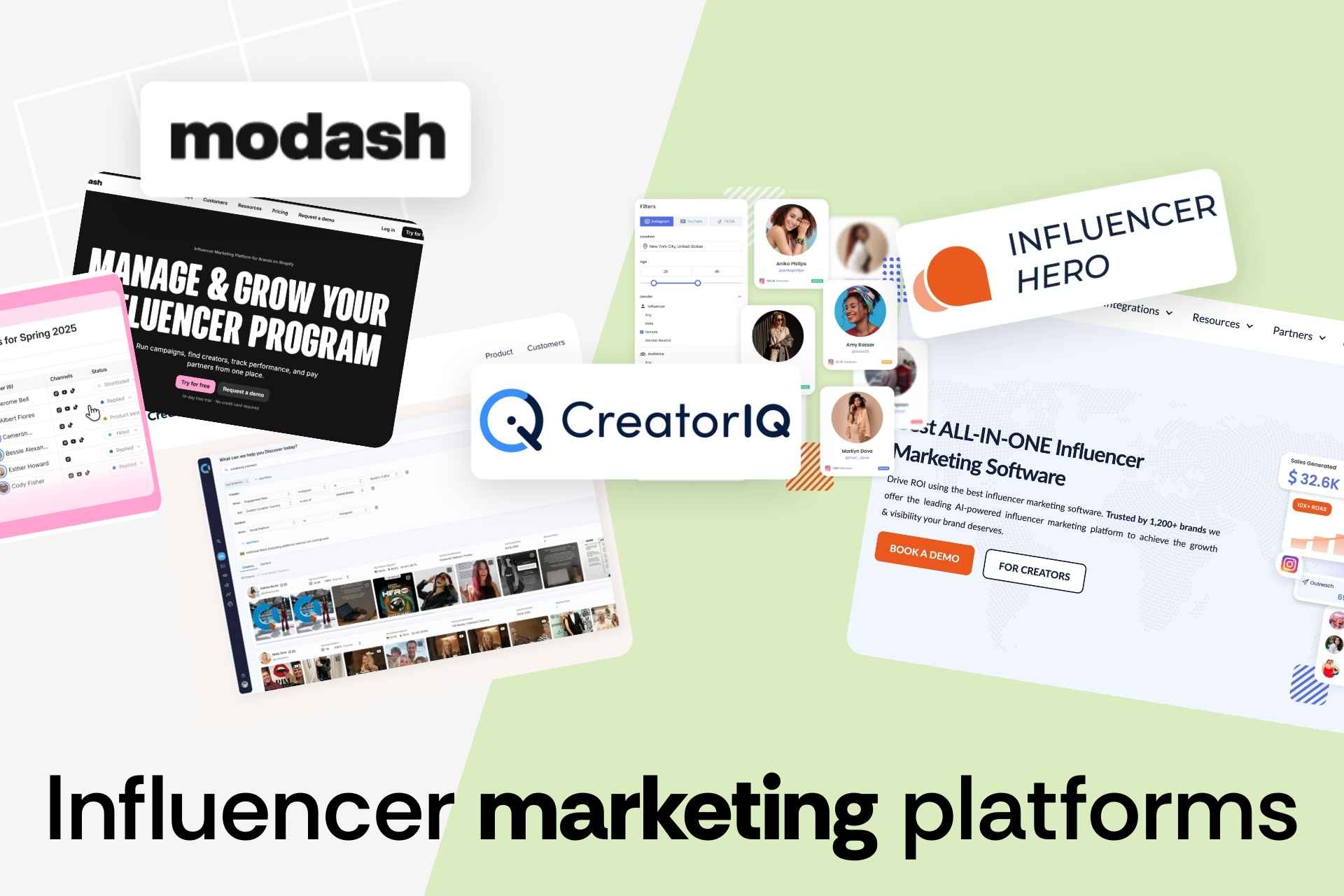
Modash vs CreatorIQ vs Influencer Hero: Pricing, Features, and Platform Comparison
Influencer marketing platforms have become a core part of how e-commerce brands and agencies run creator programs at scale, helping teams centralize discovery, outreach, gifting, affiliate tracking, and performance reporting.
The main difference between Modash, CreatorIQ, and Influencer Hero is that Modash focuses on large-scale public creator discovery, outreach, and Shopify-driven affiliate tracking; CreatorIQ is built more for enterprise teams that need advanced approval workflows, live API-based reporting, and global program management; and Influencer Hero stands out for its campaign-focused CRM, automation, and broader e-commerce flexibility across Shopify, WooCommerce, and custom setups. Together, they cover very different needs depending on whether your priority is creator search, enterprise governance, or scaling influencer operations efficiently across teams and markets.
In this article, we’ll dive deep into Modash vs CreatorIQ vs Influencer Hero, comparing their pricing, features, integrations, and overall fit to help you decide which platform is best for your brand or agency.
Modash vs CreatorIQ vs Influencer Hero
Influencer Discovery and Database
Modash stands out for sheer discovery scale, with access to 350M+ public creator profiles and strong search tools like lookalikes, fake follower checks, AI visual search, and its “Find Your Fans” feature. CreatorIQ is more enterprise-focused in discovery, with deeper filtering around audience quality, past brand mentions, semantic search, and broader platform coverage, while Influencer Hero offers solid multi-platform discovery with Chrome extension imports, lookalikes, and follower-quality analysis across more social channels than Modash.
Suggestion: Choose Modash if your top priority is finding creators quickly at scale, CreatorIQ if you need deeper enterprise-grade filtering, and Influencer Hero if multi-platform coverage and flexible discovery workflows matter most.
Influencer Outreach
Modash gives teams a practical outreach workflow with email templates, bulk outreach, and Gmail/Outlook syncing, making it efficient for lean teams running outbound creator recruitment. CreatorIQ supports bulk personalized outreach too, but its communication tools are built more around structured enterprise workflows, while Influencer Hero leans harder into automation with AI-personalized templates, drip sequences, and reply tracking designed for high-volume outreach.
Suggestion: Go with Modash for straightforward outreach, Influencer Hero for automation-heavy outbound campaigns, and CreatorIQ if your team needs a more structured communication process across multiple stakeholders.
CRM and Campaign Management
This is where the positioning becomes clearer: Modash offers a capable CRM-style workflow for organizing partnerships and campaign stages, but it is more streamlined than deeply operational. CreatorIQ is stronger for enterprise governance, with private creator CRM, tags, notes, questionnaires, approval sheets, and stakeholder-friendly workflows, while Influencer Hero puts campaign execution at the center with boards, bulk actions, automated follow-ups, and visual dashboards built for managing large creator volumes.
Suggestion: Pick Modash for simpler campaign management, CreatorIQ for more approval layers and internal coordination, and Influencer Hero if campaign operations and workflow automation are central to your program.
Reporting and Analytics
CreatorIQ is the most enterprise-ready of the three when it comes to reporting, with customizable live dashboards, API-based data connections, executive-ready views, and shareable links for stakeholders. Modash covers the core metrics well, especially for teams focused on influencer performance, affiliate sales, and Shopify-linked campaign tracking, while Influencer Hero emphasizes ROI visibility, influencer-level performance, exportable reporting, and forecasting.
Suggestion: Choose CreatorIQ if reporting for executives and cross-functional teams is a priority, Modash if you mainly need practical performance and revenue tracking, and Influencer Hero if you want strong ROI reporting with a more operational focus.
Product Gifting
Modash handles gifting well for Shopify-first brands, offering creator product-selection links, auto-tagged orders, discount codes, and gifting tied directly to campaign performance. CreatorIQ also supports gifting through Shopify, but its approach feels more structured for enterprise operations, whereas Influencer Hero is more flexible because it supports Shopify, WooCommerce, and custom e-commerce setups.
Suggestion: Choose Modash if your stack is centered on Shopify, CreatorIQ if gifting needs to fit into a more formal enterprise workflow, and Influencer Hero if you want broader e-commerce compatibility.
UGC Collection
CreatorIQ offers the most complete UGC setup of the three, with auto-collected campaign assets, downloadable content, and stronger support for usage-right requests and repurposed content tracking. Modash can collect and surface campaign content, but rights management has to be handled outside the platform, while Influencer Hero also auto-gathers influencer content and helps teams organize top-performing assets for reuse.
Suggestion: Prioritize CreatorIQ if content rights and governance are important, choose Influencer Hero if you want organized UGC collection for repurposing, and use Modash if simple content capture is enough for your workflow.
Pricing
Pricing is one of the biggest differences in this comparison. Modash has the lowest public entry point, starting at $199/month billed annually, Influencer Hero sits in the middle with plans starting at $649/month and scaling up for larger programs, and CreatorIQ is clearly positioned for enterprise budgets with annual plans starting at $35,000 per year.
Suggestion: Choose Modash if budget sensitivity is a major factor, Influencer Hero if you want a stronger operational platform without jumping straight to enterprise pricing, and CreatorIQ if your team is evaluating enterprise-scale infrastructure, support, and reporting depth.


Modash Overview
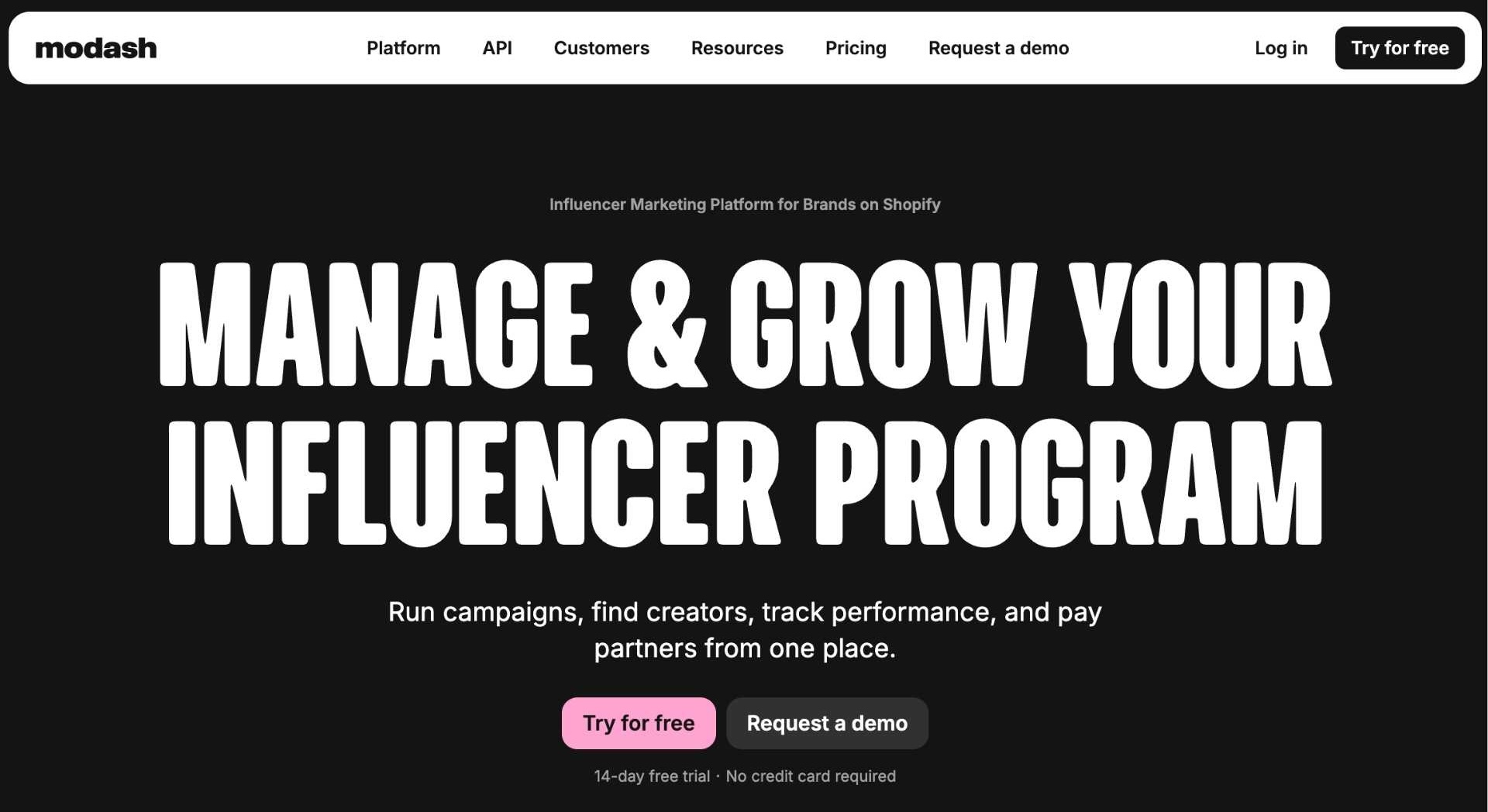
Modash is an influencer marketing platform designed to help brands find creators, manage outreach, track campaign performance, and connect influencer activity to revenue. Its discovery engine works by indexing public creator profiles across major social platforms, which allows marketers to search beyond opt-in marketplaces and filter creators by audience quality, engagement, niche, brand fit, and contact data. This makes Modash particularly relevant for e-commerce teams that want a discovery-first platform with built-in outreach and performance tracking.
Key Features
- Large creator database — Modash gives brands access to 350M+ public creator profiles, making it one of the largest discovery databases in the category.
- Advanced search filters — Users can filter creators by niche, hashtags, captions, audience location, age, gender, follower count, and engagement benchmarks to narrow shortlist quality.
- AI discovery search — Teams can describe the type of creator they want or upload an image to find profiles with similar visual style and content themes.
- Lookalike search — Brands can use high-performing creator profiles as a starting point to uncover similar accounts.
- Find Your Fans — Modash can identify creators who already follow or engage with your brand, helping teams prioritize warmer prospects.
- Bulk outreach and inbox sync — The platform supports email templates, 1:1 and bulk outreach, plus Gmail and Outlook syncing for centralized communication.
- CRM and campaign tracking — Users can organize creators into lists, track statuses such as contacted or confirmed, and monitor content and results from one dashboard.
- Affiliate and sales tracking — Modash supports discount codes, affiliate links, commission tiers, and sales tracking tied to Shopify.
- Gifting workflows — Brands can send creators unique product-selection links and connect gifting activity directly to campaign tracking.
- Creator payments — The platform includes payout workflows for affiliates and influencer partners, which helps keep execution inside one system.
Platform Coverage
Modash primarily supports Instagram, TikTok, and YouTube, with some limited visibility into linked profiles on other channels, but its main discovery, outreach, and tracking workflows are built around those three platforms.
Standout Features
- Public-profile discovery at scale — Unlike tools that depend heavily on opt-in networks, Modash searches public profiles, which gives teams much broader sourcing coverage.
- Find Your Fans — This feature is especially useful for e-commerce brands because it helps surface creators who already know the brand, which can improve outreach efficiency and conversion.
Limitations
- Limited e-commerce integrations — Shopify is Modash’s main native commerce integration, so brands using WooCommerce, Magento, or more complex commerce stacks may find it less flexible than some competitors.
- No built-in UGC rights management — Content can be collected and downloaded, but usage rights and licensing still need to be handled separately in creator contracts.
- No native paid ads or whitelisting workflow — Teams that want to run creator content directly as paid social ads will need additional tools or manual process outside the platform.
- Best suited to core influencer workflows — Modash is strongest in discovery, outreach, tracking, and affiliate execution, but it is less built out for brands that want broader enterprise governance or more layered internal approval infrastructure.
Integrations
- Shopify — lets brands manage gifting, create discount codes and affiliate links, and track attributed sales directly inside Modash.
- Gmail — syncs outreach and replies into the platform so creator communication can be managed in one place.
- Outlook — gives Microsoft-based teams the same centralized inbox workflow for outreach and conversation tracking.
- Stripe — supports creator payouts and payment operations for brands managing commissions and influencer compensation through Modash.
- API access — allows brands to use Modash data in custom internal workflows, dashboards, or creator discovery processes.
Pricing
Modash uses transparent tiered pricing. Public pricing shows Essentials at $199/month and Performance at $499/month, both billed annually, with enterprise pricing available for larger teams..
Reviews
4.9/5.0 (Capterra)
CreatorIQ Overview
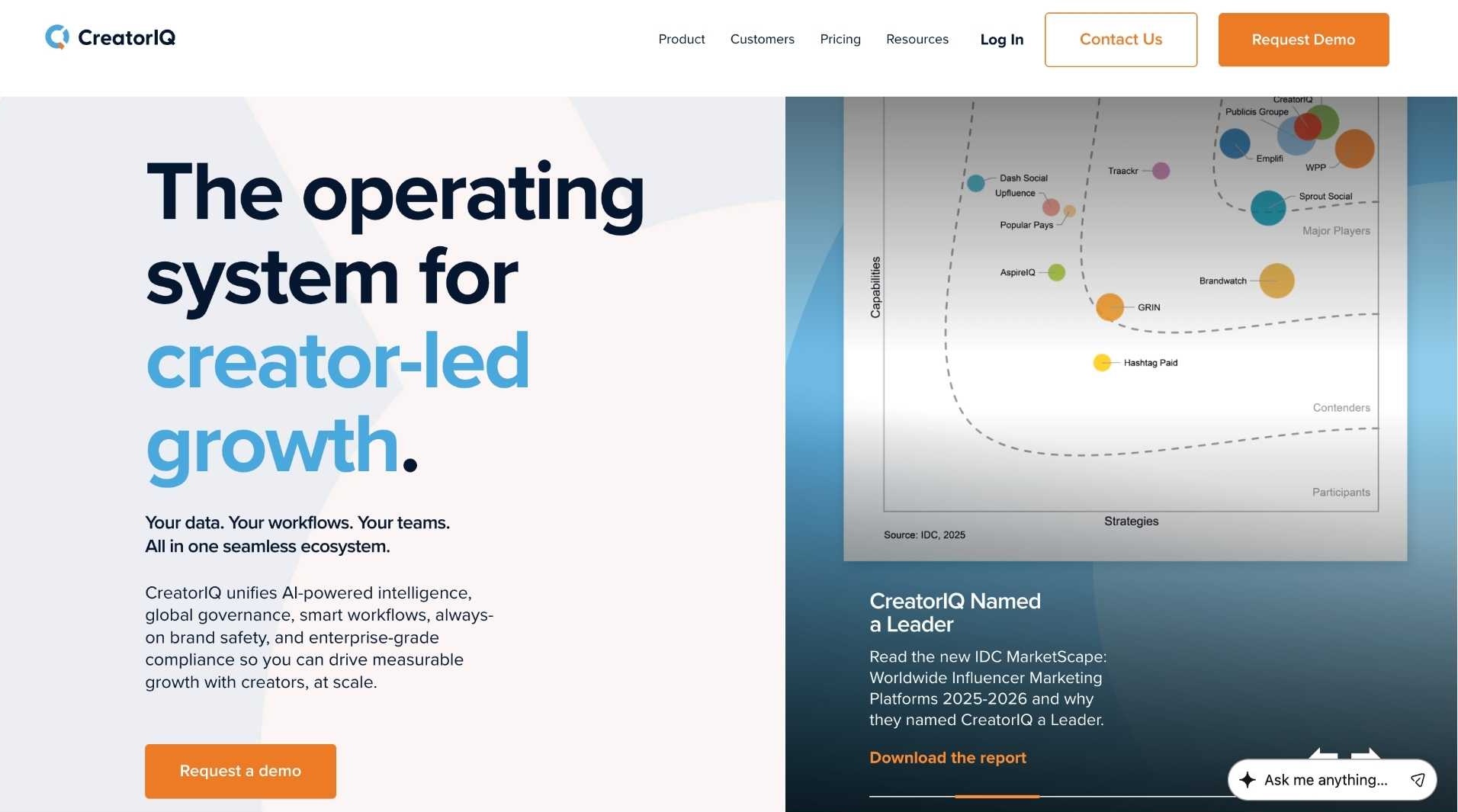
CreatorIQ is an enterprise influencer marketing platform built for brands and agencies that need more than creator discovery alone. It combines creator search, campaign activation, content approvals, reporting, and payment operations in one system, with discovery powered by public creator data, semantic search, audience filters, past brand mentions, and deeper workflow controls than most mid-market tools. CreatorIQ’s own positioning emphasizes AI-driven intelligence, unified workflows, and scale for large global programs.
Key Features
- Public creator discovery — CreatorIQ lets teams search public creators rather than relying only on an opt-in marketplace, which is important for brands that want broader sourcing.
- Advanced filtering — Users can filter by platform, audience demographics, follower thresholds, engagement rate, business status, brand mentions, keywords, hashtags, and content themes.
- Semantic AI search — Teams can search for creator types using natural-language style queries such as niche audience descriptions, not just keywords.
- Private creator CRM — The platform includes a structured CRM for tags, notes, questionnaires, past campaign history, and relationship management.
- Campaign setup and approvals — Brands can build campaigns from templates, assign deliverables by creator, generate briefs, and manage content approval inside the platform.
- Live reporting dashboards — The platform offers customizable dashboards for campaign performance, creator metrics, EMV, reach, impressions, and top content.
- In-platform payments — CreatorIQ supports creator payouts and tax documentation workflows, which helps large teams reduce finance admin.
- Content library and rights support — Campaign content is auto-collected into a downloadable library, with support for requesting usage rights and tracking repurposed content.
- Strategic support — Implementation and customer success support are positioned as part of the value, especially for large organizations rolling out structured creator programs.
Platform Coverage
CreatorIQ supports Instagram, TikTok, YouTube, Facebook, Pinterest, Twitch, and X, with strong global data access and a platform footprint geared toward large cross-market programs.
Standout Features
- Enterprise-grade reporting — CreatorIQ’s customizable live dashboards, API-based data connections, and shareable no-login reporting links make it especially strong for executive visibility and stakeholder management.
- Approval workflows and one-sheets — The platform is unusually strong for multi-stakeholder review, with shareable creator approval sheets and more structured campaign governance than most discovery-led tools.
- Payments and compliance infrastructure — Built-in payment distribution and tax documentation are a meaningful advantage for larger programs paying many creators across campaigns.
Limitations
- High entry price — CreatorIQ is clearly aimed at enterprise budgets, with annual pricing starting far above most self-serve or mid-market tools.
- Annual contracts only — Buyers should expect a longer commitment and a more involved sales process rather than month-to-month flexibility.
- Manual affiliate conversion reporting — While it supports affiliate links and codes, conversion reporting is less automated than some e-commerce-first platforms.
- Discovery is not always the strongest point for every buyer — Some reviewers value CreatorIQ more for campaign operations and reporting than for net-new creator discovery.
Integrations
- Shopify — supports gifting workflows, shipping status visibility, creator product details, and affiliate link or code setup within campaigns.
- Meta — powers real-time campaign and content reporting through direct API integrations, which is part of CreatorIQ’s reporting advantage.
- TikTok — supports live data reporting and helps maintain more reliable, compliant campaign measurement.
- YouTube — feeds reporting dashboards with creator and content performance data for campaign analysis.
- Creator Connect — acts as a branded creator application environment that feeds approved applicants into the CRM, although it is sold as an add-on.
Pricing
CreatorIQ uses annual enterprise pricing rather than self-serve monthly plans. Pricing starts at $35,000/year for Basic, $50,000/year for Standard, $90,000/year for Professional, and $200,000/year for Enterprise.
Reviews
4.4 / 5.0 (Capterra)
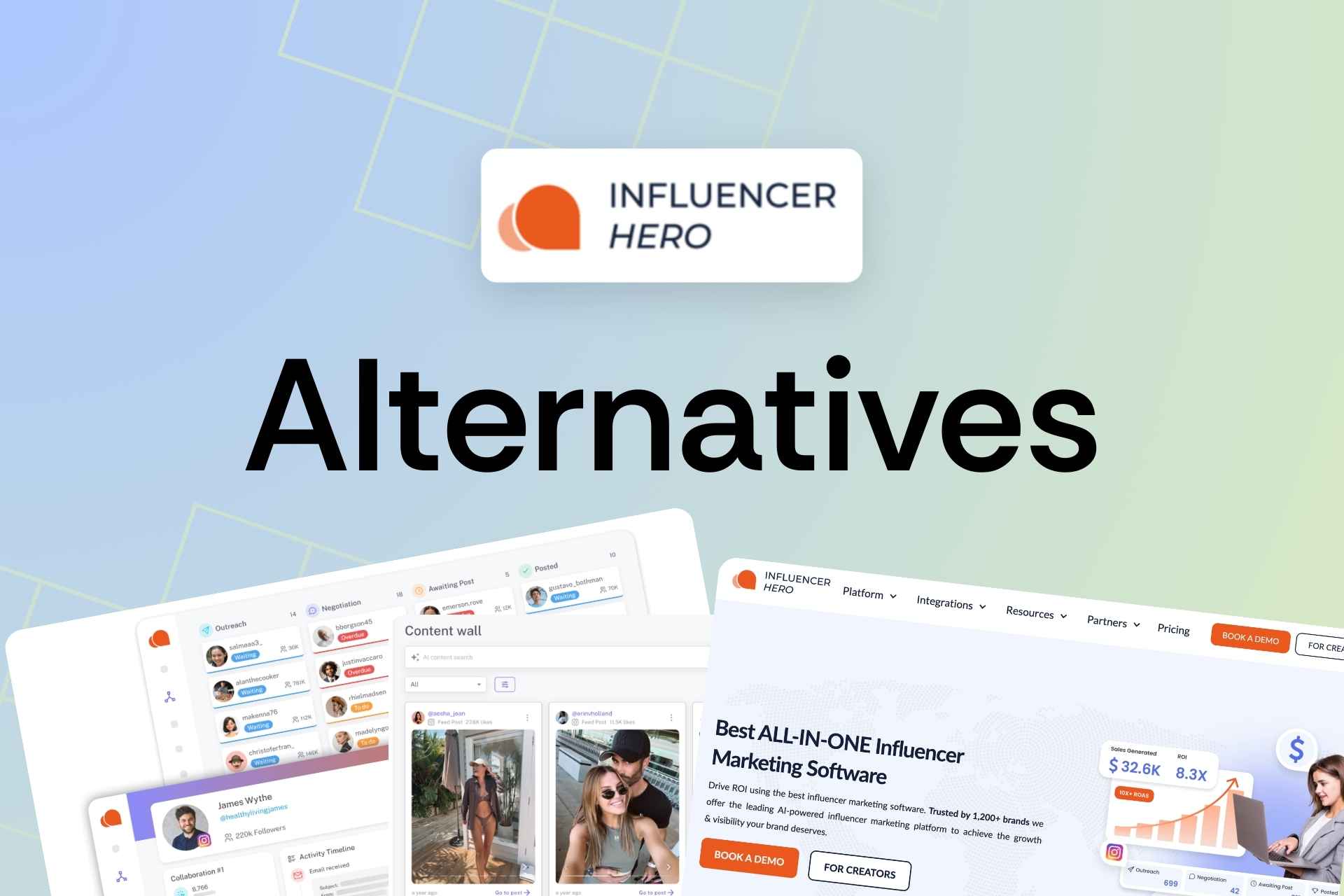
Influencer Hero Overview
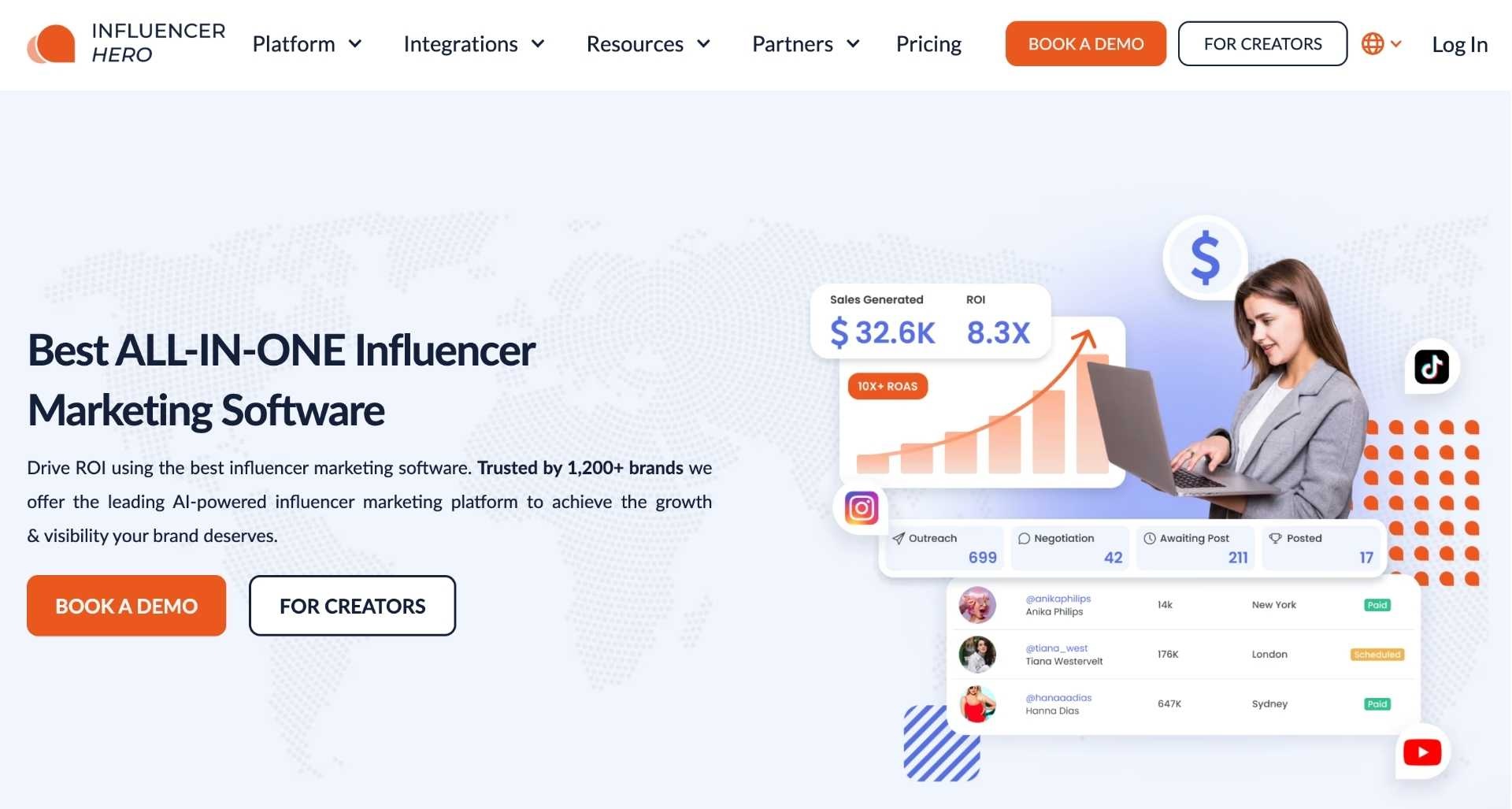
Influencer Hero is an all-in-one influencer marketing platform built to help brands discover creators, automate outreach, manage campaigns, track revenue, collect UGC, and handle affiliate workflows in one place. On the discovery side, it combines searchable creator data, audience and engagement filters, fake follower checks, lookalike suggestions, brand-follower detection, and a Chrome extension that lets teams pull creator insights directly while browsing social profiles. Its biggest strength is not just finding influencers, but turning discovery into a structured CRM and campaign workflow that can scale across large creator programs.
Key Features
- Influencer discovery — Search creators using filters like location, audience demographics, interests, engagement rate, and follower quality to build better-fit shortlists.
- Fake follower detection — Helps teams spot lower-quality audiences before outreach starts.
- Lookalike creator suggestions — Lets brands find creators similar to profiles that already match their niche or past campaign results.
- Brand-follower discovery — Surfaces creators who already follow or engage with your brand, which can improve outreach efficiency.
- Chrome extension — Pulls live creator insights while browsing Instagram, TikTok, or YouTube and lets users import creators directly into campaigns.
- AI-assisted outreach — Supports bulk and one-to-one email outreach with AI-enhanced personalization, drip sequences, and reply tracking.
- CRM and workflow boards — Uses visual boards to track creator status, campaign stages, deliverables, and relationship history in one place.
- Reporting and ROI tracking — Measures campaign performance with dashboards for clicks, sales, ROI, content performance, and influencer-level results.
- Gifting and product seeding — Connects gifting workflows to e-commerce systems so teams can manage send-outs, shipping, and confirmations more easily.
- UGC collection — Automatically gathers influencer posts into a content library for downloading, tagging, and reuse where rights are agreed.
- Affiliate tracking and payouts — Supports custom links, discount codes, commission tracking, and automated payment workflows.
- Application pages and storefronts — Includes branded landing pages for creator applications and storefront functionality for affiliate-driven product promotion.
Platform Coverage
Influencer Hero supports Instagram, TikTok, YouTube, Facebook, Pinterest, Snapchat, X, and Twitch, giving it broader social coverage than many influencer platforms focused only on the big three channels.
Standout Features
- Campaign-centric CRM automation — Influencer Hero is especially strong at turning influencer management into a structured workflow with boards, bulk actions, automated follow-ups, and stage-based organization, which is a major advantage for teams managing high creator volume.
- Automated personalized outreach — The combination of AI-personalized email flows, drip sequences, and reply tracking is one of the clearest reasons buyers choose the platform when they want to scale outbound creator recruitment.
- AI-Powered UGC search — Find influencer content using keywords, visuals, captions, or campaign context to identify top-performing UGC and streamline content reuse.
- Bulk tools for scalable operations — Execute high-volume tasks like outreach, follow-ups, product seeding, and campaign updates efficiently with batching and bulk actions.
Limitations
- No free trial: Influencer Hero does not currently offer a free trial, which may make initial evaluation more difficult.
- Learning curve: The wide feature set can feel dense at first, so new users may need some onboarding to get fully set up.
Integrations
- Shopify — Sync product catalogs, generate affiliate links and discount codes, manage gifting, and track creator-driven revenue in real time.
- WooCommerce — Connect store data to influencer campaigns so you can track orders, revenue, and discount-code performance alongside creator activity.
- Gmail — Centralize drip campaigns, outreach emails, and creator replies inside the platform rather than managing them across separate inboxes.
- Slack — Send real-time alerts about creator applications, approvals, sales, and campaign milestones to internal teams.
- Zapier — Push influencer or campaign data into tools like Google Sheets, Notion, Airtable, and Slack to build custom internal workflows without manual exports.
- GoAffPro — Manage affiliate programs, track commissions, and handle payouts tied to influencer performance.
Pricing
Influencer Hero offers flexible pricing based on outreach volume:
- Standard: $649/month (up to 1,000 outreaches/month)
- Pro: $1,049/month (up to 5,000 outreaches/month)
- Business: $2,490/month (up to 10,000 outreaches/month)
- Custom / Agency: Custom pricing available
All plans include core features and allow unlimited creators in the CRM.
Reviews
5.0/5.0 (Capterra)
Final Thoughts
Modash, CreatorIQ, and Influencer Hero each solve a different part of the influencer marketing workflow. Modash stands out for large-scale creator discovery, ease of use, and Shopify-focused affiliate and gifting workflows; CreatorIQ is better suited to enterprise teams that need deeper governance, reporting, approvals, and global program management; and Influencer Hero offers a more balanced mix of discovery, outreach automation, CRM, gifting, affiliate tracking, and campaign execution flexibility.
The right choice depends on how your team runs influencer marketing today and where you need the most support. Teams focused on creator sourcing and fast execution may lean toward Modash, larger organizations with complex internal processes may prefer CreatorIQ, and brands or agencies looking for a more operational all-in-one platform may find Influencer Hero the best fit. Suggestion: prioritize the platform that best matches your workflow requirements, reporting needs, and e-commerce setup rather than choosing based on pricing alone.