

Onalytica Alternatives: Best Influencer Marketing Platforms
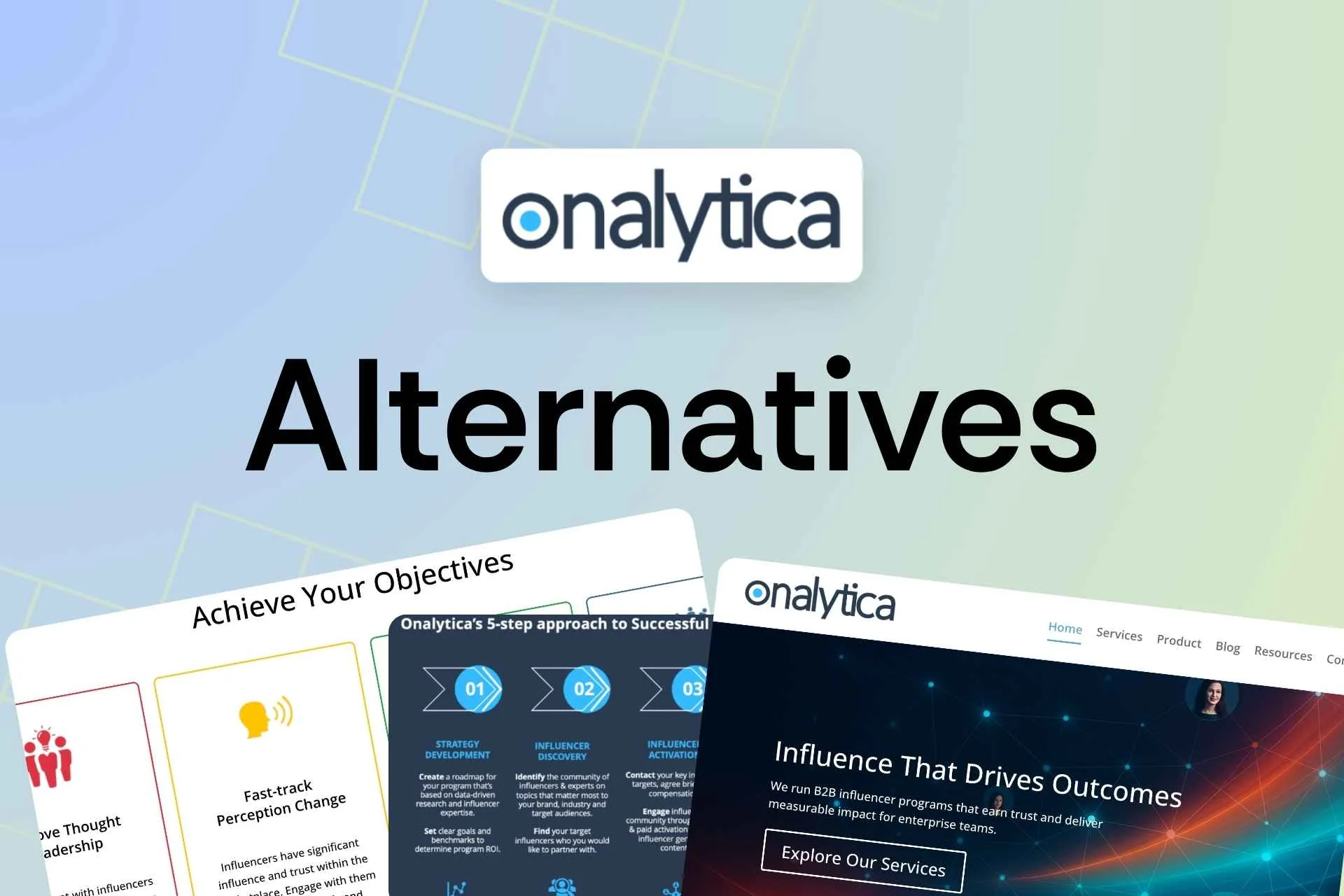
Two very different jobs hide behind the phrase "influencer marketing software." One is working out which analysts, executives and subject-matter experts actually move opinion in a category, then building relationships with them over years. The other is recruiting creators, shipping them product, tracking what they post and proving the sales that followed. Onalytica, founded in 2009 and built around topical authority rather than follower count, belongs firmly to the first job: it indexes more than 700,000 vetted voices across X, LinkedIn, blogs and the main social networks, scores them by how much weight they carry on a specific subject, maps who they talk to, and gives communications teams somewhere to manage those relationships alongside an internal employee advocacy program.
That specialization is also what sends buyers looking for Onalytica alternatives. Nothing is published about cost, contracts are annual and quoted after a call, and the price point assumes an enterprise communications budget. TikTok is absent, product seeding and discount codes are not part of the model, and no mention is ever tied back to an order. Teams that need those things end up evaluating a different class of tool entirely. Of the ten covered here, Influencer Hero, GRIN, Modash, Heepsy and Afluencer all print what they charge and can be bought without opening a procurement file; SARAL publishes an annual figure but still sells the year in one piece; Traackr, Kolsquare and Upfluence keep the familiar routine in which a number only appears after a scoping call; and Influencity sits between the two habits, assembling its price in a calculator from seats and usage.
Criteria for Suggesting Platform Alternatives
Core Features
Evaluation of each platform’s essential capabilities, including influencer discovery, outreach, CRM, campaign reporting, gifting, UGC and content collection, affiliate tracking and payments, storefronts, application pages, and AI-powered tools.
Supported Social Media Platforms
Assessment of how well each platform integrates with major social networks such as Instagram, YouTube, TikTok, Facebook, Pinterest, and many more
Pricing & Contract Flexibility
Comparison of pricing models, subscription costs, and contract requirements to help brands choose solutions that match their budget and scalability needs.
Standout & Differentiating Features
Highlighting unique or innovative functionalities that set each platform apart, such as real-time tracking dashboards, creator benchmarking, TikTok email discovery, or advanced automation tools.
Customer Reviews & User Satisfaction
Analysis of verified user feedback from credible platforms like G2, TrustRadius, Capterra, focusing on usability, reliability, value for money, customer support, and real-world performance.
Onalytica Overview

Onalytica is an influencer relationship management platform aimed at B2B and enterprise communications teams rather than consumer creator programs. It identifies experts, analysts, journalists and internal employees by topical authority — how much credibility a person holds on one specific subject — then maps their networks, follows what they publish and reports the share of voice a brand earns in that conversation. Managed services and a B2B influencer marketplace sit alongside the software for organizations that would rather have the program run for them.
Key Features
- Topical Authority Scoring: influence is measured against a peer community on a named subject instead of being read off follower counts.
- Curated Expert Database: over 700,000 vetted global profiles, assembled from large-scale analysis of public posts and long-form content.
- Network Mapping: key-connection views showing who an influencer engages with and who engages back, so second-degree routes into a community become visible.
- Relationship Management: customizable dashboards, a real-time activity feed, saved influencer profiles and topic alerts that flag moments worth responding to.
- Employee Advocacy: internal subject-matter experts are audited, trained, connected to relevant external voices and measured as a channel of their own.
- Analytics and Reporting: twelve months of historical data covering volume, reach, engagement, amplification and competitive share of voice.
Platform Coverage
X, LinkedIn, Instagram, YouTube, Facebook and blogs, with LinkedIn profile data adding professional and demographic context. TikTok is not supported.
Pricing
- Quote Only: no plans, tiers or list prices are published anywhere; scope is agreed after a discovery call.
- Priced On Seats and Tracked Influencers: the subscription moves with the number of users and the size of the influencer set being monitored.
- Annual Terms: commitments generally run for a year and include a dedicated customer success manager, with a trial or guided demo arranged on request. A closer look at what buyers report paying sits in our Onalytica pricing breakdown.
Reviews
4.4/5.0 (Capterra), drawn from a small published review base of under ten ratings across the major software directories.
Standout Features
- Authority Beats Audience Size: ranking by subject-matter credibility surfaces people no follower threshold would ever return.
- Internal and External Voices Together: employees and outside experts are discovered, activated and measured within a single framework.
- Category Share of Voice: benchmarking answers who owns a topic conversation, not merely how one campaign performed.
Limitations (Why Users Look For Onalytica Alternatives)
Nothing about cost is published
There are no tiers, no starting price and no self-serve checkout. Every evaluation begins with a discovery call and ends in a scoped annual quote, which makes budgeting awkward early on and rules the platform out of any shortlist that has to be priced the same week it is drawn up.
The price point assumes an enterprise buyer
Cost is consistently described by users as high relative to the category, and the seat-plus-tracked-influencer model rewards large programs. A small marketing team or a startup running its first creator campaigns will find the entry point difficult to justify before the program has proved anything.
Built for thought leadership, not consumer creator campaigns
The whole design assumes the goal is credibility inside a professional community. There is no TikTok coverage, no product seeding workflow and no creator storefront, so a D2C brand trying to get fifty micro-influencers unboxing a product is working against the grain of the tool rather than with it.
No store integration or revenue attribution
Discount codes, affiliate links, commission tracking and ecommerce connections are simply not part of the offering. Reporting stops at reach, engagement, amplification and share of voice, which leaves the link between an expert's post and an actual order to be reconstructed elsewhere.
Setup and reporting take real time
Reviewers repeatedly mention a learning curve, an interface that takes training to navigate confidently, and reporting outputs that are dense before they are configured. Creator communication also happens over email outside the platform rather than in an in-app inbox, so day-to-day coordination stays manual.
10 Best Influencer Marketing Platform Alternatives:
| TOOL | REVIEWS | BEST FOR | TRIAL INFO | PRICING | ||
|---|---|---|---|---|---|---|
1 |

|
⭐ | Influencer CRM & automation | Book Demo | Pricing | Website |
2 |

|
⭐ | DTC creator management | Book Demo | Pricing | Website |
3 |

|
⭐ | Influencer marketplace campaigns | Book Demo | Pricing | Website |
4 |

|
⭐ | Campaign management | Book Demo | Pricing | Website |
5 |

|
⭐ | Influencer discovery | Book Demo | Pricing | Website |
6 |

|
⭐ | Influencer discovery | Book Demo | Pricing | Website |
7 |

|
⭐ | Influencer outreach | Book Demo | Pricing | Website |
8 |

|
⭐ | Enterprise influencer analytics | Book Demo | Pricing | Website |
9 |

|
⭐ | Influencer discovery | Book Demo | Pricing | Website |
10 |

|
⭐ | Data-driven influencer discovery & campaign analytics | Book Demo | Pricing | Website |
Influencer Hero

Influencer Hero carries a creator program from first search through to the payout and the sales report, with the brand's storefront wired into the same system. For anyone arriving from a quote-only contract, two things stand out immediately. Every tier is published on the site, so a program can be sized, approved and budgeted before a single call is booked — and that is a real commercial contrast rather than a hint that the product is small, since the same platform runs enterprise programs and multi-brand agency accounts. The second is reach: eight networks, TikTok included, which is where the consumer half of a modern marketing brief now lives.
Key Features
- Creator Sourcing: search narrowed by location, demographics, interests, engagement and follower quality, with fake-follower detection, lookalike suggestions and brand-follower detection layered on top.
- Goal-Led Shortlisting: state the campaign objective and the AI assembles the candidate list rather than a coordinator building it by hand.
- Sequenced Contact: email at bulk or one-to-one, AI-personalized templates, drip sequences and reply tracking in one flow.
- Partner Boards: a relationship view per creator holding the conversation history, the campaign stage and the outstanding deliverables.
- Product Dispatch: seeding orders fulfilled automatically through Shopify and WooCommerce with shipping and delivery status, and script support for custom-built stores.
- Commission and Settlement: trackable links, discount codes, conversion and commission tracking, and creator payouts run automatically.
- Content Archive: creator posts pulled in on their own, tagged by how they performed, searchable with AI and downloadable for paid reuse.
- Inbound Routes: branded creator storefronts that generate affiliate sales, plus application pages that capture creators approaching the brand.
- Connected Stack: DocuSign, GoAffPro, Klaviyo, Slack, Zapier and hundreds of other connections, alongside API access to millions of creator profiles.
Platform Coverage
Instagram, TikTok, YouTube, Facebook, Pinterest, Snapchat, X and Twitch.
Pricing
- Standard: $649/month for up to 1,000 creators or contacts.
- Pro: $1,049/month for up to 5,000 creators or contacts.
- Business: $2,490/month for up to 10,000 creators or contacts.
- Custom and Agency: scope agreed individually for larger programs and agencies holding several brands.
Reviews
5.0/5.0 (Capterra)
Standout Features
- Content and Revenue On One Record: what a partner posted sits beside what that partner sold, so creative calls are argued from numbers instead of instinct.
- Seeding That Survives Volume: bulk dispatch and automated follow-up let one manager ship to hundreds of creators without threads going cold.
- A Single Pipeline For Both Directions: inbound applications and outbound discovery write into the same database rather than two lists nobody reconciles.
Onalytica vs Influencer Hero
The honest starting point is that these two were built for different departments. Scoring how much weight a named person carries on a narrow subject, drawing the map of who that person influences in turn, and treating internal experts as a measurable channel — none of that has a counterpart in Influencer Hero, and a communications team whose objective is standing with analysts and industry commentators is buying something specific when it buys Onalytica.
What changes the calculation is the brief the marketer has now been handed. Consumer creator programs are judged on whether the right audience saw the content and whether anything sold, and Influencer Hero is assembled around exactly that chain: eight networks, filtering that interrogates audience quality rather than topic authority, seeding through the connected store, codes and commissions traced back to individual partners, payouts settled and content filed against the same record. The provenance question resolves differently too — this is behavioral, campaign-level data that proves conversion rather than editorial credibility, which is a fair trade only if conversion is what the business is now asking about. The commercial model inverts as well: $649 a month listed openly, against a scoped annual quote that does not exist until after a call. There is one caveat worth knowing before a trial gets penciled in, which is that no free trial is offered.
GRIN
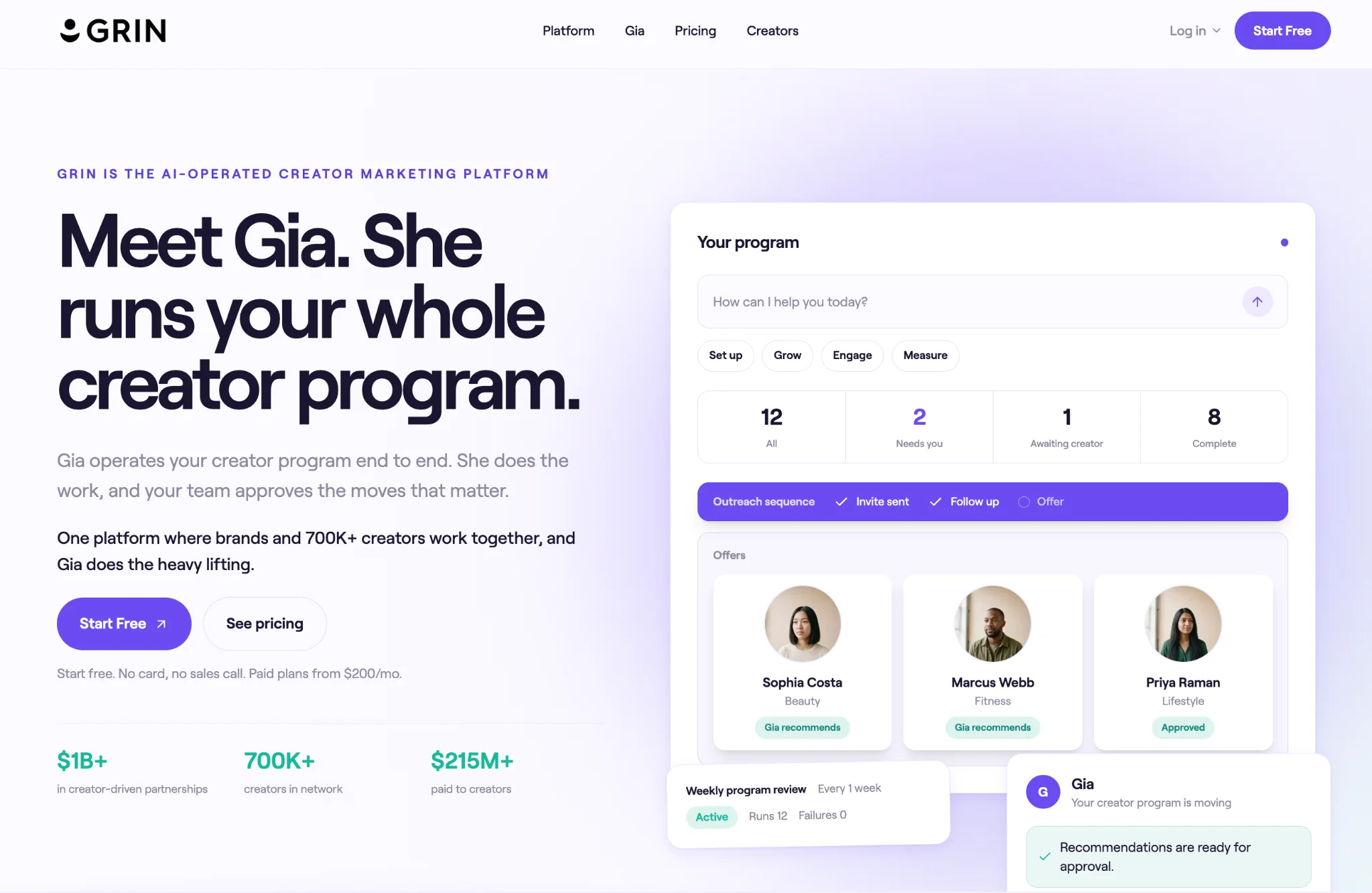
GRIN manages creator relationships for consumer brands whose influencer work never really stops. Buying it looks nothing like an enterprise procurement cycle: plans are metered in credits, the figures are on the page, and the free tier has no expiry date attached to it, so a program is sized by usage rather than negotiated. An AI agent carries out discovery, outreach drafting and routine reporting under human sign-off, on the premise that partnerships last years and administrative load is what usually breaks them.
Key Features
- Two Sourcing Routes: AI matching across GRIN's own creator network, backed by web-wide search and branded recruitment landing pages.
- Partner Files: contracts, shipments, messages and published content all stored against the individual creator.
- Fulfillment Sync: Shopify, WooCommerce and Magento connections issue codes and fulfill creator orders without manual handling.
- Sales Attribution: creator-driven revenue tracked and paid out, with the platform taking no percentage of it.
- Reporting Cadence: reports built to the team's own specification, plus recurring program reviews generated automatically.
Platform Coverage
Instagram, TikTok and YouTube, supported by ecommerce, email and communication integrations.
Pricing
- Free: $0/month, 200 monthly credits, no card required to start.
- Starter: $200/month with 2,000 credits.
- Growth: $500/month with 7,500 credits and a ceiling of 100 active creators.
- Scale: $1,000/month with 20,000 credits and a ceiling of 250 active creators.
- Complete: $1,500/month with 30,000 credits and a ceiling of 500 active creators.
Reviews
4.5/5.0 (G2)
Standout Features
- Spend Cannot Overrun: the brand sets the credit ceiling and is never billed past it, which is unusual in usage-priced software.
- A Free Tier With No Countdown: live campaigns can run without a card and without a date when the paywall arrives.
- An Agent That Acts: discovery, outreach and reporting work is carried out rather than merely recommended.
Onalytica vs GRIN
Nothing about GRIN is aimed at the buyer Onalytica was designed for, and it is more useful to say so plainly than to hunt for equivalence. Onalytica watches a professional conversation and reports where a brand stands inside it. GRIN watches a roster of consumer creators and reports what those creators received, posted and sold. Share of voice on a technical subject and units moved through a discount code are not two readings of the same instrument.
The purchase will feel unfamiliar as well. GRIN opens at zero with 200 monthly credits and no card, steps up to $200 a month, and can be abandoned without involving procurement — a very different governance conversation from an annual agreement with a named success manager attached. What is not on offer is anything resembling expert identification, network mapping or employee advocacy measurement, and the reporting assumes a store at the end of the journey. A vendor whose sale closes through a salesperson rather than a checkout will find the strongest half of GRIN inert, no matter how well the CRM side is built.
Afluencer
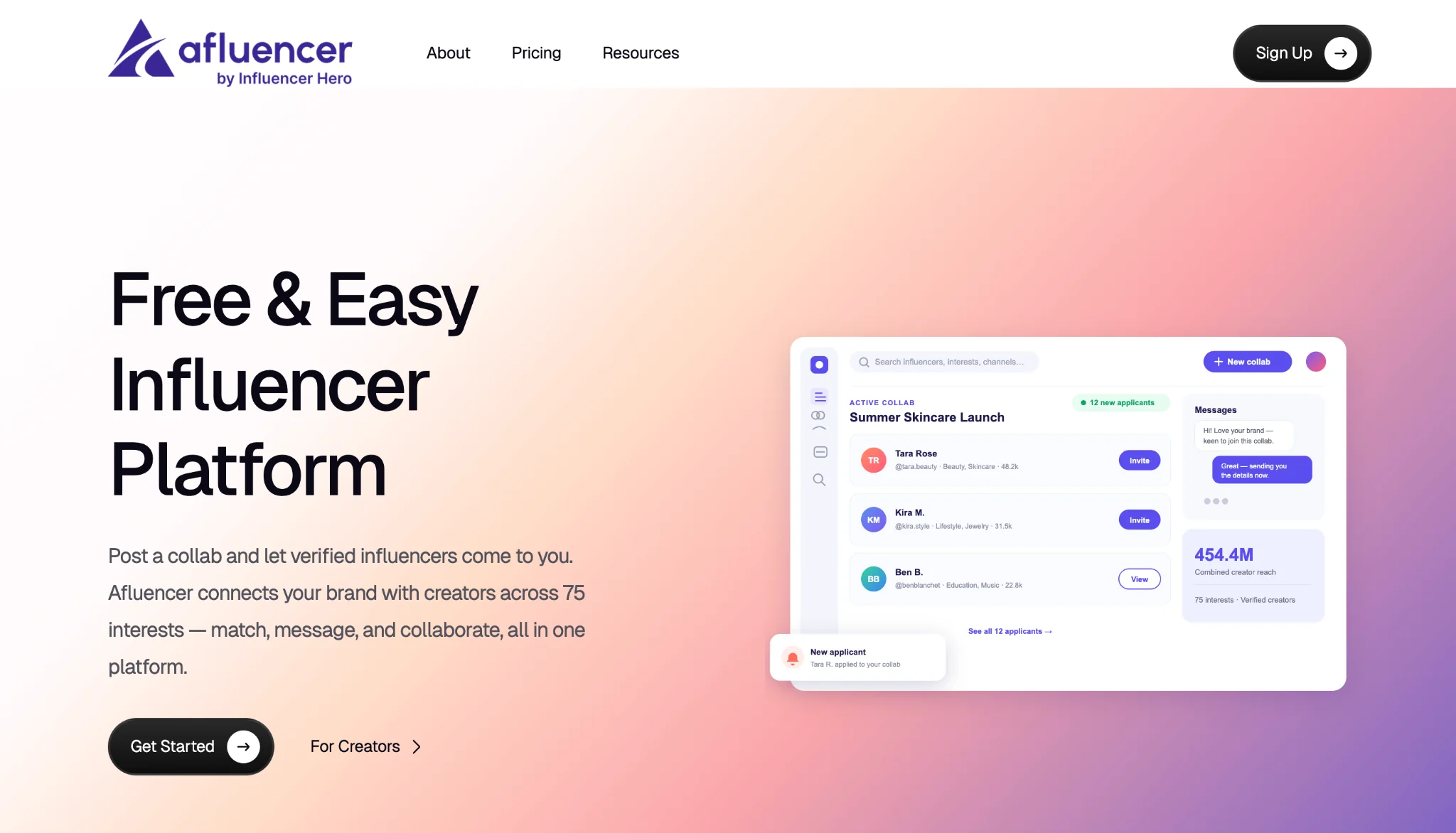
Afluencer reverses who does the approaching. A brand posts a collaboration, verified creators apply to it, and the first exchange happens with somebody who has already read the brief and decided they want in. It carries the lowest entry price of anything here and a free tier that genuinely functions, which is why it tends to be where teams go to find out whether creator marketing works for them before any platform contract is drafted.
Key Features
- Published Briefs: campaign details posted to the marketplace, with applications arriving from creators who opted in.
- Vetted Directory: searchable verified profiles narrowed by platform, follower count, niche and audience demographics.
- Monthly Invites: a credit allowance for approaching named creators directly, scaling with the plan.
- In-Dashboard Deals: messaging, product send-outs and creator payments all handled without leaving the platform.
- Connection Library: over forty integrations, Shopify, Klaviyo, Amazon, Slack and DocuSign among them.
Platform Coverage
Instagram, TikTok, YouTube and X.
Pricing
- Free: $0/month to publish collabs and take creator applications.
- Marketplace: $49/month, 60 invitation credits and access to premium filters.
- Standard: $649/month covering 1,000 reach-outs, product send-outs and creator payments.
- Pro: $1,049/month covering 5,000 reach-outs, three or more seats and a dedicated account manager.
Reviews
4.6/5.0 (G2)
Standout Features
- Warm By Default: applicants have read the brief and put their hand up, which lifts reply rates well past cold outreach.
- A First Collab At Zero Cost: a partnership can be completed before the brand has paid anything.
- An On-Ramp Nobody Else Offers: $49 a month for proactive invitations has no equivalent elsewhere in the category.
Onalytica vs Afluencer
Afluencer inverts the direction of travel. Onalytica exists to reach people who would never answer an open call — the analyst whose note shapes a procurement decision, the executive whose Monday post frames a week of argument — and to give a communications team the apparatus for cultivating them deliberately. Afluencer publishes a brief and lets consumer creators volunteer for it. That is a legitimate mechanism and an entirely different one.
For the buyer coming from an enterprise contract, the appeal is that the cost of finding out is close to nothing: a first collaboration runs on the free tier, and proactive invitations start at $49 a month, roughly what a scoped platform costs for an afternoon. What it will not do is survive the scrutiny that follows a serious budget line. The pool is limited to creators who opted in, audience data is thinner than a dedicated analytics tool provides, and nobody in that marketplace is going to be the fifteenth-most-cited voice in enterprise security. Treat it as an inexpensive way to learn whether the consumer channel works at all, not as the system a funded program eventually runs on.
Influencity

Influencity puts influencer marketing, social media management and social listening on one subscription, sold to brands, ecommerce teams and agencies carrying several clients at once. Its pitch is depth plus consolidation: one of the larger creator indexes in circulation, audience filtering that goes several layers beyond follower count, and campaign workflow attached to the same underlying data rather than bolted alongside it.
Key Features
- Index Depth: hundreds of millions of profiles queried through more than twenty audience, authenticity and performance filters.
- Lists That Persist: segmented creator groups that survive from one campaign to the next instead of being rebuilt.
- One Continuous Sequence: briefing, casting, negotiation, content validation and reporting handled as connected steps.
- Allowanced Sequences: automated email outreach with a monthly send volume set by the plan.
- Cross-Border Settlement: creator payments processed inside the platform in multiple currencies across more than 180 countries.
Platform Coverage
Instagram, TikTok, YouTube and Twitch.
Pricing
- Basic: the entry configuration, covering discovery and the core campaign toolset.
- Professional: more analytical depth and larger monthly allowances as a team grows.
- Business: raised volume ceilings and seat counts sized for agency workloads.
- Custom: enterprise scope agreed individually, with usage caps lifted.
- How It Is Priced: tiers are configured in an in-app calculator from seats and usage rather than published as fixed figures, with a seven-day free trial and a discount for paying annually.
Reviews
4.5/5.0 (G2)
Standout Features
- Beyond Engagement Rate: audience composition and authenticity data are the substance of the profile, not a footnote to it.
- Three Subscriptions Collapsed Into One: influencer work, scheduling, inbox and listening share a single license.
- Approvals Built In: content validation is a native campaign step rather than an email thread, which starts to matter as volume climbs.
Onalytica vs Influencity
Both companies sell on data, and it is worth being precise about which data. Onalytica's asset is a judgment already made: 700,000 profiles admitted because they were assessed as carrying authority on defined subjects, with everyone else deliberately excluded. Influencity's asset is scale plus dissection — hundreds of millions of profiles broken down by country, age, gender split and authenticity before any money is committed. For a consumer campaign, the second question is the one that determines whether the spend lands, and Onalytica has no answer to it because it was never asked for one.
Commercially, Influencity sits between the two worlds this reader knows. There is no fixed price list, but there is no sales gate either: seats and usage go into a calculator, a seven-day trial is available and annual billing carries a discount. That means less ceremony and less hand-holding at the same time. Onalytica wraps managed services around the software for teams without an in-house operator, whereas Influencity assumes somebody internally owns the setup of a suite that also carries scheduling, an inbox and listening. Coverage runs to four networks, payouts reach more than 180 countries, and the native approval step is the piece a governance-minded team will appreciate first.
Upfluence
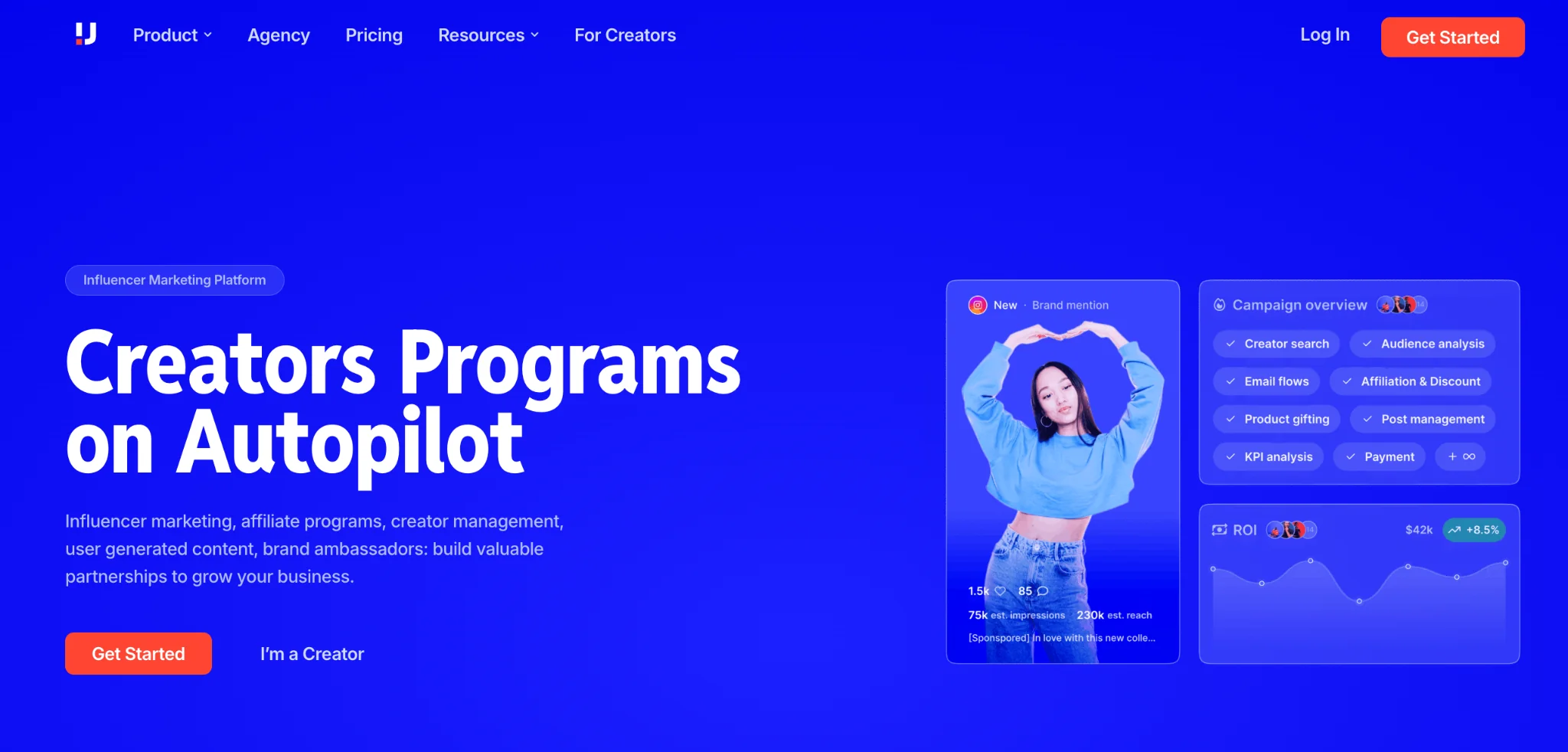
Upfluence publishes no figures at all: cost is scoped into modular packages through a consultation call, the minimum term runs twelve months, and even the trial only opens once that conversation has happened — a commercial routine an Onalytica buyer will recognize on sight. What the contract buys is unusual, though, because the platform reads connected store and email data to surface existing customers who already carry an audience, turning the buyer list itself into a recruitment pool. An AI copilot handles the shortlisting, the campaign recommendations and the outreach drafts, across more networks than most tools gathered here.
Key Features
- Fourteen Million Profiles: a creator index searchable across networks and audience criteria.
- Copilot Assistance: shortlists produced, campaign approaches suggested and outreach messages drafted by AI.
- Buyers With An Audience: connected ecommerce and email data surfaces existing customers who already have followings.
- Order-Level Attribution: creator sales and ROI traced through Shopify, WooCommerce, Magento, BigCommerce and Amazon.
- Verified Payouts: international creator payments with tax verification handled inside the platform.
Platform Coverage
Instagram, TikTok, YouTube, Twitch, Pinterest and X.
Pricing
- Three Modular Packages: unpriced bundles covering discovery, program scaling and automated program management.
- Flat Fee, No Rev Share: cost is set by modules, seats and volume, with no percentage taken from tracked creator sales.
- Quote Only: figures are never published, the minimum term is twelve months, and a trial is opened only after a consultation call.
Reviews
4.6/5.0 (G2)
Standout Features
- Advocates Who Already Bought: partners recruited from the customer base use the product before they promote it, and the content shows it.
- Six Networks: Twitch, Pinterest and X coverage opens categories the standard three cannot serve.
- Growth Without Fee Creep: scaling the affiliate channel does not push the platform fee up behind it.
Onalytica vs Upfluence
Of everything on this list, Upfluence's sales process will feel the most familiar: no published figures, three modular packages, a twelve-month minimum, and a trial that only opens after a consultation. The resemblance ends when the demo starts. Upfluence's entire logic is to attach revenue to creator activity — store integrations across five commerce systems, creator-level ROI, tax-verified international payouts — where Onalytica's logic is to explain who holds standing in a conversation and how a brand's position within it is shifting.
The customer-identification feature makes the divide concrete. Upfluence reads connected order and email data for existing buyers who happen to have an audience, on the reasoning that the most convincing partner is somebody already paying for the product. That reasoning requires a store. A vendor closing six-figure contracts through a sales team has no equivalent signal to mine, and the fourteen-million-profile index behind the feature is a consumer index whichever way it is filtered. Two things do carry across the gap: the flat fee means a growing affiliate channel never inflates the platform bill, and the Twitch, Pinterest and X coverage reaches communities the usual three networks leave out.


Modash
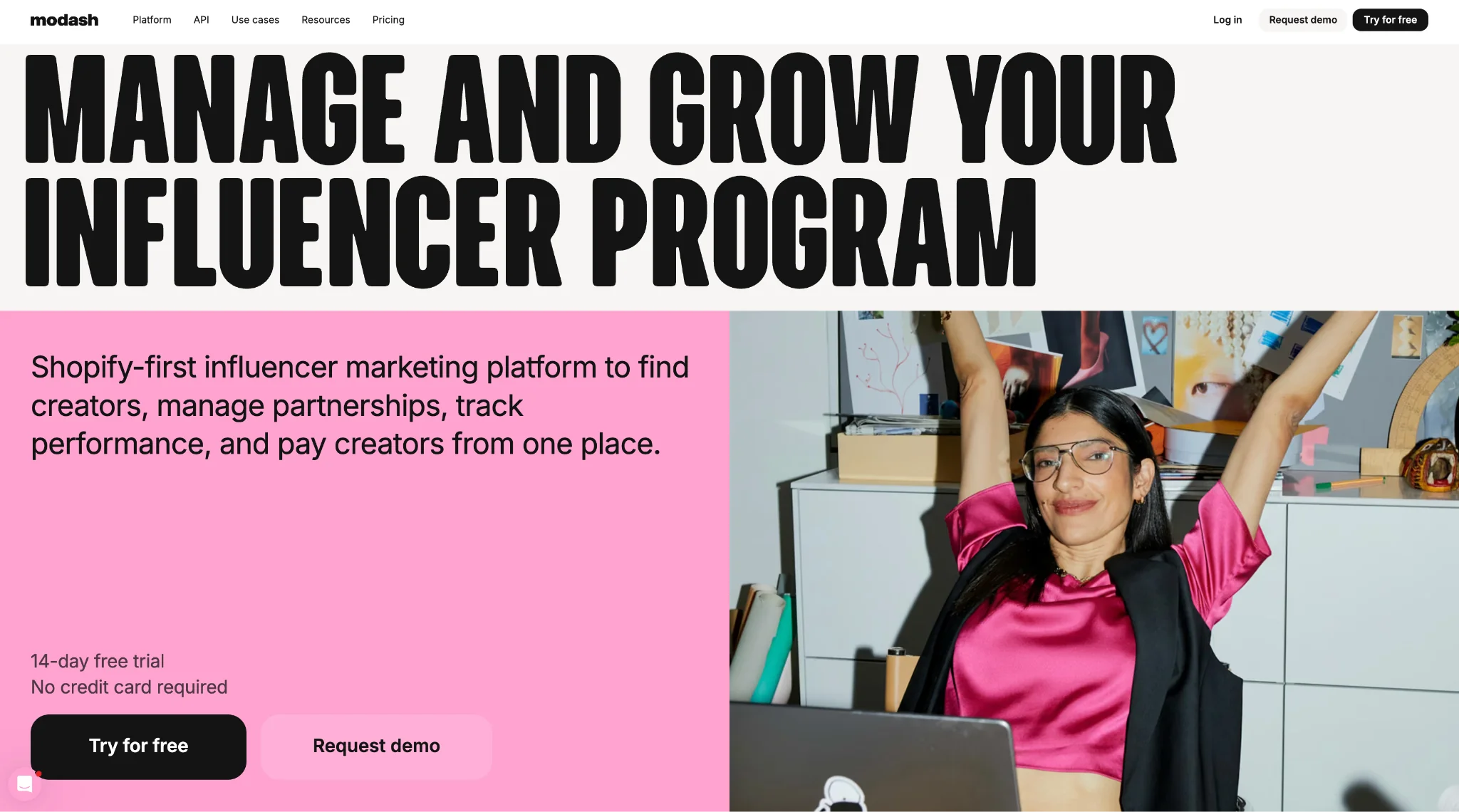
Modash indexes every public profile above 1,000 followers on Instagram, TikTok and YouTube, and collects campaign content without asking the creator to opt in, register or connect an account — a data claim specific enough to be checked rather than taken on trust, and one that closes the usual gap between who exists and who the software can actually see. Everything else is built on that base: discovery, vetting, outreach, post tracking and creator payment, assembled for in-house ecommerce teams that would rather run the work themselves than have it run for them.
Key Features
- Everything Above The Threshold: AI-assisted search over more than 350 million profiles with audience analytics attached to each one.
- Pre-Commitment Checks: demographic breakdowns and fake-follower detection available before anything is agreed.
- A CRM That Stays Light: contacts, notes, collaboration history and performance held per creator without a configuration project.
- Mail From Your Own Inbox: outreach sent through Gmail or Outlook with the campaign context carried alongside it.
- Reporting Without Cooperation: stories, posts and campaign metrics gathered automatically, with no creator participation needed.
Platform Coverage
Instagram, TikTok and YouTube, covering every public profile above 1,000 followers on each.
Pricing
- Essentials: $199/month, two seats, 300 opened profiles, 150 email unlocks and 100 tracked creators.
- Performance: $499/month, five seats, 800 opened profiles, 400 email unlocks and 250 tracked creators.
- Enterprise: from $14,700/year, with limits negotiated and custom tracking domains included.
- Terms: a fourteen-day free trial, a discount for annual billing, and no long-term contract to sign.
Reviews
4.9/5.0 (G2)
Standout Features
- Nothing Held Back By Tier: the same toolset ships on every plan, so choosing one is purely a volume calculation.
- Stories Captured Automatically: the deliverable most often lost to expiry is recorded without chasing screenshots.
- No Opt-In Subset: within its three networks, nothing is restricted to creators who registered with the platform.
Onalytica vs Modash
Modash makes the opposite bet about what a database should be. Onalytica ships a curated set — 700,000 profiles admitted because somebody judged they carried weight on a subject — and that judgment is the product being sold. Modash ships the population: every public account above 1,000 followers on Instagram, TikTok and YouTube, more than 350 million of them, with all the discrimination left to the buyer's filters. Neither approach wins in the abstract. If the deliverable is credibility inside a professional community, somebody has to have decided who counts; if the deliverable is 200 micro-creators in one country and one age band, an exhaustive index and good filters beat a curated list every time.
On the evidence question, Modash is unusually easy to defend in a review meeting. Audience demographics and fake-follower checks are visible before any commitment, and content and campaign metrics are collected without the creator granting access, so reporting never depends on partner cooperation to be complete. The purchase is equally plain: $199 a month at entry, a fourteen-day trial, no contract, identical features across every tier, and enterprise scope starting at $14,700 a year. What is missing is the entire reason Onalytica was bought. There is no topical scoring, no analyst layer, no employee advocacy, and three consumer networks is a narrow window through which to run a B2B program.
SARAL
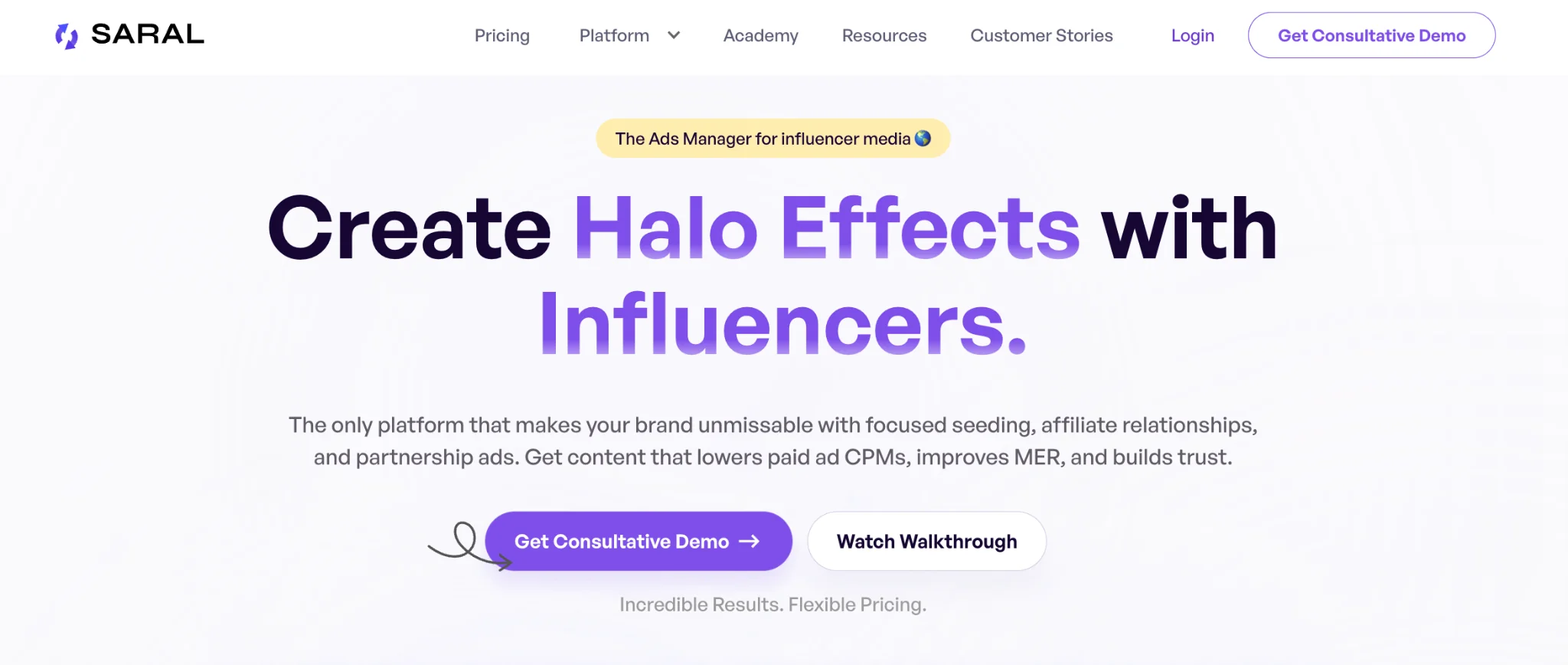
SARAL occupies an unusual middle ground in how it is bought: the annual figure is published up front — $12,000 to $25,000 a year depending on tier — yet the year is still sold in one piece rather than metered month to month, which makes it a halfway house between self-serve software and enterprise procurement. Behind that single subscription sits a closed loop built narrowly for D2C ecommerce brands and the in-house managers who run their programs day to day: discovery, automated outreach, a creator CRM, affiliate tracking and payouts, with an AI assistant taking on much of the sourcing and follow-up. The reporting assumes a store and a transaction at the end of it.
Key Features
- Contactable Profiles First: more than 200 million profiles filtered by engagement, location, topic, audience data and whether an email address exists.
- One Shared Thread View: personalized outreach sequences at scale with every creator conversation visible in a single inbox.
- Staged Partnerships: a pipeline CRM moving each partnership through stages with tasks, notes and history attached.
- Affiliate Included: cookieless tracking, discount codes, commission calculation and payouts built into the product.
- Mentions Found Automatically: brand mentions detected without prompting, with the content collected for reporting and rights.
Platform Coverage
Instagram, TikTok and YouTube, plus a Chrome extension that works across social profiles while browsing.
Pricing
- Starter: $12,000/year covering 100 active partnerships, 300 new influencers a month and one seat.
- Business: $15,000/year covering 500 active partnerships, unlimited post tracking and three seats.
- Professional: $25,000/year covering 1,000 active partnerships, full social listening and ten seats.
- Terms: quarterly billing is available at a higher effective rate, with no locked long-term contract.
Reviews
4.8/5.0 (G2)
Standout Features
- Opinionated By Design: built for one buyer type, so the workflow prescribes a process rather than offering endless configuration.
- Capture While Browsing: the extension surfaces metrics and saves a profile in one click, wherever the profile was found.
- No Second Tool For Commissions: affiliate tracking and payouts arrive with the subscription instead of being bought separately.
Onalytica vs SARAL
SARAL is the one alternative here whose annual commitment sits in territory this buyer already recognizes, with the difference that the number is printed before anybody picks up the phone: $12,000 a year at the entry tier, $25,000 at the top. Budget, in other words, is not the axis this decision turns on. The axis is what a comparable yearly outlay actually buys.
It buys a revenue-carrying partnership channel for a single D2C brand — profiles filtered down to those with reachable email addresses, sequences running through one shared inbox, a staged pipeline, and an affiliate engine with cookieless tracking, codes, commission math and payouts folded into the price. That focus is a genuine strength for its intended buyer and a hard boundary outside it, which is where an Onalytica customer should pay attention. The architecture assumes one brand, three consumer networks and a transaction at the end. An enterprise running several business units across regions, or a vendor with nothing to attribute a sale to, will meet the edges of that design quickly, and the multi-market seat and permission flexibility Onalytica takes for granted is not something SARAL sets out to provide.
Traackr
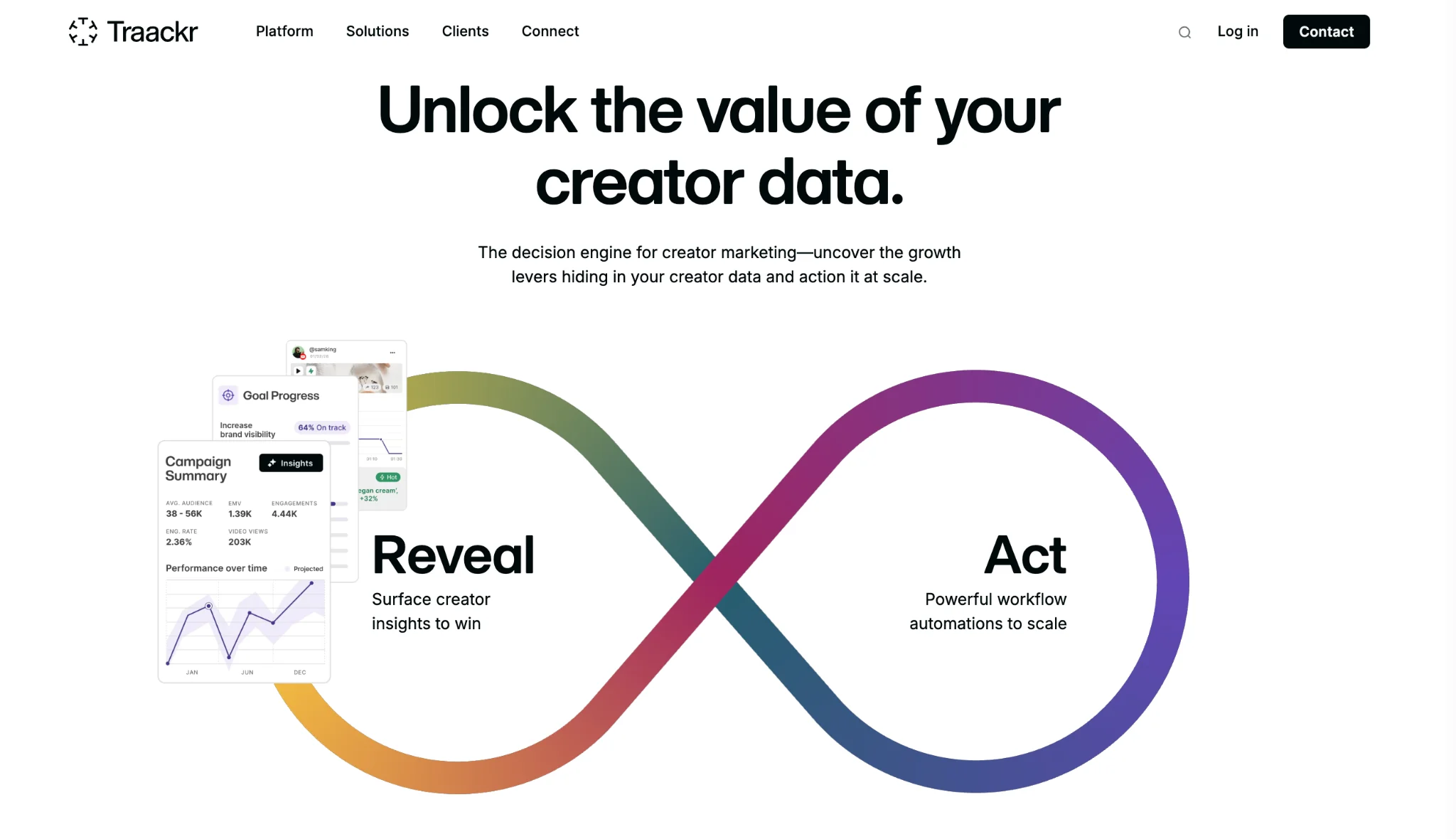
Traackr is bought the way Onalytica is bought: quote only, annual, scoped through a specialist call and signed off by procurement rather than picked off a pricing page, with the competitive benchmarking tools priced separately as an add-on. What the contract covers is a governed creator program running across markets — planning, activation and measurement held to one standard by global brands and their agencies — over more than a dozen platforms, blogs among them, rather than the consumer three. It rates 4.3/5.0 on G2 and carries more than a decade of enterprise deployments behind it, so a buyer has unusually solid references to check before committing.
Key Features
- Screened Search: creator discovery filtered on audience quality, brand affinity, performance and brand safety.
- Governed Records: centralized creator files with configurable workflows and permissions spanning brands and regions.
- Activation In Sequence: briefing, content approvals, product seeding and creator payments in local currency.
- Two Measurement Layers: engagement and EMV-style metrics reported alongside ecommerce clicks, conversions and revenue per creator.
- Competitive Tracking: share-of-influence benchmarking against named rivals across dozens of markets, sold as an add-on.
Platform Coverage
More than a dozen platforms, including blogs alongside the major social networks.
Pricing
- Quote Only: no tiers are published; cost is scoped by seats and program size through a specialist call.
- Annual Terms: yearly contracts, with entry points reported in the tens of thousands per year.
- Modular Add-Ons: the benchmarking tools are priced apart from the core platform.
Reviews
4.3/5.0 (G2)
Standout Features
- One Framework, Every Market: regional teams report against a shared standard instead of each buying its own tool.
- Feeds The Wider Stack: creator performance data flows into the broader marketing reporting layer.
- Evidence From Peers: more than a decade of enterprise deployments gives a buyer unusually solid references to check.
Onalytica vs Traackr
This is the comparison likely to decide something, because Traackr is bought the way Onalytica is bought. Quote only, scoped by seats and program size through a specialist call, annual, with entry points reported in the tens of thousands and benchmarking priced as a separate module. It indexes more than a dozen platforms, blogs among them, rather than the consumer three. The governance apparatus a communications team expects is present — centralized records, configurable workflows, permissions divided across brands and regions — so a global organization reports on one framework instead of each market procuring independently.
What separates them is the population being measured. Traackr filters on audience quality, brand affinity, performance and brand safety, and its reporting runs from EMV-style engagement figures through to clicks, conversions and revenue per creator, with seeding, approvals and local-currency payments in between — a stack designed for beauty, fashion and CPG programs running in twenty markets simultaneously. Onalytica measures professional standing: analysts, journalists, executives and internal experts, scored on subject authority and reported as share of voice. A marketer told to add consumer campaigns without surrendering enterprise reporting discipline will find Traackr the least disruptive move available. A marketer whose brief is still analyst and expert influence would be giving up the exact capability they originally paid for.
Heepsy

Every usage cap Heepsy applies is printed on the pricing page, there is a free tier that does real work, and paid plans open at €69 a month — which means the whole thing can be forecast, approved and started without a call ever being booked, the exact inverse of a scoped annual quote. That model is aimed at ecommerce brands, startups and small agencies who want a searchable creator database and nothing resembling a contract. The product began life as an analytics tool and has since grown outreach, pipelines, content tracking, a marketplace and creator payments around that original database.
Key Features
- Thirty-Plus Filters: conventional filtering alongside AI-assisted and lookalike search across millions of profiles.
- Authenticity Reads: follower legitimacy, fake-follower risk and demographic breakdowns shown per profile.
- Templated Mailing: bulk outreach with dynamic templates, AI composition, and open and response tracking.
- Configurable Pipelines: campaign stages set by the team, with live post tracking and a gallery of collected content.
- Store Hooks: creator payments plus Shopify and WooCommerce integrations.
Platform Coverage
Instagram, TikTok and YouTube.
Pricing
- Free: €0/month with a capped number of monthly results and advanced profile views.
- Starter: €69/month for 5,000 results, 100 advanced profiles, 300 outreach emails and five projects.
- Plus: €149/month for 25,000 results, 500 advanced profiles, 1,200 outreach emails and creator payments.
- Advanced: €229/month for 50,000 results, 1,000 advanced profiles, 6,000 outreach emails and unlimited projects.
Reviews
4.5/5.0 (G2)
Standout Features
- Both Directions At Once: inbound marketplace listings run alongside outbound database searching.
- Existing Fans Identified: higher tiers pick out creators already engaging with the brand and send them to a branded application page.
- Limits In Plain Sight: every usage cap is printed on the pricing page, so forecasting never needs a sales call.
Onalytica vs Heepsy
Heepsy is the cheapest serious tool in this comparison and behaves accordingly. The first paid tier is €69 a month, every usage limit is published, and a team can search millions of profiles, test follower authenticity and start outreach on the day it signs up. No call, no scoping exercise, no annual commitment. For somebody whose last software purchase took a quarter to complete, the speed is the entire proposition, and it makes Heepsy a defensible way to test a consumer creator hypothesis on money that never has to reach finance.
The trade-offs deserve naming just as plainly. Coverage is three networks. Data quality is the recurring complaint, with inactive profiles turning up in results, which means a shortlist needs checking before it goes anywhere near a stakeholder who will ask where the numbers came from. And what the reporting proves is campaign activity rather than category position: pipelines, live post tracking, a content gallery and payments through Shopify and WooCommerce, all of which presume a transaction at the end. Nothing here touches topical authority, network mapping or employee advocacy, and Heepsy has never claimed otherwise.
Kolsquare
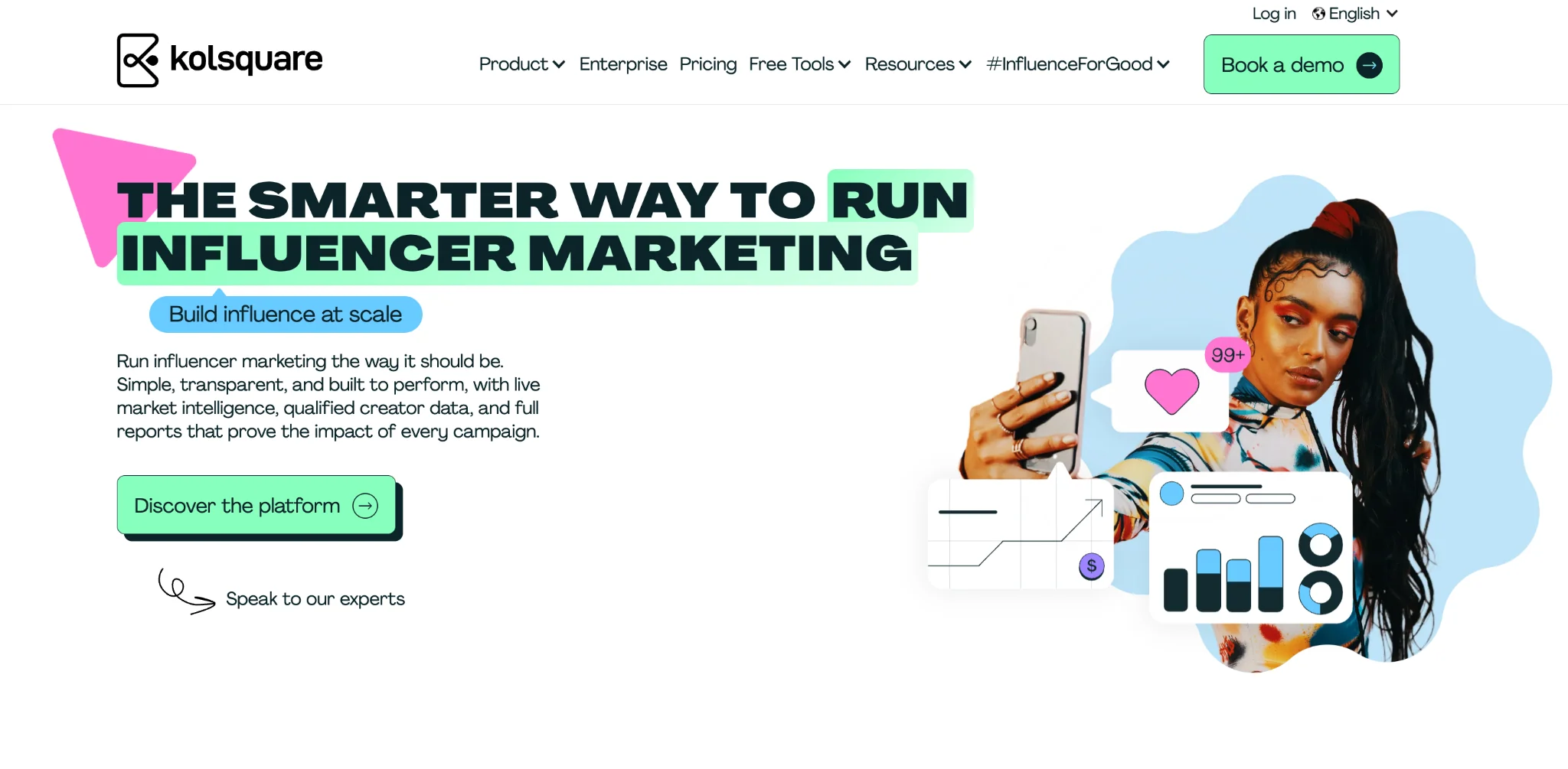
Kolsquare draws its profile information from the platforms' own APIs rather than from scraping, and builds its credibility scoring and disclosure verification around European advertising rules and GDPR — a provenance story a marketer can put in front of legal and have it survive the meeting. Around that sit discovery, a cross-market CRM, campaign management, automated reporting and competitive listening, sold to brands, agencies, enterprises and non-profits. The data runs deepest in France, DACH, Southern Europe and the UK.
Key Features
- Search With A Credibility Score: AI search across millions of profiles in more than 180 countries, each profile carrying a credibility rating.
- Campaign Workspace: briefs, approvals, communication and deadline tracking held centrally across large creator sets.
- Cross-Market CRM: casting, negotiation, approvals and payments managed in one place across territories.
- Dashboards That Update Themselves: live reporting on reach, EMV, engagement and sentiment without manual collection.
- Listening Package: competitor influencer activity and category benchmarking, sold as a separate module.
Platform Coverage
Instagram, TikTok, YouTube, Facebook, Snapchat, Twitch and X.
Pricing
- Discovery Module: database access, AI search, audience insights and CRM, priced on request.
- Listening Module: dashboards, competitive benchmarking and share of voice, priced on request.
- Enterprise: custom scope adding payments, API access and single sign-on.
- Concessions and Terms: reduced rates for qualifying startups and non-profits, and no off-the-shelf license available.
Reviews
4.3/5.0 (G2)
Standout Features
- Data From The Source: profile information is drawn from platform APIs rather than scraped, which matters to regulated advertisers.
- Compliance Built In: credibility scoring and disclosure verification are designed around European advertising rules.
- European Depth: local-language creator data in markets that US-first platforms cover thinly.
Onalytica vs Kolsquare
Of the ten, Kolsquare is the one whose institutional priorities most resemble Onalytica's, even though the people it indexes do not. It is sold the way this reader expects — a Discovery module and a Listening module each priced on request, enterprise scope adding payments, API access and single sign-on, no off-the-shelf license, and concessions for qualifying startups and non-profits. More importantly for anyone who has had to explain a dataset to legal, the profile data comes from the platforms' own APIs rather than from scraping, and the credibility scoring and disclosure verification are constructed around European advertising rules. That is a materially different conversation from defending a scraped index.
Coverage extends to seven networks and more than 180 countries, with genuine depth in European-language creators, and the reporting produces live dashboards for reach, EMV, engagement and sentiment without anybody assembling them by hand. Category benchmarking exists but arrives as a separately sold listening module rather than part of the core license, which is worth factoring into the quote. The population is consumer, though, and that is the limit: casting, negotiation, approvals and payments across markets, not analyst relations. A technology vendor building standing with industry experts in those same European markets is looking at the wrong index, however sound the governance wrapped around it happens to be.
Final Thoughts on Onalytica Alternatives
Onalytica is a specialist tool judged unfairly against generalists. Topical authority scoring, network mapping and employee advocacy measurement are hard to replicate, and for a B2B communications team the closest real comparison here is Traackr rather than anything consumer-facing. Teams leave because their brief changed, not because the software failed: they now need TikTok, product seeding, discount codes and a number in the revenue column.
That switch has a cost worth naming, since most of these ten are consumer and D2C tools bought self-serve: moving to one means trading the measurement of standing in a professional conversation for the measurement of what an audience did next. Which of those two numbers will the business ask for next year?