

Refersion Pricing Explained: Plans, Features & Review
Thirty-nine dollars a month reads like a rounding error next to what most affiliate platforms charge, which is exactly why Refersion's headline price is the least useful number on its pricing page. The figure that decides your actual bill is the percentage sitting underneath it: three percent of every affiliate-driven sale on the entry plan, two percent on the tier above. A brand doing $50,000 a month through affiliates is not paying $39. Used by more than 60,000 eCommerce brands and tightly wired into Shopify, Refersion is a serious piece of affiliate infrastructure — but the pricing rewards doing the arithmetic before you sign up. In this article, we break down Refersion pricing, key features, reviews, limitations, and the best Refersion alternatives to consider.
Refersion Pricing
Refersion publishes four options and charges most of them twice. A free Marketplace Listing gets your brand into the Refersion Marketplace with a percent-of-sale offer that affiliates can find and apply to, but it does nothing else: reviewing applicants, tracking referrals, managing commissions, and issuing payouts all require a paid plan. Launch costs $39 a month plus 3 percent of affiliate-driven sales, and covers unlimited affiliates, unlimited clicks and conversions, first-party tracking, and PayPal payouts. Growth is $199 a month plus 2 percent, adding advanced commission options, tracking by product SKU and customer email, API access, 30-plus integrations, multi-store management, and chat support. Scale is quoted for brands above $1 million in annual GMV and is described as a flat monthly subscription with premium support and white-glove onboarding — the tier where the percentage stops being the story. Annual billing saves 20 percent on the subscription; the commission fee is billed monthly regardless, calculated on affiliate-driven sales only rather than total store revenue. There is no free trial, so the free listing is the only way to touch the platform without paying.
Free Trial
There is no free trial. The free Marketplace Listing is not a substitute, since the features that make the platform useful sit behind the paywall; it is a lead-generation surface for affiliates to discover you, not a working version of the product. What that means practically is that your evaluation is a paid month. Model the total first: take last quarter's affiliate revenue, apply 3 percent, add $39, and compare that against Growth at $199 plus 2 percent. The crossover comes at roughly $16,000 in monthly affiliate sales, above which Growth is the cheaper plan despite costing five times more up front.
Contract
Plans bill monthly or annually, with annual billing discounting the subscription by 20 percent. Commission fees are calculated and billed monthly whatever the term, which is worth understanding before you commit to a year: locking in the subscription discount does nothing to cap the variable component, and the variable component is the one that grows. If your program is scaling, negotiate toward Scale earlier rather than later, since a flat monthly fee at high volume is a fundamentally different cost structure from a percentage.
Refersion Overview
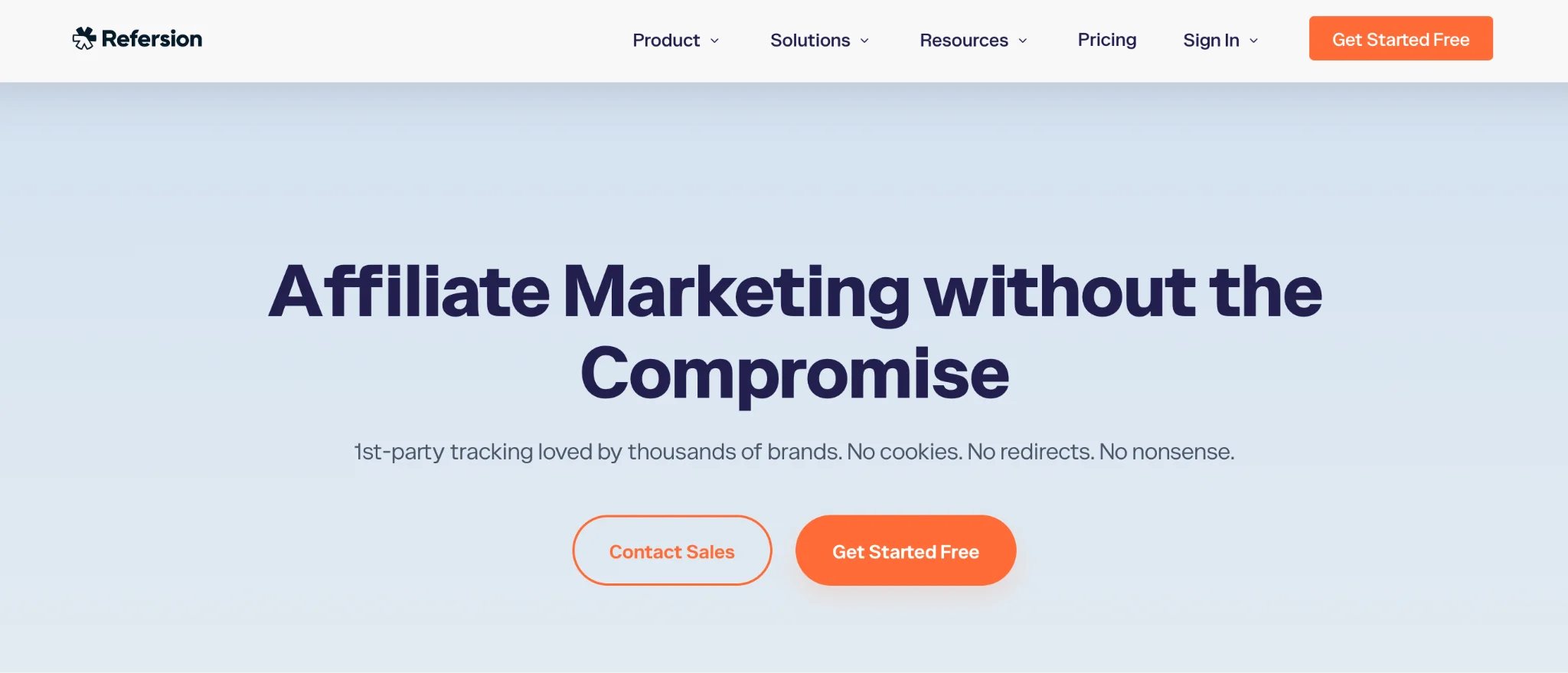
Refersion is an affiliate management platform for eCommerce brands, used by more than 60,000 merchants and built around tracking, commissioning, and paying partners rather than finding them. Its centre of gravity is Shopify, with native integrations also covering BigCommerce, WooCommerce, and Magento, plus code widgets for Stripe and ChargeBee. Tracking runs through a first-party domain rather than third-party cookies, which matters more every year, and covers unique links, coupon codes, manual credit, product SKUs, and customer email. Commission structures are unusually deep: percent of sale, flat rate, product-level rates, tiered and incentive-based rates, new versus returning customer rates, lifetime subscription commissions, SKU and coupon exclusions, and private offers. Payouts run through PayPal, Trolley, gift cards, or manual processing.
Key Features
First-Party Tracking Domain
Attribution runs on your own domain rather than third-party cookies, which keeps tracking intact as browsers continue restricting cross-site tracking.
Deep Commission Structures
Percent of sale, flat rate, product-level, tiered, incentive-based, and new-versus-returning rates can all run at once, letting the commission model reflect actual margin rather than a single blunt percentage.
Multiple Tracking Methods
Unique links, coupon codes, manual credit, product SKU, and customer email each work as attribution paths, which matters when creators promote off-platform and links do not survive the journey.
Refersion Marketplace
A directory where affiliates browse and apply to brand programs, with AI-curated recommendations, giving programs an inbound recruiting channel alongside outbound outreach.
Post-Purchase Affiliate Widget
Existing customers can be converted into affiliates immediately after buying, which is the cheapest recruiting there is and a genuinely well-placed feature.
Unified Payouts
Commission payments run through PayPal, Trolley, gift cards, or manual processing in one flow, removing the spreadsheet-and-bank-transfer stage most programs start with.
eCommerce and Marketing Integrations
Native Shopify, BigCommerce, WooCommerce, and Magento support sits alongside 30-plus marketing integrations including Klaviyo and Mailchimp on the Growth plan.
Subscription Commission Handling
Lifetime commissions on subscriptions with variable tenure are supported natively, which is unusual and valuable for subscription-led brands.
Multi-Store and Multi-Currency Support
Brands running several storefronts or selling across currencies can manage them from one account on the higher tier.
Best For
Refersion fits eCommerce brands on Shopify that already have affiliate or creator partners and need the infrastructure to track and pay them properly. It suits subscription businesses particularly well given the native lifetime-commission handling, and it suits brands with complex margin structures that need product-level or tiered rates rather than one flat percentage. The Launch plan makes it accessible to a program in its first months, and the Scale tier gives high-volume merchants a route out of percentage-based billing. It is a poor fit for brands whose problem is finding creators in the first place, since there is no influencer discovery or audience analysis here, and for programs generating substantial affiliate revenue on the entry plan, where 3 percent quietly becomes the largest line item.
Refersion Reviews
4.2/5.0 (Capterra)
Ratings diverge sharply by source, which is itself informative: Capterra sits at 4.2 across 56 reviews while G2 sits at 3.6 across 22, and the gap usually reflects who is reviewing rather than a contradiction. Praise is consistent and specific: setup is straightforward, the Shopify integration works cleanly, tracking is reliable, commission payments are simple to process, and support is responsive.
The criticism is equally consistent. Reviewers describe the platform as narrow — strong at affiliate management, absent on influencer discovery and creator communication, so most teams end up running it alongside another tool. Reporting and filtering are called thin, with specific complaints about distinguishing all links from unique links. Some users report glitches requiring support intervention. And the pricing perception is unfavourable relative to functionality, which tracks with the percentage model at scale. Test attribution against your own analytics during the first month rather than assuming the numbers agree.
Refersion Standout Features
A Percentage That Is Actually Scoped
Plenty of platforms take a cut of revenue. Refersion takes it only on affiliate-driven sales rather than total store revenue, which is a fairer basis and worth confirming when you compare against competitors that word this more loosely.
Commission Logic That Matches Real Margin
Product-level rates, SKU exclusions, tiered bonuses, and new-versus-returning splits let a brand pay more on high-margin lines and less on loss leaders. Most affiliate tools force one rate across the catalogue, which quietly costs money on every discounted product sold.
Customers Converted Into Affiliates at Checkout
The post-purchase widget recruits from the group most likely to convert — people who just bought and liked it. Recruiting affiliates at the moment of purchase costs nothing and reaches an audience no discovery database will surface.
Refersion Limitations
The Percentage Is the Real Price
At $39 plus 3 percent, a program doing $30,000 monthly in affiliate sales pays roughly $939. The subscription is a rounding error and the percentage is the bill, which is the calculation most brands skip when comparing headline prices.
No Creator Discovery
There is no influencer search, no audience analytics, and no fraud or authenticity checking. Refersion tracks and pays partners you have already found; sourcing them belongs to another system entirely.
Reporting and Filtering Are Thin
Reviewers repeatedly describe reporting as basic and filtering as limited, including difficulty separating all-link from unique-link performance. Custom reports sit on the top tier.
No Free Trial
Evaluation costs a paid month, and the free Marketplace Listing does not include tracking, approvals, or payouts. For a platform this integrated into a store's checkout, being unable to test before committing is a real friction point.


Is Refersion Worth It?
For a Shopify brand that needs affiliate tracking to be correct, Refersion earns its place: first-party attribution, genuinely flexible commission logic, clean payouts, and a scale of adoption that means the integrations are well worn rather than theoretical. Subscription brands and anyone with varied margins across a catalogue get more from it than a flat-rate competitor would offer. The reservations are the percentage that becomes the real cost as the program succeeds, the absence of any discovery or creator-management layer, the thin reporting, and the lack of a trial. Brands wanting the sourcing side handled too should compare it against:
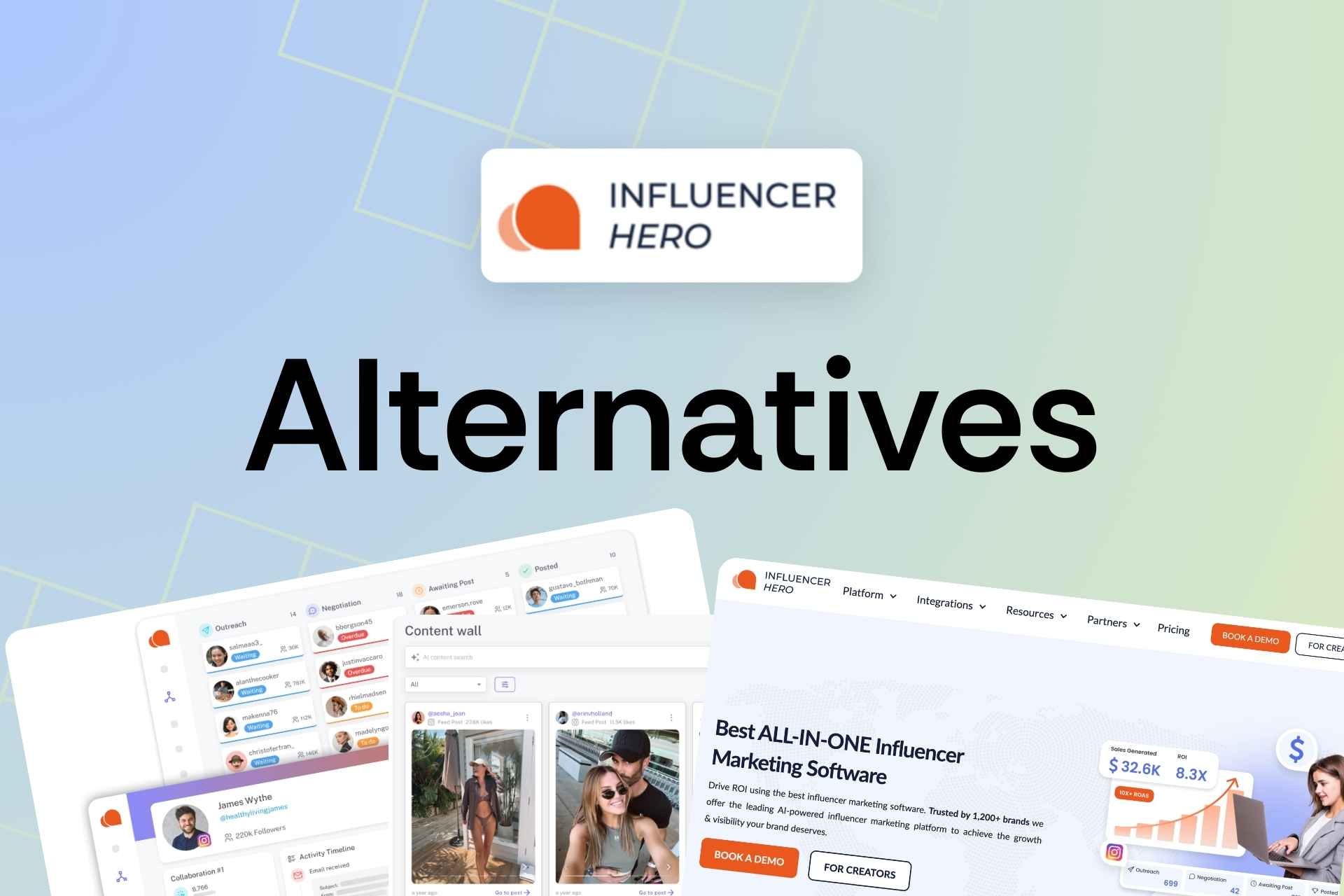
- Influencer Hero — an all-in-one influencer marketing platform where creator discovery and outreach sit in the same system as affiliate tracking, gifting, and a centralised payout manager, so sourcing and paying partners are not two separate subscriptions.
- Afluencer — a collaboration marketplace where brands post opportunities and creators apply, giving affiliate programs a steady recruiting channel without cold outreach.
- Social Snowball — Shopify-native affiliate and ambassador software with automated payouts and one-click customer-to-affiliate conversion.
- Tapfiliate — affiliate tracking with straightforward flat-rate pricing and no percentage on sales, aimed at brands that dislike revenue-share billing.
- UpPromote — affiliate and referral management built for Shopify with tiered commissions and a well-reviewed onboarding experience.
Final Thoughts
Do the multiplication before anything else. Take your affiliate revenue, apply the percentage attached to the plan you are considering, and see what the annual number looks like — that single calculation tells you more than any feature comparison, and it tells you when to push for the Scale tier's flat fee rather than waiting for the invoice to make the argument for you. If the arithmetic works and your partners are already recruited, Refersion does the tracking and paying job well and the Shopify integration is as solid as its adoption suggests. If your real gap is finding creators, budget for a second tool from the start rather than discovering the limitation three months in.