

SocialLadder Alternatives: Best Influencer Marketing Platforms
Running influencer campaigns at scale requires more than just identifying creators—it involves coordinating outreach, managing relationships, tracking deliverables, and measuring performance across multiple channels. Influencer marketing software helps streamline these workflows, giving teams a centralized system to manage creator partnerships, automate communication, and track ROI more effectively. SocialLadder is one such platform, recognized for its ambassador-driven approach, gamified campaigns, and ability to activate existing customer communities.
That said, common feedback from users on several platforms and marketing communities highlights a few limitations that push teams to explore SocialLadder alternatives: limited discovery capabilities compared to database-driven platforms, a stronger focus on ambassador programs rather than full campaign lifecycle management, and less advanced analytics for performance-focused teams. As influencer marketing programs mature, many brands look for influencer marketing software that offers deeper discovery, stronger automation, and more comprehensive reporting alongside flexible campaign workflows. In this article, we’ll compare SocialLadder with leading alternatives including GRIN, Influencer Hero, Aspire, SARAL, Influencity, NeoReach, Heepsy, Skeepers, Upfluence, and Traackr.
Criteria for Suggesting Platform Alternatives:
- Core Features
Evaluation of each platform’s essential capabilities, including influencer discovery, outreach, CRM, campaign reporting, gifting, UGC and content collection, affiliate tracking and payments, storefronts, application pages, and AI-powered tools. - Supported Social Media Platforms
Assessment of how well each platform integrates with major social networks such as Instagram, YouTube, TikTok, Facebook, Pinterest, and many more - Pricing & Contract Flexibility
Comparison of pricing models, subscription costs, and contract requirements to help brands choose solutions that match their budget and scalability needs. - Standout & Differentiating Features
Highlighting unique or innovative functionalities that set each platform apart, such as real-time tracking dashboards, creator benchmarking, TikTok email discovery, or advanced automation tools. - Customer Reviews & User Satisfaction
Analysis of verified user feedback from credible platforms like G2, TrustRadius, Capterra, focusing on usability, reliability, value for money, customer support, and real-world performance.
SocialLadder Overview
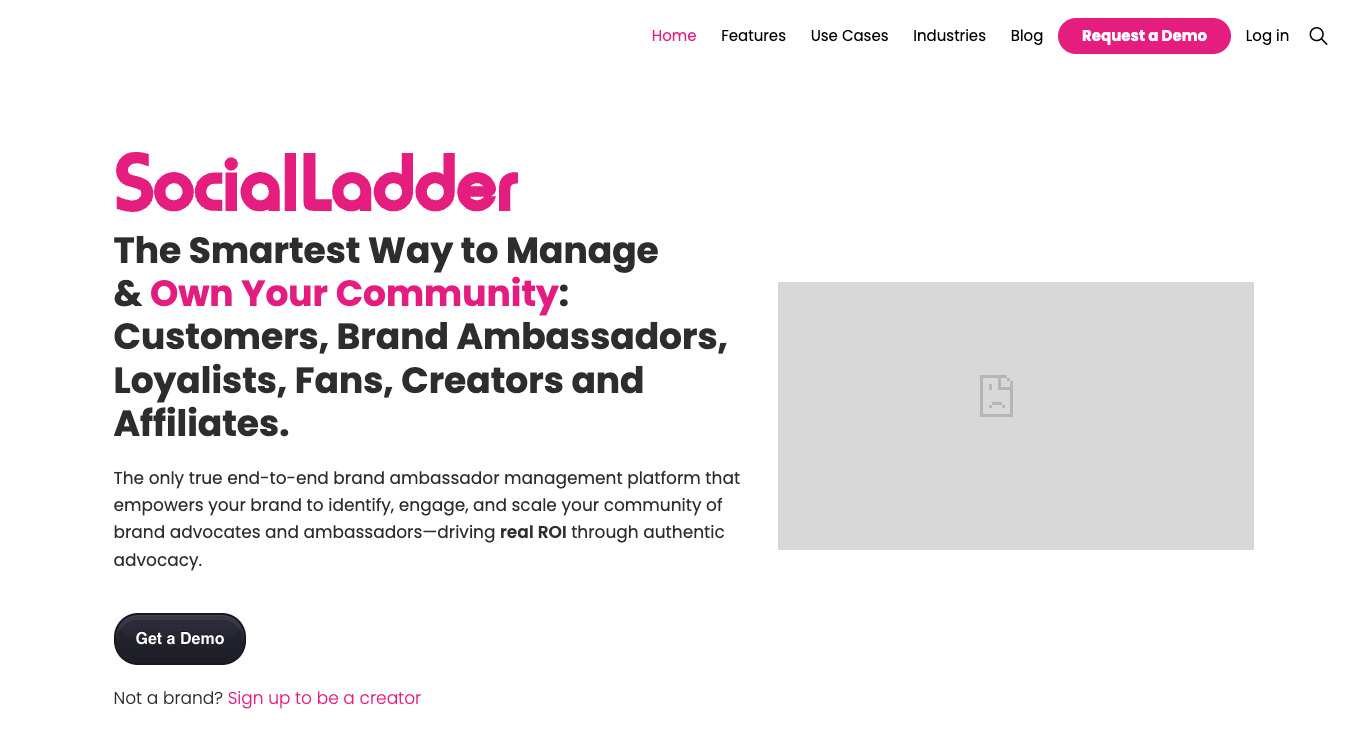
SocialLadder is a creator and ambassador management platform built for brands that want to turn customers, fans, affiliates, and influencers into a more structured community program. The platform is positioned around community-led growth rather than one-off influencer transactions, giving brands tools for recruiting, onboarding, communication, task management, rewards, and ROI tracking in one system. SocialLadder is especially relevant for DTC and consumer brands that want to run ambassador, referral, and creator programs from a centralized hub rather than managing them across spreadsheets, email, and separate affiliate tools.
Key Features
- Creator and ambassador recruitment: SocialLadder includes recruiting workflows, a searchable database, application widgets, invitation tracking, and onboarding flows so brands can bring in ambassadors, affiliates, and creators from one place.
- CRM and segmentation: The platform gives teams centralized creator management with segmentation, admin chat, message boards, SMS, email templates, and community communication tools to organize different ambassador groups and keep outreach more structured.
- Gamified missions and challenges: SocialLadder’s core workflow is built around customizable missions that let brands assign online, offline, referral, review, field marketing, and social challenges in exchange for cash, points, gift cards, or product rewards.
- Content approvals and campaign workflows: Brands can assign briefs and tasks, review submissions, approve content before it goes live, and manage creator activity without relying on email threads or spreadsheets.
- Rewards, payments, and referral tracking: SocialLadder supports rewards and payment workflows, referral conversion tracking, and integrations that connect creator activity to commerce outcomes.
- Reporting and ROI measurement: The platform offers campaign tracking, configurable reporting, interactive leaderboards, and analytics focused on engagement, conversions, earned media value, and overall ambassador ROI.
- Mobile-first creator experience: SocialLadder supports both a creator web experience and a mobile app, which helps brands run ambassador programs that are easier for creators to engage with on an ongoing basis.
- Commerce and martech integrations: Publicly listed integrations include Shopify, BigCommerce, PayPal, Klaviyo, Instagram, and Facebook Business Suite, which makes it easier to connect ambassador activity with ecommerce and lifecycle marketing workflows.
Platform Coverage
Instagram, TikTok, and Facebook
Pricing
SocialLadder does not publish fixed pricing tiers or named plans on its website. Instead, pricing is custom and includes a setup fee, a base monthly subscription, and seat fees where applicable; third-party software directories also list pricing as “contact vendor” or “no pricing info,” with subscription billing and no publicly listed free trial or free plan.
Reviews
4.5 / 5.0 (G2)
SocialLadder Standout Features
- Branded, mobile-first community layer: SocialLadder is not just built for campaign execution; it also gives brands a dedicated, branded space where ambassadors and advocates can engage with the brand and with each other, which is a stronger community play than many campaign-first influencer tools.
- Gamified mission system with multi-format challenges: Its mission structure is one of the clearest differentiators, letting brands activate ambassadors across social posting, referrals, reviews, field marketing, and manual tasks while tying participation to rewards and leaderboards.
- Newer conversion and milestone-based challenges: User feedback highlights that SocialLadder has added newer conversion- and milestone-related challenge types, which makes the platform more useful for brands that want ambassador programs tied more closely to measurable actions instead of simple content submissions.
Limitations (Why People Look for SocialLadder Alternatives)
Limited payment flexibility for fixed-fee creator deals
Some teams want the option to pay creators a straightforward flat fee for content, but SocialLadder’s structure appears more geared toward points, rewards, or commission-style payouts.
Reporting and analytics reliability issues
Users have noted campaign reports that miss posts, pull incorrect engagement rates, or require support intervention, which can slow down active campaigns.
Interface speed can affect day-to-day execution
Some reviewers describe the platform as slow or laggy, especially for teams managing programs frequently.
Communication tools are not as polished as some alternatives
Feedback points to weaker community communication in practice, including chat limitations and a less robust in-platform communication experience than some teams expect.
10 Best Influencer Marketing Platform Alternatives:
| TOOL | REVIEWS | BEST FOR | TRIAL INFO | PRICING | ||
|---|---|---|---|---|---|---|
1 |

|
⭐ | DTC creator management | Book Demo | Pricing | Website |
2 |

|
⭐ | Influencer CRM & automation | Book Demo | Pricing | Website |
3 |
|
⭐ | Influencer partnerships | Book Demo | Pricing | Website |
4 |

|
⭐ | Influencer outreach | Book Demo | Pricing | Website |
5 |

|
⭐ | Campaign management | Book Demo | Pricing | Website |
6 |
|
⭐ | Influencer campaigns & data analytics | Book Demo | Pricing | Website |
7 |

|
⭐ | Influencer discovery | Book Demo | Pricing | Website |
8 |

|
⭐ | Influencer gifting & UGC campaigns with micro-influencers | Book Demo | Pricing | Website |
9 |
|
⭐ | Ecommerce influencer discovery | Book Demo | Pricing | Website |
10 |

|
⭐ | Enterprise influencer analytics | Book Demo | Pricing | Website |
1. GRIN
GRIN is an end-to-end creator management platform built primarily for DTC and ecommerce brands that want influencer discovery, outreach, gifting, affiliate tracking, payments, and content management in one workflow. It is especially strong for brands that need tight ecommerce integrations and want to connect creator activity directly to revenue, product seeding, and reusable UGC.
Key Features
- Creator discovery and vetting: GRIN offers creator search with audience, niche, engagement, and brand-affinity filters, plus AI-assisted discovery and lookalike workflows to help teams find better-fit creators faster.
- Centralized outreach and CRM: Teams can run outreach from a connected inbox, track opens and replies, manage creator records with tags and notes, and move influencers through structured campaign stages without relying on spreadsheets.
- Ecommerce-led gifting workflows: GRIN integrates with ecommerce systems so creators can select products, brands can automate seeding, and fulfillment can be tracked inside the platform.
- Affiliate tracking and payouts: The platform supports affiliate links, commission tracking, and in-platform payments through PayPal, making it easier to manage both gifting and performance-based deals in one place.
- UGC library and media rights workflows: GRIN stores creator content, including Stories, in a searchable content library and supports media rights handling so brands can reuse assets more efficiently.
- Landing pages and inbound recruitment: Brands can build creator application pages to collect inbound interest and keep their pipeline full with warmer leads.
- Broader stack integrations: GRIN connects with tools like Gmail, Outlook, Klaviyo, Slack, DocuSign, PayPal, Shopify, WooCommerce, BigCommerce, and Magento, which is a major plus for brands that want fewer disconnected systems.
Platform Coverage
Facebook, Instagram, TikTok, X, Pinterest, YouTube, and Twitch
Pricing
Annual pricing starts at $25,000/year (approx. $2,050/month)
Reviews
4.5/5.0 (G2)
Standout Features
- Deep ecommerce infrastructure: GRIN’s Shopify, WooCommerce, BigCommerce, and Magento integrations make it stronger than many creator platforms for product seeding, discount code creation, revenue attribution, and commission payouts.
- GRIN Intelligent Assistant (Gia): GRIN’s AI layer is positioned as an agentic assistant for creator discovery, prioritization, and workflow support, helping teams reduce manual campaign management.
- Creator-friendly portals plus rights-ready UGC storage: Personalized creator portals, built-in deliverable management, and a searchable UGC library make it easier to handle approvals, content collection, and reuse at scale.
SocialLadder vs GRIN
SocialLadder is more community- and ambassador-led, with a stronger focus on gamified missions and ongoing brand advocacy, while GRIN is built more like a full creator operations system for ecommerce brands. GRIN goes deeper on outreach, gifting, affiliate tracking, payments, and UGC management, whereas SocialLadder is usually a better fit for brands centered on ambassador engagement rather than high-volume creator program execution.
2. Influencer Hero
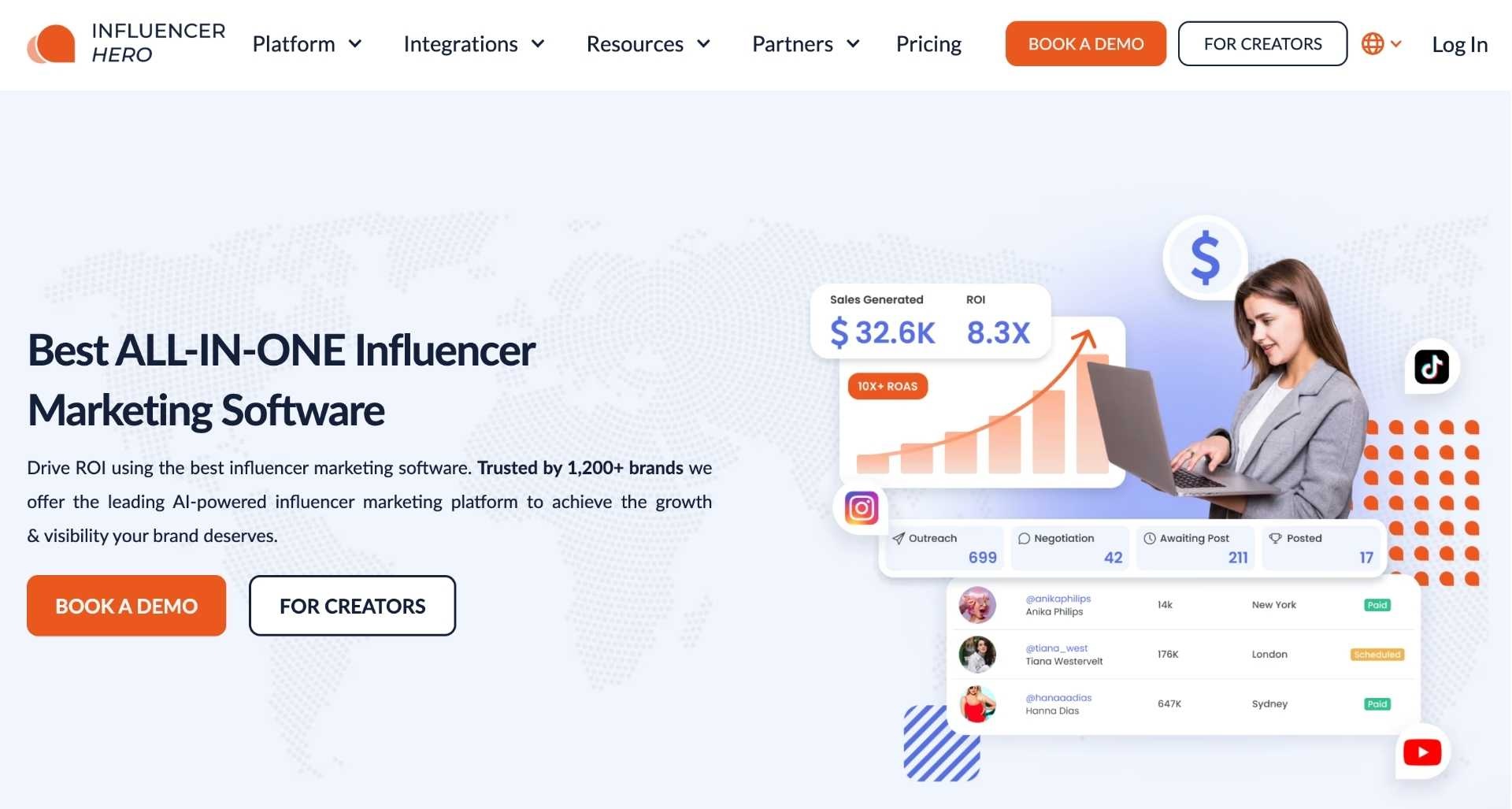
Influencer Hero is an all-in-one influencer marketing platform built for brands and agencies that want discovery, outreach, CRM, gifting, affiliate tracking, content collection, and reporting in a single workspace. Its positioning is especially strong for growing DTC teams that need automation and ecommerce visibility without moving into the price tier of heavier enterprise platforms.
Key Features
- Influencer discovery with strong filtering: Influencer Hero includes filters for location, demographics, interests, engagement, audience quality, and fake follower detection, along with lookalike suggestions.
- AI-powered outreach automation: The platform supports bulk outreach, smart templates, AI-assisted personalization, and multi-step email sequences so teams can scale communication without losing structure.
- Campaign-centric CRM: Dealflow-style boards, stage-based workflows, bulk actions, and automated follow-ups make it easier to manage larger creator pipelines.
- Gifting and seeding: Influencer Hero supports gifting workflows through Shopify and WooCommerce, with shipping and product delivery tracking inside the platform.
- Affiliate and payout management: Brands can create custom links and codes, monitor affiliate performance, and automate influencer payouts through ecommerce-connected workflows.
- UGC collection and reporting: The platform auto-collects creator content, tracks campaign performance, and surfaces ROI by influencer, sales, clicks, and content performance.
- Chrome extension and follower discovery: A browser extension helps teams pull live creator stats while browsing, and the platform can identify influencers who already follow or engage with the brand.
- Application pages and storefronts: Branded pages help attract inbound creators, while storefronts allow influencers to promote products and drive affiliate sales.
- Integrations and API: Native integrations with Shopify and WooCommerce, plus support for custom eCommerce setups and tools like Klaviyo, Slack, Zapier, and DocuSign for extended workflows.
Platform Coverage
Instagram, TikTok, YouTube, Facebook, Pinterest, Snapchat, X, and Twitch
Pricing
Influencer Hero offers flexible pricing based on outreach volume, and you can have unlimited creators in your CRM with Influencer Hero:
- Standard — $649/month (up to 1,000 reachouts/month)
- Pro — $1,049/month (up to 5,000 reachouts/month)
- Business — $2,490/month (up to 10,000 reachouts/month)
- Custom / Agency — Tailored pricing
Reviews
5.0/5.0 (Capterra)
Standout Features
- Campaign-centric CRM automation: Influencer Hero’s dealflow boards, bulk status actions, and automated email flows are a major differentiator for teams managing many creators at once.
- AI-powered UGC search: Brands can search influencer-generated content using keywords, captions, visuals, or campaign context, making it easier to identify and reuse high-performing content across marketing channels.
- Influencer Brand Followers and Chrome extension: The ability to identify existing brand followers and enrich creator research while browsing social profiles adds a practical prospecting layer many teams value.
SocialLadder vs Influencer Hero
SocialLadder is more centered on ambassador community engagement and mission-based participation, while Influencer Hero is built more for direct-response creator operations. Influencer Hero gives brands a stronger mix of AI outreach, CRM automation, affiliate tracking, and ecommerce-linked gifting, whereas SocialLadder is more focused on structured ambassador activation and rewards.
3. Aspire
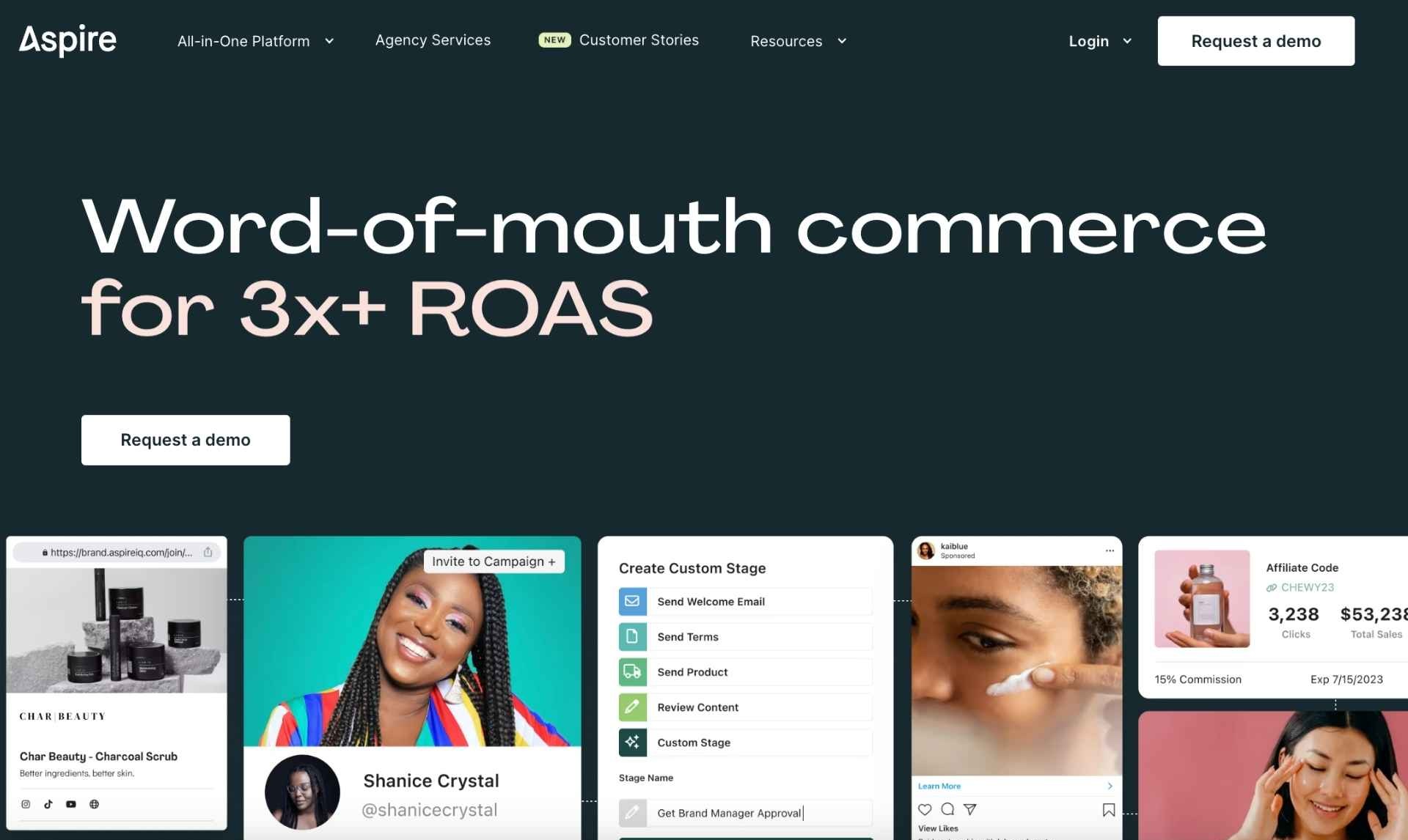
Aspire is a creator marketing platform designed to help brands manage influencer, affiliate, ambassador, and UGC programs across the full campaign lifecycle. It stands out for its creator marketplace, first-party data partnerships, and workflow automation, making it a common choice for ecommerce teams that want a balance between inbound creator sourcing and structured campaign management.
Key Features
- Discovery with first-party platform data: Aspire supports creator search by channel, keyword, engagement, and demographics, and the platform emphasizes first-party data relationships rather than relying only on scraped third-party data.
- Large inbound creator marketplace: Brands can post projects and collect applications through Aspire’s creator marketplace and custom application pages, reducing how much cold outreach is needed.
- Workflow automation and CRM: Aspire includes bulk actions, creator grouping, tags, brief workflows, automated follow-ups, and campaign stage management.
- Shopify-powered gifting: Creators can select products through controlled catalogs, while brands manage gifting rules and fulfillment without switching back and forth between tools.
- Content approvals and rights workflows: Teams can manage content review, built usage rights into briefs and contracts, and keep assets organized for reuse.
- Sales and commission tracking: Aspire supports discount codes, creator stores, links, and reporting around clicks, conversions, and sales performance.
- Support model: Aspire includes implementation and customer success support, which is a meaningful differentiator for teams that want more hands-on onboarding.
Platform Coverage
Instagram, TikTok, Pinterest, YouTube, and Facebook
Pricing
Aspire starts with tiered pricing and can be customized, with a mid-tier quote of about $2,300/month for a use case involving multiple team members and up to 500 creators in CRM.
Reviews
4.0 /5.0 (Capterra)
Standout Features
- Expanded Creator Marketplace: Aspire has recently highlighted a major expansion of its creator marketplace, giving brands access to a much larger pool of creators actively applying to collaborate.
- First-party data partnerships: Aspire’s emphasis on first-party data access from major social platforms is a key differentiator for teams prioritizing data trust and audience quality.
- AI reverse image and aesthetic-based discovery: Aspire promotes AI-driven visual discovery alongside keyword and marketplace sourcing, which is useful for brands recruiting creators based on content style and brand fit.
SocialLadder vs Aspire
SocialLadder is more focused on ambassador activation and gamified participation, while Aspire is closer to a full creator commerce platform. Aspire is a stronger fit for brands that need marketplace sourcing, Shopify-linked gifting, content approvals, and affiliate-style tracking, while SocialLadder is better aligned with community-led advocacy programs and repeat ambassador engagement.
4. SARAL
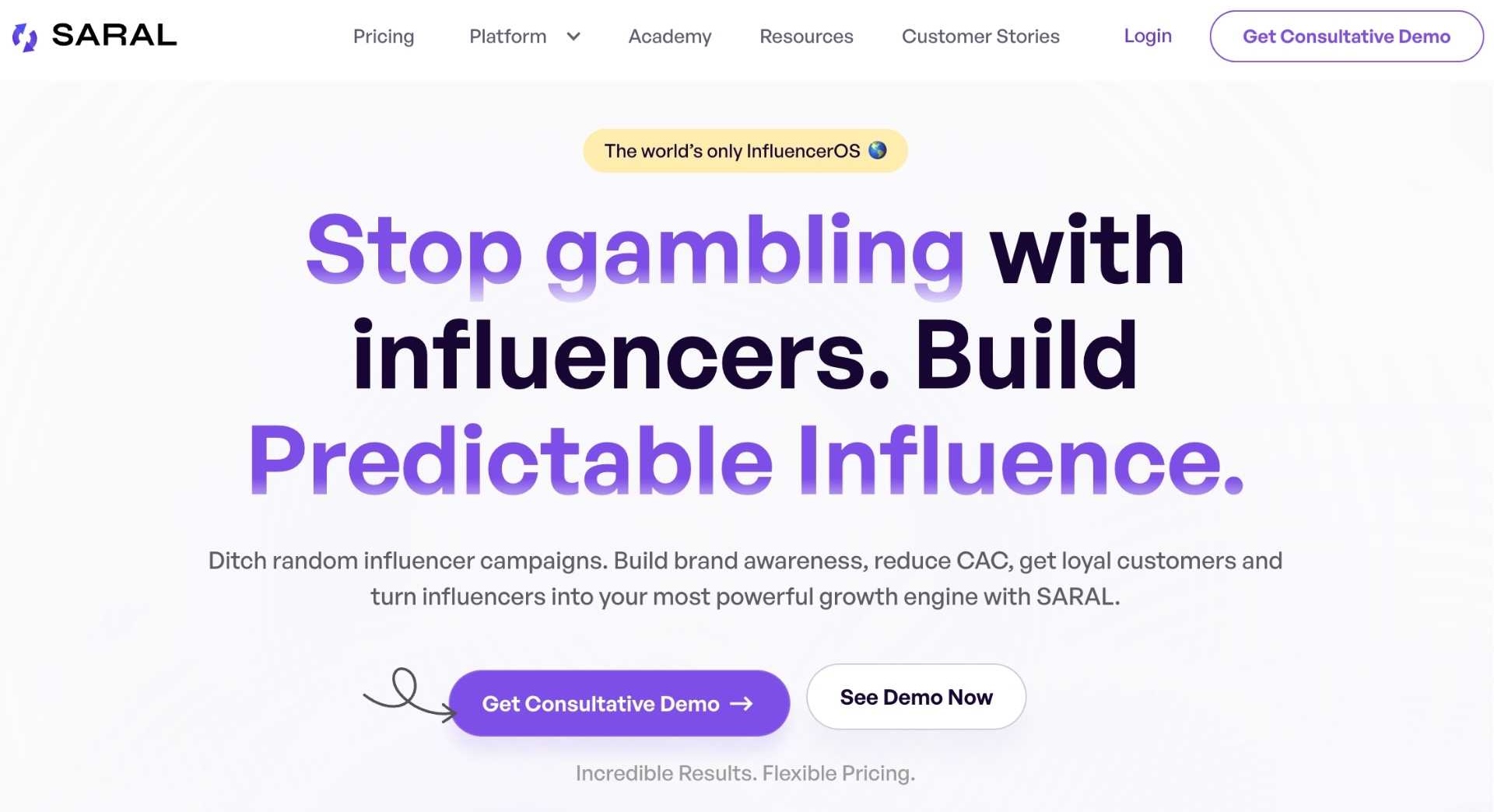
SARAL is an influencer marketing platform built for ecommerce brands that want a simpler system for discovery, outreach, relationship management, gifting, and performance tracking. Its positioning is more operational and ROI-focused than community-led, with an emphasis on helping smaller and mid-sized brands replace spreadsheets and fragmented workflows with a cleaner creator operating system.
Key Features
- Large discovery engine: SARAL’s discovery layer gives brands access to over 200 million creators and supports filtering by keywords, engagement, location, and similar influencers.
- AI assistant for discovery and outreach: SARAL’s AI assistant, SIA, helps with creator matching, personalized outreach drafts, follow-ups, and operational tasks like shipping workflows.
- Centralized influencer CRM: Relationship stages, tags, campaign tracking, and creator management all live inside SARAL’s purpose-built influencer CRM.
- Inbox for creator communication: SARAL Inbox brings creator emails into one filtered workspace and supports shortcuts for product shipping, link creation, and stage updates directly from the conversation view.
- Performance and affiliate tracking: The platform tracks creator performance across campaigns and positions itself as an ROI-first system for influencer and affiliate programs.
- Ecommerce integrations: SARAL supports Shopify and WooCommerce, with product gifting, affiliate tracking, and campaign management connected to commerce workflows.
- Onboarding and strategy support: SARAL includes onboarding and customer success guidance as part of the product experience, not just software access.
Platform Coverage
Instagram, TikTok, and YouTube.
Pricing
There are different plans:
- Starter: $3.6k/quarter
- Business: $4.5k/quarter
- Professional: $7.5k/quarter
Reviews
4.7/5.0 (G2)
Standout Features
- SIA AI assistant: SARAL has leaned heavily into SIA for creator discovery, email drafting, follow-ups, and operational workflow support, which is one of its clearest product differentiators.
- SARAL Inbox: Its newer inbox workflow is purpose-built for influencer operations and lets teams manage communication, shipping, and affiliate actions from one creator-focused workspace.
- Transparent pricing and unlimited management model: Unlike platforms that charge more as you manage more creators, SARAL explicitly says it does not increase fees based on the number of influencers under management.
SocialLadder vs SARAL
SocialLadder is more ambassador- and community-program oriented, while SARAL is more clearly built as an operational influencer OS for ecommerce teams. SARAL goes deeper on discovery, outreach automation, inbox management, affiliate tracking, and ROI visibility, whereas SocialLadder is the better fit for brands prioritizing mission-based participation and customer-ambassador engagement.
5. Influencity
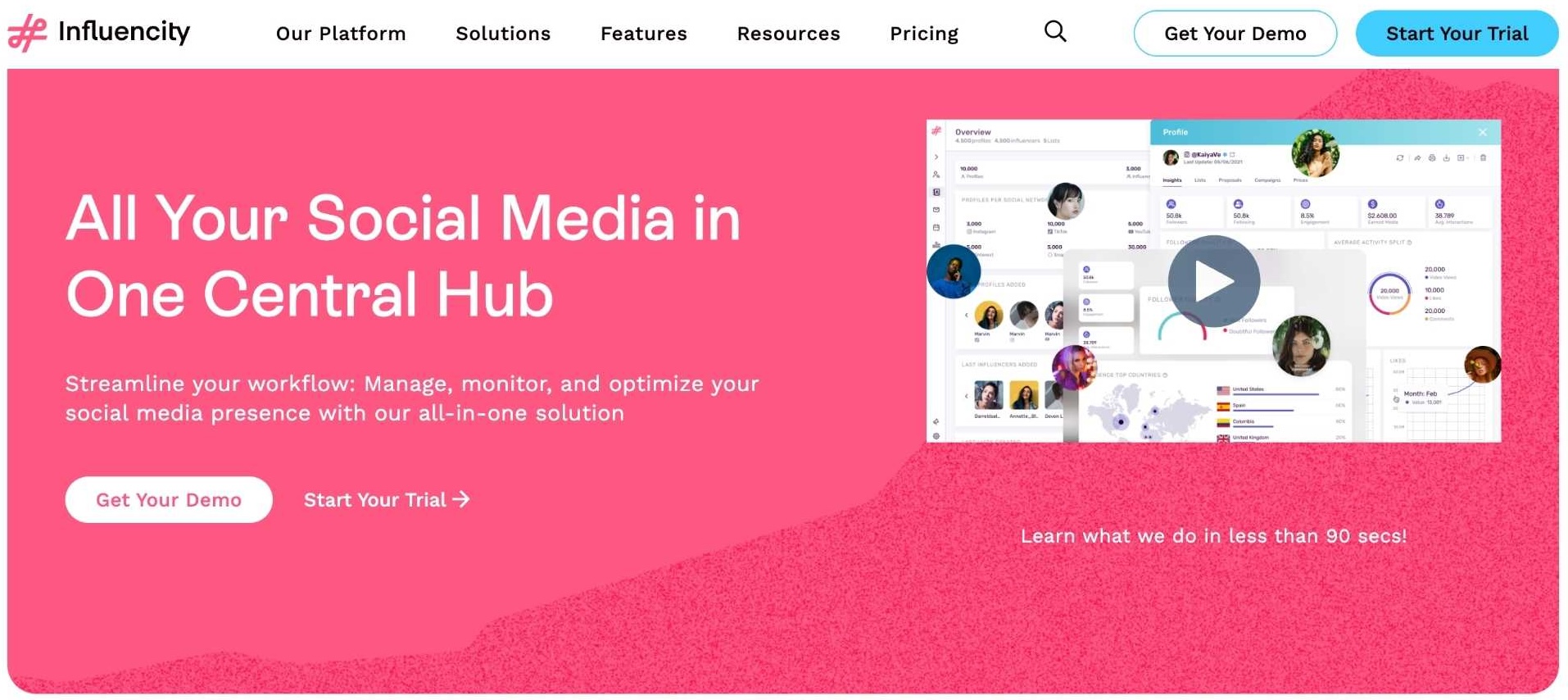
Influencity is a full-suite influencer marketing platform built for brands and agencies that want discovery, outreach, campaign management, analytics, and reporting in one place. A key part of its positioning is broad discovery through public data rather than only opt-in creators, which makes it attractive to teams that want more reach and flexibility in creator sourcing.
Key Features
- Public-data creator discovery: Influencity uses public social data to surface creator profiles at scale, helping brands search outside closed or opt-in marketplaces.
- Advanced search and profile analysis: Teams can search with AI keyword matching, hashtags, lookalikes, follower quality, engagement data, audience demographics, and affinity signals.
- Visual CRM and campaign boards: The platform includes list management, segmentation, and a Kanban-style campaign board for deadlines, approvals, and task flow.
- Email outreach workflows: Influencity supports email templates, follow-up sequences, and tracking of opens, clicks, and replies, although replies route back to the user’s own inbox.
- Tracking and reporting: Teams can combine manual reporting with auto-tracking rules based on hashtags, mentions, and post criteria, then export reports in PDF, Excel, and CSV.
- Shopify-based gifting and affiliate support: Influencity connects to Shopify for gifting, discount codes, and influencer-level sales attribution.
- Application pages and forecasting: Brands can launch branded application pages for inbound recruitment and use performance forecasting tools for budget planning.
Platform Coverage
Instagram, TikTok, YouTube, and X/Twitter
Pricing
- Professional Plan: $318/month or $3,816/year
- Business Plan: $798/month or $9,576/year
- Enterprise Plan: Custom pricing
- Auto-Tracker Add-On: $660/year (for 50 influencers)
Reviews
4.3 / 5.0 (G2)
Standout Features
- Public-data discovery at scale: Influencity’s biggest differentiator is its public-data model, which reduces dependence on opt-in creator databases and broadens discovery potential.
- Flexible reporting with manual plus auto-tracking: The mix of manual URL-based reporting and automated campaign tracking makes it practical for teams that need both control and scale.
- Integrated campaign forecasting and Kanban workflows: The combination of forecasting tools with a visual campaign board is useful for teams managing multiple programs by market, region, or brand line.
SocialLadder vs Influencity
SocialLadder is more community-oriented and better suited to ambassador programs, while Influencity is more search-, workflow-, and analytics-driven. Influencity offers broader discovery, stronger reporting exports, and more structured campaign management, whereas SocialLadder is better aligned with brands that want gamified participation and ongoing advocate engagement instead of a heavier operational setup.


6. NeoReach
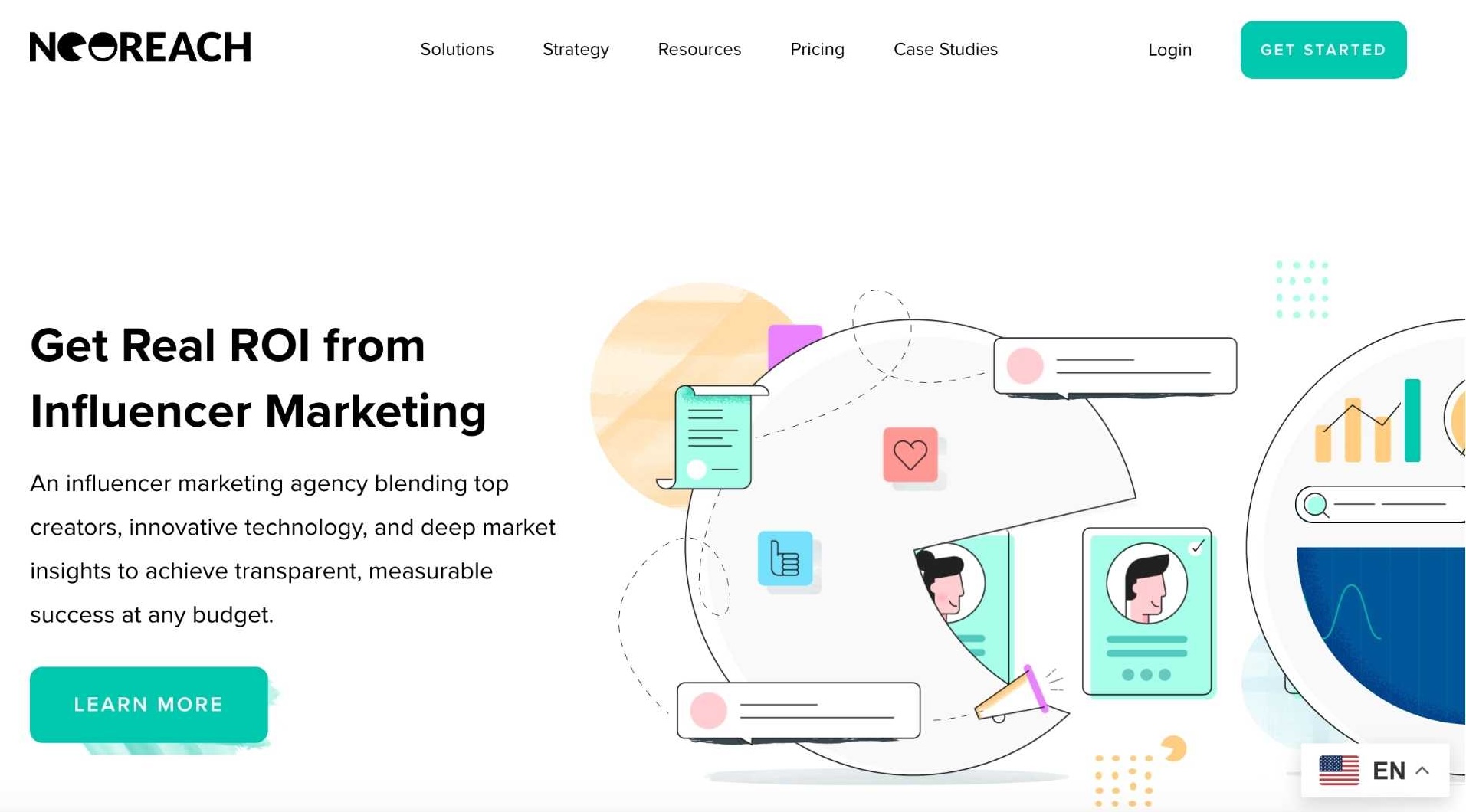
NeoReach is a tech-enabled influencer marketing platform and agency built for brands that need creator discovery, campaign management, reporting, payments, and deeper data access in one solution. Its positioning is more enterprise-focused than many SMB tools, with a strong emphasis on ROI measurement, workflow automation, and API-driven creator intelligence for brands running larger or more customized programs.
Key Features
- Advanced creator discovery and analysis: NeoReach lets teams search creators with 40+ filters, including keywords, social platforms, performance data, and audience demographics such as age, gender, language, location, income, and brand affinity.
- Campaign workflow management: The platform supports campaign planning, influencer relationship management, contract handling, deadline tracking, post reviews, and payment history in one shared workspace.
- Real-time reporting: NeoReach tracks campaign-level and creator-level metrics including ROI, CPM, CPE, impressions, engagements, and audience exposure demographics, with exportable reporting.
- Global creator payments: NeoReach positions automated influencer payments as part of its enterprise resource layer, which is helpful for teams working across multiple markets.
- API and custom data access: Its API gives access to creator data, hashtag trends, sponsorship data, audience insights, fraud detection signals, and 400+ network endpoints for teams that want deeper integrations or custom analysis.
- Fraud detection and sponsorship intelligence: NeoReach highlights fake follower and engagement detection, historical sponsorship pricing, competitor spending analysis, and audience matching as part of its data stack.
- Managed services option: Alongside software, NeoReach also offers managed campaign execution, paid media amplification, UGC production, and market research support.
Platform Coverage
Instagram, TikTok, YouTube, Facebook, Twitter (X), Pinterest, and Snapchat.
Pricing
NeoReach uses custom enterprise pricing, typically based on campaign scale, number of users, and feature requirements. Contracts are generally annual, with pricing often positioned in the higher tier of the market.
Reviews
4.5 / 5.0 (G2)
Standout Features
- Enterprise-grade API access: NeoReach’s API is one of its clearest differentiators, with 400+ endpoints covering sponsorship data, audience insights, brand data, content trends, and fraud detection.
- Software plus managed services: NeoReach is not just a self-serve platform; brands can pair the software with managed execution, paid media, UGC production, and research support.
- Historical pricing and competitor spend analysis: NeoReach highlights sponsorship pricing data, historical ROI signals, and competitor spending analysis, which is more data-heavy than the workflow-first positioning of many alternatives.
SocialLadder vs NeoReach
SocialLadder is built more around ambassador communities, gamified challenges, and ongoing advocacy, while NeoReach is geared toward larger-scale creator programs that need deeper analytics, custom data access, and more enterprise workflow control. NeoReach is the stronger option for brands that care about API access, cross-channel reporting, and managed-service support, while SocialLadder is usually the better fit for community-led activation and ambassador engagement.
7. Heepsy
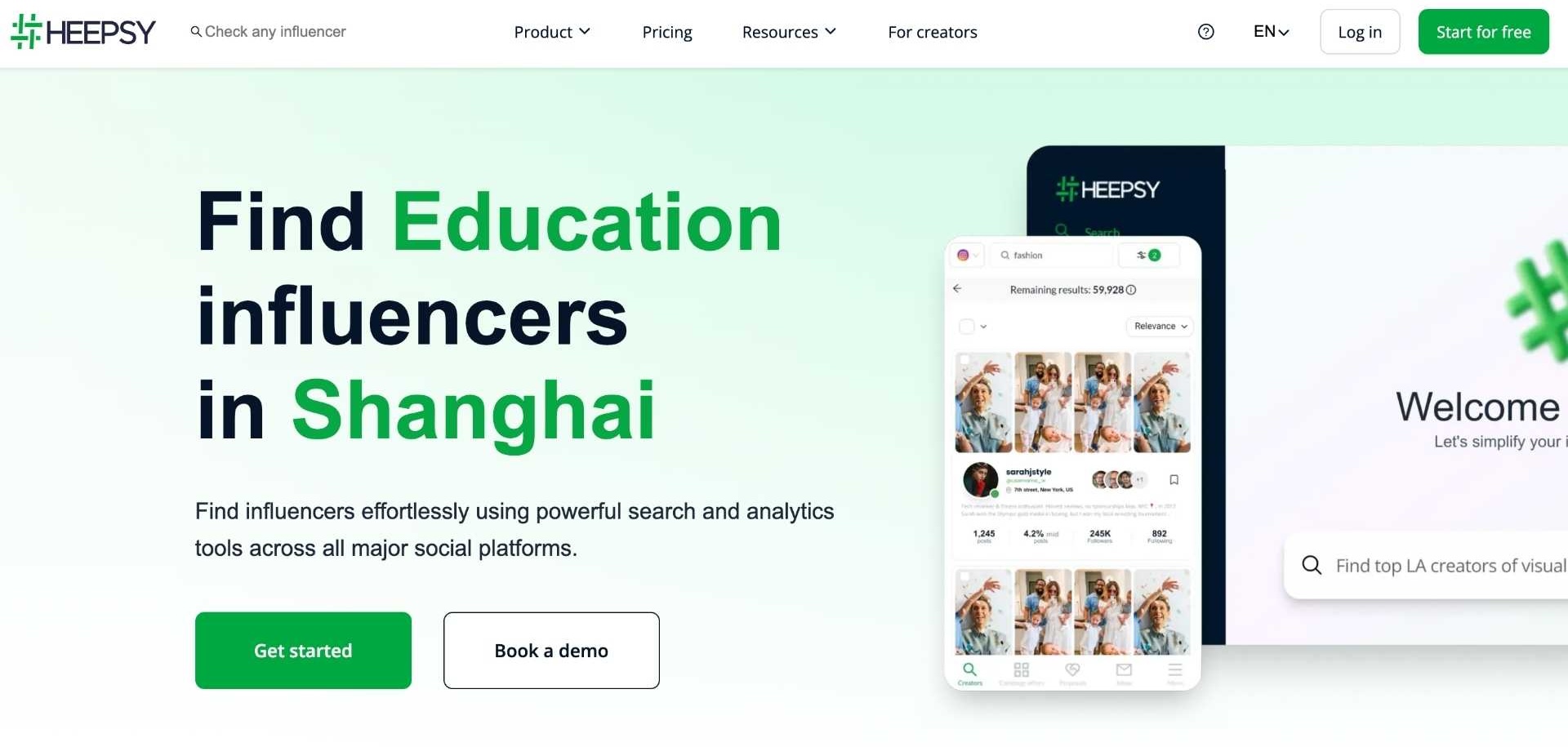
Heepsy is an influencer marketing platform focused on creator search, outreach, and campaign tracking, with a strong fit for ecommerce brands that want a simpler way to source and manage creators without moving into enterprise pricing. It is especially attractive for teams that want flexible billing, bulk outreach, and Shopify-based sales tracking on higher-tier plans.
Key Features
- Large creator database: Heepsy’s platform materials describe a database of about 50 million influencers globally, with strong coverage in the US and Europe.
- Detailed influencer search: Teams can filter by keyword, follower count, engagement rate, audience location, age, gender, authenticity, hashtags, mentions, and creator lookalikes.
- Profile analytics: Creator profiles include engagement metrics, audience demographics, recent brand collaborations, reach data, and authenticity analysis.
- Lists and pipeline CRM: Heepsy includes lists and a Kanban-style campaign board to track stages such as emailed, approved, shipped, sales, and paid.
- Bulk outreach: The platform supports outreach templates, bulk emailing, and automated follow-ups, with higher sending limits on upper plans.
- Campaign and media tracking: Heepsy can store campaign content, monitor mentions and hashtags, and generate campaign reports with engagement data.
- Ecommerce tracking on higher plans: The Advanced plan adds Shopify and WooCommerce sales integration, promotional code tracking, clicks, conversions, and affiliate-oriented reporting.
Platform Coverage
Instagram, TikTok, YouTube, and Twitch
Pricing
There are different plans:
- Free Plan: You can simply discover creators and see how the discovery feature works.
- Starter Plan: Starts at $89/month. You get up to 15k results, 50 profiles and 50 outreach emails.
- Plus Plan: Starts at $249/month. Offers 40K results, 1,000 advanced profiles, and 1,000 outreach emails. Adds bulk email outreach, contact exports, media gallery, and campaign reporting.
- Advanced Plan: Starts at $369/month. Includes 60K results, 3,000 profiles, and 3,000 outreach emails. Adds advanced filters, automated sales tracking, Shopify/WooCommerce integrations, product catalogs, and promo code tracking.
Reviews
4.5 / 5.0 (G2)
Standout Features
- Flexible billing structure: Heepsy stands out for offering free, monthly, 6-month, and annual options, plus upgrade, downgrade, and cancel-anytime flexibility.
- Strong discovery filters for the price: The platform combines audience filters, authenticity scoring, lookalike search, and detailed profile views in a package that is usually more accessible than enterprise tools.
- Affiliate tracking with ecommerce integration on Advanced: Heepsy’s higher tier adds Shopify and WooCommerce integrations, sales tracking, discount codes, and media monitoring, which gives it more commerce depth than many lower-cost tools.
SocialLadder vs Heepsy
SocialLadder is more focused on ambassador communities and gamified participation, while Heepsy is much more discovery-led and campaign-operational. Heepsy is the stronger choice for teams that want searchable creator data, bulk outreach, and a lightweight CRM, while SocialLadder makes more sense for brands building reward-driven ambassador programs rather than sourcing creators from a broad database.
8. Skeepers
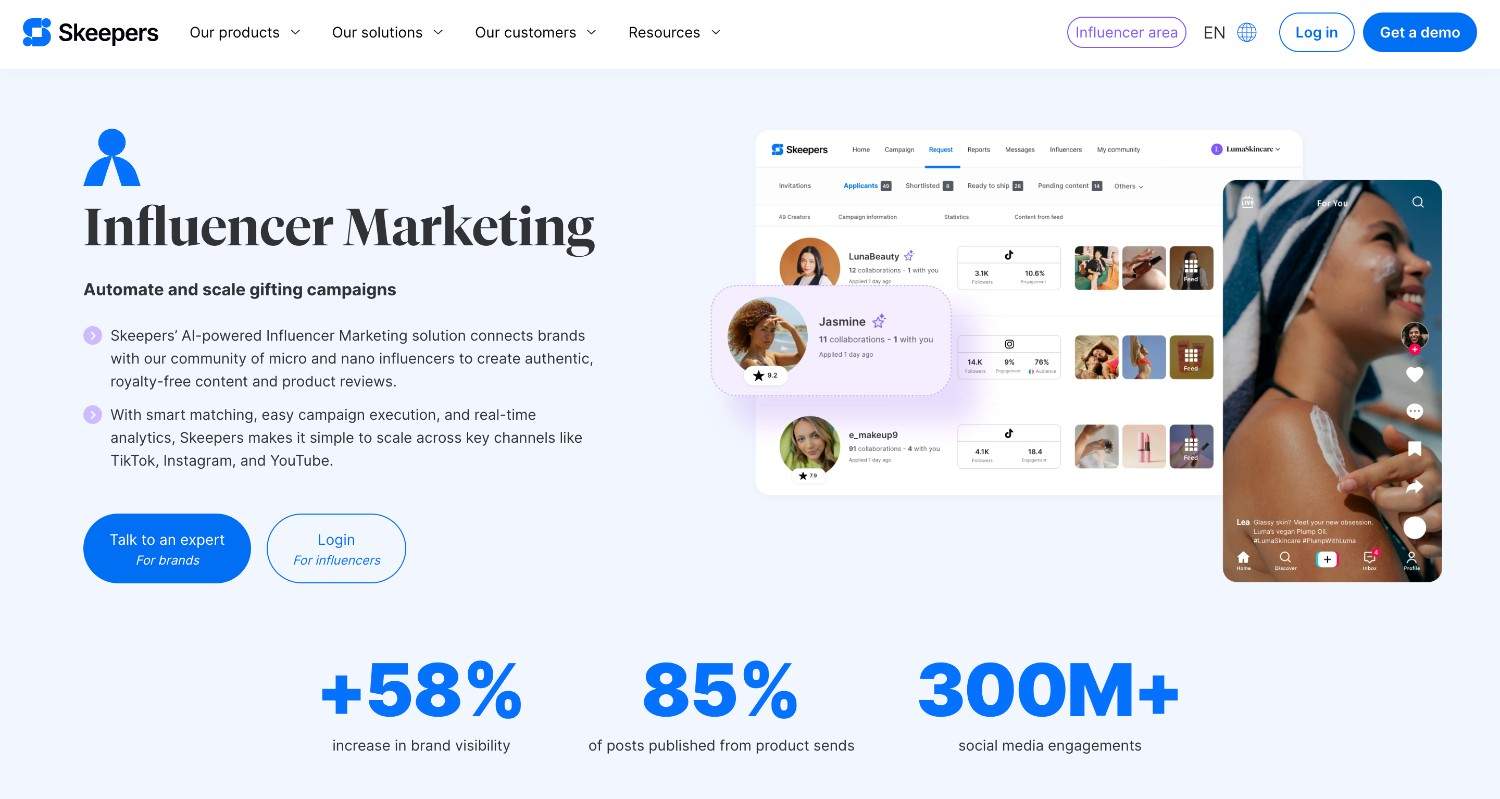
Skeepers Influencer Marketing is a creator and UGC platform designed to help brands run gifting-led campaigns with micro and nano influencers at scale. Its positioning is especially strong for brands that care about authentic product experience content, smart matching, and royalty-free content reuse rather than high-touch enterprise influencer operations.
Key Features
- Micro and nano influencer community: Skeepers says its influencer marketing solution connects brands with a community of 400k+ creators, with a strong emphasis on product seeding and authentic content creation.
- AI-powered smart matching: The platform uses AI-based matching to help brands identify creators aligned with campaign criteria and audience fit.
- Campaign briefing and collaboration: Skeepers supports campaign briefs, templates, direct messaging, and collaboration tools to manage creator relationships during execution.
- Real-time analytics: Brands can track campaign performance and engagement metrics inside the platform.
- Royalty-free content focus: Skeepers emphasizes authentic, reusable creator content and product reviews that brands can repurpose more easily.
- Shoppable content and conversion support: Its broader UGC positioning includes shoppable content workflows designed to connect creator content with commerce outcomes.
- Mobile support: Third-party software listings indicate support for web, Android, and iPhone/iPad.
Platform Coverage
Instagram, TikTok, YouTube
Pricing
Skeepers uses custom pricing, typically based on modules (UGC, influencer marketing, reviews) and campaign scale. Contracts are usually annual.
Reviews
4.7/5.0 (G2)
Standout Features
- 400k+ micro and nano creator community: Skeepers is especially differentiated for brands that want gifting-led campaigns with smaller creators rather than relying on a broad cold-search database.
- Royalty-free content creation: Its official positioning emphasizes authentic, reusable content and product reviews, which is especially attractive for brands with strong UGC needs.
- Smart matching for campaign fit: AI-powered smart matching is one of its core product differentiators and helps reduce the manual work of creator selection.
SocialLadder vs Skeepers
SocialLadder and Skeepers both lean more toward advocacy than enterprise creator operations, but they solve different problems. SocialLadder is more community- and mission-driven, with stronger ambassador engagement mechanics, while Skeepers is more gifting- and UGC-oriented, with a clearer focus on sourcing micro and nano creators to generate authentic content at scale.
9. Upfluence
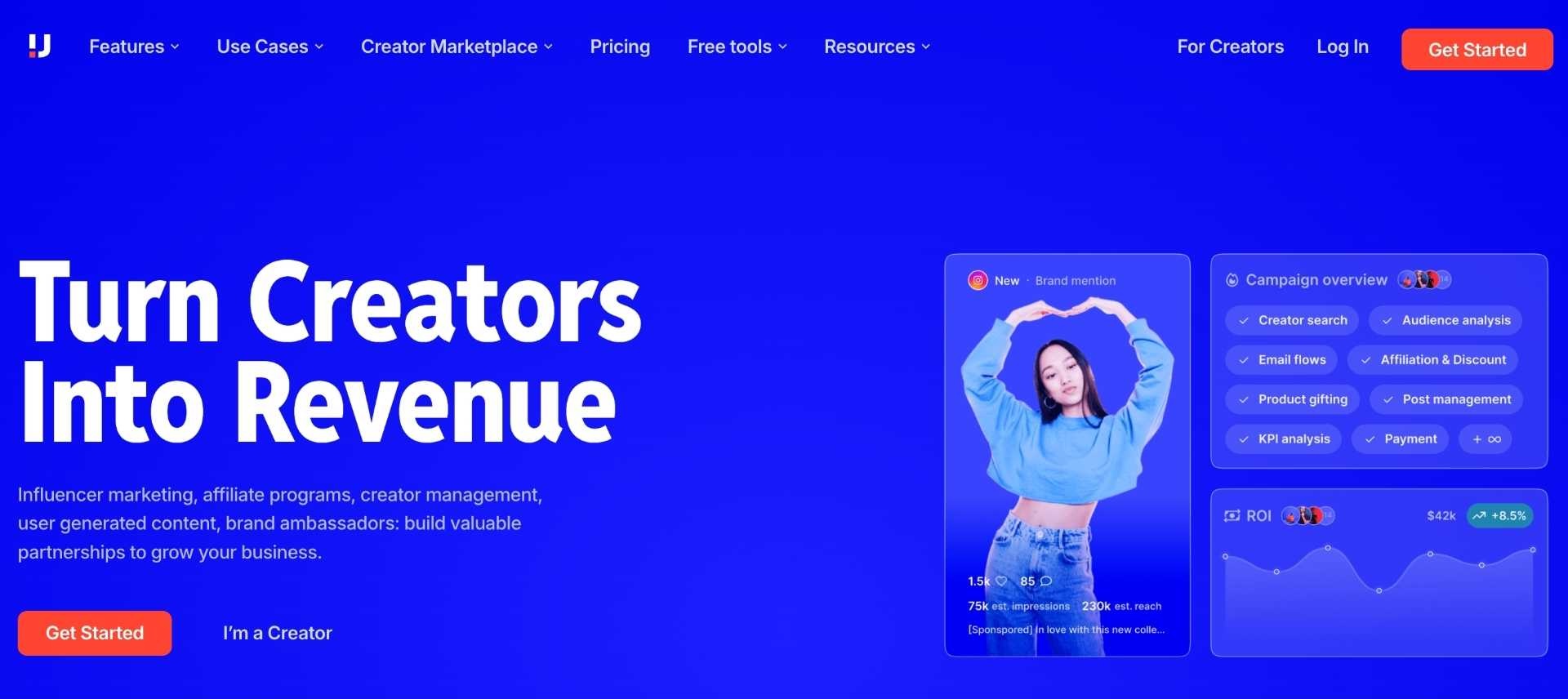
Upfluence is an end-to-end influencer marketing platform built around creator discovery, outreach, campaign management, affiliate tracking, and sales attribution. It is particularly strong for ecommerce brands because of its Shopify and Amazon integrations, customer-to-creator identification, and focus on tying influencer activity back to revenue.
Key Features
- Large influencer database: Upfluence’s current sales materials describe access to 12M+ global influencers with advanced filtering by location, niche, follower size, and engagement.
- AI-assisted discovery and outreach: Upfluence includes bulk email outreach, automated follow-up flows, and its AI campaign assistant, Jace AI, to help teams streamline communication.
- CRM and campaign management: Brands can manage communication, campaign workflows, custom compensation models, and influencer imports in-platform.
- Shopify integration: Upfluence’s Shopify integration supports customer-influencer identification, gifting, commissions, referrals, and direct campaign attribution to ecommerce sales.
- Amazon integration: For brands selling on Amazon, the platform also supports sales, affiliate link, and performance tracking.
- Performance tracking and payments: It tracks metrics such as sales, reach, impressions, engagement, clicks, and conversions, and supports bulk creator payouts.
- Social listening: Upfluence also includes social listening for market research and identifying content trends.
Platform Coverage
Instagram, TikTok, YouTube, Facebook, Twitch, Pinterest, and blogs.
Pricing
On average plans start around $2,000/month ($24,000 yearly)
Reviews
4.3 / 5.0 (Capterra)
Standout Features
- Customer-to-creator identification: Upfluence’s Shopify integration can identify existing customers who are also influencers, which is a strong differentiator for ecommerce brands looking to activate warm brand advocates.
- Shopify and Amazon revenue tracking: Upfluence is one of the stronger options for brands selling across both Shopify and Amazon and wanting influencer sales attribution in one place.
- AI campaign assistant: Jace AI adds automation to outreach and campaign workflows, helping reduce manual setup and communication work.
SocialLadder vs Upfluence
SocialLadder is more focused on ambassador communities and challenge-based engagement, while Upfluence is much more ecommerce and performance oriented. Upfluence is the better fit for brands that need large-scale discovery, bulk outreach, affiliate tracking, and direct revenue attribution through Shopify or Amazon, while SocialLadder is usually a stronger fit for structured ambassador programs and community participation.
10. Traackr
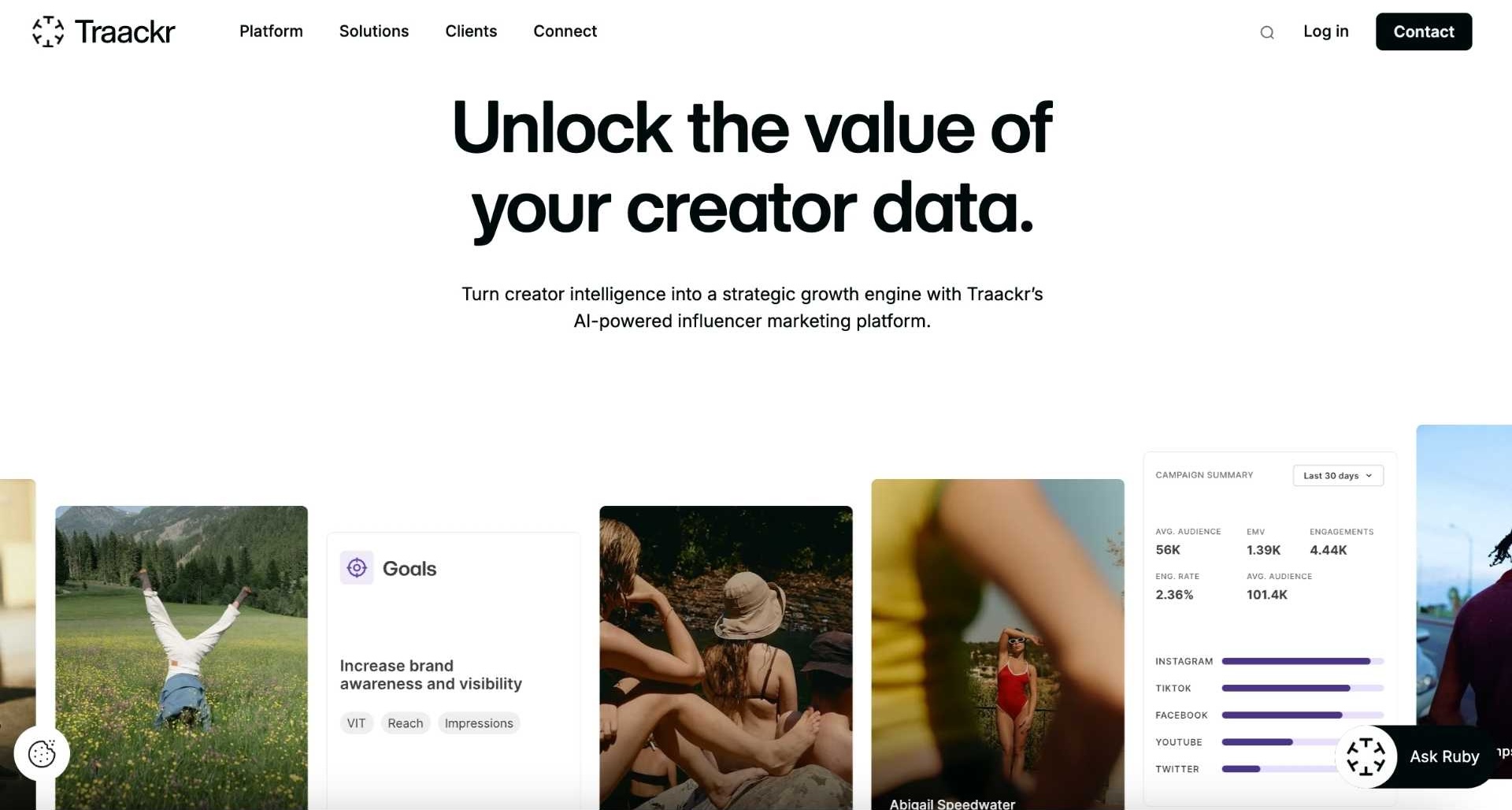
Traackr is an enterprise influencer marketing platform built for brands that care deeply about creator performance benchmarking, budget allocation, and ROI measurement across global programs. Its positioning is more strategic and analytics-heavy than many creator workflow tools, making it especially relevant for large brands that need benchmarking, cost-efficiency reporting, and executive-level visibility.
Key Features
- Global influencer discovery: Traackr’s platform materials describe a database of 6M+ influencers with filters for engagement, demographics, brand collaborations, and performance history.
- Personalized outreach and CRM: The platform supports scalable outreach, automated follow-ups, branded recruitment pages, notes, custom tags, and shared relationship management.
- Granular reporting: Traackr tracks metrics such as CPC, CPE, CPV, engagement rate, reach, and ROI, and supports benchmarking against historical and market data.
- Gifting, UGC, affiliate, and payments: The platform supports product seeding, UGC collection, affiliate links, commissions, and direct creator payouts.
- Benchmarking and budget planning: Traackr is especially strong on campaign benchmarking and spend optimization rather than just campaign execution.
- Live campaign monitoring: It supports real-time campaign performance tracking so teams can adjust creator spend or direction before a campaign ends.
- Enterprise support model: Customer success, onboarding, and strategic consulting are frequently highlighted as part of the platform experience.
Platform Coverage
Instagram, TikTok, YouTube, Facebook, Pinterest, and Twitter (X).
Pricing
Plans usually start at $32,500/year.
Reviews
4.3/5.0 (G2)
Standout Features
- Brand Vitality Score (BVS): Traackr’s proprietary benchmark combines visibility, influence, and trust into a single score, giving teams an executive-friendly view of brand impact against competitors.
- Budget Optimization Calculator: The platform helps brands estimate what they should spend on each creator based on historical performance and benchmarks, which is a meaningful differentiator for larger programs.
- Advanced cost-efficiency reporting: Traackr goes beyond standard engagement reporting with cost-per-click, cost-per-engagement, cost-per-view, and cost-per-story-view dashboards.
SocialLadder vs Traackr
SocialLadder is more focused on ambassador engagement and campaign participation, while Traackr is built for enterprise teams that want rigorous benchmarking, budget planning, and global performance measurement. Traackr is the stronger option for brands that need executive-ready reporting and spend optimization, while SocialLadder is the better fit for brands prioritizing community-led advocacy and reward-based ambassador programs.
Final Thoughts
SocialLadder stands out as a strong option for brands focused on ambassador programs, community engagement, and gamified participation, but it is not always the best fit for teams prioritizing large-scale creator discovery, advanced automation, or revenue-driven campaign tracking. As influencer marketing programs mature, many brands look for platforms that offer deeper discovery capabilities, stronger CRM workflows, ecommerce integrations, and more granular performance analytics. The alternatives covered—ranging from ecommerce-focused tools like GRIN and Upfluence to data-driven platforms like Traackr and NeoReach—highlight how different platforms are built to support different stages and strategies of influencer marketing.
Ultimately, the right choice depends on how a brand structures its creator strategy. Teams focused on ambassador communities and ongoing engagement may still find SocialLadder effective, while those scaling outbound campaigns, managing hundreds of creators, or tying influencer efforts directly to sales may benefit from more operational or analytics-heavy platforms. Evaluating factors like discovery depth, workflow automation, integrations, and reporting clarity will help determine which SocialLadder alternative aligns best with your marketing goals.