


Top CRM & Campaign Management Tools • Influencer Hero • GRIN • Aspire • CreatorIQ • Klear (Meltwater) • Later • SARAL • Upfluence • Influencity • Traackr • Final Thoughts • FAQs
Top CRM & Campaign Management Tools for Influencer Marketing
An influencer CRM and campaign management platform helps e-commerce brands and agencies keep creator relationships, outreach, approvals, gifting, tracking, and reporting in one place instead of across spreadsheets, inboxes, and disconnected tools. That makes it easier to run campaigns efficiently, stay on top of deliverables, and maintain clear visibility into which partnerships are driving content, engagement, conversions, and revenue. For online brands in particular, these tools are valuable for managing product seeding, affiliate programs, discount codes, and long-term creator relationships across multiple campaigns.
In this article, we’ll explore Influencer Hero, Grin, Aspire, CreatorIQ, Klear (Meltwater), Later, SARAL, Upfluence, Influencity, and Traackr to see which platforms are best suited for influencer CRM and campaign management.
Top CRM Tools for Influencer Marketing
| TOOL | REVIEWS | BEST FOR | TRIAL INFO | PRICING | ||
|---|---|---|---|---|---|---|
1 |

|
⭐ | Influencer CRM & automation | Book Demo | Pricing | Website |
2 |

|
⭐ | DTC creator management | Book Demo | Pricing | Website |
3 |

|
⭐ | Influencer partnerships | Book Demo | Pricing | Website |
4 |

|
⭐ | Enterprise influencer marketing | Book Demo | Pricing | Website |
5 |
|
⭐ | Influencer analytics | Book Demo | Pricing | Website |
6 |

|
⭐ | Social media & influencer campaigns | Book Demo | Pricing | Website |
7 |

|
⭐ | Influencer outreach | Book Demo | Pricing | Website |
8 |
|
⭐ | Ecommerce influencer discovery | Book Demo | Pricing | Website |
9 |

|
⭐ | Campaign management | Book Demo | Pricing | Website |
10 |

|
⭐ | Enterprise influencer analytics | Book Demo | Pricing | Website |
1. Influencer Hero
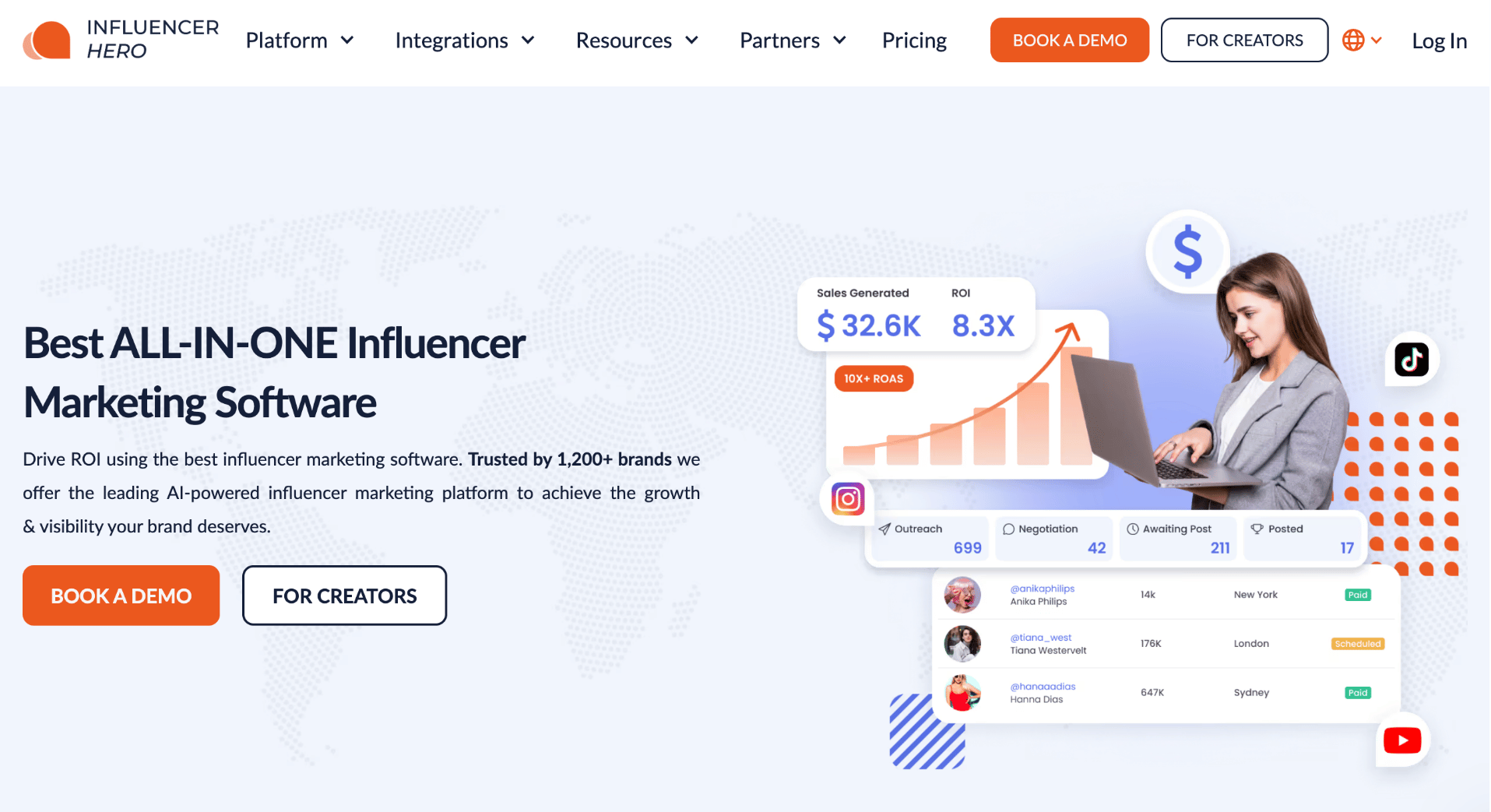
Influencer Hero is a CRM-first influencer marketing and campaign management platform designed for e-commerce teams running high-volume creator programs. It combines structured relationship management, campaign workflows, and automation into a single system—allowing teams to manage outreach, track deliverables, handle gifting, and measure revenue without switching tools. It is especially well suited for brands that need a campaign-centric CRM to scale influencer operations while maintaining clear visibility across every stage.
Key features:
- Influencer discovery: Search across a database of 450M+ creators using 20+ filters. Additional tools like lookalike discovery, brand-follower identification, fake follower detection, and a Chrome extension help teams build highly relevant creator lists faster.
- CRM boards: Organize influencers in structured, campaign-based pipelines with visual boards that track outreach status, approvals, deliverables, and performance. Built-in automation and tagging make it easy to manage thousands of relationships at scale.
- Bulk outreach: Send personalized one-to-one or bulk emails directly from the platform, with communication history fully synced to each creator profile.
- Automated email flows: Set up AI-enhanced drip sequences, smart follow-ups, and reply tracking to reduce manual work and improve response rates.
- Gifting and seeding: Connect campaigns to Shopify, WooCommerce, or custom stores to automate product sends, track shipping, and confirm delivery status.
- Affiliate tracking: Generate unique links and discount codes, track conversions and commissions, and connect influencer activity directly to revenue.
- UGC collection: Automatically collect, store, and organize influencer-generated content for review, reuse, and paid media.
- Reporting and ROI tracking: Access real-time dashboards with performance metrics including clicks, engagement, affiliate sales, UGC, and ROI per influencer.
Platform coverage:
Influencer Hero supports Instagram, TikTok, YouTube, Facebook, Pinterest, Snapchat, X, and Twitch.
Standout features:
- Campaign-centric CRM automation: Structured boards, bulk actions, and automated flows make it well suited for high-volume creator programs.
- Influencer brand followers: Identify creators who already follow or engage with your brand to improve campaign authenticity and conversion rates.
- AI-powered UGC search: Search influencer content using keywords, captions, or visuals to quickly find high-performing assets for reuse.
- Chrome extension: Browse Instagram, TikTok, or YouTube and instantly access key influencer metrics while viewing profiles. Add creators directly to your CRM in one click, streamlining discovery and list building without leaving the platform.
Limitations:
- Steep learning curve
Integrations:
- Shopify: Sync products, generate affiliate links and discount codes, and track influencer-driven revenue in real time.
- WooCommerce: Track influencer orders, commissions, and gifting campaigns for WooCommerce stores.
- Klaviyo: Identify influencers within your existing customer base and sync influencer-driven customers into email marketing flows.
- DocuSign: Send and manage influencer contracts digitally, allowing creators to review and sign campaign agreements directly.
- GoAffPro: Connect influencer campaigns with affiliate tracking to monitor commissions and sales performance.
- Slack: Receive campaign notifications, influencer replies, and workflow updates directly in Slack channels.
- Zapier: Connect Influencer Hero with thousands of apps to automate workflows and sync campaign data across your marketing stack.
- Email integrations (Gmail & Outlook): Run influencer outreach campaigns and manage communication directly from your email inbox.
Pricing:
Influencer Hero offers tiered monthly plans based on outreach volume, with unlimited influencer storage across all plans:
- Standard — $649/month (up to 1,000 outreach contacts/month)
- Pro — $1,049/month (up to 5,000 outreach contacts/month)
- Business — $2,490/month (up to 10,000 outreach contacts/month)
- Custom — Tailored pricing for agencies and high-volume teams
Reviews:
5.0/5.0 (Capterra)
2. GRIN
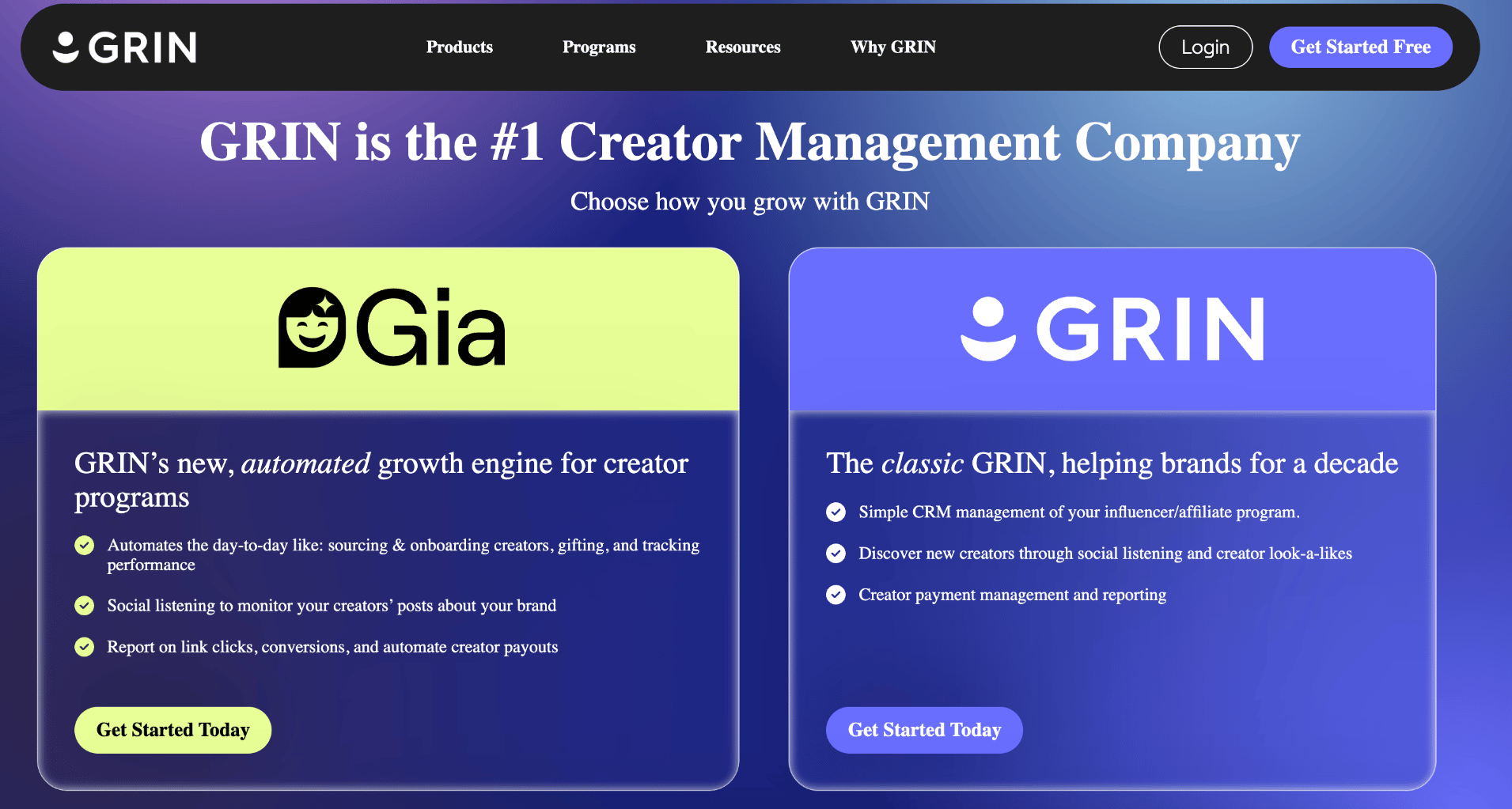
GRIN is a creator management platform designed for e-commerce and DTC brands that want influencer CRM, gifting, affiliate tracking, creator communication, and reporting in one system. Its core strength is tying creator relationships closely to store operations, which makes it a strong fit for brands running product seeding and revenue-focused campaigns.
Key features:
- Creator discovery: Find creators by niche, audience data, engagement rate, and brand affinity.
- Influencer CRM: Use tags, notes, pipelines, and relationship history to manage creators over time.
- Email outreach: Sync outreach with your inbox and track opens, clicks, and replies.
- Product gifting: Let creators select products through store-connected workflows and track orders.
- Affiliate tracking: Create discount codes and commission structures tied to creator results.
- Payments: Send payouts through in-platform payment workflows.
- Application pages: Collect inbound creator applications through branded landing pages.
- UGC library: Store creator content, including Stories, in a searchable content library.
- ROI reporting: Measure affiliate revenue, conversions, and campaign performance at the creator level.
Platform coverage:
GRIN supports Instagram, TikTok, YouTube, X, Twitch, and Snapchat.
Standout features:
- E-commerce-native workflow: GRIN is especially strong when gifting, commissions, and revenue attribution are central to the program.
- Unlimited creator partnerships: It is designed for brands that want to scale partnerships without strict creator caps.
- Embedded payments and media rights workflows: Payouts and content reuse are more deeply embedded than in many competing tools.
Limitations:
- Pricing is often a barrier for smaller teams.
- GRIN is generally sold on annual agreements rather than lightweight monthly plans.
- Some teams may find the platform more operationally heavy than simpler mid-market alternatives. This is an inference based on its feature depth and pricing profile.
Integrations:
- Shopify: Automates product seeding, order tagging, and sales attribution.
- PayPal: Handles creator payments and commission payouts inside the workflow.
- Gmail: Syncs influencer conversations from your own inbox.
- Outlook: Centralizes creator communication for teams using Microsoft email.
- Klaviyo: Connects creator and customer communication flows for e-commerce programs.
Pricing:
GRIN uses custom pricing and annual contracts. Annual pricing starts at $25,000/year (approx. $2,050/month)
Reviews:
4.5/5.0 (G2)
3. Aspire
Aspire is an influencer marketing platform that combines influencer CRM, campaign workflows, creator recruitment, gifting, affiliate tracking, and reporting in one system. It stands out for combining campaign management with first-party data partnerships and a large inbound creator marketplace.
Key features:
- Creator discovery: Search creators by channel, keyword, engagement, and demographics.
- Inbound creator marketplace: Publish projects and receive applications from creators who want to collaborate.
- CRM and workflow management: Track creators across invite, contract, brief, content approval, posting, and reporting stages.
- Bulk actions and automations: Send welcome emails, briefs, and contracts in batches and automate follow-ups.
- Product gifting: Let creators select pre-approved products through Shopify-connected flows.
- Sales tracking and commissions: Track clicks, conversions, sales, and creator commissions.
- Content library: Store campaign content and usage-rights information.
- Email sync: Connect Gmail to keep creator communication tied to campaign records.
- Exportable reports: Generate campaign and sales reports for internal stakeholders.
Platform coverage:
Aspire is strongest on Instagram, TikTok, YouTube, Facebook, and Pinterest.
Standout features:
- First-party platform data: Direct partnerships with Meta, TikTok, and Pinterest improve data reliability.
- Large inbound marketplace: Aspire reduces some of the manual work of creator sourcing by bringing applications into the platform.
- Strong onboarding and support: It is consistently positioned as a hands-on option for teams building more mature workflows.
Limitations:
- Pricing can be high for smaller teams.
- Direct payment processing is less central than in some competitors.
- Support for smaller secondary platforms is less clearly emphasized than for its core channels.
Integrations:
- Shopify: Supports product seeding, promo codes, and conversion tracking.
- Gmail: Keeps creator conversations visible inside campaign workflows.
- PayPal: Supports creator payment workflows.
- CJ: Pulls affiliate conversion data into campaign reporting.
- ShareASale/Awin: Connects affiliate links and sales tracking to creator campaigns.
Pricing:
Plans usually start at $2,000/month with annual agreements.
Reviews:
4.0 /5.0 (Capterra)
4. CreatorIQ
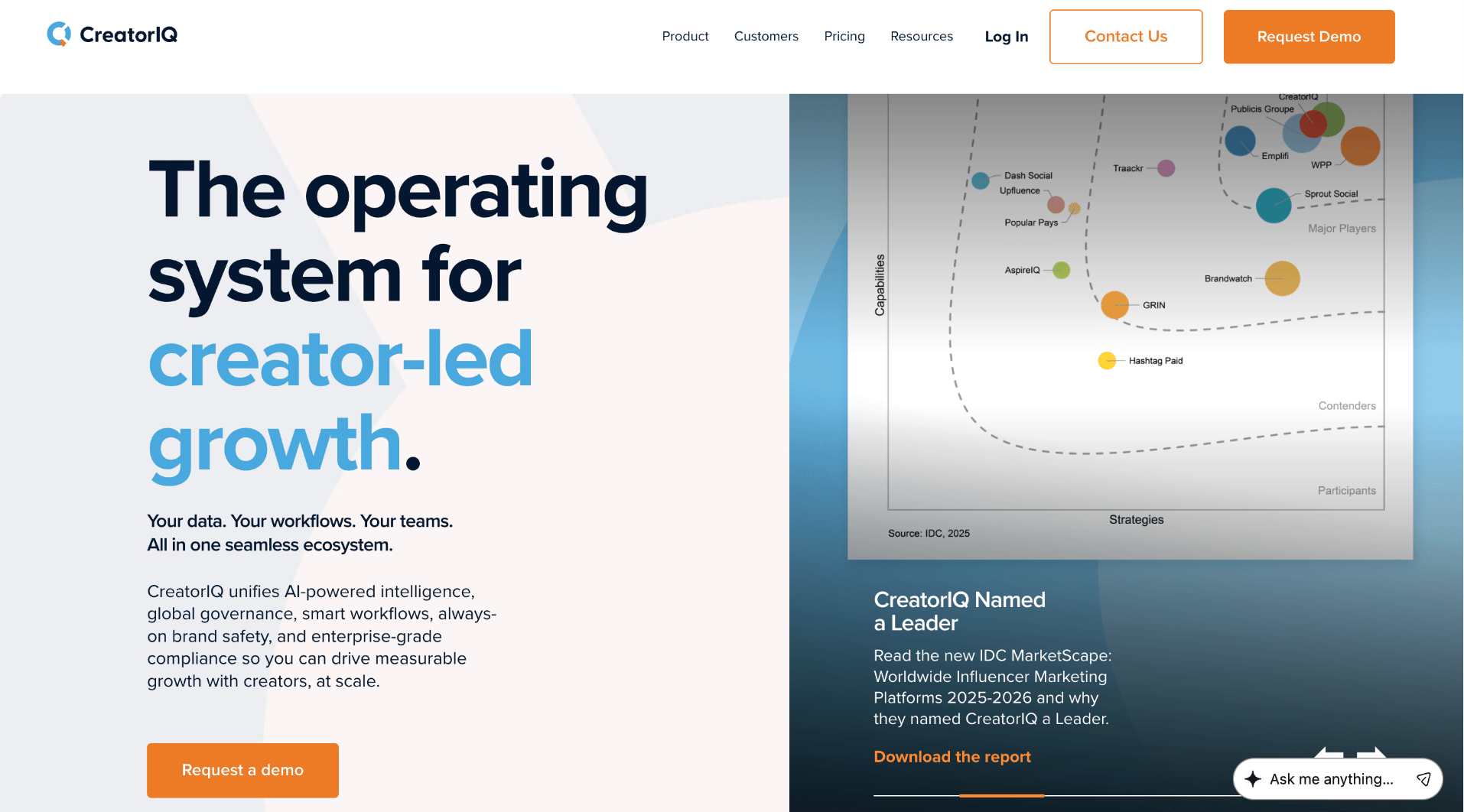
CreatorIQ is an enterprise creator marketing platform built for large brands and agencies that need influencer CRM, approval workflows, governance, payments, and reporting at scale. It is best suited to teams that need structured collaboration across multiple stakeholders, regions, or business units.
Key features:
- Public creator search: Search public creator profiles without relying only on opt-in databases.
- Advanced filtering: Filter by platform, audience data, content themes, brand mentions, and semantic search terms.
- Private creator CRM: Store creator records, campaign history, notes, questionnaires, and tags.
- Campaign setup and briefs: Build campaigns from templates and generate structured briefs with dates and guidelines.
- Approval workflows: Share creator one-sheets and content approval links with internal stakeholders.
- Payments and compliance: Handle creator payouts with tax and compliance support.
- UGC and content library: Auto-collect campaign assets and manage reuse requests.
- Custom dashboards: Build executive-ready live reports across creator, campaign, and content performance.
Platform coverage:
CreatorIQ supports Instagram, TikTok, YouTube, Facebook, Pinterest, Twitch, X, and other major channels used by enterprise creator programs.
Standout features:
- Enterprise approval workflows: One-sheets and live approval links make cross-functional campaign review much easier.
- Strong reporting layer: CreatorIQ is built for stakeholder-friendly dashboards and live performance reporting.
- Governance and compliance: Payments, approvals, and operational controls are stronger than in many lighter SMB tools.
Limitations:
- Cost and annual contracts make it harder for smaller teams to justify.
- It is more enterprise-oriented than e-commerce-first tools focused on quick startup and gifting workflows.
- Teams mainly looking for a lightweight self-serve platform may find it too heavy. This is an inference based on its packaging and enterprise feature set.
Integrations:
- Shopify: Connects product gifting, shipping, and creator-facing product details to campaign workflows.
- Google Analytics: Adds website and performance data to creator reporting.
- DocuSign: Streamlines contracts and approvals.
- Tableau: Pushes creator data into BI reporting environments.
- Awin: Connects affiliate activity to creator campaign reporting.
Pricing:
- Basic Plan: Starts at $35,000/year. Includes 1,000 contact creators per month
- Standard Plan: Starts at $50,000/year. Includes 2,500 contact creators per month
- Professional Plan: Starts at $90,000/year. Includes 5,000 contact creators per month
- Enterprise Plan: Starts at $200,000/year. Includes 7,500 contact creators per month
Reviews:
4.4 / 5.0 (Capterra)
5. Klear (Meltwater)
Klear, part of Meltwater, is an influencer CRM and campaign management platform that combines creator discovery, outreach, reporting, direct communication, and e-commerce measurement inside a broader media intelligence ecosystem. It is a strong fit for brands and agencies that want influencer campaign management plus access to social listening and wider brand monitoring tools.
Key features:
- Influencer discovery: Search creators by topic, keyword, audience, and brand-collaboration filters.
- Visual search and AI summaries: Use image-led search and AI-powered creator summaries to evaluate fit faster.
- Campaign management: Add influencers, set deliverables, and manage campaigns from a central dashboard.
- Direct communication: Chat with creators inside the platform instead of relying only on email or DMs.
- Product gifting and coupon tracking: Support gifting, coupon codes, link tracking, and sales attribution.
- Performance reporting: Measure reach, engagement, media value, sentiment, affiliate metrics, and sales.
- Instant report exports: Generate internal reports quickly for stakeholder sharing.
- Payments: Supports creator payments inside the broader workflow.
Platform coverage:
Klear covers major channels including Instagram, YouTube, Facebook, Twitch, X, Pinterest, and blogs.
Standout features:
- True Reach: Its reach estimation is designed to avoid overvaluing creators based only on follower count.
- Visual AI search: It gives teams another way to find creators beyond standard keyword filters.
- Meltwater ecosystem: Klear becomes more valuable for teams already using Meltwater for listening, media monitoring, or reporting.
Limitations:
- Pricing is enterprise-level.
- Some users report interface lag and export limitations.
- It may be more than smaller e-commerce brands need if they only want core creator CRM and campaign tracking. This is an inference based on its broader suite positioning.
Integrations:
- Shopify: Connects coupon-code sales tracking and e-commerce attribution to campaigns.
- Slack: Sends alerts and campaign-related notifications to internal teams.
- Microsoft Teams: Extends internal collaboration and notifications into the Microsoft stack.
- Platform payments: Supports creator payment workflows inside the campaign process.
- Meltwater social listening tools: Links influencer campaign data to broader brand and competitor monitoring.
Pricing:
Klear uses custom annual pricing, with packages from around $2,300 per month depending on users and influencer volume.
Reviews:
4.3 / 5.0 (G2)


6. Later
Later is an influencer marketing and campaign management platform aimed at brands that want structured creator workflows, reporting, brand-suitability checks, and sales measurement in one system. It is a solid fit for teams that want stronger controls around vetting and ROI reporting without managing campaigns entirely in spreadsheets or email.
Key features:
- Creator discovery: Find and vet creators based on fit, audience, and expected campaign performance.
- Campaign workflow dashboard: Track creators through review, proposal, approval, and posting stages.
- Content approval: Let creators submit content for review before it goes live.
- Brand safety filters: Exclude creators based on flagged keywords or risky content themes.
- Competitive benchmarking: Compare creator overlap and engagement against competitors.
- EMV and campaign reporting: Measure earned media value, engagement trends, and creator performance.
- Gifting and affiliate workflows: Use Shopify and PayPal-linked tools for seeding and commission payouts.
- Email integration: Manage outreach and proposals through Gmail or Outlook-connected workflows.
Platform coverage:
Later is strongest on Instagram, TikTok, and YouTube, with broader listening data available across additional channels.
Standout features:
- Brand Fit Score: Helps teams quantify creator alignment against custom brand criteria.
- Brand safety controls: Later stands out for risk-screening and exclusion workflows.
- Content approval workflow: The built-in review step is useful for brands with tighter compliance or brand-guideline needs.
Limitations:
- Entry pricing is high for smaller teams.
- Annual contracts are required
- UGC rights management is not built in as deeply as in some competitors.
Integrations:
- Shopify: Connects product gifting and creator-specific code tracking.
- PayPal: Supports affiliate commission payouts.
- Gmail: Keeps creator communication visible in the campaign workflow.
- Outlook: Supports email outreach and proposal tracking for Microsoft-based teams.
- Reporting exports: Download reports in PDF, PNG, and JPEG formats for internal sharing.
Pricing:
- Essentials Plan: Starts at $28,500/year. Best for brands starting in influencer marketing.
- Pro Plan: Starts at $42,000/year. Best for data and automation to make your campaigns run faster and achieve better ROI.
- Premier Plan: Starts at $60,000/year. Everything you need for a scaled influencer program.
All plans come with an additional one-time onboarding fee of $5,000 for all new customers.
Reviews:
4.4 / 5.0 (Capterra)
7. SARAL
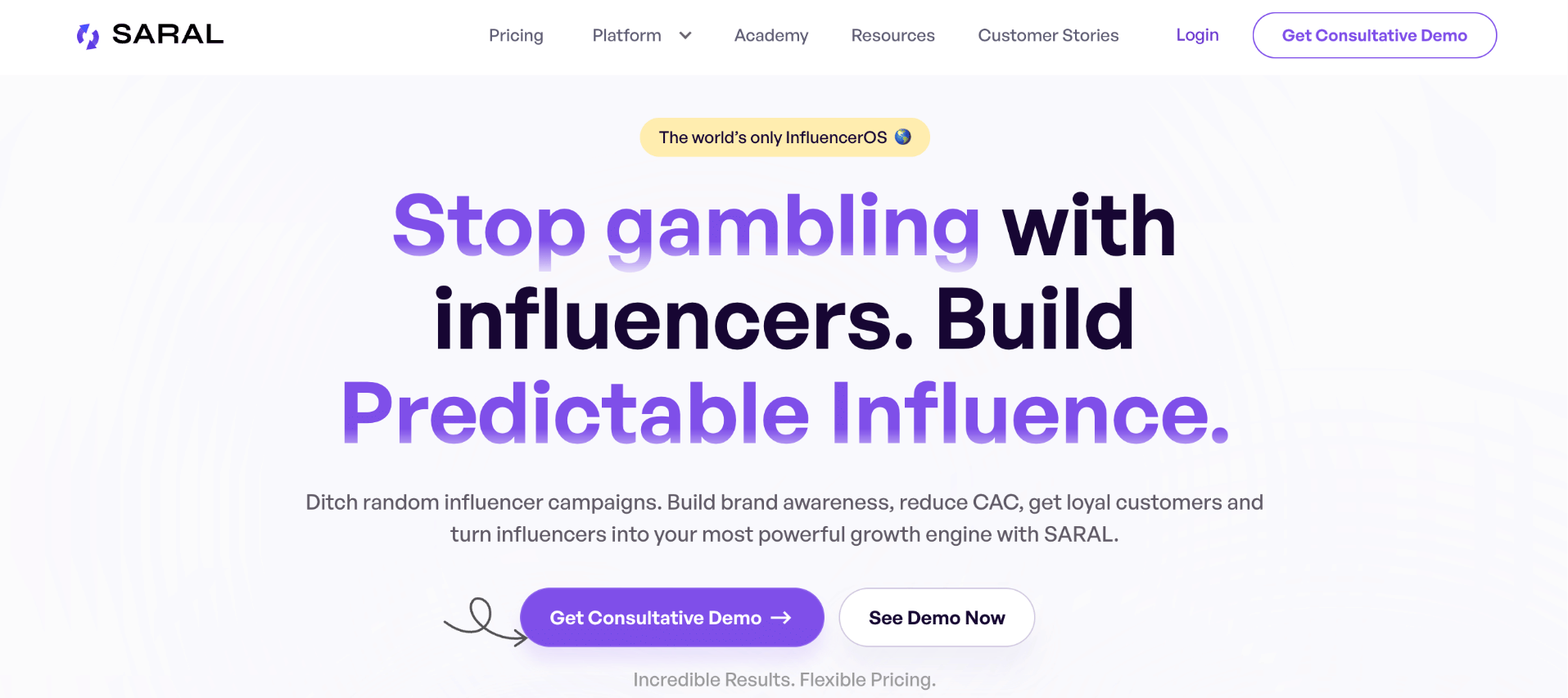
SARAL is an influencer CRM and campaign management platform built for e-commerce brands that want a simpler operating system for outreach, gifting, affiliate tracking, and relationship management. It is a good fit for brands that want useful automation and store-connected workflows without moving into enterprise-level complexity.
Key features:
- Influencer discovery: Find creators across major channels and review audience metrics and contact data.
- Automated outreach: Use personalized email sequences and inbox workflows to scale creator outreach.
- Influencer CRM: Keep affiliates, ambassadors, and creators organized in one relationship database.
- Product seeding workflows: Connect gifting and shipping processes to e-commerce operations.
- Affiliate tracking: Generate links and discount codes and connect creator activity to revenue.
- Mention and content tracking: Monitor live creator content and campaign output.
- Workflow automation: Reduce repetitive admin such as follow-ups and campaign status updates.
Platform coverage:
SARAL is mainly focused on Instagram, TikTok, and YouTube for influencer discovery and campaign management.
Standout features:
- Simple e-commerce-first workflow: The product is clearly built around gifting, affiliate, and ambassador programs.
- Outreach automation: Email drips and inbox tooling are a major part of its appeal for leaner teams.
- Accessible setup: It is positioned as easier to adopt than many enterprise creator platforms.
Limitations:
- Public review depth is still lighter than for more established platforms.
- It is more DTC-focused than enterprise-oriented.
- Reporting and benchmarking depth may not match heavier enterprise tools.
Integrations:
- Shopify: Connects product gifting, shipping, and sales attribution.
- WooCommerce: Extends store-based workflows to WooCommerce brands.
- Klaviyo: Helps coordinate creator and customer email workflows.
- PayPal: Supports creator payment workflows.
- Slack: Sends internal updates on creator-program activity.
Pricing:
- Starter: $3.6k/quarter
- Business: $4.5k/quarter
- Professional: $7.5k/quarter
Reviews:
4.7/5.0 (G2)
8. Upfluence
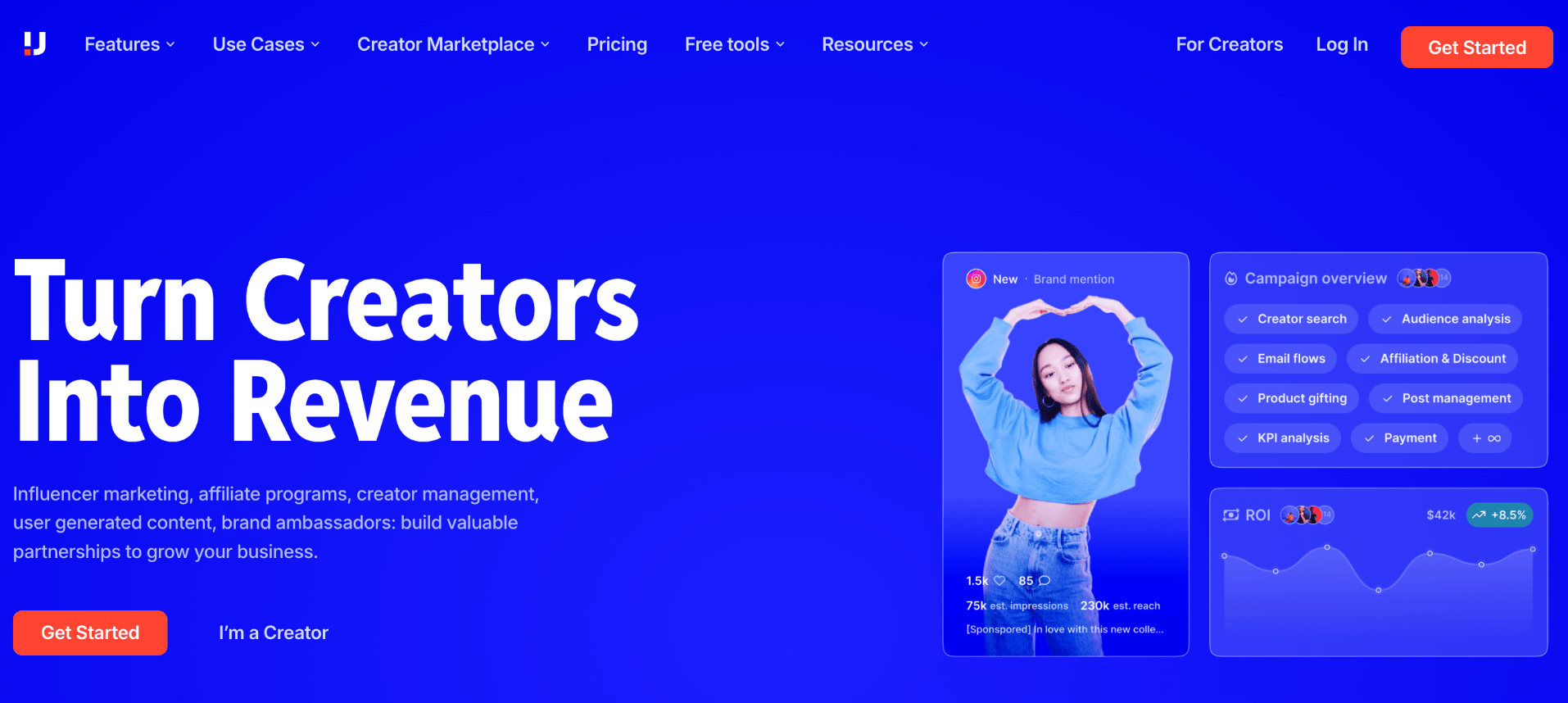
Upfluence is an end-to-end influencer CRM and campaign management platform with a strong e-commerce angle, especially for brands that want discovery, outreach, affiliate tracking, gifting, and sales attribution connected to store data. It is particularly strong for online brands that want to identify creators inside their customer base and tie creator activity directly to conversions and revenue.
Key features:
- Influencer discovery: Access a large creator database with filters for niche, location, engagement, and audience data.
- In-platform CRM: Centralize outreach, relationship history, and creator performance in one place.
- Bulk outreach: Send large-scale email campaigns with automated follow-up flows.
- AI assistant: Use AI support to streamline outreach and campaign setup.
- Affiliate tracking: Create links, compensation models, and discount codes tied to creator performance.
- Influential-customer identification: Match store customers to creator profiles to uncover new partners.
- Sales attribution: Track likes, reach, clicks, conversions, and store sales from campaigns.
- Creator payouts: Handle secure bulk payments inside the platform.
Platform coverage:
Upfluence supports Instagram, TikTok, YouTube, X, Twitch, Pinterest, and WordPress blogs.
Standout features:
- Customer-to-creator workflow: Upfluence is especially strong at helping brands turn customers into influencers or affiliates.
- Amazon integration: It is one of the stronger options for brands that also need Amazon attribution.
- Broad e-commerce compatibility: It is better suited than Shopify-only tools for brands with wider commerce needs.
Limitations:
- Pricing is a barrier for smaller brands.
- Setup can feel more complex for beginners.
- Cancellation flexibility is limited
Integrations:
- Shopify: Identifies influential customers, streamlines gifting, and tracks sales attribution.
- Amazon: Tracks sales, affiliate links, and creator performance for Amazon sellers.
- Gmail: Syncs creator communication into the CRM workflow.
- Outlook: Centralizes outreach history for teams using Microsoft email.
- Payments workflows: Supports secure bulk creator payouts.
Pricing:
On average plans start around $2,000/month ($24,000 yearly)
Reviews:
4.3 / 5.0 (Capterra)
9. Influencity
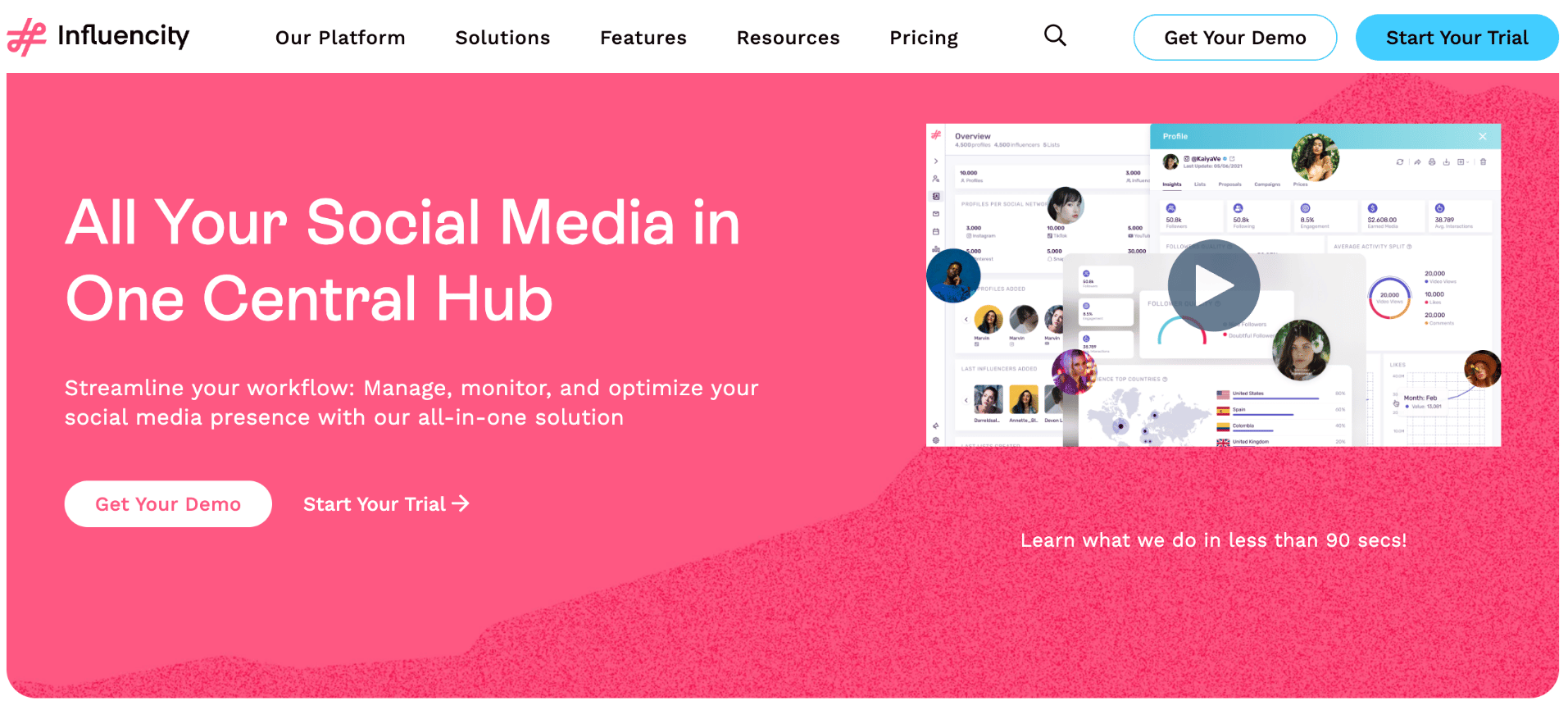
Influencity is an end-to-end influencer marketing platform that combines discovery, CRM, outreach, campaign execution, analytics, and reporting in one system. It is a practical option for teams that want broad workflow coverage, visual campaign management, and exportable reporting without moving into the highest enterprise price tier.
Key features:
- Influencer discovery: Search a large creator database using audience, niche, and performance filters.
- Influencer CRM: Use tagging, lists, and segmentation to manage creator relationships.
- Campaign boards: Track deliverables, budgets, and creator progress in a Kanban-style view.
- Email outreach: Manage templates, follow-ups, and sending workflows tied to campaigns.
- Forecasting tools: Estimate campaign performance and budget requirements before launch.
- Auto-tracking: Monitor campaign posts that match defined rules such as mentions or hashtags.
- Exportable reports: Download campaign reports in PDF, Excel, and CSV formats.
- Shopify support: Connect gifting and affiliate tracking to store performance.
Platform coverage:
Influencity supports Instagram, TikTok, YouTube, and X for influencer workflows, with broader social monitoring coverage across additional channels.
Standout features:
- Visual campaign management: The Kanban-style workflow makes campaign progress easier to manage.
- Forecasting and planning: Budget and outcome estimation is stronger than in many mid-market tools.
- Balanced positioning: It offers more depth than lightweight tools while staying more accessible than enterprise platforms. This is an inference based on its feature set and pricing.
Limitations:
- In-platform negotiation messaging is limited; replies go to your inbox rather than staying fully in-platform.
- Shopify is the main e-commerce integration.
- Auto-tracking requires an added paid tracker module.
Integrations:
- Shopify: Supports gifting workflows and affiliate code tracking.
- Instagram: Supports creator analysis and campaign-related data collection.
- TikTok: Extends campaign tracking and creator analysis to TikTok.
- YouTube: Supports creator performance analysis and reporting.
- Email workflows: Supports outreach templates and sending workflows tied to campaign management.
Pricing:
- Professional Plan: $318/month or $3,816/year
- Business Plan: $798/month or $9,576/year
- Enterprise Plan: Custom pricing
- Auto-Tracker Add-On: $660/year (for 50 influencers)
Reviews:
4.3 / 5.0 (G2)
10. Traackr
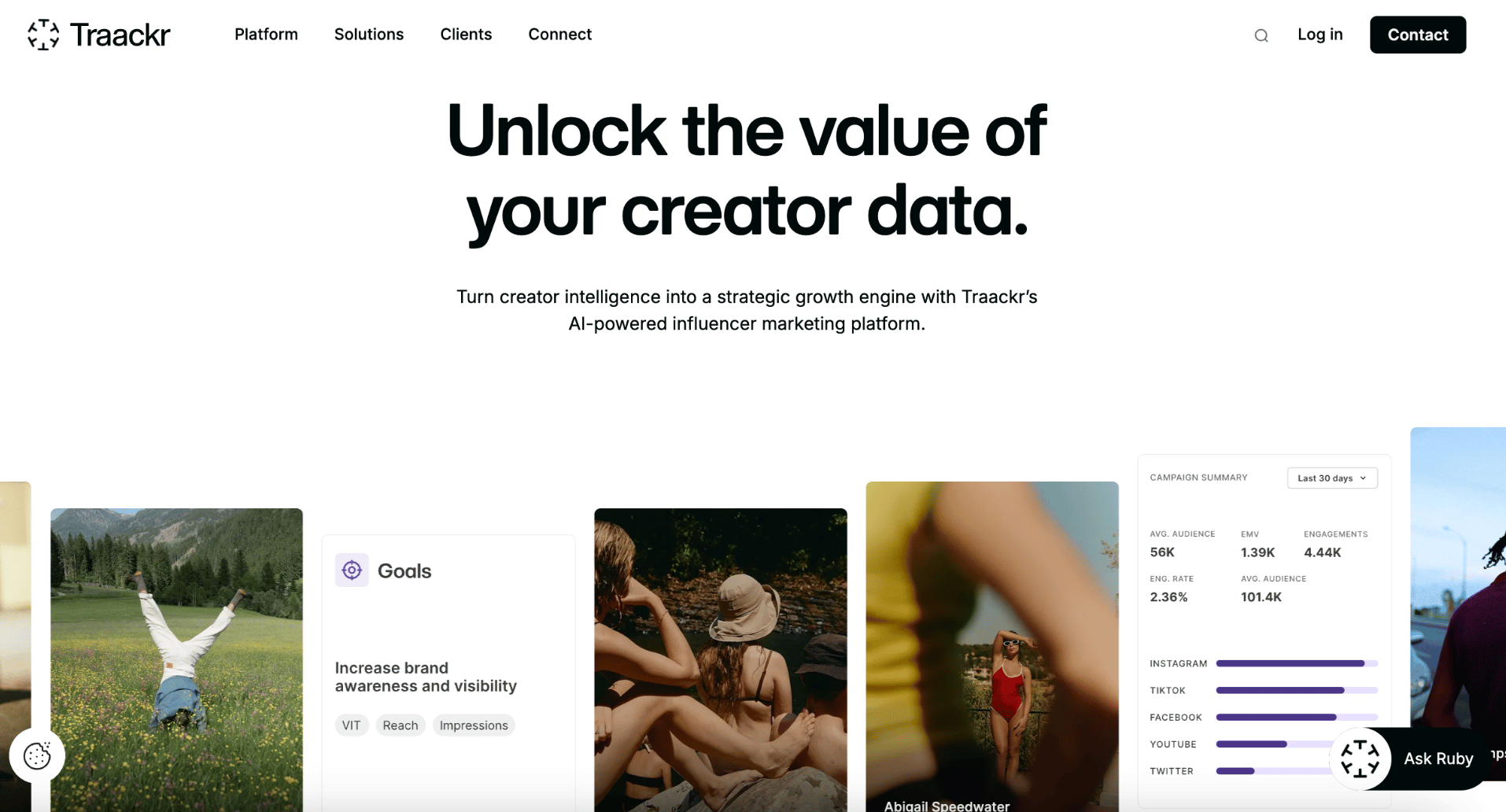
Traackr is an influencer CRM and campaign management platform built for brands that care heavily about benchmarking, budget optimization, and performance measurement, not just creator discovery and outreach. It is especially well suited to mature programs that want to compare creator investments across markets and connect influencer spend to ROI.
Key features:
- Influencer discovery: Search creators using engagement, audience, collaboration history, and performance filters.
- Influencer CRM: Centralize creator relationships, notes, and collaboration tracking.
- Personalized outreach: Run scalable creator recruitment and communication workflows.
- Product seeding workflows: Manage gifting logistics and connect delivery to content performance.
- UGC tracking: Track campaign content and make high-performing assets easier to repurpose.
- Affiliate and payments: Manage links, commissions, and creator payouts inside the broader platform.
- Benchmarking metrics: Track CPC, CPE, CPV, reach, ROI, and historic comparisons.
- Application pages: Use branded pages to collect creator applications for campaigns.
Platform coverage:
Traackr supports major creator platforms including Instagram, TikTok, YouTube, Facebook, Pinterest, and Snapchat.
Standout features:
- Brand Vitality Score: Traackr’s benchmarking layer is a major differentiator for teams comparing brand visibility and influence over time.
- Budget optimization metrics: It is stronger than many tools on cost-efficiency and investment benchmarking.
- Enterprise-grade reporting: Historic comparisons and exportable analytics make it well suited to mature global programs.
Limitations:
- Pricing is high relative to SMB-focused tools.
- Some teams may want more pricing transparency during evaluation.
- It is more measurement-led than lightweight CRM-first creator tools. This is an inference based on positioning and feature emphasis.
Integrations:
- Shopify: Supports product seeding and commerce-linked influencer workflows.
- Affiliate links: Connects creator sales tracking to campaign measurement.
- Creator payouts: Supports direct payment workflows in the platform.
- Application pages: Branded creator application pages support campaign recruitment.
- Reporting exports: Export campaign and benchmark reports for internal analysis.
Pricing:
Traackr pricing starting at $32,500 per year for a standard plan, with custom-built packages and added capabilities available on request.
Reviews:
4.3 / 5.0 (G2)
Final Thoughts on Top 10 CRM & Campaign Management Tools for Influencer Marketing
The best influencer CRM and campaign management tools help e-commerce brands and agencies move beyond spreadsheets by centralizing creator relationships, outreach, gifting, approvals, reporting, and sales tracking in one system. Across the platforms covered, the main differences come down to how well they support e-commerce workflows, the depth of their CRM and automation features, and whether they are better suited to growing brands or enterprise teams. The right choice depends on your campaign volume, internal processes, and how closely you need influencer activity tied to revenue, affiliate performance, and broader marketing operations.