

Top 10 Influencer Marketing Platforms for Shopify Brands
Shopify brands rely heavily on creators to drive product discovery, build trust, and generate measurable revenue through social channels. Managing influencer partnerships at scale, however, quickly becomes complex without the right tools. Influencer marketing platforms help Shopify merchants streamline the entire workflow—from discovering relevant creators and managing outreach to handling product gifting, affiliate links, and tracking sales generated from influencer campaigns. Many platforms also integrate directly with Shopify, allowing brands to attribute revenue to individual creators, automate discount codes, and manage commissions in one place . This level of visibility is critical for founders and marketing teams who want to understand which partnerships actually drive conversions and customer acquisition.
When evaluating influencer marketing software for Shopify, businesses typically prioritize features such as native Shopify integrations, affiliate and discount code tracking, automated gifting workflows, influencer CRM capabilities, and detailed performance analytics tied to sales. The ability to identify creators who already follow or purchase from the brand can also significantly improve campaign performance and reduce acquisition costs.
In this guide, we’ll explore some of the most widely used influencer marketing platforms for Shopify brands, including Upfluence, GRIN, Influencer Hero, Shopify Collabs, Afluencer, Aspire, HypeAuditor, Klear (Meltwater), Modash, and Influencity.
Top Influencer Marketing Platforms for Shopify Brands
| TOOL | REVIEWS | BEST FOR | TRIAL INFO | PRICING | ||
|---|---|---|---|---|---|---|
1 |

|
⭐ | Ecommerce influencer discovery | Book Demo | Pricing | Website |
2 |

|
⭐ | Influencer CRM & automation | Book Demo | Pricing | Website |
3 |

|
⭐ | DTC creator management | Book Demo | Pricing | Website |
4 |

|
⭐ | Shopify creator affiliates | Book Demo | Pricing | Website |
5 |

|
⭐ | Influencer marketplace campaigns | Book Demo | Pricing | Website |
6 |

|
⭐ | Influencer partnerships | Book Demo | Pricing | Website |
7 |

|
⭐ | Influencer analytics | Book Demo | Pricing | Website |
8 |

|
⭐ | Influencer analytics | Book Demo | Pricing | Website |
9 |

|
⭐ | Influencer discovery | Book Demo | Pricing | Website |
10 |

|
⭐ | Campaign management | Book Demo | Pricing | Website |
1. Upfluence
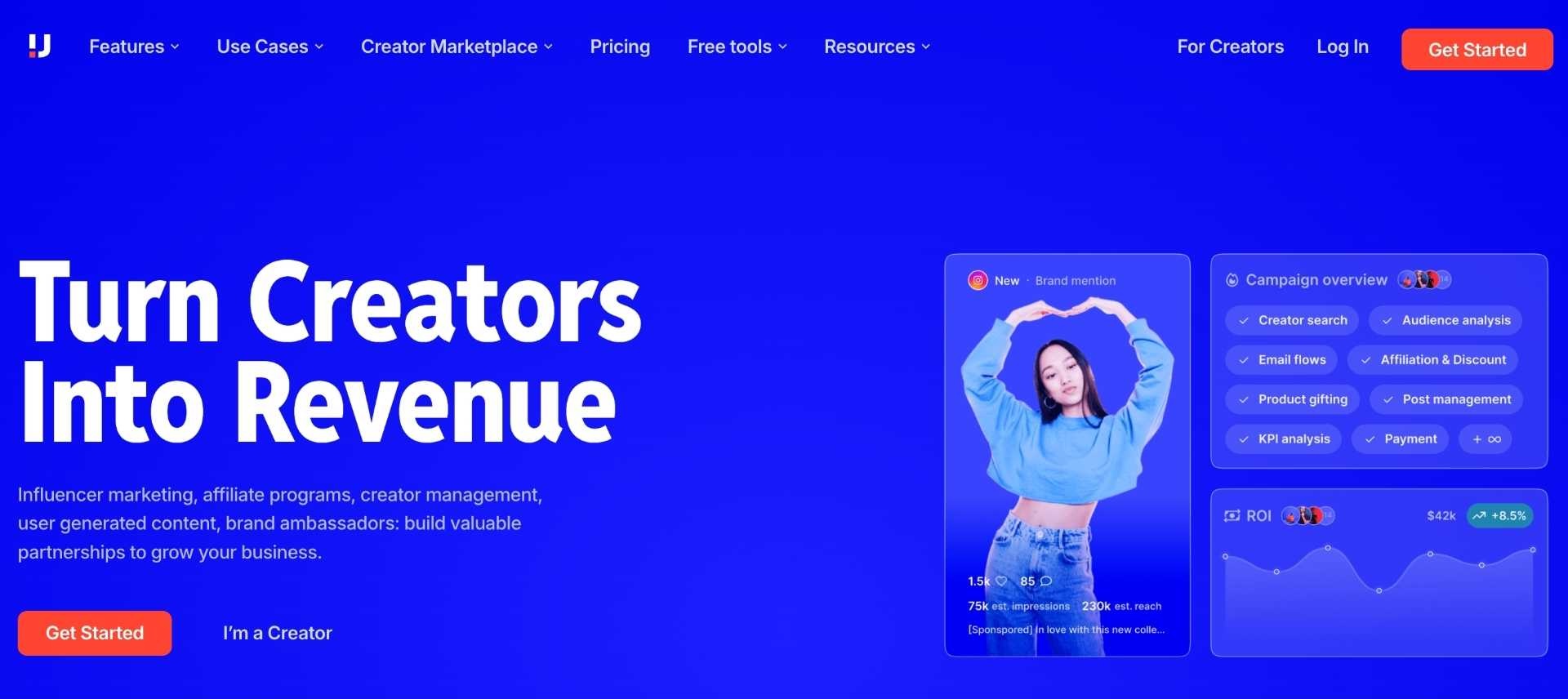
Upfluence is an end-to-end influencer marketing platform built with commerce use cases in mind, which makes it a strong fit for Shopify brands that want to run discovery, outreach, gifting, affiliate tracking, and revenue attribution from one system. Its core advantage for Shopify merchants is that it connects creator activity to store data, so teams can identify influential customers, automate product sends, generate codes, and measure creator-driven sales more directly.
Key features
- Influencer discovery: Upfluence gives teams access to a large creator database with filters for niche, location, engagement, audience demographics, and past content, which helps Shopify brands narrow down creators that match their target customer.
- Bulk outreach and email automation: Brands can run email outreach, templates, and follow-up flows inside the platform to reduce manual creator management.
- Influencer CRM: The platform stores creator conversations, campaign history, and relationship data so teams can manage repeat partnerships in one place.
- Shopify-based gifting and affiliate management: Shopify brands can send products, create referral links, assign commissions, and manage affiliate campaigns directly through the platform.
- Sales and conversion tracking: Upfluence tracks clicks, engagement, conversions, and sales tied to creator activity, giving eCommerce teams a clearer view of ROI.
- Bulk creator payments: Brands can process creator payouts at scale instead of handling payments one by one.
- Social listening: Teams can monitor posts and engagement trends to inform creator selection and campaign planning.
Platform coverage
Upfluence supports Instagram, TikTok, YouTube, X, Twitch, Pinterest, and WordPress blogs, making it broad enough for most consumer brands running multi-channel creator programs.
Standout features for Shopify brands
- Customer-to-creator identification: Upfluence can help brands find influential customers already in their ecosystem, which is especially useful for DTC teams that want warmer outreach and stronger conversion rates.
- Native promo code and sales tracking: Shopify merchants can generate codes and connect creator activity to store revenue instead of relying only on top-of-funnel engagement metrics.
- Integrated gifting workflows: Product seeding, referrals, and commissions can be managed from the same workflow, which reduces operational friction for lean eCommerce teams.
Limitations
- Annual commitment and higher cost: Upfluence is not especially flexible for smaller brands that want a low-risk monthly plan.
- Learning curve: Several users describe onboarding and campaign setup as more complex than expected.
- Campaign editing and workflow friction: Some buyers report clunky list management, limited editing once campaigns are set up, and weaker automation than they expected.
- Data accuracy can vary: Some users flag occasional issues with creator location data, which can matter for geo-targeted campaigns.
Integrations
- Shopify: Connect your store to trigger orders, ship products, generate codes, and track creator-driven sales.
- Amazon Attribution: Brands selling on Amazon can connect creator campaigns to attributed sales and affiliate performance.
- Klaviyo: Match existing contacts to creators and activate influencer segments from your email database.
- Gmail: Send and sync creator outreach directly from your inbox inside Upfluence.
- Outlook: Manage creator communication through Microsoft email accounts without leaving the platform.
Pricing
All plans are custom made. There’s a minimum full year of service you have to commit to with monthly payments. On average plans start around $2,000/month ($24,000 yearly)
Reviews
4.3 / 5.0 (Capterra)
2. Influencer Hero
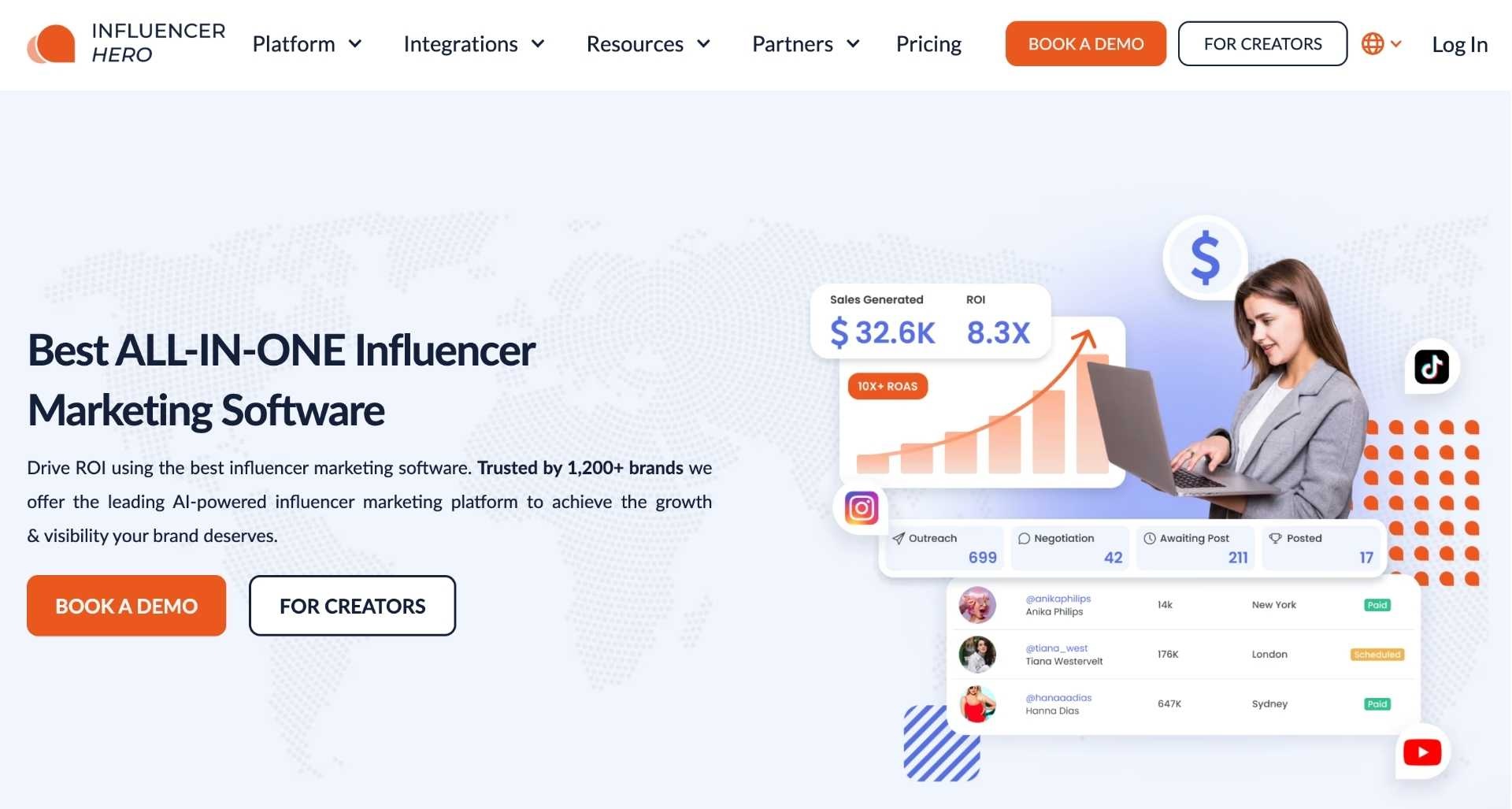
Influencer Hero is an all-in-one influencer marketing platform aimed at eCommerce brands that want strong workflow automation without moving into enterprise pricing too early. For Shopify brands, it is especially appealing because it combines discovery, outreach, CRM, gifting, affiliate tracking, payouts, and reporting in a package that is more accessible than many larger platforms.
Key features
- Influencer discovery: Search creators by demographics, interests, engagement, and location, with lookalike suggestions and fake follower checks to support vetting.
- Bulk outreach and drip automation: Brands can send one-to-one or bulk emails with AI-assisted personalization and sequence-based follow-ups.
- Campaign CRM: Influencer Hero uses campaign boards, tags, status tracking, and bulk actions to manage creator programs at scale.
- Performance reporting: Teams can monitor clicks, affiliate sales, ROI, and creator-level performance in real time.
- Gifting and shipping support: The platform supports product send-outs and tracks delivery as part of the creator workflow.
- UGC collection: Posts are automatically gathered for reuse and can be tagged for ad use or internal review.
- Affiliate and payouts: Brands can manage custom links, codes, commissions, and influencer payouts within the platform.
- Application pages and storefronts: Branded signup pages help brands build inbound creator pipelines.
Platform coverage
Influencer Hero supports Instagram, TikTok, YouTube, Facebook, Pinterest, Snapchat, X, and Twitch, giving Shopify brands wide coverage for both awareness and conversion campaigns.
Standout features for Shopify brands
- Campaign-centric CRM automation: This is one of Influencer Hero’s clearest strengths, especially for brands running large gifting or affiliate programs that need repeatable workflows.
- Shopify-focused eCommerce support: The platform is built to connect outreach and creator management with gifting, code tracking, and sales attribution, which is what Shopify teams usually care about most.
- Automated personalized outreach: AI-enhanced messaging and multi-step flows reduce the amount of manual follow-up required from lean internal teams.
Limitations
- Steep learning curve: The wide range of features may create a learning curve for teams new to influencer marketing platforms.
Integrations
- Shopify: Manage gifting, discount codes, affiliate tracking, and revenue attribution tied to creator activity.
- WooCommerce: Run similar gifting and affiliate workflows if your brand operates outside Shopify or across multiple storefronts.
- PayPal: Process influencer payouts with less manual finance work.
- Gmail: Sync outreach and replies through your email workflow.
- Outlook: Manage creator communication through Microsoft email accounts.
Pricing
Influencer Hero offers scalable pricing based on outreach volume:
- Standard Plan — $649/month for up to 1,000 outreaches per month
- Pro Plan — $1,049/month for up to 5,000 outreaches per month
- Business Plan — $2,490/month for up to 10,000 outreaches per month
- Custom / Agency Plan — Custom pricing
Billing is flexible with monthly, quarterly, or annual options, so there is no required long-term enterprise contract. Influencer Hero also allows unlimited creators in your CRM.
Reviews
5.0 / 5.0 (Capterra)
3. GRIN
GRIN is a creator management platform designed primarily for eCommerce and DTC brands, so it aligns well with Shopify teams that need more than just discovery. It combines creator search, outreach, gifting, affiliate management, content collection, and payments, with a strong emphasis on helping brands operationalize creator programs across the full funnel.
Key features
- Creator discovery: GRIN offers search filters, lookalike discovery, and AI-supported creator matching to help brands source relevant partners.
- Influencer CRM: Teams can manage relationships, pipelines, notes, and creator histories in a centralized system.
- Email syncing and outreach: Brands can connect their email accounts and manage creator conversations from within the platform.
- Product gifting: GRIN lets creators select products through a Shopify-connected storefront, which simplifies seeding at scale.
- Affiliate management: Brands can assign links and codes, track sales, and manage commissions in one workflow.
- UGC library: Creator content, including Stories, can be collected and stored in a searchable library for reuse.
- In-platform payments: Teams can pay creators through integrated payment workflows without handling payout admin manually.
- Media rights support: GRIN includes media rights management when creators are booked, which is useful for brands planning to reuse content.
Platform coverage
GRIN primarily supports Instagram, TikTok, and YouTube, with some materials also referencing X, Twitch, and Snapchat depending on workflow and data access.
Standout features for Shopify brands
- Shopify-native gifting flow: Creators can choose products through a storefront-like experience, which is far more scalable than emailing for sizes, variants, and shipping details.
- Unlimited creator partnerships: GRIN does not cap the number of creators you can work with, which matters for brands running ambassador, affiliate, or always-on seeding programs.
- Built-in UGC and rights management: For Shopify brands that want to repurpose creator content across paid and owned channels, GRIN’s content library is a meaningful operational advantage.
Limitations
- High starting cost: GRIN is often positioned above the budget range of smaller Shopify brands.
- Annual commitment: Research materials indicate a minimum 12-month commitment on most plans.
- Discovery limits: Some materials note that database access is restricted to opt-in creators, which can narrow the top of funnel compared with public-data platforms.
- Navigation and process friction: Some users say creator sorting, status management, and deliverable handling can become manual if teams are not disciplined in the workflow.
- No native paid social boosting tools: Brands wanting whitelisting or in-platform paid amplification may need other tools.
Integrations
- Shopify: Connect gifting, order tagging, product selection, and creator-attributed revenue tracking to your store.
- PayPal: Send creator payments from within your workflow instead of managing payouts manually.
- Gmail: Sync outreach and creator replies with your existing inbox.
- Outlook: Manage email-based creator communication through Microsoft accounts.
- Klaviyo: Connect creator marketing with lifecycle email and customer data for stronger retention and ambassador workflows.
Pricing
GRIN pricing is not fully transparent on its official site. Public sources show a wide range: some listings show entry pricing from $999/month, while other buyer-facing materials and comparisons place typical plans around $2,500/month and up, often with annual commitments, so buyers should confirm scope carefully during sales conversations.
Reviews
4.5/5.0 (G2)
4. Shopify Collabs
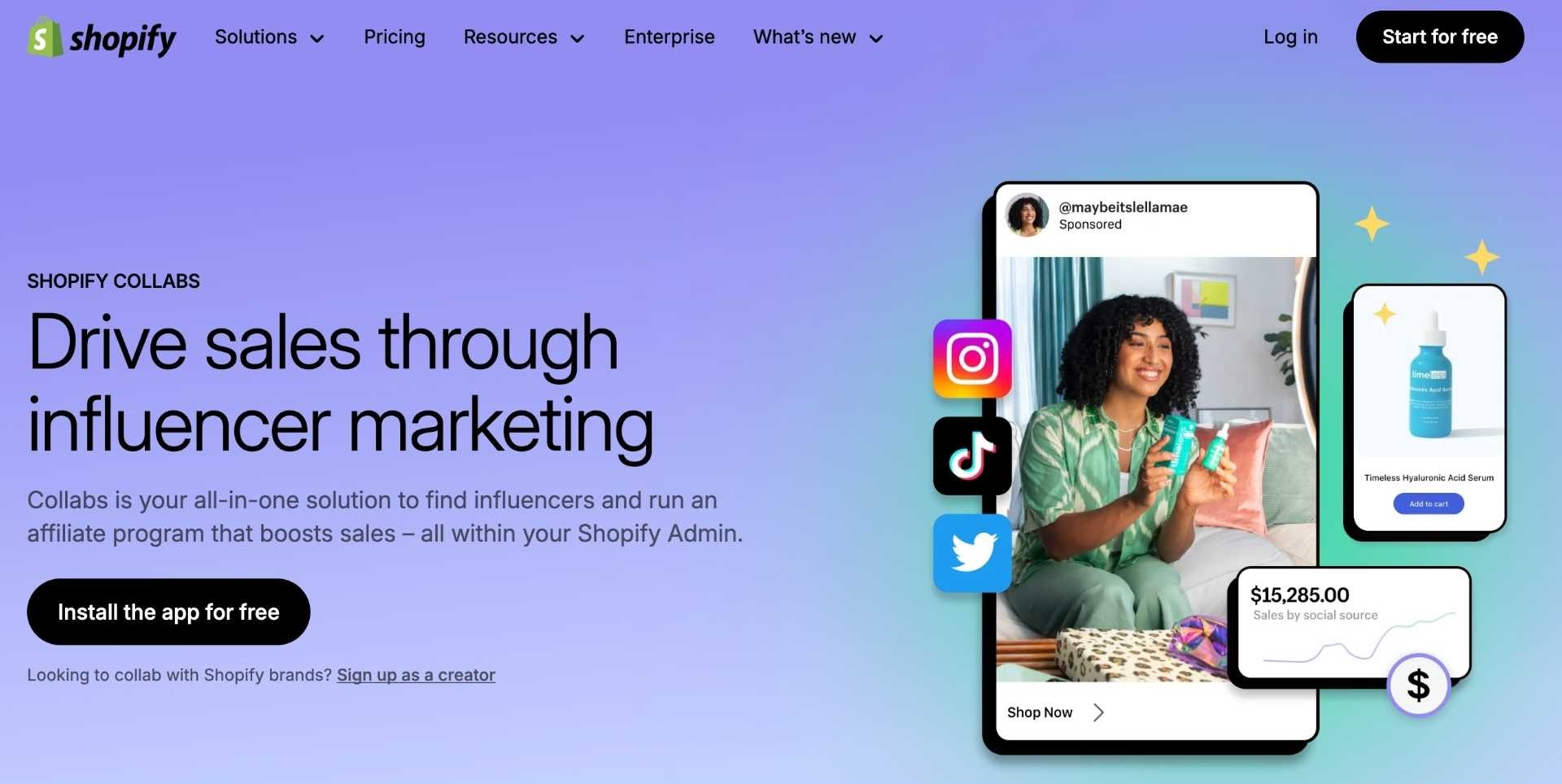
Shopify Collabs is Shopify’s own affiliate and creator partnership app, designed for merchants that want a lightweight way to recruit creators, send gifts, track affiliate sales, and pay commissions without adding a separate influencer platform. It works best for Shopify brands that want a native, lower-friction starting point for creator programs rather than a heavyweight discovery and CRM stack.
Key features
- Creator recruitment: Brands can invite creators directly, run an open access affiliate program, or publish an application page on their store.
- Gift management: Merchants can send free products, percentage discounts, or fixed-amount discounts to creator partners.
- Affiliate links and codes: Shopify Collabs generates and tracks affiliate links and discount codes tied to creator sales.
- Automatic payouts: The app handles creator commission payouts through Shopify-managed workflows.
- Storefront application pages: Brands can create a simple branded application page to collect inbound creator interest.
- Flow automation support: Eligible merchants can use Shopify Flow templates to automate approvals, follow-ups, and lifecycle actions.
Platform coverage
Shopify Collabs is designed around creator and affiliate workflows connected to Shopify stores rather than broad social platform management, but it supports creators promoting products through the channels connected to their affiliate links, discount codes, and Collabs profiles.
Standout features for Shopify brands
- Native Shopify integration: Because it is built by Shopify, attribution, order tracking, discount logic, and payouts are more tightly connected to the store backend than with many third-party apps.
- Low barrier to entry: The app is free to install and only charges when sales are driven, which makes it appealing for early-stage brands testing creator partnerships.
- Open access creator program: Brands can allow eligible creators to generate affiliate product links without one-by-one approval, which is useful for scaling affiliate discovery.
Limitations
- More limited discovery than dedicated platforms: Several merchants want stronger demographic filters and smarter creator recommendations.
- Mixed merchant feedback on fraud, usability, and search quality: Negative reviews frequently mention weak creator quality control, slow performance, or limited protection for sellers.
- Best suited to Shopify-only workflows: Brands that need broad multi-platform discovery, deep CRM, or enterprise reporting will often outgrow it.
Integrations
- Shopify: Native integration lets you connect creator activity directly to products, discounts, orders, and payouts.
- Shopify Flow: Automate approvals, follow-ups, gift reminders, and creator lifecycle steps with ready-made workflows.
- Shopify Billing: Creator commissions are processed through Shopify’s billing infrastructure.
- Shopify discount engine: Create and track creator-specific discount codes tied to affiliate performance.
- Shopify product catalog: Send free products or product-specific gifts directly from your store inventory.
Pricing
Shopify Collabs is free to install, with additional charges that may apply; Shopify also states that merchants generally only pay when sales are driven. The app is available on most Shopify plans except Starter and Retail.
Reviews
4.8 / 5.0 (Capterra)
5. Afluencer
Afluencer is an influencer marketplace designed to help brands and creators connect, collaborate, and manage partnerships in one place. Brands create collaboration opportunities, set targeting criteria, and receive applications from creators, while influencers can browse and apply to campaigns that fit their niche and audience.
Key Features
- Influencer marketplace: Connect with active creators who have opted into the platform rather than relying on scraped databases.
- Campaign creation ("Collabs"): Brands can publish campaigns and invite influencers to apply.
- Influencer search and filtering: Filter creators by niche, location, audience demographics, platform, and follower count.
- Engagement metrics and profile insights: Review engagement rates and audience information before selecting creators.
- In-app messaging: Communicate directly with influencers after a collaboration is accepted.
- UGC sourcing: Find creators capable of producing user-generated content for paid or gifted campaigns.
- Application management: Organize creator applications and approvals from a centralized dashboard.
- Creator profiles and portfolios: Evaluate content style and partnership fit before outreach.
- Onboarding and strategy support: Access live chat, email support, and onboarding assistance.
- Free entry plan: Brands can create an account and begin posting collaborations without upfront costs.
Platform Coverage
Afluencer primarily supports Instagram, TikTok, YouTube, and Facebook creators. Brands can discover influencers across multiple channels and run campaigns focused on social posts, reels, videos, and UGC collaborations. The platform is especially geared toward micro-influencers and creators with engaged communities rather than celebrity-scale accounts.
Standout Features for Shopify Brands
- Product seeding and gifting campaigns: Shopify brands can quickly launch collaborations with micro-influencers to generate authentic content and reviews without managing outreach manually.
- Access to active micro-influencers: Afluencer focuses on creators who actively participate in collaborations, making it easier for DTC brands to find partners with engaged audiences rather than browsing massive databases.
- Application-based workflow: Instead of cold outreach, brands post opportunities and receive creator applications, which can reduce the time and effort required to recruit influencers.
Limitations
- Limited free plan functionality: Free users face restrictions on the number of applications and available features.
- Smaller creator pool in certain regions: Users have reported fewer available influencers in some international markets.
- Some inactive creators: Brands may occasionally encounter profiles that have not been active for extended periods.
- Search and filtering could be more advanced: Some users mention that creator filtering and dashboard customization are relatively basic compared with enterprise influencer platforms.
- UI and navigation limitations: Feedback suggests the user experience could be improved in certain areas.
Integrations
- Shopify: Allows ecommerce brands to connect their store and streamline influencer product collaborations.
- Instagram: Enables brands to evaluate creator profiles and run Instagram-focused campaigns.
- TikTok: Helps brands discover creators producing short-form video content and UGC.
- YouTube: Supports partnerships with video creators for reviews, tutorials, and sponsored content.
- Facebook: Gives brands access to creators and audiences across Facebook communities and pages.
Pricing
Afluencer offers a free plan for brands getting started, alongside paid subscriptions. The VIP plan starts at $49/month, while the Concierge plan starts at $99/month. Pricing is structured on a monthly basis, allowing brands to scale their influencer efforts without long-term contracts. The platform also provides onboarding support and does not require speaking with a sales team before getting started.
Reviews
4.6/5.0 (G2)


6. Aspire
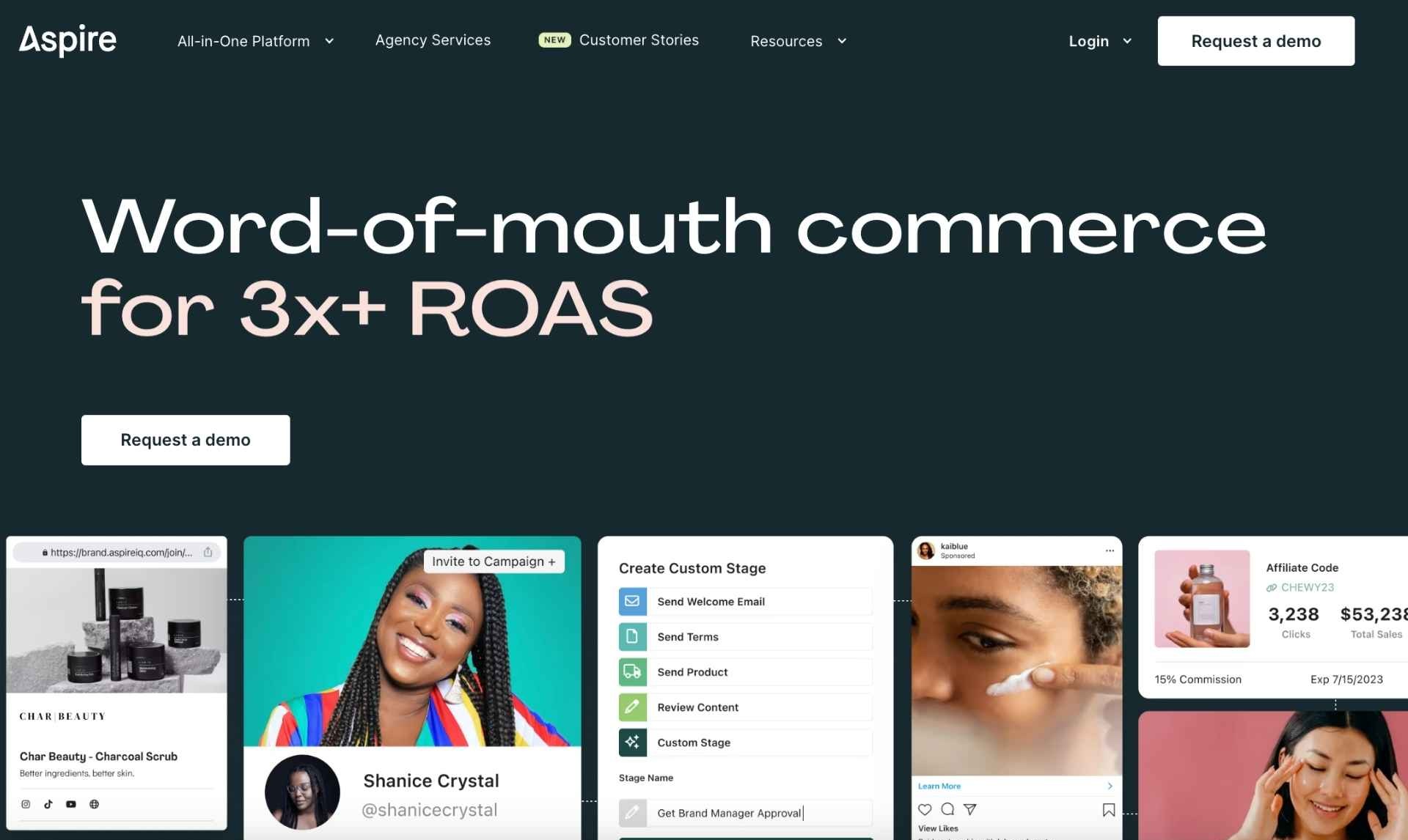
Aspire is a creator marketing platform designed to help eCommerce brands manage the full influencer marketing lifecycle—from discovery and recruitment to gifting, content approvals, sales tracking, and reporting. Shopify brands often use Aspire to streamline product seeding, manage creator workflows, and track revenue generated from influencer campaigns without relying on multiple separate tools.
Key features
- Creator discovery: Aspire allows brands to search creators using filters like platform, engagement, audience demographics, and keywords, helping Shopify teams find influencers that match their ideal customer profile.
- Inbound creator marketplace: Brands can post collaboration opportunities where creators apply directly, reducing manual outreach and speeding up recruitment.
- Campaign workflow management: The platform organizes campaigns into stages such as invite, contract, brief, content approval, and post tracking, helping teams manage multiple collaborations simultaneously.
- Product gifting and fulfillment: Shopify integration allows creators to browse and select products while brands track fulfillment and shipping status inside the platform.
- Affiliate and sales tracking: Aspire generates discount codes and referral links while tracking clicks, conversions, and commission payouts tied to creators.
- Content library: All influencer posts are stored in a centralized content hub for reuse across ads, email, and social channels.
- Automated outreach workflows: Brands can send bulk emails, templates, and automated follow-ups to creators through integrated email systems.
Platform coverage
Aspire supports campaigns across Instagram, TikTok, and YouTube, which are the primary channels used for most influencer-driven Shopify campaigns.
Standout features for Shopify brands
- Shopify-powered product seeding: Creators can browse a brand’s product catalog and request items directly, which simplifies the gifting process and reduces manual coordination.
- Large inbound creator marketplace: With more than one million creators actively applying to collaborations, brands can source partners without relying entirely on outbound outreach.
- Automated creator workflows: Bulk actions, contract management, and follow-up automation help eCommerce teams run larger creator programs without expanding internal staff.
Limitations
- Higher pricing compared with entry-level tools: Aspire is often better suited for scaling brands rather than early-stage Shopify stores.
- Limited coverage for smaller social platforms: Most functionality focuses on major networks like Instagram, TikTok, and YouTube.
- Payment processing is not fully handled inside the platform: Brands may need external tools or manual workflows to complete payouts.
Integrations
- Shopify: Manage product gifting, track orders, and attribute sales from influencer campaigns directly to your Shopify store.
- Gmail: Sync creator conversations with your inbox so outreach and replies are tracked inside Aspire.
- Slack: Share campaign updates and creator activity with internal teams through Slack notifications.
- Stripe: Track commission payments and financial reporting connected to influencer campaigns.
- Google Analytics: Combine creator campaign data with broader website traffic and conversion analytics.
Pricing
Aspire offers customizable pricing tiers based on campaign volume and team size. Mid-tier plans for brands managing around 20–40 creators per month have been quoted at approximately $2,000 per month, with most contracts structured annually and no widely advertised free trial.
Reviews
4.0 /5.0 (Capterra)
7. HypeAuditor
HypeAuditor is an influencer marketing platform focused on creator discovery, audience analysis, and fraud detection. Shopify brands often use it to identify authentic influencers, evaluate audience quality, and run influencer campaigns with more confidence in creator credibility and performance data.
Key features
- Influencer discovery engine: Advanced filters allow brands to search creators by audience demographics, category, engagement rate, and language.
- Audience quality analysis: HypeAuditor evaluates follower authenticity and engagement patterns to help brands avoid fake or low-quality audiences.
- Lookalike creator search: Brands can find influencers similar to existing partners or competitors’ collaborators.
- Influencer outreach tools: Teams can manage contact lists and send messages directly through integrated communication features.
- Campaign management: The platform tracks deliverables, manages contracts, and organizes influencer collaborations from start to finish.
- Content approval workflows: Influencers can upload draft content for brand review before publishing.
- Social listening: Brands can monitor mentions, hashtags, and competitor campaigns to discover creators already discussing their products.
Platform coverage
HypeAuditor supports influencer campaigns across Instagram, TikTok, YouTube, Twitch, X, and Snapchat.
Standout features for Shopify brands
- Audience authenticity scoring: Shopify brands can reduce wasted marketing spend by verifying whether an influencer’s followers are genuine before partnering.
- Competitor campaign discovery: The platform can identify influencers already promoting competing products, helping brands find proven creators in their niche.
- Detailed audience demographics: Teams can ensure influencers reach the right geographic and demographic audience for their products.
Limitations
- Limited built-in eCommerce workflows: Compared with Shopify-focused platforms, HypeAuditor emphasizes analytics more than gifting or affiliate management.
- Pricing transparency can be limited: Most plans require contacting the sales team for quotes.
- Campaign workflow features are less advanced than full CRM-style platforms.
Integrations
- Shopify: Track influencer-driven sales and connect campaign activity to your store data.
- Google Analytics: Combine campaign metrics with website conversion data.
- Slack: Receive notifications for campaign updates and creator actions.
- HubSpot: Sync influencer campaign leads and contacts with your CRM.
- Zapier: Automate workflows between HypeAuditor and hundreds of other marketing tools.
Pricing
HypeAuditor pricing is typically customized depending on database access and campaign features. The platform offers a 24–48 hour free trial, after which plans are negotiated with the sales team.
Reviews
4.8/5.0 (Capterra)
8. Klear (Meltwater)
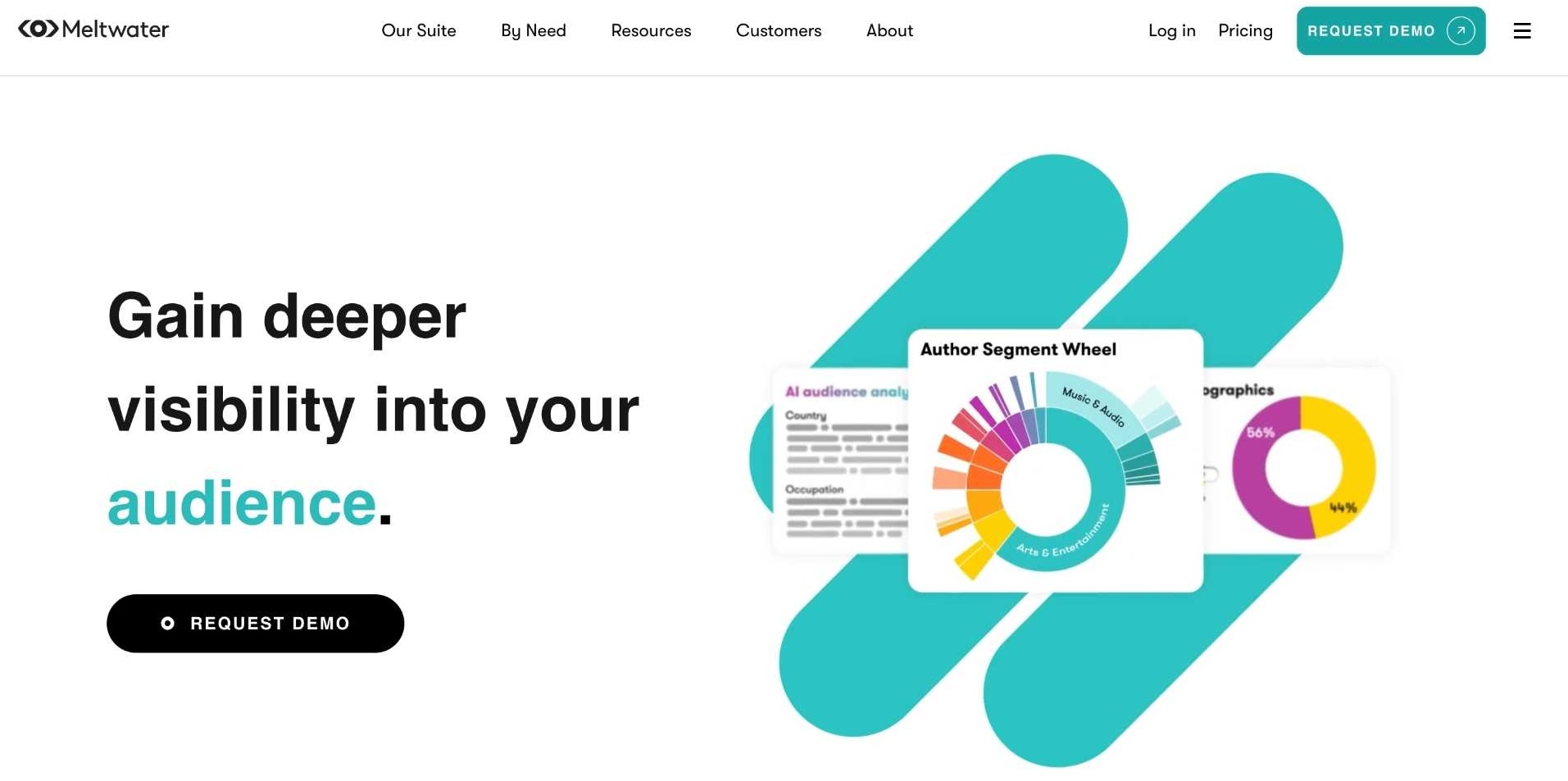
Klear, part of the Meltwater marketing suite, is an enterprise influencer marketing platform focused on discovery, campaign management, and analytics. Shopify brands typically use Klear when they need advanced creator data, performance measurement, and the ability to combine influencer marketing with broader media monitoring and social listening tools.
Key features
- Influencer discovery: Klear offers access to over 30 million influencers and advanced filters for audience demographics, engagement rates, and brand collaborations.
- AI-powered creator insights: Profiles include estimated cost per post, brand affinity data, and content summaries generated by AI.
- Campaign management: Teams can create campaigns, assign deliverables, and communicate with creators through an integrated messaging system.
- Product gifting and affiliate links: Shopify brands can distribute coupon codes, track links, and measure conversions driven by creators.
- Performance reporting: Detailed dashboards measure engagement, reach, ROI, sentiment, and influencer-level performance metrics.
- True Reach analytics: A proprietary metric that estimates the real audience reached by a creator rather than relying only on follower counts.
- Integrated creator payments: Brands can pay influencers directly through the platform using KlearPay.
Platform coverage
Klear supports influencer campaigns across Instagram, TikTok, YouTube, and other major social channels depending on the data integration used by the Meltwater ecosystem.
Standout features for Shopify brands
- True Reach technology: Shopify brands can better estimate the real exposure of influencer content instead of relying on inflated follower metrics.
- Integrated campaign and messaging system: Creator communication and campaign tracking happen in one platform rather than across email and spreadsheets.
- Expanded Meltwater ecosystem: Brands can combine influencer campaigns with media monitoring and social listening to track broader brand impact.
Limitations
- High pricing compared with most Shopify-focused tools.
- Reporting customization can be limited in certain comparisons.
- Interface performance issues have been reported by some users.
Integrations
- Shopify: Track product gifting campaigns, coupon codes, and influencer-driven revenue from your store.
- Slack: Send campaign updates and influencer activity notifications to internal teams.
- Google Analytics: Combine influencer campaign data with website performance insights.
- Salesforce: Connect influencer campaigns with broader CRM and sales tracking.
- Looker Studio: Export campaign performance data for advanced reporting dashboards.
Pricing
Klear pricing is typically offered through annual contracts. Starts from $2,300/month
Reviews
4.3 / 5.0 (G2)
9. Modash
Modash is an influencer marketing platform focused on discovery, outreach, campaign tracking, and affiliate management. It is particularly popular among Shopify brands because of its large creator database and direct Shopify integration that connects influencer campaigns with product gifting, discount codes, and revenue attribution.
Key features
- Influencer discovery database: Modash provides access to hundreds of millions of creator profiles with advanced filtering by niche, demographics, engagement, and audience quality.
- AI creator search: Brands can search creators by describing the type of content or aesthetic they want to find.
- Lookalike creator discovery: The platform suggests influencers similar to creators already performing well for a brand.
- Bulk outreach tools: Brands can send email outreach campaigns with templates and automated tracking of responses.
- Campaign performance tracking: Real-time dashboards track engagement, reach, clicks, and affiliate sales from influencer campaigns.
- Automated affiliate programs: Shopify merchants can assign commissions, track code usage, and manage influencer payouts in one place.
- Fake follower detection: Audience analysis helps brands evaluate creator authenticity before launching campaigns.
Platform coverage
Modash supports campaigns across Instagram, TikTok, and YouTube, which are the primary platforms for most influencer-driven product promotions.
Standout features for Shopify brands
- Direct Shopify integration: Brands can automate gifting, generate discount codes, and track influencer-driven revenue directly from their store.
- “Find Your Fans” feature: Modash can identify influencers already following your brand, making outreach warmer and more likely to convert.
- Massive creator database: Access to hundreds of millions of public profiles allows Shopify teams to find niche creators across many markets.
Limitations
- Limited eCommerce integrations beyond Shopify.
- No built-in content licensing or rights management tools.
- No native whitelisting or paid ad boosting functionality.
Integrations
- Shopify: Manage gifting campaigns, generate codes, and track affiliate revenue tied to influencer promotions.
- Gmail: Sync creator outreach and conversations with your inbox.
- Outlook: Manage communication with creators through Microsoft email accounts.
- Stripe: Automate influencer commission payments and payouts.
- Zapier: Connect Modash with CRM, analytics, and automation tools.
Pricing
There are different plans:
- Essential Plan: Starts at $199/month (is paid annually). Allows you to contact up to 100 creators a month.
- Performance Plan: Starts at $499/month (is paid annually). Allows you to contact up to 250 creators a month and gives you access to the Shopify integration.
- Enterprise Plan: Custom pricing based on your brand needs.
Reviews
4.9/5.0 (Capterra)
10. Influencity
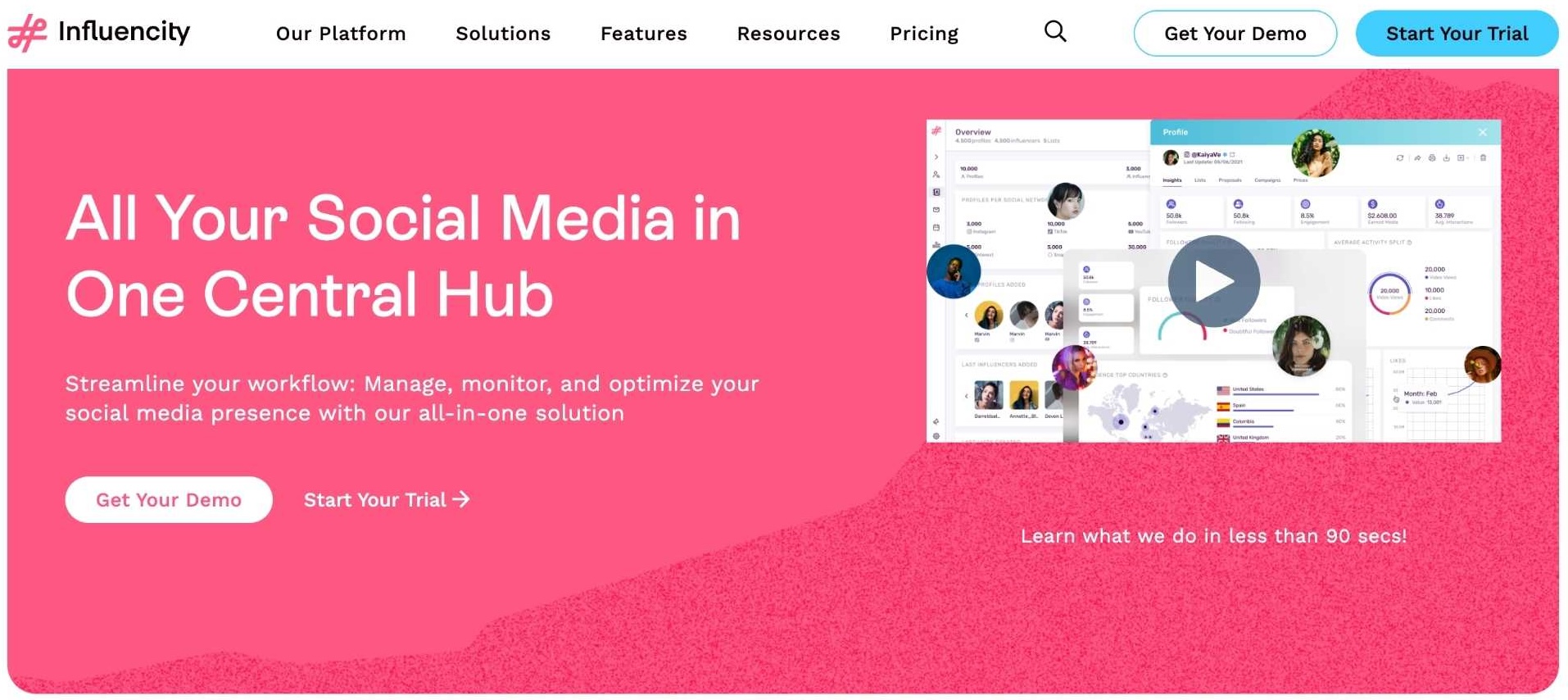
Influencity is an end-to-end influencer marketing platform that helps brands manage creator programs from discovery and outreach to campaign tracking and reporting. The platform is particularly relevant for Shopify brands because it integrates directly with Shopify to support product gifting, affiliate tracking, and sales attribution, allowing teams to connect influencer campaigns with real eCommerce performance.
Key features
- Influencer discovery: Influencity provides access to more than 15 million influencer profiles using public data, with filters for engagement rate, audience demographics, hashtags, and niche categories.
- Influencer CRM: Brands can organize creators into lists, tag them by campaign type or geography, and track relationship history in a visual CRM interface.
- Campaign management board: A Kanban-style campaign workflow helps teams track deliverables, deadlines, approvals, and influencer communication in one dashboard.
- Automated outreach: The platform supports email outreach campaigns with templates, follow-ups, and tracking for opens and replies.
- Post tracking and analytics: Influencity automatically collects campaign content based on hashtags or mentions and tracks engagement, reach, and impressions.
- Campaign forecasting tools: Teams can estimate campaign performance and expected ROI before launching influencer collaborations.
- Exportable reports: Campaign data can be exported in PDF, Excel, or CSV formats for internal reporting and stakeholder updates.
Platform coverage
Influencity supports influencer campaigns across Instagram, TikTok, YouTube, and Twitter (analytics only).
Standout features for Shopify brands
- Shopify gifting and affiliate workflows: Influencity integrates directly with Shopify so brands can send products, generate discount codes, and track influencer-driven sales.
- Comprehensive campaign CRM: Shopify brands running ongoing creator programs can manage outreach, collaborations, and campaign progress from a single dashboard.
- Flexible campaign tracking: Teams can track influencer posts automatically through hashtags or manually add campaign content for accurate performance reporting.
Limitations
- No native in-platform messaging for negotiation: Influencer communication typically continues through external email systems.
- Shopify is currently the only supported eCommerce integration.
- Auto-tracking features require an additional paid add-on.
- Onboarding process may take several weeks for new teams.
Integrations
- Shopify: Manage product gifting campaigns, assign discount codes, and track sales generated by influencer collaborations.
- Gmail: Send influencer outreach emails directly from the platform while replies are delivered to your inbox.
- Slack: Share campaign updates and influencer activity notifications with internal teams.
- Google Analytics: Combine influencer campaign metrics with broader website performance data.
- Zapier: Connect Influencity with CRM, marketing automation, and reporting tools.
Pricing
Influencity offers tiered pricing with a Professional plan starting at approximately $3,816 per year, including influencer discovery, outreach automation, campaign boards, and Shopify integration. Higher-tier plans with additional features and tracking capacity are available with custom pricing.
Reviews
4.3 / 5.0 (G2)
Final Thoughts on Top 10 Influencer Marketing Platforms for Shopify Brands
Choosing the right influencer marketing platform can make a significant difference for Shopify brands looking to scale creator partnerships and drive measurable revenue. Tools like Upfluence, GRIN, Aspire, and Modash focus heavily on eCommerce integrations, while platforms such as HypeAuditor and Klear provide deeper analytics and performance insights. Meanwhile, solutions like Shopify Collabs and Influencity offer flexible options for brands that want simpler affiliate workflows or scalable campaign management. Ultimately, the best platform depends on a brand’s stage of growth, campaign complexity, and how tightly it needs influencer activity connected to Shopify sales and customer acquisition.