

Top 10 Influencer Marketing Platforms for UGC Campaigns
User-generated content (UGC) campaigns have become a core growth lever for brands because they deliver authentic, high-performing creative that can be reused across paid and organic channels. However, running UGC campaigns at scale quickly becomes operationally complex—teams need to continuously source the right creators, manage outreach and negotiations, coordinate content delivery, secure usage rights, and track performance across dozens or hundreds of assets. Trying to manage this manually often leads to missed deadlines, inconsistent content quality, and limited visibility into ROI.
Influencer marketing platforms solve these challenges by centralizing the entire workflow, from creator discovery and outreach automation to content approvals, campaign management, and performance tracking. They also help brands build structured content pipelines, maintain organized content libraries, and automate the collection of influencer posts for repurposing. Key features for successful UGC campaigns include advanced creator search, automated communication, content and approval workflows, usage rights management, campaign tracking, and robust analytics—all in one place.
In this article, we’ll explore Insense, Joinbrands, Influencer Hero, Afluencer, Aspire, Upfluence, Creator.co, Influentials, Taggbox, and Revfluence.
Top Influencer Marketing Platforms for UGC Campaigns
| TOOL | REVIEWS | BEST FOR | TRIAL INFO | PRICING | ||
|---|---|---|---|---|---|---|
1 |

|
⭐ | UGC creators & paid social ads | Book Demo | Pricing | Website |
2 |

|
⭐ | UGC creators & product seeding | Book Demo | Pricing | Website |
3 |

|
⭐ | Influencer CRM & automation | Book Demo | Pricing | Website |
4 |

|
⭐ | Influencer marketplace campaigns | Book Demo | Pricing | Website |
5 |

|
⭐ | Influencer partnerships | Book Demo | Pricing | Website |
6 |

|
⭐ | Influencer discovery | Book Demo | Pricing | Website |
7 |

|
⭐ | Influencer campaigns & creator marketplace | Book Demo | Pricing | Website |
8 |

|
⭐ | Influencer analytics & discovery | Book Demo | Pricing | Website |
9 |

|
⭐ | UGC curation & social proof widgets | Book Demo | Pricing | Website |
10 |

|
⭐ | Influencer discovery & video content strategy | Book Demo | Pricing | Website |
1. Insense
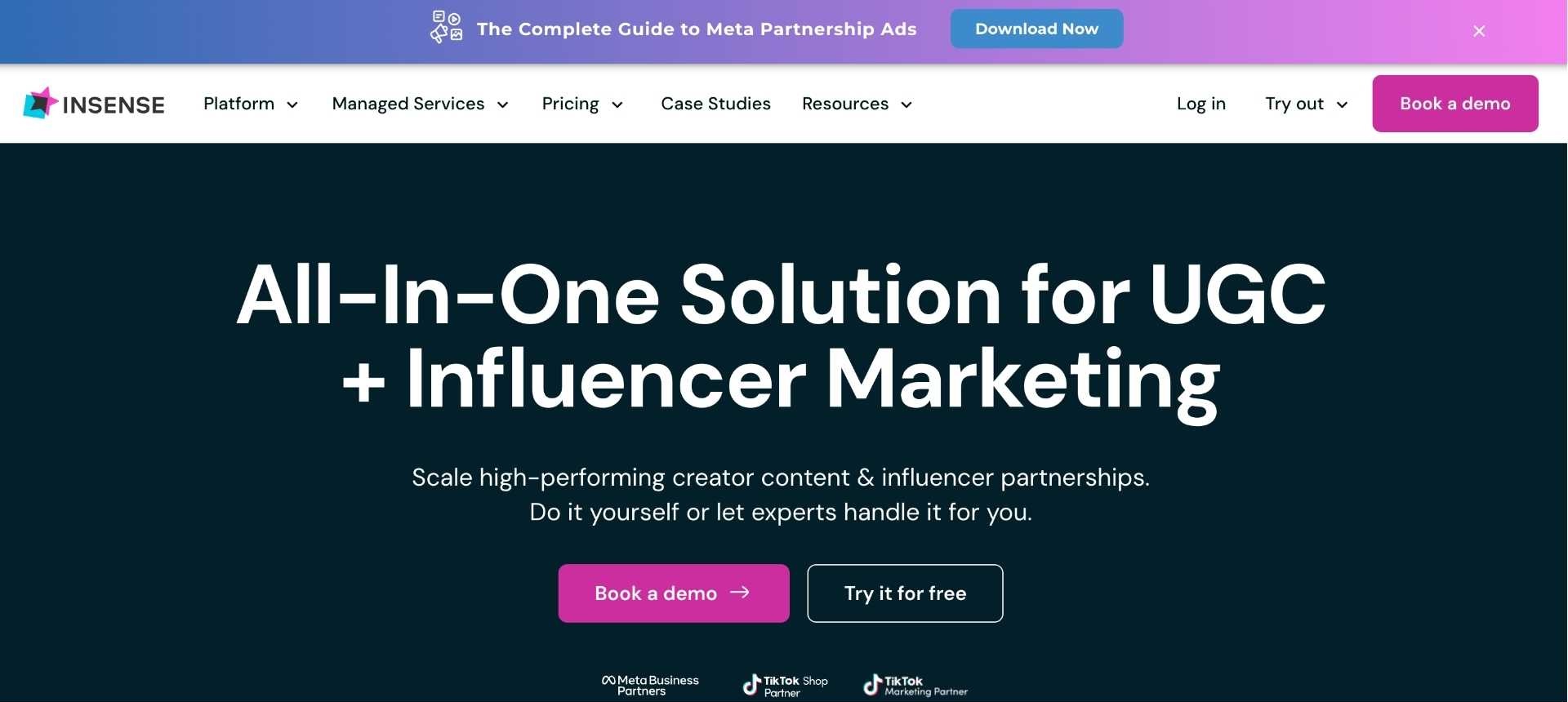
Insense is built specifically for brands that want to source UGC creators, launch paid creator ads, and manage product seeding without building a large in-house creator team. It is especially strong for UGC campaigns because it combines a vetted creator marketplace, interactive briefs, direct creator chat, automated contracts and payments, and ad-ready rights management in a workflow designed around fast content production.
Key features
- Creator marketplace: Gives brands access to 80,000+ vetted creators and micro-influencers across multiple markets.
- Advanced creator filters: Brands can filter by category, language, age, location, price, followers, and more to find a better UGC match.
- Interactive creative briefs: The brief builder adapts to campaign selections and helps reduce revision cycles.
- Direct creator chat: Communication happens inside the platform so approvals and revision requests stay in one place.
- Payments and copyrights: Automated legal agreements, creator payments, and licensed content handling make the platform strong for paid UGC usage.
- Whitelisting and ads: Supports Meta Partnership Ads and TikTok Spark Ads for turning creator content into paid media.
- Affiliate and TikTok Shop workflows: Brands can run affiliate-style creator campaigns and track TikTok Shop activity.
Platform coverage
Insense is strongest on TikTok and Instagram, with campaign support tied closely to Meta Partnership Ads, TikTok Spark Ads, TikTok Shop, Shopify, and broader UGC production workflows.
Standout features
- Paid-social-ready UGC workflow: Insense is one of the more specialized platforms for brands that need UGC specifically for Meta and TikTok ad execution.
- Automated contracts, payments, and licensing: This is a major advantage for brands producing a high volume of content assets.
- Fast creator sourcing for performance teams: Its marketplace and briefing flow are built to speed up creator matching and asset delivery.
Limitations
- Insense is more specialized around UGC production and creator ads than broad influencer CRM, so it may feel narrow for teams that want deeper long-term relationship management.
- Creator payments are separate from subscription costs, and marketplace fees can materially affect total campaign spend.
- Some feedback highlights that clearer mock drafts and more detailed application support could improve the creator-side workflow.
Integrations
- Meta: Supports Meta Partnership Ads and helps manage whitelisting-style creator ad workflows.
- TikTok: Supports creator discovery and TikTok-focused campaign execution.
- TikTok Shop: Enables affiliate-style social commerce programs tied to creator activity.
- Shopify: Connects UGC and seeding campaigns to product workflows and licensed content execution.
- Gmail: Helps teams manage outreach and creator communication alongside campaign execution.
Pricing
Insense offers a one-month Trial plan at $650 per month, which auto-upgrades unless canceled, and its Brand plan starts at $500 per month billed quarterly; Agency pricing starts at $800 per month billed quarterly. Creator payments are not included in the subscription, and marketplace fees apply.
Reviews
4.5/5.0 (G2)
2. JoinBrands
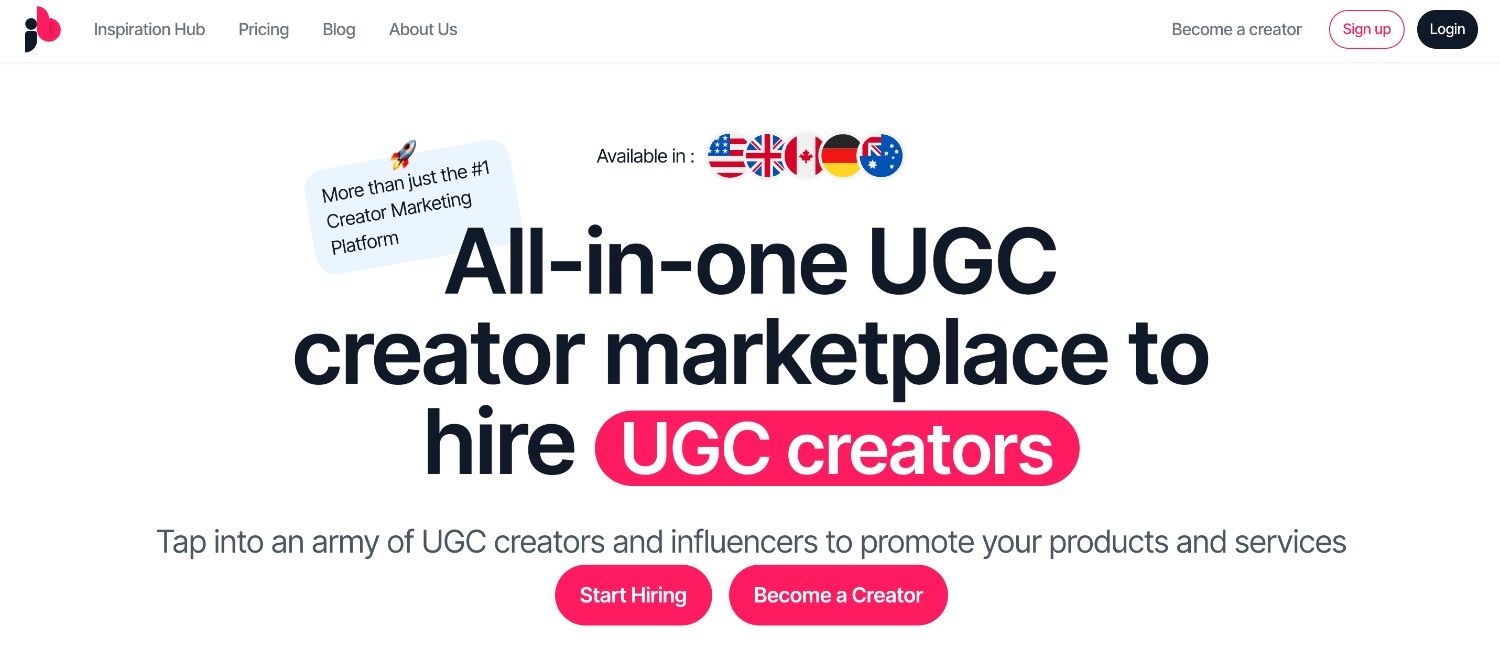
JoinBrands is a creator marketplace built for brands that want ready-to-order UGC, creator posting, and product-driven campaigns without a heavy enterprise setup. It works well for UGC campaigns because brands can launch a job, receive creator applications quickly, approve content, and get usable assets fast, which makes it particularly attractive for brands prioritizing speed, affordability, and direct creator access.
Key features
- Creator marketplace: Brands can access a large creator pool and invite creators directly into UGC or posting jobs.
- Content-only and content-plus-posting campaigns: Supports both pure UGC production and creator posting workflows.
- Broad content formats: Includes UGC images, UGC videos, TikTok videos, TikTok Shop videos, Instagram Reels, YouTube Shorts, and Amazon shoppable videos.
- Automated follow-ups: Paid tiers include automation to keep creator outreach moving.
- Content approval: Brands can review and approve creator submissions before final delivery or posting.
- Analytics: Higher tiers include analytics and extended TikTok reporting.
- Retainers and live commerce support: Supports retainer campaigns and TikTok Shop Live jobs for brands scaling beyond one-off UGC.
Platform coverage
JoinBrands is strongest across TikTok, TikTok Shop, Instagram, YouTube, and Amazon, with campaign types built around UGC, creator posting, and commerce-led content.
Standout features
- Fast, transactional UGC workflow: JoinBrands is one of the better fits for teams that want to order creator content quickly without implementing a large platform.
- Strong format coverage for commerce content: Support for Amazon shoppable videos, TikTok Shop content, and short-form video makes it especially relevant for product-led brands.
- Flexible entry pricing: The free and low-cost paid plans make it accessible for smaller brands testing creator-led UGC.
Limitations
- Publicly documented third-party integrations are lighter than what you get with broader influencer CRMs, so it is less ideal if you want a deeply connected marketing stack.
- Some user feedback points to creator delivery delays and missing chat functionality such as image uploads.
- Analytics and automation appear stronger in higher tiers and newer feature rollouts than in the entry-level setup.
Integrations
- Shopify: Imports products directly into JoinBrands so brands can build campaigns from their store catalog.
- TikTok Shop: Connects creator campaigns to real-time sales and ROI tracking for TikTok Shop activity.
- Amazon: Supports Amazon campaign workflows and Amazon shoppable video jobs for marketplace-led brands.
- TikTok Spark Ads: Supports Spark code retrieval for paid amplification workflows.
- Custom domain or subdomain: Supports branded account configuration for a more white-labeled setup.
Pricing
JoinBrands offers a free pay-as-you-go plan with a 15% platform fee, then paid plans at $99, $299, and $499 per month, with annual billing available at a 10% discount. This makes it one of the more flexible pricing structures in the category.
Reviews
4.8/5.0 (G2)
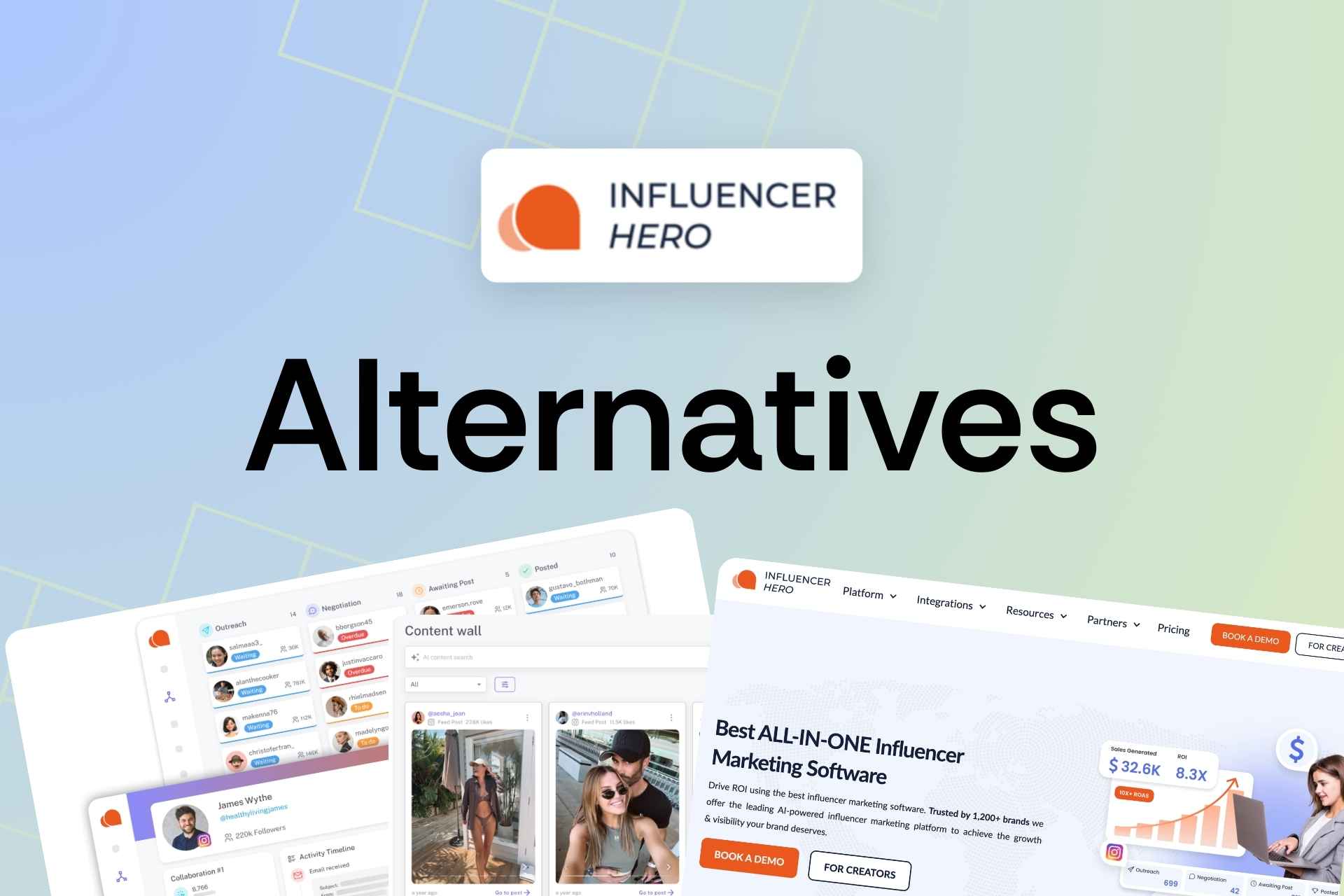
3. Influencer Hero
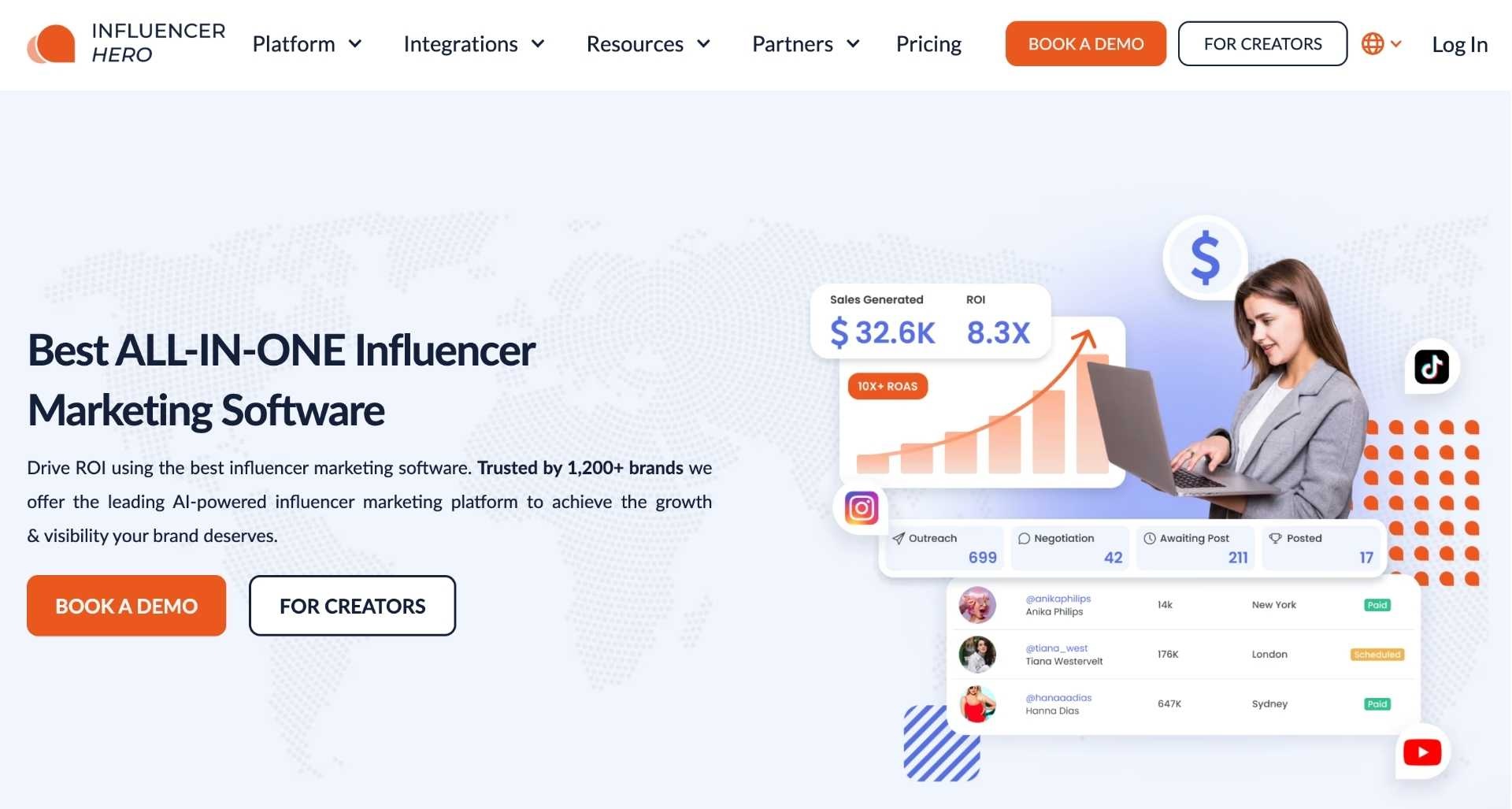
Influencer Hero is an all-in-one influencer marketing platform with a strong bias toward campaign automation, influencer CRM organization, gifting, affiliate tracking, and UGC collection. It is particularly well suited for UGC campaigns because it gives brands a structured way to source creators, manage outreach, send product, collect content, and track which assets and creators are actually driving results.
Key features
- Influencer discovery: Advanced discovery tools with filters for location, audience demographics, interests, engagement rate, and follower quality. AI-assisted discovery further speeds up the sourcing process and improves match accuracy.
- AI-powered outreach: Enables both one-to-one and large-scale outreach using AI-personalized email templates, bulk sending, and multi-step drip sequences.
- Campaign CRM: A campaign-centric CRM with visual, board-based workflows allows teams to track every stage of the creator lifecycle—from outreach and negotiation to deliverables, approvals, and payments. Automation features support follow-ups, reminders, and task updates, making it easier to manage high volumes of creators in parallel.
- Content collection and UGC management: Automatically collects influencer posts and stores them in a content library.
- Gifting and product seeding: Direct integrations with Shopify, WooCommerce, and custom eCommerce setups allow brands to send products, track shipping and delivery, and manage seeding campaigns without leaving the platform. This is particularly useful for scaling product-driven UGC campaigns.
- Affiliate tracking and payouts: Brands can generate unique affiliate links and discount codes, track clicks, conversions, and commissions, and automate payouts.
- Reporting and analytics: Real-time dashboards provide insights into campaign performance, including content engagement, clicks, conversions, affiliate revenue, and ROI per influencer.
- Application pages and storefronts: Customizable, branded application pages help attract inbound creators, while influencer storefronts allow creators to showcase products and drive affiliate sales directly, supporting both recruitment and conversion.
- Scalable workflow automation: Bulk actions across outreach, campaign updates, gifting, and CRM management allow teams to execute repetitive tasks efficiently, making the platform well-suited for managing hundreds or thousands of micro-influencers.
Platform coverage
Influencer Hero supports Instagram, TikTok, YouTube, Facebook, Pinterest, Snapchat, X, and Twitch, which makes it one of the broader channel options in this group.
Standout features
- Campaign-centric CRM automation: Its board-based workflow, bulk actions, and automated follow-ups are a strong fit for brands managing lots of creators at once.
- AI-personalized outreach at scale: Influencer Hero stands out for its ability to combine bulk outreach with AI-driven personalization, helping brands maintain relevance and improve response rates even in high-volume campaigns.
- AI-powered UGC search: With AI and UGC search, brands can quickly find influencer-generated content based on keywords, visuals, captions, or campaign context. This makes it easier to identify high-performing content, discover top creators, and streamline content sourcing for paid ads, social media, and eCommerce use cases.
Limitations
- The lack of a free trial may make it harder for teams to evaluate the platform before committing.
- Steep learning curve
Integrations
- Shopify: Supports gifting, affiliate tracking, shipping updates, and customer-to-creator matching.
- WooCommerce: Extends gifting and affiliate workflows beyond Shopify.
- Gmail: Supports creator communication and centralized outreach workflows through your own email domain.
- Outlook: Works with email-based creator outreach for teams using Microsoft mail workflows.
- Custom eCommerce scripts: Supports embedded scripts for brands with custom commerce setups that still need attribution and payout workflows.
Pricing
Influencer Hero offers flexible pricing based on outreach volume, with unlimited influencer storage across all plans:
- Standard — $649/month (up to 1,000 reachouts/month)
- Pro — $1,049/month (up to 5,000 reachouts/month)
- Business — $2,490/month (up to 10,000 reachouts/month)
- Custom / Agency — Tailored pricing
Reviews
5.0/5.0 (Capterra)
4. Afluencer
Afluencer is an influencer marketing platform that helps brands connect with creators and micro-influencers for sponsored campaigns, gifting, and UGC collaborations. Brands create collaboration opportunities ("Collabs"), specify their requirements, and receive applications from active creators, making influencer discovery and relationship management more streamlined.
Key Features
- Influencer Marketplace: Connect with a network of active creators instead of relying on a static database.
- Collab Campaigns: Create campaigns and allow creators to apply based on your targeting criteria.
- Influencer Discovery Filters: Search creators by niche, location, audience demographics, follower count, and engagement metrics.
- Direct Messaging: Communicate with creators directly inside the platform to coordinate partnerships.
- Performance Insights: View creator engagement rates, audience data, and social metrics before approving collaborations.
- Product Gifting Campaigns: Send products to creators in exchange for content and social posts.
- UGC Collaboration Support: Work with creators to generate user-generated content that brands can repurpose across ads, websites, and social media.
- AI CreatorGPT Assistant: Access AI-powered recommendations and assistance for influencer campaign management.
- Premium Creator Filters: Identify highly active creators and narrow searches using advanced criteria.
- Strategy and Onboarding Support: Receive guidance through onboarding sessions and customer support.
Platform Coverage
Afluencer supports influencer campaigns across Instagram, TikTok, YouTube, Facebook, and X (formerly Twitter). The platform is particularly focused on social-first collaborations and UGC partnerships, enabling brands to discover creators across multiple channels while managing conversations and campaigns from a single dashboard.
Standout Features
- Active Creator Marketplace: Unlike large databases containing inactive profiles, Afluencer focuses on creators who are active users of the platform and ready to collaborate.
- Collab-Based Workflow: Brands can publish opportunities and receive applications from interested creators rather than conducting manual outreach.
- Affordable Entry Point: The platform offers a free plan and relatively low-cost premium plans, making influencer marketing accessible for startups and smaller ecommerce brands.
Limitations
- Smaller Creator Pool in Certain Regions: Brands targeting markets outside North America and Europe may find fewer available creators.
- Limited Free Plan Functionality: The free tier restricts the number of applications and advanced filtering options.
- Occasional Inactive Profiles: Some users report encountering creators who are no longer actively responding to partnership requests.
- UI and Navigation Could Be Improved: Several users mention that the interface feels less polished than competing platforms.
Integrations
- Shopify: Enables merchants to discover influencers and coordinate collaborations directly from their Shopify ecosystem.
- Instagram: Allows brands to evaluate and collaborate with Instagram creators for posts, reels, and UGC campaigns.
- TikTok: Supports discovery of TikTok creators and campaign management for short-form video collaborations.
- YouTube: Helps brands find YouTube creators for long-form and video-based partnerships.
- Facebook: Provides access to Facebook creators and social campaigns across Meta's ecosystem.
Pricing
Afluencer offers a free plan for brands getting started. Paid plans begin with the VIP plan at $49/month, while the Concierge plan costs $99/month. The platform follows a monthly subscription model and also offers free trials through its Shopify app. Premium plans unlock additional influencer invites, advanced filters, AI features, strategy sessions, and priority support. Pricing is structured to accommodate small businesses and growing ecommerce brands rather than enterprise teams.
Reviews
4.5/5.0 (Shopify App Store)
5. Aspire
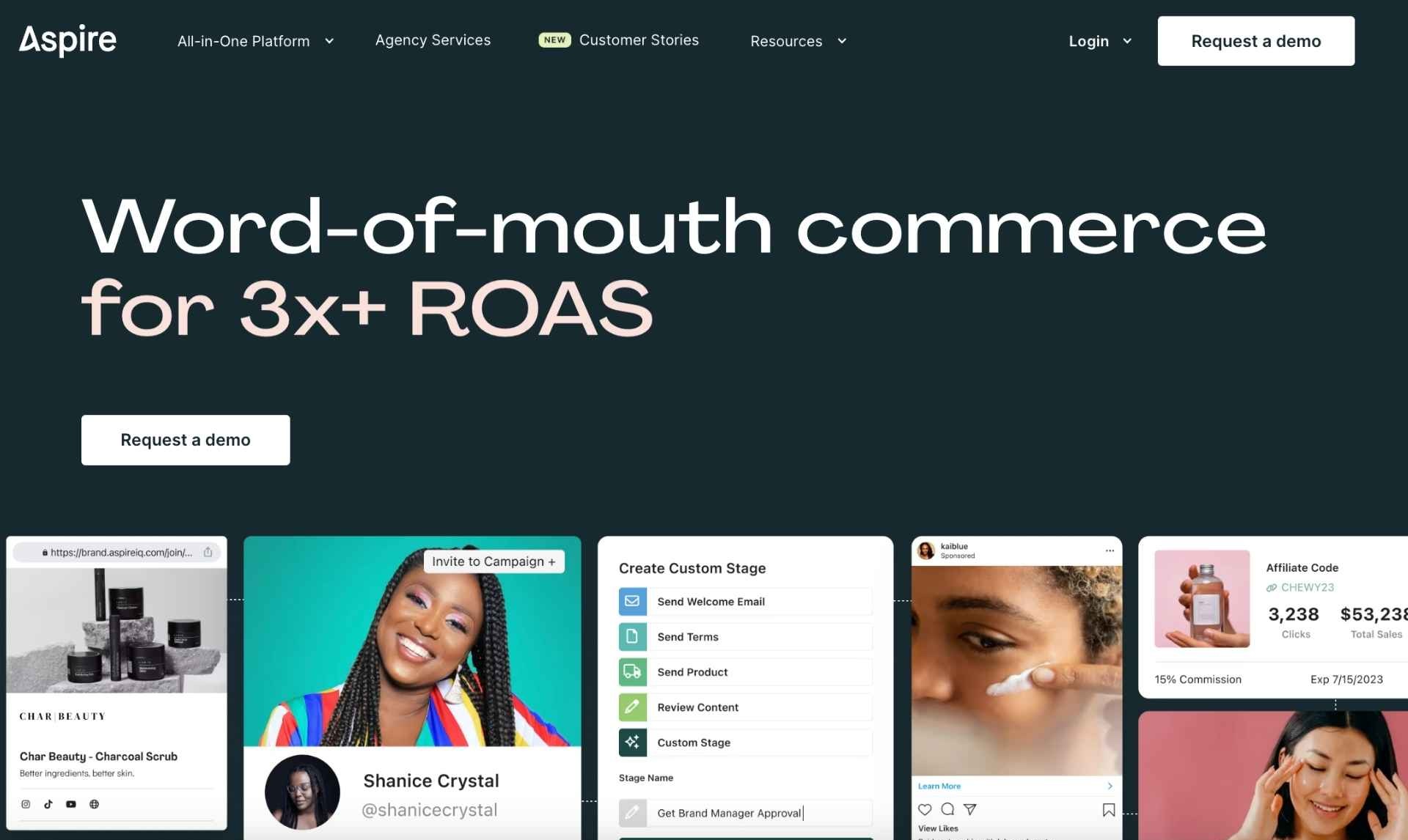
Aspire is an end-to-end influencer marketing platform designed to help brands manage the full lifecycle of creator and UGC campaigns—from discovery and outreach to content approvals, gifting, and performance tracking. It is particularly strong for UGC campaigns because it combines inbound creator applications, structured workflows, and built-in usage rights, allowing brands to consistently generate and reuse high-quality content at scale.
Key features
- Creator discovery: Search creators using filters like demographics, engagement, and lookalikes to find the right UGC fit.
- Creator marketplace: Access a large inbound network of creators applying directly to campaigns, reducing manual sourcing.
- Campaign workflow management: Manage outreach, contracts, briefs, approvals, and posting in a structured pipeline.
- Content approvals: Review and approve creator submissions before publishing to maintain brand consistency.
- Gifting and fulfillment: Shopify integration enables product seeding and tracks fulfillment without switching tools.
- Content library: Store all creator content and usage rights in one place for reuse across paid and organic channels.
- Sales and performance tracking: Track clicks, conversions, and revenue tied to creator campaigns.
Platform coverage
Aspire supports Instagram, TikTok, YouTube, and other major social platforms, with strong integrations into Meta and TikTok ecosystems.
Standout features
- Inbound creator marketplace: One of the largest inbound creator networks, helping brands scale UGC production quickly.
- First-party data integrations: Direct partnerships with major platforms improve accuracy of creator and performance data.
- End-to-end workflow automation: Automates follow-ups, approvals, and campaign steps, reducing manual workload.
Limitations
- Pricing can be relatively high for smaller brands or early-stage teams.
- Some users report complexity when navigating advanced features and workflows.
- Limited mention of direct payment processing compared to some competitors.
Integrations
- Shopify: Enables product gifting, fulfillment tracking, and revenue attribution from creator campaigns.
- Gmail: Syncs outreach and communication directly into campaign workflows.
- Meta: Supports campaign tracking and paid amplification of UGC.
- TikTok: Connects creator campaigns with TikTok content and performance data.
- CSV/Exports: Allows exporting campaign and sales data for internal reporting.
Pricing
Aspire uses custom pricing, with mid-tier plans reported around ~$2,300/month depending on team size and campaign volume. No clear free plan is publicly available.
Reviews
4.5/5.0 (G2)


6. Upfluence
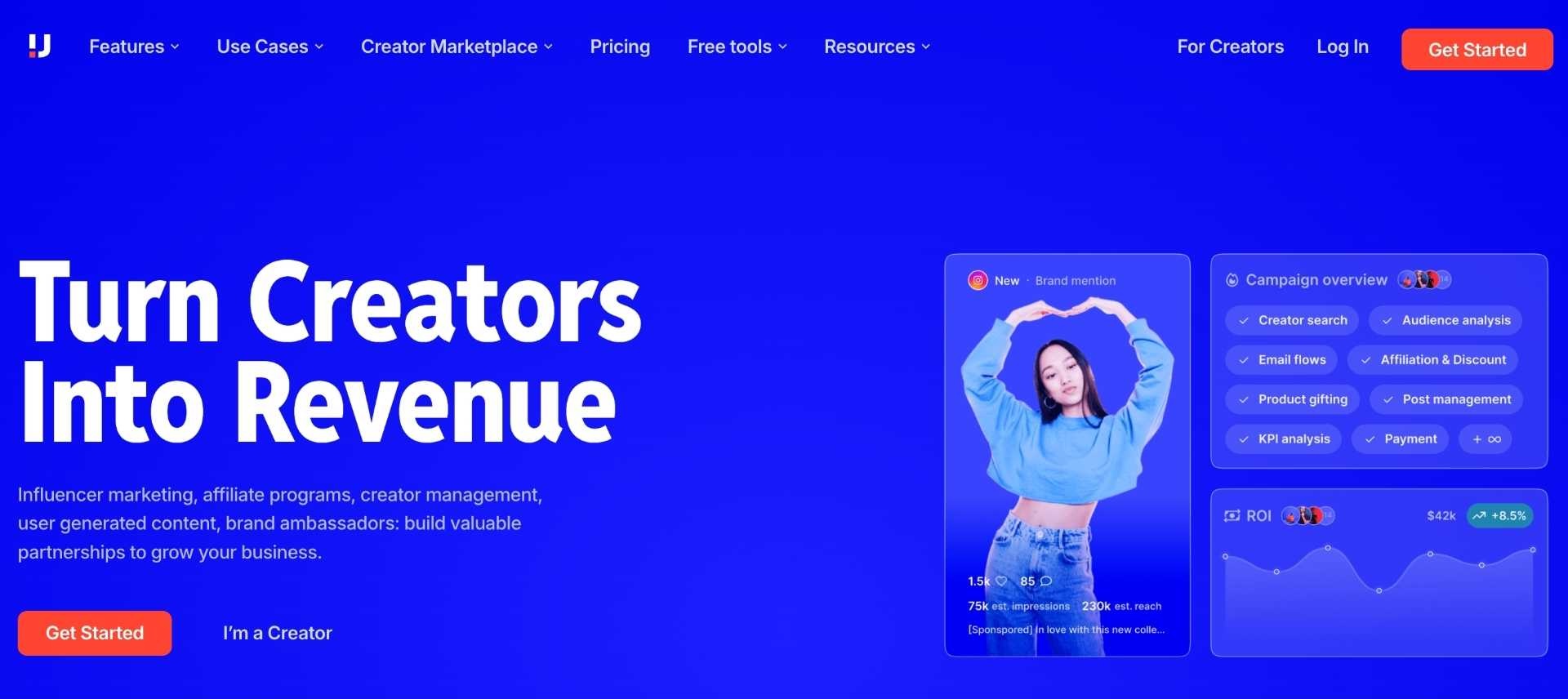
Upfluence is an all-in-one influencer marketing platform focused on helping brands manage creator discovery, outreach, campaign execution, affiliate tracking, and payments within a single system. It is particularly effective for UGC campaigns because it connects influencer activity directly to eCommerce performance, allowing brands to scale content production while tracking real revenue impact.
Key features
- Creator discovery: Access a database of 12M+ influencers with advanced filters for niche, engagement, and audience demographics.
- Outreach automation: Send bulk emails and automate follow-ups using built-in tools.
- Influencer CRM: Manage communication, track relationships, and monitor campaign progress in one place.
- Affiliate tracking: Generate links, codes, and commissions tied to influencer performance.
- Content and campaign tracking: Track engagement, reach, clicks, and conversions across influencer content.
- eCommerce integrations: Identify influencers within your customer base and turn them into creators.
- Creator payments: Handle payouts directly within the platform.
Platform coverage
Upfluence supports Instagram, TikTok, YouTube, X, Twitch, Pinterest, and blogs, making it a strong multi-platform option.
Standout features
- Deep eCommerce integration: Strong Shopify and Amazon integrations allow direct revenue attribution from UGC campaigns.
- Customer-to-creator identification: Brands can turn existing customers into influencers, improving authenticity and lowering costs.
- End-to-end campaign management: Covers discovery, outreach, tracking, and payments in one platform.
Limitations
- High pricing and annual commitment can be restrictive for smaller teams.
- Some users report a learning curve and UI complexity.
- Outreach automation can be limited compared to more specialized tools.
Integrations
- Shopify: Tracks sales, manages gifting, and identifies influencer customers.
- Amazon: Tracks affiliate sales and influencer-driven conversions.
- Gmail/Outlook: Syncs communication for outreach and campaign management.
- PayPal: Enables secure influencer payments.
- Social platforms: Tracks campaign performance across multiple channels.
Pricing
Starts at approximately $1,276/month with annual contracts required; pricing varies based on features and add-ons.
Reviews
4.5/5.0 (G2)
7. Creator.co
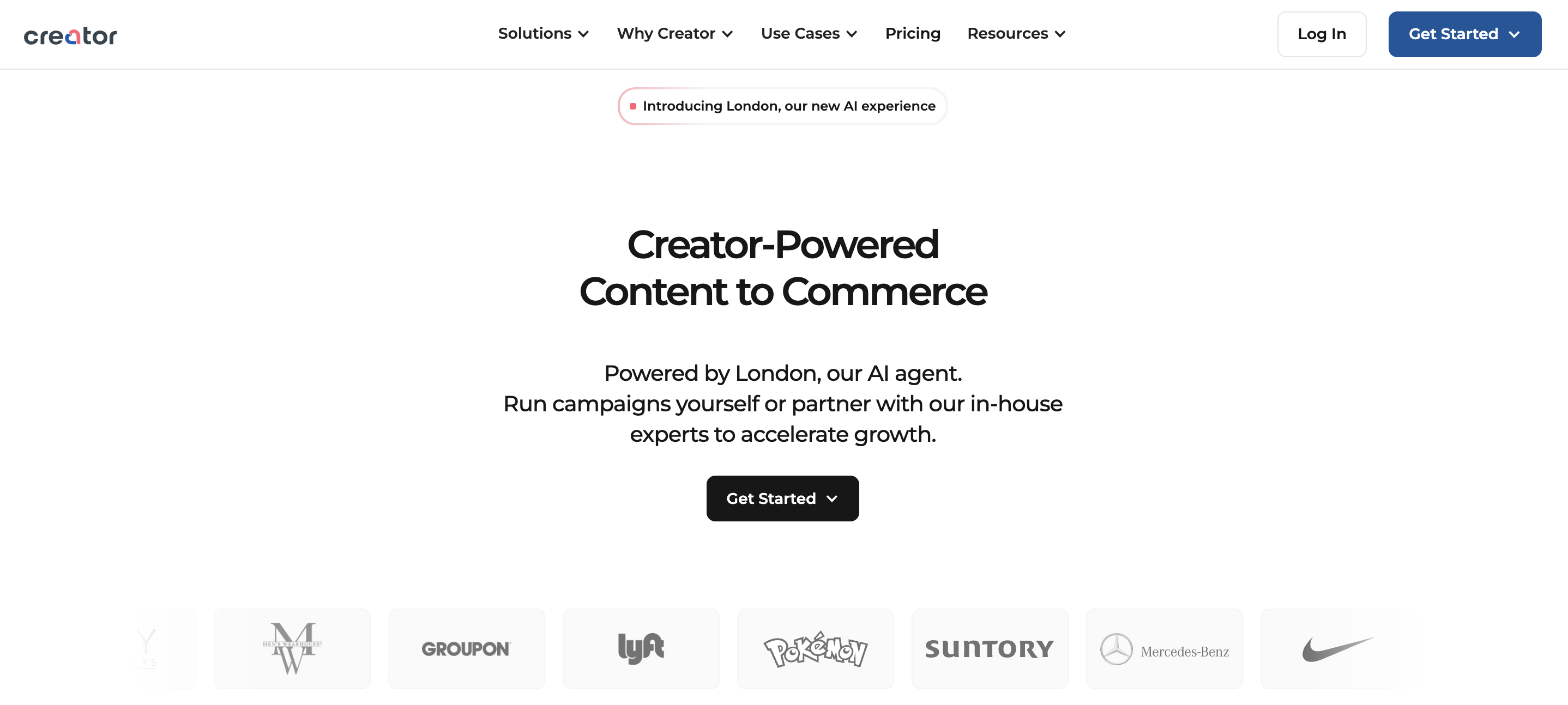
Creator.co is a creator marketplace and influencer marketing platform that focuses on helping brands source creators, run campaigns, and generate UGC through a mix of automated workflows and managed services. It is particularly useful for UGC campaigns because it combines self-serve tools with optional managed campaigns, allowing brands to scale content production without building a large in-house team.
Key features
- Creator marketplace: Access a large pool of creators who can apply to campaigns or be invited directly.
- Campaign automation: Automates outreach, onboarding, and campaign workflows.
- Managed services: Offers hands-on campaign management for brands that want external support.
- Content creation workflows: Enables brands to collect and manage UGC from creators efficiently.
- Performance tracking: Tracks engagement and campaign results across creators.
- Brand briefs and templates: Standardizes communication and expectations with creators.
- Community-driven campaigns: Focuses on micro and nano influencers for scalable UGC production.
Platform coverage
Creator.co supports campaigns across Instagram, TikTok, YouTube, and other major social channels.
Standout features
- Hybrid model (self-serve + managed): Brands can choose between running campaigns themselves or outsourcing execution.
- Strong focus on micro-influencers: Helps brands generate large volumes of authentic UGC.
- Campaign automation: Reduces manual effort in onboarding and managing creators.
Limitations
- Less advanced CRM and analytics compared to enterprise platforms.
- Limited transparency on advanced integrations and data depth.
- Managed services can increase overall campaign costs.
Integrations
- Shopify: Enables product seeding and tracks conversions from influencer campaigns.
- Stripe: Handles payments for campaigns and creator transactions.
- Social platforms: Tracks engagement and performance across channels.
- Email tools: Supports communication workflows with creators.
- API access: Allows custom integrations for advanced use cases.
Pricing
Creator.co offers both subscription plans and managed campaign pricing, typically starting with entry-level plans and scaling based on campaign volume. No clear free plan is widely promoted.
Reviews
4.6/5.0 (G2)
8. Influentials
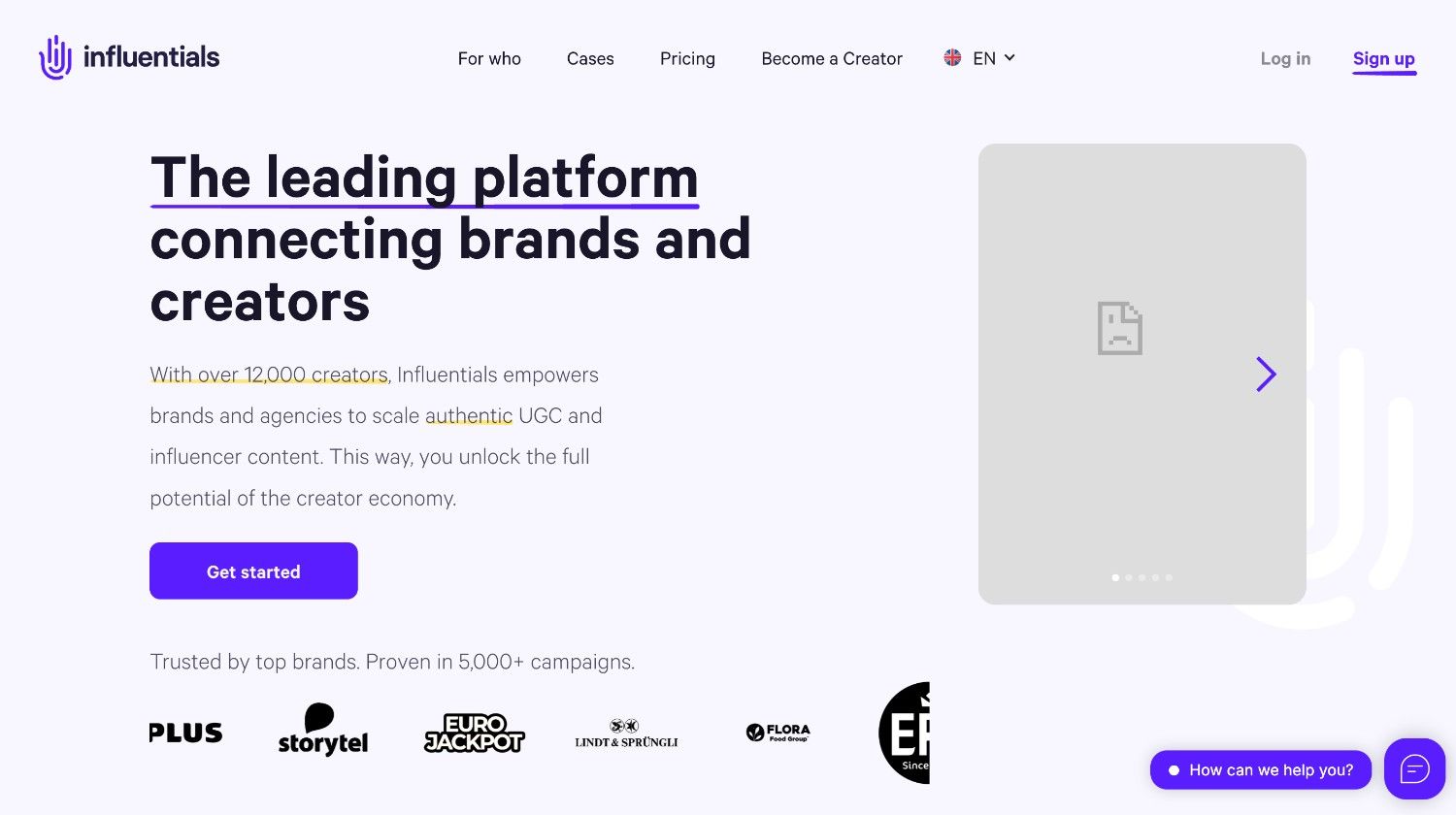
Influentials is a UGC-focused creator platform that connects brands with vetted creators to produce content quickly and at scale. It is designed specifically for brands that want high volumes of UGC for ads and social media, making it a strong fit for performance-driven teams.
Key features
- Creator network: Access a curated pool of creators focused on producing UGC-style content.
- Content-first campaigns: Focuses on delivering ready-to-use content rather than long-term influencer relationships.
- Fast turnaround workflows: Designed for quick content production cycles.
- Content briefs: Standardized briefs to ensure consistency across creators.
- Content delivery system: Centralized platform for receiving and managing UGC.
- Paid ads readiness: Content is optimized for paid social use cases.
- Creator matching: Matches brands with relevant creators based on campaign needs.
Platform coverage
Influentials primarily supports Instagram and TikTok, focusing on short-form UGC content.
Standout features
- UGC-first approach: Built specifically for content production rather than influencer relationship management.
- Fast content turnaround: Ideal for brands running high-frequency ad testing.
- Performance-focused creators: Emphasis on creators who understand conversion-driven content.
Limitations
- Limited CRM functionality for long-term influencer relationships.
- Narrower platform coverage compared to full influencer platforms.
- Less advanced analytics and reporting capabilities.
Integrations
- Meta: Enables use of UGC in paid ad campaigns.
- TikTok: Supports Spark Ads and organic content workflows.
- Shopify: Connects UGC campaigns with product-based workflows.
- Google Drive: Stores and shares content assets.
- Slack: Shares updates and campaign progress with teams.
Pricing
Influentials typically offers custom pricing based on content volume and campaign needs, with no publicly listed plans.
Reviews
4.6/5.0 (G2)
9. Taggbox
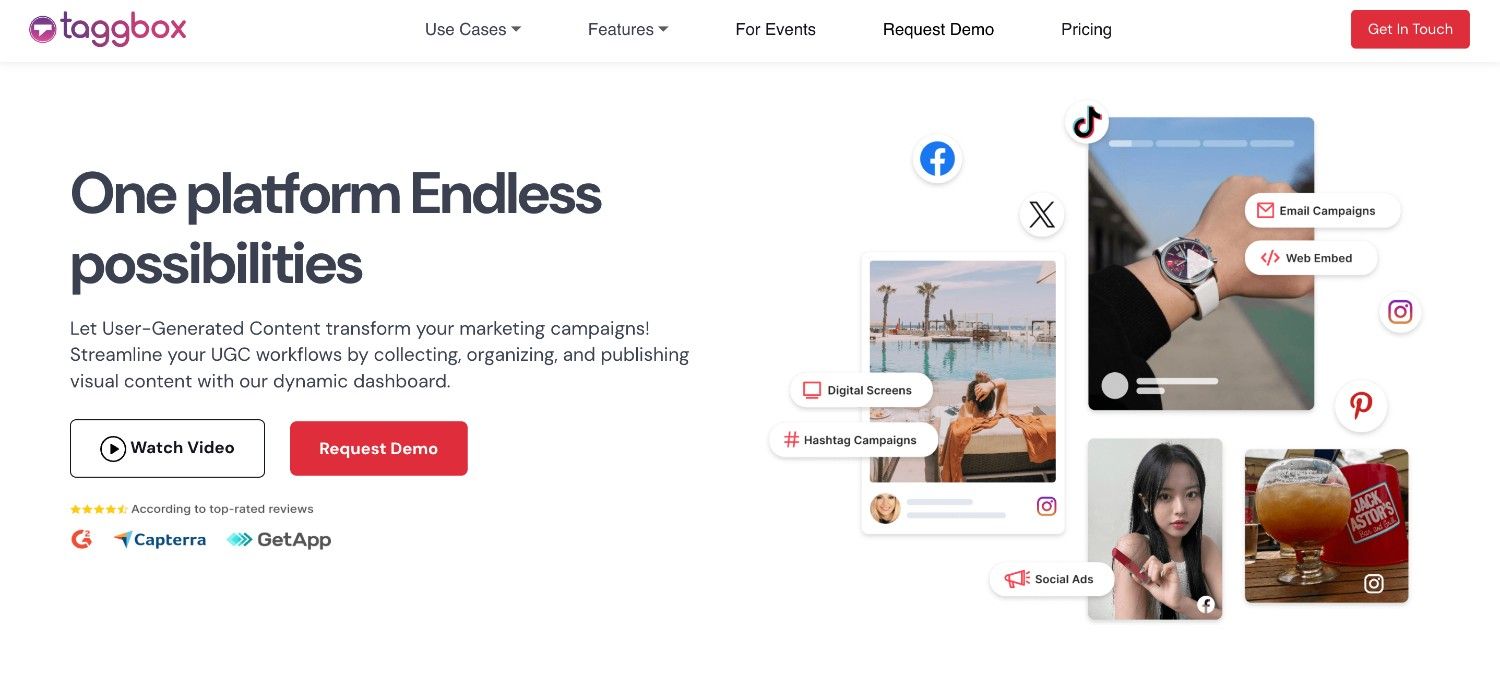
Taggbox is not a creator sourcing platform in the same way as the others on this list, but it is highly relevant for UGC campaigns because it helps brands collect, moderate, rights-clear, organize, and display UGC across websites, emails, social ads, and digital displays. It is best for teams that already have UGC coming in and need a dedicated system to turn scattered creator and customer content into a usable content library and shoppable on-site experience.
Key features
- Social content aggregation: Pulls in social feeds, reviews, stories, photos, and videos from multiple sources.
- Asset manager: Organizes and categorizes UGC in one centralized library.
- Rights management: Helps brands secure usage permission and manage licensing for repurposing UGC.
- Shoppable galleries: Lets brands connect UGC to product pages and commerce experiences.
- Moderation tools: Enables manual and AI-assisted content moderation before publishing UGC.
- Multi-channel publishing: Supports UGC use cases across websites, email, social ads, print, and digital displays.
- API access: Gives technical teams a way to build custom UGC experiences across channels.
Platform coverage
Taggbox supports major UGC and feed sources including Instagram, TikTok, YouTube, Facebook, X, LinkedIn, Google Reviews, Slack, Pinterest, and other social and review channels depending on the widget or use case.
Standout features
- Rights management at scale: Taggbox’s rights-request workflow is one of the clearest reasons to use it for UGC-heavy campaigns.
- Shoppable UGC execution: It helps brands move beyond content display into conversion-focused social commerce galleries.
- Strong website and channel embedding: Taggbox is especially useful when the goal is to operationalize UGC across owned channels rather than manage influencer relationships.
Limitations
- Taggbox is more of a UGC management and display platform than a full influencer CRM, so it does not replace creator outreach and campaign management software.
- User feedback suggests some widget customization options could be more flexible.
- Pricing can rise as brands move into more advanced use cases and add-ons.
Integrations
- Shopify: Lets brands embed shoppable UGC and social proof directly into Shopify storefronts.
- WordPress: Makes it easy to publish UGC widgets and social feeds on WordPress sites.
- Wix: Supports embedding UGC and social widgets into Wix websites.
- Squarespace: Allows UGC widgets to be added to Squarespace pages for social proof and conversion support.
- HTML: Gives developers a direct embed option for custom sites and more flexible implementation.
Pricing
- Free Plan: $0/month — 1 feed, 500 views/month, manual moderation, ad-free, 500 posts.
- Starter: $19/month — 2 feeds, 10K views/month, 15+ platforms, updates every 2 hours, email support, 5,000 posts.
- Growth: $29/month — 4 feeds, 50K views/month, auto moderation, “Wall of Love” page, chat support, 30,000 posts.
- Advanced: $79/month — 10 feeds, 1M views/month, AI moderation, TikTok feeds, multi-Twitter integration, chat & call support, 100,000 posts.
Reviews
4.8/5.0 (G2)
10. Revfluence
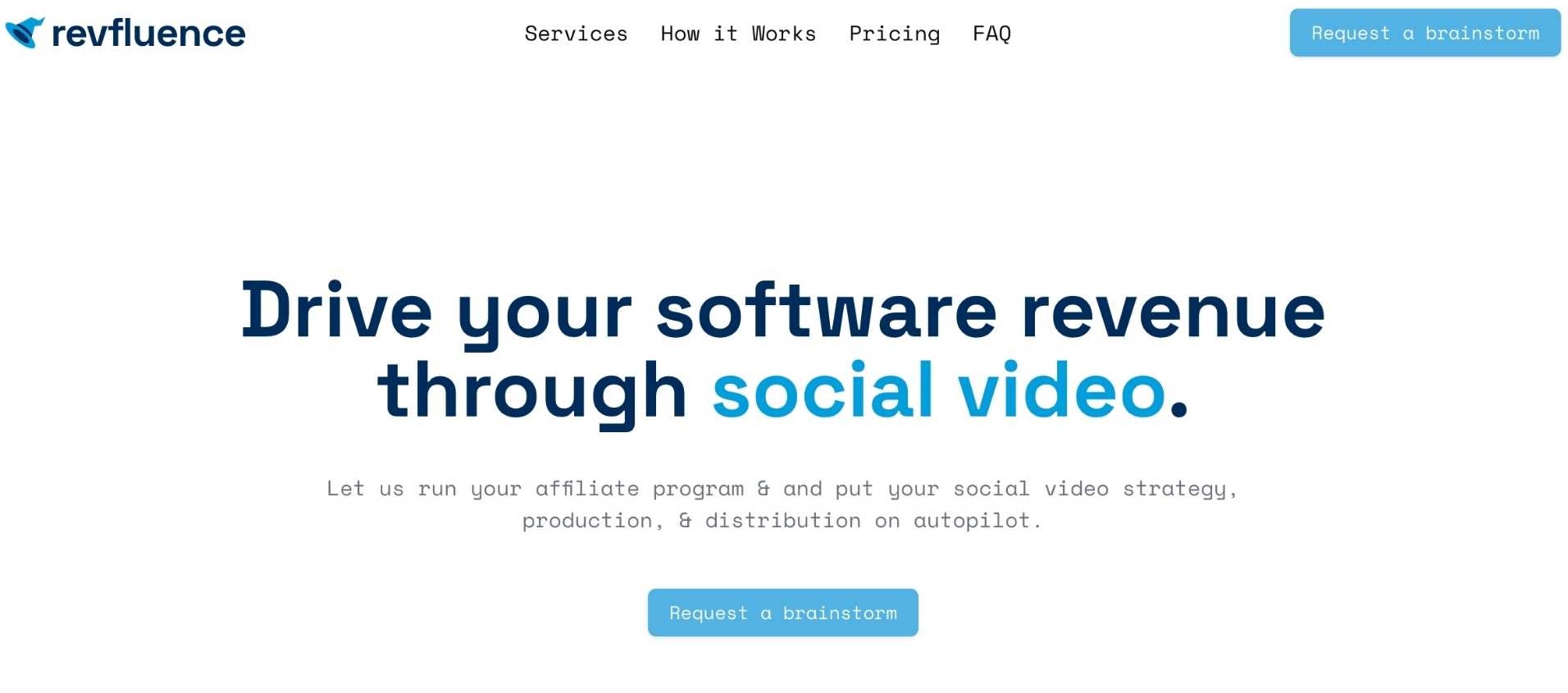
Revfluence is an influencer marketing platform designed to help brands discover creators, manage relationships, and execute campaigns from a centralized system. It is well-suited for UGC campaigns because it enables teams to coordinate creator outreach, manage deliverables, and track content performance in one place—reducing the operational complexity of running content-heavy campaigns at scale
Key features
- Creator discovery: Identify influencers using filters such as audience demographics, engagement, and niche relevance to support targeted UGC sourcing
- Influencer CRM: Organize creators, track communication history, and manage long-term relationships within a centralized database
- Campaign management: Plan and execute campaigns with structured workflows for outreach, deliverables, and timelines
- Content tracking: Monitor when influencer content goes live and track campaign-related posts across platforms
- Performance analytics: Measure campaign results including engagement, reach, and overall effectiveness
- Team collaboration: Share campaign data, creator notes, and updates across internal stakeholders
Platform coverage
Revfluence supports influencer and UGC campaigns across major social platforms including Instagram, TikTok, YouTube, and Facebook
Standout features
- Centralized influencer CRM: Revfluence places strong emphasis on relationship management, making it easier to run ongoing UGC programs rather than one-off collaborations
- Structured campaign workflows: Combines outreach, tracking, and reporting into a single system to reduce reliance on manual tools
- Scalable creator management: Designed to support campaigns involving multiple creators while maintaining visibility into communication and performance
Limitations
- The platform focuses more on CRM and campaign management than marketplace-style creator sourcing, which may require more manual outreach.
- Limited publicly available details on advanced UGC-specific features like automated content rights management.
- Pricing and feature tiers are not transparent, requiring direct contact with the company.
Integrations
- Shopify: Connects eCommerce data to influencer campaigns to help track conversions and manage product-based collaborations
- Instagram: Enables tracking of influencer content and engagement performance directly from campaigns
- TikTok: Supports campaign tracking and content performance for TikTok-based creators
- YouTube: Allows tracking and management of long-form creator content within campaigns
Pricing
- Long form: $3.5k/monthly
- Short form: $4.5k/monthly
- Affiliates: $8.5k/monthly
Reviews
Not publicly disclosed
Final Thoughts
Choosing the right platform for UGC campaigns ultimately comes down to how you want to scale creator sourcing, streamline workflows, and manage content at volume. Some tools on this list focus on fast UGC production and creator marketplaces, while others provide full end-to-end infrastructure with CRM, automation, and performance tracking built in. The key is selecting a platform that aligns with your team’s workflow—whether that’s generating content quickly, managing long-term creator relationships, or turning UGC into measurable revenue. By centralizing these processes, the right platform can significantly reduce operational overhead while improving the consistency and performance of your campaigns.