

Top 10 Influencer Marketing Platforms in 2026
Software platforms have become a critical layer in scaling influencer programs as teams move beyond one-off collaborations to always-on creator partnerships. For CMOs and marketing teams managing dozens—or thousands—of creators, specialized platforms help streamline discovery, outreach, campaign management, payments, and performance tracking in one place. Modern solutions now combine large creator databases, CRM-style relationship management, and integrations with eCommerce platforms like Shopify to connect influencer activity directly to revenue.
In this article, we explore leading influencer marketing platforms used by brands and agencies in 2026, including Aspire, Influencer Hero, Upfluence, GRIN, Afluencer, Later, CreatorIQ, Modash, Captiv8, and Klear, and examine how each platform helps teams manage influencer programs more efficiently.
Key Features to Look for in Influencer Marketing Platforms
Influencer Discovery and Search
A strong influencer discovery engine allows marketers to quickly find creators who match their brand’s target audience. Most platforms provide advanced filters such as location, engagement rate, niche, audience demographics, follower size, and past brand collaborations. Some tools also offer AI-powered search, lookalike creator recommendations, and visual or keyword-based discovery to help teams identify relevant creators faster.
Outreach and Relationship Management
Influencer marketing platforms often include built-in CRM functionality to manage communication with creators. These tools help teams organize influencer lists, track conversations, send bulk outreach emails, and automate follow-up messages. Having outreach and relationship management within the platform ensures that influencer partnerships can be tracked and scaled without relying on spreadsheets or fragmented tools.
Campaign Management and Workflow Automation
Campaign management features allow marketing teams to plan, execute, and monitor influencer collaborations in a structured workflow. Platforms typically support campaign briefs, contract management, content approvals, deliverable tracking, and deadline management within a single dashboard. Workflow automation—such as automated follow-ups, bulk approvals, or creator onboarding—helps teams manage larger influencer programs more efficiently.
Performance Tracking and Reporting
Accurate measurement is essential for understanding the impact of influencer marketing. Most platforms provide reporting dashboards that track metrics such as reach, impressions, engagement, clicks, conversions, and earned media value. Some solutions also integrate with eCommerce platforms like Shopify to attribute revenue directly to influencer campaigns, giving marketing leaders a clearer picture of return on investment.
Creator Payments and Affiliate Tracking
Many influencer platforms now include built-in payment systems and affiliate tracking tools. These features allow brands to generate unique links or discount codes, track commissions, and automate payouts to creators. Managing payments and commissions within the same platform simplifies financial workflows and reduces administrative overhead.
AI and Automation Capabilities
AI-driven tools are becoming increasingly common in influencer marketing software. These capabilities can recommend creators, detect fake followers, predict campaign performance, and automate tasks such as outreach messaging or creator scoring. Automation helps marketing teams reduce manual work and focus more on strategy, partnerships, and campaign optimization.
Top Influencer Marketing Platforms
| TOOL | REVIEWS | BEST FOR | TRIAL INFO | PRICING | ||
|---|---|---|---|---|---|---|
1 |

|
⭐ | Influencer CRM & automation | Book Demo | Pricing | Website |
2 |

|
⭐ | Influencer partnerships | Book Demo | Pricing | Website |
3 |
|
⭐ | Ecommerce influencer discovery | Book Demo | Pricing | Website |
4 |

|
⭐ | DTC creator management | Book Demo | Pricing | Website |
5 |

|
⭐ | Influencer marketplace campaigns | Book Demo | Pricing | Website |
6 |

|
⭐ | Social media & influencer campaigns | Book Demo | Pricing | Website |
7 |

|
⭐ | Enterprise influencer marketing | Book Demo | Pricing | Website |
8 |

|
⭐ | Influencer discovery | Book Demo | Pricing | Website |
9 |
|
⭐ | Enterprise influencer campaigns | Book Demo | Pricing | Website |
10 |
|
⭐ | Influencer analytics | Book Demo | Pricing | Website |
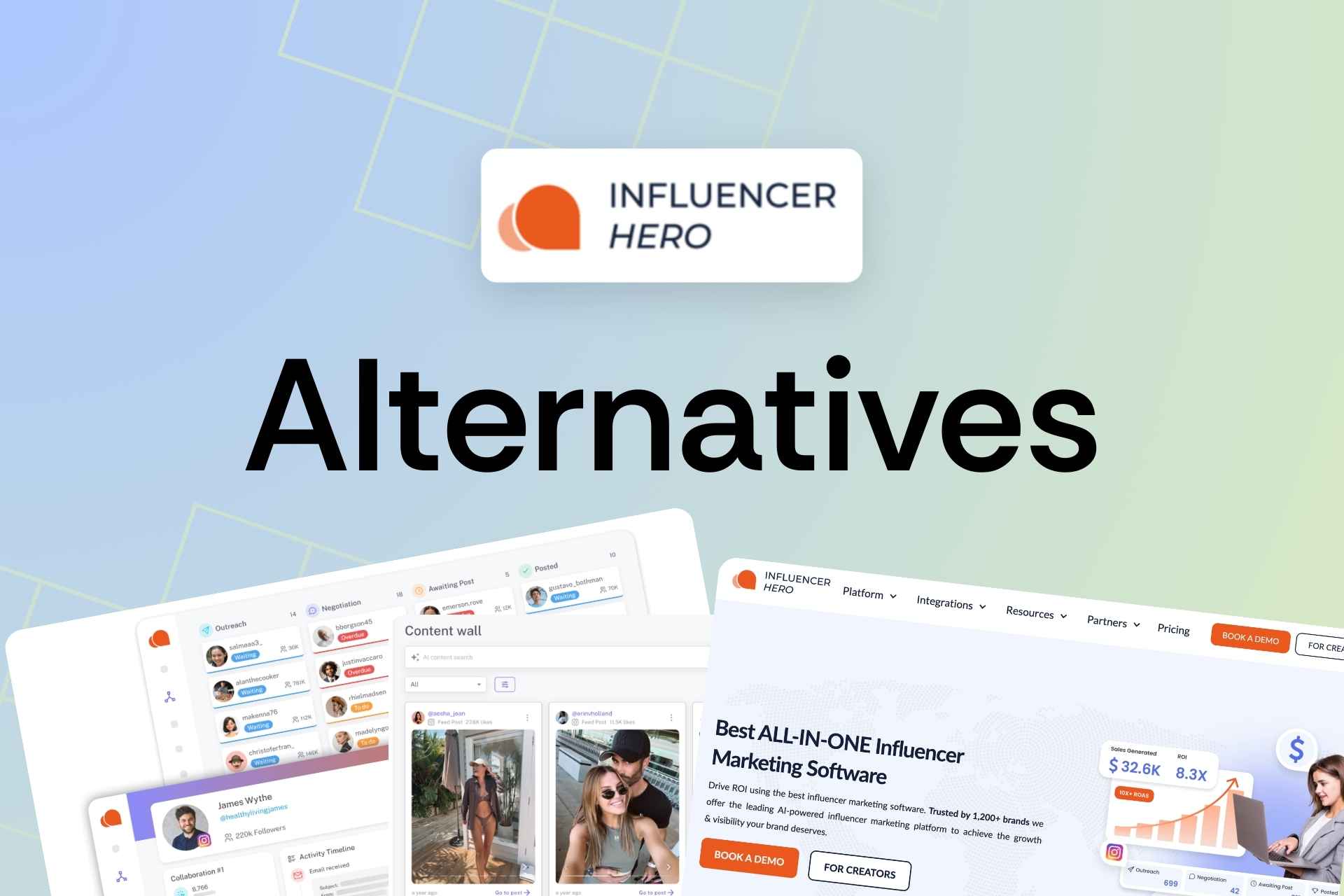
1. Influencer Hero
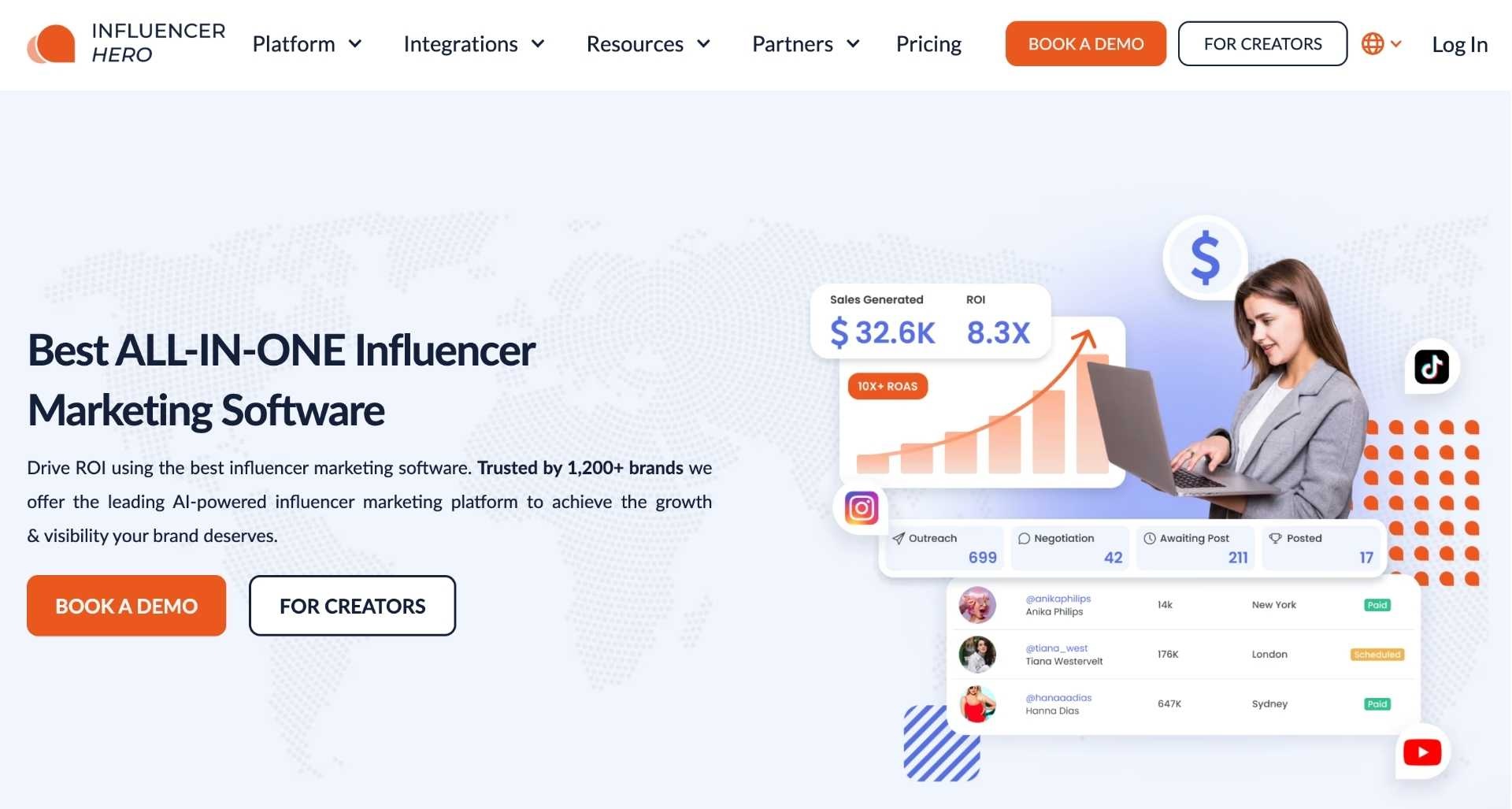
Influencer Hero is an all-in-one influencer marketing platform designed for ecommerce and DTC teams that want discovery, outreach, gifting, affiliate tracking, UGC collection, and payouts in one workflow. It is especially strong for brands that need a campaign-centric CRM and tighter operational control over creator programs without moving into enterprise-level complexity.
Key features
- Influencer discovery: Search creators with filters for location, interests, engagement, and audience fit to build qualified creator lists faster.
- Bulk outreach and drip sequences: Teams can run personalized outreach at scale with automated follow-ups and reply tracking.
- Campaign CRM: Structured boards help teams manage outreach, deliverables, status changes, and creator relationships in one place.
- Affiliate tracking and discount codes: The platform creates affiliate links and creator-specific codes, then attributes clicks and sales back to campaigns.
- Gifting workflows: Ecommerce integrations let brands send products using live inventory rather than manual coordination.
- UGC and content collection: Influencer Hero stores campaign content so teams can review, download, and reuse strong-performing assets.
- Creator payouts: Brands can process creator payments and track affiliate earnings inside the platform.
- Campaign reporting and performance analytics: Real-time reporting dashboards track campaign metrics such as clicks, sales, engagement, and overall ROI, helping teams evaluate influencer performance and optimize campaigns.
Platform coverage
- TikTok
- YouTube
- Snapchat
- X
- Twitch
Standout features
- AI Workflow Optimization: Influencer Hero uses AI-driven automation to reduce manual work across influencer campaigns. From creator discovery to outreach and campaign management, the platform helps teams automate repetitive tasks, receive predictive campaign suggestions, and identify creators with higher potential for campaign success.
- Chrome Extension for Influencer Research: The Influencer Hero Chrome extension allows teams to browse Instagram, TikTok, or YouTube and instantly view key influencer metrics. Creators can then be imported directly into campaigns with one click, making influencer research and list building significantly faster.
- AI-Powered UGC Search: The platform includes AI-powered tools that help brands find influencer-generated content using keywords, captions, visual elements, or campaign context. This allows teams to identify high-performing UGC, discover top creators, and reuse content for paid ads, social media, and ecommerce marketing
Limitations
- Some users want more campaign customization, particularly for more tailored workflows.
Integrations
- Shopify: Sync products, generate affiliate links and discount codes, and attribute creator-driven revenue in real time.
- WooCommerce: Manage gifting, commission tracking, and discount-code workflows directly from store inventory.
- Gmail: Run drip campaigns and creator communication from your existing email address.
- Outlook: Launch and track influencer outreach while logging replies and conversations back to creator records.
- Slack: Sends real-time notifications about influencer replies, posts, sales, shipments, and payouts to internal teams.
- DocuSign: Automates influencer contracts and agreement signing directly within campaign workflows.
- Stripe: Supports automated commission payments and financial workflows for influencer partnerships.
Pricing
Influencer Hero offers scalable pricing based on outreach volume:
- Standard Plan — $649/month for up to 1,000 outreaches per month
- Pro Plan — $1,049/month for up to 5,000 outreaches per month
- Business Plan — $2,490/month for up to 10,000 outreaches per month
- Custom / Agency Plan — Custom pricing
Billing is flexible with monthly, quarterly, or annual options, so there is no required long-term enterprise contract. Influencer Hero also allows unlimited creators in your CRM.
Reviews
5.0 / 5.0 (Capterra)
2. Aspire
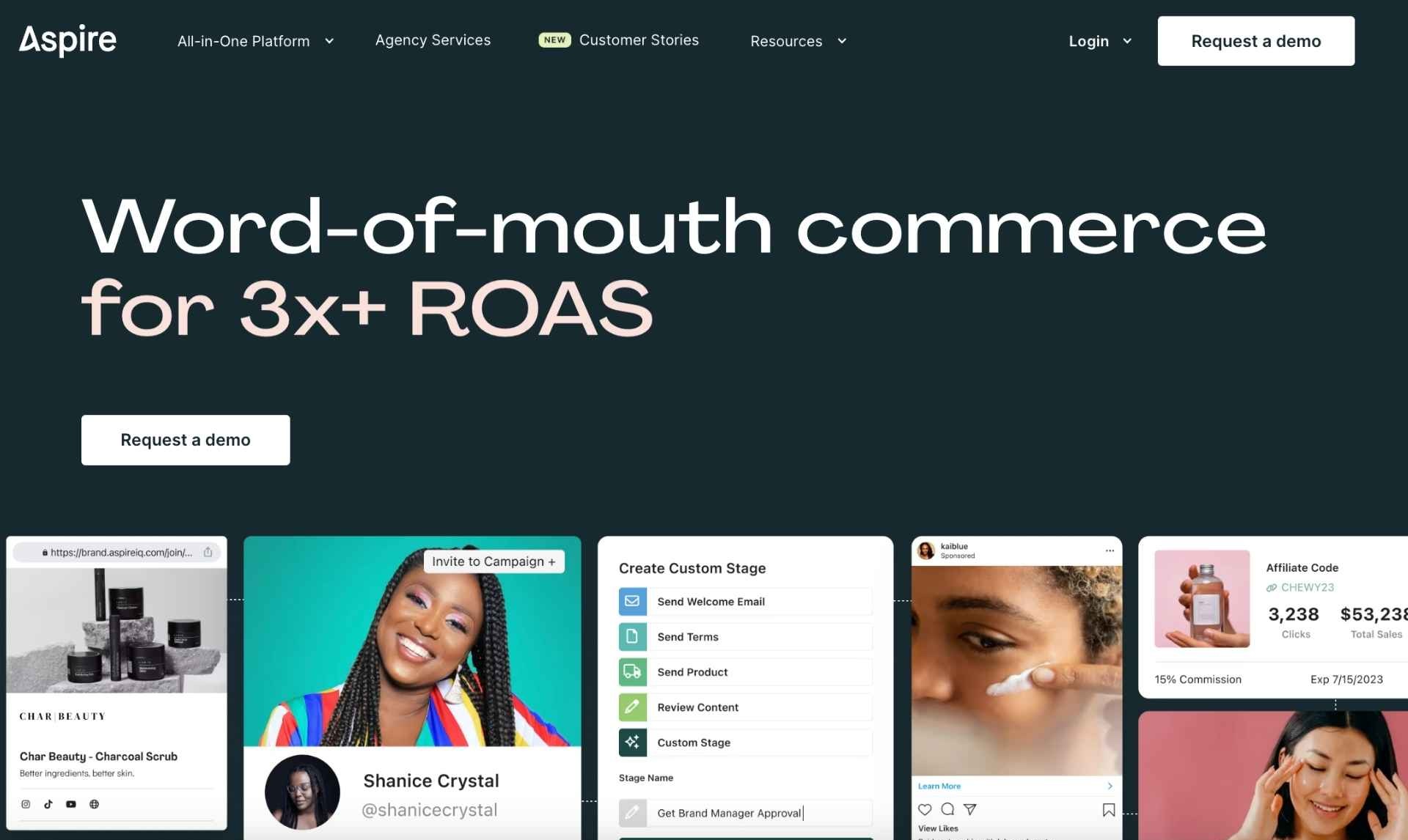
Aspire is an influencer marketing platform built for brands that want to manage discovery, recruitment, gifting, approvals, affiliate tracking, and reporting in one system. Its workflow combines outbound creator search with an inbound marketplace, then connects campaigns to commerce data so teams can track creator-driven sales more clearly.
Key features
- Creator discovery: Search creators by channel, keyword, engagement, demographics, and audience fit so teams can build shorter, better-qualified outreach lists.
- Inbound creator marketplace: Brands can post opportunities and receive applications from creators already interested in working with them.
- CRM and workflow automation: Campaign pipelines support invites, briefs, approvals, and follow-ups so teams can manage more creators without relying on spreadsheets.
- Shopify-based gifting and promo codes: Teams can send products, generate codes, and identify influential customers directly from connected store data.
- Affiliate and conversion tracking: Aspire ties creator activity to clicks, conversions, and sales, which is especially useful for ecommerce programs.
- Content approvals and asset library: Brands can review deliverables and keep campaign content organized for reuse across paid and owned channels.
- Integrated creator payments: Teams can pay creators inside the platform through supported payment integrations rather than handling payouts manually.
Platform coverage
- TikTok
- YouTube
Standout features
- Inbound plus outbound discovery: Aspire stands out because it supports both search-led recruitment and application-driven recruitment, giving brands more ways to source creators.
- First-party and commerce-linked workflows: Its Shopify connection goes beyond promo codes by helping brands spot influential customers, manage gifting, and connect creator activity to store outcomes.
- Strong campaign orchestration: Teams often highlight Aspire as a true all-in-one operating layer for briefs, approvals, communication, and reporting rather than just a search tool.
Limitations
- Pricing is not transparent on the official site, which makes early vendor comparison harder for buyers.
- The platform appears better suited to mid-market and enterprise brands than very small teams running lightweight gifting programs.
- Some users describe the interface as clunky or uneven to navigate, especially when managing more complex workflows.
Integrations
- Shopify: Sync store data to send gifts, create promo codes, and identify influential customers from your buyer base.
- Gmail: Send creator outreach from your brand email and manage communication in a shared inbox workflow.
- Microsoft Outlook: Keep creator communication tied to brand inboxes and internal teams without switching tools.
- Klaviyo: Push influencer contacts into CRM and email sequences for more structured lifecycle communication.
- PayPal: Handle creator payments from inside Aspire instead of managing payouts manually outside the platform.
Pricing
All plans are custom made. Plans usually start at $2,000/month, with annual agreements.
Reviews
4.0 /5.0 (Capterra)
3. Upfluence
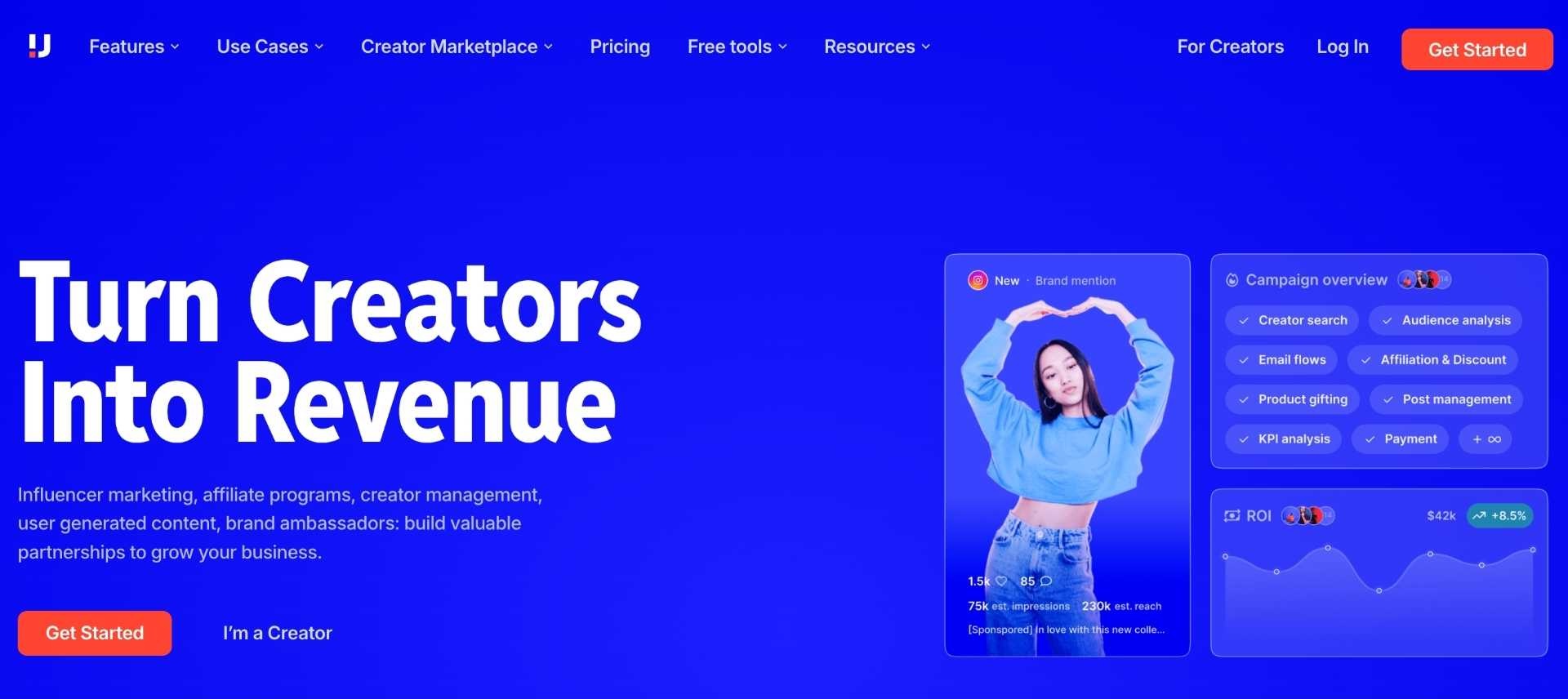
Upfluence is an end-to-end influencer and affiliate marketing platform built with a strong ecommerce angle, especially for brands selling through Shopify and Amazon. It combines creator discovery, outreach, CRM, affiliate tracking, social listening, and payments, with a clear focus on tying creator activity back to revenue.
Key features
- Large creator database: Upfluence gives brands access to a broad creator pool with filters for niche, location, audience, and engagement.
- Bulk outreach: Teams can send influencer outreach from linked Gmail or Outlook inboxes and automate follow-up sequences.
- CRM and campaign management: Marketers can manage outreach, track collaboration stages, and centralize influencer records in one platform.
- Affiliate and promo-code management: The platform supports custom codes, link tracking, and commission-based partnerships tied to ecommerce performance.
- Amazon integration: Upfluence is unusual in offering native Amazon support for affiliate tracking and creator-led sales attribution.
- Social listening: Teams can track who is talking about their brand or category and use that data to inform recruitment.
- Creator payouts: Bulk payouts are built into the workflow for brands running paid programs at scale.
Platform coverage
- TikTok
- YouTube
- X
- Twitch
- Blogs / WordPress creators
Standout features
- Native Amazon support: Upfluence is one of the few mainstream influencer platforms that directly emphasizes Amazon as part of its ecommerce workflow.
- Customer-to-creator identification: Its commerce integrations help brands identify existing customers who can become creators or affiliates, which can improve response rates and efficiency.
- Strong ecommerce stack integrations: Upfluence is particularly compelling for online retailers that want promo-code, affiliate, and sales attribution built into the platform.
Limitations
- Pricing and packaging are not fully transparent on the official site, so budget planning usually requires a sales conversation.
- The platform can feel complex for smaller teams, especially if they do not need the full ecommerce and affiliate stack.
- Some users report clunky workflow areas and a steeper learning curve, particularly around campaign setup and edits.
- Cost can be hard to justify for lighter programs, especially when annual commitments are involved.
Integrations
- Shopify: Identify influential customers, run gifting and affiliate campaigns, and track creator-attributed sales.
- Amazon: Attribute creator-driven sales and affiliate performance directly to Amazon activity.
- WooCommerce: Generate codes and track influencer revenue from creator campaigns.
- Gmail: Send outreach from your business inbox and keep creator communication centralized.
- Klaviyo: Enrich CRM records and use creator data inside lifecycle and retention workflows.
Pricing
All plans are custom made. There’s a minimum full year of service you have to commit to with monthly payments. On average plans start around $2,000/month ($24,000 yearly)
Reviews
4.3 / 5.0 (Capterra)
4. GRIN
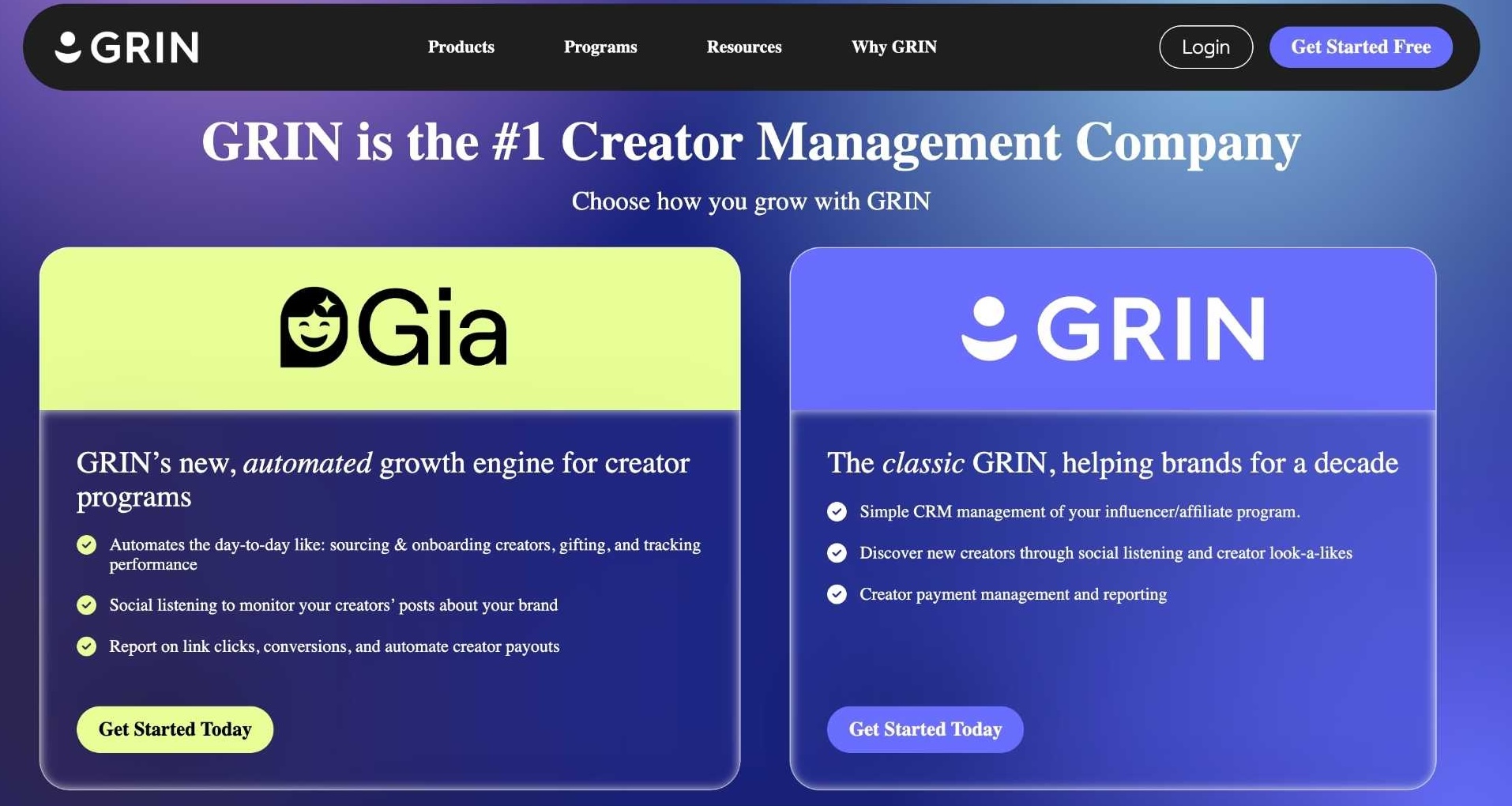
GRIN is a creator management platform aimed primarily at DTC and ecommerce brands that want to run discovery, outreach, gifting, content collection, affiliate tracking, and payments from one system. It is strongest when a brand’s influencer program is tightly connected to ecommerce operations and internal workflows.
Key features
- Creator discovery: GRIN helps teams search and vet influencers by niche, audience, and relevance, then move them directly into campaign workflows
- Outreach and email sync: Brands can communicate through integrated email systems rather than juggling separate outreach tools.
- Campaign CRM: Tags, task automation, creator portals, and relationship tracking make it easier to run always-on programs.
- Product seeding and gifting: Ecommerce integrations allow brands to send products, create discount codes, and manage fulfillment from inside GRIN.
- Affiliate and commission tracking: Teams can manage links, sales attribution, and creator commissions in the same operating system.
- UGC library: Creator content is stored centrally for approvals, repurposing, and long-term reuse.
- Embedded payments and contracts: GRIN connects payments and agreements through workflow integrations, reducing admin work.
Platform coverage
- TikTok
- YouTube
- X
- Twitch
- Snapchat
Standout features
- Deep ecommerce infrastructure: GRIN is particularly strong when brands need gifting, discount-code creation, fulfillment, and ROI tracking tied directly to store systems.
- Creator-friendly portals: Influencers can access briefs, contracts, codes, and submission steps in one place, which helps reduce coordination friction.
- Broad workflow integrations: Gmail, DocuSign, PayPal, Slack, and ecommerce tools make GRIN feel more like a creator operations hub than a standalone search product.
Limitations
- The platform is expensive for smaller teams, and contract rigidity comes up frequently in buyer discussions.
- Discovery quality is a recurring concern in public feedback, with some users citing weak matches or duplicate results.
- Some teams report glitches or underdeveloped workflow areas, especially when expectations were set high during the sales process.
Integrations
- Shopify: Sync store data to send products, create discount codes, and measure creator-driven sales.
- WooCommerce: Support product seeding, fulfillment, and ecommerce-linked tracking inside creator campaigns.
- PayPal: Pay creators directly from the platform without moving payout workflows outside GRIN.
- DocuSign: Manage creator contracts and approvals with less manual back-and-forth.
- Gmail: Keep creator outreach and communication tied to campaign records and internal teams.
Pricing
GRIN pricing is not fully transparent on its official site. Public sources show a wide range: some listings show entry pricing from $999/month, while other buyer-facing materials and comparisons place typical plans around $2,500/month and up, often with annual commitments, so buyers should confirm scope carefully during sales conversations.
Reviews
4.5/5.0 (G2)
5. Afluencer
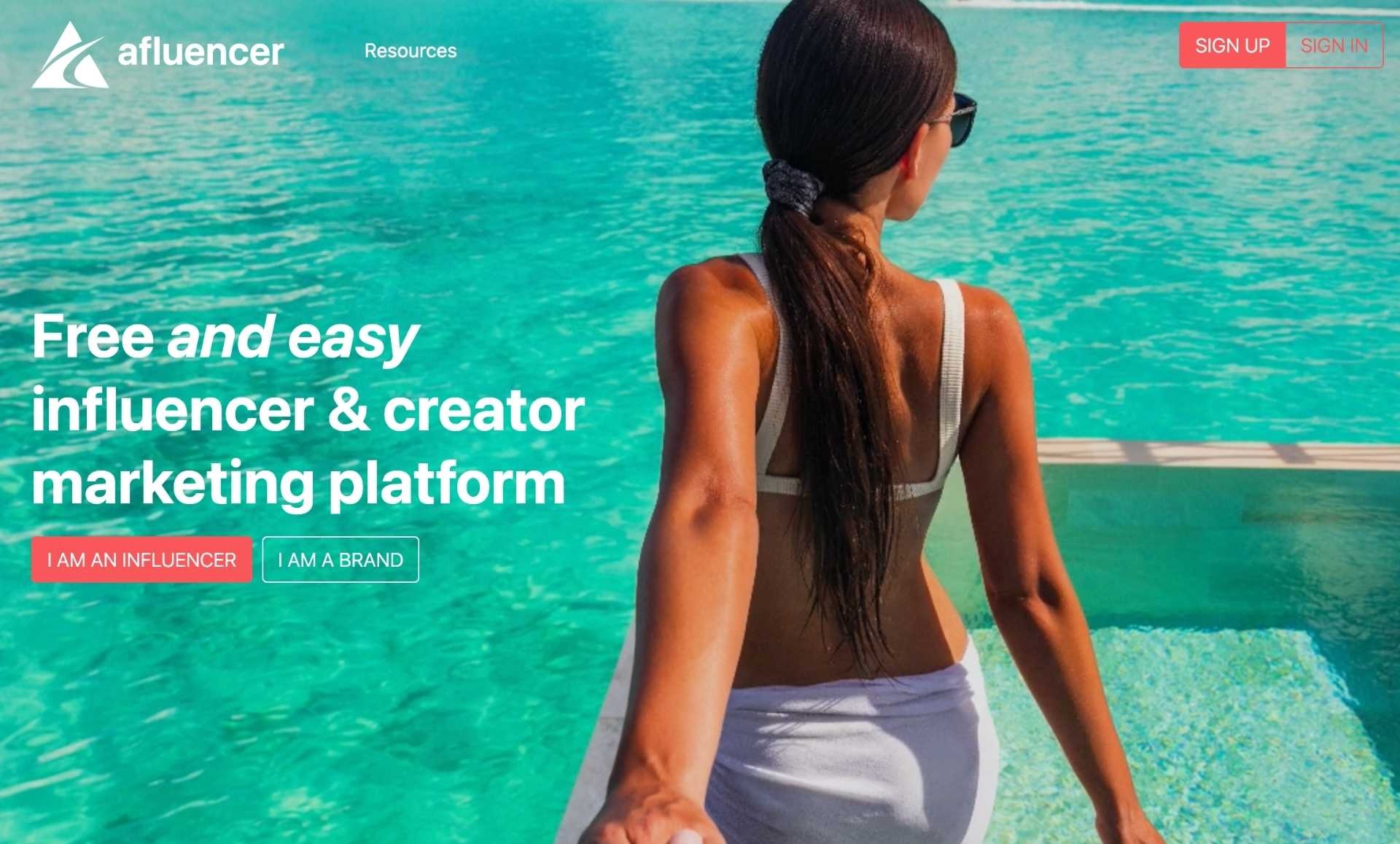
Afluencer is an influencer marketing marketplace that helps brands connect with creators and manage collaborations in one place. Brands can search for influencers based on niche, audience demographics, follower count, and social platforms, while creators can apply for campaigns or receive invitations directly from brands.
Key Features
- Influencer Discovery: Search creators using filters such as niche, audience location, platform, and follower count.
- Campaign Marketplace: Brands can publish collaboration opportunities and receive applications from interested creators.
- Direct Messaging: Built-in messaging allows brands and influencers to communicate without leaving the platform.
- Influencer Invitations: Brands can proactively invite creators to participate in campaigns.
- Creator Profiles: Detailed profiles provide information about audience demographics, content categories, and social channels.
- Audience and Demographic Filters: Narrow down influencers based on age group, country, interests, and reach.
- Collaboration Management: Keep track of invitations, applications, and ongoing partnerships from a centralized dashboard.
- CreatorGPT AI Assistant: AI-powered tools help brands discover creators and streamline influencer marketing workflows.
- Featured Creator Spotlights: Influencers can gain additional exposure through featured placements and newsletters.
Platform Coverage
- TikTok
- YouTube
- X (Twitter)
Standout Features
- Two-Sided Marketplace for Brands and Creators: Unlike many platforms focused primarily on brands, Afluencer provides a marketplace where creators can actively apply to campaigns while brands can also discover and invite influencers.
- Advanced Influencer Filters: Brands can filter creators by interests, audience country, follower count, platform, and demographic information, making it easier to find relevant partners.
- Affordable Entry Point: Afluencer is positioned as a lower-cost alternative to enterprise influencer platforms, making it accessible for smaller ecommerce brands and businesses.
Limitations
- International creators may find fewer active campaigns compared with U.S.-based influencers.
- Coverage across niche industries may vary, meaning some brands may struggle to find enough suitable creators.
- The platform lacks some of the advanced CRM, workflow automation, and reporting capabilities available in enterprise influencer marketing platforms.
- Several users note that campaign details could be more comprehensive and standardized.
Integrations
- Shopify: Sync your ecommerce store and streamline influencer gifting and collaboration workflows directly from Shopify.
- Instagram for Business: Connect Instagram accounts to showcase creator profiles and campaign performance.
- TikTok: Use TikTok creators and campaigns as part of influencer outreach efforts.
- YouTube: Discover and collaborate with YouTube creators through their connected profiles.
- Facebook: Access creators and audience information associated with Facebook accounts.
Pricing
Afluencer offers a free plan and paid plans starting at $49/month for the VIP tier, $99/month for Concierge Tier, and $199/month for Boss Tier. The platform follows a monthly subscription model and provides a 60-day free trial for Shopify users. Higher tiers unlock additional influencer invitations, premium filters, AI tools, and priority support.
Reviews
4.5/5.0 (Shopify App Store)


6. Later
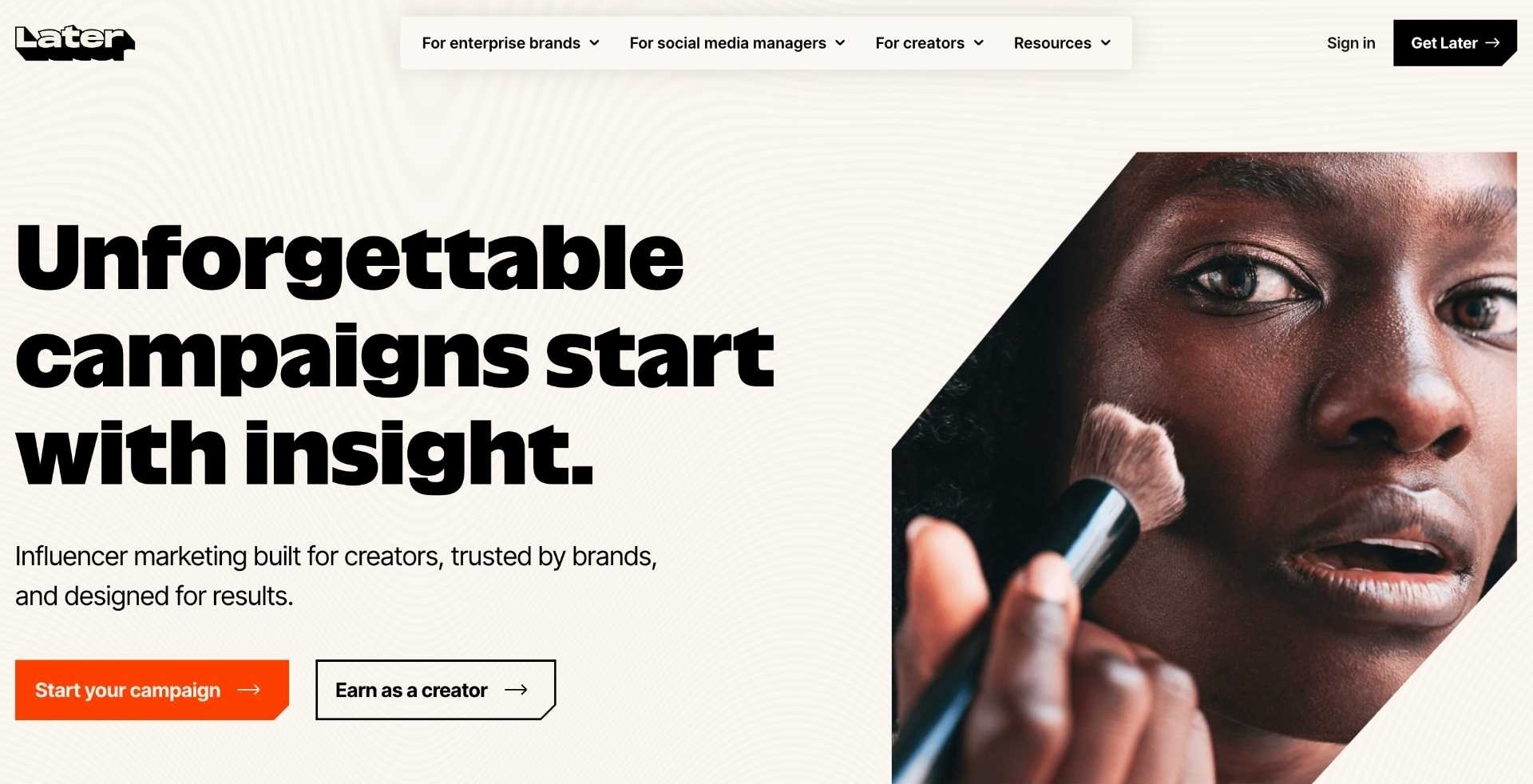
Later is a creator marketing platform for brands that want influencer discovery, outreach, campaign management, analytics, social listening, ratings and reviews, and payouts in one system. It is built for teams that want to run large creator programs with more structure, while also connecting influencer activity to conversion and brand-lift metrics.
Key features
- Influencer discovery: Search a database of more than 10 million contactable creators using demographic, audience, and brand-affinity filters to find better-fit partners faster.
- Outreach and IRM: Manage creator communication, send offers, and track conversations from inside the platform instead of relying on separate inboxes and spreadsheets.
- Workflow automation: Automate campaign applications, recruitment, and flexible approval workflows so larger programs are easier to run consistently.
- Content approvals: Review drafts and track content creation in real time before posts go live.
- Analytics and forecasting: Measure engagement, impressions, ROI, EMV, conversions, and conversion value from one reporting dashboard.
- Ratings and reviews: Use creator programs to generate product ratings and reviews and syndicate them across ecommerce and marketing channels.
- Influencer payments: Track invoices and pay creators in multiple currencies with built-in payout options.
- Social listening: Monitor sentiment and brand health alongside influencer activity to understand broader campaign impact.
Platform coverage
- TikTok
- YouTube
- Threads
- Snapchat
Standout features
- Ratings and reviews workflow: Later stands out for letting brands turn creator campaigns into verified ratings and reviews, which is useful for ecommerce teams focused on conversion as well as reach.
- Strong measurement layer: The platform combines ROI, EMV, conversions, and custom attribution in a way that appeals to performance-minded marketing teams.
- Enterprise workflow depth: Flexible campaign workflows, influencer payments, and social listening make it more operationally complete than lighter discovery-only tools.
Limitations
- Pricing is custom and not publicly transparent for the influencer marketing product, so teams need a sales conversation before they can compare costs properly.
- No free trial is currently offered for Later Influence, which adds friction for buyers that want hands-on evaluation before committing.
- Some users mention occasional glitches and workflow friction, especially around outreach and campaign execution at scale.
- The platform is more enterprise-oriented than many lower-cost creator tools, so it may be more than smaller teams need.
Integrations
- Shopify: Connect your store for influencer gifting and product selection without chasing shipping details manually.
- Stripe: Pay creators securely in more than 25 currencies and keep payout tracking inside the campaign workflow.
- Tango: Send e-gift cards from global retailers and brands as part of gifting or compensation workflows.
- Yotpo: Route creator-generated reviews into Yotpo so social proof can be reused across ecommerce touchpoints.
Pricing
There are different plans:
- Essentials Plan: Starts at $28,500/year. Best for brands starting in influencer marketing.
- Pro Plan: Starts at $42,000/year. Best for data and automation to make your campaigns run faster and achieve better ROI.
- Premier Plan: Starts at $60,000/year. Everything you need for a scaled influencer program.
All plans come with an additional one-time onboarding fee of $5,000 for all new customers.
Reviews
4.4 / 5.0 (Capterra)
7. CreatorIQ
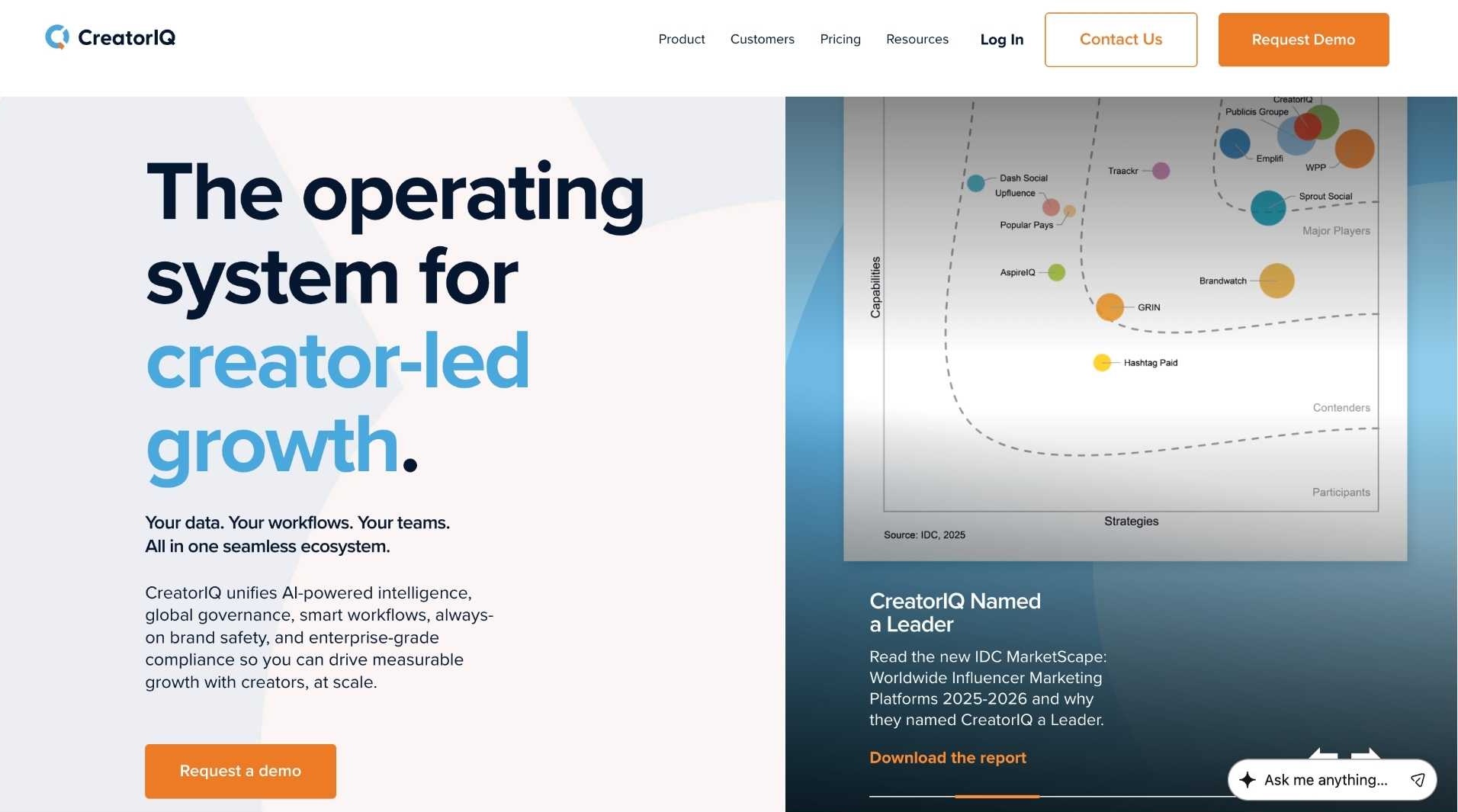
CreatorIQ is an enterprise creator marketing platform built for brands that need creator discovery, campaign execution, measurement, brand safety, governance, and cross-team collaboration in one environment. It is designed less like a lightweight influencer tool and more like a system of record for large-scale creator programs.
Key features
- Creator discovery: Search public creators with AI-powered discovery, semantic search, and smart recommendations to surface better-fit partners faster.
- Campaign execution: Build campaigns from scratch or templates, assign deliverables by creator, and manage briefs, approvals, and launch workflows centrally.
- Private creator CRM: Store creator contact details, notes, past campaign history, and custom tags in a dedicated relationship management layer.
- One-sheet approvals: Share creator shortlists with stakeholders through live links that do not require a login.
- Creator payments: Process payouts through CreatorIQ Pay with support for 60+ currencies across 80+ markets.
- Brand safety: Use SafeIQ and governance controls to manage creator suitability more proactively across large programs.
- Measurement and BI connectivity: Push creator data into internal systems through ExchangeIQ so reporting is not trapped inside the platform.
- Affiliate and commerce support: Integrate affiliate tracking and ecommerce workflows so creator activity can be tied back to performance.
Platform coverage
- TikTok
- YouTube
- Twitch
- X (Twitter)
Standout features
- Enterprise governance and brand safety: CreatorIQ’s governance, compliance, and SafeIQ positioning make it especially attractive to large brands with stricter approval and risk requirements.
- ExchangeIQ API layer: Its bi-directional API is a major differentiator for teams that need creator data flowing into CRM, BI, or internal reporting systems.
- Operational depth for global teams: Shared approvals, creator CRM, campaign controls, and payment support are built for large multi-market programs rather than one-off campaigns.
Limitations
- Pricing is custom and aimed at enterprise users, which can put it out of reach for smaller brands and lean agency teams.
- Some users report that creator discovery is not as strong as campaign management, which matters if sourcing net-new creators is your top priority.
- The platform is likely more complex than smaller teams need, especially if they do not require governance, BI connectivity, or multi-market workflows.
Integrations
- Shopify: Let creators select products, support gifting workflows, and connect creator activity to ecommerce execution.
- Amazon: Extend creator programs into commerce and marketplace workflows through CreatorIQ’s partner ecosystem.
- Affiliate networks: Plug your existing affiliate platform into CreatorIQ via API so performance metrics flow back into one reporting layer.
- Business intelligence tools: Use ExchangeIQ to connect creator data to BI platforms and internal reporting environments.
- CRM systems such as Salesforce: Push creator data into CRM environments to align creator marketing with broader customer and campaign reporting.
Pricing
There are different plans:
- Basic Plan: Starts at $35,000/year. Includes 1,000 contact creators per month
- Standard Plan: Starts at $50,000/year. Includes 2,500 contact creators per month
- Professional Plan: Starts at $90,000/year. Includes 5,000 contact creators per month
- Enterprise Plan: Starts at $200,000/year. Includes 7,500 contact creators per month
Reviews
4.4 / 5.0 (Capterra)
8. Modash
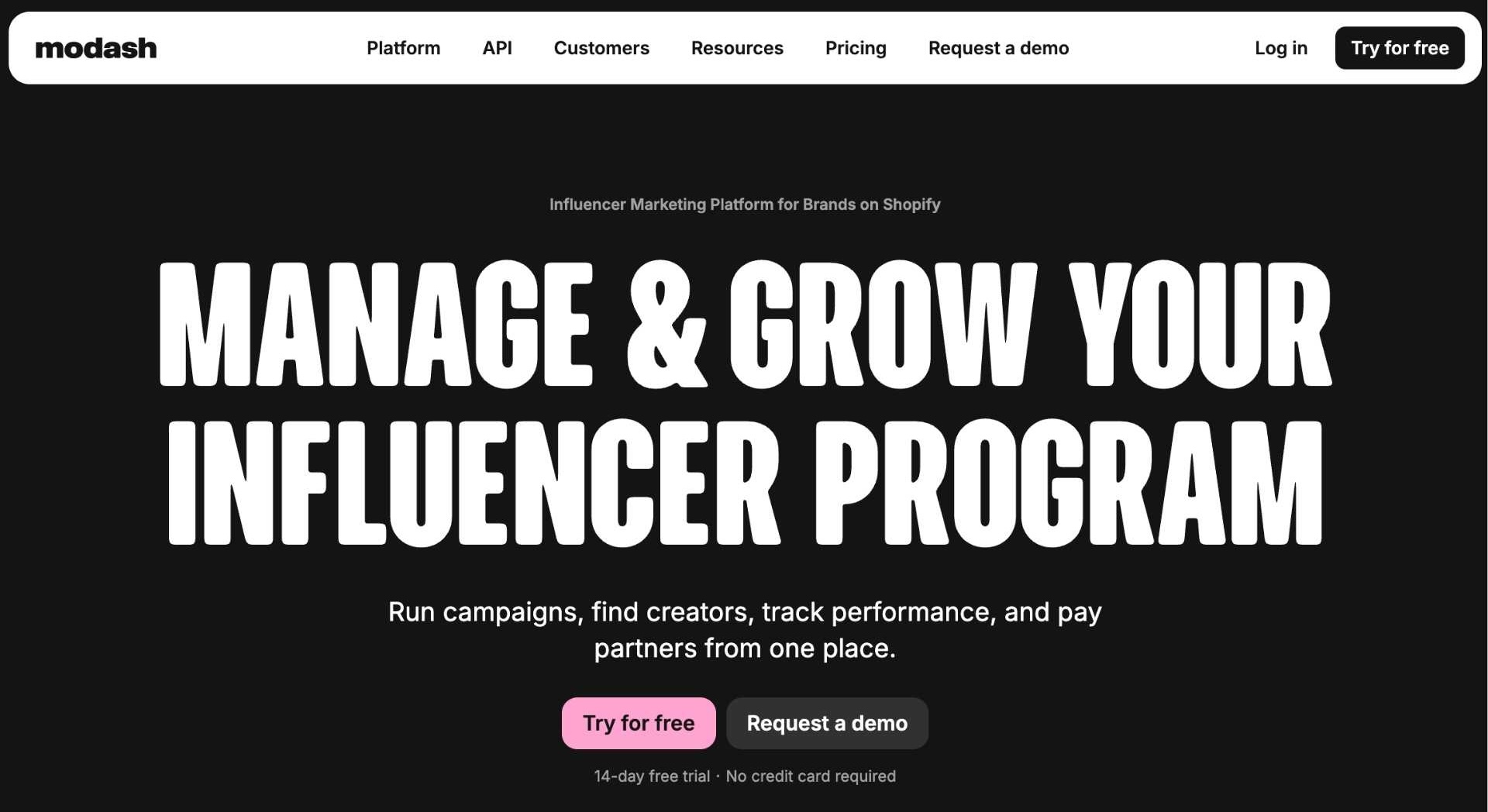
Modash is an end-to-end influencer marketing platform that focuses on discovery, outreach, tracking, affiliate management, and payments without adding too much enterprise overhead. It works especially well for ecommerce and DTC teams that want a large creator database, strong Shopify workflows, and transparent pricing.
Key features
- Large public creator database: Search public creators across Instagram, TikTok, and YouTube rather than relying on an opt-in network.
- Advanced discovery filters: Filter by niche, hashtags, captions, audience demographics, location, engagement, and more to narrow lists quickly.
- CRM and outreach: Save creators to lists, manage statuses, and send outreach through Gmail or Outlook integrations.
- AI discovery: Describe a creator style or upload an image to find creators with a similar visual fit.
- Content tracking: Automatically capture posts, monitor mentions and hashtags, and pull performance into one dashboard.
- Affiliate and gifting workflows: Use Shopify to handle discount codes, gifting, affiliate tracking, and sales attribution without moving between tools.
- Influencer payments: Set commission tiers and automate payouts for creators and affiliates.
- Fake follower analysis: Review follower quality and engagement benchmarks before committing to partnerships.
Platform coverage
- TikTok
- YouTube
Standout features
- Massive non-opt-in database: Modash’s biggest edge is breadth, since it surfaces public creators rather than limiting brands to an opt-in pool.
- Strong Shopify workflow: Gifting, discount codes, affiliate links, and sales tracking are tightly connected and included without extra Shopify fees.
- AI visual search: The ability to describe a vibe or upload an image makes discovery more practical for visually led consumer brands.
Limitations
- Shopify is the main ecommerce integration, so brands using other commerce stacks may feel more constrained.
- There is no native UGC licensing layer, so reuse rights still need to be handled in contracts outside the platform.
- Some users mention occasional loading delays or complexity in parts of the workflow, even though overall feedback is very strong.
- Paid ads and whitelisting support are not core strengths compared with some enterprise competitors.
Integrations
- Shopify: Run gifting, discount codes, sales tracking, and affiliate workflows directly from Modash.
- Gmail: Send and track creator outreach from your existing inbox while keeping communication logged inside Modash.
- Outlook: Manage creator outreach and follow-ups through Outlook without leaving the platform.
- API: Connect creator and campaign data into broader internal workflows where needed.
- Payment rails inside Modash: Automate affiliate and creator payouts so finance workflows are not fully manual.
Pricing
There are different plans:
- Essential Plan: Starts at $199/month (is paid annually). Allows you to contact up to 100 creators a month.
- Performance Plan: Starts at $499/month (is paid annually). Allows you to contact up to 250 creators a month and gives you access to the Shopify integration.
- Enterprise Plan: Custom pricing based on your brand needs.
Reviews
4.9/5.0 (Capterra)
9. Captiv8
Captiv8 is an enterprise influencer marketing platform built for brands that want discovery, campaign management, analytics, and creator commerce within one system. The platform emphasizes large-scale creator programs, advanced reporting, and integrations with marketing and analytics tools so influencer campaigns can be measured alongside other digital marketing channels.
Key features
- Creator discovery: Search a database of more than 15 million creators using detailed filters such as audience demographics, interests, and brand-safety indicators.
- Global content search: Identify posts mentioning specific brands, keywords, or hashtags across social platforms to find creators already discussing a topic.
- Campaign management: Manage multiple influencer campaigns simultaneously with collaboration tools that allow internal teams to review and approve creators.
- Direct creator communication: Chat with influencers directly inside the platform instead of relying on email or DMs.
- Advanced performance tracking: Track campaign metrics such as engagement, impressions, clicks, conversions, and earned media value in one dashboard.
- Custom reporting dashboards: Build reports focused on prioritized KPIs and export campaign insights for internal stakeholders.
- Sentiment analysis: Analyze the tone and sentiment of influencer posts and conversations to monitor brand perception.
Platform coverage
- TikTok
- YouTube
- X (Twitter)
- Twitch
Standout features
- Deep analytics and KPI reporting: Captiv8 stands out for advanced performance dashboards that track engagement, sales, and earned media value in detail.
- Global post search capability: The ability to search individual posts and brand mentions helps marketers identify creators who are already talking about their brand or niche.
- Enterprise collaboration tools: Built-in collaboration features allow large marketing teams to review creators and campaigns together before launching partnerships.
Limitations
- Captiv8 is typically positioned for larger brands with significant budgets.
- The platform generally requires yearly commitments rather than flexible month-to-month plans.
- Capabilities such as storefronts or creator commerce may involve additional costs.
Integrations
- Shopify: Track influencer-driven product sales and manage ecommerce campaigns connected to your store.
- Google Analytics: Combine campaign performance data with broader website analytics and conversion metrics.
- Looker Studio: Export influencer campaign data into customizable dashboards for internal reporting.
- Affiliate platforms: Connect affiliate workflows so influencer campaigns can track commissions and referral revenue.
- Social media APIs: Integrate with social networks to pull real-time engagement and content performance data.
Pricing
Captiv8 pricing typically starts around $25,000 per year, with a one-time onboarding fee of about $3,000. Additional creator-commerce or storefront features can increase the cost significantly depending on the scope of the program.
Reviews
4.7 / 5.0 (G2)
10. Klear
Klear is an influencer marketing platform developed by Meltwater that combines influencer discovery, campaign management, and analytics with social listening capabilities. It is particularly useful for brands that want influencer marketing integrated with broader social media monitoring and brand intelligence tools.
Key features
- Influencer discovery: Search a database of more than 30 million influencers using filters for audience demographics, engagement rates, and past brand collaborations.
- True Reach metric: AI-powered estimation of real audience reach rather than simply counting followers.
- AI influencer summaries: Automatically generated creator profiles summarizing tone, values, audience characteristics, and estimated collaboration costs.
- Campaign management: Plan campaigns, assign deliverables, and track influencer performance directly within the platform.
- Integrated messaging: Communicate with influencers through built-in chat tools rather than external messaging apps.
- Product gifting and affiliate links: Manage discount codes, track links, and affiliate programs through campaign dashboards.
- Performance reporting: Measure engagement, reach, conversions, and ROI for individual influencers and campaigns.
Platform coverage
- TikTok
- YouTube
- X (Twitter)
- Blogs and web creators
Standout features
- True Reach AI metric: Helps marketers evaluate how many people actually see influencer content instead of relying on follower counts alone.
- Integration with Meltwater analytics: Klear connects influencer campaigns with broader social listening and media monitoring tools.
- Advanced discovery filters: The platform provides detailed filters such as brand collaborations, audience demographics, and engagement patterns to identify high-quality creators.
Limitations
- The platform is primarily targeted at enterprise brands with larger budgets.
- Some users report restrictions on exporting large datasets from reports.
- Some feedback notes slower loading speeds in certain parts of the interface.
Integrations
- Shopify: Manage influencer product gifting and track ecommerce-driven conversions.
- Google Analytics: Combine campaign performance with website analytics for deeper ROI tracking.
- Meltwater social listening: Monitor brand mentions and industry trends alongside influencer campaigns.
- CRM systems: Sync influencer data with internal CRM tools to manage long-term creator relationships.
- Affiliate platforms: Connect affiliate links and commission tracking to influencer campaigns.
Pricing
Klear pricing is typically offered through annual contracts. Starts from $2,300/month
Reviews
4.3 / 5.0 (G2)
Final Thoughts on Top 10 Influencer Marketing Platforms in 2026
Influencer marketing platforms have become essential infrastructure for brands and agencies running scalable creator programs. The tools highlighted in this guide—such as Influencer Hero, Aspire, Upfluence, GRIN, Afluencer, Later, CreatorIQ, Modash, Captiv8, and Klear—offer different strengths, from ecommerce integrations and affiliate tracking to enterprise analytics and large creator databases. Choosing the right platform ultimately depends on factors like team size, campaign complexity, budget, and how closely influencer activity needs to connect to revenue. By evaluating these core capabilities, marketing leaders can select a platform that supports long-term creator partnerships and measurable campaign performance.