

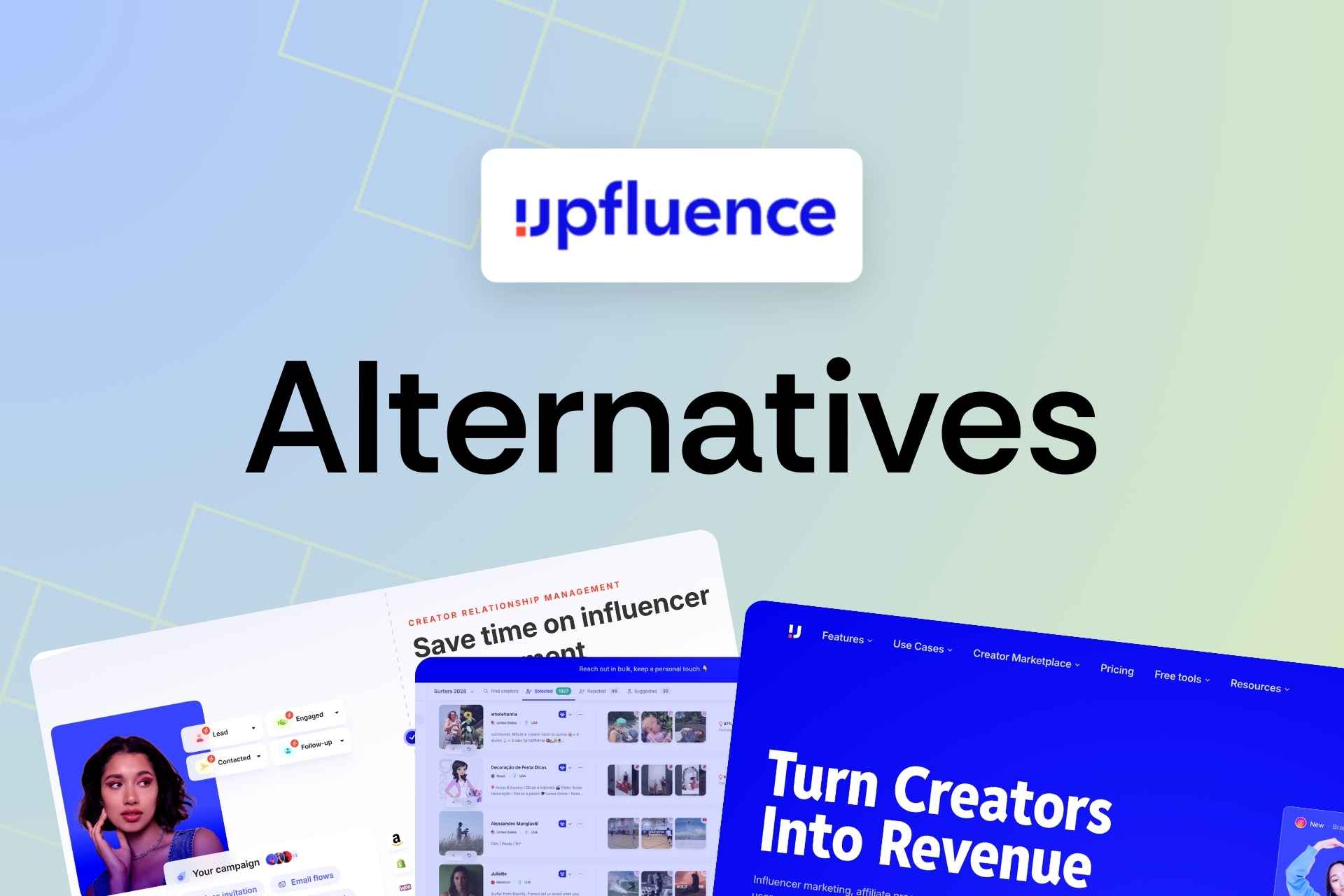
Upfluence Alternatives: Best Influencer Marketing Platforms
Influencer marketing software has become essential for brands and agencies that need to discover creators, manage outreach, track performance, and measure ROI across multiple social platforms in one centralized system. As influencer partnerships scale, manual workflows quickly become inefficient, making platforms like Upfluence and its competitors critical for campaign execution and creator relationship management. According to Influencer Marketing Hub, the influencer marketing industry is projected to reach $24 billion in 2025, highlighting the growing reliance on dedicated influencer marketing software to manage campaigns efficiently.
However, feedback across platforms like G2, Reddit discussions, and marketing communities shows that many teams start exploring Upfluence alternatives due to several recurring limitations. Users commonly mention high pricing tied to long-term contracts, a steep onboarding process that requires significant setup time, and limited flexibility in reporting or CRM customization compared to newer platforms built for performance-driven teams. These challenges often lead agencies and D2C brands to evaluate alternative influencer marketing software that offers faster workflows, clearer analytics, or better scalability for growing creator programs.
As a result, marketers are increasingly comparing Upfluence alternatives to find platforms better aligned with their campaign size, budget, and operational needs.
In this guide, we’ll break down how leading influencer marketing platforms compare in terms of discovery capabilities, outreach automation, analytics, and overall usability. Below, we explore the 10 best Upfluence alternatives currently used by brands and agencies.
Criteria for Suggesting Platform Alternatives:
- Core Features
Evaluation of each platform’s essential capabilities, including influencer discovery, outreach, CRM, campaign reporting, gifting, UGC and content collection, affiliate tracking and payments, storefronts, application pages, and AI-powered tools. - Supported Social Media Platforms
Assessment of how well each platform integrates with major social networks such as Instagram, YouTube, TikTok, Facebook, Pinterest, and many more - Pricing & Contract Flexibility
Comparison of pricing models, subscription costs, and contract requirements to help brands choose solutions that match their budget and scalability needs. - Standout & Differentiating Features
Highlighting unique or innovative functionalities that set each platform apart, such as real-time tracking dashboards, creator benchmarking, TikTok email discovery, or advanced automation tools. - Customer Reviews & User Satisfaction
Analysis of verified user feedback from credible platforms like G2, TrustRadius, Capterra, focusing on usability, reliability, value for money, customer support, and real-world performance.
Upfluence Overview
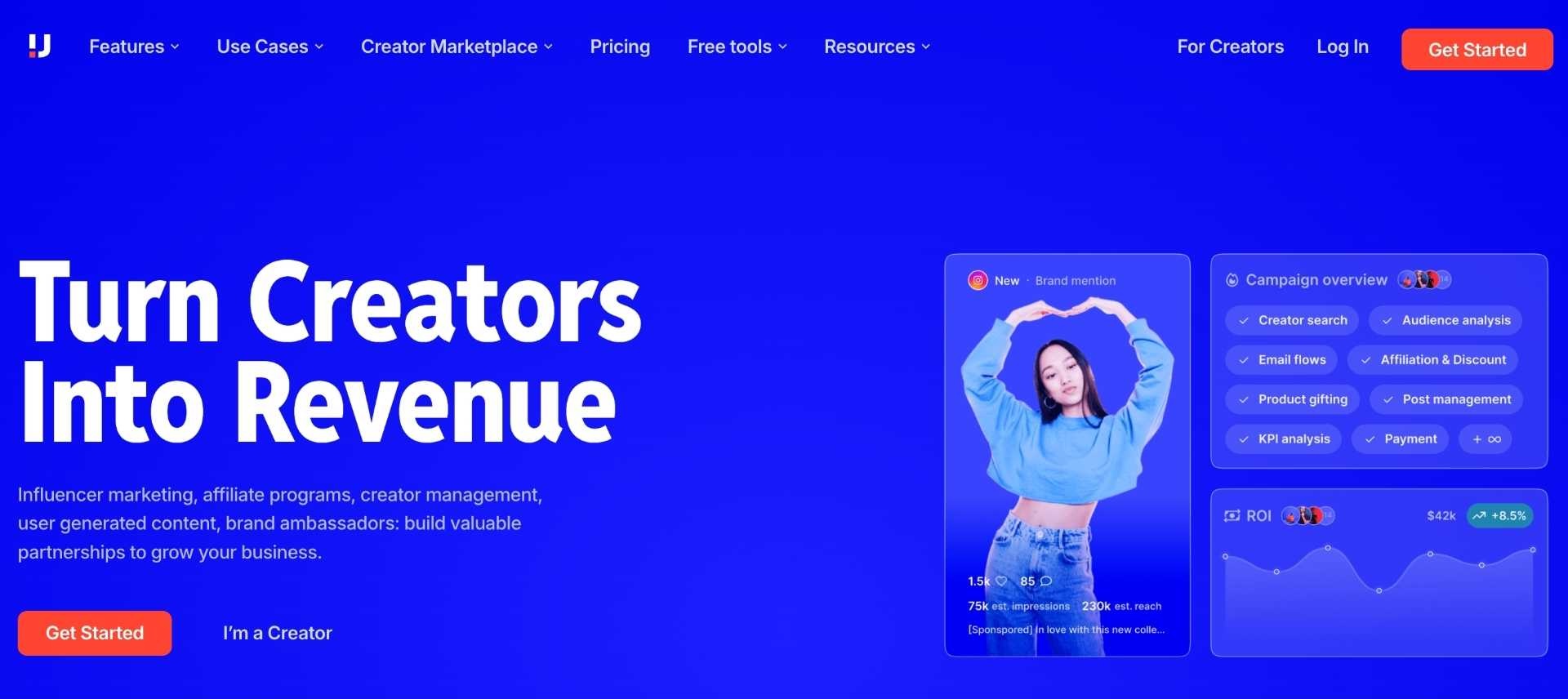
Upfluence is an all-in-one influencer marketing software designed to help brands and agencies manage creator discovery, outreach, affiliate programs, and campaign tracking from a single platform. Originally built to support eCommerce-driven influencer programs, the platform focuses heavily on connecting influencer marketing with sales attribution, particularly for Shopify and Amazon brands. Today, Upfluence is widely used by D2C companies looking to scale creator partnerships while centralizing influencer relationships, payments, and performance analytics.
Key Features
- Influencer Discovery & Database
Upfluence provides access to a database of over 12 million influencers globally, allowing users to filter creators based on niche, engagement rate, audience demographics, location, follower size, and performance metrics. Advanced search filters help marketing teams quickly identify creators aligned with campaign goals instead of relying on manual research workflows. - AI-Powered Campaign Management (Jace AI)
The platform includes an AI campaign assistant that helps brands launch influencer campaigns faster by automating influencer selection, outreach personalization, and campaign setup. This reduces spreadsheet-based workflows and enables teams to manage large creator programs at scale. - Creator Relationship Management (IRM/CRM)
Upfluence allows brands to upload existing influencer lists and continue managing past partnerships within the system. Teams can track communications, collaboration history, performance metrics, and affiliate activity in one centralized influencer CRM. - Affiliate & Sales Tracking
The platform enables brands to generate affiliate links, discount codes, and commission structures while tracking clicks, conversions, and revenue at the individual creator level. Sales attribution integrates directly with eCommerce platforms for ROI measurement. - Automated Outreach & Email Workflows
Built-in email templates and automated follow-ups streamline influencer communication. Campaign stages can trigger scheduled outreach sequences automatically, improving response rates while reducing manual communication work. - Influencer Payments & Compliance (Upfluence Pay)
Upfluence includes a payment infrastructure powered by Stripe that manages global creator payments, invoices, and tax compliance. This removes the need for external payment tools such as PayPal when managing international influencer campaigns. - Social Listening & Content Analytics
Brands can monitor conversations around keywords, competitors, or product categories to identify trending creators and high-performing content ideas before launching campaigns.
Platform Coverage
Upfluence supports influencer discovery and campaign tracking across:
- TikTok
- YouTube
- X (Twitter)
- Twitch
- Blogs (WordPress publishers)
Pricing
Upfluence does not publicly list full pricing tiers, but based on verified industry data:
- Growth Plan: Starts around $1,276/month - $2,000/month (annual contract, billed monthly)
- Custom Enterprise Plans: Pricing varies depending on influencer volume, integrations, and payment features
- Contract Type: Primarily annual agreements
- Optional modules (such as payments or advanced features) can be enabled or disabled depending on campaign needs
Most customers work on customized enterprise-style contracts rather than fixed monthly SaaS plans.
Reviews
- G2: 4.5/5.0
Upfluence Standout Features
- Customer-to-Influencer Identification (Shopify Integration)
Upfluence automatically identifies influencers already purchasing from your store, helping brands convert existing customers into affiliates or brand ambassadors. - Amazon Affiliate & Sales Tracking Integration
Unlike many competing influencer marketing platforms, Upfluence enables direct tracking of influencer-driven sales on Amazon marketplaces. This is particularly valuable for D2C brands running hybrid Shopify + Amazon sales strategies. - Integrated Payments Infrastructure (Upfluence Pay)
The built-in payment wallet manages creator payouts, tax documentation, and compliance workflows globally without relying on third-party payment tools. This reduces operational friction for brands managing large international creator programs.
Limitations (Why Users Look for Upfluence Alternatives)
Based on aggregated feedback from Reddit discussions, G2 reviews, and agency forums, several recurring limitations push brands to evaluate Upfluence alternatives:
High Entry Pricing & Annual Commitments
Many small to mid-sized brands report that Upfluence’s pricing structure and required annual contracts make it difficult to justify early in their influencer marketing maturity stage.
Complex Onboarding & Learning Curve
Users frequently mention that setup and onboarding require significant training, especially for teams transitioning from lighter influencer tools or manual workflows.
Interface Performance & Workflow Friction
Some marketers note slower navigation and multi-step workflows when managing campaigns or filtering influencers, particularly compared to newer platforms designed with simpler UX.
Limited Reporting Flexibility for Agencies
Agencies managing multiple clients often mention challenges customizing reports or dashboards for different stakeholders, leading teams to seek platforms with more flexible analytics exports and visualization options.
10 Best Influencer Marketing Platform Alternatives:
| TOOL | REVIEWS | BEST FOR | TRIAL INFO | PRICING | ||
|---|---|---|---|---|---|---|
1 |

|
⭐ | Influencer CRM & automation | Book Demo | Pricing | Website |
2 |

|
⭐ | DTC creator management | Book Demo | Pricing | Website |
3 |

|
⭐ | Influencer partnerships | Book Demo | Pricing | Website |
4 |

|
⭐ | Influencer outreach | Book Demo | Pricing | Website |
5 |

|
⭐ | Enterprise influencer marketing | Book Demo | Pricing | Website |
6 |

|
⭐ | Campaign management | Book Demo | Pricing | Website |
7 |
|
⭐ | Enterprise influencer campaigns | Book Demo | Pricing | Website |
8 |
|
⭐ | Influencer marketing & Social media analytics | Book Demo | Pricing | Website |
9 |
|
⭐ | Influencer discovery & video content strategy | Book Demo | Pricing | Website |
10 |
|
⭐ | Influencer marketplace | Book Demo | Pricing | Website |
1. Influencer Hero
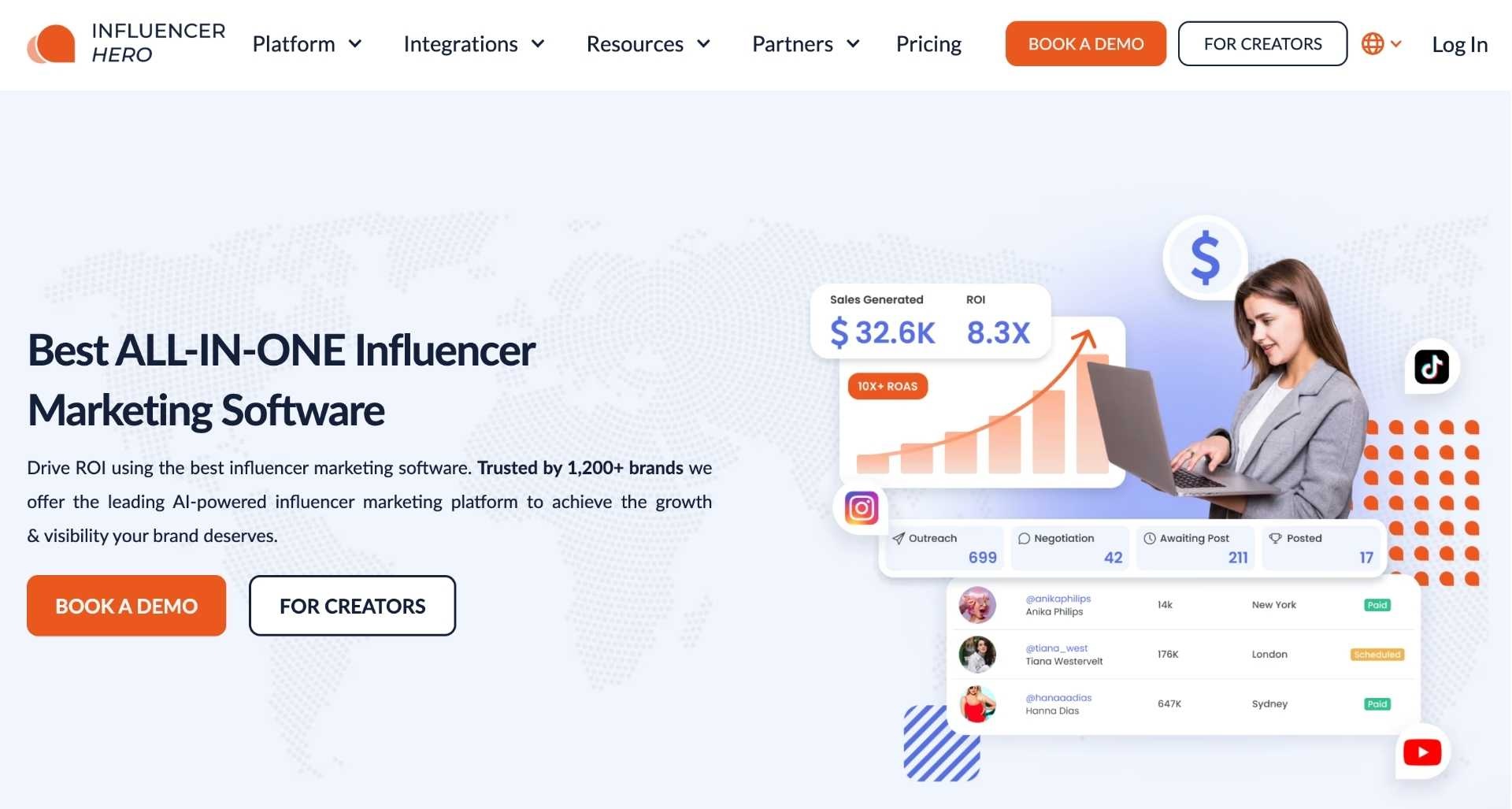
Influencer Hero is an all-in-one influencer marketing software built for D2C brands and agencies that want to manage influencer discovery, outreach, affiliate tracking, gifting, and reporting within a single workflow. The platform focuses heavily on automation and scalability, helping teams replace fragmented influencer stacks with one centralized CRM-driven system. It is increasingly adopted by brands looking for flexible pricing and faster campaign execution compared to enterprise-heavy platforms.
Key Features
- AI Influencer Discovery
Influencer Hero provides advanced creator search across multiple social platforms with filters for engagement rate, audience demographics, niche relevance, growth trends, and authenticity metrics. Brands can quickly identify creators aligned with campaign goals without manual sourcing. - Automated Outreach & Follow-Ups
Built-in outreach automation enables personalized email sequences, bulk outreach campaigns, and automatic follow-ups. This allows teams to contact thousands of creators monthly while maintaining structured communication workflows. - Influencer CRM & Relationship Management
The platform centralizes creator conversations, collaboration history, deliverables, and campaign status in one dashboard. Teams can manage long-term creator partnerships instead of running one-off campaigns. - Affiliate & Discount Code Tracking
Influencer Hero allows brands to generate affiliate links and discount codes while tracking conversions, revenue attribution, and creator-level ROI directly inside the platform. - Product Seeding & Gifting Management
Brands can manage product shipments, influencer approvals, and collaboration logistics without external spreadsheets or fulfillment tracking tools. - UGC & Content Tracking
Automatically collects influencer-generated content and performance metrics, allowing marketing teams to repurpose top-performing assets for paid ads or social media.
Platform Coverage
- TikTok
- YouTube
- Snapchat
- X (Twitter)
- Twitch
Pricing
Influencer Hero offers flexible pricing based on outreach volume:
- Standard Plan — $649/month for 1,000 reachouts/month
- Pro Plan — $1,049/month for 5,000 reachouts/month
- Business Plan — $2,490/month for 10,000 reachouts/month
- Custom / Agency Plan — Custom pricing
Contracts are flexible compared to enterprise competitors, with scalable options depending on outreach volume but you can have unlimited creators in your CRM with Influencer Hero.
Reviews
- 5.0 / 5.0 (Capterra)
Influencer Hero Standout Features
- End-to-End Influencer + Affiliate Management
Influencer Hero combines influencer CRM, affiliate tracking, outreach, and gifting in one workflow, eliminating the need for multiple third-party tools. - High-Volume Outreach Automation
Unlike many enterprise platforms, brands can scale outreach to thousands of creators monthly while maintaining automated personalization and response tracking. - Integrated UGC Performance Tracking
The platform automatically gathers influencer content performance data, enabling brands to identify high-performing creators and reuse content for paid media campaigns. - Bulk Tools for Scalable Operations
Run influencer marketing at scale with bulk actions for outreach, follow-ups, product seeding, campaign updates, and deal management. The batching feature allows teams to execute high-volume tasks efficiently without sacrificing organization or accuracy. - AI Workflow Optimization
Leverages AI for creator recommendations, outreach personalization, and predictive insights to improve campaign performance and reduce manual work.
Upfluence vs Influencer Hero
Upfluence is positioned as an enterprise-focused platform with strong eCommerce integrations and built-in payment infrastructure, while Influencer Hero is designed with a stronger focus on usability, automation, and day-to-day campaign execution for growing D2C brands and agencies. Influencer Hero offers a more flexible and transparent pricing model, along with a faster onboarding experience, making it easier for teams to get campaigns up and running without heavy setup. Its CRM-driven workflow and outreach automation are particularly useful for managing high-volume creator programs in a structured way.
On the other hand, Upfluence differentiates with features like customer-to-influencer identification and deeper enterprise-level infrastructure. Brands that prioritize operational efficiency, scalable outreach, and quicker deployment often find Influencer Hero to be a practical and more agile alternative.
2. GRIN
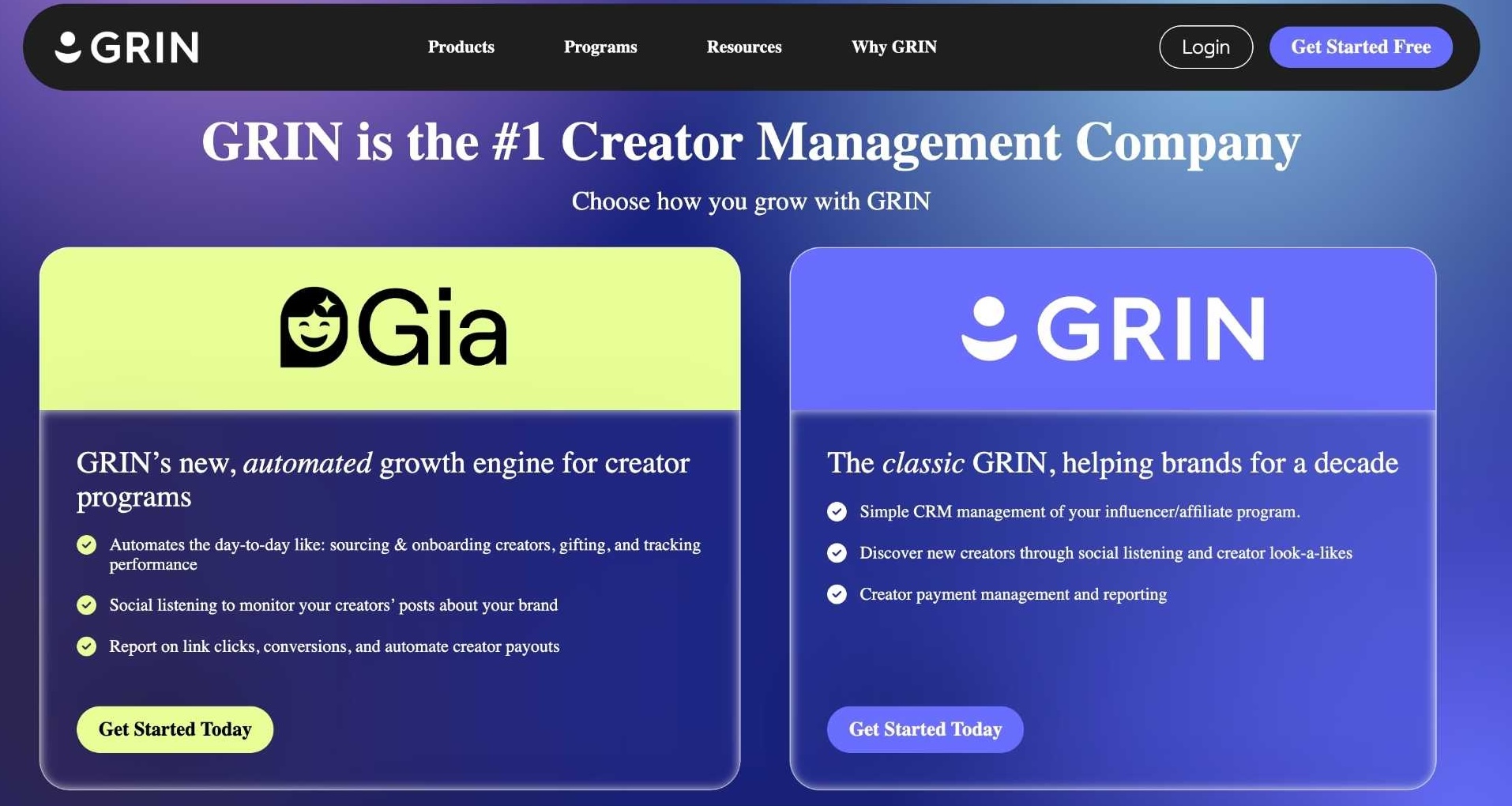
GRIN is an influencer marketing platform designed primarily for eCommerce brands managing long-term creator partnerships. The platform focuses on relationship-driven influencer programs rather than marketplace-style discovery, making it popular among established D2C companies.
Key Features
- Creator Relationship Management
GRIN operates as a creator CRM where brands manage influencer collaborations similarly to customer relationships, including communication tracking and performance history. - eCommerce Integrations
Native integrations with Shopify and other eCommerce platforms allow brands to track influencer-driven sales and automate product fulfillment. - Campaign Workflow Management
Teams can manage contracts, deliverables, approvals, and campaign timelines directly within the platform. - Affiliate & Sales Attribution
Tracks influencer revenue performance through affiliate links and discount codes tied to creator campaigns. - Content Library Management
Automatically collects influencer content for reuse across marketing channels.
Platform Coverage
- TikTok
- YouTube
- Twitch
- X (Twitter)
- Snapchat
Pricing
- Starts at approximately $25,000/year (~$2,050/month)
- Annual contract required
- Monthly billing under yearly commitment
Reviews
- 4.5 / 5.0 (G2)
GRIN Standout Features
- Deep Shopify Integration
Enables automated product seeding, influencer orders, and revenue attribution directly tied to store performance. - Relationship-First Creator CRM
Designed for brands building ambassador-style programs rather than short-term influencer campaigns. - Owned Creator Database Model
Encourages brands to build private influencer networks instead of relying on shared marketplaces.
Upfluence vs GRIN
Both platforms strongly support eCommerce influencer programs, but Upfluence provides broader influencer discovery through its large global database. GRIN, on the other hand, focuses more on managing creators brands already work with rather than sourcing new influencers at scale.
Upfluence may suit teams prioritizing discovery and affiliate expansion, while GRIN appeals to brands building long-term ambassador ecosystems integrated deeply with Shopify operations.
3. Aspire
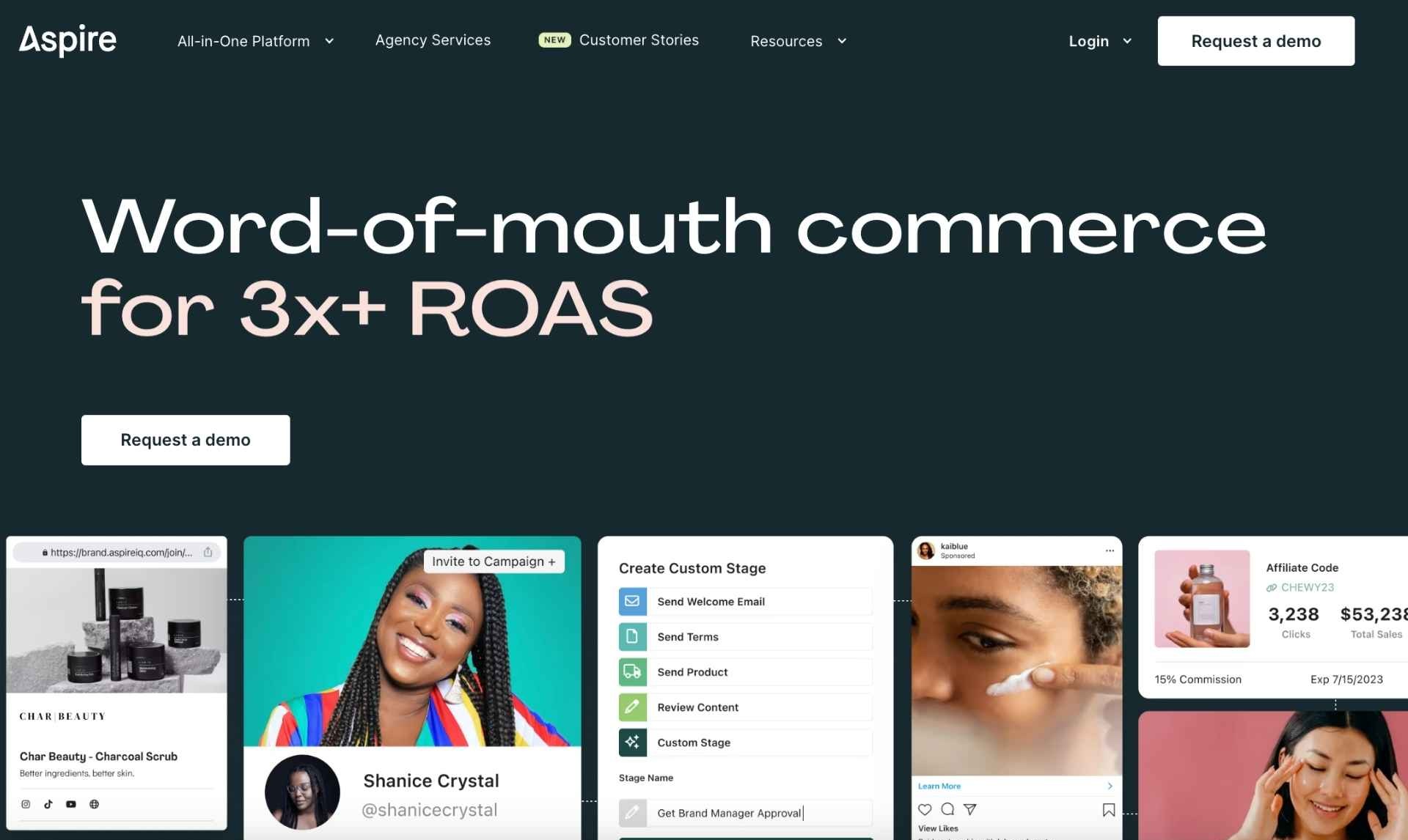
Aspire is an influencer marketing and creator collaboration platform focused on brand-creator partnerships and community-driven campaigns. It combines influencer discovery with creator marketplaces and collaboration workflows.
Key Features
- Creator Marketplace
Brands can publish campaigns and allow influencers to apply directly, reducing outbound sourcing efforts. - Campaign Lifecycle Management
Manages influencer onboarding, approvals, deliverables, and reporting from a single dashboard. - Influencer Discovery Tools
Advanced filters help brands identify creators based on performance metrics and audience insights. - Affiliate & Ambassador Programs
Supports long-term influencer and affiliate partnerships with performance tracking. - Content Collaboration Tools
Enables structured communication between brands and creators during campaigns.
Platform Coverage
- TikTok
- YouTube
Pricing
- Custom pricing
- Typically starts around $2,000/month
- Annual contracts required
Reviews
- 4.0 / 5.0 (Capterra)
Aspire Standout Features
- Inbound Creator Applications Marketplace
Allows influencers to apply directly to brand campaigns, reducing outreach workload. - Community-Based Creator Programs
Built for ambassador and brand community growth rather than one-off activations. - Workflow Collaboration System
Structured approval pipelines streamline creator-brand collaboration.
Upfluence vs Aspire
Upfluence emphasizes sales attribution and affiliate-driven influencer marketing, while Aspire leans toward creator collaboration and community-building workflows. Aspire’s marketplace model reduces outbound outreach needs, whereas Upfluence relies more on active influencer discovery.
Brands prioritizing structured creator communities may prefer Aspire, while performance-focused eCommerce teams often lean toward Upfluence.
4. Saral
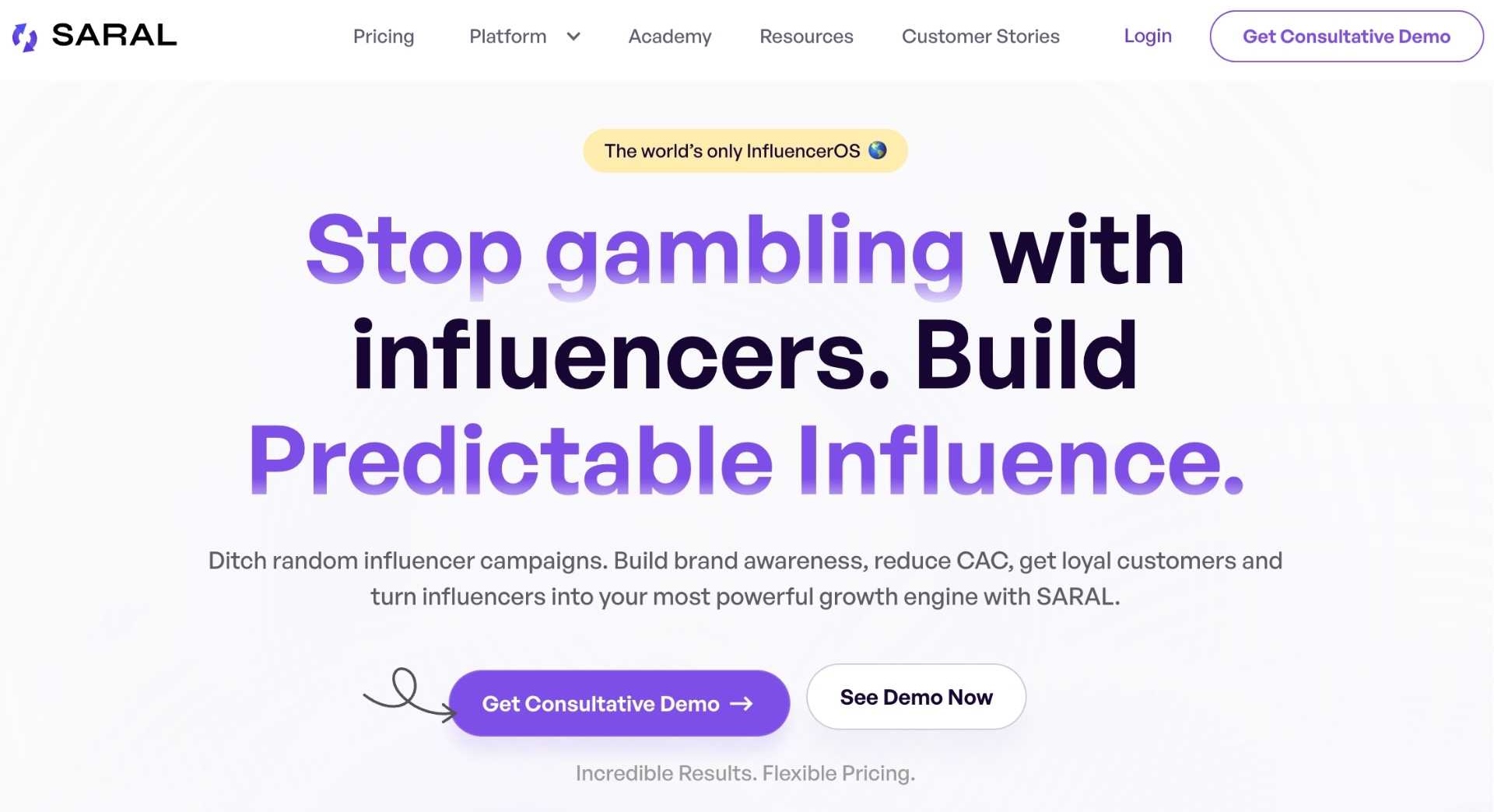
SARAL is an influencer marketing platform designed specifically for D2C brands running gifting and affiliate-driven influencer programs. The platform focuses on simplifying influencer outreach and relationship management.
Key Features
- Influencer Discovery & Vetting
Helps brands find niche creators using engagement and audience filters optimized for product seeding campaigns. - Automated Outreach
Email automation simplifies influencer recruitment and follow-ups. - Affiliate Program Management
Generates referral links and tracks influencer-driven revenue. - Product Gifting Workflow
Built specifically to manage product seeding campaigns efficiently. - Performance Analytics
Tracks engagement, conversions, and creator ROI.
Platform Coverage
- TikTok
- YouTube
Pricing
- Starter: $3,600/quarter
- Business: $4,500/quarter
- Professional: $7,500/quarter
Quarterly commitment required.
Reviews
- 4.7 / 5.0 (G2)
SARAL Standout Features
- Gifting-Centric Campaign Management
Designed specifically for product seeding workflows common in D2C influencer marketing. - Simple Outreach Automation
Focuses on reducing operational complexity for lean marketing teams. - Affiliate-First Influencer Strategy
Optimized for revenue-driven creator collaborations.
Upfluence vs SARAL
Upfluence offers broader enterprise functionality and multi-channel analytics, while SARAL focuses on simplicity and gifting-based influencer programs. SARAL is often preferred by smaller D2C brands seeking faster execution without enterprise complexity.
Upfluence suits brands scaling global influencer operations, whereas SARAL appeals to teams prioritizing ease of use and streamlined workflows.
5. CreatorIQ
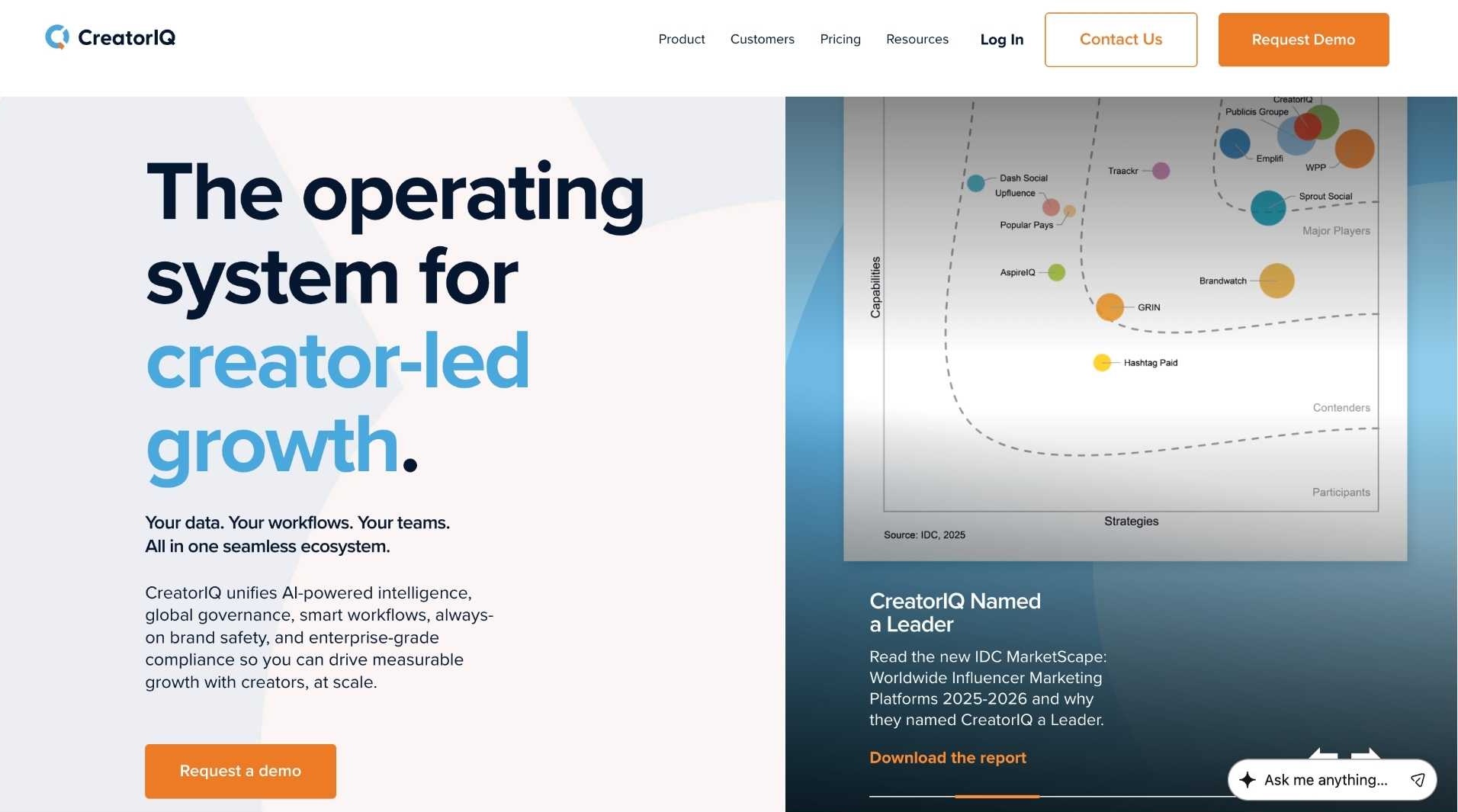
CreatorIQ is an enterprise-grade influencer marketing platform used by global brands and agencies managing large-scale creator programs. The platform emphasizes data governance, brand safety, and enterprise analytics.
Key Features
- Enterprise Influencer Discovery
AI-powered creator identification supported by extensive audience and brand safety analytics. - Campaign & Workflow Automation
Manages influencer onboarding, approvals, contracts, and reporting across global teams. - Advanced Analytics & Reporting
Provides enterprise dashboards measuring brand impact, engagement trends, and ROI. - Global Creator CRM
Centralizes influencer relationships across regions and departments. - API & Enterprise Integrations
Integrates with major marketing and business intelligence systems.
Platform Coverage
- TikTok
- YouTube
- X (Twitter)
- Twitch
- Snapchat
Pricing
- Basic: Starts at $35,000/year
- Standard: Starts at $50,000/year
- Professional: Starts at $90,000/year
- Enterprise: Starts at $200,000/year
Annual enterprise contracts required.
Reviews
- 4.4 / 5.0 (Capterra)
CreatorIQ Standout Features
- Enterprise-Level Data Governance
Built for global brands requiring compliance, permissions, and brand safety monitoring. - API-Driven Ecosystem Integrations
Connects influencer data with enterprise marketing stacks and BI tools. - Advanced Audience Intelligence
Deep demographic and authenticity analytics support large-scale creator vetting.
Upfluence vs CreatorIQ
Upfluence targets mid-market and eCommerce-driven brands, while CreatorIQ operates primarily in the enterprise segment serving global organizations. CreatorIQ offers deeper analytics and governance capabilities but comes with significantly higher pricing and implementation complexity.
Brands seeking scalable enterprise infrastructure may prefer CreatorIQ, whereas Upfluence typically provides a more accessible solution for performance-focused influencer programs.


6. Influencity
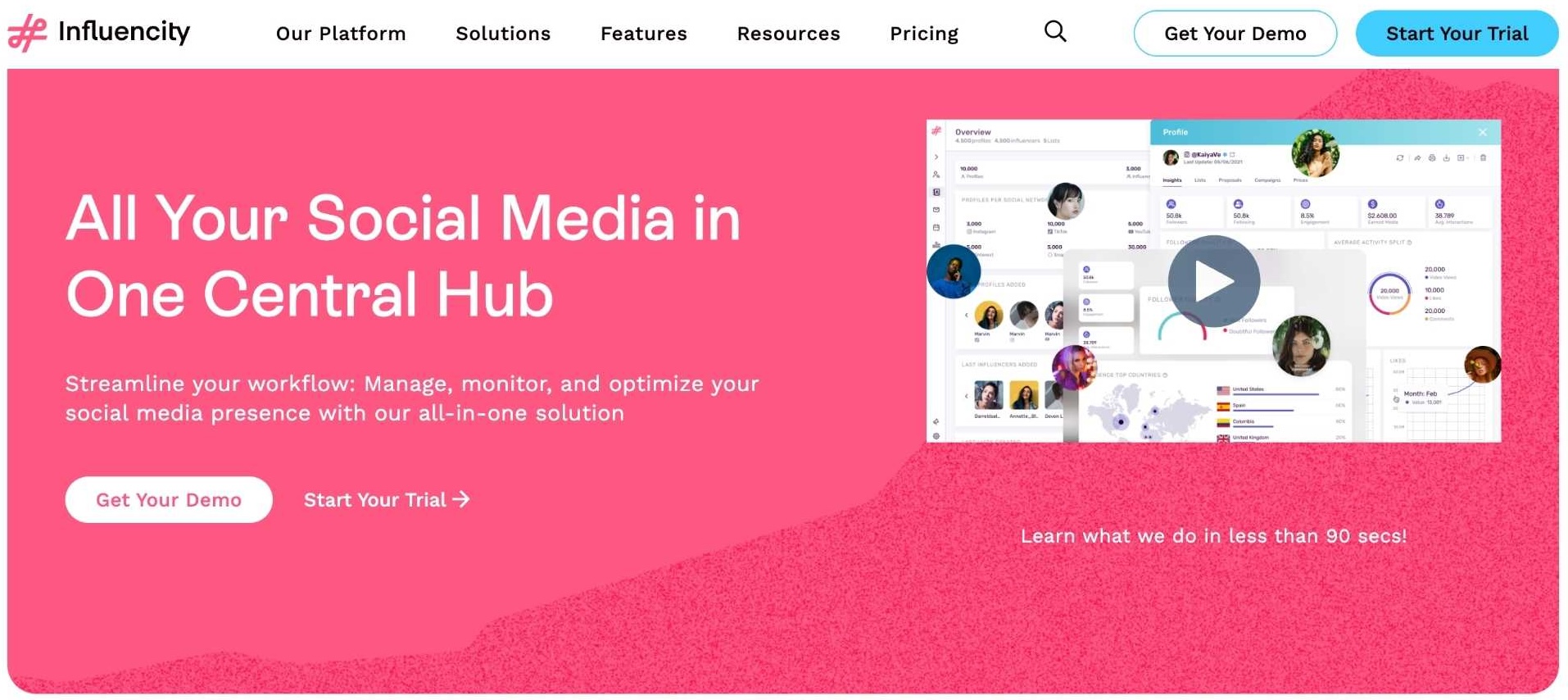
Influencity is a data-driven influencer marketing software designed for brands and agencies that prioritize analytics, influencer vetting, and campaign performance measurement. The platform is widely used by mid-sized marketing teams looking for strong audience insights and flexible pricing without enterprise-level complexity. Influencity positions itself as an analytics-first alternative focused on campaign optimization and reporting accuracy.
Key Features
- Advanced Influencer Discovery
Influencity provides detailed creator search filters including audience demographics, follower authenticity, engagement trends, and historical performance data. This enables marketers to identify creators based on measurable campaign fit rather than vanity metrics. - Campaign Management Dashboard
Brands can organize campaigns, track influencer collaborations, and monitor performance metrics within centralized workflows designed for agency or multi-brand use. - Audience & Competitor Analysis
The platform allows users to analyze competitor influencer strategies and audience overlaps, helping brands refine creator selection decisions. - Performance Tracking & Reporting
Influencity delivers customizable reports measuring reach, engagement, earned media value, and campaign ROI across influencer collaborations. - Influencer Relationship Management
Maintains influencer communication history and collaboration data to support long-term partnerships.
Platform Coverage
- TikTok
- YouTube
- X (Twitter – analytics only)
Pricing
- Professional Plan: $318/month or $3,816/year
- Business Plan: $798/month or $9,576/year
- Enterprise Plan: Custom pricing
- Auto-Tracker Add-On: $660/year (tracking up to 50 influencers)
Pricing is available monthly or annually, offering more flexibility compared to enterprise-only platforms.
Reviews
- 4.3 / 5.0 (G2)
Influencity Standout Features
- Deep Audience Quality Analytics
Provides granular follower authenticity and demographic analysis to reduce influencer fraud risk. - Campaign Auto-Tracking System
Automatically monitors influencer content performance without requiring manual reporting submissions. - Competitor Influencer Benchmarking
Enables brands to analyze which creators competitors collaborate with and evaluate campaign gaps.
Upfluence vs Influencity
Upfluence focuses strongly on eCommerce integrations, affiliate tracking, and influencer payments, while Influencity differentiates itself through analytics depth and reporting flexibility. Influencity is often preferred by marketing teams prioritizing campaign insights rather than operational automation.
Brands running affiliate-heavy programs may lean toward Upfluence, whereas agencies needing strong analytics and flexible pricing structures frequently evaluate Influencity as a lighter, data-focused alternative.
7. Captiv8
Captiv8 is an enterprise influencer marketing platform built for large brands and agencies managing global creator campaigns. Known for its AI-powered campaign intelligence and media measurement capabilities, Captiv8 combines influencer marketing with paid media performance analysis.
Key Features
- AI Influencer Discovery Engine
Captiv8 enables brands to search creators using behavioral, audience, and performance-based datasets across millions of profiles. - Campaign & Media Measurement
Tracks both organic influencer performance and paid amplification results in one reporting environment. - Creator Collaboration Tools
Supports campaign workflows including approvals, contracts, and influencer communication management. - Brand Safety & Compliance Monitoring
Enterprise-grade controls help brands evaluate creator suitability and risk factors. - Cross-Channel Performance Analytics
Combines influencer and social media performance insights into unified dashboards.
Platform Coverage
- TikTok
- YouTube
- Snapchat
- Twitch
- X (Twitter)
Pricing
- Starts at $2,000/month
- Typically structured under enterprise-style agreements
Reviews
- 4.7 / 5.0 (G2)
Captiv8 Standout Features
- Unified Influencer + Paid Media Measurement
Measures influencer content performance alongside paid media amplification results. - AI Campaign Intelligence Engine
Uses predictive analytics to estimate campaign outcomes before launch. - Enterprise Brand Safety Controls
Advanced creator vetting tools designed for global brand compliance requirements.
Upfluence vs Captiv8
Upfluence primarily targets D2C and eCommerce brands seeking affiliate tracking and influencer commerce integrations. Captiv8, in contrast, operates more as an enterprise marketing intelligence platform combining influencer and media analytics.
While Upfluence excels in operational campaign execution and payments, Captiv8 is better suited for enterprise teams managing large multi-channel brand awareness campaigns.
8. Sprout Social
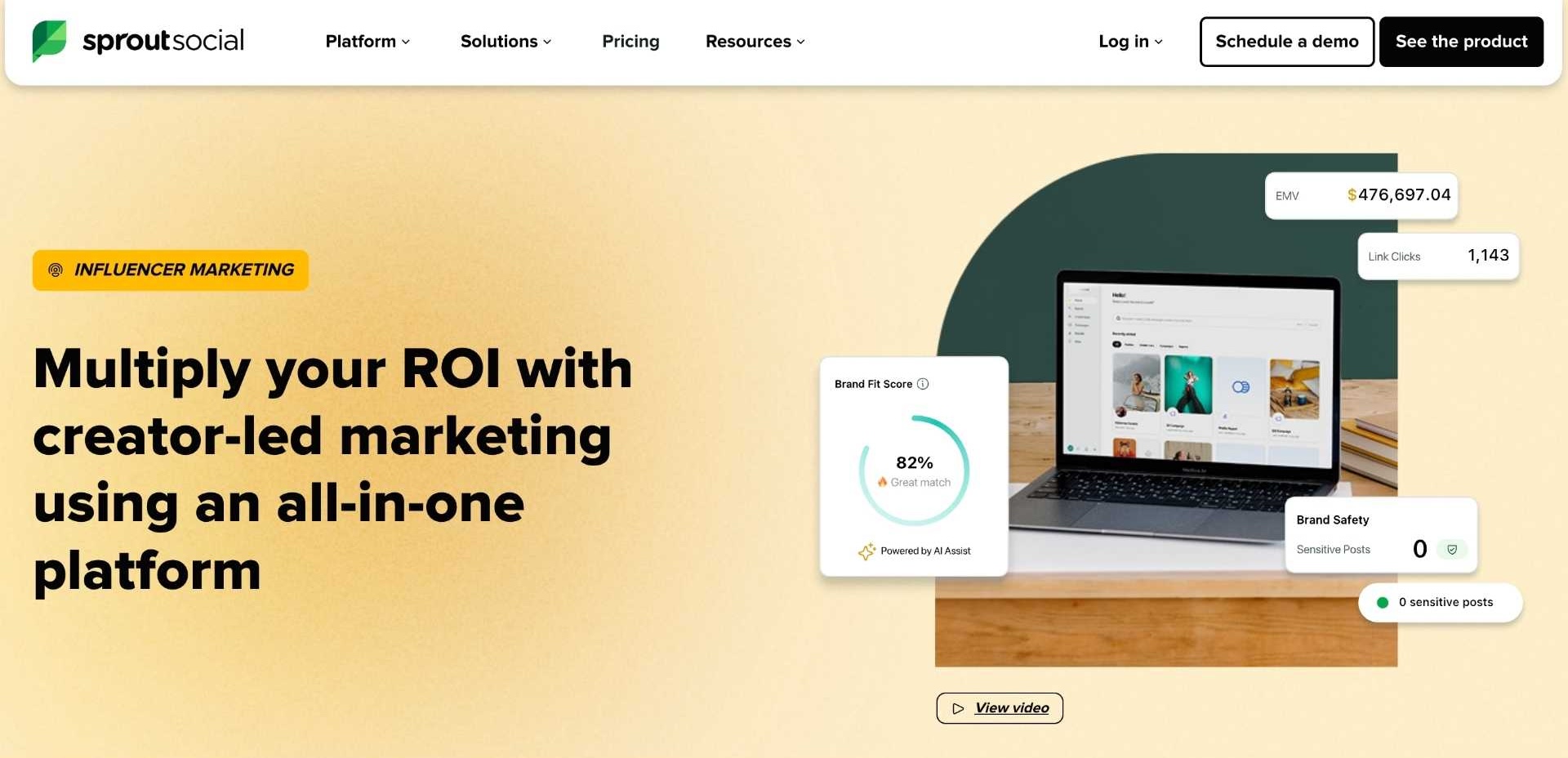
Sprout Social is an influencer marketing and social intelligence platform focused on data analytics and campaign measurement. Sprout Social is commonly used by agencies requiring advanced reporting and audience insights.
Key Features
- Influencer Discovery & Social Listening
Identifies creators through keyword tracking, audience behavior, and brand conversation monitoring. - Campaign Planning & Management
Helps teams organize influencer collaborations, track deliverables, and measure performance. - Audience Intelligence Analytics
Provides detailed demographic and psychographic insights into influencer audiences. - Competitive Benchmarking
Allows marketers to evaluate campaign performance against industry competitors. - Custom Reporting Dashboards
Enterprise reporting tailored for agencies and stakeholder presentations.
Platform Coverage
- TikTok
- YouTube
- Twitch
- X (Twitter)
Pricing
- Starts around $2,500/month
- Annual contracts typically required
Reviews
- 4.7 / 5.0 (Capterra)
Sprout Social Standout Features
- Advanced Social Listening Integration
Tracks brand conversations and trending creators in real time. - Enterprise Reporting Customization
Highly customizable dashboards for agency reporting needs. - Competitive Campaign Benchmarking
Compares influencer performance against competitors and industry standards.
Upfluence vs Sprout Social
Upfluence emphasizes influencer commerce and affiliate-driven campaigns, whereas Sprout Social focuses heavily on analytics, benchmarking, and social intelligence. Agencies prioritizing reporting depth often favor Sprout Social.
Brands focused on direct revenue attribution and influencer payments may find Upfluence more aligned with performance marketing workflows.
9. Revfluence
Revfluence is an influencer marketing platform designed for brands running structured creator and affiliate programs at scale. The platform supports both long-form creator partnerships and short-form performance-driven campaigns.
Key Features
- Influencer Campaign Management
Centralizes campaign setup, creator collaboration, and deliverable tracking. - Affiliate Program Infrastructure
Enables brands to manage influencer affiliate partnerships with conversion tracking. - Creator Performance Analytics
Measures engagement, reach, and campaign ROI across collaborations. - Workflow Automation
Simplifies influencer onboarding and campaign coordination. - Content Collaboration Management
Organizes influencer deliverables and approvals in one system.
Platform Coverage
Not publicly disclosed
Pricing
- Long-Form Campaigns: $3,500/month
- Short-Form Campaigns: $4,500/month
- Affiliate Programs: $8,500/month
Monthly pricing varies based on campaign structure.
Reviews
- Public review data limited across major platforms.
Revfluence Standout Features
- Campaign-Type Based Pricing Model
Allows brands to structure costs depending on campaign format. - Affiliate-Focused Creator Programs
Designed for revenue-driven influencer collaborations. - Structured Content Workflow Management
Supports large creator programs with organized deliverable tracking.
Upfluence vs Revfluence
Upfluence delivers broader all-in-one influencer marketing functionality, including discovery, payments, and CRM workflows. Revfluence focuses more narrowly on structured creator campaign execution and affiliate programs.
Brands needing end-to-end influencer infrastructure may prefer Upfluence, while Revfluence may appeal to teams running predefined campaign formats.
10. IZEA
IZEA is one of the longest-standing influencer marketing platforms, offering influencer discovery, content collaboration, and creator marketplace solutions. The platform connects brands directly with creators through campaign marketplaces and managed collaboration workflows.
Key Features
- Creator Marketplace
Brands can publish campaigns where influencers apply directly for collaborations. - Influencer Discovery Tools
Search creators using audience demographics, engagement metrics, and niche filters. - Content Licensing & UGC Management
Allows brands to license influencer-generated content for marketing use. - Campaign Workflow Management
Handles collaboration approvals, deliverables, and campaign tracking. - Performance Reporting
Provides analytics dashboards measuring campaign outcomes.
Platform Coverage
- TikTok
- YouTube
- Snapchat
- Twitch
- X (Twitter)
Pricing
- Pricing not publicly disclosed
- Custom enterprise agreements available
Reviews
- 3.9 / 5.0 (G2)
IZEA Standout Features
- Creator Marketplace Model
Enables inbound influencer applications instead of manual outreach. - Content Licensing Infrastructure
Allows brands to legally reuse influencer content across marketing channels. - Managed Campaign Services
Offers optional managed influencer campaign support.
Upfluence vs IZEA
Upfluence focuses on influencer commerce, affiliate tracking, and CRM-driven campaign execution, while IZEA leans toward marketplace-based creator sourcing and managed collaborations. IZEA simplifies creator discovery through inbound applications rather than outbound outreach.
Brands seeking performance attribution and eCommerce integrations often prefer Upfluence, whereas IZEA appeals to teams prioritizing creator marketplaces and content licensing workflows.
Final Thoughts on Upfluence Alternatives
Choosing the right influencer marketing software ultimately depends on how your team manages creator relationships, campaign execution, and performance tracking. While Upfluence remains a strong option for eCommerce-focused brands looking for affiliate tracking, payments infrastructure, and customer-to-influencer identification, many businesses explore alternatives to gain greater pricing flexibility, improved usability, or more specialized functionality.
Platforms like Influencer Hero and SARAL prioritize operational simplicity and outreach automation, while solutions such as CreatorIQ, Captiv8, and Sprout Social cater to enterprise teams requiring advanced analytics, governance, and large-scale campaign management.
Across the platforms reviewed, the main differences come down to workflow priorities — whether brands need stronger influencer discovery, relationship management, analytics depth, or scalable affiliate programs. By evaluating factors such as integrations, reporting capabilities, onboarding complexity, and contract flexibility, brands and agencies can select an influencer marketing platform that aligns more closely with their campaign goals and long-term creator strategy.