

Webfluential Alternatives: Best Influencer Marketing Platforms
Managing influencer campaigns today requires more than manual outreach and spreadsheets, which is why influencer marketing software has become essential for handling creator discovery, relationship management, campaign workflows, and performance tracking at scale. Webfluential is often considered by brands looking for a streamlined, opt-in influencer marketplace with collaboration tools and unique features like personality matching and creator monetization, but it also has trade-offs that lead many users to explore Webfluential alternatives. Common limitations include a smaller creator pool due to its opt-in model, less consistent support for fast-growing platforms like TikTok, and workflow friction in areas like search and navigation, along with a relatively limited volume of third-party reviews that can make evaluation harder. These factors push many marketers to compare other influencer marketing platforms that offer broader discovery, stronger automation, or deeper analytics.
In this article, we’ll break down how Webfluential compares to leading alternatives such as GRIN, Influencer Hero, Aspire, SARAL, Influencity, NeoReach, Webfluential itself, Skeepers, Upfluence, and Traackr to help you find the right fit for your influencer strategy.
Criteria for Suggesting Platform Alternatives:
• Core Features
Evaluation of each platform’s essential capabilities, including influencer discovery, outreach, CRM, campaign reporting, gifting, UGC and content collection, affiliate tracking and payments, storefronts, application pages, and AI-powered tools.
• Supported Social Media Platforms
Assessment of how well each platform integrates with major social networks such as Instagram, YouTube, TikTok, Facebook, Pinterest, and many more
• Pricing & Contract Flexibility
Comparison of pricing models, subscription costs, and contract requirements to help brands choose solutions that match their budget and scalability needs.
• Standout & Differentiating Features
Highlighting unique or innovative functionalities that set each platform apart, such as real-time tracking dashboards, creator benchmarking, TikTok email discovery, or advanced automation tools.
• Customer Reviews & User Satisfaction
Analysis of verified user feedback from credible platforms like G2, TrustRadius, Capterra, focusing on usability, reliability, value for money, customer support, and real-world performance.
Webfluential Overview

Webfluential is an influencer marketing platform designed to connect brands, agencies, and creators within a single ecosystem focused on collaboration and monetization. Founded in South Africa, the platform has evolved from a traditional influencer marketplace into a broader creator economy solution, combining campaign management, creator discovery, and social commerce tools. Today, Webfluential positions itself as a platform that not only facilitates influencer campaigns but also enables creators to build sustainable revenue streams through brand partnerships and digital product sales.
Key Features
• Influencer discovery with opt-in marketplace: Webfluential operates on an opt-in creator network, allowing brands to discover influencers who have actively joined the platform. Brands can publish campaign briefs and receive pitches from relevant creators, streamlining the sourcing process.
• Authenticated audience data: Influencers connect their social accounts directly, giving brands access to verified audience demographics, engagement metrics, and performance insights rather than relying solely on scraped or estimated data.
• Campaign collaboration workflows: The platform includes built-in tools for managing negotiations, content approvals, and communication between brands and creators, helping teams centralize campaign execution.
• Performance reporting and benchmarking: Webfluential provides campaign analytics, including engagement metrics and comparative benchmarks, allowing marketers to evaluate performance and optimize future campaigns.
• Lead generation and referral tracking: Beyond awareness campaigns, the platform supports referral-driven strategies, enabling brands to track leads and conversions generated by influencers.
• Creator Store (social commerce): Creators can launch their own digital storefronts to sell products or services, opening up additional monetization opportunities and deeper brand partnerships.
• Creator Agent (talent management): A newer feature that allows agencies and talent managers to manage creator rosters, contracts, commissions, and brand relationships within the platform.
• Personality matching technology: Webfluential uses AI-driven personality analysis to match brands with influencers based on tone and communication style, going beyond traditional demographic targeting.
Platform Coverage
Instagram, YouTube, Facebook, and X (Twitter)
Pricing
Webfluential offers a tiered pricing structure with monthly plans:
• Verified Business – $0/month: Includes 1 team member, 1 brand profile, creator search, collaboration tools, Creator Store access, and wishlists.
• Creator Agent – $59/month: Adds creator talent management features for agencies and managers.
• Creative Agency – $99/month: Includes 3 team members, unlimited brands, campaign management tools, and an additional $7/month per extra user.
• Agency Enterprise – $2,500/month: Includes 25 team members, unlimited brands, advanced campaign and client management, API access, and up to $10,000 credit line. Additional users cost $7/month.
Reviews
Not available
Webfluential Standout Features
• AI-powered personality matching: Uses IBM Watson to analyze and match brand tone with influencer communication style, helping improve brand alignment beyond surface-level metrics.
• Creator Store for monetization: Enables influencers to sell digital products directly, positioning Webfluential as part of the broader creator economy rather than just a campaign tool.
• Creator Agent for talent management: Offers dedicated tools for agencies to manage creator rosters, contracts, and revenue streams—an uncommon feature among traditional influencer platforms.
Limitations (Why Users Look for Webfluential Alternatives)
Limited creator database compared to competitors
Because the platform relies on opt-in influencers, the available pool can feel smaller than platforms that index millions of public profiles, limiting discovery in niche markets.
Inconsistent platform coverage for newer channels
While core platforms are supported, newer or fast-growing channels like TikTok are not as deeply integrated or clearly positioned within the platform’s main offering.
User interface and workflow friction
Some users report that navigation, search filtering, and profile analysis can feel less intuitive compared to newer, more modern platforms.
Lower volume of third-party reviews and transparency
Compared to leading influencer marketing tools, Webfluential has fewer publicly available user reviews, making it harder for buyers to validate performance and support quality at scale.
10 Best Influencer Marketing Platform Alternatives
| TOOL | REVIEWS | BEST FOR | TRIAL INFO | PRICING | ||
|---|---|---|---|---|---|---|
1 |

|
⭐ | DTC creator management | Book Demo | Pricing | Website |
2 |

|
⭐ | Influencer CRM & automation | Book Demo | Pricing | Website |
3 |

|
⭐ | Influencer partnerships | Book Demo | Pricing | Website |
4 |

|
⭐ | Influencer outreach | Book Demo | Pricing | Website |
5 |

|
⭐ | Campaign management | Book Demo | Pricing | Website |
6 |
|
⭐ | Influencer campaigns & data analytics | Book Demo | Pricing | Website |
7 |

|
⭐ | Influencer discovery | Book Demo | Pricing | Website |
8 |

|
⭐ | Influencer gifting & UGC campaigns with micro-influencers | Book Demo | Pricing | Website |
9 |

|
⭐ | Ecommerce influencer discovery | Book Demo | Pricing | Website |
10 |

|
⭐ | Enterprise influencer analytics | Book Demo | Pricing | Website |
GRIN
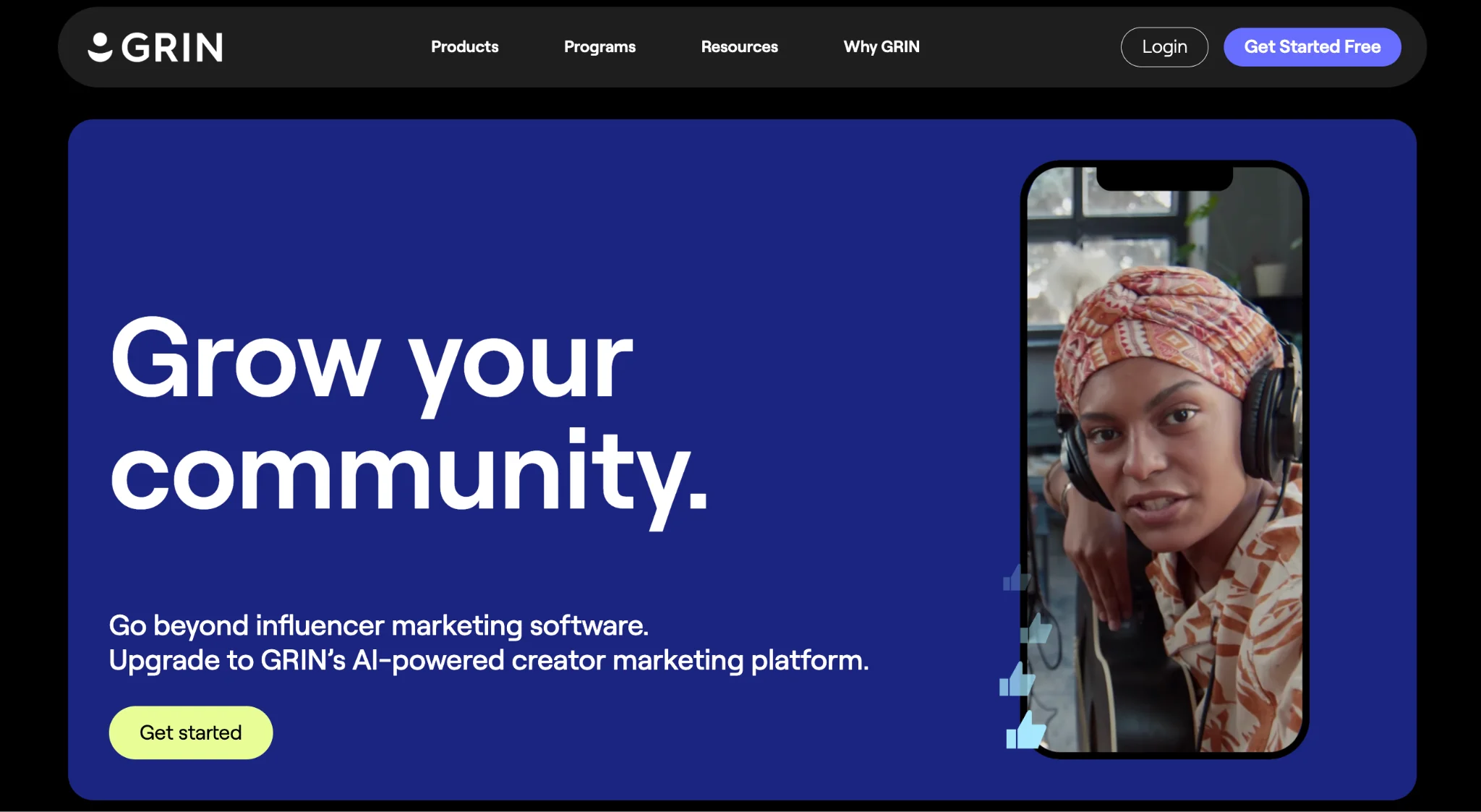
GRIN is a creator management platform built primarily for DTC and eCommerce brands that want to run influencer, affiliate, ambassador, and customer-creator programs from one system. Its positioning is less about a lightweight marketplace and more about giving brands infrastructure for creator discovery, outreach, gifting, content collection, sales attribution, and relationship management at scale.
Key Features
• AI-assisted creator discovery: GRIN lets brands search large creator datasets, use lookalikes, and increasingly rely on Gia, its AI agent, to surface relevant creators and help with outreach.
• Centralized creator CRM: The platform is designed to manage creator relationships end to end, from recruitment and communication to deliverables, campaigns, and long-term ambassador workflows.
• Automated outreach and comms: GRIN includes email templates, tracked outreach, follow-up workflows, and collaboration management so teams are not juggling inboxes and spreadsheets.
• Product gifting and seeding: It supports product selection, fulfillment, shipping, discount-code creation, and product tracking through eCommerce integrations, which is especially valuable for product-led brands.
• Affiliate tracking and payments: Brands can create links, monitor creator and campaign performance, and pay creators through integrated payment workflows.
• Content library and repurposing: GRIN automatically pulls creator content into an organized library so teams can search, tag, and repurpose top-performing assets.
• ROI and performance reporting: The reporting layer tracks campaign, creator, and program-level performance to help teams prove incrementality and optimize spend.
• Branded application pages: Brands can launch intake pages so creators, affiliates, and fans can apply directly, which reduces manual sourcing.
Platform Coverage
Facebook, Instagram, TikTok, X, Pinterest, YouTube, and Twitch
Pricing
Annual pricing starts at $25,000/year (approx. $2,050/month)
Reviews
4.5/5.0 (G2)
Standout Features
• Gia AI creator marketing agent: GRIN is pushing hard into AI with Gia, which helps identify creators, draft outreach, manage gifting, and keep campaigns moving. That is a more visible AI layer than many legacy platforms currently surface.
• eCommerce-native gifting and affiliate infrastructure: GRIN stands out for tightly connecting creator workflows with gifting, storefront selection, product fulfillment, commission tracking, and ROI measurement.
• Content capture plus reuse workflows: The automatic content library, tagging, storage, and repurposing functionality make GRIN particularly strong for brands that want creator content to fuel paid, email, and organic channels after the campaign ends.
Webfluential vs GRIN
Compared with Webfluential, GRIN is much more operationally built for eCommerce teams that need gifting, affiliate links, ROI tracking, and creator management at scale, while Webfluential leans more into an opt-in marketplace, personality matching, and creator monetization through products like Creator Store and Creator Agent. GRIN is also a stronger fit for brands that want deep creator CRM and commerce attribution, whereas Webfluential is better suited to brands that value a simpler opt-in ecosystem and creator-brand matchmaking.
Influencer Hero

Influencer Hero is an all-in-one influencer marketing platform aimed at growing DTC brands and agencies that want structured outreach, campaign management, UGC collection, affiliate tracking, and creator payments in one place. Its market position is built around automation and transparent pricing, making it especially attractive to teams that want more workflow depth than lightweight tools, but without jumping straight to enterprise-only software.
Key Features
• Influencer discovery and filtering: Influencer Hero offers large-scale creator search with audience filters, fake-follower checks, lookalikes, and profile analysis to help brands shortlist creators faster.
• Bulk outreach with AI personalization: The platform supports automated outreach campaigns, drip sequences, follow-ups, and AI-enhanced personalization to improve reply rates without making outreach feel generic.
• CRM and campaign boards: A core strength is its campaign-centric CRM, where teams can manage creator stages, approvals, deliverables, contracts, and reporting in a structured workflow.
• Affiliate tracking and payouts: Brands can generate custom links and codes, attribute conversions to creators, and automate parts of commission tracking and payouts.
• Gifting and eCommerce integrations: Influencer Hero connects creator activity to store and order data so brands can measure not just engagement, but actual revenue tied to creator campaigns.
• UGC and content collection: The platform captures creator content and stores it in the content library for reuse, which helps brands build a usable content pipeline from influencer campaigns.
• Chrome extension and free utilities: Influencer Hero also offers creator analysis utilities and browser-based workflows that make sourcing and vetting faster for lean teams.
Platform Coverage
Instagram, TikTok, YouTube, Facebook, Pinterest, Snapchat, X, and Twitch
Pricing
Influencer Hero offers flexible pricing based on outreach volume, and you can have unlimited creators in your CRM with Influencer Hero:
• Standard — $649/month (up to 1,000 reachouts/month)
• Pro — $1,049/month (up to 5,000 reachouts/month)
• Business — $2,490/month (up to 10,000 reachouts/month)
• Custom / Agency — Tailored pricing
Reviews
5.0/5.0 (Capterra)
Standout Features
• Campaign-centric CRM automation: Influencer Hero’s strongest differentiator is its structured campaign workflow with boards, bulk actions, and stage-based automations built for managing high creator volumes efficiently.
• AI-driven outreach personalization: The platform puts unusual emphasis on outreach quality, using AI-enhanced personalization and drip workflows to help messages feel more one-to-one at scale.
• AI-Powered UGC Search: With AI and UGC search, brands can quickly find influencer-generated content based on keywords, visuals, captions, or campaign context. This helps teams reuse high-performing UGC, identify top creators, and streamline content discovery for paid ads, social media, and ecommerce use cases.
Webfluential vs Influencer Hero
Compared with Webfluential, Influencer Hero is more workflow-heavy and performance-oriented, with deeper CRM automation, affiliate tracking, and structured outreach. Webfluential, by contrast, is more marketplace- and creator-economy-led, with differentiators like personality matching, Creator Store, and Creator Agent. For brands focused on repeatable outreach, eCommerce attribution, and campaign operations, Influencer Hero is the more execution-driven option.
Aspire
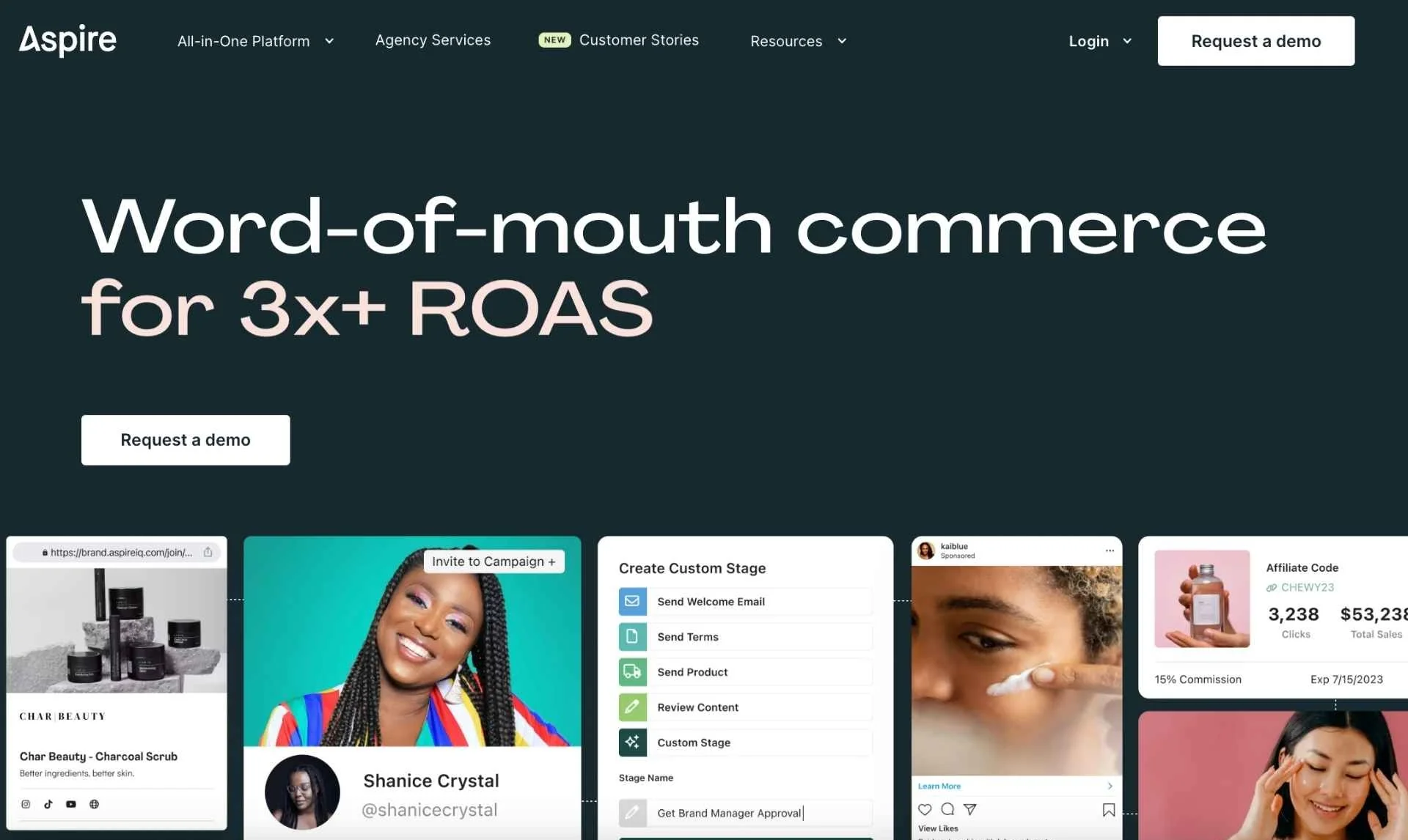
Aspire is an influencer marketing platform designed to help brands discover creators, manage campaigns, run affiliate and ambassador programs, and measure social commerce impact. It is especially well known for combining a searchable creator database with an inbound creator marketplace, giving brands both outbound and inbound sourcing options inside the same platform.
Key Features
• Dual-mode creator discovery: Aspire combines influencer search with a Creator Marketplace where creators can proactively apply to campaigns, giving brands more than one way to fill their pipeline.
• Workflow and campaign management: Brands can manage briefs, approvals, deliverables, contracts, and campaign stages from one dashboard, which helps scale programs without a heavy manual layer.
• Affiliate and ambassador support: Aspire is built not just for one-off influencer campaigns but also for affiliate, ambassador, referral, and UGC workflows.
• Shopify and commerce tools: It supports gifting, product seeding, creator stores, sales tracking, and commission workflows tied to commerce outcomes.
• Content rights and repurposing support: Aspire highlights licensing, reuse permissions, and content workflows as part of its broader campaign setup.
• Branded content ads and paid amplification: Through direct integrations, Aspire helps brands extend creator content into paid media, which is valuable for teams combining influencer and performance marketing.
• Support and services layer: Aspire also offers agency services and strategic support for brands that want help managing programs rather than only licensing software.
Platform Coverage
Instagram, TikTok, Pinterest, YouTube, and Facebook
Pricing
Aspire starts with tiered pricing and can be customized, with a mid-tier quote of about $2,300/month for a use case involving multiple team members and up to 500 creators in CRM.
Reviews
4.0 /5.0 (Capterra)
Standout Features
• Direct partnerships with Meta, TikTok, and Pinterest: Aspire’s direct partner relationships are one of its clearest differentiators because they support stronger creator data access and better paid amplification workflows.
• Creator Marketplace plus creator search: Many platforms do one or the other well; Aspire’s strength is combining outbound discovery with inbound creator applications.
• Strong social-commerce workflow: Aspire stands out for combining creator sourcing, gifting, affiliate tracking, and paid amplification into one system that fits modern DTC teams.
Webfluential vs Aspire
Compared with Webfluential, Aspire is far more mature as an end-to-end operating platform for brands that need discovery, creator applications, gifting, affiliate tracking, and paid social extensions. Webfluential’s differentiation is more around its opt-in marketplace, IBM Watson personality matching, and creator monetization products, while Aspire is the stronger choice for brands building repeatable creator acquisition and commerce workflows.
SARAL

SARAL is an influencer marketing platform built for eCommerce brands that want a simpler, more operationally focused system for discovering creators, automating outreach, managing relationships, tracking performance, and paying partners. The company describes itself as an “InfluencerOS,” and its positioning is clearly centered on helping brands build predictable, ROI-driven influencer programs rather than just run one-off campaigns.
Key Features
• Large-scale creator discovery: SARAL says brands can search more than 200 million influencer profiles without waiting for creators to opt in, which is a major advantage over marketplace-only tools.
• Automated outreach: The platform helps brands scale outreach and keep creator communication organized without relying on spreadsheets and fragmented inboxes.
• Flexible influencer CRM: SARAL includes customizable relationship stages, fields, and workflows so brands can map the software to their process rather than rebuilding operations around a rigid tool.
• Performance and ROI tracking: SARAL tracks creator performance across campaigns and links creator activity to outcomes like sales and ROAS, making it more performance-oriented than lightweight CRM tools.
• AI assistant and workflow support: SARAL highlights SIA, its AI influencer assistant, as part of its pitch for reducing manual work and helping teams move faster.
• Payments and partnership operations: It also supports creator payment workflows, helping brands run full partnership programs inside one system.
• Strategy-heavy onboarding: SARAL’s positioning goes beyond software by emphasizing onboarding, success management, and shared-channel support for teams that want closer guidance.
Platform Coverage
Instagram, TikTok, and YouTube.
Pricing
There are different plans:
• Starter: $3.6k/quarter
• Business: $4.5k/quarter
• Professional: $7.5k/quarter
Reviews
4.7/5.0 (G2)
Standout Features
• Predictable-influence positioning: SARAL is unusually explicit about helping brands build a repeatable, ROI-first influencer engine rather than just a creator database and CRM.
• Open-web discovery without opt-in limitations: SARAL’s 200M+ creator search across Instagram, TikTok, and YouTube makes it materially broader than marketplace-only tools.
• Software plus strategy model: Its onboarding, success manager access, and shared support approach make SARAL feel more consultative than many pure SaaS competitors.
Webfluential vs SARAL
Compared with Webfluential, SARAL is more focused on operational simplicity and performance management for eCommerce brands, while Webfluential is more rooted in an opt-in influencer marketplace and creator monetization ecosystem. SARAL also offers much broader creator discovery across Instagram, TikTok, and YouTube, whereas Webfluential’s clearest public analytics coverage remains strongest on Facebook, X, Instagram, YouTube, and blogs, with TikTok positioned less centrally on the brand side.
Influencity

Influencity is an end-to-end influencer marketing platform designed for brands and agencies that want to find creators, manage relationships, launch campaigns, track content, and report on results without stitching together multiple tools. Its current positioning is broader than a pure influencer platform, since the company also ties influencer marketing into social listening and wider social media management capabilities.
Key Features
• Public-data creator discovery: Influencity lets teams search large volumes of public creator profiles and evaluate them with detailed audience and performance filters.
• Influencer relationship management: It centralizes influencer records, workflows, approvals, outreach, and campaign organization so teams can manage multiple collaborations from one hub.
• Campaign manager and reports: The platform supports launch, tracking, and reporting workflows so brands can turn campaign activity into stakeholder-ready outputs.
• Monitoring and content tracking: Influencity tracks content, mentions, hashtags, and campaign activity in real time, which is useful for teams running multi-creator or multi-market programs.
• Payments and collaboration workflows: The platform also supports influencer payment workflows and campaign operations, helping brands keep execution in one place.
• Forecasting and analytics: Influencity’s broader analytics layer is geared toward helping teams forecast outcomes and optimize decisions before and during campaigns.
• Expanded suite beyond influencer marketing: A notable differentiator is that the platform now sits alongside social listening and social media management products, which can appeal to brands that want a wider marketing stack.
Platform Coverage
Instagram, TikTok, YouTube, and X/Twitter
Pricing
• Professional Plan: $318/month or $3,816/year
• Business Plan: $798/month or $9,576/year
• Enterprise Plan: Custom pricing
• Auto-Tracker Add-On: $660/year (for 50 influencers)
Reviews
4.3 / 5.0 (G2)
Standout Features
• Large-scale public-profile discovery: Influencity’s ability to search large public datasets without requiring creator opt-in is one of its clearest advantages for brands that want wide discovery reach.
• Broader suite with social listening and social management: Influencity is increasingly differentiated by how it extends beyond influencer campaigns into adjacent social marketing workflows.
• End-to-end modular workflow: The platform’s Discover, IRM & Data, Campaigns, and Reports structure makes it appealing to teams that want one suite rather than disconnected point tools.
Webfluential vs Influencity
Compared with Webfluential, Influencity is broader and more data-heavy, with larger-scale public discovery, stronger multi-step campaign infrastructure, and a more explicit extension into social listening and management. Webfluential, on the other hand, is more differentiated by its opt-in marketplace, creator-side monetization tools such as Creator Store, and IBM Watson personality matching. For brands prioritizing scale, public-data discovery, and operational control, Influencity is usually the more robust option.


NeoReach

NeoReach is an enterprise influencer marketing platform designed for brands and agencies that need large-scale creator discovery, data-driven campaign management, and deep analytics. The platform positions itself as a data-first solution, offering one of the largest influencer datasets alongside advanced reporting and paid media integrations. It is commonly used by global brands running high-volume, performance-focused influencer programs.
Key Features
• Massive influencer discovery database: NeoReach provides access to millions of creators with advanced filters for audience demographics, engagement, historical performance, and brand collaborations.
• AI-powered search and audience insights: The platform uses machine learning to surface relevant creators and provide deep insights into audience quality, authenticity, and brand affinity.
• End-to-end campaign management: Teams can manage campaigns from creator sourcing to contracting, execution, and reporting within one platform.
• Paid media and whitelisting support: NeoReach enables brands to amplify influencer content through paid social channels, bridging influencer and performance marketing.
• Custom reporting and dashboards: Highly customizable analytics allow brands to track ROI, engagement, conversions, and campaign performance at granular levels.
• Influencer payments and contracts: The platform includes tools for managing contracts, payments, and compliance across large influencer programs.
• API access and data integrations: NeoReach offers API access for enterprise teams that want to integrate influencer data into internal systems or BI tools.
Platform Coverage
Instagram, TikTok, YouTube, Facebook, Twitter (X), Pinterest, and Snapchat.
Pricing
NeoReach uses custom enterprise pricing, typically based on campaign scale, number of users, and feature requirements. Contracts are generally annual, with pricing often positioned in the higher tier of the market.
Reviews
4.5 / 5.0 (G2)
Standout Features
• Enterprise-grade data infrastructure: NeoReach’s large influencer dataset and API access make it one of the most data-heavy platforms available for global campaigns.
• Paid media integration: Strong support for whitelisting and boosting influencer content into paid campaigns sets it apart from many tools focused only on organic campaigns.
• Custom analytics and reporting flexibility: Highly configurable dashboards allow brands to tailor reporting to specific KPIs and internal requirements.
Webfluential vs NeoReach
Compared with Webfluential, NeoReach is significantly more enterprise-focused, offering deeper analytics, larger-scale discovery, and stronger paid media integrations. Webfluential, on the other hand, is more accessible and marketplace-driven, with features like personality matching and creator monetization tools. For large brands prioritizing data and scale, NeoReach is the stronger option, while Webfluential suits teams looking for a simpler collaboration ecosystem.
Heepsy

Heepsy is an influencer marketing platform designed to help brands and agencies find, analyze, and connect with influencers at scale. Known for its user-friendly interface and strong search capabilities, Heepsy focuses on simplifying influencer discovery and outreach, making it particularly popular among small to mid-sized brands and eCommerce businesses looking for an affordable and accessible solution.
Key Features
• Large influencer database: Heepsy provides access to approximately 50 million influencers globally, allowing brands to search across different markets and niches with broad coverage.
• Advanced search filters: Users can filter influencers by keywords, follower count, engagement rate, audience demographics (location, age, gender), and authenticity metrics to find highly targeted creators.
• Fake follower detection: Includes an authenticity score to help identify influencers with real audiences, reducing the risk of working with low-quality or fraudulent accounts.
• Detailed influencer profiles: Each creator profile includes engagement data, audience breakdown, past collaborations, and estimated performance metrics.
• Outreach and email automation: Heepsy allows bulk outreach with email templates and follow-ups, supporting up to thousands of emails per month depending on the plan.
• Campaign management and CRM: Features a Kanban-style pipeline to track influencer relationships and campaign stages from outreach to payment.
• Media and content tracking: Tracks influencer posts, engagement metrics, and campaign performance through hashtags and mentions.
• Shopify integration for sales tracking: On higher-tier plans, Heepsy integrates with Shopify to track conversions, sales, and affiliate performance directly tied to influencer campaigns.
Platform Coverage
Instagram, TikTok, YouTube, and Twitch
Pricing
There are different plans:
• Free Plan: You can simply discover creators and see how the discovery feature works.
• Starter Plan: Starts at $89/month. You get up to 15k results, 50 profiles and 50 outreach emails.
• Plus Plan: Starts at $249/month. Offers 40K results, 1,000 advanced profiles, and 1,000 outreach emails. Adds bulk email outreach, contact exports, media gallery, and campaign reporting.
• Advanced Plan: Starts at $369/month. Includes 60K results, 3,000 profiles, and 3,000 outreach emails. Adds advanced filters, automated sales tracking, Shopify/WooCommerce integrations, product catalogs, and promo code tracking.
Reviews
4.5 / 5.0 (G2)
Standout Features
• Highly granular influencer search filters: Heepsy’s filtering system allows brands to narrow down creators by niche, audience demographics, and authenticity, making discovery fast and precise.
• Built-in fake follower detection: The platform’s authenticity scoring helps brands avoid influencers with inflated or low-quality audiences.
• Affordable entry point with scalable plans: Compared to many enterprise tools, Heepsy offers accessible pricing while still covering core influencer marketing workflows.
Webfluential vs Heepsy
Compared with Webfluential, Heepsy offers significantly broader influencer discovery through its large public database and advanced filtering, making it better suited for brands prioritizing scale and niche targeting. Webfluential, on the other hand, focuses on an opt-in marketplace with collaboration tools and creator monetization features like Creator Store. Heepsy is more practical for discovery and outreach-driven workflows, while Webfluential leans more toward curated partnerships and creator ecosystem features.
Skeepers
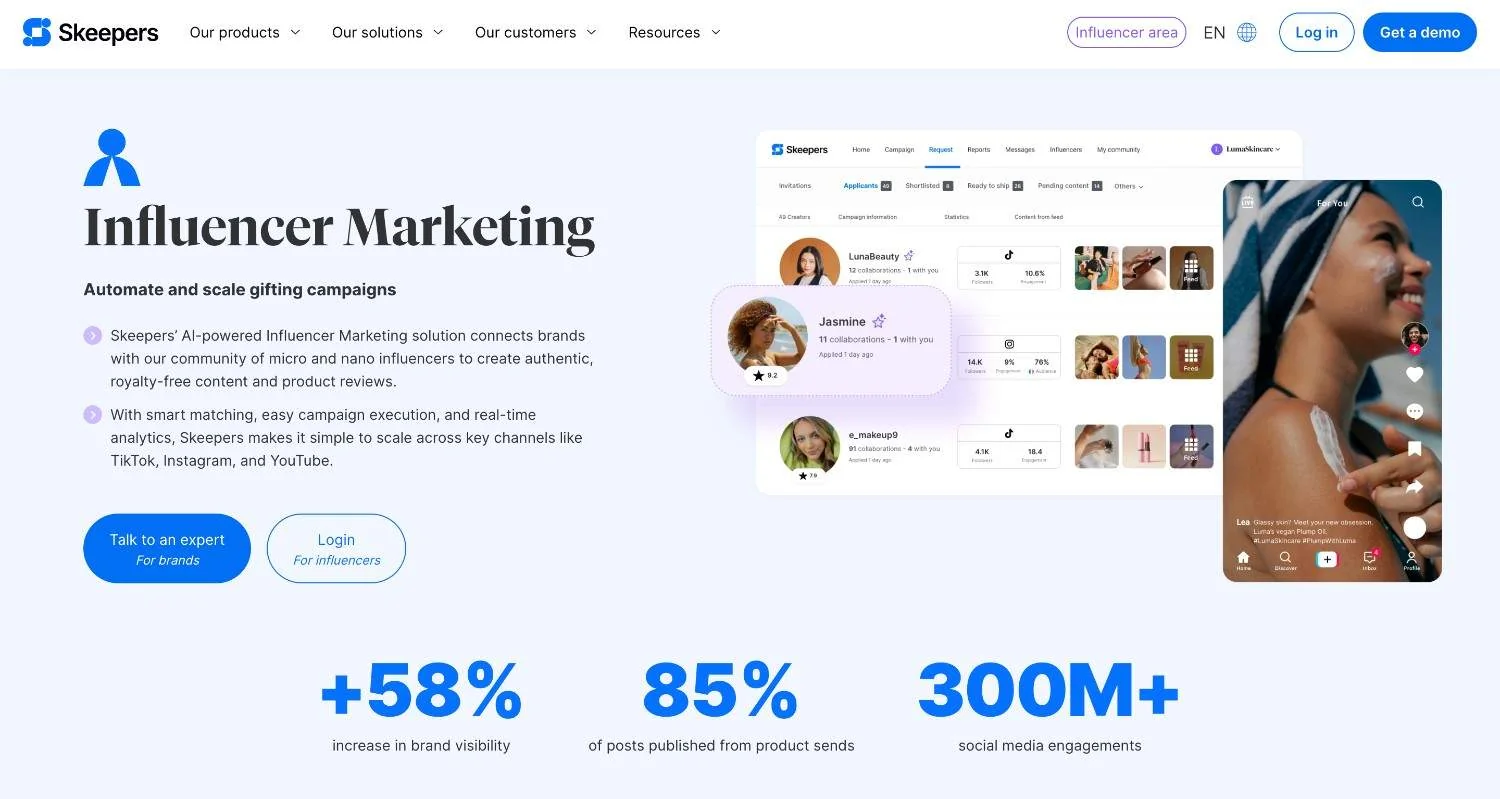
Skeepers is a UGC and influencer marketing platform focused on helping brands collect, manage, and activate customer and creator content across the marketing funnel. It combines influencer marketing with ratings, reviews, and user-generated content tools, making it particularly strong for brands focused on social proof and content-driven commerce.
Key Features
• Influencer and UGC campaigns: Skeepers enables brands to run influencer campaigns while also collecting user-generated content from customers and creators.
• Content management and distribution: Centralizes content creation, approval, and distribution across marketing channels.
• Ratings and reviews integration: Combines influencer marketing with product reviews to build trust and credibility.
• Product seeding workflows: Supports gifting campaigns and content creation tied to product launches.
• Content rights management: Helps brands manage licensing and reuse of creator-generated content.
• Performance tracking: Tracks engagement, reach, and content performance across campaigns.
• Community building tools: Enables brands to build long-term relationships with creators and customers.
Platform Coverage
Instagram, TikTok, YouTube
Pricing
Skeepers uses custom pricing, typically based on modules (UGC, influencer marketing, reviews) and campaign scale. Contracts are usually annual.
Reviews
4.7/5.0 (G2)
Standout Features
• UGC + influencer hybrid platform: Combines influencer marketing with reviews and user-generated content for stronger social proof.
• Content lifecycle management: Handles everything from creation to distribution and reuse.
• Commerce-driven content strategy: Strong focus on converting content into sales and trust signals.
Webfluential vs Skeepers
Compared with Webfluential, Skeepers is more focused on UGC, reviews, and content-driven commerce, while Webfluential centers on influencer collaboration and creator monetization. Skeepers is better suited for brands prioritizing social proof and content reuse, whereas Webfluential is stronger for direct influencer partnerships and creator ecosystems.
Upfluence
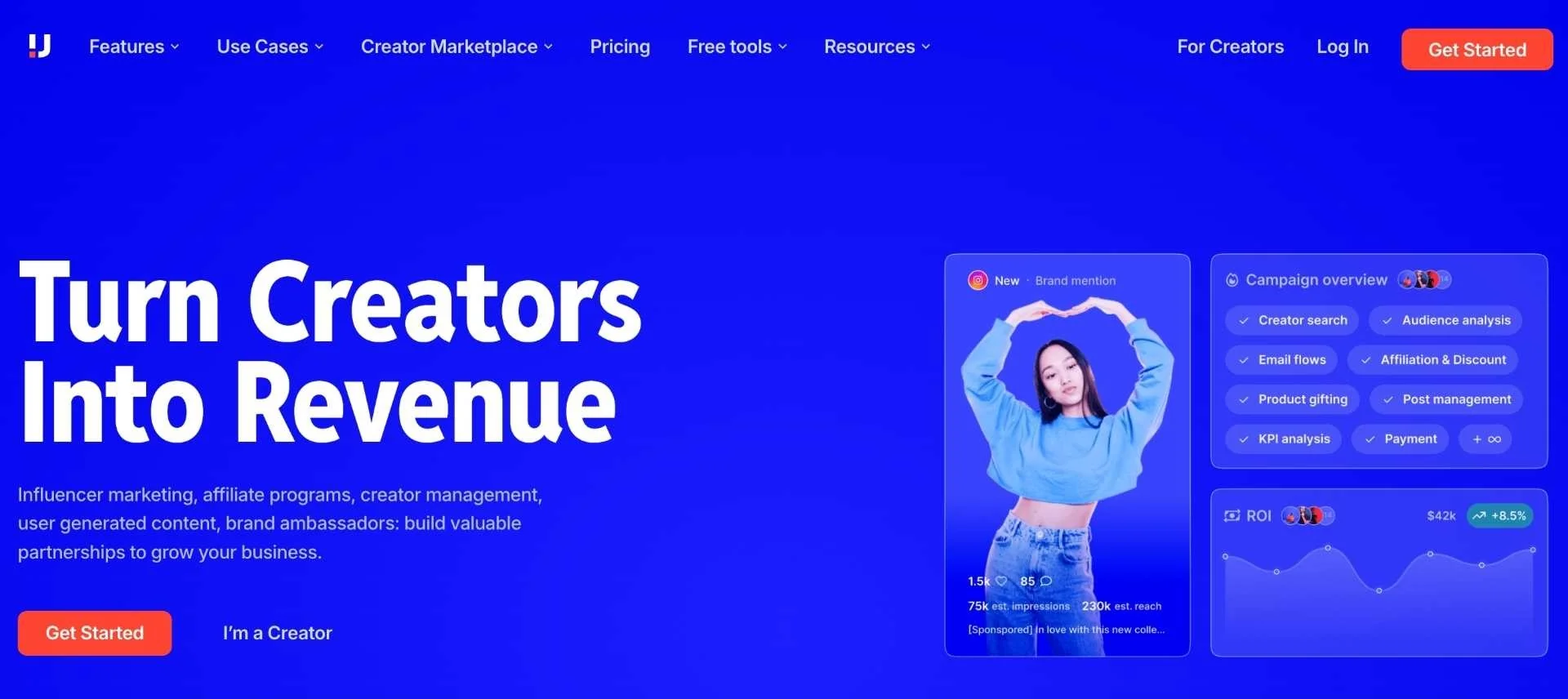
Upfluence is a comprehensive influencer marketing platform built for eCommerce brands that want to integrate influencer campaigns directly into their sales and customer data. It combines influencer discovery, outreach, campaign management, and affiliate tracking with strong Shopify and Amazon integrations.
Key Features
• Large influencer database: Access to millions of creators with advanced filtering based on demographics, engagement, and niche.
• AI-powered outreach automation: Includes bulk email campaigns and automated follow-ups through its AI assistant.
• CRM and campaign management: Centralizes influencer communication, campaign tracking, and performance monitoring.
• Shopify and Amazon integrations: Tracks sales, identifies influencer customers, and manages affiliate campaigns directly.
• Affiliate and referral tracking: Enables brands to generate links, track conversions, and manage commissions.
• Creator payments: Supports secure bulk payments to influencers within the platform.
• Social listening: Helps brands monitor trends and identify high-performing content.
Platform Coverage
Instagram, TikTok, YouTube, Facebook, Twitch, Pinterest, and blogs.
Pricing
On average plans start around $2,000/month ($24,000 yearly)
Reviews
4.3 / 5.0 (Capterra)
Standout Features
• Deep eCommerce integrations (Shopify + Amazon): Enables direct sales tracking and influencer identification from existing customers.
• Customer-to-creator conversion: Helps brands turn existing buyers into influencers, improving ROI and authenticity.
• End-to-end influencer commerce workflows: Covers discovery, outreach, gifting, tracking, and payments in one platform.
Webfluential vs Upfluence
Compared with Webfluential, Upfluence is far more focused on eCommerce integration and revenue tracking, making it ideal for brands that want to tie influencer campaigns directly to sales. Webfluential is more marketplace-driven with creator monetization features, while Upfluence is better suited for data-driven, ROI-focused campaigns.
Traackr

Traackr is an enterprise influencer marketing platform focused on performance measurement, benchmarking, and ROI optimization. It is widely used by global brands that need advanced analytics, budget allocation tools, and competitive benchmarking across influencer campaigns.
Key Features
• Global influencer discovery: Access to millions of influencers with filters for performance, audience, and past collaborations.
• Influencer CRM: Tracks relationships, campaign status, and collaboration history across teams.
• Advanced reporting and analytics: Measures ROI using metrics like CPC, CPE, CPV, and engagement rates.
• Budget optimization tools: Helps brands allocate spend based on expected performance and ROI.
• Benchmarking and competitive insights: Compares campaign performance against industry standards.
• Affiliate and payment tools: Supports commission tracking and creator payouts.
• Real-time campaign tracking: Allows teams to monitor performance and adjust campaigns mid-flight.
Platform Coverage
Instagram, TikTok, YouTube, Facebook, Pinterest, and Twitter (X).
Pricing
Plans usually start at $32,500/year.
Reviews
4.3/5.0 (G2)
Standout Features
• Brand Vitality Score (BVS): Proprietary metric combining visibility, influence, and trust into a single benchmark.
• Budget optimization calculator: Helps brands allocate influencer spend based on predicted ROI.
• Cost-per metrics dashboard: Tracks efficiency using CPC, CPE, CPV, and other performance metrics.
Webfluential vs Traackr
Compared with Webfluential, Traackr is significantly more analytics-driven and enterprise-focused, offering advanced benchmarking, cost-per metrics, and ROI optimization tools. Webfluential is simpler and more accessible, with strengths in creator collaboration and monetization, while Traackr is better suited for large brands prioritizing performance measurement and strategic budget allocation.
Final Thoughts on Webfluential Alternatives
Webfluential offers a unique mix of influencer collaboration and creator monetization, but as this comparison shows, alternatives vary widely depending on brand needs. Platforms like GRIN, Upfluence, and Aspire excel in eCommerce integrations and ROI tracking, while tools like NeoReach and Traackr focus on enterprise-scale data and analytics. Others such as Influencer Hero, SARAL, and Influencity prioritize workflow automation and large-scale discovery. Ultimately, the best alternative depends on whether a brand values marketplace simplicity, performance tracking, creator scale, or end-to-end campaign infrastructure.