

Archive Pricing Explained: Plans, Features & Review
Most brands lose more creator content than they collect. Posts go up untagged, stories vanish in twenty-four hours, and by the time someone screenshots a good one it is already gone. Archive built its product on that specific failure, capturing mentions automatically across Instagram, TikTok, and YouTube and turning them into a searchable content library with rights attached. More than a thousand brands use it, including Allbirds, Uniqlo, Notion, and DoorDash, but the plans are sold on credits and capture volume rather than a published price, which makes budgeting a conversation rather than a calculation. In this article, we break down Archive pricing, key features, reviews, limitations, and the best Archive alternatives to consider.
Archive Pricing
Archive does not publish dollar figures. Its plan structure is public, and it is built on two meters: monthly credits, which fund platform actions like searches and reports, and a monthly UGC cap, which limits how much content the platform captures and stores for you. Startup includes 21,000 credits and 500 UGC per month. Growth moves up to 105,000 credits and 2,500 UGC. Enterprise runs 420,000 credits and 10,000 UGC. Two agency plans sit alongside those: Agency pools 105,000 credits with a 50,000 shared UGC cap across ten brand workspaces and two seats, and an unlimited variant removes the UGC ceiling entirely, with seat and workspace add-ons available on both. Every plan includes API and MCP server access, which is unusual at entry level. The practical consequence of this model is that a successful month costs more than a quiet one, because volume is the lever the pricing turns on. Actual figures come through a demo and a scoped proposal.
Free Trial
Archive does not advertise a self-serve free trial. Access starts with a demo, where the team scopes credits, UGC volume, and workspace count against how much creator content your brand actually generates. Brands that want proof first usually ask for a capture audit of their existing mentions during the sales process, which is a more useful test than a trial period anyway, since the platform's value is entirely a function of how much content it finds.
Contract
Plans are subscriptions with allowances that reset monthly, quoted per brand and per workspace. Moving between tiers, adding seats, or lifting the UGC cap is a commercial conversation rather than a toggle in the billing screen, so it is worth estimating peak-month capture volume before signing rather than the average.
Archive Overview
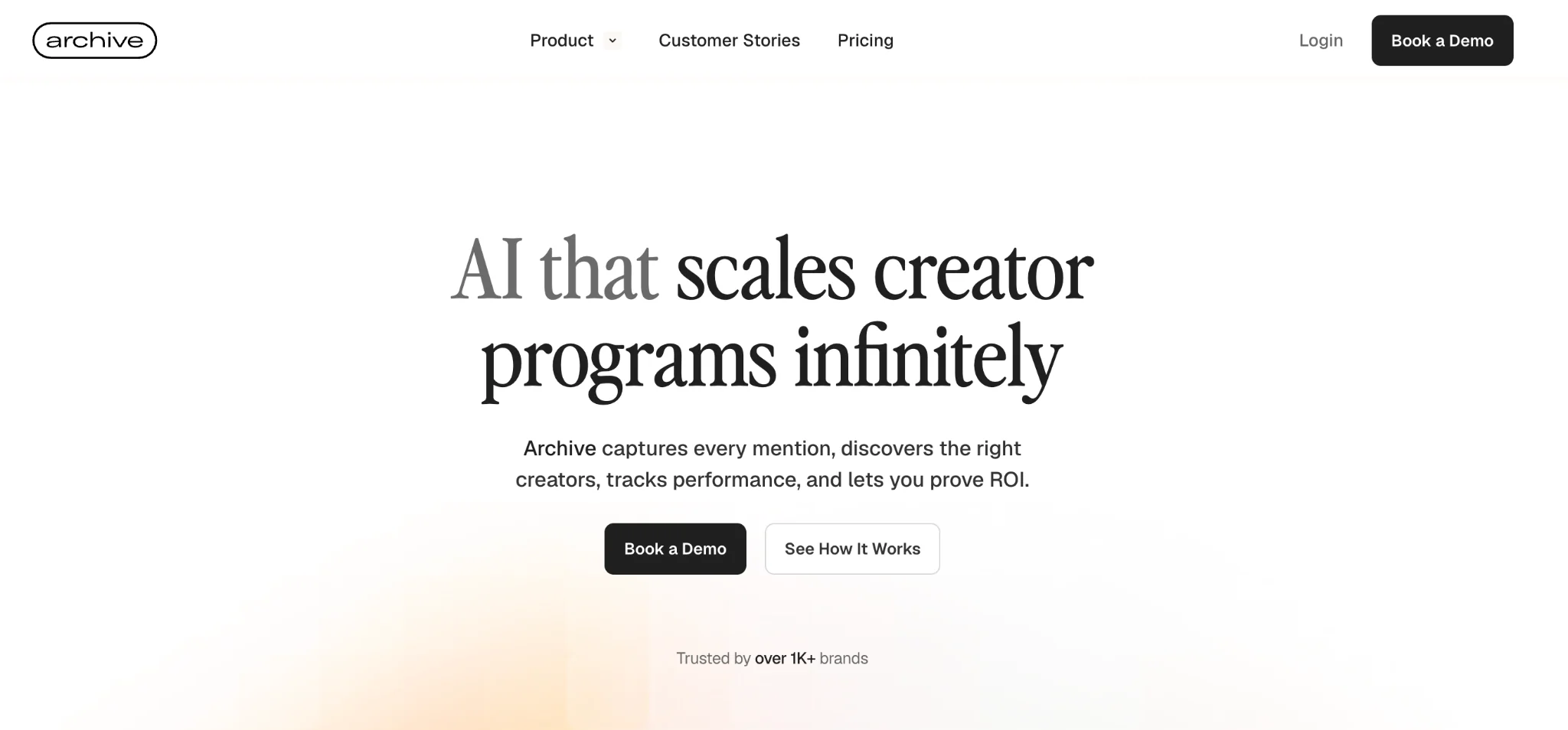
Archive positions itself as an AI creator marketing platform, and its centre of gravity is social listening rather than campaign execution. The platform monitors Instagram, TikTok, and YouTube for brand mentions, including posts that never tagged the brand account, saves the content permanently, and files it in a searchable library with performance data attached. On top of that sit creator discovery powered by audience data and lookalike matching, campaign tracking that flags whether contracted creators actually posted, competitor benchmarking, and rights management for repurposing content into paid media. The customer profile skews toward D2C and eCommerce brands with high organic UGC volume, plus the social, PR, and partnerships teams inside them.
Key Features
Automatic Social Listening
Archive continuously monitors Instagram, TikTok, and YouTube for brand mentions and saves them without anyone manually watching feeds, which is the difference between a content library that fills itself and one that depends on someone remembering to check.
Untagged Mention Capture
The platform surfaces posts that mention or feature a brand without tagging the account, which is where a large share of organic creator content lives and where most tag-based tools go blind.
Story and Ephemeral Content Archiving
Stories are saved before they expire, so brands keep a permanent record of content that would otherwise disappear in a day, along with the metrics attached to it.
Super Search
An AI search layer lets teams query the UGC library in natural language, by full sentences, by similar images, or by loose descriptions of a look or mood, instead of relying on manual tags and folder discipline.
UGC Library, Collections and Labels
Captured content is organized into filterable collections with custom labels, which is what makes a library of tens of thousands of assets usable by a creative team on deadline.
Usage Rights and Whitelisting
Rights requests, consent tracking, and watermark-free downloads are handled in-platform, so content moves from an organic post to a paid ad without a separate permissions scramble.
AI Creator Search
Creator discovery works off audience data and lookalike matching, letting brands find profiles similar to the creators already performing for them rather than starting every search from filters.
Campaign Tracking and Reporting
The platform tracks whether creators posted, what the content earned in reach and engagement, and how that rolls up into campaign-level performance and earned media value.
Competitor Insights
Brands can benchmark their own creator activity against competitors, including which creators are posting for them and how that content performs.
API and MCP Server Access
Every plan includes API access and an MCP server, which lets technical teams pull captured content and creator data into their own systems and AI workflows rather than working only inside the interface.
Best For
Archive suits D2C and eCommerce brands that already generate meaningful organic creator content and are losing most of it. Beauty, food and beverage, apparel, and consumer tech teams with active communities get the most out of it, as do social and PR teams that need a defensible record of coverage and a fast route from an organic post to a paid asset. Agencies running several brands are served by the pooled workspace plans. Brands with thin organic mention volume, or teams whose main bottleneck is recruiting and paying creators rather than capturing what they post, will find the value harder to justify.
Archive Reviews
No reliable public star rating
Archive does not have enough independent review volume on the major software directories to produce a meaningful score. A single five-star listing exists, which tells you nothing statistically, and scattered product community reviews are positive but thin. That means the platform has to be judged on what it demonstrably does rather than on aggregate sentiment. The strongest public signals are the named customer roster and the capture rate itself, and users who do write about it consistently point to the same thing: content they did not know existed showing up in the library. The recurring criticism in the category is cost predictability, since usage-based pricing rewards the platform when a brand's content volume grows. Ask for a capture audit and a modelled cost at your busiest month before committing.
Archive Standout Features
Capture of Content Nobody Tagged
The core technical claim is that Archive finds substantially more brand content than tag-based monitoring does. For a brand with an active community, the gap between tagged mentions and total mentions is the entire product, and it is what separates this from a social listening dashboard.
Semantic Search Over Your Own UGC
Super Search treats the content library like a search engine rather than a folder tree. Being able to ask for a specific scene, product angle, or feel and get back matching creator footage changes how quickly a paid social team can turn organic content into ad variants.
Agent-Ready Access on Every Plan
Including API and MCP server access at every tier, entry plans included, is a meaningful design choice. It means the captured content and creator data can feed internal dashboards, retrieval systems, and AI workflows instead of staying locked behind a UI.
Archive Limitations
No Published Pricing
Plan structures are visible but prices are not, so there is no way to compare Archive against a subscription-priced platform without entering a sales process first.
Costs Scale With Success
Credits and UGC caps mean the bill tracks capture volume. A viral month, a product launch, or a seeding push that works consumes allowance faster, which is an awkward incentive for a growing brand to budget against.
Three Platforms Only
Coverage is Instagram, TikTok, and YouTube. Brands with meaningful creator activity on Pinterest, Snapchat, X, Twitch, or in newsletters and podcasts need separate tooling for those channels.
Strong on Content, Lighter on Program Operations
Archive is built to find, store, and analyze creator content. Running the program itself, negotiating deals, fulfilling gifting orders, issuing commissions, and paying creators, sits largely outside it, so most brands pair it with a platform that handles the transactional side.


Is Archive Worth It?
If your brand already has creators posting about it and you are capturing a fraction of it by hand, Archive solves a real and expensive problem, and the content library it builds pays for itself the first time a paid social team pulls three months of organic footage out of it. It is a weaker fit for brands with little organic mention volume, teams that need transparent monthly pricing, or programs where the bottleneck is finding, briefing, and paying creators rather than tracking what they post. If that describes your situation, these alternatives are worth weighing:
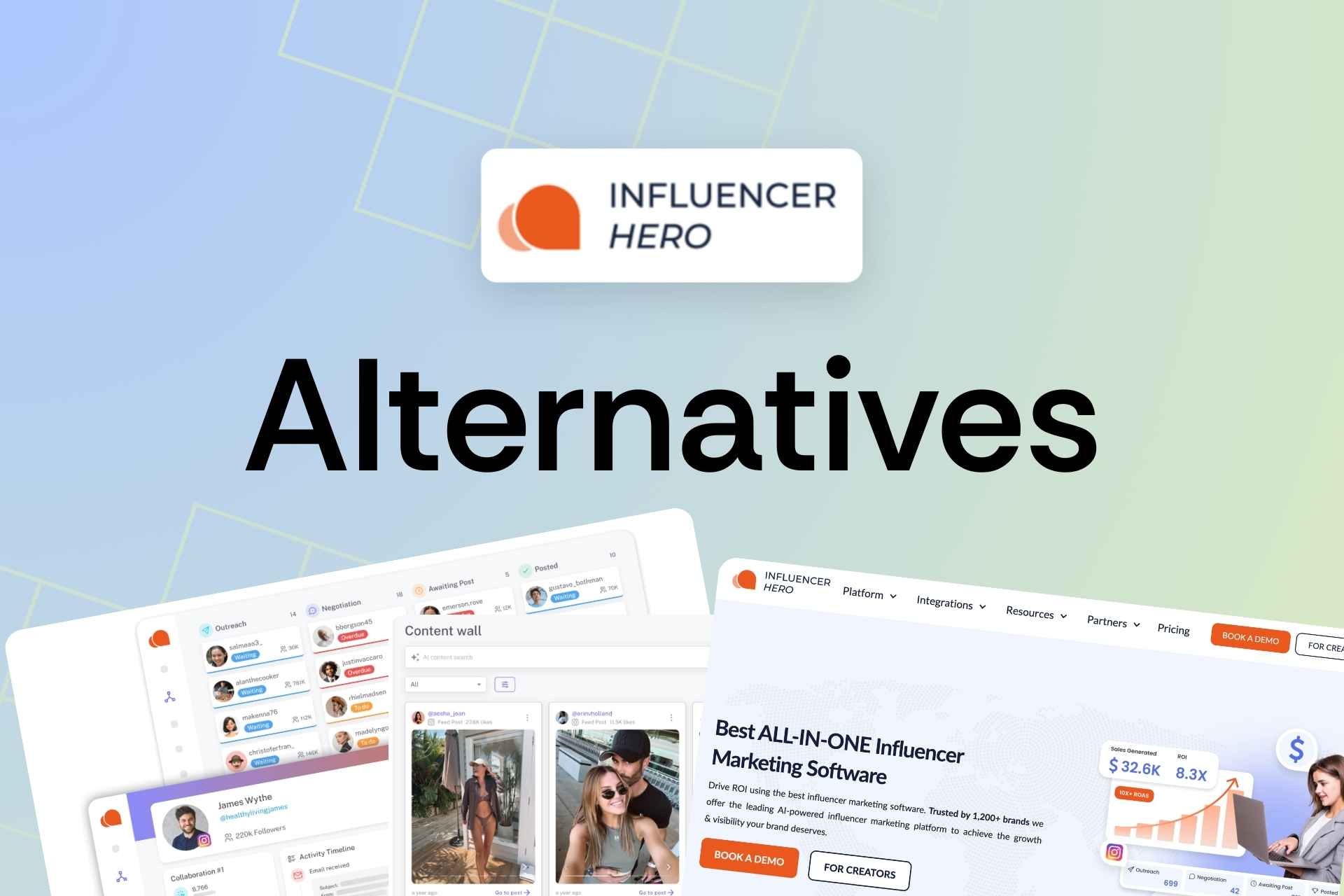
- Influencer Hero — an all-in-one influencer marketing platform combining creator discovery, influencer outreach automation, CRM, gifting, and affiliate tracking with an automated UGC content library, on publicly listed plans.
- Afluencer — a brand-creator marketplace where brands post collaborations and creators apply, covering the recruitment side that a listening tool leaves untouched.
- Modash — a large creator database with audience quality analysis and post tracking, built for teams whose priority is finding and vetting new partners.
- SARAL — a lightweight workflow tool for product seeding and creator outreach, aimed at small teams running high-volume gifting programs.
- Dash Social — social content analytics and asset management for brands that want listening and creative performance measurement in one place.
Final Thoughts
Archive is best understood as infrastructure rather than a campaign tool. It answers one question exceptionally well, what did creators actually post about us, and turns the answer into a usable content asset with rights attached. Judge it on your organic mention volume and on how much of that content your team currently loses, because those two numbers decide the return. If capturing content is only half the job and you also need to recruit, brief, and pay the creators producing it, an all-in-one platform will cover more ground.