

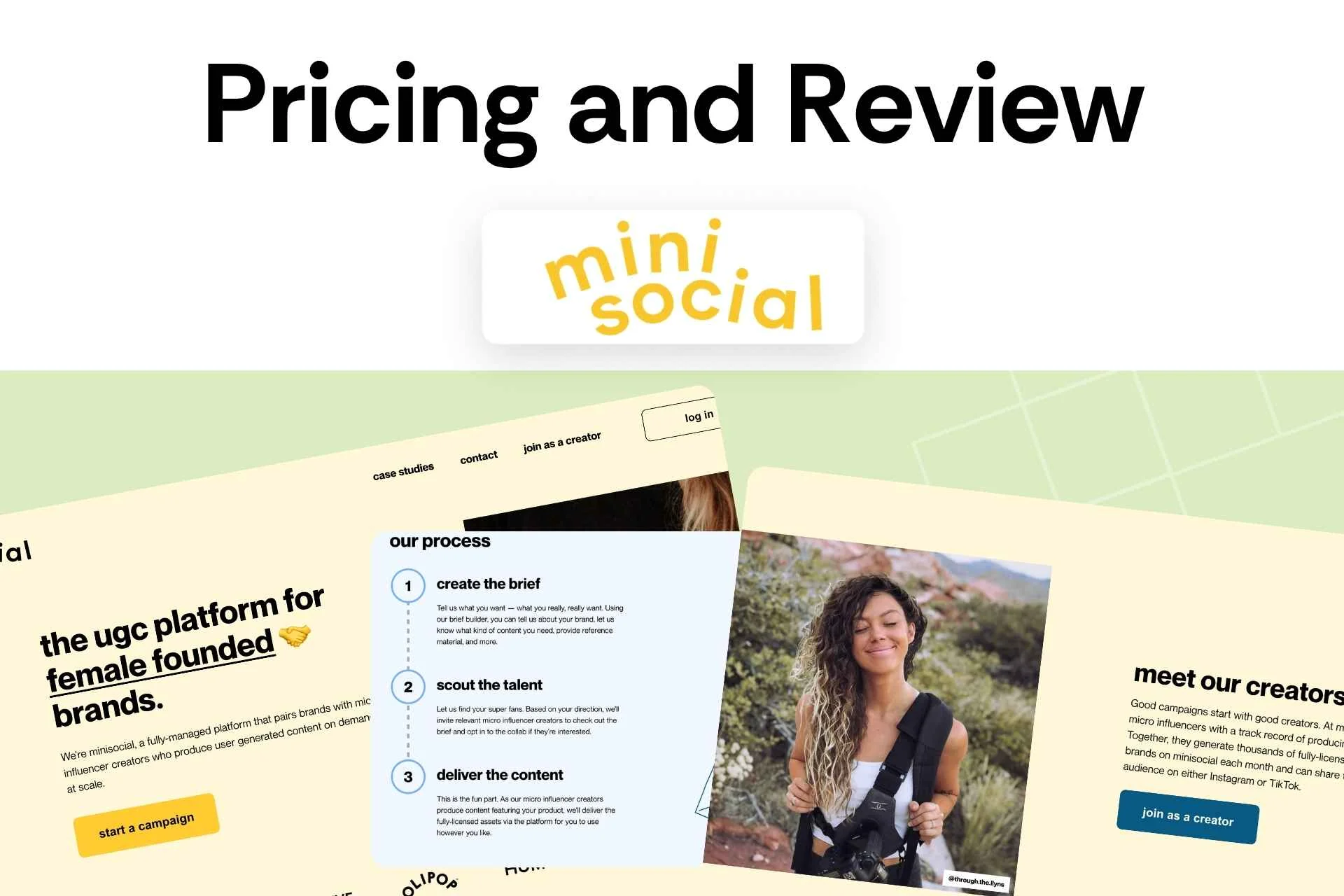
Minisocial Pricing Explained: Plans, Features & Review
Getting authentic content and real reach usually means running two separate programs, but Minisocial folds them into one managed motion. It pairs brands with micro-influencers who create user-generated content and post it to their own audiences, then hands over the fully licensed assets to use anywhere. That combination of content and reach, delivered done-for-you, is a genuine draw, though the project-based pricing and managed-only model shape who it fits. Marketers weighing it want to know what a campaign costs and where the trade-offs land.
In this article, we break down Minisocial pricing, key features, reviews, and limitations to consider.
Minisocial Pricing
Minisocial keeps pricing refreshingly simple for a managed service: projects start at $3,000 for 10 creators, and that figure is all-inclusive of creator fees, so there's no separate budget to negotiate for talent. Cost scales with how many creators you want in a campaign, and there are no long-term contracts, meaning brands pay per project rather than locking into a subscription.
Crucially, the price includes full content licensing through what Minisocial calls the "mini license," which grants unrestricted, perpetual rights to use the content across organic social, paid ads, web, and print. So the number you see covers the creators, the content, and the rights, packaged as one done-for-you deliverable.
Free Trial
Minisocial doesn't offer a free trial. Because it's a fully managed, project-based service rather than self-serve software, getting started means scoping a campaign and running a project rather than testing a dashboard on your own.
Contract
There are no long-term contracts. Brands commission projects as needed, starting at the $3,000 entry point and scaling by creator count, which keeps commitment low and lets teams run campaigns when it suits their calendar.
Minisocial Overview
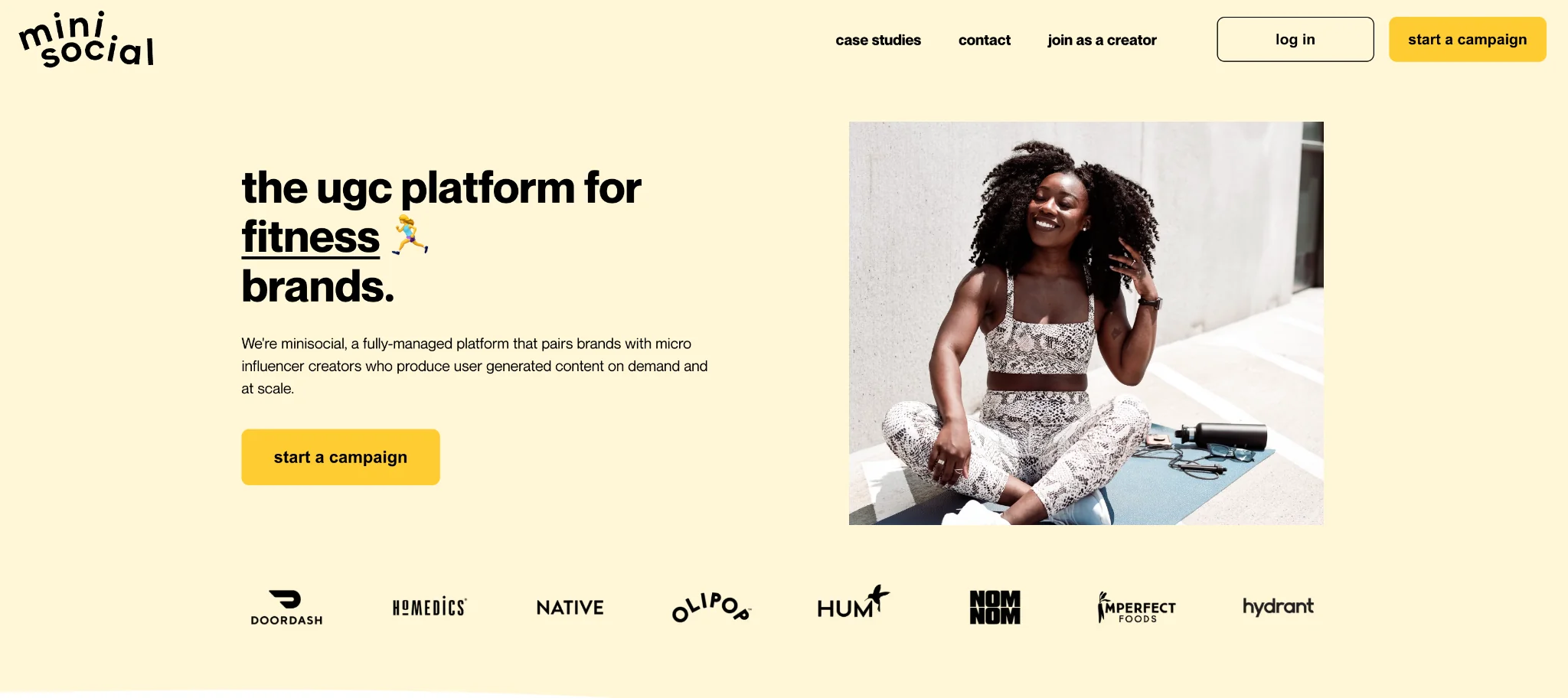
Minisocial is a fully managed platform that connects brands with micro-influencer creators to produce user-generated content at scale, with reach built in. Rather than handing brands a tool to operate, Minisocial runs the process: a brand submits a campaign brief, Minisocial identifies and invites relevant micro-influencers to opt in, the brand ships product, creators produce content and post to their own Instagram and TikTok audiences, and Minisocial delivers fully licensed assets back through its platform. The result is a steady supply of authentic content plus genuine social proof, which makes it a natural fit for DTC brands that want both content and creator reach without managing the logistics themselves.
Key Features
Managed Micro-Influencer Creator Sourcing
Minisocial identifies and invites relevant micro-influencers for each campaign, handling the sourcing, vetting, and coordination so brands don't have to shortlist or negotiate with creators directly.
UGC Production at Scale
The platform's core output is authentic user-generated content produced by real creators, giving brands a reliable pipeline of photos and videos rather than one-off assets.
Full "Mini License" Rights
Every project includes unrestricted, perpetual licensing, so brands can use the content across organic social, paid ads, website, and print without worrying about usage caps or expiration, a meaningful advantage over many influencer arrangements.
Built-In Micro-Influencer Reach
Because creators post to their own Instagram and TikTok audiences, brands get authentic social proof and reach alongside the content, combining two goals in a single campaign.
Ad-Ready Content for Testing
The UGC is designed to perform in paid social, so brands can test multiple assets to improve ad ROI, treating each project as a source of fresh creative to iterate on.
Social Proof Across Channels
Brands can deploy the content as social proof on product pages, in email, and across social channels, extending the value of each campaign well beyond the initial posts.
Done-for-You Workflow
From brief to delivery, Minisocial manages the campaign end to end, including creator opt-in, product shipping coordination, and asset delivery, so lean teams can run UGC programs without added headcount.
Best For
Minisocial fits DTC and ecommerce brands that want authentic UGC and micro-influencer reach at the same time, without building an in-house program to source and manage creators. It's especially useful for lean marketing teams that value a done-for-you workflow and want fully licensed content they can run in ads and across channels.
The $3,000 entry point suits brands with a real content budget rather than those wanting occasional one-offs, and the managed model appeals to teams that would rather hand off logistics than operate a platform themselves.
Reviews
Strong sentiment, no single standardized public score
Minisocial doesn't have one prominent, verified star rating consolidated across the major software review sites, so there isn't a single number to cite, but sentiment in available coverage is positive. Brands consistently highlight the value of the all-inclusive, fully licensed content, the quality of the micro-influencer creators, and the convenience of a done-for-you workflow that combines content and reach.
The most common considerations are the project-based cost, which suits brands with a content budget more than tiny teams, and the managed model, which trades hands-on control for convenience. As always, it's worth validating fit with references and a first project.
Minisocial Standout Features
Content Plus Reach in One Campaign
Minisocial's biggest differentiator is delivering both authentic UGC and genuine micro-influencer reach in a single managed project, where most tools give you one or the other, so brands solve two problems at once.
Perpetual, Unrestricted Licensing
The "mini license" gives brands full, expiration-free rights to every asset across organic, paid, web, and print, which is unusually generous and removes the usage-rights friction common in influencer deals.
Transparent, All-Inclusive Pricing
Starting at $3,000 for 10 creators with creator fees included and no long-term contract, Minisocial's pricing is refreshingly clear for a managed service, letting brands budget a campaign without a drawn-out negotiation.
Minisocial Limitations
Project-Based Cost
At a $3,000 entry point, Minisocial suits brands with a real content budget. Very small brands or those wanting occasional one-off assets may find the minimum steep compared with lighter-weight UGC options.
Managed-Only, Limited Self-Serve Control
Because Minisocial runs campaigns for you, brands don't get a dashboard to source, message, and manage creators themselves, which can feel restrictive for teams that want granular, hands-on control.
Instagram and TikTok Focus
The reach side centers on Instagram and TikTok, so brands whose audiences live primarily on other platforms may find the channel mix narrower than they need.
Less Suited to Full Campaign Management
Minisocial is built around UGC production and micro-influencer reach, not end-to-end influencer program management, so brands needing discovery databases, CRM, affiliate tracking, and ongoing relationship tools will need a broader platform.


Is Minisocial Worth It?
For DTC and ecommerce brands that want authentic, fully licensed UGC and micro-influencer reach delivered done-for-you, Minisocial is often worth it: the all-inclusive pricing, perpetual content rights, and combined content-and-reach model save real time and cover a lot in one campaign. It's a weaker fit for very small brands wanting cheap one-offs, teams that want hands-on self-serve control, or brands needing full influencer program management like discovery, CRM, and affiliate tracking.
If those points describe you, these alternatives are worth comparing:
- Influencer Hero - An all-in-one platform combining creator discovery, automated outreach, a visual CRM, gifting, affiliate tracking, UGC collection, and ROI reporting across eight networks, for brands that want to run programs end to end themselves.
- Afluencer - A marketplace that connects brands with influencers and UGC creators seeking collaborations, a simple self-serve way to source and message talent directly.
- Cohley - A content-generation platform that connects brands with creators for UGC, photography, and video at scale, strong for teams that want a steady content pipeline with rights included.
- Archive - A UGC management platform that captures, organizes, and rights-manages creator content mentioning your brand, useful for turning organic posts into reusable assets.
- SARAL - A lean influencer and UGC platform for DTC brands to find creators, run product-seeding, and manage collaborations, well suited to hands-on teams starting out.
Final Thoughts
Minisocial is a strong pick for brands that see content as an ongoing need and want authentic UGC plus micro-influencer reach handled for them, with clean pricing and generous licensing removing the usual friction. The decision comes down to whether a managed, project-based model fits your budget and whether you need content and reach or a full program-management platform.