

Obviously Pricing Explained: Plans, Features & Review
Obviously runs some of the largest creator campaigns in the industry, and it does so without asking the client to manage the day-to-day. Backed by a big-brand roster and now part of WPP, the agency leans on a large creator database, in-house content production, and seeding programs that can activate thousands of creators at once. That firepower is exactly what enterprise teams want, but it comes with agency pricing and a hands-off model that will not suit every brand. Deciding whether it fits starts with understanding how it charges and where it falls short.
In this article, we break down Obviously pricing, key features, reviews, and limitations for brands and agencies to consider.
Obviously Pricing
Obviously is quote-only, with no published plans or tiers. Because it operates as a full-service agency, cost depends on campaign scope, the number of creators activated, the mix of services (content, seeding, paid amplification), and whether you run a one-off push or an ongoing ambassador program.
There is no public rate card and no reliable ranges to anchor to, so budgeting means booking a call, asking for a written proposal, and confirming exactly what is included.
In practice, its positioning around enterprise brands signals budgets well above self-serve software.
Free Trial
There is no free trial or free plan. As a managed agency, Obviously is evaluated through a demo and a tailored proposal rather than a self-serve account you can test before buying.
Contract
Terms are set per engagement in the written quote. Campaigns can be scoped as a single activation or as an ongoing ambassador program, and any minimums or commitments are agreed as part of that proposal rather than published upfront.
Obviously Overview
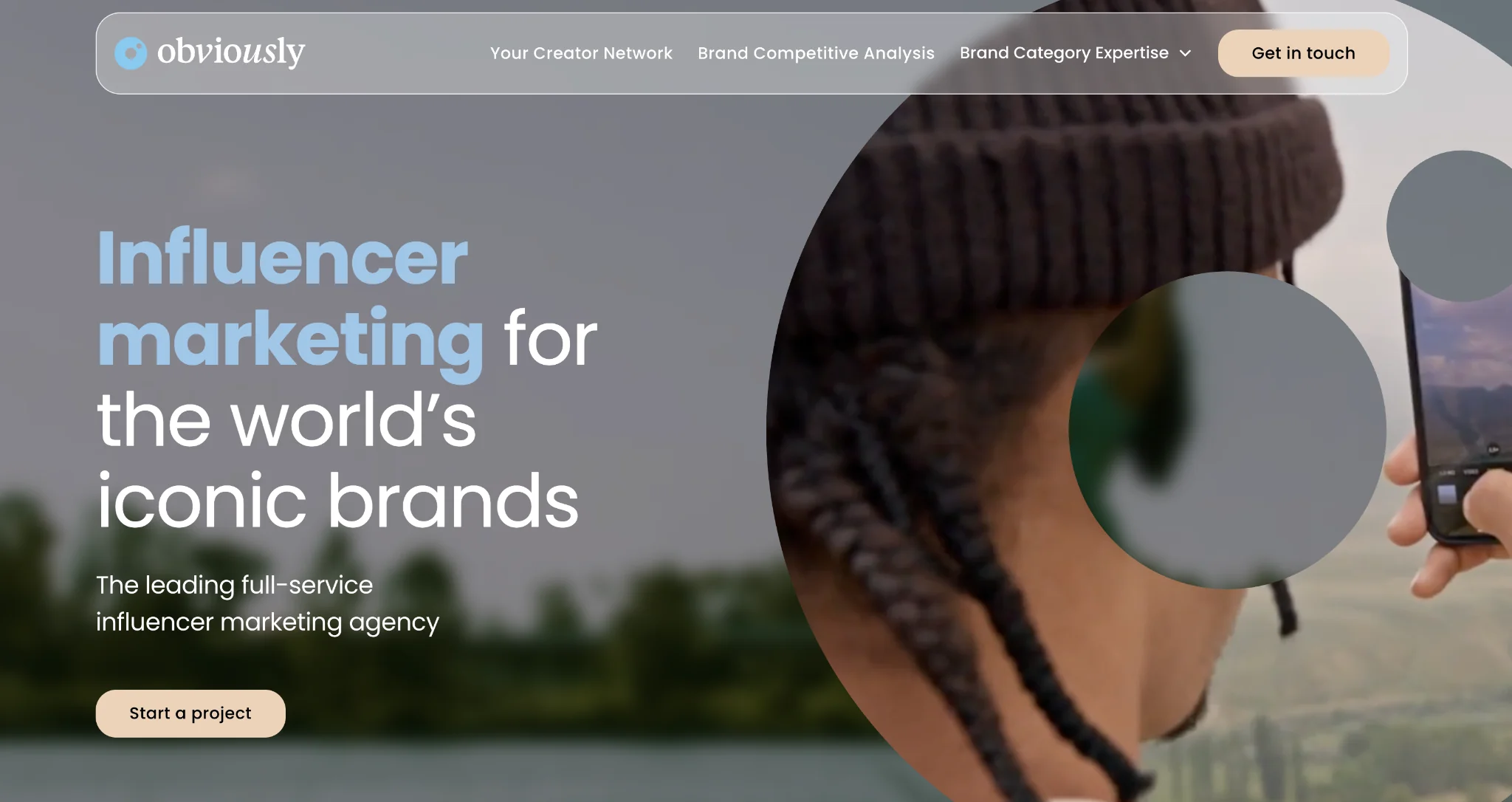
Obviously is a full-service influencer marketing agency headquartered in New York and now owned by WPP. It plans and executes creator campaigns across Instagram, TikTok, YouTube, X, Pinterest, and Snapchat, drawing on a database of more than 400,000 creators and in-house teams for content, seeding, and paid amplification. With work for brands such as Google, Coca-Cola, Lyft, and Converse and billions of reported impressions, it sits firmly at the enterprise end of the market, built for brands that want an external team to own execution end to end.
Key Features
Influencer Discovery at Scale
Obviously identifies and vets creators from a database of 400,000+ profiles, matching them to campaigns based on audience fit, performance, and brand safety rather than follower count alone.
In-House Content Production
Rather than relying solely on creator-made posts, the agency produces content at scale in-house, giving brands more control over quality and creative direction across a campaign.
Product Seeding and Fulfillment
Its seeding operation handles influencer gifting and logistics for anywhere from a handful of creators to a couple of thousand, managing fulfillment so brands do not have to coordinate shipping themselves.
Paid Media Amplification
Top-performing creator content can be amplified through paid media, extending reach beyond organic audiences and squeezing more value from the best-performing posts.
Real-Time Reporting and Brand Safety
A live dashboard tracks campaign performance and runs brand-safety checks, so teams can monitor results and flag risks while a campaign is still in flight.
Ambassador Programs
Obviously leans into long-term ambassador relationships over one-off posts, an approach it credits with meaningfully higher engagement than single activations.
Best For
Obviously is built for established and enterprise brands that want large-scale campaigns, ambitious seeding programs, and ambassador initiatives handled entirely by an outside team. It fits companies with the budget and appetite to trade hands-on control for scale, in-house creative, and full-service execution across multiple platforms.
Reviews
No reliable public star rating
Obviously does not carry a substantial third-party star rating on the major software directories, so it is best judged on its client work rather than aggregate scores. Its credibility comes from campaigns for globally recognized brands, billions of reported impressions, and backing from a major holding company. The trade-off is thin public feedback from smaller or mid-market clients, so brands outside the enterprise tier should request relevant case studies and references before committing.
Obviously Standout Features
In-House Creative at Scale
Producing content internally rather than leaning only on creators lets Obviously keep quality and messaging consistent even across large, multi-creator campaigns.
High-Volume Seeding Operation
Few agencies coordinate gifting and fulfillment for up to 2,000 creators in a single program, which makes Obviously a strong fit for brands that treat seeding as a core channel.
Proprietary Competitive Intelligence
Obviously uses proprietary AI for competitive analysis, giving brands a read on how their creator presence stacks up against rivals alongside standard campaign reporting.
Obviously Limitations
No Self-Serve Access
Obviously is a managed agency, not a tool, so brands that want to run influencer discovery, outreach, and reporting themselves will not get a platform login here.
Opaque, Enterprise-Level Pricing
With quote-only pricing and no public ranges, brands cannot budget from published information, and costs are geared toward enterprise spend.
Reduced Hands-On Control
Handing execution to an external team means less real-time control and slower iteration for brands that prefer to steer campaigns themselves.
Not Suited to Smaller or Lean Teams
Startups, small D2C brands, and solo marketers are outside the sweet spot, and are usually better served by affordable, self-serve software.


Is Obviously Worth It?
For enterprise brands that want a proven team to run high-volume creator and seeding campaigns with in-house creative, Obviously is a strong option with a marquee client list to back it up. It is a poor match for smaller brands, performance-led D2C teams, or anyone who wants transparent pricing and a self-serve platform they can operate day to day. If that describes you, these alternatives are worth comparing:
- Influencer Hero — an all-in-one influencer marketing platform that pairs automated influencer outreach, discovery, and affiliate tracking with clear ROI reporting, so brands can run seeding and ambassador programs in-house.
- Afluencer — a discovery and collaboration marketplace where brands post opportunities and match with creators who are actively looking to partner, handy for filling campaigns fast.
- GRIN — a creator-management platform built for D2C ecommerce, with deep Shopify integration for gifting, affiliate links, and relationship tracking.
- Modash — a discovery-first tool with a very large global creator database and audience-quality checks for vetting influencers before outreach.
- Traackr — an enterprise influencer marketing system focused on data, benchmarking, and program measurement across markets.
Final Thoughts
Obviously is a credible pick when you want scale, in-house creative, and a team to run the whole program for you, but the quote-only pricing and hands-off model make it a mismatch for brands that value control and predictable costs. The right call comes down to whether you would rather outsource execution or own it with software.