

Upfluence vs CreatorIQ vs HypeAuditor: Pricing, Features, and Platform Comparison
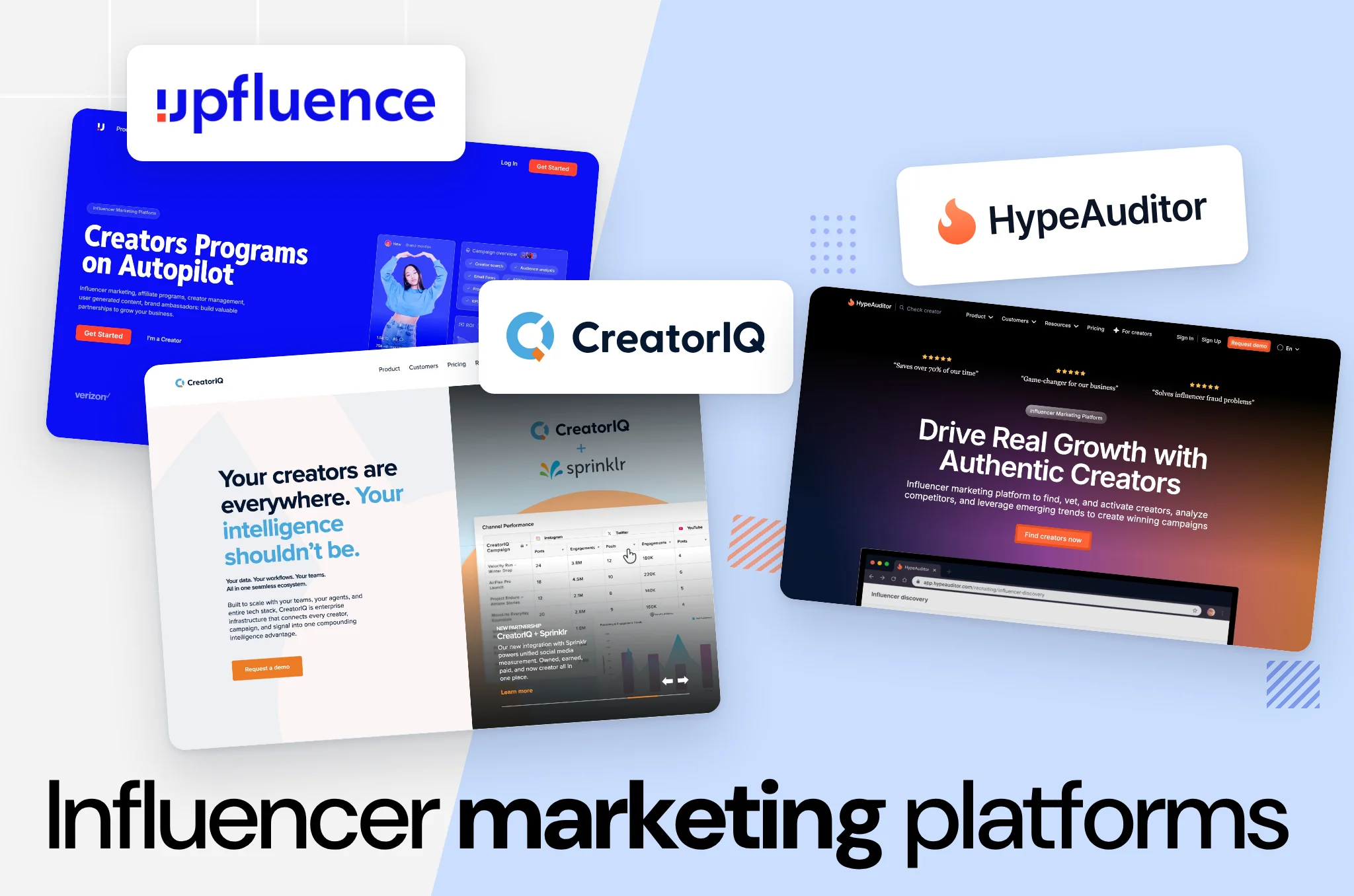
Upfluence vs CreatorIQ vs HypeAuditor is a comparison many brands and agencies make, because these three platforms appear on most influencer marketing shortlists but serve quite different needs.
Upfluence is built for eCommerce teams that want creator search, outreach, product seeding, affiliate codes and payouts tied to store sales. The main difference between CreatorIQ and HypeAuditor is depth versus breadth of use: CreatorIQ is an enterprise system for multinational brands coordinating creators across numerous teams and partner agencies, while HypeAuditor is an analytics-first platform best known for audience quality scoring, fraud detection and market research, with a much lower entry price.
Choosing between them depends on your budget, how many creators you manage and whether sales, governance or research matters most. Below, we look at Upfluence vs CreatorIQ vs HypeAuditor feature by feature, including pricing and real-world fit, so you can choose the platform that suits your brand.
Upfluence vs CreatorIQ vs HypeAuditor
Influencer Discovery and Database
HypeAuditor has the largest database of the three, with more than 227 million accounts, 35+ filters and an Account Quality Score that flags fake or low-quality audiences, which makes it a favorite for careful creator vetting. CreatorIQ builds its search on proprietary Creator Graph data plus official platform feeds and layers SafeIQ safety checks on top, while Upfluence is the only one of the three that can spot creators inside a brand's Shopify customer list.
Suggestion: HypeAuditor is the strongest pick for research-heavy discovery, while Upfluence suits brands that want to recruit from their customer base.
Influencer Outreach
On Upfluence, the Jaice assistant drafts first emails, chases unanswered messages and helps settle creator fees, all from the brand's existing mailbox. HypeAuditor sends personalized emails in bulk and can launch AI-written outreach in a single click with a monthly email allowance, whereas CreatorIQ is set up to bring creators into long-running enterprise programs rather than to send large volumes of cold email.
Suggestion: Teams that send a lot of outreach will get the most automation from Upfluence.
CRM and Campaign Management
Governance is CreatorIQ's core strength, letting several brands, regions and agency partners work in one controlled system. Upfluence offers a CRM with contracts, recruitment pages and a creator marketplace, and HypeAuditor covers offers, contracts and content approval inside its campaign module.
Suggestion: CreatorIQ is the natural fit for multinational teams, while Upfluence and HypeAuditor are easier to run for single-brand teams.
Reporting and Analytics
Spend, cost per engagement, CPM, EMV and ROI all appear in HypeAuditor's campaign stats, and its competitor and market modules show how a brand stacks up in its category. CreatorIQ offers enterprise reporting, benchmarking and earned media measurement, while Upfluence focuses on sales and ROI per creator, including purchases made on Amazon.
Suggestion: Choose HypeAuditor or CreatorIQ for market and competitor insight, and Upfluence when revenue per creator is the main metric.
Product Gifting
Upfluence has the most developed gifting workflow of the three, letting creators choose products from the live store catalogue within the brand's limits across Shopify, WooCommerce, Magento and BigCommerce. CreatorIQ supports product ordering through Shopify and measures the lift from gifted products, while HypeAuditor allows free product orders through a connected Shopify store without a dedicated seeding workflow.
Suggestion: Brands that seed products at scale will find Upfluence the most practical option.
UGC Collection
None of the three offers a full content library today: Upfluence handles UGC programs and pushes reposts through Hootsuite, HypeAuditor logs campaign posts automatically, and CreatorIQ's promised content hub has not launched yet.
Suggestion: If reusing creator content is a priority, confirm each platform's current content tools during the demo.
Pricing
HypeAuditor is the easiest to try, since brands can begin for free and upgrade to Basic at $299 a month on a yearly plan, with PRO and Enterprise quoted separately. Upfluence uses quote-based modules with a fixed annual fee and a 12-month minimum, and CreatorIQ's enterprise deals are said to cost between $30,000 and $59,500 annually.
Suggestion: HypeAuditor fits smaller budgets, Upfluence fits mid-size eCommerce programs, and CreatorIQ is priced for large enterprises.


Upfluence Overview
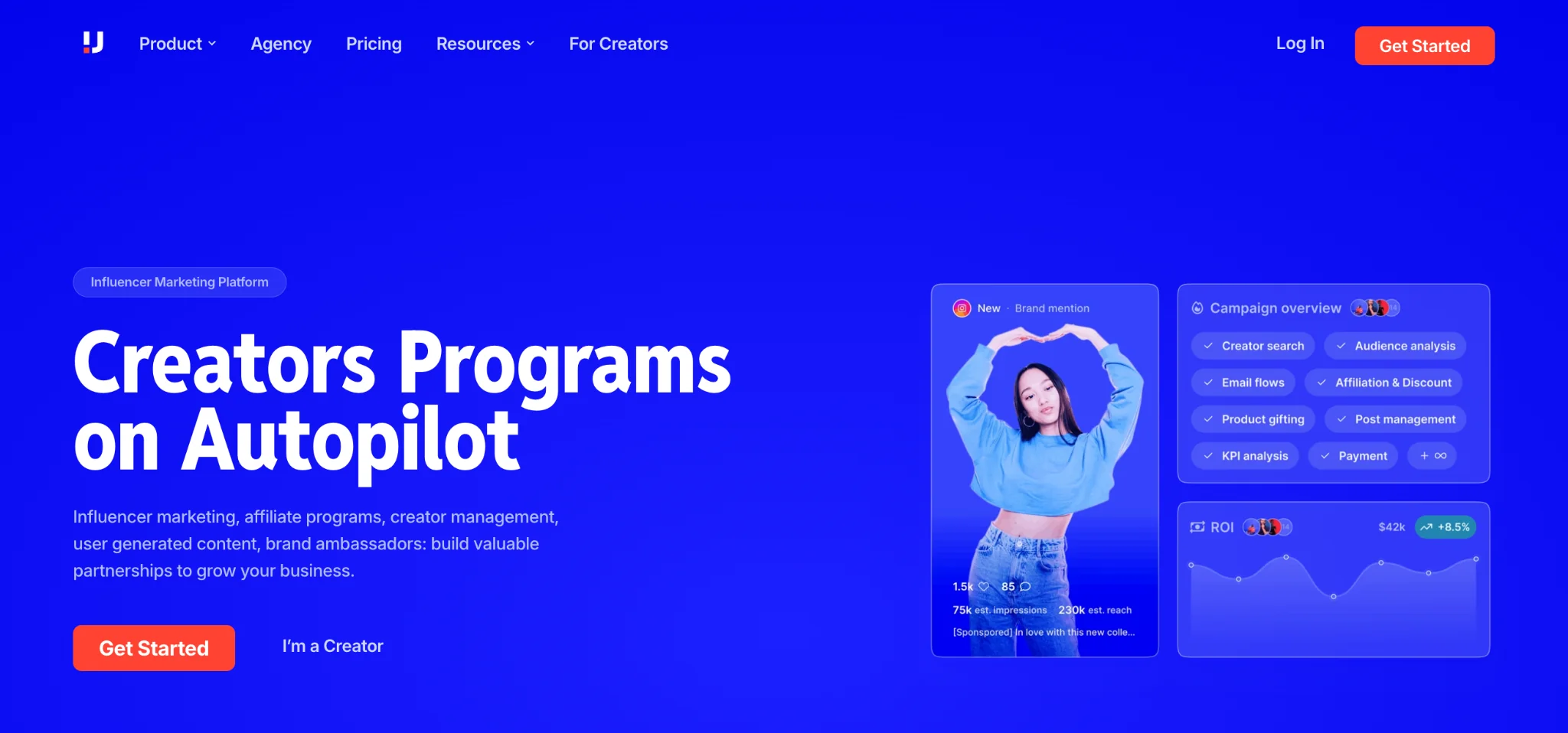
Brands such as Verizon, Philips and HelloFresh are among the 1,300-plus clients that run creator and affiliate programs on Upfluence, a company launched in 2013 by founders based in New York and Lyon. Most of its customers are online retailers, and the platform now leans heavily on Jaice, an AI assistant that prepares creator lists, writes outreach and keeps follow-ups on schedule.
Key Features
- Creator Filters and Lookalikes: Lists can be built from audience, topic and engagement filters or from creators who resemble a strong existing partner.
- Buyer Matching: Connecting Shopify reveals which existing customers have a social audience worth activating.
- Jaice Assistant: AI prepares messages, chases replies and helps the team agree on creator rates.
- Commission Tracking: Every creator receives an automatically generated code or link that feeds sales reporting.
- Gifting From the Catalogue: Creators pick items from the live store, and the brand signs off each order with one click.
- Creator Payments: Bulk payouts run in several currencies, with identity checks and US tax documents handled by the platform.
Platform Coverage
Upfluence lets brands search Pinterest, Twitch, YouTube, TikTok and Instagram creators.
Standout Features
- Turning Shoppers Into Partners: Buyers who already like the products can be invited into affiliate programs.
- Amazon Sales Data: Amazon Attribution shows which creators drive marketplace orders.
- Less Manual Email Work: Jaice takes over much of the back-and-forth with creators.
Limitations
Upfluence asks for a yearly commitment and only shares prices on a call, several reviewers describe the way lists and campaigns are organized as awkward, and response times from support reportedly slow down after the onboarding period.
Integrations
- Shopify: Pull products into gifting, create discount codes and attribute orders to creators.
- WooCommerce, Magento and BigCommerce: Run the same seeding and sales tracking on other store platforms.
- Gmail and Outlook: Keep creator emails in the brand's own mailbox while syncing them into Upfluence.
- Amazon Attribution: Link creator campaigns to sales made on Amazon.
- Hootsuite: Repost creator content to the brand's own social channels.
Pricing
Upfluence quotes each customer after a discovery call, choosing from three modules that range from creator search to a fully automated program with payments. Customers pay a flat yearly amount rather than a cut of sales, with a minimum term of twelve months, and our Upfluence pricing review explains the modules in detail.
Reviews
4.6/5.0 (G2, 140 reviews)
CreatorIQ Overview
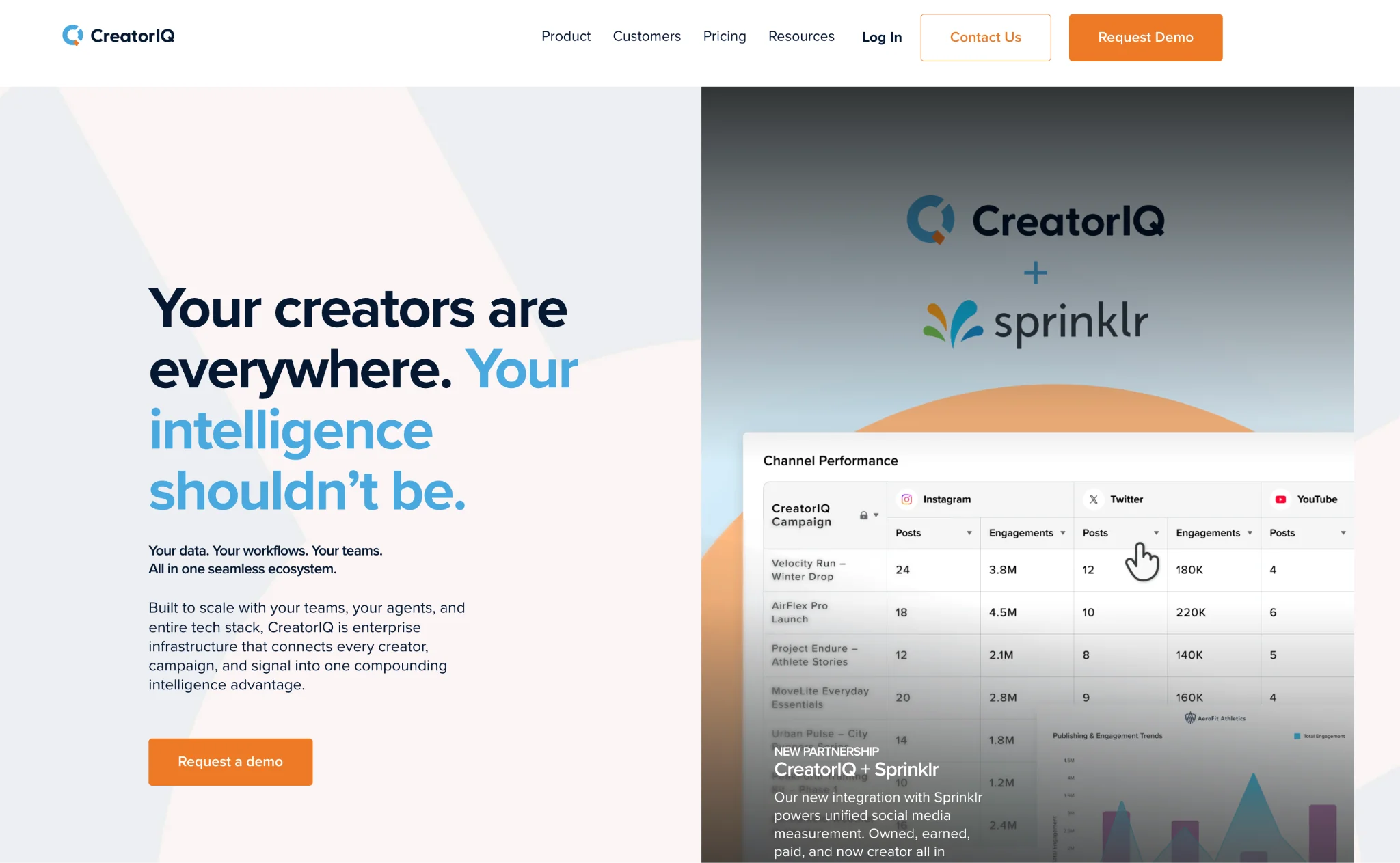
Google, Delta, YETI and Beiersdorf are among the more than 1,300 organizations using CreatorIQ, a Los Angeles company that analyst firms rank among the leaders in enterprise creator marketing. Its strength is control at scale, so global marketing teams can share creator data, apply brand safety rules and report results consistently across regions and agencies.
Key Features
- AI Discovery on the Creator Graph: Creator search and vetting use CreatorIQ's proprietary dataset together with official platform data.
- SafeIQ Screening: AI reviews each creator's past posts for content that could create reputational risk.
- Recruit: Creators are invited, onboarded and organized into ongoing programs.
- Convert: Affiliate programs plug into networks such as Impact, Awin and Rakuten.
- BenchmarkIQ: Results are placed side by side with competitor and category data.
- Centralized Payments: CreatorIQ Pay handles creator compensation across markets.
Platform Coverage
CreatorIQ supports creators on Snapchat, Facebook, YouTube, TikTok and Instagram, as well as Amazon creators.
Standout Features
- Control Across Regions: Global teams, local markets and agencies share one governed workspace.
- Reputation Protection: SafeIQ makes brand safety part of every creator decision.
- Connected Enterprise Stack: Links to Sprinklr, DocuSign, Tableau and leading affiliate networks.
Limitations
Budgets usually need to start near $30,000 a year because pricing is enterprise-only, new users report that discovery takes time to master, and the central content hub has not yet launched.
Integrations
- Shopify: Give creators product access and attribute sales through links and codes.
- Official platform APIs: Meta, TikTok and YouTube supply first-party audience data.
- Affiliate networks: Impact, CJ and Rakuten handle commission tracking.
- DocuSign: Contracts are signed digitally inside the workflow.
- Tableau: Creator results feed into company BI dashboards.
Pricing
CreatorIQ quotes every contract individually and sells on yearly terms, with reported deals falling between roughly $30,000 and $59,500 per year. Our CreatorIQ pricing review looks at what drives that range.
Reviews
4.5/5.0 (Capterra, 17 reviews)
HypeAuditor Overview
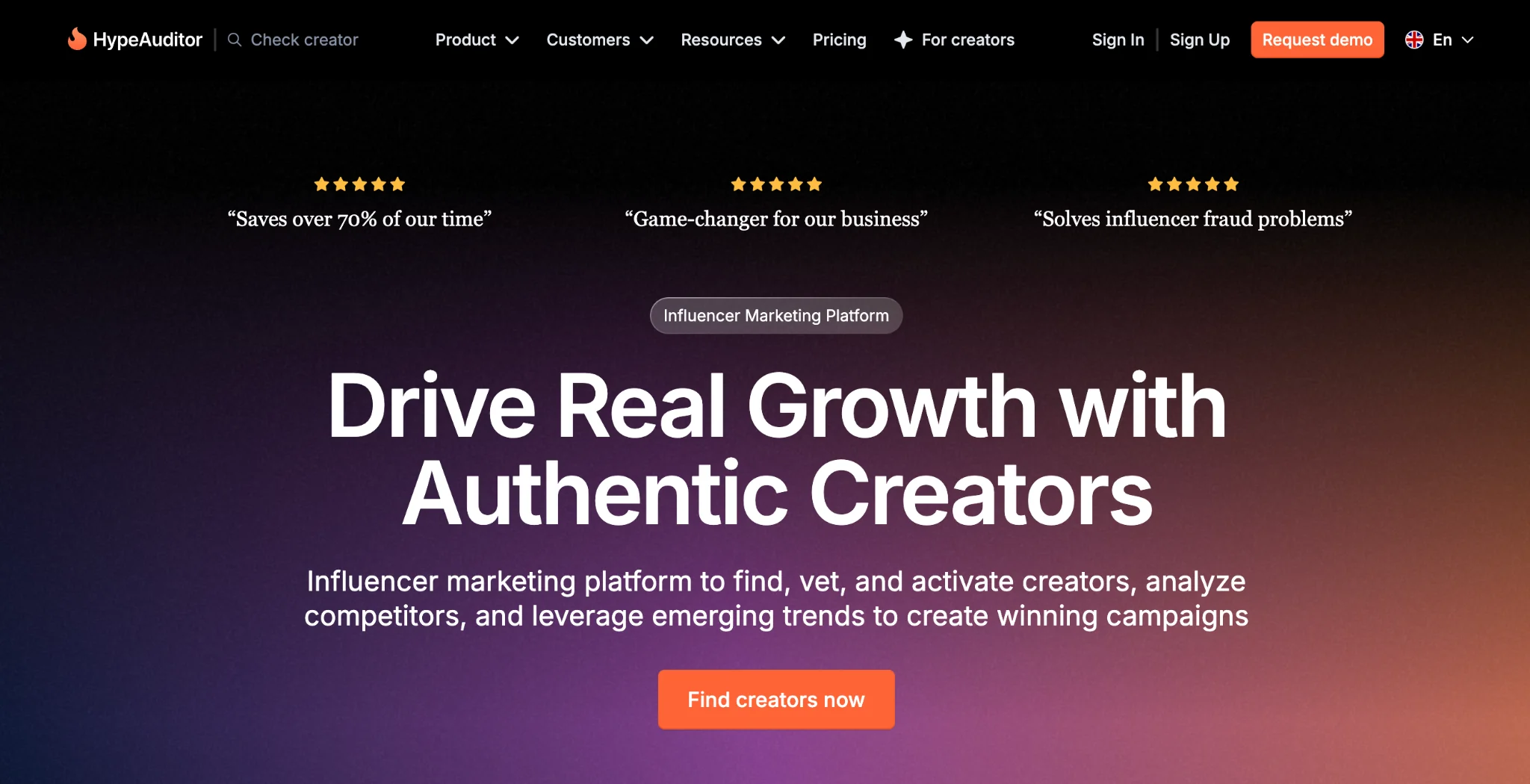
HypeAuditor was founded in 2017 by Alexander Frolov and Leonid Zhavoronkov and is now headquartered in Indianapolis, with brand and agency users that include Philips, Michelin and Ogilvy. It made its name by spotting fake followers and scoring audience quality, and over time it has grown into a broader platform with outreach, campaign management, competitor tracking and market research. Teams focused mainly on research can also browse our roundup of influencer discovery tools.
Key Features
- 227M+ Account Database: More than 35 filters, AI Search and lookalike search help narrow down creators.
- Audience Quality Checks: AI fraud detection estimates how real and relevant each creator's followers are.
- Personalized Bulk Email: Outreach goes out in batches, with an AI option to launch it in one click.
- Campaign Module: Offers that creators accept with a click, custom contracts and content approval are built in.
- Competitor Tracking: Brands monitor which creators and campaigns rivals are investing in.
- Market Reports: Category data highlights trends, benchmarks and top creators by market.
Platform Coverage
HypeAuditor includes Twitch, X, YouTube, TikTok and Instagram.
Standout Features
- Trusted Fraud Scoring: Its audience quality analysis is one of the best-known in the industry.
- Market Intelligence: Competitor and category data help with planning.
- Accessible Entry: A free starting tier and paid plans from $299 a month.
Limitations
Several advanced tools, including AI Search, quality score filtering and competitor tracking, sit on the PRO and Enterprise tiers, reviewers often ask for deeper reporting dashboards, and gifting and content features are lighter than on commerce-led platforms.
Integrations
- Shopify: Tie creator promo codes to clicks, revenue and ROI.
- Zapier: Send HypeAuditor data to other business apps.
- HypeAuditor API: Use discovery, report and market data in internal tools.
- Chrome extension: Check a creator's analytics directly on their profile.
- PayPal: Keep track of payments made to creators.
Pricing
Brands can start on free access to media plans and campaign tools, then move to Basic from $299 a month on annual billing or to PRO and Enterprise on custom quotes. Two-year contracts receive the best rates, and trials are arranged through the sales team.
Reviews
4.6/5.0 (G2, 271 reviews)
Final Thoughts
Upfluence, CreatorIQ and HypeAuditor each fit a different kind of team. Upfluence works best for eCommerce brands that want AI-assisted outreach, catalogue-based gifting, affiliate codes and Amazon tracking, CreatorIQ belongs in large organizations where governance and brand safety must hold across regions and agency partners, and HypeAuditor is the budget-friendly pick for teams whose main job is vetting creators, catching fraud and researching their market.
Before committing, list the steps your team handles every week and check which platform covers most of them on one contract. Brands that want discovery, outreach, gifting, affiliate tracking and payouts together on published monthly plans may also want to look at Influencer Hero, and teams that prefer creators applying to them can explore influencer databases and marketplaces as a starting point.