

Linqia Alternatives: Best Influencer Marketing Platforms
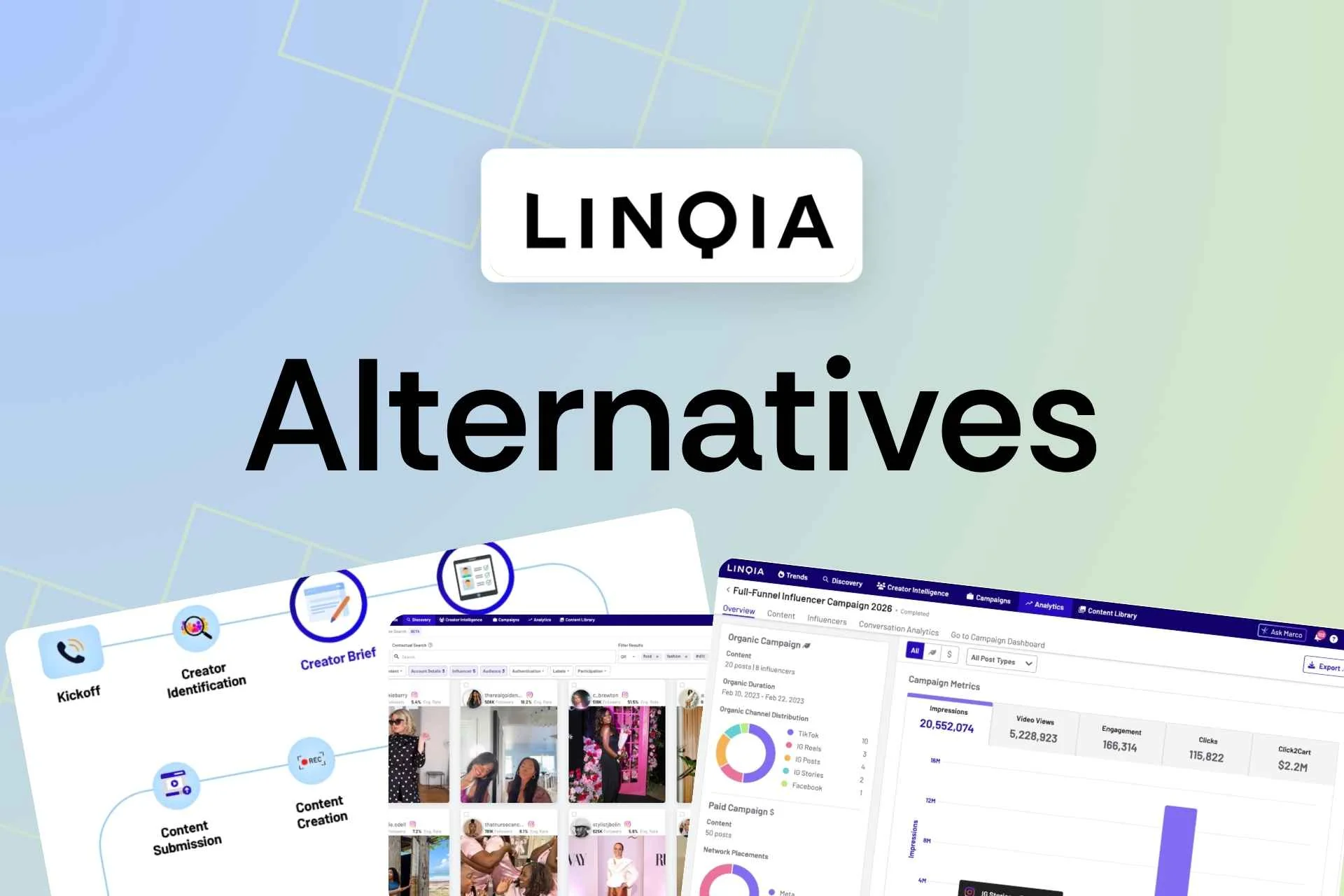
Managing influencer campaigns today requires more than spreadsheets and manual outreach—brands and agencies rely on influencer marketing platform to streamline creator discovery, automate outreach, manage campaign workflows, and track performance across channels. Linqia is a well-known option, particularly for enterprise teams looking for a managed, performance-driven approach, offering strong campaign execution, creative strategy, and paid amplification.
However, it also comes with trade-offs that push many teams to explore Linqia alternatives. Limited pricing transparency makes it difficult to evaluate costs upfront, its enterprise-oriented model can be expensive for smaller teams, and its managed-service approach may not suit marketers who want full control through a self-serve platform.
In this guide, we’ll compare 10 of the best Linqia alternatives—CreatorIQ, Upfluence, Traackr, Influencer Hero, Later, Klear, Lefty, IMAI (InfluencerMarketing.AI), Glewee, and Kolsquare—to help you find the right platform for your needs.
Criteria for Suggesting Platform Alternatives
Core Features
Evaluation of each platform’s essential capabilities, including influencer discovery, outreach, CRM, campaign reporting, gifting, UGC and content collection, affiliate tracking and payments, storefronts, application pages, and AI-powered tools.
Supported Social Media Platforms
Assessment of how well each platform integrates with major social networks such as Instagram, YouTube, TikTok, Facebook, Pinterest, and many more
Pricing & Contract Flexibility
Comparison of pricing models, subscription costs, and contract requirements to help brands choose solutions that match their budget and scalability needs.
Standout & Differentiating Features
Highlighting unique or innovative functionalities that set each platform apart, such as real-time tracking dashboards, creator benchmarking, TikTok email discovery, or advanced automation tools.
Customer Reviews & User Satisfaction
Analysis of verified user feedback from credible platforms like G2, TrustRadius, Capterra, focusing on usability, reliability, value for money, customer support, and real-world performance.
Linqia Overview
Linqia is a full-service, tech-enabled influencer marketing partner built for enterprise brands and agencies that want influencer campaigns tied to measurable business outcomes. Its proprietary platform, Resonate, combines AI-powered creator selection, campaign workflow management, paid amplification, real-time reporting, and closed-loop measurement, while Linqia’s team supports strategy, negotiations, creative direction, content rights, and campaign execution. The company positions itself around “guaranteed influencer ROI” and has worked with 650+ brand partnerships since its founding in 2012.
Key Features
- AI-powered influencer discovery: Linqia uses 1.5B data points, predictive algorithms informed by 25M+ influencer posts, audience data, and Google Vision-powered creator selection to identify creators likely to perform for a specific campaign objective.
- Managed campaign execution: Beyond software, Linqia provides campaign strategy, creator negotiations, content rights support, custom music guidance, and hands-on service for brands that do not want to manage every workflow manually.
- Creative strategy and briefing: Linqia uses performance data to guide creator briefs, creative direction, and content formats, helping brands reduce guesswork before campaigns launch. Its newer Brief AI feature is designed to accelerate campaign briefing and improve content alignment.
- Centralized approvals and collaboration: Resonate includes embedded workflows for creative briefs, creator selection, content review, comments, feedback, approvals, and reporting in one dashboard.
- Organic and paid performance tracking: Linqia reports on both organic influencer performance and paid media amplification from a single dashboard, giving teams visibility into how creator assets perform across channels.
- Real-time optimization: The platform uses in-flight performance data to identify top-performing assets, optimize campaigns while they are live, and amplify the best-performing content through paid media.
- Closed-loop measurement: Linqia supports measurement across upper-funnel and lower-funnel goals, including brand lift, engagement, traffic, conversions, product sales, and ROI.
- Content repurposing and scaling: Resonate Studio helps brands edit, resize, subtitle, brand, and export influencer content for Instagram, TikTok, YouTube, paid social, display, online video, CTV, DOOH, and other marketing placements.
Platform Coverage
Instagram, TikTok, YouTube
Pricing
Linqia does not publish standard self-serve pricing on its website. Its pricing is typically custom and tied to campaign goals rather than a fixed per-seat SaaS plan.
Third-party software listings show a starting price of $25,000, with no free trial available, though this should be treated as directional because Linqia’s current model is custom and enterprise-oriented.
Reviews
4.8/5.0 (G2)
Linqia Standout Features
- Resonate Studio for cross-channel content scaling: Linqia’s newer Resonate Studio turns influencer content into multi-format creative assets for social, paid media, display, online video, CTV, and DOOH. This is especially valuable for enterprise teams that want creator content to fuel more than one influencer campaign.
- Brief AI and Conversation Analytics: Linqia’s AI suite includes Brief AI and Conversation Analytics, designed to speed up campaign planning, improve briefing quality, and extract audience and content insights faster. Linqia reported that these tools helped campaigns launch 20% faster and generate 1.8x higher engagement in early usage
- Creator-led retail media offering: Linqia has expanded beyond traditional social campaigns into retail media, helping brands deploy creator content across retailer ecosystems such as Amazon, Walmart, Target, and Kroger, with attribution and sales lift measurement from retail media networks.
Limitations (Why Users Look for Linqia Alternatives)
Limited pricing transparency
Linqia does not publish clear package pricing, which makes it harder for smaller teams to compare costs upfront or determine whether the platform fits their budget before speaking with sales.
Enterprise-oriented cost structure
Public listings indicate a high starting cost, and Linqia’s managed-service model is generally better suited for larger brands than small businesses or lean in-house teams.
Less ideal for teams wanting self-serve control
Linqia is strong for brands that want a strategic partner, but teams looking for a pure DIY influencer database, lightweight CRM, or fast creator outreach tool may prefer alternatives with more self-service flexibility.
Potential overkill for smaller campaigns
Brands running simple gifting, nano-influencer, or affiliate campaigns may not need Linqia’s full-service strategy, paid amplification, retail media, and enterprise measurement capabilities.
Custom contracts may reduce flexibility
Because Linqia pricing is negotiated around goals and campaign scope, brands looking for monthly subscriptions, free trials, or transparent plan tiers may find alternatives easier to evaluate and adopt.
10 Best Influencer Marketing Platform Alternatives
| TOOL | REVIEWS | BEST FOR | TRIAL INFO | PRICING | ||
|---|---|---|---|---|---|---|
1 |

|
⭐ | Enterprise influencer marketing | Book Demo | Pricing | Website |
2 |

|
⭐ | Influencer discovery | Book Demo | Pricing | Website |
3 |

|
⭐ | Enterprise influencer analytics | Book Demo | Pricing | Website |
4 |

|
⭐ | Influencer CRM & automation | Book Demo | Pricing | Website |
5 |

|
⭐ | Social media & influencer campaigns | Book Demo | Pricing | Website |
6 |
|
⭐ | Influencer analytics | Book Demo | Pricing | Website |
7 |
|
⭐ | Influencer analytics & discovery | Book Demo | Pricing | Website |
8 |

|
⭐ | AI influencer discovery & analytics | Book Demo | Pricing | Website |
9 |
|
⭐ | Small brands running influencer and UGC campaigns | Book Demo | Pricing | Website |
10 |

|
⭐ | Data-driven influencer discovery & campaign analytics | Book Demo | Pricing | Website |
CreatorIQ
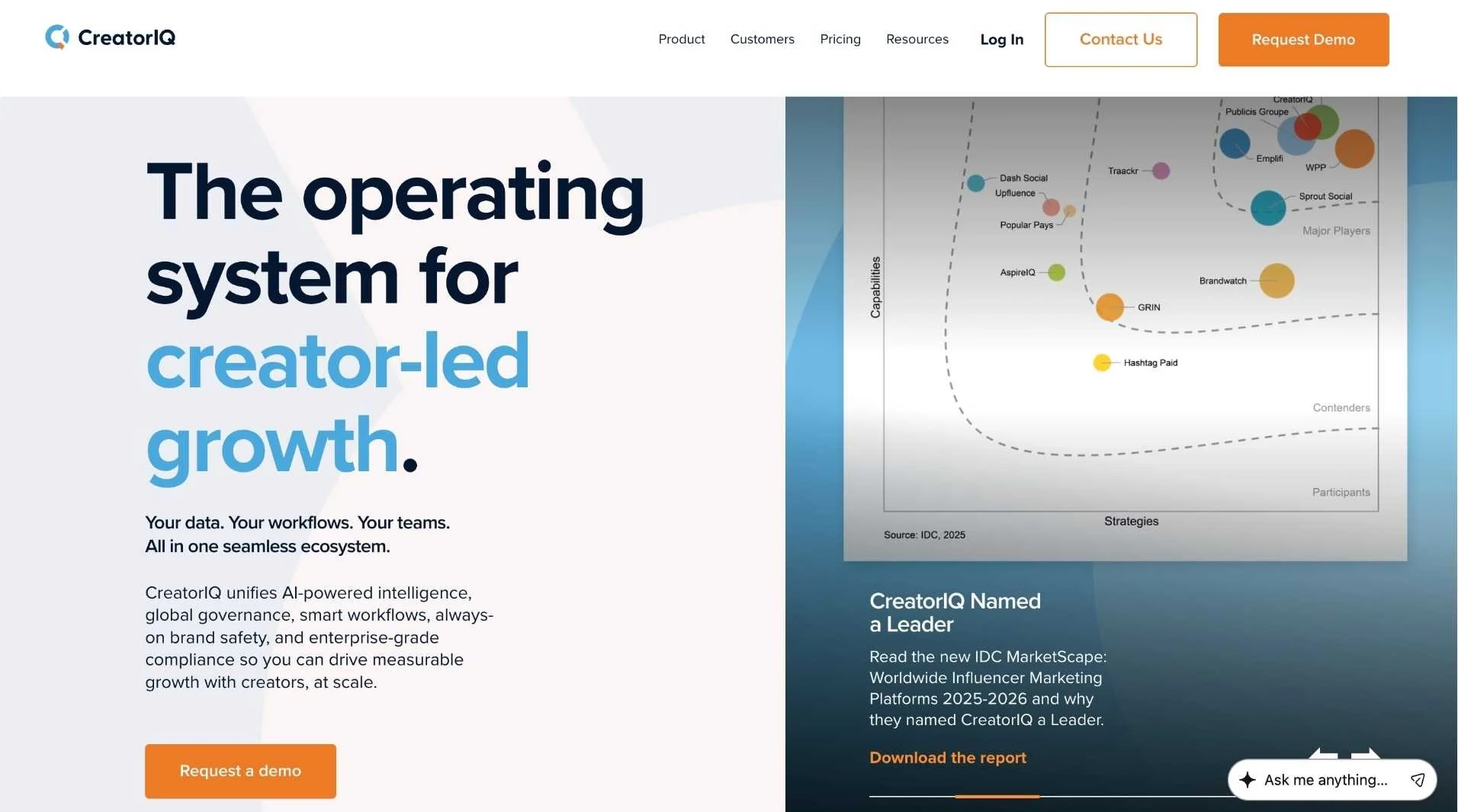
CreatorIQ is an enterprise-grade influencer marketing platform designed to manage the full influencer lifecycle—from discovery and vetting to campaign execution, payments, and reporting. Trusted by global brands like Disney, Coca-Cola, and Unilever, the platform differentiates itself through direct API integrations with major social platforms, providing highly reliable data and advanced analytics for large-scale influencer programs.
Key Features
- Advanced influencer discovery: Search any public creator (no opt-in required) using granular filters such as audience demographics, engagement rate, brand mentions, and content keywords.
- API-driven data accuracy: Direct integrations with platforms like Instagram, TikTok, and YouTube provide real-time, compliant data rather than scraped estimates.
- CRM and creator relationship management: Build private creator databases with tagging, notes, campaign history, and segmentation for long-term partnerships.
- Campaign workflow management: Create campaigns, assign deliverables, manage approvals, and generate briefs with built-in collaboration tools.
- Content approval and UGC library: Store, review, and repurpose influencer content with usage rights tracking.
- Payments and compliance: Built-in payment system handles payouts, tax documentation, and financial workflows.
- Custom reporting dashboards: Fully customizable analytics with live dashboards, exportable reports, and executive-ready visuals.
Platform Coverage
Instagram, YouTube, TikTok, Facebook, Twitter, Pinterest, and more.
Pricing
- Basic Plan: Starts at $35,000/year. Includes 1,000 contact creators per month
- Standard Plan: Starts at $50,000/year. Includes 2,500 contact creators per month
- Professional Plan: Starts at $90,000/year. Includes 5,000 contact creators per month
- Enterprise Plan: Starts at $200,000/year. Includes 7,500 contact creators per month
Reviews
4.4 / 5.0 (Capterra)
Standout Features
- API-first data infrastructure: Direct integrations with major social platforms ensure highly accurate, real-time influencer and campaign data.
- Enterprise-grade reporting dashboards: Fully customizable, shareable dashboards designed for executive stakeholders and global teams.
- Built-in payments and compliance system: Streamlines payouts, tax handling, and financial reporting for large-scale influencer programs.
Linqia vs CreatorIQ
Linqia operates as a managed service with strong strategic support and guaranteed outcomes, while CreatorIQ is more of a self-serve enterprise platform built for in-house teams that want full control over campaigns. CreatorIQ excels in data transparency and customization, whereas Linqia emphasizes done-for-you execution and performance guarantees.
Additionally, CreatorIQ’s pricing is structured and transparent (albeit expensive), while Linqia relies on custom campaign-based pricing, making CreatorIQ easier to benchmark but less flexible for short-term campaigns.
Upfluence
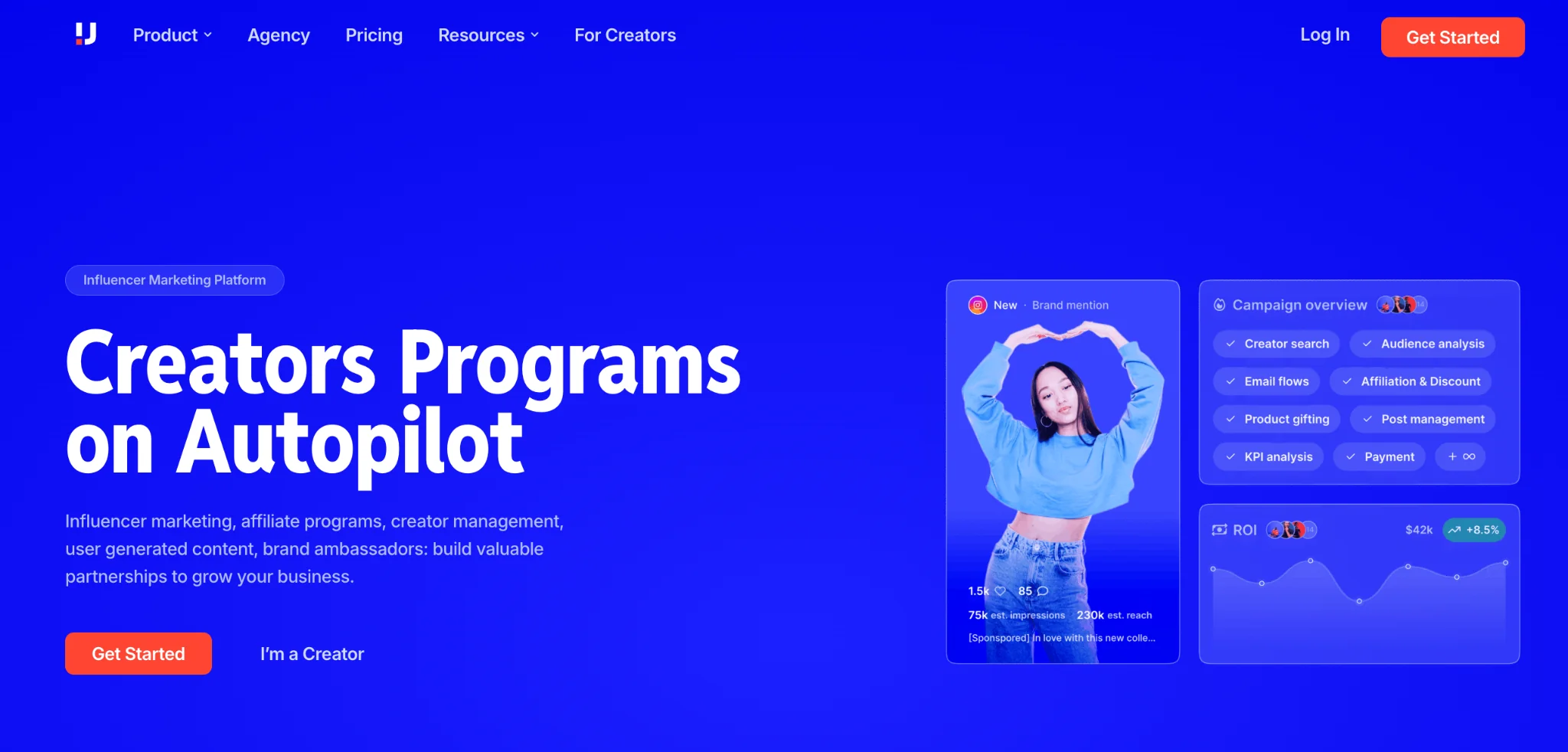
Upfluence is an all-in-one influencer marketing platform built primarily for eCommerce brands. It combines influencer discovery, outreach, CRM, affiliate tracking, and payments, with strong integrations for Shopify and Amazon—making it particularly appealing for performance-driven campaigns.
Key Features
- 12M+ influencer database: Discover creators using advanced filters like niche, engagement rate, and audience demographics.
- AI-powered outreach assistant (Jace AI): Automates email outreach and follow-ups to streamline influencer communication.
- CRM and campaign management: Manage influencer relationships, track communications, and oversee campaign progress in one place.
- Affiliate and eCommerce integration: Deep Shopify and Amazon integrations for tracking sales, commissions, and customer-influencer relationships.
- Social listening tools: Monitor brand mentions and trending content to inform campaigns.
- Creator payments: Handle bulk payments directly within the platform.
Platform Coverage
Instagram, TikTok, YouTube, Facebook, Twitch, Pinterest, and blogs.
Pricing
On average plans start around $2,000/month ($24,000 yearly)
Reviews
4.3 / 5.0 (Capterra)
Standout Features
- Deep Shopify & Amazon integration: Tracks influencer-driven sales and identifies customers who are influencers.
- Customer-to-creator conversion: Turns existing customers into brand advocates for higher ROI campaigns.
- AI-powered outreach automation: Streamlines influencer communication at scale with automated email flows.
Linqia vs Upfluence
Linqia focuses on managed, performance-driven campaigns with guaranteed outcomes, while Upfluence is a self-serve SaaS platform built for brands that want to run campaigns internally.
Upfluence stands out for eCommerce integrations and affiliate tracking, whereas Linqia is stronger in creative strategy, paid amplification, and enterprise-level campaign execution.
Traackr
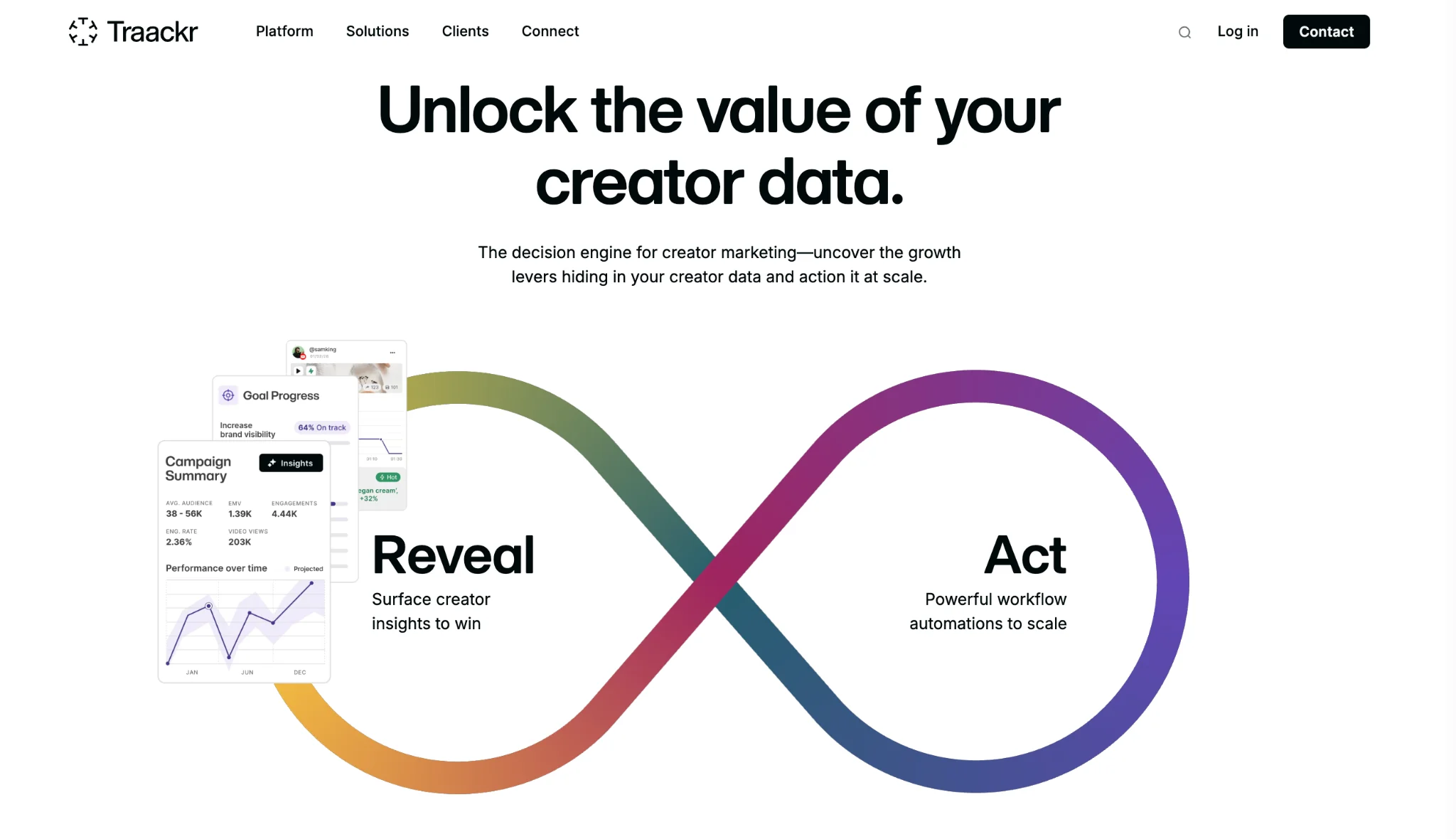
Traackr is an enterprise influencer marketing platform focused on performance measurement, benchmarking, and budget optimization. It is widely used by global brands that want to track ROI, compare campaigns across markets, and optimize influencer spend.
Key Features
- Influencer discovery: Access over 6M influencers with advanced filters and historical performance data.
- Campaign management & CRM: Track relationships, manage outreach, and centralize campaign workflows.
- Advanced analytics: Measure ROI using metrics like CPC, CPE, CPV, and engagement rates.
- Budget optimization tools: Allocate spend based on predicted performance and historical benchmarks.
- UGC tracking and repurposing: Collect and reuse influencer-generated content.
- Affiliate and payment tools: Manage commissions and payouts within the platform.
Platform Coverage
Instagram, TikTok, YouTube, Facebook, Pinterest, and Twitter (X).
Pricing
Plans usually start at $32,500/year.
Reviews
4.3/5.0 (G2)
Standout Features
- Brand Vitality Score (BVS): Proprietary metric combining visibility, influence, and trust into one benchmark score.
- Budget optimization calculator: Predicts ROI and recommends spend allocation per creator.
- Cost-per-metric dashboard: Tracks efficiency across CPC, CPE, CPV, and other performance metrics.
Linqia vs Traackr
Linqia focuses on campaign execution and managed services, while Traackr is more of a data and analytics platform built for performance tracking and benchmarking.
Traackr excels in ROI measurement and benchmarking, whereas Linqia is stronger in content production, paid amplification, and hands-on campaign delivery.
Influencer Hero

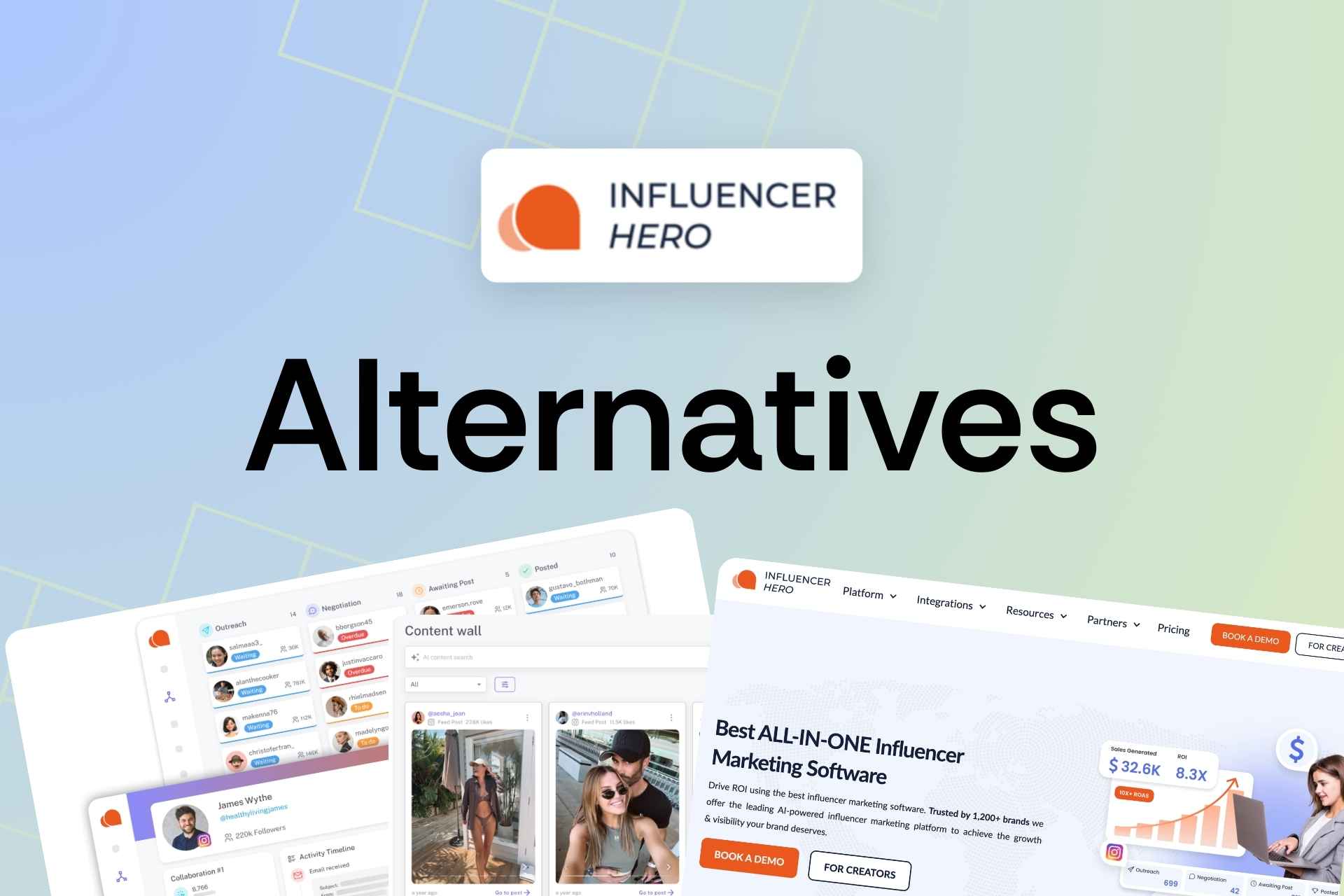
Influencer Hero is an all-in-one influencer marketing platform designed for scaling campaigns efficiently. It combines CRM, outreach automation, affiliate tracking, and analytics, with a strong focus on workflow automation and campaign orchestration.
Key Features
- Influencer discovery: Search creators across major platforms with advanced audience, engagement, location, and niche filters, plus fraud detection and lookalike recommendations
- Outreach & automation: Run personalized outreach at scale with AI-assisted messaging, automated follow-ups, and multi-step email sequences
- Influencer CRM: Centralize creator relationships with pipeline management for conversations, campaign stages, and deliverables
- Gifting workflows: Manage product seeding end-to-end with automated order creation, shipment tracking, and delivery monitoring
- Affiliate tracking & payouts: Create trackable links and discount codes, measure performance, and manage commissions and payments in one workflow
- Campaign analytics & ROI tracking: Track engagement, clicks, conversions, and revenue through real-time dashboards tied to campaign performance
- UGC library: Automatically capture and organize creator content in the content library for reuse across paid ads, social media, and eCommerce channels
- Application pages & storefronts: Build branded creator application pages and enable influencers to promote products through personalized storefronts
Platform Coverage
Instagram, TikTok, YouTube, Facebook, Pinterest, Snapchat, X, and Twitch
Pricing
Influencer Hero offers flexible pricing based on outreach volume, and you can have unlimited creators in your CRM with Influencer Hero:
- Standard — $649/month (up to 1,000 reachouts/month)
- Pro — $1,049/month (up to 5,000 reachouts/month)
- Business — $2,490/month (up to 10,000 reachouts/month)
- Custom / Agency — Tailored pricing
Reviews
5.0/5.0 (Capterra)
Standout Features
- AI Workflow Optimization: From discovery to outreach, Influencer Hero reduces manual effort with smart automations, predictive success scoring, and campaign suggestions.
- Chrome Extension: Browse Instagram, TikTok, or YouTube and instantly pull up key influencer stats—then add them directly to your campaigns.
- AI-Powered UGC Search: With AI and UGC search, brands can quickly find influencer-generated content based on keywords, visuals, captions, or campaign context. This helps teams reuse high-performing UGC, identify top creators, and streamline content discovery for paid ads, social media, and ecommerce use cases.
Linqia vs Influencer Hero
Linqia is a managed service platform for enterprise campaigns, while Influencer Hero is a self-serve SaaS tool focused on automation and scalability.
Influencer Hero provides more hands-on control and lower pricing tiers, whereas Linqia delivers strategic support, paid amplification, and guaranteed outcomes.
Later
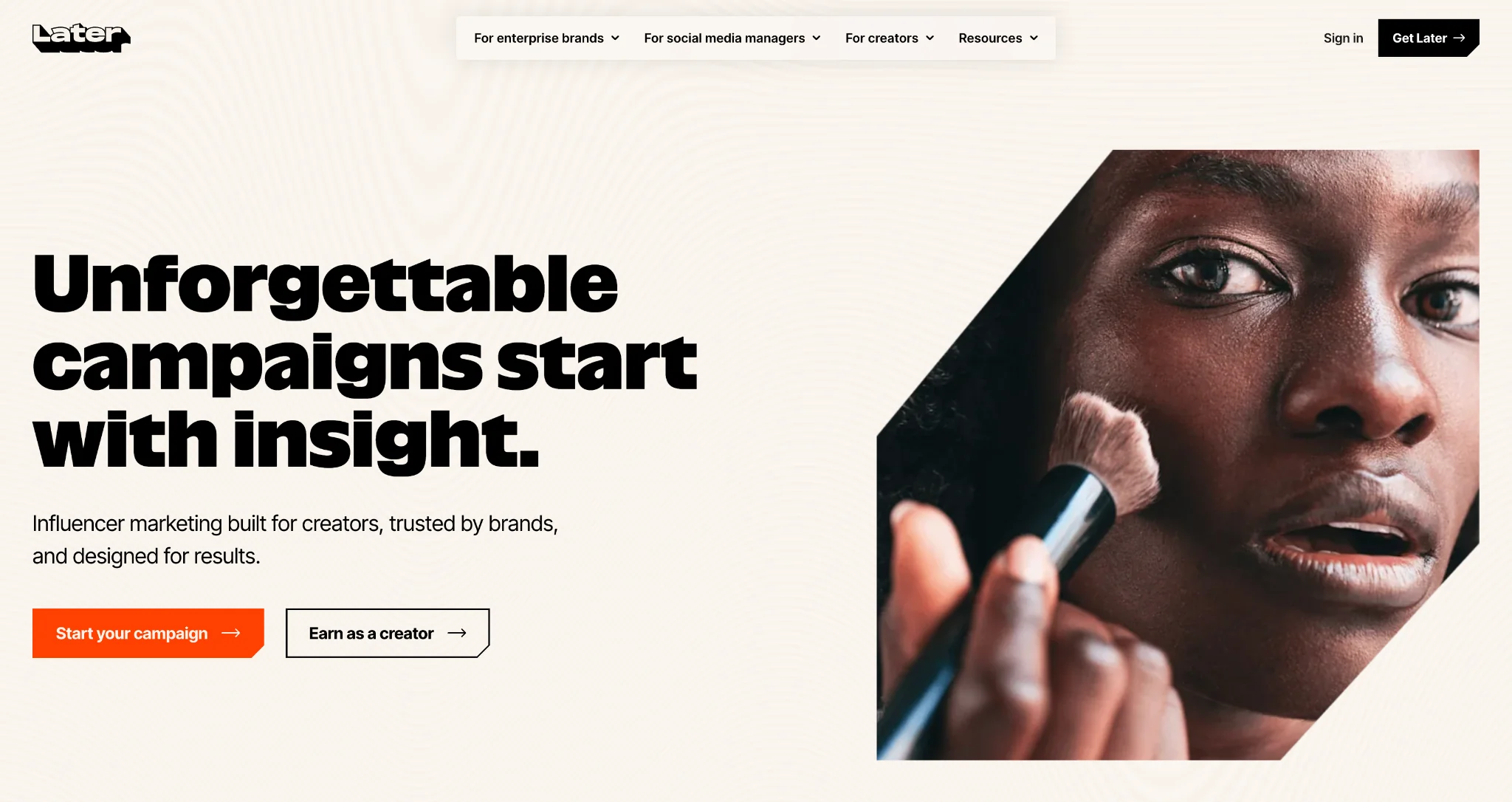
Later is a social media management and influencer marketing platform designed to help brands plan, schedule, and analyze content while collaborating with creators. It is particularly popular among SMBs and mid-sized brands looking for an intuitive, visual-first workflow.
Key Features
- Influencer discovery (Later Influence): Search creators based on audience demographics, engagement, and niche.
- Campaign management: Coordinate influencer collaborations, track deliverables, and manage approvals.
- Content scheduling: Plan and publish posts across multiple social channels from one dashboard.
- Analytics and reporting: Track engagement, performance, and campaign results.
- Link in bio tools: Drive traffic and conversions from social campaigns.
- Content calendar and collaboration tools: Visual planning for campaigns and social media strategy.
Platform Coverage
Instagram, TikTok, YouTube, Pinterest, Snapchat, Facebook, and Twitch.
Pricing
There are different plans:
- Essentials Plan: Starts at $28,500/year. Best for brands starting in influencer marketing.
- Pro Plan: Starts at $42,000/year. Best for data and automation to make your campaigns run faster and achieve better ROI.
- Premier Plan: Starts at $60,000/year. Everything you need for a scaled influencer program.
All plans come with an additional one-time onboarding fee of $5,000 for all new customers.
Reviews
4.4 / 5.0 (Capterra)
Standout Features
- Visual content calendar: Industry-leading drag-and-drop planner for social media campaigns.
- Integrated social + influencer workflow: Combines influencer marketing with content scheduling in one tool.
- Link in bio monetization tools: Helps drive measurable traffic and conversions from influencer content.
Linqia vs Later
Linqia is built for enterprise influencer campaigns with managed execution, while Later is primarily a social media management tool with influencer capabilities.
Later is significantly more affordable and accessible, making it ideal for smaller teams, whereas Linqia provides advanced measurement, paid media amplification, and full-service campaign support for large-scale initiatives.


Klear (by Meltwater)
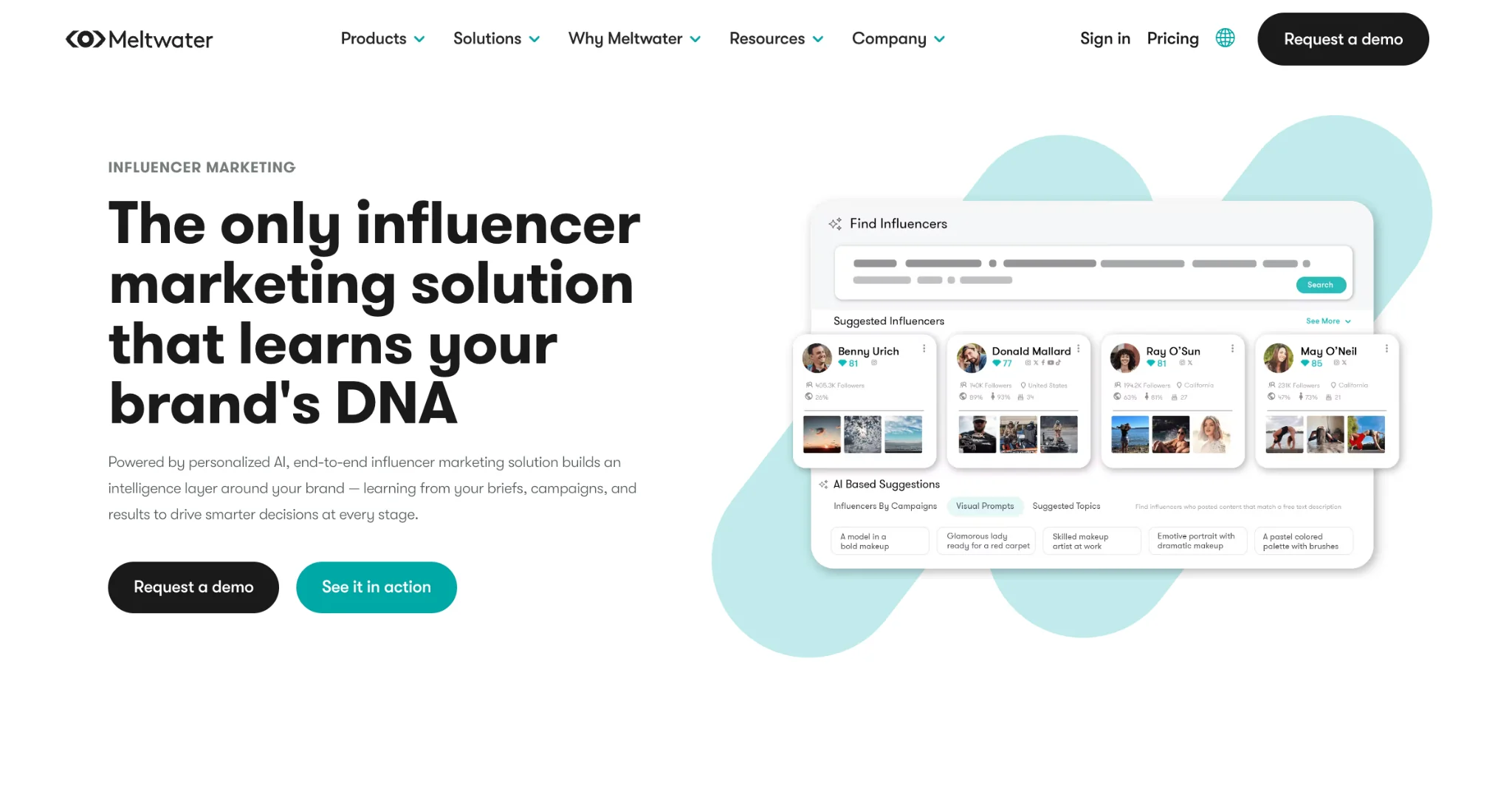
Klear is an influencer marketing platform owned by Meltwater, designed to help brands discover, manage, and measure influencer campaigns at scale. It combines influencer discovery with social listening and media intelligence, making it particularly valuable for brands that want to integrate influencer marketing with broader PR and brand monitoring efforts.
Key Features
- 30M+ influencer database: Access a large global pool of creators with advanced filtering by niche, audience demographics, engagement, and brand collaborations.
- AI-powered “True Reach”: Estimates actual reach instead of inflated follower counts, improving campaign forecasting accuracy.
- Visual and keyword search: Discover creators using keywords or image-based searches to match content themes.
- Campaign management tools: Manage influencer collaborations, deliverables, and communications within a centralized dashboard.
- Integrated communication (Connect): Chat with influencers directly without relying on external email or DMs.
- Performance tracking & reporting: Track reach, engagement, ROI, sentiment, and affiliate metrics with exportable reports.
- Social listening integration: Monitor brand mentions, competitors, and trends as part of the broader Meltwater suite.
Platform Coverage
Klear supports major social media platforms including Instagram, YouTube, Twitter, TikTok, and Facebook. It enables brands to work with influencers across these platforms to create comprehensive and targeted campaigns.
Pricing
Start from $2,300/month
Reviews
4.3/5.0 (G2)
Standout Features
- True Reach AI metric: Filters out inflated follower counts to show realistic campaign reach.
- Integrated social listening ecosystem: Combines influencer marketing with PR, brand monitoring, and media intelligence.
- Visual influencer search: Find creators based on image recognition and content themes.
Linqia vs Klear
Linqia focuses on managed influencer campaigns with guaranteed performance, while Klear is a data-driven platform integrated into a broader marketing intelligence suite.
Klear stands out for social listening and analytics depth, whereas Linqia excels in creative execution, paid amplification, and hands-on campaign delivery.
Lefty
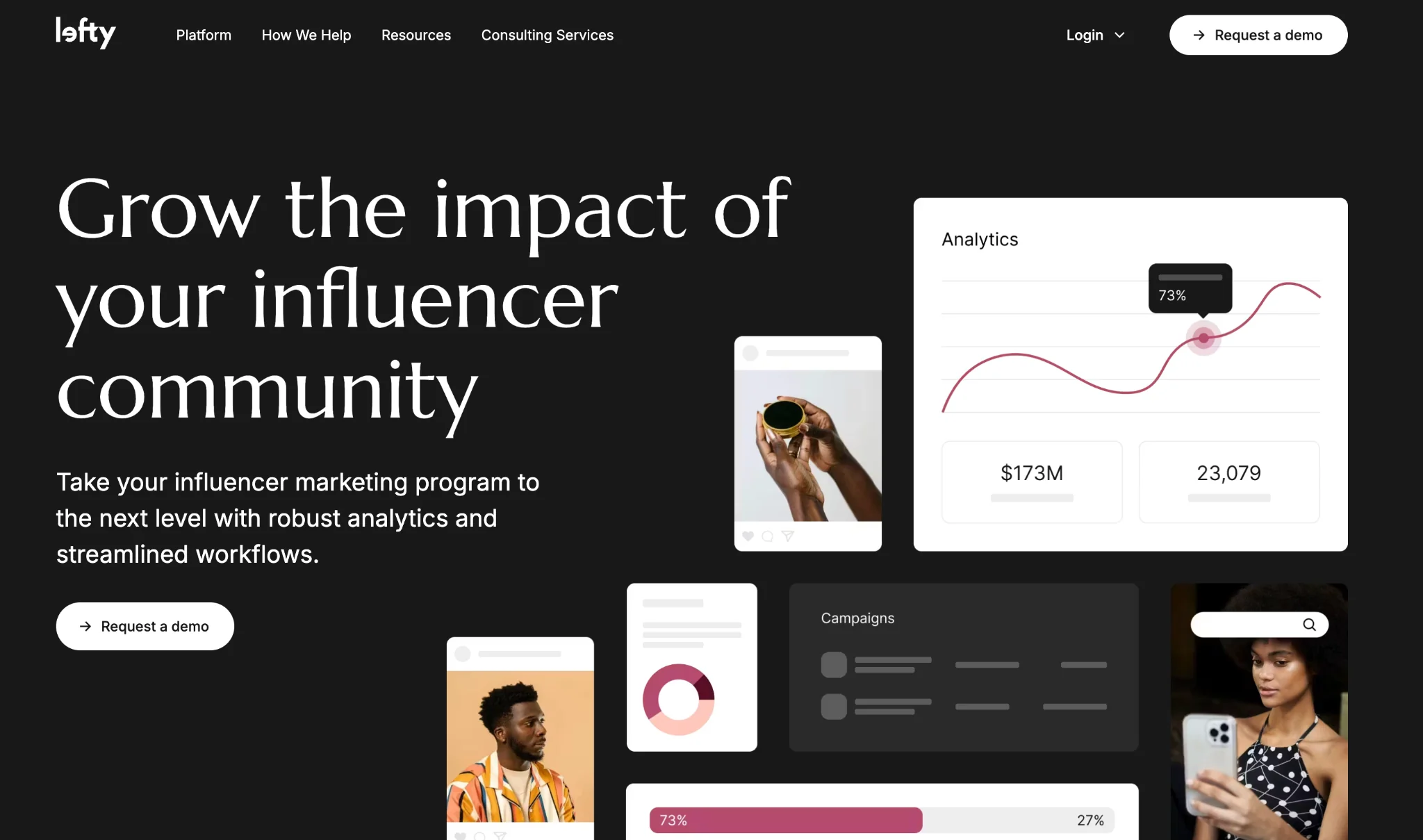
Lefty is a data-driven influencer marketing platform designed for brands and agencies that prioritize performance analytics and campaign benchmarking. It focuses heavily on real-time insights, audience quality analysis, and competitive intelligence to help marketers optimize influencer strategies.
Key Features
- Influencer discovery engine: Search creators using filters like audience demographics, engagement rate, and content category.
- Real-time campaign tracking: Monitor performance metrics such as reach, engagement, and earned media value as campaigns run.
- Competitive benchmarking: Analyze competitors’ influencer campaigns to identify trends and opportunities.
- Audience quality analysis: Evaluate follower authenticity, demographics, and brand affinity.
- Content tracking: Automatically collect and analyze influencer posts tied to campaigns.
- Custom reporting dashboards: Generate performance reports with actionable insights for optimization.
Platform Coverage
Lefty covers Instagram, TikTok, YouTube, Facebook, Pinterest, Snapchat, Twitch, and X (Twitter.
Pricing
Starting Price: ~€590 per month.
Pro Plan: ~€990/month, including 2 users, 5 campaigns, and unlimited reports.
Premium Plan: ~€1,690/month, which adds a dedicated manager.
Premium+ Plan: ~€3,490/month for 10 users and 25 campaigns.
Reviews
4.7 / 5.0 (G2)
Standout Features
- Real-time campaign analytics: Track influencer performance while campaigns are live.
- Competitive benchmarking tools: Compare brand performance against competitors in the same industry.
- Audience quality scoring: Deep analysis of follower authenticity and demographics.
Linqia vs Lefty
Linqia is built for execution and managed services, while Lefty is more focused on analytics and campaign intelligence.
Lefty provides stronger benchmarking and competitive insights, whereas Linqia offers creative strategy, influencer sourcing, and campaign management support.
IMAI (InfluencerMarketing.AI)
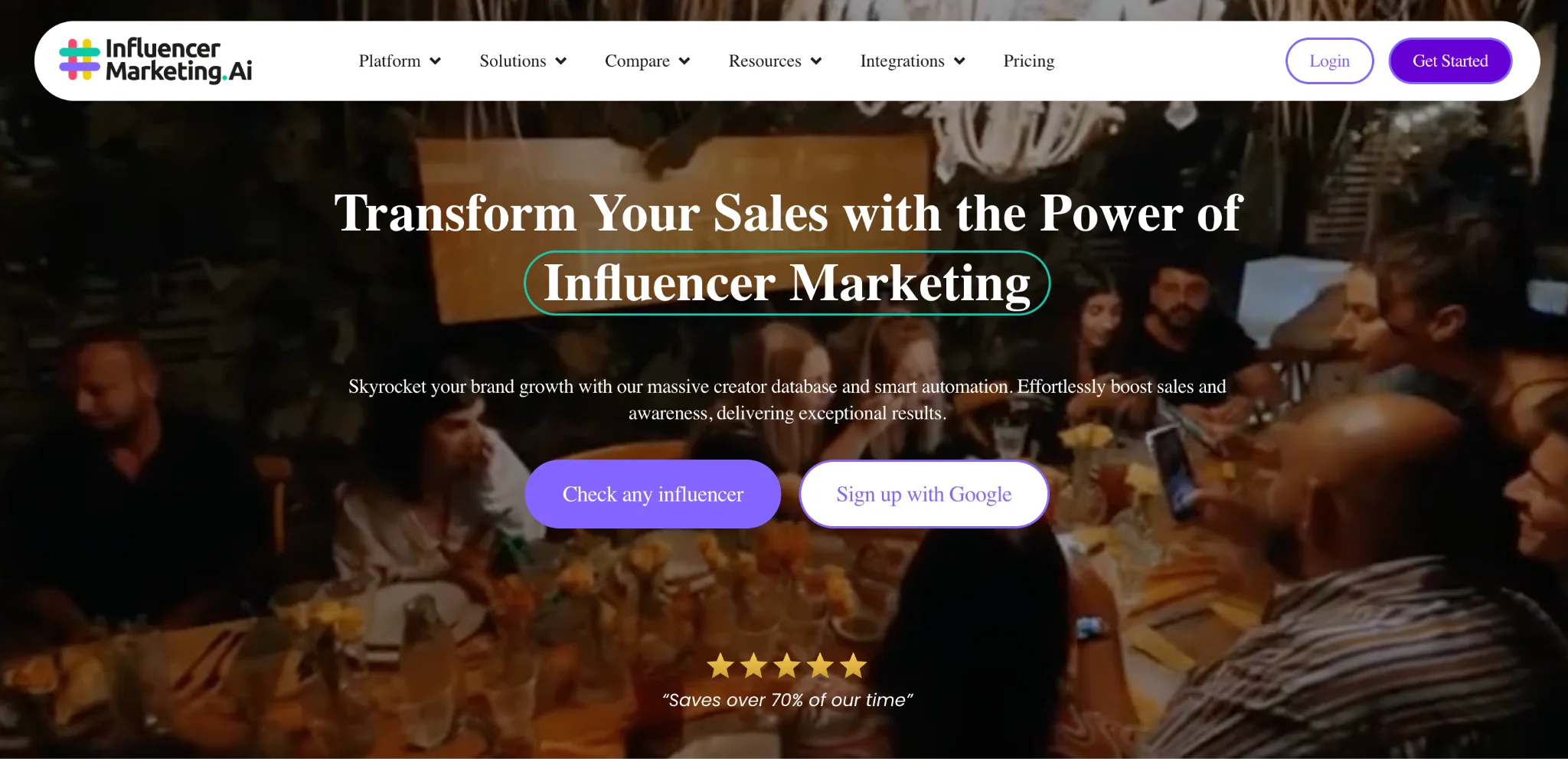
IMAI (InfluencerMarketing.AI) is an AI-powered influencer marketing platform designed to automate influencer discovery, fraud detection, and campaign optimization. It positions itself as a scalable solution for brands and agencies looking to leverage machine learning for influencer selection and performance prediction.
Key Features
- AI-driven influencer discovery: Search millions of influencers using advanced filters and predictive matching algorithms.
- Fraud detection tools: Identify fake followers, engagement manipulation, and suspicious activity.
- Campaign management dashboard: Manage outreach, collaborations, and performance tracking in one platform.
- Audience insights: Analyze demographics, interests, and engagement behavior.
- Performance prediction: Use AI to estimate campaign outcomes before launch.
- Reporting & analytics: Track ROI, engagement, and conversions with customizable reports.
Platform Coverage
InfluencerMarketing.AI (IMAI) supports major platforms like Instagram, YouTube, Facebook, and TikTok, making it suitable for a wide range of influencer marketing campaigns across different social media channels.
Pricing
Starting Price: US$99.00/month.
Reviews
4.5 / 5.0 (G2)
Standout Features
- AI-powered fraud detection: Identifies fake followers and engagement anomalies.
- Predictive campaign analytics: Forecasts campaign performance before launch.
- Automated influencer matching: Uses machine learning to recommend best-fit creators.
Linqia vs IMAI
Linqia focuses on managed execution and guaranteed results, while IMAI is a self-serve AI-driven platform for influencer discovery and analytics.
IMAI excels in automation and fraud detection, whereas Linqia offers creative execution, paid media amplification, and strategic campaign support.
Glewee
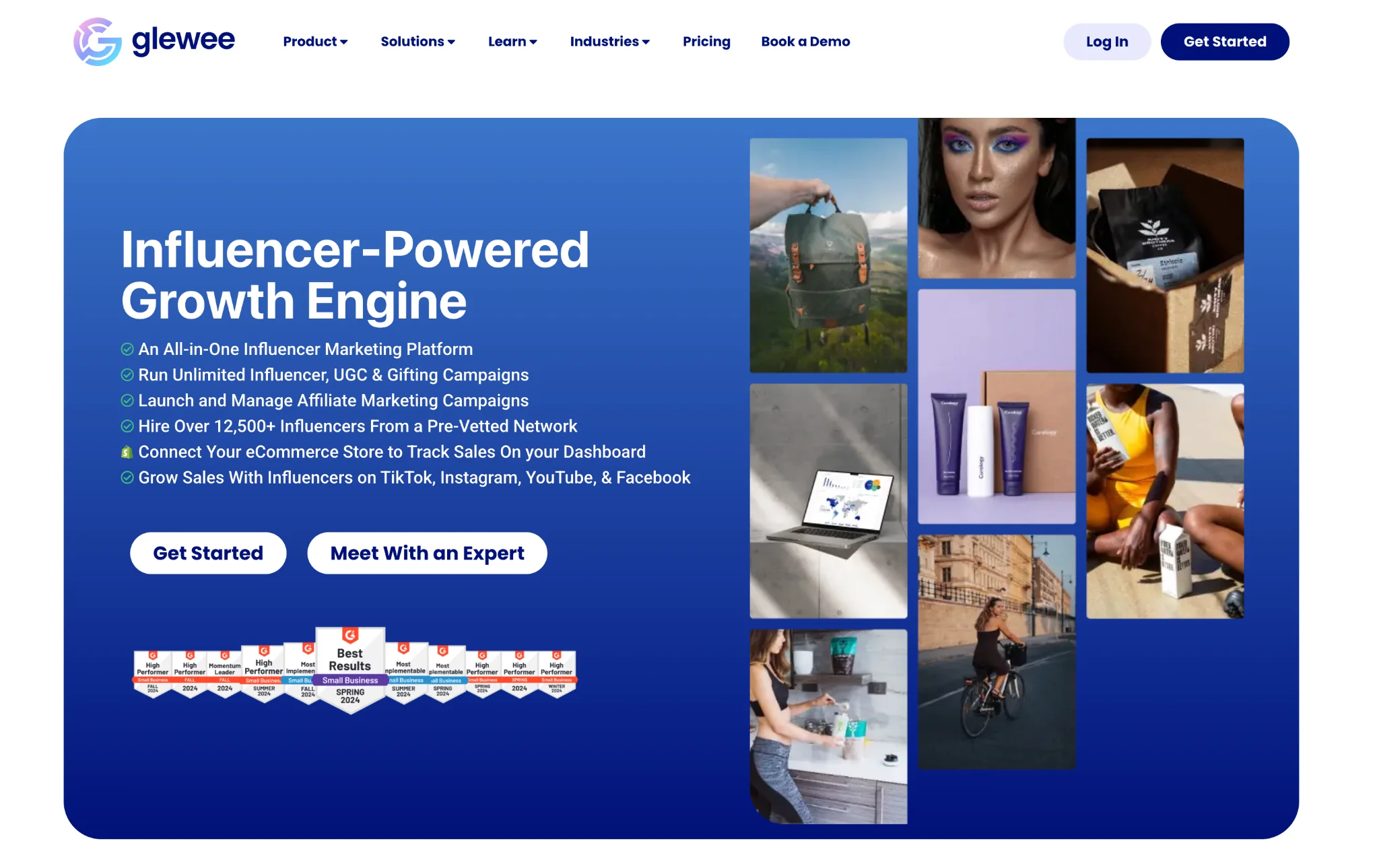
Glewee is an influencer marketing platform and marketplace that connects brands with creators, offering tools for discovery, collaboration, and campaign management. It is designed to simplify influencer marketing for both brands and creators through an intuitive, partnership-driven approach.
Key Features
- Creator marketplace: Access a network of vetted influencers ready for brand collaborations.
- Campaign management tools: Create, manage, and track influencer campaigns in one dashboard.
- Direct communication: Collaborate with creators through built-in messaging tools.
- Performance tracking: Monitor campaign results, engagement, and ROI metrics.
- Content management: Store and review influencer-generated content.
- Brand-creator matching: Algorithm-driven matching to pair brands with relevant influencers.
Platform Coverage
Instagram, YouTube, Facebook, and TikTok
Pricing
- Essentials $99/month
- Pro $249/month
Reviews
4.8 / 5.0 (G2)
Standout Features
- Curated creator marketplace: Focus on vetted influencers for higher-quality collaborations.
- Simplified campaign workflows: Easy-to-use interface for managing partnerships.
- Brand-creator matching engine: Algorithm pairs brands with relevant creators.
Linqia vs Glewee
Linqia operates as a full-service enterprise solution, while Glewee is more of a marketplace-driven platform focused on simplifying collaborations.
Glewee is better suited for smaller teams and direct creator partnerships, whereas Linqia provides enterprise-level strategy, execution, and performance guarantees.
Kolsquare
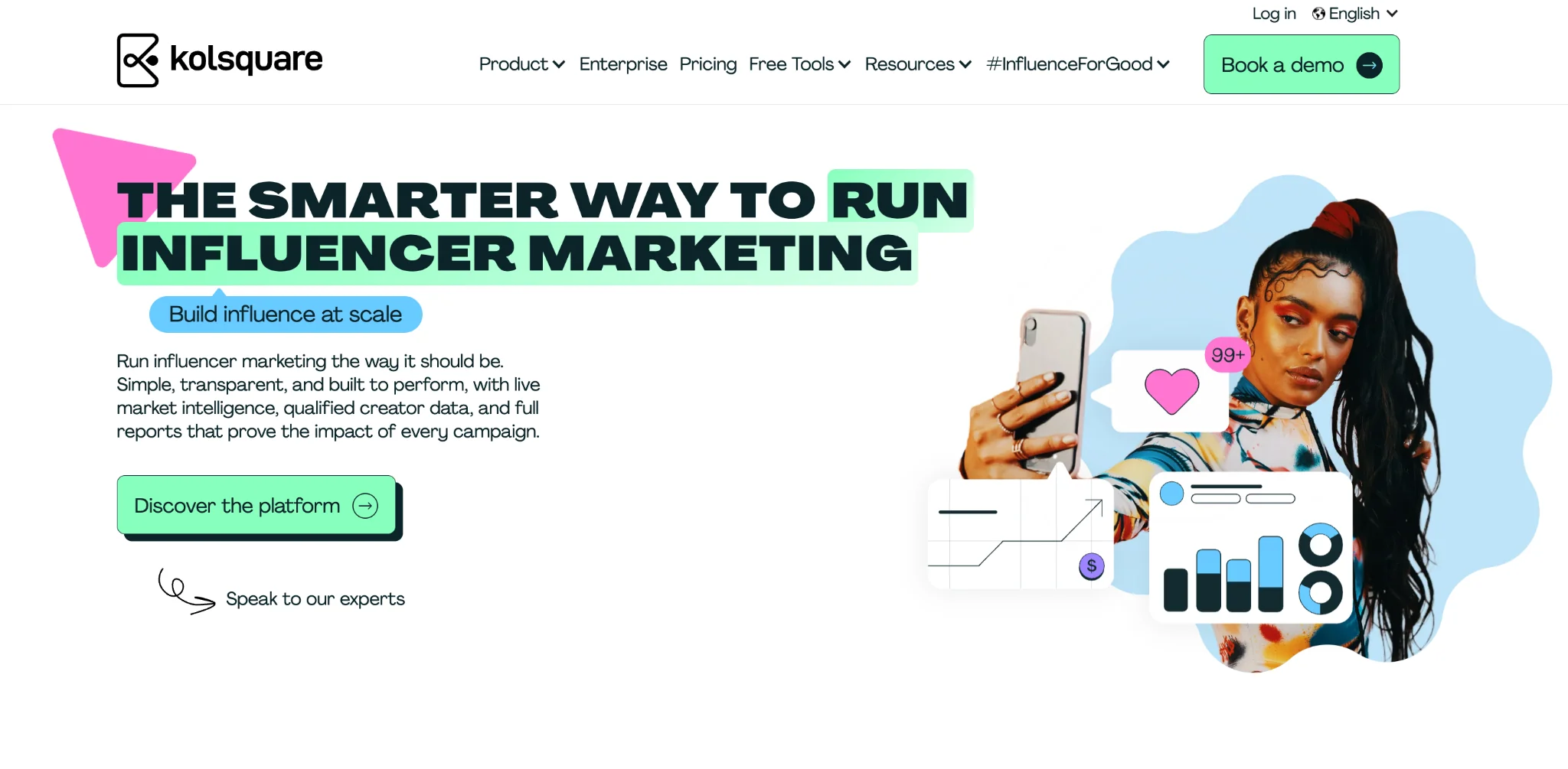
Kolsquare is a European influencer marketing platform designed to help brands manage influencer campaigns with a strong focus on data transparency, compliance, and performance tracking. It is particularly popular among brands operating in European markets.
Key Features
- Influencer discovery: Access a global database of creators with advanced filters for demographics, engagement, and niche.
- Campaign management: Plan, execute, and track influencer campaigns with centralized workflows.
- Audience insights: Analyze audience demographics, interests, and authenticity.
- Performance analytics: Track KPIs such as engagement, reach, and ROI.
- Compliance tools: Ensure campaigns meet regulatory requirements, particularly in European markets.
- Content tracking: Automatically collect and analyze influencer posts.
Platform Coverage
Instagram, TikTok, YouTube, and Facebook.
Pricing
Kolsquare offers pricing based on an annual contract, with the cost structure available on request. The pricing details are not fully disclosed, but typically, influencer marketing platforms like Kolsquare charge based on campaign scale, influencer volume, and the range of features used.
Reviews
4.5 / 5.0 (G2)
Standout Features
- Strong European market focus: Designed for compliance and performance in EU markets.
- Advanced audience analytics: Deep insights into follower demographics and authenticity.
- Content tracking automation: Automatically captures and analyzes influencer posts.
Linqia vs Kolsquare
Linqia is a US-based managed service platform, while Kolsquare is a data-driven SaaS tool with strong European market expertise.
Kolsquare emphasizes compliance, analytics, and transparency, whereas Linqia focuses on campaign execution, creative strategy, and ROI-driven performance.
Final Thoughts on Linqia Alternatives
Linqia stands out as a managed, performance-driven influencer marketing solution, but the alternatives explored offer a wide range of approaches—from enterprise SaaS platforms with deep analytics (CreatorIQ, Traackr) to eCommerce-focused tools (Upfluence, Influencer Hero) and more accessible or specialized solutions (Later, Klear, Kolsquare).
Ultimately, the right choice depends on a brand’s priorities: whether that’s hands-on control vs. managed service, advanced analytics vs. ease of use, or enterprise scalability vs. budget flexibility.