

Lurkit Pricing Explained: Plans, Features & Review
Games do not market like consumer products, and creator platforms built for beauty and apparel show it immediately: no Twitch coverage, no way to send a key, no concept of watch hours. Lurkit exists in that gap, serving game studios and publishers with key distribution, performance-based Quests, and a creator CRM spanning Twitch, YouTube, and TikTok, with Bethesda, Tencent, and Wargaming among the 900-plus studios on its books. The pricing follows the enterprise pattern — three tiers, all quoted — with one twist that changes the total: paid activations carry a commission on top of the plan. In this article, we break down Lurkit pricing, key features, reviews, limitations, and the best Lurkit alternatives to consider.
Lurkit Pricing
Lurkit sells three tiers named Indie, Studio, and Publisher, and none of them carries a published figure. Indie is the entry plan and includes real-time marketing insights, the creator CRM, key distribution campaigns, and access to paid campaigns and Quests, with a commission applied to Quest activations that the entry plan lists at 20 percent. Studio and Publisher add everything in Indie plus a success agent with a dedicated account manager, and open up a set of paid add-ons including a Launch Pack, a take-over package, community pushes, highlighted game placements, and a managed creator program. The site advertises discounts of up to 70 percent for qualifying studios, which is unusual enough to be worth asking about directly, and suggests real flexibility for smaller developers. The practical cost picture, then, has two moving parts: a quoted platform fee scaled to studio size, and a percentage of everything you spend activating creators through Quests.
Free Trial
Lurkit does not publish a free trial or a self-serve tier. Access starts with a demo and a scoped conversation about your studio size, release schedule, and campaign needs. Given the discount programme, the sensible move for a smaller developer is to raise budget constraints early rather than treating the first quote as fixed, since the pricing appears designed to flex considerably by studio size.
Contract
Contract terms are not published, and plan structure suggests annual arrangements scoped per studio rather than month-to-month subscriptions. The variable to model carefully is the Quest commission, because unlike the platform fee it scales with every activation. A studio running key campaigns and organic creator programs pays mostly the platform fee; a studio funding large paid creator pushes around a launch pays that plus a percentage of the entire activation budget.
Lurkit Overview
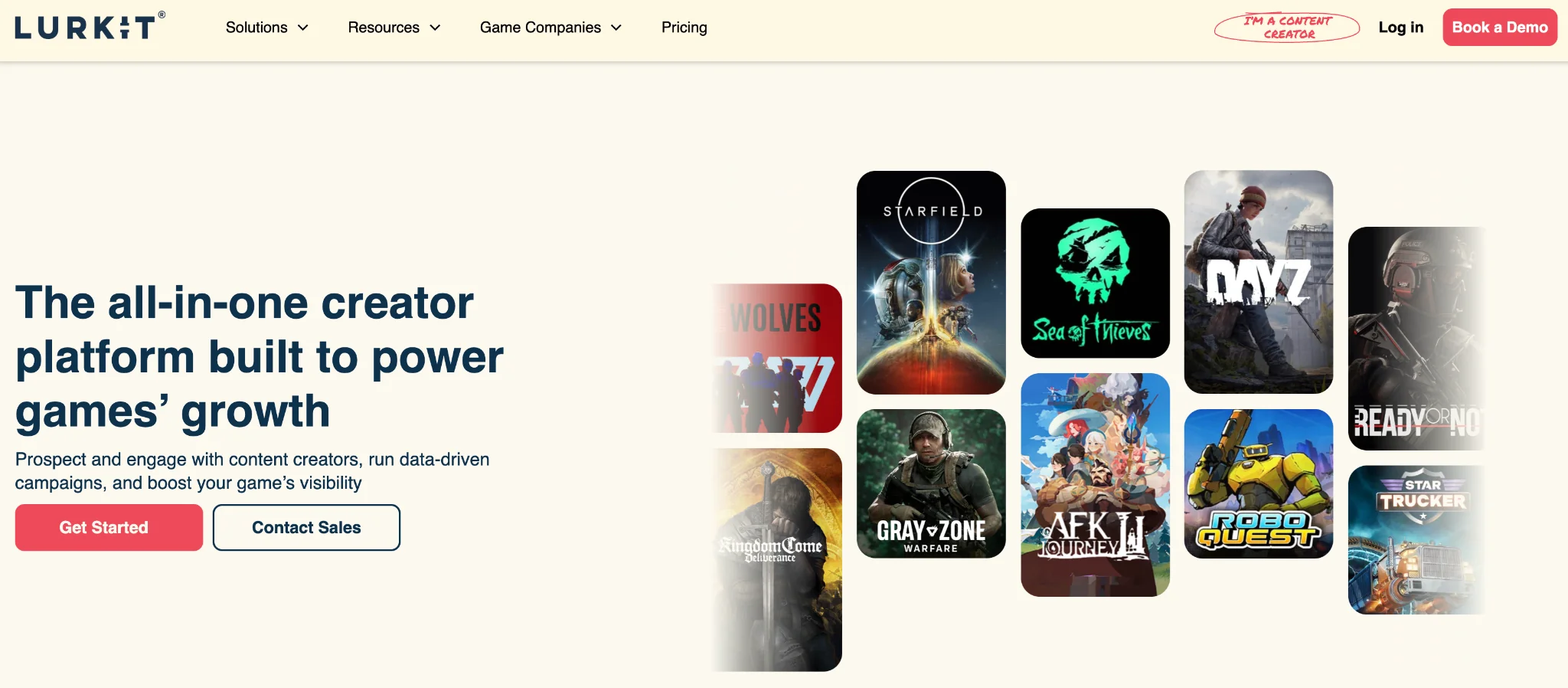
Lurkit is a creator marketing platform built exclusively for games, connecting studios and publishers with a network of roughly 90,000 to 100,000 verified creators across Twitch, YouTube, YouTube Shorts, and TikTok. Its workflow reflects how games actually reach creators: distributing keys at speed, running performance-based Quests where creators earn against defined KPIs, arranging paid sponsorships with contracts and payments handled in-platform, and maintaining an organic key marketplace where creators discover titles themselves. Around that sits a creator CRM for prospecting and shortlisting with shared team notes, creator program tooling with branded portals and automated reward distribution, and analytics covering real-time performance, competitive benchmarking, and post-campaign cost breakdowns. More than 900 publishers and studios use it, including Bethesda, Tencent, NetEase Games, Wargaming, and Crytek.
Key Features
Key Distribution Campaigns
Studios push game keys to relevant creators at scale rather than emailing them one at a time, which is the single most common gaming creator workflow and the reason most studios look at a platform like this first.
Paid Quests
Quests are performance-based activations where creators are rewarded against defined KPIs such as views, watch hours, or clicks, turning a sponsorship into an outcome-linked arrangement rather than a flat fee for a stream.
Creator CRM
Prospecting, shortlisting, and relationship management run through a CRM with global notes visible across the team, so knowledge about a creator survives staff changes and campaign gaps.
Paid Sponsorships With Contracts and Payments
Direct sponsorship deals are arranged in-platform with contract handling and payment processing included, removing the invoicing and paperwork overhead that slows down individual creator deals.
Organic Key Marketplace
Creators browse and request titles themselves, generating inbound interest and coverage that costs nothing beyond the key, which is where a lot of a game's long-tail visibility comes from.
Creator Programs and Custom Portals
Studios build branded landing pages and portals where creators join a program, take on missions with specific KPIs, and receive rewards distributed automatically as they hit them.
Merchandise and Giveaway Management
Physical rewards and giveaways are managed alongside digital ones, which matters for community-building campaigns that extend past a single stream.
Real-Time Performance Tracking
Campaigns are monitored live across platforms, so a studio can see how a launch push is landing while there is still time to adjust it.
Competitive Analysis
Studios benchmark their creator activity and coverage against comparable titles, useful for setting expectations before a launch rather than explaining results after it.
Post-Campaign Reporting and Cost Breakdowns
Detailed reporting ties spend to outcomes across platforms, giving a cost-per-result view that a publisher can take into the next campaign budget conversation.
Best For
Lurkit fits game studios and publishers of any size that treat creator coverage as a core launch channel, from indie developers shipping their first title to publishers running global releases across multiple games. Its value concentrates around launches and content updates, where key distribution volume and creator activation speed decide how much coverage a title gets in its opening window. The discount programme makes it plausible for smaller studios that would otherwise assume an enterprise platform is out of reach. It is not a fit for anyone outside games: the network, the workflows, and the metrics are all built around Twitch and gaming YouTube, so a consumer brand looking for creators would find nothing usable here.
Lurkit Reviews
No reliable public star rating
Lurkit does not carry a meaningful aggregate score on the major software directories, so there is no verified user sentiment to weigh, which is common for platforms serving a narrow vertical where the buyer count is small. What exists instead is a client roster that does the work a rating normally would: nearly a thousand studios and publishers, including some of the largest names in the industry, is a stronger signal than a handful of anonymous reviews. Independent commentary in the gaming marketing space consistently credits the platform for genuine category specialisation and for combining insights with creator management, while flagging the same two things: pricing is opaque, and outcomes still depend on the studio actively managing creator relationships rather than expecting the platform to do it. Ask for benchmarks from titles in your genre during the demo, since coverage quality varies far more by genre here than in general influencer marketing.
Lurkit Standout Features
Built for How Games Actually Reach Creators
Key distribution, watch hours, Twitch coverage, and launch-window timing are native concepts here rather than adaptations. For a studio, that removes the constant translation work of using a platform designed for a different industry.
Performance-Based Quests
Paying creators against views, watch hours, or clicks rather than a flat rate shifts risk in the studio's favour and scales naturally: a Quest that underperforms costs less, and one that overdelivers is money well spent.
A Discount Programme That Opens the Door
Advertising discounts of up to 70 percent for qualifying studios is not something enterprise platforms usually do. It suggests the company genuinely wants indie developers on the platform, and it means the first quote is a starting point rather than a verdict.
Lurkit Limitations
No Published Pricing
Three tiers, no figures. Budgeting requires a sales conversation, and comparing total cost against alternatives is impossible until you are already in one.
Commission on Top of the Plan
Quest activations carry a percentage fee alongside the platform cost, so a launch with heavy paid creator spend costs considerably more than the subscription implies. Model both numbers before committing.
Gaming Only
The network and the entire workflow are built for games. That specialisation is the product's strength, but it also means there is no path to using it for anything else, and studios with adjacent consumer products need a second platform.
Outcomes Still Depend on You
The tooling handles distribution, tracking, and payments, but creator relationships, pitch quality, and program upkeep remain the studio's job. Teams expecting the platform to generate coverage on its own tend to be disappointed.


Is Lurkit Worth It?
If you ship games, Lurkit is one of a small number of platforms that actually speaks your language, and the combination of key distribution, performance-based Quests, and a creator CRM covers the workflow end to end rather than in pieces. The client roster suggests it holds up at publisher scale, and the discount programme means indie studios should not rule it out on price before asking. The reservations are the opaque pricing, the commission layered on paid activations, and the fact that results still rest on active relationship management. Studios weighing the alternatives should look at:
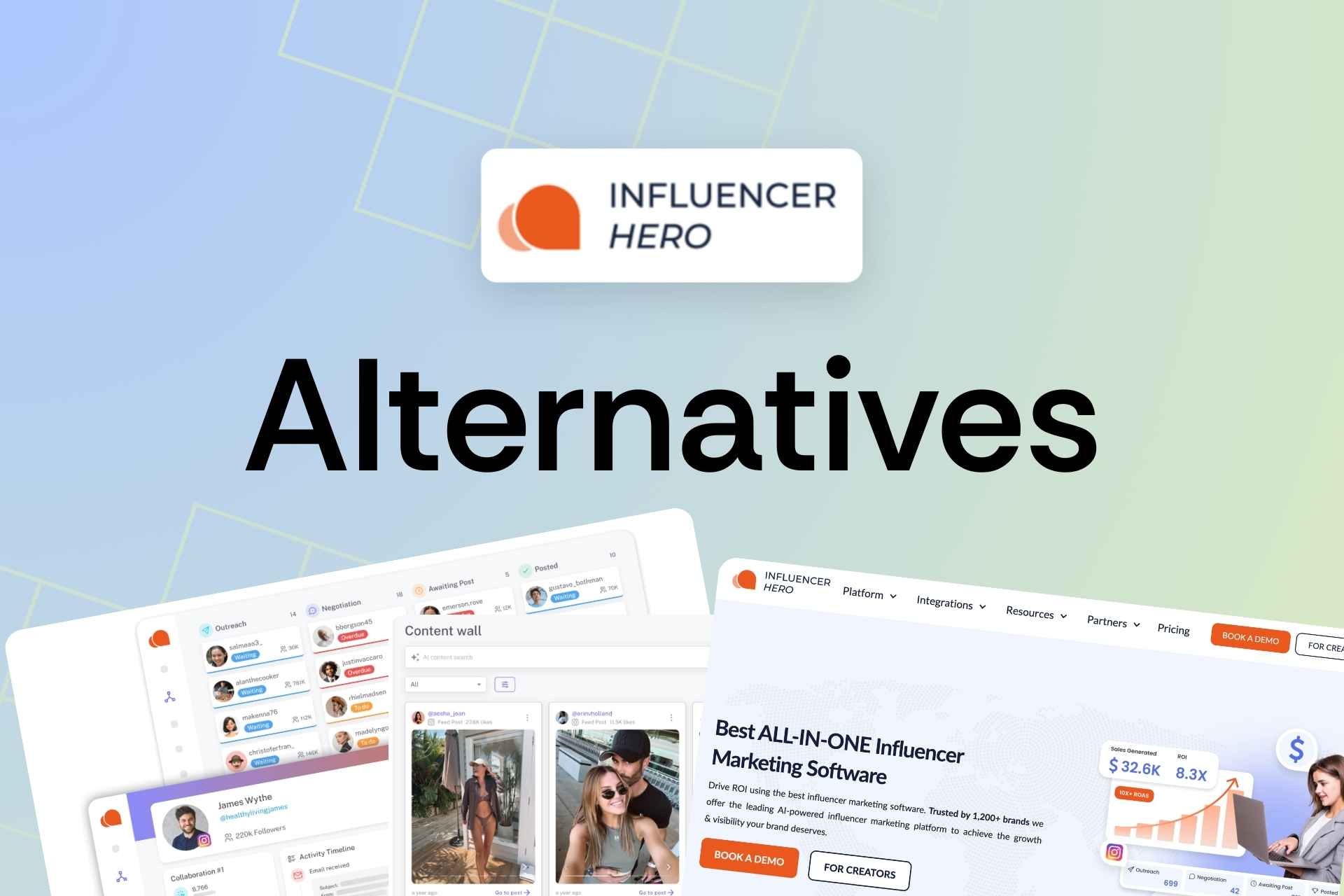
- Influencer Hero — an all-in-one creator platform covering discovery, outreach automation, CRM, product seeding, affiliate tracking, and ROI reporting across eight networks on published plans.
- Afluencer — a marketplace where creators apply to posted collaborations, useful for studios building an inbound pipeline alongside a key program.
- Keymailer — a long-established key distribution service with a large registered creator base and a straightforward request-and-approve workflow.
- Woovit — key distribution and creator management focused on getting titles into the hands of streamers with minimal overhead.
- Streamforge — data-driven creator discovery and campaign management for games, with an emphasis on predicting which creators will perform for a specific title.
Final Thoughts
Lurkit is best judged on release cadence rather than company size. A studio shipping regularly, running launch pushes, and depending on streamer coverage for visibility will use every part of this platform and find the fee straightforward to justify. A studio with one title a year and a small marketing budget should ask about the discount before assuming it is out of reach, and should model the Quest commission against a realistic launch budget rather than the platform fee alone. What you are buying is category fit: tooling that understands keys, watch hours, and launch windows, which no general creator platform provides.